共找到 67 项 “higher” 相关结果
- 全部分类
- 全部
- 文学
- 历史
- 哲学/宗教
- 法律
- 政治/社会
- 医学
- 教育/心理学
- 艺术/传媒
- 研究生考试
- 资格认证考试
- 公开课
- 语言
- 经济金融
- 管理学
- IT/计算机
- 自然科学
- 工学/工程
- 体育
- 行业资料
- 音乐
- 汽车机械制造
- 文档模板
- 创业
- 农学
- 生活
- 数据库教程
- 民族
New approach higher vocational English student’s.1
光盘作者: 柳吉良,常淑丽主编
出版社:高等教育出版社,2012
简介:《新理念高职英语立体化系列教材:新理念高职英语学生用书1》在研究和总结目前教材编写成果、深入探索外语学习以及教材编写的相关理论的基础上,针对主要通过课堂和教材学习外语的特殊学习环境,在教材编写和教学活动设计中融入了一些新思考和新理念、开展了一些新尝试。
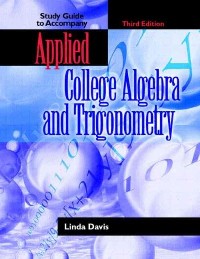
Applied college algebra and trigonometry / 3rd ed.
光盘作者: Linda Davis.
简介:This book's objective is to make learning mathematics easier. Its easy-to-follow writing style and its balanced approach between mathematical theory and real-world applications allow the user to progress step-by-step; concepts are presented and then built upon, strengthening understanding and providing solid support for learning new concepts. Using color graphics, illustrations, examples, and application problems, topics covered in this easy-to-follow book are linear equations and inequalities; factors and fractions; exponents and radicals; functions and graphs; quadratic equations; systems of equations; higher degree equations; exponential and logarithmic functions; right angle trigonometry; vectors and oblique triangles; graphs; complex numbers; analytic geometry; introduction to statistics and empirical curve fitting; and sequences, series, and the binomial theorem. For workers in technical fields needing to brush up on their mathematic skills.
作者: 余敏主编
简介: 高级剑桥商务英语证书(BEC Higher)考试是针对在商务活动中需要高等英语水平的人员设计的一种全新的实用型考试,它从听、说、读、写四个方面全面考查考生在商务和一般生活环境下使用英语的能力。和其他BEC考试一样,BEC Higher的考试分为两个阶段:第一阶段是笔试,包括阅读、写作和听力三个部分;第二阶段是口试。 本书是为准备参加BEC Higher考试的人员而编写的仿真试题集,一共6套。书中的每一套试题都是严格按照2002年剑桥大学考试委员会颁发的考试大纲的要求和样题的形式编写的。本书适合BEC Higher考生,或英语专业、工商管理专业或其它与国际商务专业有关并有意向商务发展的在校大中专生或技校、职高的学生,或已从事商务工作的中低级管理人员和中高级职员。 本书附MP3光盘一张。
简介:This book is based on the authors' research on rendering images of higher dimensional fractals by a distance estimation technique. It is self-contained, giving a careful treatment of both the known techniques and the authors' new methods. The distance estimation technique was originally applied to Julia sets and the Mandelbrot set in the complex plane. It was justified, through the work of Douady and Hubbard, by deep results in complex analysis. In this book the authors generalise the distance estimation to quatemionic and other higher dimensional fractals, including fractals derived from iteration in the Cayley numbers (octonionic fractals). The generalization is justified by new geometric arguments that circumvent the need for complex analysis. This puts on a firm footing the authors' present work and the second author's earlier work with John Hart and Dan Sandin. The results of this book will be of great interest to mathematicians and computer scientists interested in fractals and computer graphics.
简介:Traditionally, incorporating optimal drug-like properties into a structural lead was not considered by medicinal chemists to be their responsibility. Instead, medicinal chemists felt that the undesirable drug-like properties in their drug candidates would be fixed by preclinical development scientists. However, that view has changed in the past 5a?10 years, resulting in another significant paradigm shift in drug discovery. The most significant aspect of this latest paradigm shift is the recognition by medicinal chemists that the drug-like properties of structural hits, structural leads, and drug candidates are intrinsic properties of the molecules and that it is the responsibility of the medicinal chemist to optimize not only the pharmacological properties but also the drug-like properties of these molecules. Therefore, assessment of these drug-like properties is now done early in the drug discovery process on structural hits and structural leads as well as the design of screening libraries. Optimization of these drug-like properties is done through an iterative process in close collaboration with preclinical development scientists. This process is analogous to the process used by the medicinal chemist to characterize and optimize the pharmacological activity of their structural hits, leads and drug candidates. Recognizing these changes in the paradigm by which drugs are discovered, the American Association of Pharmaceutical Scientists (AAPS) has recently organized and sponsored two focused workshops in the area of profiling drug-like properties during drug discovery. The first workshop, entitled "Pharmaceutical Profiling in Drug Discovery for Lead Selection", took place in Whippany, NJ on May 19-21, 2003. This workshop, which was co-sponsored by the American Chemical Society-Medicinal Chemistry Division and the Society for Biomolecular Screening, was focused on prediction, measurement, and utilization of drug-like properties during lead selection. From this workshop arose the book entitled Pharmaceutical Profiling in Drug discovery for Lead Selection, which was edited by Ronald T. Borchardt, Edward H. Kerns, Christopher A. Lipinski, Dhiren R. Thakker and Binghe Wang and published by AAPS Press (Arlington, VA) in 2004. The second workshop entitled "Optimizing the Drug-Like Properties of Leads in Drug Discovery" took place in Parsippany, NJ on September 19-22, 2004. This workshop, which was co-sponsored by the American Chemical Society-Medicinal Chemistry Division, American Chemical Society-North Jersey Section, American Society for Clinical Pharmacology and Therapeutics, European Federation for Pharmaceutical Sciences, International Society for the study of Xenobiotics, and the Society of Toxicology, was focused on the optimization of the drug-like properties of leads in drug discovery. If the strategies and the methodologies presented at this workshop were to be adopted by pharmaceutical and biotechnology companies, it is the belief of the workshopa's organizers that more higher quality drug candidates would be advancing into preclinical and clinical development resulting in more efficacious and safer drugs.
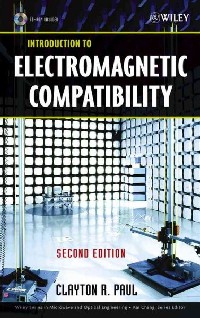
简介:[Publisher description] A Landmark text thoroughly updated, including a new CD As digital devices continue to be produced at increasingly lower costs and with higher speeds, the need for effective electromagnetic compatibility (EMC) design practices has become more critical than ever to avoid unnecessary costs in bringing products into compliance with governmental regulations. The Second Edition of this landmark text has been thoroughly updated and revised to reflect these major developments that affect both academia and the electronics industry. Readers familiar with the First Edition will find much new material, including: * Latest U.S. and international regulatory requirements * PSpice used throughout the textbook to simulate EMC analysis solutions * Methods of designing for Signal Integrity * Fortran programs for the simulation of Crosstalk supplied on a CD * OrCAD(r) PSpice(r) Release 10.0 and Version 8 Demo Edition software supplied on a CD * The final chapter on System Design for EMC completely rewritten * The chapter on Crosstalk rewritten to simplify the mathematics Detailed, worked-out examples are now included throughout the text. In addition, review exercises are now included following the discussion of each important topic to help readers assess their grasp of the material. Several appendices are new to this edition including Phasor Analysis of Electric Circuits, The Electromagnetic Field Equations and Waves, Computer Codes for Calculating the Per-Unit-Length Parameters and Crosstalk of Multiconductor Transmission Lines, and a SPICE (PSPICE) tutorial. Now thoroughly updated, the Second Edition of Introduction to Electromagnetic Compatibility remains the textbook of choice for university/college EMC courses as well as a reference for EMC design engineers.
简介:"Surrounded by 140 acres of expansive lawns, meadows, and walking trails in the Berkshires of western Massachusetts, the Sterling and Francine Clark Art Institute is home to exceptional collections of European and American painting and sculpture, master prints and drawings, English silver and porcelain, and early photographs. It is also recognized as a leading international center for research and higher education. This book combines beautiful images with engaging narrative to capture the unique experience of "art in nature" that has made the Clark one of the country's best-loved museums."--BOOK JACKET.
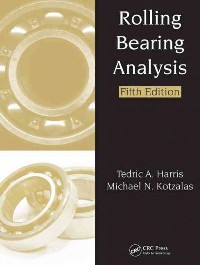
简介:For the last four decades, Tedric Harris' Rolling Bearing Analysis has been the "bible" for engineers involved in rolling bearing technology. Why do so many students and practicing engineers rely on this book? The answer is simple: because of its complete coverage from low- to high-speed applications and full derivations of the underlying mathematics from a leader in the field. Updated, revamped, and reorganized for the new millennium, the fifth incarnation of this classic reference is the most modern, flexible, and interactive tool in the field. What makes this edition so revolutionary? For starters, the coverage is split conveniently into two books: Essential Concepts of Bearing Technology introduces the fundamentals involved in the use, design, and performance of rolling bearings for more common applications; Advanced Concepts of Bearing Technology delves into more advanced topics involving more dynamic loading, more extreme conditions, and higher-speed applications. Furthermore, each book in this edition includes a CD-ROM that contains numerical examples as well as tables of dimensional, mounting, and life-rating data obtained from ABMA/ANSI standards. Whether you are interested in the mathematics behind the empirical values or methods for estimating the effects of complex stresses on fatigue endurance, Rolling Bearing Analysis, Fifth Edition compiles the techniques and the data that you need in a single, authoritative resource.
简介:The Princeton Review realizes that acing the SAT is very different from getting straight As in school. The Princeton Review doesn't try to teach students everything there is to know about math and English--only the techniques they'll need to score higher on the exam.There's a big difference. InCracking the SAT & PSAT/NMSQT, The Princeton Review will teach test takers how to think like the test makers and: • Eliminate answer choices that look right but are planted to fool you • Master the 250 most important SAT vocabulary words • Nail even the toughest sections: Analogies, Quantitative Comparison, Critical Reading, and more ** This book and CD-ROM package includes 6 full-length, simulated SAT exams: 2 in the book, and 4 on CD-ROM. Plus, The Princeton Review will show readers how to go online and get additional practice. All of TPR's sample test questions are just like the ones test takers will see on the actual SAT, and TPR fully explains every solution. Contents Include: I Orientation How to Think About the SAT Cracking the SAT: Basic Principles Cracking the SAT: Advanced Principles Intro to the PSAT/NMSQT II How to Crack the Verbal SAT Joe Bloggs and the Verbal SAT Sentence Completions Analogies Critical Reading Writing Skills III How to Crack the Math SAT Joe Bloggs and the Math SAT The Calculator Arithmetic Algebra: Cracking the System Geometry Quantitative Comparisons: Cracking the System Grid-Ins: Cracking the System IV Taking the PSAT/SAT V Vocabulary VI Answer Key to Drills
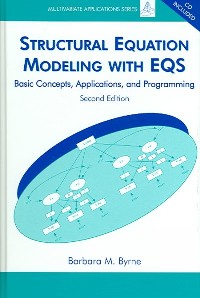
简介:Summary: Publisher Summary 1 Researchers and students who want a less mathematical alternative to the EQS manual will find exactly what they're looking for in this practical text. Written specifically for those with little to no knowledge of structural equation modeling (SEM) or EQS, the author's goal is to provide a non-mathematical introduction to the basic concepts of SEM by applying these principles to EQS, Version 6.1. The book clearly demonstrates a wide variety of SEM/EQS applications that include confirmatory factor analytic and full latent variable models. Analyses are based on a wide variety of data representing single and multiple-group models; these include data that are normal/non-normal, complete/incomplete, and continuous/categorical. Written in a "user-friendly" style, the author "walks" the reader through the varied steps involved in the process of testing SEM models. These include model specification and estimation, assessment of model fit, description of EQS output, and interpretation of findings. Each of the book's applications is accompanied by: a statement of the hypothesis being tested, a schematic representation of the model, explanations and interpretations of the related EQS input and output files, tips on how to use the associated pull-down menus and icons, and the data file upon which the application is based. Beginning with an overview of the basic concepts of SEM and the EQS program, the book carefully works through applications starting with relatively simple single group analyses, through to more advanced applications, such as a multi-group, latent growth curve, and multilevel modeling. The new edition features: *Many new applications that include a latent growth curve model, a multilevel model, a second-order model based on categorical data, a missing data multigroup model based on the EM algorithm, and the testing for latent mean differences related to a higher-order model. *A CD enclosed with the book that includes all application data. *Vignettes illustrating procedural and/or data management tasks using a Windows interface. *Description of how to build models both interactively using the BUILDULEQ interface and graphically using the EQS Diagrammer. Publisher Summary 2 This practical volume is intended for researchers and students who want a less technical alternative to the EQS manual.
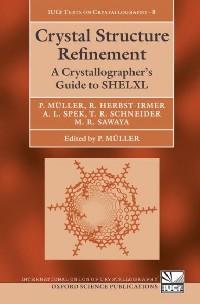
简介:Summary: Publisher Summary 1 Crystal Structure Refinement is a mixture of textbook and tutorial. As A Crystallographers Guide to SHELXL it covers advanced aspects of practical crystal structure refinement, which have not been much addressed by textbooks so far. After an introduction to SHELXL in the first chapter, a brief survey of crystal structure refinement is provided. Chapters three and higher address the various aspects of structure refinement, from the treatment of hydrogen atoms to the assignment of atom types, to disorder, to non-crystallographic symmetry and twinning. One chapter is dedicated to the refinement of macromolecular structures and two short chapters deal with structure validation (one for small molecule structures and one for macromolecules). In each of the chapters the book gives refinement examples, based on the program SHELXL, describing every problem in detail. It comes with a CD-ROM with all files necessary to reproduce the refinements.
简介: Introduction Foreword About the Author Core MFC The MFC Architecture A Brief History of MFC The MFC Class Hierarchy CObject CCmdTarget CWinThread CWinApp CWnd CFrameWnd CView CDocument Summary MFC Dialogs, Controls, and Data Interaction Creating an Application Starting and Using MFC AppWizard The AppWizard-Generated Code Modifying the Application Adding Dialog Controls Adding Initialization Using Dialog Controls ToolTips Enabling ToolTips Displaying Text Dialog Data Exchange Standard DDX UpdateData Using Standard Dialog Boxes File Open/Save Color Selector Font Selector Print Dialog Summary The Windows Common Controls Initializing and Using the Common Controls Notifications for Windows Common Controls The Notification Message Structure Overview of the Notification Process A Better Notification Handling Scheme Specifying Notification Ranges with ON_NOTIFY_RANGE Hot Key Controls: Class CHotKeyCtrl CHotKeyCtrl Class Methods Creating and Initializing a CHotKeyCtrl Object Using a Hot Key Control Spin Controls: Class CSpinButtonCtrl Spin Control Styles CSpinButtonCtrl Messages CSpinButtonCtrl Class Methods Creating and Initializing a Spin Control Sample Program: SPIN1 Slider Controls: Class CSliderCtrl Slider Control Styles CSliderCtrl Messages CSliderCtrl Class Methods Creating and Initializing a Slider Control Sample Program: Slider Controls (SLIDER1) Sample Program: SLIDER1 Progress Bar Controls: Class CProgressCtrl CProgressCtrl Class Methods Creating and Initializing a CProgressCtrl Object Using a Progress Control Image Lists: Class CImageList CImageList Class Methods Creating and Initializing a CImageList Control List View Controls: Class CListCtrl List View Control Styles Image Lists and the List View Control List View Items and Subitems List View Notification Messages Creating and Initializing a CListCtrl Object Using the List View Control Tree View Controls: Class CTreeCtrl Tree View Control Styles Tree View Notification Messages CTreeCtrl Class Methods Creating and Initializing a Tree View Control Using a CTreeCtrl Object Sample Program: TREELIST.EXE Tab Controls: Class CTabCtrl Tab Control Styles Tab Control Notification Messages CTabCtrl Class Methods The Tab Item Structure (TC_ITEM) Creating and Initializing a Tab Control Using a Tab Control Animate Controls: Class CAnimateCtrl Animate Control Styles Animate Control Notification Messages CAnimateCtrl Class Methods Creating and Initializing an Animate Control Using an Animate Control Rich Edit Controls: Class CRichEditCtrl Rich Edit Control Window Styles The Character Format Structure (CHARFORMAT) The Paragraph Format Structure (PARAFORMAT) CRichEditCtrl Class Methods CRichEditCtrl Line-Related Methods CRichEditCtrl Text-Selection Methods CRichEditCtrl Formatting Methods CRichEditCtrl Editing Methods CRichEditCtrl Clipboard Methods CRichEditCtrl General-Purpose Methods Creating and Initializing a Rich Edit Control Using a Rich Edit Control Summary Painting, Device Contexts, Bitmaps, and Fonts Device Contexts The Graphics Device Interface MFC Wrapping MFC Device Context Classes The Base Class: CDC Painting with Class CPaintDC Managing Client Areas with Class CClientDC Managing Frame Windows with Class CWindowDC Windows Graphic Objects Pens: Class CPen Brushes: Class CBrush Fonts: Class CFont Bitmaps: Class CBitmap Palettes: Class CPalette Regions: Class CRgn GDI Coordinate Systems Logical Mapping Modes Vector Graphics Drawing Modes Lines and Polylines Rectangles Regions Polygons Ellipses Bezier Curves Fonts and Text Font Characteristics The TEXTMETRIC Structure The LOGFONT Structure Font Creation Drawing Text Sample Program: Vector Graphics and Text Methods (VECTEXT1.EXE) Raster Graphics Named Raster Operations (ROPs) Bitmaps Device-Dependent Bitmaps Device-Independent Bitmaps (DIBs) The CBitmap Class Transferring and Contorting Bitmaps Bitmap Resources Tacking Resources onto an Executable File Getting Image Resources out of an Executable File Sample Program: Exploring Bitmap Resources (BITMAP1) Summary Custom Control Development Window Classes Versus C++ Classes A Validating Edit Control The Clock Static Control Control Metrics Painting the Face Locating the Hands Painting the Hands Setting the Time Pitfalls of Subclassing Standard Controls The Hyperlink Control Implementation Strategy Font Processing Painting the Window Controlling the Cursor Mouse Input Keyboard Input Launching the Link Advanced Custom Control Topics Subclassing Limitations Notifications Using the Resource Editor with Custom Classes Summary The MFC Application Object, Message Routing, and Idle Processing The MFC Application Object CWinApp and Application Lifetime The CWinApp Data Members The CWinApp Member Functions Application-Specific Initialization Functionality in InitInstance OLE Container Support 3D Look for Windows NT 3.5x Registry Usage Most Recently Used Files List SDI and MDI Document/View Main Frame Window Creation Automation Support Rich Edit Control Support Command-Line Handling Message Routing, Message Maps, and Message Categories Message Routing PreTranslateMessage Message Maps Idle Processing OnIdle Idle Processing for Dialogs The Splash Screen Component Summary Documents, Views, and Applications That Use Them The Document/View Architecture Documents, Frames, and Views Document Templates Creating New Documents Opening New Files Single Versus Multiple Document Templates Views The CView Class The CScrollView Class The CFormView Class The Database View Classes The Control Views Changing Views in an SDI Using the MDI Summary Extending the User Interface Responding to the User Keyboard Messaging Handling Keyboard Messages Mouse Messaging Handling Mouse Messages User Interfaces and AppWizard Extending Menus Obtaining Menus and Pop-up Menus Adding Menu Items Using Floating Pop-up Menus Putting Control Bars to Use Using Toolbars and Rebars Using Status Bars Showing and Hiding Control Bars Supporting ToolTips Updating the User Interface Property Sheets and Wizards MFC's Support for Property Sheets and Wizards Creating a Simple Wizard Splitting a View Summary Printing Printing Fundamentals Printing with MFC Printing in the View The PrintInfo Object Printing Menu Commands Printing and GDI Mapping Modes WYSIWYG Printing Application Resources The Application Class The View Class Pagination Printing with a Known Page Count Printing with an Unknown Page Count Printing Page Numbers Stopping and Aborting Print Jobs Halting a Print Job in OnPrepareDC() Halting a Print Job in OnPrint() Summary MFC and COM Programming COM A Little History Interfaces, Objects, and Methods Some Terminology A Real-World View The IUnknown Interface Servers, Clients, and Classes The COM Runtime Environment Defining the Class Factory How Are COM Objects Reused? Marshaling and Threading Marshaling Threading COM, OLE, and Automation IDispatch Automation Servers, Objects, and Controllers Supporting Both IDispatch and IUnknown Persisting COM Data Structured Storage Identifying COM Data (Monikers) Transferring Data Uniform Data Transfer Connectable Objects DCOM Object Creation Invoking Methods Security Issues Some Important Information BSTR SAFEARRAY HRESULT VARIANT Further Reading Summary COM and MFC Understanding the Afx Global Functions Application Lifetime Control Client Control Management Connection Point Management Control Registration Exceptions Initialization Licensing Type Information Reviewing the OLE Macros Class Factories Client/Container Common Commands Control Property Persistence Dialog Data Exchange Dispatch Maps Event Maps Property Page Data Mapping Property Pages Type Library Access MFC and the OLE Class Categories Active Document Automation Common Dialogs for OLE Container Control Drag and Drop (Universal Data Transfer) Document Servers Support Summary MFC OLE Servers Document Servers Server Types Full Server Active Document Container/Server Mini-Server Document Server Design OLE Documents Active Documents Building an Active Document Server Persistence Rendering the View Automation Servers IDispatch GetIDsOfNames GetTypeInfo GetTypeInfoCount Invoke IDispatch-Derived Interface in ODL Calling Methods Through IDispatch GetIDsOfNames Type Information Methods Invoke Dispinterfaces Differ from Interfaces Calling Methods Through IDispatch Dual Interfaces The Variant An Automation Server Using MFC Server Type Declaring and Defining Additional Dispinterfaces Adding Methods and Properties Summary MFC OLE Clients IDispatch and Its Place in Automation Interface Definition for Automation Servers IDL and ATL ODL and MFC Dual Interfaces MFC and Automation Controller Connecting to a Server Server Review Building a Controller Using COleDispatchDriver Using #import Remote Automation Summary MFC ActiveX Controls Development Strategy MFC ATL MFC and ATL Control Development Two Faces of a Control Runtime Design Time Subclassing a Control MFC ATL Component Categories ICatRegister ICatInformation Methods, Properties, and Events Properties Methods Events Property Pages Property Pages in ATL Property Pages in MFC Component Registration Registration Scripts Registration and Controls COM Object Subkeys Building an MFC Control Interface Definition A Quick ATL Port Summary MFC ActiveX Control Containers Active Document Container Storage Site Objects In-Place Activation Document Extensions Building the Simplest Active Document Container OLE Controls Adding Containment to an Existing Project ActiveX Container Control Containment and Events Summary Using MFC and ATL What Is ATL and Why Is It Important for Programming in MFC? Helpful ATL COM Support for MFC Applications COM Pointers the Smart Way Other ATL COM Support Advanced ATL Support for MFC Applications Begin with Your MFC Application Add the Required ATL Support Summary Scripting Your MFC Application Scripting Basics Scripting Interfaces Dual Interfaces Object Models Implementing a Scripted Application Object Implementation Summary MFC Database Programming MFC Database Processing Relational Database Concepts Tables Columns Records Cursors Transactions Storing and Retrieving Data SELECT INSERT DELETE UPDATE Database Communication Mechanisms ODBC DAO Which Methodology Should I Use? ODBC/MFC CDatabase CRecordset DAO CDaoWorkspace CDaoDatabase CDaoRecordset CDaoTableDef CDaoQueryDef Summary Advanced Database Support The COM Approach OLE DB ADO Which One Should I Use? OLE DB Consumers Using the ATL Wrapper Classes CDataSource CSession Accessors Rowsets Accessing Datasource Data Using the ADO C++ Interfaces ADOConnection ADORecordset ADOCommand ADOField ADOProperty ADOParameter ADOError Summary MFC Utility Classes Strings and Collections Strings and String Classes Inside the CString Class Practical CString Usage CString Summary Collections Inside Collection Classes Templated Collections The UNL_MultiEd Application Overview An STL Approach Summary File I/O and MFC The CFile Class Processing Files with CFile Inside the CFile Class The CStdioFile Class The CMemFile Class The CSharedFile Class The CFileDialog Class The User-Defined CFileDialog Class Practical Usage of CFile and CFileDialog Opening a File Reading Data from a File A Classical Approach What Are Streams? Summary Exceptions What Are They Good For? Types of Exceptions Structured Exception Handlers Nesting of Structured Exception Handlers Raising Structured Exceptions Cleaning Up After an Exception C++ Exceptions Defining a C++ Exception Class MFC Exceptions MFC CException-Derived Classes CMemoryException CNotSupportedException CArchiveException CFileException CResourceException COleException CDbException COleDispatchException CUserException CDaoException CInternetException Deriving Your Own MFC-Compliant Exception Objects Deleting Exceptions Using MFC Exception Macros Mixing Exceptions Summary MFC and the Web MFC and DHTML DHTML, MSIE, and the Internet Using the Internet Explorer Web ActiveX Control Internet Explorer ActiveX Control Basics CHtmlView CHtmlView and the Document/View Relationship CHtmlView and COM Using the Internet Explorer ActiveX Control in a Dialog Box Using DHTML The DHTML Object Model The Document Object Other DHTML Objects Collection Objects DHTML COM Interfaces Obtaining the Document DHTML Interface Obtaining the DHTML Collections Interfaces Using the DHTML Interface The DHTML Element Interface Methods Document Navigation Summary CSocket Programming How Do Network Communications Work? Sockets, Ports, and Addresses Winsock and MFC Initializing the Winsock Environment Creating a Socket Making a Connection Sending and Receiving Messages Closing the Connection Socket Events Controlling Event Triggering Detecting Errors Getting Socket Information Sockets and I/O Serialization Building a Networked Application Creating the Application Shell Window Layout and Startup Functionality Inheriting from the CAsyncSocket Class Connecting the Application Sending and Receiving Ending the Connection Summary WinInet Programming Web Application Protocols and WinInet Hypertext Transfer Protocol File Transfer Protocol Gopher Protocol WinInet API and MFC Internet Session Basics CInternetSession CInternetFile CInternetException CInternetConnection Building a Simple WinInet Application Application-Level Functionality HTTP Classes FTP Classes Gopher Classes Building a Simple FTP Client Summary ISAPI Extensions The Foundation From There to Here From GET to POST Adding Some Form Elements Change the Form Change the Parse Map Declare and Use the Handler Function Add a Radio Button Other Form Input Elements Change the Form Change the Parse Map Change the Handler Function Summary MAPI and MFC The Messaging Application Programming Interface Client Applications Two Higher-Level Alternatives: Simple MAPI and CMC Simple MAPI Common Messaging Calls The MapiMessage Structure The MapiFileDesc Structure Limited MAPI Functionality in MFC The CDocument Connection Doing MAPI the MFC Way The CDocument::OnFileSendMail() Method Sample Program: MAPI1.EXE Summary TAPE and MFC Overview Assisted Telephony Basic Telephony Service Supplemental Telephony Service Extended Telephony Service History of TAPI TAPI 1.3 TAPI 1.4 TAPI 1.5 TAPI 2 TAPI 2.1 TAPI 2.2 TAPI 3 Using Assisted Telephony Using Basic Telephony Configuring TAPI Connecting with TAPI Transmitting Data with TAPI Disconnection with TAPI Terminating a TAPI Session Summary MFC and Graphics Programming MFC and OpenGL What Is OpenGL? Graphics Boot Camp Core Terms and Key Concepts The Basic Mathematics of Graphics Programming OpenGL Boot Camp OpenGL Datatypes OpenGL Function Naming Conventions OpenGL Render Function Scoping The OpenGL Matrix Stack The OpenGL Rendering Context Minimal OpenGL Program and a Custom View Creating Your Basic MFC Application Adding the Custom OpenGL Base Class Integrate the Custom View Class into Your Application Build Your 3D Scene Add the OpenGL Libraries to Your Project抯 Link List 2D and 3D Models Basic Model Development Model Transformations Display Lists Light The Basics of Light in OpenGL Types of Light Object Material Properties Texture Mapping OpenGL Images and Windows Device-Independent Bitmaps Applying Texture Special Effects Blending Fog Summary MFC and DirectX What Is DirectX? DirectX in a Nutshell DirectX Components DirectX Basics Differences in COM Programming Style and DirectX DirectX Component Startup Sequence DirectDraw Basics Initializing DirectDraw DirectDraw and Palettes DirectDraw Surfaces DirectDraw Page Flipping DirectDraw from a Window Using DirectDraw in Practice Surfaces and Bitmaps Windowed Rendering Error Handling DirectDraw Shutdown Summary Multimedia and MFC Multimedia Fundamentals The DirectX Media Player Control Media Formats Supported by the Media Player Control Inside the Media Player Control The CMediaPlayer Class Using the Media Player Control Playing Sound Working with Waves Revisiting DirectSound Using DirectSound to Play Sound Effects Summary Advanced MFC Inside the Registry Registry Usage Configuration Services Information State User Preferences The Registry Structure Programmatic Control of the Registry The Registry API The Registry Sample Application The Registry Key Editor Dialog Creating a New Key Deleting a Key Deleting a Name/Value Pair A Word About Wrapping the Registry Functions A Word About Installation Summary Writing and Using DLLs Advantages of DLLs Code Elimination Modularity and Packaging Extensibility Inside an AFX DLL Exporting Classes, Functions, and Data The Big Deal About Exports Mangled Names Exporting Classes What Goes Around, Comes Around Exporting Explicit Functions Exporting Data Exporting MFC Data Exporting the Destructor Export Toolkit include Files What to Export Other DLL Issues AfxLoadLibrary and AfxFreeLibrary Designing for Extensibility and Reuse Resource Location Multiple Module Definition Files Load Addresses and the Linker Summary Creating Custom Wizards Property Sheets and Property Pages The CPropertySheet and CPropertyPage Classes The Wizard Walk and the Property Sheet Connection Creating a Wizard Setting the Wizard Mode Enabling the Wizard Buttons Displaying the Wizard Wizard Notification Messages Sample Program: Off to See the Wizard (WIZARD1.EXE) Creating Wizard Page Dialog Template Resources Create a Dialog Class for Each Dialog Resource Exploring the Welcome Page: Class CIntroPage Exploring the About You Page: Class CPage1 Updating Wizard Information for CPage2 and CPage3 Creating and Displaying the Wizard Summary Index
简介:要出国旅游,如何预订机票? 想人住酒店,如何询问是否有空房? 旅行纪念品要价太高,如何与店主讨价还价? 其实,出国旅游并不需要你的英语能够达到“滔滔不绝”的境界,只要掌握关键句子就OK了。 在预订机票的时候,如果你不想中途转机,希望搭乘直飞航班的话,可以询问“Is this a direct flight?” 如果你事先没有预订酒店,可以对接待人员说,“I don''''t have are servation. Do you have any vacancies?” 想给亲友买些纪念品,跟店主讨价还价时可以说“That''''s a bit higher than I wanted to pay”。 你想掌握旅途中最常用的句子吗?《旅游英语场景救急》帮你hold住所有旅途救急英文。 我们设计了100个在旅途中出现率极高的场景来介绍旅游必备的英文。无论是“预订机票、酒店”、“问路”、“询问打折信息”,还是“遭遇突发状况”,你在旅途中遇到的任何情况都可以随时翻看这《旅游英语场景救急》,查找相应的句子来“救急”,迅速突破出国游的“语言关”。 《旅游英语场景救急》以各场合中急需的口语句子为切人点,每个场景单元设置“场合急需用句”和“场景典型对话”两个板块,将急需句按小主题再分类,适合在急用的时候准确找到对应内容,而且实用、简单的口语句子好学易记,配上真实场景会话,帮助大家身临其境学习口语,加深记忆。
简介: To me??? YOGA signifies four things: Y for Yukti (reasoning)??? O for Om (the primordial sacred sc<br >(wisdom)??? and A for Agni (fire or power). I am also a worshiper of Nada Yoga??? which incorpc<br >attainment of yoga. There are two principal Nadas: Anahata Nada and Ahata Nada. Anahal<br >mic unstruck sound heard by great yogis when they are blessed with the highest enlightenm~<br >eration)??? after years of meditation and sadhana (dedication) under a guru s training. But as a n<br >the direction of my guru??? I have pursued Ahata Nada.<br >The Ahata Nada??? or struck sound??? is the search for divinity and godliness through music. There<br >two types of musicians: One is a professional showman and entertainer; another??? who??? tho~<br >performer??? also believes that music is a meditation and prayer with which to reach God. This I<br >cian believes in Nada Yoga and also the ultimate phrase Nada Brahma which means \"sound<br >As an Indian??? I feel proud and honored that all the different forms of yoga thousands of y~<br >respected and adapted in all the different parts of the world??? and that the physical??? mental???<br >fits have been admitted by all.<br >Reading books on Hatha Yoga??? Bhakti Yoga??? and other forms of yoga can definitely provide<br >to sincere seekers. But I firmly believe that \"book knowledge\" is not enough as far as yog???<br >same sincere seeker has to learn personally from an experienced??? enlightened??? and adept yc<br >In this grim period of worldwide violence??? terrorism??? pollution??? hatred??? war??? hunger??? and di~<br >ing to see that there are some conscientious people who are trying their best to bring relief<br >ers through philanthropy??? art??? literature??? music??? dance??? and yoga.<br >Yoga??? with its many different approaches??? can definitel~oe a great help in building a hea<br > l <br >and in elevating one to a higher spiritual consciousness:.~Thanks to teachers like Sharon Gan<br >yoga has been accepted on a serious level in the United States and not just as a fad. What<br >is not just restricted to older people. Interest has spread among the younger generations also.<br ><br >
简介:Summary: Publisher Summary 1 Now that evidence is available on two generations, contributors from the medical and social sciences review over 2,000 research reports published between 1955 and 2005 to synthesize findings on how television affects children. Their topics include how children's television has changed, cognitive development and educational achievement, social roles and marginality, advertising and consumer development, and violence. The extensive bibliography is duplicated on then included CD-ROM. Annotation 漏2007 Book News, Inc., Portland, OR (booknews.com) Publisher Summary 2 This seminal volume is a comprehensive review of the literature on children's television, covering fifty years of academic research on children and television. The work includes studies of content, effects, and policy, and offers research conducted by social scientists and cultural studies scholars. The research questions represented here consider the content of programming, children's responses to television, regulation concerning children's television policies, issues of advertising, and concerns about sex and race stereotyping, often voicing concerns that children's entertainment be held to a higher standard. The volume also offers essays by scholars who have been seeking answers to some of the most critical questions addressed by this research. It represents the interdisciplinary nature of research on children and television, and draws on many academic traditions, including communication studies, psychology, sociology, education, economics, and medicine. The full bibliography is included on CD. Arguably the most comprehensive bibliography of research on children and television, this work illustrates the ongoing evolution of scholarship in this area, and establishes how it informs or changes public policy, as well as defining its role in shaping a future agenda. The volume will be a required resource for scholars, researchers, and policy makers concerned with issues of children and television, media policy, media literacy and education, and family studies.
简介: CHEMISTRY AND CHEMICAL REACTIVITY has been revised to help students get to a higher level of understanding of General Chemistry-concepts. This revision includes General ChemistryNow, a new CD-ROM and web-based learning system that focuses on goals, connections, and complete integration with the text.
简介:Summary: Publisher Summary 1 Additions to this fourth edition of a text/CD-ROM package include discussion of dot plots as an alternative to histograms, material on Six Sigma methodology, emphasis on the role that acceptance control charts play in controlling risks, and scatter lot matrices as applied to datasets of higher dimensions. There are new chapters on process capability and improvement and on measurement studies. The CD-ROM contains papers on ANOM and ANOME published in the Journal of Quality Technology , plus an Excel add-in for performing these analyses and freeware versions of graphing and statistical utilities. Ott was affiliated with Rutgers University. Annotation 漏2005 Book News, Inc., Portland, OR (booknews.com)
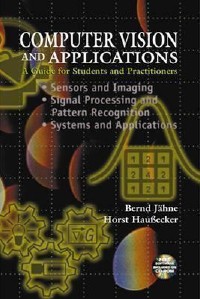
简介:"Computer Vision and Applications offers a fresh approach to computer vision by covering in a single volume the entire spectrum of computer vision ranging from the imaging process to high-end algorithms and applications. Computer vision is understood as the host of techniques used to acquire, process, analyze, and understand complex,higher-dimensional data from the environment for scientific and technical exploration. This book takes intoaccount the interdisciplinary nature of computer vision with its links to virtually all natural sciences and attempts to bridge the gap between basic research and applications." "Computer Vision and Applications is the perfect basic reference for graduate students, scientists,and practitioners in industry who wish to gain a broader understanding of the subject and who are interested in discovering how computer vision concepts can be applied tovarious areas of scientific and technical research. The advanced reader will find detailed information on selectedtopics and references to extended subjects."--BOOK JACKET.
简介:Summary: Publisher Summary 1 Complex analysis nowadays has higher-dimensional analoga: the algebra of complex numbers is replaced then by the non-commutative algebra of real quaternions or by Clifford algebras. During the last 30 years the so-called quaternionic and Clifford or hypercomplex analysis successfully developed to a powerful theory with many applications in analysis, engineering and mathematical physics. This textbook introduces both to classical and higher-dimensional results based on a uniform notion of holomorphy. Historical remarks, lots of examples, figures and exercises accompany each chapter.
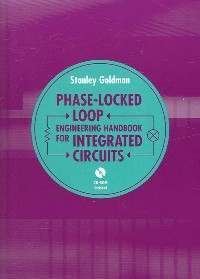
简介:Summary: Publisher Summary 1 Integrated circuits for a variety of applications are increasingly calling for higher frequencies, those ranging from 200 to 4,000 MHz. Monolithic phase-lock looped (PLL) devices can meet these frequencies but designing a new monolithic PLL is daunting. Practitioner Goldman presents practical solutions, SPICE listings and simulation techniques, in-depth information on testing and measurement, and detailed guidance as he covers initial steps, system analysis, system requirements, components, loop compensation synthesis, test and measurement for PLLs, simulation, applications and extensions. With each chapter he provides a list of questions for classroom use and a list of references. The illustrations are especially well done. Annotation 漏2007 Book News, Inc., Portland, OR (booknews.com)
热门推荐
PASS Cambridge BEC Higher Self - Study Practice Tests with Key