共找到 62 项 “Zora” 相关结果
- 全部分类
- 全部
- 文学
- 历史
- 哲学/宗教
- 法律
- 政治/社会
- 医学
- 教育/心理学
- 艺术/传媒
- 研究生考试
- 资格认证考试
- 公开课
- 语言
- 经济金融
- 管理学
- IT/计算机
- 自然科学
- 工学/工程
- 体育
- 行业资料
- 音乐
- 汽车机械制造
- 文档模板
- 创业
- 农学
- 生活
- 数据库教程
- 民族
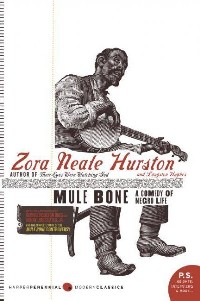
简介: The only collaboration between the two brightest lights of the Harlem Renaissance--Zora Neale Hurston and Langston Hughes In 1930, two giants of African American literature joined forces to create a lively, insightful, often wildly farcical look inside a rural Southern black community--the three-act play "Mule Bone." In this hilarious story, Jim and Dave are a struggling song-and-dance team, and when a woman comes between them, chaos ensues in their tiny Florida hometown. This extraordinary theatrical work broke new ground while triggering a bitter controversy between the collaborators that kept it out of the public eye for sixty years. This edition of the rarely seen stage classic features Hurston's original short story, "The Bone of Contention," as well as the complete recounting of the acrimonious literary dispute that prevented Mule Bone from being produced or published until decades after the authors' deaths.
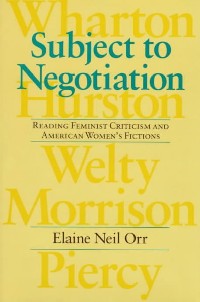
简介:Summary: Publisher Summary 1 Challenges the "subversive" model of feminist criticism and argues for the importance of negotiation for feminist practice within a plurality of critical positions and identities, presenting an empirical method for a negotiating feminist criticism and demonstrating the model with analysis of the writing of five American women authors: Edith Wharton, Zora Neale Hurston, Eudora Welty, Toni Morrison, and Marge Piercy. For scholars of feminist literary theory and 20th-century American literature. Annotation c. by Book News, Inc., Portland, Or.
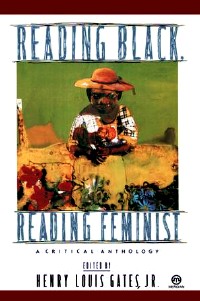
简介:This is a collection of 26 literary essays on the new wave of black feminist literature. Leading critics--both male and female, black and white--look at fiction, nonfiction, poetry, slave narratives, and autobiographies that have created a "new voice" and a distinct literary tradition that blends realistic and narrative modes. The essays construct a literary history that documents black women as artists, intellectuals, symbol makers, teachers, and survivors. They probe the historical roots and significance of the new tradition as well as what distinguishes the current black feminist literature from earlier traditions. Writers explored include Toni Morrison, Gloria Naylor, Alice Walker, Maya Angelou, Phillis Wheatley, and Zora Neale Hurston. The collection ends with two conversations, one between Rita Dove and Helen Vendler, the other between Jamaica Kincaid and Donna Perry. ISBN 0-452-01045-4 (pbk.) : 14.95
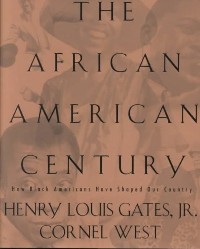
简介:Black Americans are at the heart of the greatest achievements of our history, from music to law, from politics to sports, from literature to religion. Now the two leading African-American intellectuals of our day show us why the twentieth century was The African-American Century, with one hundred original profiles of the most influential African Americans from W. E. B. Du Bois to Oprah Winfrey. Henry Louis Gates, Jr., and Cornel West offer their personal picks of the African-American figures who did the most to shape our world. Here we find much-loved figures such as scientist George Washington Carver and civil rights leader Martin Luther King, Jr., and contemporary favorites such as comedian Richard Pryor, novelist Alice Walker, and golf champion Tiger Woods. We also learn about less well known people such as jockey Jimmy Winkfield, aviator Bessie Coleman, and filmmaker Oscar Micheaux, and recognize the achievements of controversial figures such as activist Angela Davis, Nation of Islam leader Louis Farrakhan, and rap artist Tupac Shakur. Each profile is a lively story in its own right. But taken as a whole, these one hundred stories offer a unique window on the history of the twentieth century. Decade by decade, we marvel at the triumphs of a people who began the century only thirty-five years "up from slavery," and ended it at the top of every field. The result is a moving testament to the humanity and genius of black Americans, both individually and together. The African-American Century reminds us that there would be no American culture without black America. Without Louis Armstrong, Miles Davis, or John Coltrane, we would have no jazz. Without Zora Neale Hurston, Ralph Ellison, or Toni Morrison, we would miss our greatest novels. Without Joe Louis, Jackie Robinson, or Althea Gibson, we would have none of our most glorious triumphs in sports. Without Thurgood Marshall, Dr. King, or Barbara Jordan, we would be deprived of the political breakthroughs that affirm and strengthen our democracy. Whether we are laughing with Bill Cosby or dancing to rock 'n' roll, whether we are listening to a great preacher or stunned by the power of a Spike Lee film, whether we are building a business empire or fighting for justice - we are all shaped and influenced by the African-American experience. Written in a lively, accessible style and fully illustrated throughout, The African-American Century is a celebration of black achievement and a tribute to the black struggle for freedom in America that will inspire us for years to come. - Publisher.
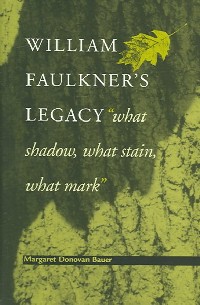
简介:Summary: Publisher Summary 1 This fresh approach to Faulkner’s canon examines his fiction in relation to other writers of the South whose works echo but also supplement, revise, respond to, and even correct his depictions of the South. Whether working at the same time or two generations after Faulkner, these writers tackle similar issues—the liberal white male, the southern lady, African-Americans, and the nonaristocrat. From Ellen Glasgow and Zora Neale Hurston to Ernest Gaines, Toni Morrison, and new writers like Elizabeth Dewberry and Tim Gautreaux, many southern writers have used the same tropes, plots, and archetypes as Faulkner, to different effect. Margaret Bauer argues that they seem to have understood more quickly than the critics that Faulkner was only one voice of one part of the South and that there were more stories to tell and more people who could tell them. Using a variety of critical techniques, Bauer offers a new avenue toward understanding the literary response to southern history. Among the most important contributions of this book is its re-examination of Faulkner's white male liberal prototype, who feels powerless to effect change and relieve the oppression of African-Americans and women in the South. Viewing such a character from the point of view of the oppressed illuminates the cowardice of these privileged men, who were previously lauded for their liberal consciousness or sympathized with for their frustration over their impotence. Bauer also offers a thorough reading of the main body of Ernest Gaines’s canon.
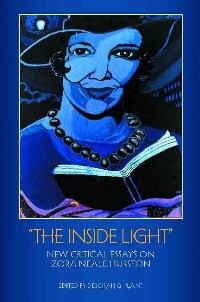
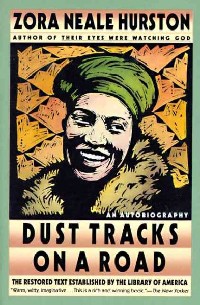
简介:Summary: Publisher Summary 1 This exploration of Zora Neale Hurston's life and work draws on a wealth of newly discovered information and manuscripts that bring new dimensions of her writing to light. Publisher Summary 2 "Croft has done a skillful job chronicling and organizing the life and works of an extraordinary writer. Recommended. Upper-division undergraduates and graduate students." "Plant...adds new dimension to the body of biographical literature already published, earnestly portraying Hurston's vitality and spirituality, characteristics that enabled her to achieve innumerable accomplishments...An inspiring read, recommended for all libraries." Zora Neale Hurston is best known for the landmark novel. Their Eyes Were Watching God, which recently returned to the bestseller list in the wake of an acclaimed television adaptation. But no understanding of Hurston is complete without considering all the forms of her work---including her extraordinary contributions as a folklorist---in light of the treasure trove of newly discovered information, texts, and film footage. "The Inside Light": New Critical Essays on Zora Neale Hurston caps a decade of resurgent popularity and critical interest in Hurston to offer the most insightful critical analysis of her work to date. Encompassing all of Hurston's writings---fiction, folklore manuscripts, drama, and correspondence---it fully reaffirms the legacy of this phenomenal writer, whom The Color Purple's Alice Walker called "A Genius of the South." "The Inside Light" offers 20 critical essays covering the breadth of Hurston's writing, including her poetry, which up to now has received little attention. Essays throughout are informed by revealing new research, previously unseen manuscripts, and even film clips of Hurston. The book also focuses on aspects of Hurston's life and work that remain controversial, including her stance on desegregation, her relationships with Charlotte Mason, Langston Hughes, and Richard Wright, and the veracity of her autobiography, Dust Tracks on a Road. Publisher Summary 3 In this collection of 20 essays, new and established Hurston scholars simultaneously celebrate Hurston's life and achievements, and question her motivations and choices. Drawing on recently discovered manuscripts and film clips of Hurston, they consider not only her fiction, but also her plays and dramatics works, poetry, correspondence, and her contribution as a folklorist. Also discussed are aspects of her life and work that are still controversial, such as her stance on desegregation, her relationships with other African American literary giants of the period, and the veracity of her autobiography. Subjects include Hurston and the Hollywood studio narrative culture during her time, and the recent made-for-television movie of Hurston's novel Their Eyes Were Watching God. Plant is chair of the Department of African American Studies at the University of South Florida. Annotation 漏2010 Book News, Inc., Portland, OR (booknews.com)
简介:Born of African rhythms, the spiritual "call and response," and other American musical traditions, jazz was by the 1920s the dominant influence on this country's popular music. Writers of the Harlem Renaissance (Langston Hughes, Claude McKay, Zora Neale Hurston) and the "Lost Generation" (Malcolm Cowley, F. Scott Fitzgerald, and Gertrude Stein), along with many other Americans celebrated it--both as an expression of black culture and as a symbol of rebellion against American society. But an equal number railed against it. Whites were shocked by its raw emotion and sexuality, and blacks considered it "devil's music" and criticized it for casting a negative light on the black community. In this illuminating work, Kathy Ogren places this controversy in the social and cultural context of 1920s America and sheds new light on jazz's impact on the nation as she traces its dissemination from the honky-tonks of New Orleans, New York, and Chicago, to the clubs and cabarets of such places as Kansas City and Los Angeles, and further to the airwaves. Ogren argues that certain characteristics of jazz, notably the participatory nature of the music, its unusual rhythms and emphasis, gave it a special resonance for a society undergoing rapid change. Those who resisted the changes criticized the new music; those who accepted them embraced jazz. In the words of conductor Leopold Stowkowski, "Jazz [had] come to stay because it [was] an expression of the times, of the breathless, energetic, superactive times in which we [were] living, it [was] useless to fight against it." Numerous other factors contributed to the growth of jazz as a popular music during the 1920s. The closing of the Storyville section of New Orleans in 1917 was a signal to many jazz greats to move north and west in search of new homes for their music. Ogren follows them to such places as Chicago, New York, and San Francisco, and, using the musicians' own words as often as possible, tells of their experiences in the clubs and cabarets. Prohibition, ushered in by the Volstead Act of 1919, sent people out in droves to gang-controlled speak-easies, many of which provided jazz entertainment. And the 1920s economic boom, which made music readily available through radio and the phonograph record, created an even larger audience for the new music. But Ogren maintains that jazz itself, through its syncopated beat, improvisation, and blue tonalities, spoke to millions. Based on print media, secondary sources, biographies and autobiographies, and making extensive use of oral histories, The Jazz Revolution offers provocative insights into both early jazz and American culture.
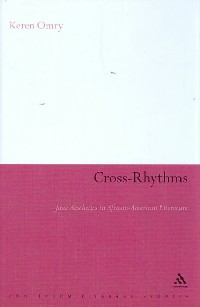
简介:Cross-Rhythms investigates the literary uses and effects of blues and jazz in African-American literature of the twentieth century. Texts by James Baldwin, Ralph Ellison, Langston Hughes, Zora Neale Hurston, Gayl Jones, Toni Morrison and Ishmael Reed variously adopt or are consciously informed by a jazz aesthetic; this aesthetic becomes part of a strategy of ethnic identification and provides a medium with which to consider the legacy of trauma in African-American history. These diverse writers are all thoroughly immersed in a socio-cultural context and a literary aesthetic that embodies shifting conceptions of ethnic identity across the twentieth century. The emergence of blues and jazz is, likewise, a crucial product of, as well as catalyst for, this context, and in their own aesthetic explorations of notions of ethnicity these writers consciously engage with this musical milieu. By examining the highly varied manifestations of a jazz aesthetic as possibly the fundamental common denominator which links these writers, this study attempts to identify an underlying unifying principle. As the different writers write against essentializing or organic categories of race, the very fact of a shared engagement with jazz sensibilities in their work redefines the basis of African-American communal identity. - Publisher.
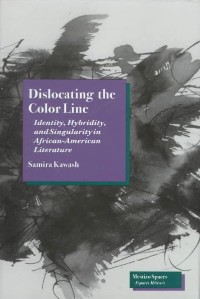
简介:"This book provides a historical context for the recent resurgence of racial division by tracing the path of the color line as it appears in the narrative writings of African-Americans in the nineteenth and twentieth centuries. In readings of slave narratives, "passing novels," and the writings of Charles Chesnutt and Zora Neale Hurston, the author asks: What is the work of division? How does division work?" "The history of the color line in the United States is coeval with that of the nation. The author suggests that throughout this history, the color line has not functioned simply to name biological or cultural difference, but more important, it has served as a principle of division, classification, and order." "This book seeks not only to understand, but also to bring critical pressure on the interpretations, practices, and assumptions that correspond to and buttress representations of racial difference."--BOOK JACKET.
简介:The modernist avant-garde used manifestos to outline their ideas, cultural programs and political agendas. Yet the manifesto, as a document of revolutionary change and a formative genre of modernism, has heretofore received little critical attention. This study reappraises the central role of manifestos in shaping the modernist movement by investigating twentieth-century manifestos from Europe and the Black Atlantic. Manifestos by writers from the imperial metropolis and the colonial 'periphery' drew very different emphases in their recasting of histories and experiences of modernity. Laura Winkiel examines archival materials as well as canonical texts to analyse how Sylvia Pankhurst, Virginia Woolf, Mina Loy, Wyndham Lewis, Nancy Cunard, C. L. R. James, W. E. B. Du Bois, Zora Neale Hurston, Aim猫 C猫saire and others presented their modernist projects. This new focus on manifestos in their geographical and historical context allows for a revision of modernism that emphasizes its cross-cultural aspects.
简介:Summary: Publisher Summary 1 Beginning with a subtle and persuasive analysis of the cultural context, Farebrother examines collage in modernist and Harlem Renaissance figurative art and unearths the collage sensibility attendant in Franz Boas's anthropology. This strategy makes explicit the formal choices of Harlem Renaissance writers by examining them in light of African American vernacular culture and early twentieth-century discourses of anthropology, cultural nationalism and international modernism. At the same time, attention to the politics of form in such texts as Toomer's Cane, Locke's The New Negro and selected works by Hurston reveals that the production of analogies, juxtapositions, frictions and distinctions on the page has aesthetic, historical and political implications. Why did these African American writers adopt collage form during the Harlem Renaissance? What did it allow them to articulate? These are among the questions Farebrother poses as she strives for a middle ground between critics who view the Harlem Renaissance as a distinctive, and necessarily subversive, kind of modernism and those who foreground the cooperative nature of interracial creative work during the period. A key feature of her project is her exploration of neglected connections between Euro-American modernism and the Harlem Renaissance, a journey she negotiates while never losing sight of the particularity of African American experience. Ambitious and wide-ranging, Rachel Farebrother's book offers us a fresh lens through which to view this crucial moment in American culture. Publisher Summary 2 Farebrother (American studies, U. of Swansea, Wales) analyzes historical, aesthetic, and political aspects of juxtaposition and stylistic incongruity deployed by Harlem Renaissance writers Alain Locke, Zora Neale Hurston, and Jean Toomer. Other scholars have noted this collage aesthetic in the journal The New Negro, where pages combined text and visual art, but she finds the same pattern within pure text as well. Among her topics are Boasian anthropology and the Harlem Renaissance, culture citizenship in The New Negro, Toomer's Cane, Hurston's cross-cultural aesthetic, and her textual synthesis in Jonah's Gourd Vine and Moses, Man of the Mountain. Annotation 漏2010 Book News, Inc., Portland, OR (booknews.com)
简介:Summary: Publisher Summary 1 Applies linguistics methods for a richer understanding of literary texts and spoken language. Dialect and Dichotomyoutlines the history of dialect writing in English and its influence on linguistic variation. It also surveys American dialect writing and its relationship to literary, linguistic, political, and cultural trends, with emphasis on African American voices in literature.Furthermore, this book introduces and critiques canonical works in literary dialect analysis and covers recent, innovative applications of linguistic analysis of literature. Next, it proposes theoretical principles and specific methods that can be implemented in order to analyze literary dialect for either linguistic or literary purposes, or both. Finally, the proposed methods are applied in four original analyses of African American speech as represented in major works of fiction of the American South鈥擬ark Twain's Adventures of Huckleberry Finn, Charles W. Chesnutt's The Conjure Woman, William Faulkner's The Sound and the Fury, and Zora Neale Hurston's Their Eyes Were Watching God.Dialect and Dichotomyis designed to be accessible to audiences with a variety of linguistic and literary backgrounds. It is an ideal research resource and course text for students and scholars interested in areas including American, African American, and southern literature and culture; linguistic applications to literature; language in the African American community; ethnicity and representation; literary dialect analysis and/or computational linguistics; dialect writing as genre; and American English. Publisher Summary 2 Dialect and Dichotomyoutlines the history of dialect writing in English and its influence on linguistic variation. It also surveys American dialect writing and its relationship to literary, linguistic, political, and cultural trends, with emphasis on African American voices in literature.
简介:Includes writings by Washington Irving, James Kirke Paulding, Frances Trollope, Fanny Kemble, Philip Hone, Charles Dickens, Henry David Thoreau, Nathaniel Parker Willis, Edgar Allan Poe, James Fenimore Cooper, Margaret Fuller, George G. Foster, Grant Thorburn, Walt Whitman, Herman Melville, George Templeton Strong, Frederick Law Olmsted, Ernest Duvergier de Hauranne, Fanny Fern, Mark Twain, James D. McCabe, Wong Chin Foo, Jose Marti, William Dean Howells, Jacob Riis, Stephen Crane, Abraham Gahan, Theodore Dreiser, George W. Plunkett and William L. Riorden, Maxim Gorky, Henry James, O. Henry, James Weldon Johnson, James Huneker, Sara Teasdale, Djuna Barnes, Edna St. Vincent Millay, Willa Cather, Claude McKay, Marianne Moore, Paul Rosenfeld, Edmund Wilson, Vladimir Mayakovsky, Hart Crane, Stephen Graham, Al Smith, Helen Keller, Paul Morand, Lincoln Steffens, Dawn Powell, Louis-Ferdinand Celine, Christopher Morley, F. Scott Fitzgerald, Edith Wharton, Thomas Wolfe, Damon Runyon, Henry Miller, Charles Reznikoff, A.J. Liebling, Langston Hughes, Elizabeth Bishop, John McNulty, Irwin Shaw, Mary McCarthy, Zora Neale Hurston, Red Smith, David Schubert, Weldon Kees, E.B. White, Bernard Malamud, Anzia Yezierska, William Carlos Williams, Malcolm Cowley, Alfred Kazin, Joseph Mitchell, William S. Burroughs, Bernardo Vega, Frank O'Hara, Loren Eiseley, Robert Moses, John Cheever, Ned Rorem, Jane Jacobs, James Merrill, Edwin Denby, Amiri Baraka (LeRoi Jones), George Oppen, James Baldwin, Harvey Shapiro, Gay Talese, Louis Auchincloss, Mario Puzo, Tom Wolfe, Joan Didion, Isaac Bashevis Singer, Jimmy Cannon, James Schuyler, Allen Ginsberg, Elizabeth Hardwick, Lewis Mumford, Kate Simon, Edward Rivera, Joyce Johnson, Lionel Abel, E.L. Doctorow, Ralph Ellison, Oscar Hijuelos, and Vivian Gornick.
简介:This is the first comprehensive historical analysis of how black music and musicians have been represented in the fiction of African American writers. It also examines how music and musicians in fiction have exemplified the sensibilities of African Americans and provided paradigms for an African American literary tradition. The fictional representation of African American music by black authors is traced from the nineteenth century (William Wells Brown, Martin Delany, Pauline E. Hopkins, Paul Laurence Dunbar) through the early twentieth century and the Harlem Renaissance (James Weldon Johnson, Langston Hughes, Claude McKay, Zora Neale Hurston) to the 1940s and 50s (Richard Wright, Ann Petry, James Baldwin, Ralph Ellison) and the 1960s and the Black Arts Movement (Margaret Walker, William Melvin Kelley, Leroi Jones/Amiri Baraka, Henry Dumas). In the century between Brown and Baraka, the representation of music in black fiction went through a dramatic metamorphosis. Music occupied a representative role in African American culture from which writers drew ideas and inspiration. The music provided a way out of a limited situation by offering a viable option to the strictures of racism. Individuals who overcome these limitations then become role models in the struggle toward equality. African American musical forms-for both artist and audience-also offerd a way of looking at the world, survival, and resistance. The black musician became a ritual leader. This study delineates how black writers have captured the spirit of the music that played such a pivotal role in African American culture. (Ph.D. dissertation, State University of New York at Stony Brook, 1993; revised with new preface and index)
简介:In A Genealogy of Literary Multiculturalism, Christopher Douglas uncovers the largely unacknowledged role played by ideas from sociology and anthropology in nourishing the politics and forms of minority writers from diverse backgrounds. Douglas divides the history of multicultural writing in the United States into three periods. The first, which spans the 1920s and 1930s, features minority writers such as Zora Neale Hurston and D'Arcy McNickle. The second period, from 1940 to the mid-1960s, was a time of assimilation and integration, as seen in the work of authors such as Richard Wright, Jade Snow Wong, John Okada, and Ralph Ellison. The third period focuses on the writers we associate with contemporary literary multiculturalism, including Toni Morrison, N. Scott Momaday, Frank Chin, Ishmael Reed, and Gloria Anzald煤a. Book jacket.
简介:Includes works by James Joyce, Kate Chopin, Lee K. Abbott, Chinua Achebe, Julia Alvarez, Sherwood Anderson, Guillaume Apollinaire, Margaret Atwood, Isaac Babel, James Baldwin, Toni Cade Bambara, Ann Beattie, Ambrose Bierce, Heinrich Boll, Jorge Luis Borges, Kay Boyle, Robert Olen Butler, Hortense Calisher, Raymond Carver, Willa Cather, John Cheever, Anton Chekhov, Sandra Cisneros, Colette, Julio Cortazar, Stephen Crane, Isak Dinesen, Ralph Ellison, Louise Erdrich, William Faulkner, F. Scott Fitzgerald, Carlos Fuentes, Gabriel Garcia Marquez, Charlotte Perkins Gilman, Gail Godwin, Nadine Gordimer, Nathaniel Hawthorne, Ernest Hemingway, Zora Neale Hurston, Shirley Jackson, Franz Kafka, Jamaica Kincaid, D.H. Lawrence, Ursula K. LeGuin, Doris Lessing, Bernard Malamud, Thomas Mann, Katherine Mansfield, Bobbie Ann Mason, Guy de Maupassant, Yukio Mishima, Alice Munro, Joyce Carol Oates, Tim O'Brien, Flannery O'Connor, Frank O'Connor, Tillie Olsen, Cynthia Ozick, Dorothy Parker, I.L. Peretz, Luigi Pirandello, Edgar Allan Poe, Katherine Anne Porter, Leslie Marmon Silko, Isaac Bashevis Singer, Amy Tan, James Thurber, John Updike, Alice Walker, Eudora Welty, Edith Wharton, John Edgar Wideman, William Carlos Williams, Virginia Woolf, Richard Wright, Leo Tolstoy, Elizabeth Bowen, Henry James, Howard Moss, and others.
简介:African American Literary Theory is an extraordinary gift to literary studies. It is necessary, authoritative and thorough. The timing of this book is superb!" Karla F.C. Holloway, Duke University "The influence of African American literature can be attributed, in no small part, to the literary theorists gathered in this collection. This is a superb anthology that represents a diversity of voices and points of view, and a much needed historical retrospective of how African American literary theory has developed." Marlon B. Ross, University of Michigan "A volume of great conceptual significance and originality in its focus on the development of African American literary theory." Farah Jasmine Griffin, University of Pennsylvania African American Literary Theory: A Readeris the first volume to document the central texts and arguments in African American literary theory from the 1920s through the present. As the volume progresses chronologically from the rise of a black aesthetic criticism, through the Blacks Arts Movement, feminism, structuralism and poststructuralism, and the rise of queer theory, it focuses on the key arguments, themes, and debates in each period. By constantly bringing attention to the larger political and cultural issues at stake in the interpretation of literary texts, the critics gathered here have contributed mightily to the prominence and popularity of African American literature in this country and abroad. African American Literary Theoryprovides a unique historical analysis of how these thinkers have shaped literary theory, and literature at large, and will be a indispensable text for the study of African American intellectual culture. Contributors include Sandra Adell, Michael Awkward, Houston A. Baker, Jr., Hazel V. Carby, Barbara Christian, W.E.B. DuBois, Ann duCille, Ralph Ellison, Henry Louis Gates, Jr., Addison Gayle Jr., Carolyn F. Gerald, Evelynn Hammonds, Phillip Brian Harper, Mae Gwendolyn Henderson, Stephen E. Henderson, Karla F.C. Holloway, Langston Hughes, Zora Neale Hurston, LeRoi Jones (Amiri Baraka), Joyce A. Joyce, Alain Locke, Wahneema Lubiano, Deborah E. McDowell, Harryette Mullen, Larry Neal, Charles I. Nero, Robert F. Reid-Pharr, Marlon B. Ross, George S. Schuyler, Barbara Smith, Valerie Smith, Hortense J. Spillers, Sherley Anne Williams, and Richard Wright.
简介:Pretty story by Francis Hopkinson -- Rip Van Winkle by Washington Irving -- Peter Rugg, the missing man by William Austin -- Grey champion by Nathaniel Hawthorne -- Big bear of Arkansas by T.B. Thorpe -- Cask of Amontillado by Edgar Allen Poe -- Bartleby the scrivener by Herman Melville -- Tennessee's partner by Bret Harte -- Captain Kidd's money by Harriet Beecher Stowe -- Marjorie Daw by Thomas Bailey Aldrich -- Lady or the tiger? by Frank Stockton -- Over on the t'other mounting by Charles Egbert Craddock -- Revolt of mother by Mary Wilkins Freeman -- One of the missing by Ambrose Bierce -- Return of a private by Hamlin Garland -- Real thing by Henry James -- Courting of Sister Wisby by Sarah Orne Jewett -- Open boat by Stephen Crane -- Man that corrupted Hadleyburg by Samuel Langhorne Clemens -- Furnished room by O. Henry -- To build a fire by Jack London -- Strength of God and the teacher by Sherwood Anderson -- Diamond as big as the Ritz by F. Scott Fitzgerald -- Haircut by Ring Lardner -- Double birthday by Willa Cather -- Spring evening by James T. Farrell -- Masses of men by Erskine Caldwell -- Gilded six-bits by Zora Neale Hurston -- Silent snow, secret snow by Conrad Aiken -- Odor of verbena by William Faulkner -- Daring young man on the flying trapeze by William Saroyan -- Snows of Kilimanjaro by Ernest Hemingway -- Tooth for Paul Revere by Stephen Vincent Benet -- Noon wine by Katherine Anne Porter -- Leader of the people by John Steinbeck -- Lily Daw and the three ladies by Eudora Welty -- Fire and cloud by Richard Wright -- Patterns of love by William Maxwell -- Ballad of the sad cafe by Carson McCullers -- Cass Mastern's wedding ring by Robert Penn Warren -- Wedding: Beacon Hill by Jean Stafford -- Rain in the heart by Peter Taylor -- Gunners' Passage by Irwin Shaw -- Lottery by Shirley Jackson -- February 1999: Ylla by Ray Bradbury -- Country husband by John Cheever -- Good man is hard to find by Flannery O'Connor -- Mexican girl by Jack Kerouac --浮喔膏笖 喔佮覆喔`笣