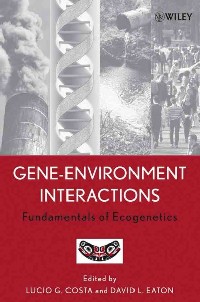
Gene-Environment interactions : fundamentals of ecogenetics /
作者: edited by Lucio G. Costa, David L. Eaton.
出版社:
简介:Summary:
Publisher Summary 1
Costa and Eaton, both affiliated with the Department of Environmental and Occupational Health Sciences at the University of Washington, present recent work in the field of ecogenetics, the interplay between heredity and the environment. Coverage encompasses both laboratory and data analysis, with special emphasis given to polymorphisms that may predispose individuals to disease. Early chapters cover lab tools for assessing genotypes, and later chapters cover genetic polymorphisms relevant for ecogenetics, common diseases where genetic and environmental factors interact, and ethical, legal, and social issues. Annotation 漏2006 Book News, Inc., Portland, OR (booknews.com)
Publisher Summary 2
Understanding the play between heredity and environment, and relating it to disease causation, is the task of ecogenetics. Gene-Environment Interactions: Fundamentals of Ecogenetics presents the first comprehensive survey of this discipline, reflecting its relationship with toxicology, epidemiology, pharmacology, public health, and other medical and biological fields.
Divided into four sections, the text elucidates key basic and advanced topics:
* Section 1 covers fundamentals, including the history of the discipline, a discussion of the molecular laboratory tools currently available to assess genotypes, using such measurements in molecular epidemiology studies, and the statistical issues involved in their analysis.
* Section 2 focuses on a number of key genetic polymorphisms relevant for ecogenetics, including enzymes of phase I and phase II metabolism, enzymes involved in DNA repair, as well as receptors and ion channels. This highlights characteristics of selected, widely studied genotypic/phenotypic differences, and allows discussion of how given genetic variations can influence responses to exogenous chemicals.
* Section 3 examines gene-environment interactions through a disease-based approach, addressing how genetic polymorphisms can influence susceptibility to various diseases. Chapters cover important disease conditions such as various types of cancer, neurodegenerative diseases, cardiovascular disease, chronic pulmonary diseases, infectious diseases, diabetes, and obesity.
* The final section discusses the ethical, legal, and social issues that arise when investigating and evaluating genetic polymorphisms in human populations, as well as the impact of ecogenetics on risk assessment, regulatory policies, and medicine and public health.
Packed with clear examples illustrating concepts, as well as numerous tables and figures, Gene-Environment Interactions: Fundamentals of Ecogenetics is a unique resource for a wide range of physicians, students, and other specialists.