共找到 53 项 “Gorbachev” 相关结果
- 全部分类
- 全部
- 文学
- 历史
- 哲学/宗教
- 法律
- 政治/社会
- 医学
- 教育/心理学
- 艺术/传媒
- 研究生考试
- 资格认证考试
- 公开课
- 语言
- 经济金融
- 管理学
- IT/计算机
- 自然科学
- 工学/工程
- 体育
- 行业资料
- 音乐
- 汽车机械制造
- 文档模板
- 创业
- 农学
- 生活
- 数据库教程
- 民族
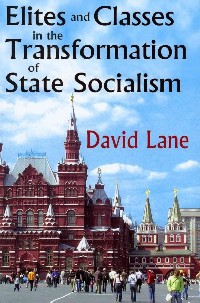
简介:Summary: Publisher Summary 1 Lane (emeritus, sociology, U. of Cambridge) examines the forces that led to the fall of communism 20 years ago, and who subsequently benefited and lost from it. A major concern is the role of the hegemonic Western states in tilting the balance toward a capitalist revolution, and the peculiar form of capitalism and capitalist class that emerged in Russia. Among his topics are elite and class paradigms of transformation, a reputational analysis of transforming elites under Gorbachev and Eltsin, and the place of socialist and post-socialist states in the capitalist world system. Annotation 漏2011 Book News, Inc., Portland, OR (booknews.com) Publisher Summary 2 The year 2011 marks the twentieth anniversary of the end of the Soviet Union. This may be an appropriate time to evaluate the adoption by previously state socialist societies of other economic and political models. The transition has sometimes been described in positive terms, as a movement to free societies with open markets and democratic elections. Others have argued that the transition has created weak, poverty-stricken states with undeveloped civil societies ruled by unresponsive political elites. Which is the more accurate assessment?David Lane examines a few of the theoretical approaches that help explain the trajectory of change from socialism to capitalism. He focuses on two main approaches in this volume鈥攅lite theories and social class. Theories dwelling on the role of elites regard the transformation from socialism to capitalism as a type of system transfer in which elites craft democratic and market institutions into the space left by state socialism. Lane contrasts this interpretation with class-based theories, which consider transformation in terms of revolution, and explain why such theories have not been considered the best way of framing the transition in the post-socialist states.While recogniing that elites can play important roles and have the capacity to transform societies, Lane contends that elite theories alone are inadequate to explain a system change that brings free markets. In contrast, he proposes a class approach in which two groups characterie state socialism: an administrative class and an acquisition class.
简介:Volume III of The Cambridge History of the Cold War examines the evolution of the conflict from the Helsinki Conference of 1975 until the Soviet collapse in 1991. A team of leading scholars analyzes the economic, social, cultural, religious, technological and geopolitical factors that ended the Cold War and discusses the personalities and policies of key leaders such as Brezhnev, Reagan, Gorbachev, Thatcher, Kohl and Deng Xiaoping. The authors show how events throughout the world shaped the evolution of Soviet-American relations and they explore the legacies of the superpower confrontation in a comparative and transnational perspective. Individual chapters examine how the Cold War affected and was affected by environmental issues, economic trends, patterns of consumption, human rights and non-governmental organizations. The volume represents the new international history at its best, emphasizing broad social, economic, demographic and strategic developments while keeping politics and human agency in focus.
简介:Summary: Publisher Summary 1 Volume III of The Cambridge History of the Cold War examines the evolution of the conflict from the Helsinki Conference of 1975 until the Soviet collapse in 1991. A team of leading scholars analyzes the economic, social, cultural, religious, technological, and geopolitical factors that ended the Cold War and discusses the personalities and policies of key leaders such as Brezhnev, Reagan, Gorbachev, Thatcher, Kohl, and Deng Xiaoping. The authors show how events throughout the world shaped the evolution of Soviet没American relations and they explore the legacies of the superpower confrontation in a comparative and transnational perspective. Individual chapters examine how the Cold War affected and was affected by environmental issues, economic trends, patterns of consumption, human rights, and non-governmental organizations. The volume represents the new international history at its best, emphasizing broad social, economic, demographic, and strategic developments while keeping politics and human agency in focus. Publisher Summary 2 Final volume in a definitive new history of the Cold War which will define the field for years to come. Publisher Summary 3 This volume examines the evolution of the Cold War from the Helsinki Conference of 1975 until the Soviet collapse in 1991. Leading scholars analyze the economic, social, cultural, religious, technological, and geopolitical factors that shaped the policies that ended the Cold War, looking at the personalities and policies of Carter and Reagan, Brezhnev and Gorbachev, Thatcher, Kohl, and Deng Xiaoping. They show how events throughout the world shaped the evolution of Soviet-American relations and also explore the legacies of the super-power confrontation in a comparative and trans-national perspective. Penetrating chapters examine how the Cold War affected and was affected by the environment, the global economy, consumer capitalism, human rights and non-governmental organizations. The authors also deal with demographic trends, capital flows, multilateral institutions, and geopolitical configurations. This is international history at its best: emphasizing social, intellectual, economic and geostrategic trends without losing focus on personalities, politics, and human agency.
简介:Now in paperback--leading Soviet commentator Vladimir Pozner's bestselling book of personal memoir and political observation. Aside from Gorbachev, Pozner is the most widely known Russian personality in America, and he earns his fame with these controversial commentaries that reveal his strongly humanistic philosophy.
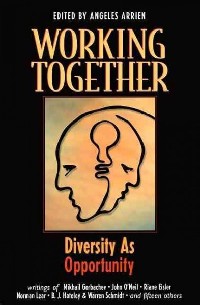
简介: Working Together gathers some of the best writing on working with diversity. This anthology honors a multiplicity of viewpoints as part of a larger evolutionary shift in expanding the planet's consciousness. Mikhail Gorbachev describes diversity as a key factor in creating a "new civilization"; anthropologist Riane Eisler proposes a partnership approach between men and women; and Suzie Williams offers diversity-based "recipes for synergy."
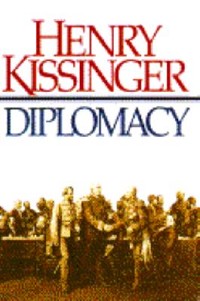
简介:In this controversial and monumental book - arguably his most important - Henry Kissinger illuminates just what diplomacy is. Moving from a sweeping overview of his own interpretation of history to personal accounts of his negotiations with world leaders, Kissinger describes the ways in which the art of diplomacy and the balance of power have created the world we live in, and shows how Americans, protected by the size and isolation of their country, as well as by their own idealism and mistrust of the Old World, have sought toconduct a unique kind of foreign policy based on the way they wanted the world to be, as opposed to the way it really is. Spanning more than three centuries of history, from Cardinal Richelieu, the father of the modern state system, to the "New World Order" in which we live, Kissinger demonstrates how modern diplomacy emerged from the trials and experiences of the balance of power of warfare and peacemaking, and why America, sometimes to its peril, refused to learn its lessons. His intimate portraits of world leaders, including de Gaulle, Nixon, Chou En-lai, Mao Tse-tung, Reagan, and Gorbachev, based on personal experience and knowledge, provide the reader with a rare window on diplomacy at the summit, together with a wealth of detailed and original observations on the secret negotiations, great events, and the art of statesmanship that have shaped our lives in the decades before, during and since Henry Kissinger was himself at the center of things. Analyzing the differences in the national styles of diplomacy, Kissinger shows how various societies produce special ways of conducting foreign policy, and how Americans, from the very beginning, soughta distinctive foreign policy based on idealism. He illustrates his points with his own insights and with examples from his own experience, as well as with candid accounts of his breakthrough diplomatic initiatives as Nixon's foreign policy partner. Informed by deep historical knowledge, wit, a gift for irony, and a unique understanding of the forces that bind and sunder nations, Kissinger's Diplomacy is must reading for anyone who cares about America's position in the world.
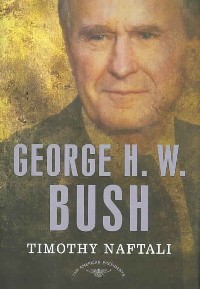
简介:George Bush was a throwback to a different era. A patrician figure not known for eloquence, Bush dismissed ideology as "the vision thing." Yet, as biographer Naftaliargues, no one was better prepared for the challenges facing the United States as the Cold War ended. Bush wisely encouraged the liberalization of the Soviet system and skillfully orchestrated the reunification of Germany. Following Iraq's invasion of Kuwait in 1990, he united theglobal community to defeat Saddam Hussein. At home, Bush reasserted fiscal discipline after the excesses of the Reagan years. Ultimately, his political awkwardness cost Bush a second term: his toughest decisions widened fractures in the Republican Party, and Bush lost his bid for reelection in 1992. In a final irony, the conservatives who scorned him would return to power eight years later, under his son and namesake, with the result that the elder George Bush would see his reputation soar.--From publisher description. "George H. W. Bush was a throwback to a different era. A patrician figure not known for eloquence, Bush dismissed ideology as "the vision thing." Yet, as Timothy Naftali argues in this reassessment of our forty-first president, no one of his generation was better prepared for the challenges facing the United States as the Cold War ended.When the people of Eastern Europe took the first actions against communist rule in 1989, Bush not only encouraged Mikhail Gorbachev to allow events to play out peacefully but also gave the Soviet leader room to maneuver by managing the Western reaction to the fall of the Berlin Wall and the other milestones of freedom. And the following year, it was Bush who decisively guided the process of German reunification. Moreover, Bush's masterlyhandling of the collapse of communism enabled him to marshal the grand coalition that defeated Saddam Hussein and reversed the annexation of Kuwait in 1991." "At home, Bush reasserted fiscal discipline after the excesses of the Reagan years, risking his political future by reversing his famous pledge, "Read my lips - no new taxes." Never a strong candidate, Bush entered 1992 weakened by the loss of the Reaganite core of the Republican Party, a soft economy, and a sense among many that he was out of touch with post-Cold War priorities. With his party divided and lacking broad popular appeal ofhis own, Bush was handily defeated in his bid for reelection." "In a final irony, the conservatives who scorned George H. W. Bush would return to power eight years later during the troubled presidency of his son and namesake, with the unexpected result that the elder Bush would see his reputation soar. Naftali's biography argues that this newfound appreciation is richly deserved."--BOOKJACKET.
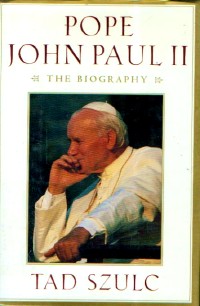
简介:"Is Pope John Paul II leading the Roman Catholic Church toward triumphal survival in the third millennium of the Christian era or is he presiding over one of its deepest crises in history? Is the world's oldest organized religious institution at a dramatic crossroads?" "These are the questions facing Roman Catholicism in this final phase of the long and extraordinary pontificate of the Polish pope, the spiritual head of nearly one billion believers and a world statesman of immense stature and influence, perhaps the greatest and most charismatic figure the Church has produced in the twentieth century." "Yet, at the age of seventy-five and in the seventeenth year of his papacy, John Paul II remains a mystery, theologically, politically, and personally. A man of impressive intellectual - and literary - achievements, Karol Wojtyla of Krakow presents a daunting contradiction between his inexorable conservative stand on contraception, divorce, and an all-male, celibate priesthood, and his powerful advocacy of human rights everywhere and social justice in the Third World and among the poor of the affluent West.". "Szulc discloses here for the first time significant new material, including the inside story of the personal negotiations involving John Paul II, President Gorbachev of the Soviet Union, and General Jaruzelski of Poland that led to Poland's and Eastern Europe's transition from communism to democracy; the drama of John Paul II's secret diplomacy resulting in the establishment of relations between the Holy See and Israel; the never-before-told story of how the Polish communist regime helped to "make" Wojtyla an archbishop, the key step on his road to the papacy; reports by the Polish Secret Police assessing Bishop Wojtyla; the revelation of the role of Cardinal Wojtyla as the principal drafter of Pope Paul VI's encyclical Humanae vitae on contraception; the detailed, hour-by-hour, inside story of Karol Wojtyla's election as pope; secret documents of the Soviet Communist Party's Politburo on plans for a campaign to neutralize the Polish pope; and the strange role of the CIA at the time of the assassination attempt against John Paul II."--BOOK JACKET.
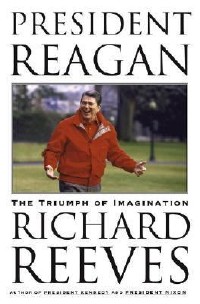
简介:Twenty-five years after Ronald Reagan became president, Richard Reeves has written a surprising and revealing portrait of one of the most important leaders of the twentieth century. As he did in his bestselling books President Kennedy: Profile of Power and President Nixon: Alone in the White House, Reeves has used newly declassified documents and hundreds of interviews to show a president at work day by day, sometimes minute by minute. President Reagan: The Triumph of Imagination is the story of an accomplished politician, a bold, even reckless leader, a gambler, a man who imagined an American past and an American future - and made them real. He is a man of ideas who changed the world for better or worse, a man who understands that words are often more important than deeds. Reeves shows a man who understands how to be President, who knows that the job is not to manage the government but to lead the nation. In many ways, a quarter of a century later, he is still leading. As his vice president, George H. W. Bush, said after Reagan was shot and hospitalized in 1981: "We will act as if he were here." He is a heroic figure if not always a hero. He did not destroy communism, as his champions claim, but he knew it would self-destruct and hastened the collapse. No small thing. He believed the Soviet Union was evil and he had contempt for the established American policies of containment and d茅tente. Asked about his own Cold War strategy, he answered: "We win. They lose!" Like one of his heroes, Franklin D. Roosevelt, he has become larger than life. As Roosevelt became an icon central to American liberalism, Reagan became the nucleus holding together American conservatism. He is the only president whose name became a political creed, a noun not an adjective: "Reaganism." Reagan's ideas were so old they seemed new. He preached an individualism, inspiring and cruel, that isolated and shamed the halt and the lame. He dumbed-down America, brilliantly blending fact and fiction, transforming political debate into emotion-driven entertainment. He recklessly mortgaged America with uncontrolled military spending, less taxation, and more debt. In focusing on the key moments of the Reagan presidency, Reeves recounts the amazing resiliency of Ronald Reagan, the real "comeback kid." Here is a seventy-year-old man coming back from a near-fatal gunshot wound, from cancer, from the worst recession in American history. Then, in personal despair as his administration was shredded by the lying and secrets of hidden wars and double-dealing, he was able to forge one of history's amazing relationships with the leader of "the Evil Empire." That story is told for the first time using the transcripts of the Reagan-Gorbachev meetings, the climax of an epic story - as if he were here. - Dust jacket.
简介:A momentous debate has been unfolding in China over the last fifteen years, only intermittently in public view, concerning the merits of socialism as a philosophy of social justice and as a program for national development. Just as Deng Xiaoping's better advertised experiment with market- based reforms has challenged Marxist-Leninist dogma on economic policy, the years since the death of Mao Zedong have seen a profound reexamination of a more basic question: to what extent are the root problems of the system due to Chinese socialism and Marxism generally? Here Yan Sun gathers a remarkable group of primary materials, drawn from an unusual range of sources, to present the most systematic and comprehensive study of post-Mao reappraisal of China's socialist theory and practice. Rejecting an assumption often made in the West, that Chinese socialist thought has little bearing on politics and policymaking, Sun takes the arguments of the post-Mao era seriously on their own terms. She identifies the major factions in the debate, reveals the interplay among official and unofficial forces, and charts the development of the debate from an initially parochial concern with problems raised by Chinese practice to a grand critique of the theory of socialism itself. She concludes with an enlightening comparison of the reassessments undertaken by Deng Xiaoping with those of Gorbachev, linking them to the divergent outcomes of reform and revolution in their respective countries.
简介:Naylor approaches the Soviet General Secretary Mikhail Gorbachev as if he were the chief executive officer of a huge business enterprise. He provides a "strategic analysis" and concludes that Gorbachev is driven to radical reforms in all areas of Soviet life. He calls upon the United States to respond with sober realism rather than with "outdated anti-Sovietism." ISBN 0-669-13831-2 :
简介:Summary: Publisher Summary 1 Donald Treadgoldwas one of the most distinguished Russian historians of his generation. His Twentieth Century Russia, a standard text in colleges and universities for several decades,has been regularly revised and expanded to reflect new events and scholarship. The present revision, by Professor Herbert Ellison, contains a major chapter on the Yeltsin era, and brings the Russian story to the final year of the century.Twice in the twentieth century the collapse of the Russian state and empire has been followed by an effort to build a democracy on the Western model. The first effort succumbed within a few months to Lenin’s communist revolution, whose ideas and institutions dominated the history of Russia, and eventually much of the world, during the succeeding seventy-four years. In August 1991, an attempt by Soviet leaders to suppress democratic and nationalist movements unleashed by the Gorbachev reforms, and already victorious in Eastern Europe, precipitated instead an anti-communist revolution under the leadership of Boris Yeltsin.The revolution, and the sweeping transformation that followed, are treated in the new edition, which assesses the aims and scope of the first decade of Russia’s second revolution. The transformation included a new constitutional structure, two fully democratic parliamentary elections and a presidential election (with another of each soon to come), a vigorous revival of political parties and political debate, and major questions about Russia’s political future. Against the broad background of the Russian experience over a turbulent century, it raises the major questions: What are the prospects for Russian democracy? Why are the communists, following an anti-communist revolution, the most powerful parliamentary party in Russia’s new parliament, and what is their impact? Why has the conversion to a market economy proved so difficult and painful, and what are its prospects? How has Russia related to the new states that were once fellow republics of the USSR? Why has the foreign policy of the new Russian democracy moved from a vision of partnership with the US to a reality of conflict and confrontation?Twentieth Century Russia poses these questions, and many more, for the student and the general reader alike, against the fascinating background of Russia’s experience before, during and since the era of communist rule, exploring the roots of current developments in the communist and pre-communist past. Publisher Summary 2 This classic work by the late Donald Treadgold, one of the most distinguished Russian historians of his generation, stands as the fullest, most comprehensive text available on twentieth century Russian history. Providing a comprehensive overview of the political, economic and cultural institutions of Imperial Russia, it traces the wrenching transformations of Russian society in the opening decades of this century, the emergence of Leninism within Russian Marxism and the broader Russian revolutionary movement, and Lenin’s seizure of power in the aftermath of the February Revolution of 1917. It then follows the course of the consolidation of communist power in Russia, the creation of the Soviet Union, and the record of communist rule from the 20’s to the collapse of communist power in 1991. The work is especially notable for its comprehensive coverage of political, social, economic and cultural changes, and of foreign and revolutionary policy. The ninth edition of Twentieth Century Russia adds to the extensive revisions of previous editions a major chapter on the sweeping changes in Russia in the Yeltsin era by Herbert Ellison.
简介:"When "Strategies of Containment" was first published, the Soviet Union was still a superpower, Ronald Reagan was still president of the United States, and the Berlin Wall was still standing. Now this new edition of Gaddis' classic carries the history of containment through the end of the Cold War and beyond. Revised and updated throughout, it includes a comprehensive assessment of how Reagan and Gorbachev completed the process of containment and brought the Cold War to an end. And in a new epilogue, Gaddis evaluates the relevance of containment for the future of American grand strategy." -- Cover.
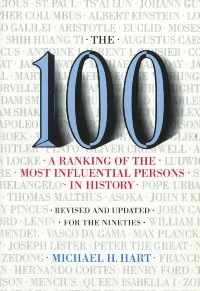
简介: The 100: A Ranking of the Most Influential Persons in History is a 1978 book by Michael H. Hart, reprinted in 1992 with revisions. It is a ranking of the 100 people who, according to Hart, most influenced human history. Surprising to readers was the first person on Hart's list, Muhammad instead of Jesus or Moses. Hart asserted that Muhammad was "supremely successful" in both the religious and secular realms. He also opined that Muhammad's role in the development of Islam was far more influential than Jesus' collaboration in the development of Christianity. He attributes the development of Christianity to St. Paul, who played a pivotal role in its dissemination. The 1992 revisions included the demotion of figures associated with Communism, such as Vladimir Lenin and Mao Zedong, and the introduction of Mikhail Gorbachev. Hart took sides in the Shakespearean authorship issue and substituted Edward de Vere, 17th Earl of Oxford for William Shakespeare. Hart also substituted Niels Bohr and Henri Becquerel with Ernest Rutherford, thus correcting an error in the first edition. Henry Ford was also promoted from the "Honorary Mentions" list, replacing Pablo Picasso. Finally, some of the rankings were re-ordered, although no one listed in the top ten changed position. Hart wrote another book in 1999, entitled A View from the Year 3000, voiced in the perspective of a person from that future year and ranking the most influential people in history. Roughly half of those entries are fictional people from 2000–3000, but the remainder are actual people. these were taken mostly from the 1992 edition, with some re-ranking of order.
简介:Summary: Publisher Summary 1 For general readers and her communications analyst colleagues, Dovring demonstrates how the ambiguities and double entendres of political English, Bodysnatched English she calls it, are manipulated to confuse and deceive both native speakers and others forced to use English as an international medium. Understanding such activity, she says, is particularly important for people who get their information from television and the internet. Annotation c. by Book News, Inc., Portland, Or. Publisher Summary 2 As an international language, English has facilitated the sharing of information. But when it comes to communication, specifically political communication, Dovring argues that the type of English that is used leads to misunderstandings, political double entendre, and the subtle manipulation of public opinion. President Kennedy was one of the first to face this problem when he negotiated with Khrushchev in the 1960s. He encountered an English where familiar words were used with new or dubious meanings in order to point toward certain political goals. This "Bodysnatched English" is the subject of Dovring's study. A communications analyst, Dovring examines the use, influence, and political environment where "Bodysnatched English" has appeared. She points out the often neglected fact that communication is an art, performed to perfection by politicians acting on the public stage. She analyzes recent political communications, including the words of Reagan, Clinton, Gorbachev, Khrushchev, and Qadafi.
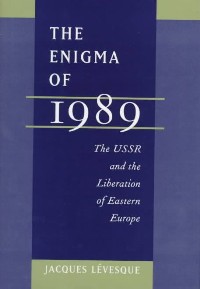
简介:The Soviet external empire fell in 1989 virtually without bloodshed. The domino-like collapse of the communist regimes of Eastern Europe was not anticipated by political experts in either the East or the West. Most surprising of all was the Soviet Union's permissive reactions to the secession. For the first time in modern history, such an epochal upheaval could take place not only without war but also without major international tensions. This book is the first comprehensive scholarly attempt to elucidate Soviet behavior toward Eastern Europe in 1989. Jacques Lévesque thoroughly analyses the policies of the USSR toward Eastern Europe during the Gorbachev era and clarifies the goals that underpinned these policies. Based on interviews with political leaders and exhaustive research in Russia, Czechoslovakia, Hungary, Poland, and the other ex-Warsaw Pact countries, this book traces the nuances of each country's case as a set of continually changing, mutually reinforcing causes and effects.
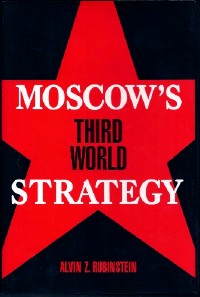
简介:"[This is] a careful, well-crafted and well-documented interpretation of the place of the Third World in overall Soviet policy by the doyen of U.S. specialists on Soviet policy toward developing countries. Moscow's Third World Strategy is essential reading for anyone seriously interested in Soviet foreign policy."--Roger E. Kanet, Soviet Studies "Rubinstein's book is written with a sure touch and mastery of the material, which he organizes according to different aspects of Soviet policy (involvement, intervention, support of liberation movements, and so on) rather than geographically." --Foreign Affairs "Unlike many scholars, Rubinstein does not rely heavily on Soviet journalistic and academic writing to illuminate Soviet policy and intentions in the Third World; rather, he relies almost exclusively on the record of Soviet actions. The result is a systematic survey of Moscow's Third World strategy from Lenin to Gorbachev, concise, brilliantly researched, and elegantly written." --Ilya Prizel, Orbis
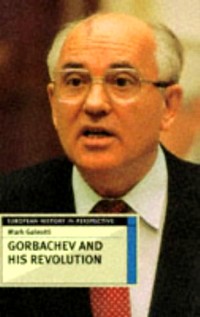
简介:By turns radical, uncertain, ambitious and autocratic, Mikhail Gorbachev and his bid to reform the Soviet Union have shaped the contemporary world. This concise and lively book provides an introduction to the man and his times, setting them in the context of a decaying and ramshackle empire and an ideology long since betrayed by its professed followers. Drawing on the latest memoirs and scholarship, this book follows Gorbachev's increasingly desperate attempts to control the forces he unleashed and hold together a state whose days were over.