

简介
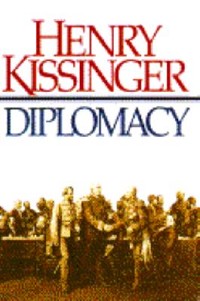
In this controversial and monumental book - arguably his most important - Henry Kissinger illuminates just what diplomacy is. Moving from a sweeping overview of his own interpretation of history to personal accounts of his negotiations with world leaders, Kissinger describes the ways in which the art of diplomacy and the balance of power have created the world we live in, and shows how Americans, protected by the size and isolation of their country, as well as by their
own idealism and mistrust of the Old World, have sought toconduct a unique kind of foreign policy based on the way they wanted the world to be, as opposed to the way it really is. Spanning more than three centuries of history, from Cardinal Richelieu, the father of the modern state system, to the "New World Order" in which we live, Kissinger demonstrates how modern diplomacy emerged from the trials and experiences of the balance of power of warfare and peacemaking, and
why America, sometimes to its peril, refused to learn its lessons. His intimate portraits of world leaders, including de Gaulle, Nixon, Chou En-lai, Mao Tse-tung, Reagan, and Gorbachev, based on personal experience and knowledge, provide the reader with a rare window on diplomacy at the summit, together with a wealth of detailed and original observations on the secret negotiations, great events, and the art of statesmanship that have shaped our lives in the decades
before, during and since Henry Kissinger was himself at the center of things. Analyzing the differences in the national styles of diplomacy, Kissinger shows how various societies produce special ways of conducting foreign policy, and how Americans, from the very beginning, soughta distinctive foreign policy based on idealism. He illustrates his points with his own insights and with examples from his own experience, as well as with candid accounts of his breakthrough
diplomatic initiatives as Nixon's foreign policy partner. Informed by deep historical knowledge, wit, a gift for irony, and a unique understanding of the forces that bind and sunder nations, Kissinger's Diplomacy is must reading for anyone who cares about America's position in the world.
目录
The New World Order
The Hinge: Theodore Roosevelt or Woodrow Wilson
From Universality to Equilibrium: Richelieu, William of Orange, and Pitt
The Concert of Europe: Great Britain, Austria, and Russia
Two Revolutionaries: Napoleon III and Bismarck
Realpolitik Turns on Itself
A Political Doomsday Machine: European Diplomacy Before the First World War
Into the Vortex: The Military Doomsday Machine
The New Face of Diplomacy: Wilson and the Treaty of Versailles
The Dilemmas of the Victors
Stresemann and the Re-emergence of the Vanquished
The End of Illusion: Hitler and the Destruction of Versailles
Stalin's Bazaar
The Nazi-Soviet Pact
America Re-enters the Arena: Franklin Delano Roosevelt
Three Approaches to Peace: Roosevelt, Stalin, and Churchill in World War II
The Beginning of the Cold War
The Success and the Pain of Containment
The Dilemma of Containment: The Korean War
Negotiating with the Communists: Adenauer, Churchill, and Eisenhower
Leapfrogging Containment: The Suez Crisis
Hungary: Upheaval in the Empire
Khrushchev's Ultimatum: The Berlin Crisis 1958-6324 Concepts of Western Unity: Macmillan, de Gaulle, Eisenhower, and Kennedy
Vietnam: Entry into the Morass; Truman and Eisenhower
Vietnam: On the Road to Despair; Kennedy and Johnson
Vietnam: The Extrication; Nixon
Foreign Policy as Geopolitics: Nixon's Triangular Diplomacy
Detente and Its Discontents
The End of the Cold War: Reagan and Gorbachev
The New World Order Reconsidered
Notes
Acknowledgments
Index
The Hinge: Theodore Roosevelt or Woodrow Wilson
From Universality to Equilibrium: Richelieu, William of Orange, and Pitt
The Concert of Europe: Great Britain, Austria, and Russia
Two Revolutionaries: Napoleon III and Bismarck
Realpolitik Turns on Itself
A Political Doomsday Machine: European Diplomacy Before the First World War
Into the Vortex: The Military Doomsday Machine
The New Face of Diplomacy: Wilson and the Treaty of Versailles
The Dilemmas of the Victors
Stresemann and the Re-emergence of the Vanquished
The End of Illusion: Hitler and the Destruction of Versailles
Stalin's Bazaar
The Nazi-Soviet Pact
America Re-enters the Arena: Franklin Delano Roosevelt
Three Approaches to Peace: Roosevelt, Stalin, and Churchill in World War II
The Beginning of the Cold War
The Success and the Pain of Containment
The Dilemma of Containment: The Korean War
Negotiating with the Communists: Adenauer, Churchill, and Eisenhower
Leapfrogging Containment: The Suez Crisis
Hungary: Upheaval in the Empire
Khrushchev's Ultimatum: The Berlin Crisis 1958-6324 Concepts of Western Unity: Macmillan, de Gaulle, Eisenhower, and Kennedy
Vietnam: Entry into the Morass; Truman and Eisenhower
Vietnam: On the Road to Despair; Kennedy and Johnson
Vietnam: The Extrication; Nixon
Foreign Policy as Geopolitics: Nixon's Triangular Diplomacy
Detente and Its Discontents
The End of the Cold War: Reagan and Gorbachev
The New World Order Reconsidered
Notes
Acknowledgments
Index
- 名称
- 类型
- 大小
光盘服务联系方式: 020-38250260 客服QQ:4006604884
云图客服:
用户发送的提问,这种方式就需要有位在线客服来回答用户的问题,这种 就属于对话式的,问题是这种提问是否需要用户登录才能提问
Video Player
×
Audio Player
×
pdf Player
×
