共找到 7 项 “Bhaskar” 相关结果
- 全部分类
- 全部
- 文学
- 历史
- 哲学/宗教
- 法律
- 政治/社会
- 医学
- 教育/心理学
- 艺术/传媒
- 研究生考试
- 资格认证考试
- 公开课
- 语言
- 经济金融
- 管理学
- IT/计算机
- 自然科学
- 工学/工程
- 体育
- 行业资料
- 音乐
- 汽车机械制造
- 文档模板
- 创业
- 农学
- 生活
- 数据库教程
- 民族
简介:This book is concerned with articulating a new approach to the sociology of education, one which is realist and that brings together sociological analysis of knowers with epistemological analysis of knowledge. Made up of key previously published chapters, alongside original material, its series of interconnected papers systematically unfold an o... more 籸iginal theoretical framework. A key focus of the book is how the social sciences and humanities can build knowledge over time, in terms of both new intellectual development and students? understandings. Recurrent themes include: Are these fields doomed to recurrent fragmentation, schisms and segmented learning experiences? How can knowledge be developed that builds on past achievements and integrates and subsumes existing insights? In grappling with these issues, the book itself exemplifies cumulative, integrative knowledge development. The approach engages with, builds on and integrate the insights of such major thinkers as Emile Durkheim, Pierre Bourdieu, Basil Bernstein and Roy Bhaskar. The conceptual framework is developed cumulatively to create an integrated approach, and is at every stage grounded in substantive studies of concrete issues in education. Concepts are developed from and for empirical research into key problems in the sociology of knowledge, educational policy, curriculum, and teaching and learning, and across a range of areas from mathematics to cultural studies and from school English to professional education at university. This book is essential reading for all serious students of educational theory, and the sociology of education. ?less
简介:At the heart of contemporary relativism, is the idea that the world has no mind-independent characteristics. As there is no way that the world is on its own, any opinions held may be regarded as valid. Critical realism is a promising alternative to such a position. Critical realism allows for the conclusion that certain processes lead to specific outcomes regardless of how we think about them, which in turn places a limited but crucial check on relativism. Groff defends "realism about causality" through close discussions of Kant, Hilary Putnam, Brain Ellis and Charles Taylor, among others. In so doing she affirms critical realism, but with several important qualifications. In particular, she rejects the theory of truth advanced by Roy Bhaskar. She also attempts to both clarify and correct earlier critical realist attempts to apply realism about causality to the social sciences. By connecting issues in metaphysics and philosophy of science to the problem of relativism, Groff bridges the gap betweenthe philosophical literature and broader debates surrounding socio-political theory and poststructuralist thought. This unique approach will make the book of interest to philosophers and socio-political theorists alike.
简介:In What's Wrong with Postmodernism Norris critiques the "postmodern-pragmatist malaise" of Baudrillard, Fish, Rorty, and Lyotard. In contrast he finds a continuing critical impulse--an "enlightened or emancipatory interest"--in thinkers like Derrida, de Man, Bhaskar, and Habermas. Offering a provocative reassessment of Derrida's influence on mod... more 籩rn thinking, Norris attempts to sever the tie between deconstruction and American literary critics who, he argues, favor endless, playful, polysemic interpretation at the expense of systematic argument. As he explores leftist attempts to arrive at an accommodation with postmodernism, Norris addresses the politics of deconstruction, the issue of men in feminism, Habermas' quarrel with Derrida, narrative theory as a hermeneutic paradigm, musical aesthetics in relation to literary theory, and various aspects of postmodern debate. A chapter on Stanley Fish brings several of these topics together and offers a generalized statement on the function of current criticism. ?less
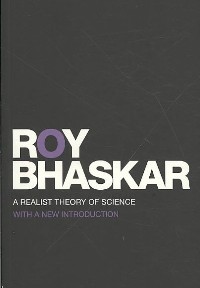
简介:Now acknowledged as a classic in the philosophy of science, A Realist Theory of Scienceis one of the very few books which has transformed, not only our understanding of science, but that of the nature of the world it studies. Since its original publication in 1975, this book has inspired the multi-disciplinary and international movemen... more 籺 of thought known as 'critical realism'; and its ideas have been influential across the whole spectrum of the sciences, arts and humanities and in a diverse array of social practices and professions. In this book, Roy Bhaskar sets out to revindicate ontology, critiquing the reduction of being in favor of knowledge, which he calls the "epistemic fallacy". Employing a transcendental argument from the nature of experimental activity, he establishes a critique of the dominant positivist and neo-Kantian traditions in the philosophy of science, developing a new ontology in which concepts of structure, difference and change come to the fore. Then, analyzing the nature of scientific discovery and development, he shows how, against both the empiricist and rationalist traditions, science can come to have a posteriori knowledge of natural necessity. The resultant position, which the author characterizes as transcendental realism, has the power to resolve many traditional philosophical problems, such as the problem of induction. At the same time it lays the basis for radically new accounts of social science, ethics and the project of human emancipation. ?less
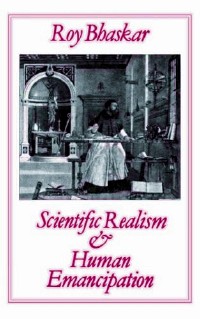
简介: Following on from Roy Bhaskar’s first two books, A Realist Theory of Science and The Possibility of Naturalism,? Scientific Realism and Human Emancipation, establishes the conception of social science as explanatory—and thence emancipatory—critique. Scientific Realism and Human Emancipationstarts from an assessment of the impasse of contemporary accounts of science as stemming from an incomplete critique of positivism. It then proceeds to a systematic exposition of scientific realism in the form of transcendental realism, highlighting a conception of science as explanatory of a structured, differentiated and changing world. Turning to the social domain, the book argues for a view of the social order as conditioned by, and emergent from, nature. Advocating a critical naturalism, the author shows how the transformational model of social activity together with the conception of social science as explanatory critique which it entails, resolves the divisions and dualisms besetting orthodox social and normative theory: between society and the individual, structure and agency, meaning and behavior, mind and body, reason and cause, fact and value, and theory and practice. The book then goes on to discuss the emancipatory implications of social science and sketches the nature of the depth investigation characteristically entailed. In the highly innovative third part of the book Roy Bhaskar completes his critique of positivism by developing a theory of philosophical discourse and ideology, on the basis of the transcendental realism and critical naturalism already developed, showing how positivism functions as a restrictive ideology of and for science and other social practices.
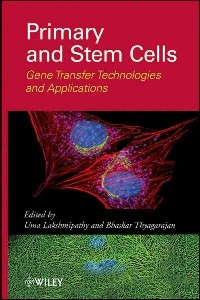
Primary and stem cells : gene transfer technologies and applications /
作者: edited by Uma Lakshmipathy, Bhaskar Thyagarajan.
简介:Summary: Publisher Summary 1 "This book describes basic cell engineering methods, emphasizing stem cell applications, and use of the genetically modified stem cells in cell therapy and drug discovery. Together, the chapters introduce and offer insights on new techniques for engineering of stem cells and the delivery of transgenes into stem cells via various viral and non-viral systems. The book offers a guide to the types of manipulations currently available to create genetically engineered stem cells that suit any investigator's purpose, whether it's basic science investigation, creation of disease models and screens, or cells for therapeutic applications"--Provided by publisher. Publisher Summary 2 This book describes basic cell engineering methods, emphasizing stem cell applications, and use of the genetically modified stem cells in cell therapy and drug discovery. Together, the chapters introduce and offer insights on new techniques for engineering of stem cells and the delivery of transgenes into stem cells via various viral and non-viral systems. The book offers a guide to the types of manipulations currently available to create genetically engineered stem cells that suit any investigator's purpose, whether it's basic science investigation, creation of disease models and screens, or cells for therapeutic applications.