

共找到 9 项 “Foreword” 相关结果
- 全部分类
- 全部
- 文学
- 历史
- 哲学/宗教
- 法律
- 政治/社会
- 医学
- 教育/心理学
- 艺术/传媒
- 研究生考试
- 资格认证考试
- 公开课
- 语言
- 经济金融
- 管理学
- IT/计算机
- 自然科学
- 工学/工程
- 体育
- 行业资料
- 音乐
- 汽车机械制造
- 文档模板
- 创业
- 农学
- 生活
- 数据库教程
- 民族
简介:An insightful, highly visual guide to the state-of-the-art in the practice of ophthalmic surgery "The subjects include new diagnostic instruments and have multiple chapters on individual surgical problems. This text is an excellent compilation of lucid color figures and surgical videos....An important contribution to contemporary opht... more 籬almic education...which will be of great value to the readers."--Travis A. Meredith, MD, Sterling A. Barrett Distinguished Professor, Chairman, Department of Ophthalmology, University of North Carolina, Chapel Hill (from the foreword) "Dr. Sandeep Saxena has compiled an excellent collection of chapters, all written by experts in their respective fields. I am certain this book will make its space on the tables of all postgraduate students and ophthalmic surgeons."--Dipak Kumar, MS, Professor and Head, Department of Ophthalmology, King George's Medical University, Lucknow (from the foreword) Ophthalmologists determined to stay on the leading edge of the field as new diagnostic and therapeutic modalities emerge will find everything they need in this comprehensive guide to current practice. Here, in a single reference, is a far-reaching, authoritative compilation of the latest and best techniques in contemporary ophthalmic surgery -- enriched by more than 800 full-color photographs and illustrations. FEATURES:Offers expert guidance: chapters are written, and procedures demonstrated, by 77 of the world's leading practitioners in ophthalmic surgery Vividly and visually illustrates key concepts and surgical techniques with more than 1,500 illustrations -- 800 in full color Two DVD's demonstrate, in 75 videos, every surgical technique discussed in the book Treats anterior segment surgeries, including corneal and refractive surgeries, glaucoma surgeries, phacoemulsification, bimanual microphacoemulsification, small incision cataract surgery, and pediatric cataract surgery Includes posterior segment surgeries such as laser photocoagulation, photodynamic therapy, transpupillary thermotherapy, vitreoretinal surgeries and macular and submacular surgeries including macular translocation Presents surgical strategies in uveitis, strabismus, lid, orbit, and intraocular tumors Introduces the latest advances in phacoemulsification technology, including cold phaco, intraocular lens material and designs, plasma blade, and vitreoretinal surgery ?less

Security analysis : principles and technique / 6th ed.
光盘作者: by Benjamin Graham and David L. Dodd.
简介:First published in 1934,Security Analysisis one of the most influential financial books ever written. Selling more than one million copies through five editions, it has provided generations of investors with the timeless value investing philosophy and techniques of Benjamin Graham and David L. Dodd. .As relevant today as when they first appeared nearly 75 years ago, the teachings of Benjamin Graham, ?the father of value investing,? have withstood the test of time across a wide diversity of market conditions, countries, and asset classes. .This new sixth edition, based on the classic 1940 version, is enhanced with 200 additional pages of commentary from some of today's leading Wall Street money managers. These masters of value investing explain why the principles and techniques of Graham and Dodd are still highly relevant even in today's vastly different markets. The contributor list includes: . Seth A. Klarman,president of The Baupost Group, L.L.C. and author ofMargin of Safety. James Grant,founder ofGrant's Interest Rate Observer, general partner of Nippon Partners. Jeffrey M. Laderman,twenty-five year veteran ofBusinessWeek. Roger Lowenstein, author ofBuffett: The Making of an American CapitalistandWhen America Agedand Outside Director, Sequoia Fund. Howard S. Marks, CFA,Chairman and Co-Founder, Oaktree Capital Management L.P.. J. Ezra Merkin,Managing Partner, Gabriel Capital Group .. Bruce Berkowitz,Founder, Fairholme Capital Management.. Glenn H. Greenberg,Co-Founder and Managing Director, Chieftain Capital Management. Bruce Greenwald,Robert Heilbrunn Professor of Finance and Asset Management, Columbia Business School. David Abrams,Managing Member, Abrams Capital ..Featuring a foreword by Warren E. Buffett (in which he reveals that he has read the 1940 masterwork ?at least four times?), this new edition ofSecurity Analysiswill reacquaint you with the foundations of value investing'more relevant than ever in the tumultuous 21st century markets. .
简介: Introduction Foreword About the Author Core MFC The MFC Architecture A Brief History of MFC The MFC Class Hierarchy CObject CCmdTarget CWinThread CWinApp CWnd CFrameWnd CView CDocument Summary MFC Dialogs, Controls, and Data Interaction Creating an Application Starting and Using MFC AppWizard The AppWizard-Generated Code Modifying the Application Adding Dialog Controls Adding Initialization Using Dialog Controls ToolTips Enabling ToolTips Displaying Text Dialog Data Exchange Standard DDX UpdateData Using Standard Dialog Boxes File Open/Save Color Selector Font Selector Print Dialog Summary The Windows Common Controls Initializing and Using the Common Controls Notifications for Windows Common Controls The Notification Message Structure Overview of the Notification Process A Better Notification Handling Scheme Specifying Notification Ranges with ON_NOTIFY_RANGE Hot Key Controls: Class CHotKeyCtrl CHotKeyCtrl Class Methods Creating and Initializing a CHotKeyCtrl Object Using a Hot Key Control Spin Controls: Class CSpinButtonCtrl Spin Control Styles CSpinButtonCtrl Messages CSpinButtonCtrl Class Methods Creating and Initializing a Spin Control Sample Program: SPIN1 Slider Controls: Class CSliderCtrl Slider Control Styles CSliderCtrl Messages CSliderCtrl Class Methods Creating and Initializing a Slider Control Sample Program: Slider Controls (SLIDER1) Sample Program: SLIDER1 Progress Bar Controls: Class CProgressCtrl CProgressCtrl Class Methods Creating and Initializing a CProgressCtrl Object Using a Progress Control Image Lists: Class CImageList CImageList Class Methods Creating and Initializing a CImageList Control List View Controls: Class CListCtrl List View Control Styles Image Lists and the List View Control List View Items and Subitems List View Notification Messages Creating and Initializing a CListCtrl Object Using the List View Control Tree View Controls: Class CTreeCtrl Tree View Control Styles Tree View Notification Messages CTreeCtrl Class Methods Creating and Initializing a Tree View Control Using a CTreeCtrl Object Sample Program: TREELIST.EXE Tab Controls: Class CTabCtrl Tab Control Styles Tab Control Notification Messages CTabCtrl Class Methods The Tab Item Structure (TC_ITEM) Creating and Initializing a Tab Control Using a Tab Control Animate Controls: Class CAnimateCtrl Animate Control Styles Animate Control Notification Messages CAnimateCtrl Class Methods Creating and Initializing an Animate Control Using an Animate Control Rich Edit Controls: Class CRichEditCtrl Rich Edit Control Window Styles The Character Format Structure (CHARFORMAT) The Paragraph Format Structure (PARAFORMAT) CRichEditCtrl Class Methods CRichEditCtrl Line-Related Methods CRichEditCtrl Text-Selection Methods CRichEditCtrl Formatting Methods CRichEditCtrl Editing Methods CRichEditCtrl Clipboard Methods CRichEditCtrl General-Purpose Methods Creating and Initializing a Rich Edit Control Using a Rich Edit Control Summary Painting, Device Contexts, Bitmaps, and Fonts Device Contexts The Graphics Device Interface MFC Wrapping MFC Device Context Classes The Base Class: CDC Painting with Class CPaintDC Managing Client Areas with Class CClientDC Managing Frame Windows with Class CWindowDC Windows Graphic Objects Pens: Class CPen Brushes: Class CBrush Fonts: Class CFont Bitmaps: Class CBitmap Palettes: Class CPalette Regions: Class CRgn GDI Coordinate Systems Logical Mapping Modes Vector Graphics Drawing Modes Lines and Polylines Rectangles Regions Polygons Ellipses Bezier Curves Fonts and Text Font Characteristics The TEXTMETRIC Structure The LOGFONT Structure Font Creation Drawing Text Sample Program: Vector Graphics and Text Methods (VECTEXT1.EXE) Raster Graphics Named Raster Operations (ROPs) Bitmaps Device-Dependent Bitmaps Device-Independent Bitmaps (DIBs) The CBitmap Class Transferring and Contorting Bitmaps Bitmap Resources Tacking Resources onto an Executable File Getting Image Resources out of an Executable File Sample Program: Exploring Bitmap Resources (BITMAP1) Summary Custom Control Development Window Classes Versus C++ Classes A Validating Edit Control The Clock Static Control Control Metrics Painting the Face Locating the Hands Painting the Hands Setting the Time Pitfalls of Subclassing Standard Controls The Hyperlink Control Implementation Strategy Font Processing Painting the Window Controlling the Cursor Mouse Input Keyboard Input Launching the Link Advanced Custom Control Topics Subclassing Limitations Notifications Using the Resource Editor with Custom Classes Summary The MFC Application Object, Message Routing, and Idle Processing The MFC Application Object CWinApp and Application Lifetime The CWinApp Data Members The CWinApp Member Functions Application-Specific Initialization Functionality in InitInstance OLE Container Support 3D Look for Windows NT 3.5x Registry Usage Most Recently Used Files List SDI and MDI Document/View Main Frame Window Creation Automation Support Rich Edit Control Support Command-Line Handling Message Routing, Message Maps, and Message Categories Message Routing PreTranslateMessage Message Maps Idle Processing OnIdle Idle Processing for Dialogs The Splash Screen Component Summary Documents, Views, and Applications That Use Them The Document/View Architecture Documents, Frames, and Views Document Templates Creating New Documents Opening New Files Single Versus Multiple Document Templates Views The CView Class The CScrollView Class The CFormView Class The Database View Classes The Control Views Changing Views in an SDI Using the MDI Summary Extending the User Interface Responding to the User Keyboard Messaging Handling Keyboard Messages Mouse Messaging Handling Mouse Messages User Interfaces and AppWizard Extending Menus Obtaining Menus and Pop-up Menus Adding Menu Items Using Floating Pop-up Menus Putting Control Bars to Use Using Toolbars and Rebars Using Status Bars Showing and Hiding Control Bars Supporting ToolTips Updating the User Interface Property Sheets and Wizards MFC's Support for Property Sheets and Wizards Creating a Simple Wizard Splitting a View Summary Printing Printing Fundamentals Printing with MFC Printing in the View The PrintInfo Object Printing Menu Commands Printing and GDI Mapping Modes WYSIWYG Printing Application Resources The Application Class The View Class Pagination Printing with a Known Page Count Printing with an Unknown Page Count Printing Page Numbers Stopping and Aborting Print Jobs Halting a Print Job in OnPrepareDC() Halting a Print Job in OnPrint() Summary MFC and COM Programming COM A Little History Interfaces, Objects, and Methods Some Terminology A Real-World View The IUnknown Interface Servers, Clients, and Classes The COM Runtime Environment Defining the Class Factory How Are COM Objects Reused? Marshaling and Threading Marshaling Threading COM, OLE, and Automation IDispatch Automation Servers, Objects, and Controllers Supporting Both IDispatch and IUnknown Persisting COM Data Structured Storage Identifying COM Data (Monikers) Transferring Data Uniform Data Transfer Connectable Objects DCOM Object Creation Invoking Methods Security Issues Some Important Information BSTR SAFEARRAY HRESULT VARIANT Further Reading Summary COM and MFC Understanding the Afx Global Functions Application Lifetime Control Client Control Management Connection Point Management Control Registration Exceptions Initialization Licensing Type Information Reviewing the OLE Macros Class Factories Client/Container Common Commands Control Property Persistence Dialog Data Exchange Dispatch Maps Event Maps Property Page Data Mapping Property Pages Type Library Access MFC and the OLE Class Categories Active Document Automation Common Dialogs for OLE Container Control Drag and Drop (Universal Data Transfer) Document Servers Support Summary MFC OLE Servers Document Servers Server Types Full Server Active Document Container/Server Mini-Server Document Server Design OLE Documents Active Documents Building an Active Document Server Persistence Rendering the View Automation Servers IDispatch GetIDsOfNames GetTypeInfo GetTypeInfoCount Invoke IDispatch-Derived Interface in ODL Calling Methods Through IDispatch GetIDsOfNames Type Information Methods Invoke Dispinterfaces Differ from Interfaces Calling Methods Through IDispatch Dual Interfaces The Variant An Automation Server Using MFC Server Type Declaring and Defining Additional Dispinterfaces Adding Methods and Properties Summary MFC OLE Clients IDispatch and Its Place in Automation Interface Definition for Automation Servers IDL and ATL ODL and MFC Dual Interfaces MFC and Automation Controller Connecting to a Server Server Review Building a Controller Using COleDispatchDriver Using #import Remote Automation Summary MFC ActiveX Controls Development Strategy MFC ATL MFC and ATL Control Development Two Faces of a Control Runtime Design Time Subclassing a Control MFC ATL Component Categories ICatRegister ICatInformation Methods, Properties, and Events Properties Methods Events Property Pages Property Pages in ATL Property Pages in MFC Component Registration Registration Scripts Registration and Controls COM Object Subkeys Building an MFC Control Interface Definition A Quick ATL Port Summary MFC ActiveX Control Containers Active Document Container Storage Site Objects In-Place Activation Document Extensions Building the Simplest Active Document Container OLE Controls Adding Containment to an Existing Project ActiveX Container Control Containment and Events Summary Using MFC and ATL What Is ATL and Why Is It Important for Programming in MFC? Helpful ATL COM Support for MFC Applications COM Pointers the Smart Way Other ATL COM Support Advanced ATL Support for MFC Applications Begin with Your MFC Application Add the Required ATL Support Summary Scripting Your MFC Application Scripting Basics Scripting Interfaces Dual Interfaces Object Models Implementing a Scripted Application Object Implementation Summary MFC Database Programming MFC Database Processing Relational Database Concepts Tables Columns Records Cursors Transactions Storing and Retrieving Data SELECT INSERT DELETE UPDATE Database Communication Mechanisms ODBC DAO Which Methodology Should I Use? ODBC/MFC CDatabase CRecordset DAO CDaoWorkspace CDaoDatabase CDaoRecordset CDaoTableDef CDaoQueryDef Summary Advanced Database Support The COM Approach OLE DB ADO Which One Should I Use? OLE DB Consumers Using the ATL Wrapper Classes CDataSource CSession Accessors Rowsets Accessing Datasource Data Using the ADO C++ Interfaces ADOConnection ADORecordset ADOCommand ADOField ADOProperty ADOParameter ADOError Summary MFC Utility Classes Strings and Collections Strings and String Classes Inside the CString Class Practical CString Usage CString Summary Collections Inside Collection Classes Templated Collections The UNL_MultiEd Application Overview An STL Approach Summary File I/O and MFC The CFile Class Processing Files with CFile Inside the CFile Class The CStdioFile Class The CMemFile Class The CSharedFile Class The CFileDialog Class The User-Defined CFileDialog Class Practical Usage of CFile and CFileDialog Opening a File Reading Data from a File A Classical Approach What Are Streams? Summary Exceptions What Are They Good For? Types of Exceptions Structured Exception Handlers Nesting of Structured Exception Handlers Raising Structured Exceptions Cleaning Up After an Exception C++ Exceptions Defining a C++ Exception Class MFC Exceptions MFC CException-Derived Classes CMemoryException CNotSupportedException CArchiveException CFileException CResourceException COleException CDbException COleDispatchException CUserException CDaoException CInternetException Deriving Your Own MFC-Compliant Exception Objects Deleting Exceptions Using MFC Exception Macros Mixing Exceptions Summary MFC and the Web MFC and DHTML DHTML, MSIE, and the Internet Using the Internet Explorer Web ActiveX Control Internet Explorer ActiveX Control Basics CHtmlView CHtmlView and the Document/View Relationship CHtmlView and COM Using the Internet Explorer ActiveX Control in a Dialog Box Using DHTML The DHTML Object Model The Document Object Other DHTML Objects Collection Objects DHTML COM Interfaces Obtaining the Document DHTML Interface Obtaining the DHTML Collections Interfaces Using the DHTML Interface The DHTML Element Interface Methods Document Navigation Summary CSocket Programming How Do Network Communications Work? Sockets, Ports, and Addresses Winsock and MFC Initializing the Winsock Environment Creating a Socket Making a Connection Sending and Receiving Messages Closing the Connection Socket Events Controlling Event Triggering Detecting Errors Getting Socket Information Sockets and I/O Serialization Building a Networked Application Creating the Application Shell Window Layout and Startup Functionality Inheriting from the CAsyncSocket Class Connecting the Application Sending and Receiving Ending the Connection Summary WinInet Programming Web Application Protocols and WinInet Hypertext Transfer Protocol File Transfer Protocol Gopher Protocol WinInet API and MFC Internet Session Basics CInternetSession CInternetFile CInternetException CInternetConnection Building a Simple WinInet Application Application-Level Functionality HTTP Classes FTP Classes Gopher Classes Building a Simple FTP Client Summary ISAPI Extensions The Foundation From There to Here From GET to POST Adding Some Form Elements Change the Form Change the Parse Map Declare and Use the Handler Function Add a Radio Button Other Form Input Elements Change the Form Change the Parse Map Change the Handler Function Summary MAPI and MFC The Messaging Application Programming Interface Client Applications Two Higher-Level Alternatives: Simple MAPI and CMC Simple MAPI Common Messaging Calls The MapiMessage Structure The MapiFileDesc Structure Limited MAPI Functionality in MFC The CDocument Connection Doing MAPI the MFC Way The CDocument::OnFileSendMail() Method Sample Program: MAPI1.EXE Summary TAPE and MFC Overview Assisted Telephony Basic Telephony Service Supplemental Telephony Service Extended Telephony Service History of TAPI TAPI 1.3 TAPI 1.4 TAPI 1.5 TAPI 2 TAPI 2.1 TAPI 2.2 TAPI 3 Using Assisted Telephony Using Basic Telephony Configuring TAPI Connecting with TAPI Transmitting Data with TAPI Disconnection with TAPI Terminating a TAPI Session Summary MFC and Graphics Programming MFC and OpenGL What Is OpenGL? Graphics Boot Camp Core Terms and Key Concepts The Basic Mathematics of Graphics Programming OpenGL Boot Camp OpenGL Datatypes OpenGL Function Naming Conventions OpenGL Render Function Scoping The OpenGL Matrix Stack The OpenGL Rendering Context Minimal OpenGL Program and a Custom View Creating Your Basic MFC Application Adding the Custom OpenGL Base Class Integrate the Custom View Class into Your Application Build Your 3D Scene Add the OpenGL Libraries to Your Project抯 Link List 2D and 3D Models Basic Model Development Model Transformations Display Lists Light The Basics of Light in OpenGL Types of Light Object Material Properties Texture Mapping OpenGL Images and Windows Device-Independent Bitmaps Applying Texture Special Effects Blending Fog Summary MFC and DirectX What Is DirectX? DirectX in a Nutshell DirectX Components DirectX Basics Differences in COM Programming Style and DirectX DirectX Component Startup Sequence DirectDraw Basics Initializing DirectDraw DirectDraw and Palettes DirectDraw Surfaces DirectDraw Page Flipping DirectDraw from a Window Using DirectDraw in Practice Surfaces and Bitmaps Windowed Rendering Error Handling DirectDraw Shutdown Summary Multimedia and MFC Multimedia Fundamentals The DirectX Media Player Control Media Formats Supported by the Media Player Control Inside the Media Player Control The CMediaPlayer Class Using the Media Player Control Playing Sound Working with Waves Revisiting DirectSound Using DirectSound to Play Sound Effects Summary Advanced MFC Inside the Registry Registry Usage Configuration Services Information State User Preferences The Registry Structure Programmatic Control of the Registry The Registry API The Registry Sample Application The Registry Key Editor Dialog Creating a New Key Deleting a Key Deleting a Name/Value Pair A Word About Wrapping the Registry Functions A Word About Installation Summary Writing and Using DLLs Advantages of DLLs Code Elimination Modularity and Packaging Extensibility Inside an AFX DLL Exporting Classes, Functions, and Data The Big Deal About Exports Mangled Names Exporting Classes What Goes Around, Comes Around Exporting Explicit Functions Exporting Data Exporting MFC Data Exporting the Destructor Export Toolkit include Files What to Export Other DLL Issues AfxLoadLibrary and AfxFreeLibrary Designing for Extensibility and Reuse Resource Location Multiple Module Definition Files Load Addresses and the Linker Summary Creating Custom Wizards Property Sheets and Property Pages The CPropertySheet and CPropertyPage Classes The Wizard Walk and the Property Sheet Connection Creating a Wizard Setting the Wizard Mode Enabling the Wizard Buttons Displaying the Wizard Wizard Notification Messages Sample Program: Off to See the Wizard (WIZARD1.EXE) Creating Wizard Page Dialog Template Resources Create a Dialog Class for Each Dialog Resource Exploring the Welcome Page: Class CIntroPage Exploring the About You Page: Class CPage1 Updating Wizard Information for CPage2 and CPage3 Creating and Displaying the Wizard Summary Index

简介:"Computer graphics, and rendering in particular, is full of beautiful theory. The theory covers physical concepts, such as light fields and the interaction of light with different materials, and mathematical concepts, such as integral equations and Monte Carlo integration. The great thing about computers is that they allow us to build rendering systems based on the best theory. This book turns the theory of image-making into a practical method for creating images." from the foreword by Pat Hanrahan, Canon USA Professor, Stanford University From movies to video games, computer-rendered images are pervasive today.Physically Based Rendering introduces the concepts and theory of photorealistic rendering hand in hand with the source code for a sophisticated renderer. By coupling the discussion of rendering algorithms with their implementations, Matt Pharr and Greg Humphreys are able toreveal many of the details and subtleties of these algorithms. But this book goes further; it also describes the design strategies involved with building real systemsthere is much more to writing a good renderer than stringing together a set of fast algorithms. For example, techniques for high-quality antialiasing must be considered from the start, as they have implications throughout the system. The rendering system described in this book is itself highly readable, written in a style called literate programming that mixes text describing thesystem with the code that implements it. Literate programming gives a gentle introduction to working with programs of this size. This lucid pairing of text and codeoffers the most complete and in-depth book available for understanding, designing, and building physically realistic rendering systems. * Winner of an Honorable Mention in the Computer and Information Science category from The Professional and Scholarly Publishing Division (PSP) of the Association of American Publishers (AAP) * Finalist for the 15th Annual Jolt Awards * Companion CD-ROM includes the source code for a complete rendering system for Windows, Mac OS X, and Linuxwith many of the features found in high-quality commercial systems. * The system's plug-in architecture makes its basic structure transparent and allows for new features to be added easily. * The rendering system implements a number of newer or difficult-to-implement algorithms and techniques,including subdivision surfaces, Monte Carlo light transport, and volumetric scattering.

简介:From the foreword of the second edition: "All of the above make this a unique, invaluable book for the student, professor, or hydrologist seeking to acquire a thorough understanding of this area of hydrology" Philip B. Bedient, Rice University, Texas, USA From the reviews of the first edition: "Although this book is generally concerned with surface runoff and flood periods, the conceptions and methods, as well as the method of utilizing GIS for distributed models, are remakably useful. Careful study of this excellent book will help achieve understanding of GIS-based distributed modelling, and it is highly recommended to students, teachers, researchers, and engineers involved in hydrology, water resources, and environmental Sciences." (Bulletin of the American Meteological Society, May 2002)
简介:Summary: Publisher Summary 1 This reference speaks to the huge base of Visual Basic developers who, until now, could only learn about COM by reading books written for C++ programmers. Now they can get up to speed quickly and participate in Microsoft's strategy for distributed computing. The Foreword is by Don Box, the industry guru for COM technology.
简介:Understanding and Crafting the Mix gives you clear and systematic methods for identifying, evaluating, and shaping the artistic elements in music and audio recording. The exercises throughout help you to develop critical listening and evaluating skills and gain greater control over the quality of your recordings. William Moylan takes an inside look into a range of popular music,including recordings by The Beatles, offering you insightsinto making meaningful sound judgements during recording. Sample production sequences and descriptions of the recordist's roles as composer, conductor and performer provides you with a clear view of the entire recording process. The foreword has graciously been provided by industry legend Rupert Neve. The book also includes an audio CD featuring exercises, reference materials, examples of mixes and sound qualities, and tracks and instructions for setting up and evaluating playback systems. * Unique in its focus on the aesthetics of recording and mixing and how to apply these to the mixing desk * Improve your critical listening skills with the series of exercises * Real life examples and popular musicused throughout - also includes FREE CD-ROM with audio clips and demos.
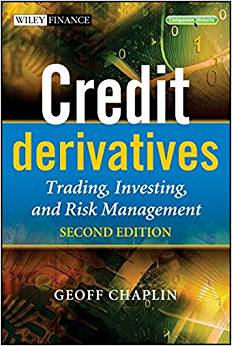
Credit Derivatives: Trading, Investing, and Risk Management
光盘作者: Geoff Chaplin
简介:The credit derivatives industry has come under close scrutiny over the past 2 years, with the Credit Crisis highlighting the instability of a number of credit structures and throwing the industry into turmoil. What has been made clear by recent events is the necessity for a thorough understanding of credit derivatives by all parties involved in a transaction, from traders, structurers, quants and investors. This book covers the subject from a real world perspective, tackling issues such as liquidity, poor data, and credit spreads, to the latest innovations in portfolio products, hedging and risk management techniques. The book concentrates on practical issues and develops an understanding of the products through applications and detailed analysis of the risks and alternative means of trading. Credit Derivatives: Risk Management, Trading and Investing provides: A description of the key products, applications, and an analysis of typical trades including basis trading, hedging, and credit structuring Analysis of the industry standard 'default and recovery' and Copula models including many examples, and a description of the models' shortcomings Tools and techniques for the management of a portfolio or book of credit risks including appropriate and inappropriate methods of correlation risk management A thorough analysis of counterparty risk An intuitive understanding of credit correlation in reality and in the Copula model The book has been thoroughly updated to reflect the changes the industry has seen over the past 5 years, notably with an analysis of the lead up and causes of the credit crisis. It will contain 50% new material, which will include copula valuation and hedging, portfolio optimisation, portfolio products and correlation risk management, pricing in illiquid environments, chapters on the evolution of credit management systems, the credit meltdown and the mathematics of the credit bubble. The book is accompanied by a CD ROM which will illustrate the models used in the book and also provide an advanced valuation toolkit. Contents Foreword] Preface Disclaimer Acknowledgements Part I: Credit Background and Credit Derivatives 1. Credit Debt and other traditional credit instruments 2. Pricing Methods 3. Default and Recovery Data; Transition Matrices; Historical Pricing 4.The Credit Event for Debt 5. Asset Swaps and Asset Swap Spread; z-spread 6. Liquidity 7. Credit portfolios and portfolio risk Software examples: Transition matrix based pricing; historical and implied transition matrices Asset swap, z-spread, maturity spread calculations Portfolio correlation and VaR Part II: Credit Default Swaps and other Single Name Products 8. Credit Default Swaps: Product Description, and Simple Applications - 9. Valuation and Risk: Basic Concepts - 10. CDS Deal Examples 11. CDS/Bond Basis Trading 12. Sensitivities; Hedging Issues 13. Credit Linked Notes 14. Digital CDS 15. Basket CDS and Index CDS structures 16. Spread Options, Callable/Putable Bonds, Callable Asset Swaps, Callable Default Swaps 17. Total Return Swaps 18. Single Name Book management 19. CDS Pricing by Simulation Software examples: Deterministic model Excel and MathCad] Debt valuation Excel and MathCad] CDS valuation Excel and MathCad] Sensitivity calculation examples Excel and MathCad] Part III: Portfolio Products - Correlated stochastic recovery models, Semi-closed form solutions, Structure pricing Correlation in structures. CDOs and structured credit products - synthetic - static and standard index products - synthetic - bespoke, static and managed - cashflow CDOs - securitisations - rating (update), SPV, applications - product risks (bubble related to enhanced sales opportunities) - pricing at 0 and 100% correl - other portfolio products (contributed) Copula valuation and hedging (method) Correlation - in the real world and further section on correlation in normal and abnormal environments - e.g. correlation of life policy values. - matrix and tag - factor/tranche/compound - base - correlated stochastic recovery - Monte Carlo pricing - Semi closed form pricing Application of Copula valuation - Synthetics: 21.6 to 21.8 rewritten - Cashflow CDO - Structures Portfolio Optimisation (contributed) Other Copulae Portfolio Products and Correlation Risk management Pricing methodologies in illiquid environments Part IV: Default Swaps including Counterparty Risk - CDS as a portfolio product Vanilla CDS Counterparty ("Double trigger") CDS Part V: - NEW The Evolution of Credit Management Systems The Credit Meltdown and rebirth of CDS The Mathematics of the Bubble Mathematical Appendix: List of Abbreviations Glossary References Index

出版社:McGraw-Hill 2011
简介:The most authoritative, comprehensive, and current cardiac surgery resource – completely updated and in full color DVD with surgical video clips "...the must-have resource for adult cardiac surgeons around the world. Dr. Cohn...has done a masterful job of keeping this text at the forefront of surgical thought and technique."—Thomas B. Ferguson, MD, Washington University School of Medicine Emeritus (from the foreword) In Cardiac Surgery in the Adult, Fourth Edition, the world’s foremost cardiovascular surgeons and physicians deliver thorough, up-to-date coverage of operative strategy, decision making, technique, and pre- and post-operative management for treating the adult cardiac patient. Editor Lawrence H. Cohn takes you through the optimal treatment of congenital, acquired, infectious, and traumatic diseases of the heart and great vessels. The book begins with a history of cardiac surgery and basic cardiac science, then moves into all types of cardiac surgery, providing both practicing surgeons and residents insight into the very latest surgical protocols. Presented in full color for the first time, the fourth edition of Cardiac Surgery in the Adult is aligned with up-to-the-minute developments in the field including recent surgical trends in minimally invasive cardiac surgery. Unparalleled in both scope and clinical rigor, the fourth edition contains 70 chapters that highlight every important topic in cardiovascular surgery. FEATURES An update of the most recent surgical perspectives and techniques in ischemic and valvular heart disease, diseases of the great vessels, cardiac arrhythmias, and more New and refreshed content on pivotal trends and topics, including the use of robotic surgery, minimally invasive valve and coronary artery bypass surgery, stem-cell induced regenerative medicine, tissue engineering, percutaneous valve procedures, and much more New full-color design—with many illustrations enhanced expressly for this edition—facilitates the comprehension of surgical procedures throughout Important opening section on the fundamentals of cardiac surgery, from its origins to the surgical anatomy of the heart, cardiac surgical physiology, risk stratification, and the statistical treatment of surgical outcome data Key chapters on the perioperative and postoperative management of cardiac patients from internationally recognized experts in the field Coverage of trends that highlight patient demographics, with a focus on cross-training surgeons in endovascular skills through coverage of such topics as percutaneous intervention and endovascular graft technology Companion DVD with procedure-simplifying video clips