共找到 34 项 “Richard Dawkins.” 相关结果
- 全部分类
- 全部
- 文学
- 历史
- 哲学/宗教
- 法律
- 政治/社会
- 医学
- 教育/心理学
- 艺术/传媒
- 研究生考试
- 资格认证考试
- 公开课
- 语言
- 经济金融
- 管理学
- IT/计算机
- 自然科学
- 工学/工程
- 体育
- 行业资料
- 音乐
- 汽车机械制造
- 文档模板
- 创业
- 农学
- 生活
- 数据库教程
- 民族
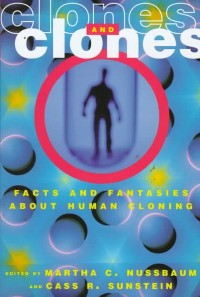
Clones and clones : facts and fantasies about human cloning /
作者: edited by Martha C. Nussbaum and Cass R. Sunstein.
简介: <p>Distinguished scholars and writers from a broad range of disciplines address a troubling and fascinating issue. "To many if not most of us, cloning represents a possible turning point in the history of humanity," write the editors of Clones and Clones--a prospect the contributors to this stimulating volume view with varying degrees of alarm, disgust, grief, calm, ambivalence, and not a little humor. . . .Ranging from psychoanalyst Adam Phillips's case study of a child whose confusion of "cloning" and "clothing" expresses our mixed desire and terror of sameness, to Cass Sunstein's projections of utterly plausible Supreme Court decisions both for and against human cloning; from William Miller's analysis of the queasiness and nervous laughter the subject elicits in many of us ("Sheep jokes are sex jokes," he notes), to Richard Epstein's libertarian argument against a research ban; from Andrea Dworkin's denunciation of another masculine effort to control reproduction to Martha Nussbaum's witty and elegiac fantasy of the cloning of a lost lover--this superb collection limns our beliefs and concerns about what it means to be human. Other contributors: Stephen Jay Gould, Richard Dawkins, and Steven Pinker (science); Eric and Richard Posner, William Eskridge and Ed Stein, and Laurence Tribe (law); David Tracy, Wendy Doniger, Jean Bethke Elshtain, and Dan Brock (religion and ethics); journalist George Johnson; sociologist Barbara Rothman; philosopher Felicia Ackerman; science fiction writer Lisa Tuttle; and poet C. K. Williams. The book also features Ian Wilmut's original article in Nature and excerpts from the report of the National Bioethics Advisory Council.</p>
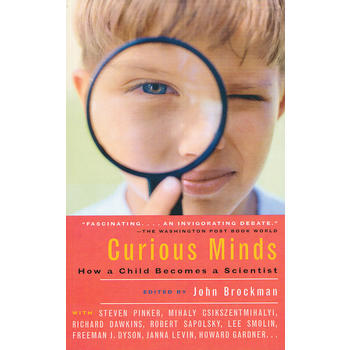
作者: John
简介:
In this anthology of reminiscences by prominent scientists,the roll includes Richard Dawkins, Murray Gell-Mann, Joseph Ledouxand Ray Kurzweil, along with 23 others. The mandate of the book'seditor, literary agent Brockman (The Third Culture), to each ofthese authors was to write an essay explaining how he or she cameto be a scientist. Some take him at his word and write meanderingstories of childhood. David Buss found his calling—the study ofhuman mating behavior—while working at a truck stop after droppingout of school. Paul Davies says he was born to be a theoreticalphysicist. Daniel Dennett, on the other hand, seems to have triedevery other profession before landing, as if by accident, inscience. A few writers let their essays get hijacked by the sciencethey have devoted their lives to. And in the midst of this, like akeystone in an arch, is an essay by Steven Pinker explaining whythe entire exercise is a bunch of hooey: scientifically speaking,he says, people have no objective idea what influenced theirbehavior, and that writing a memoir is creative storytelling, notobjective observation of what actually happened. Whether or notthese essays are scientifically sound is open to debate, but theydo offer occasionally inspiring glimpses into the minds of today'sscientific intelligentsia.
Copyright © Reed Business Information, a division of ReedElsevier Inc. All rights reserved. --This text refers to theHardcover edition.
From Scientific American
When the late evolutionist and polymath Stephen Jay Gould was atoddler, he became fascinated and terrified by the toweringTyrannosaurus rex skeleton at the American Museum of NaturalHistory. Gould later claimed to have been instantly "imprinted" onthe monstrous saurian, like a duckling on its mama. The little boydecided on the spot to become a paleontologist--years before heeven learned the word. In John Brockman's Curious Minds: How aChild Becomes a Scientist, a collection of 27 autobiographicalessays by leading savants, Harvard psychologist Steven Pinkerscoffs at this oft-told story. Pinker relates that Gould dedicatedhis first book: "For my father, who took me to see theTyrannosaurus when I was five," and admires Gould's "genius ... forcoming up with that charming line." But he doesn't buy it. Pinkergoes on to tell his own childhood story, with the caveat thatlong-term memory is notoriously malleable and that we often concoctretrospective scenarios to fit satisfying *s of our lives. Sodon't believe anything in this book, he warns, including his ownself-constructed mythology; many children are exposed to books andmuseums, but few become scientists. Pinker concludes that perhapsthe essence of who we are from birth shapes our childhoodexperiences rather than the other way around. Nevertheless, whenBrockman asked Pinker and others to trace the roots of their adultobsessions for this book, he received some unexpected andentertaining responses. Primatologist Robert Sapolsky, for example,haunted the Bronx Zoo and the natural history museum, as Gould did,but fell in love with living primates rather than fossil bones. Hedidn't want to just study mountain gorillas, he recalls of hischildhood crush on monkeys and apes, "I wanted to be one." For thepast few decades, Sapolsky has spent half of each year in hisphysiology lab and the other half among wild baboon troops in EastAfrica. Some people, such as theoretical psychologist NicholasHumphrey, are simply born into science. His grandfather, Nobellaureate A. V. Hill, often took him along to the physiology lab.Grandfather Hill--quoting his friend Ivan Pavlov--taught youngNicholas that "facts are the air of a scientist. Without them youcan never fly." Among frequent visitors to the family home were hisgreat-uncles Maynard and Geoffrey Keynes, members of Britishscience's aristocracy, as well as his great-aunt Margaret, agranddaughter of Charles Darwin. He recalls how their long-termhouseguest, an adolescent, "bossy" Stephen Hawking, once marched upand down the hallways clutching a military swagger stick, barkingat a "platoon of hapless classmates." Science was Humphrey'sbirthright. Richard (The Selfish Gene) Dawkins, one of England'spreeminent Darwinians, admits that he never cared for science orthe natural world during his early years. He was inspired, however,by the fanciful children's books about Dr. Dolittle by HughLofting. The good doctor was a Victorian gentleman who heldintelligent conversations with mice and parrots and whales. Anadventurous sort, he traveled the world to learn the secrets offaraway places. When the adult Dawkins encountered the life andworks of Charles Darwin, he welcomed him as an old friend and heroof his youth. Dolittle and Darwin, he opines, "would have been soulbrothers." Lynn Margulis's early interest in the wonders of themicroscopic world began when she was a "boy crazy" adolescent, whowas amazed to learn that some minuscule creatures never need sex inorder to reproduce. Enter a teenage heartthrob: the buddingastrophysicist Carl Sagan. ("Tall, handsome in a sort of galootyway, with a shock of brown-black hair, he captivated me.") She was16 when they met; eventually they married. Sagan's fascination with"billions and billions" of cosmic bodies resonated with her ownfixation on the billions of microcosms to be observed through themicroscope. Margulis's study subjects have included a tiny animalin a termite's gut that is made up of five distinct genomes cobbledtogether. She has argued that we and other animals are compositecritters, whose every cell harbors long-ago invaders--minutesymbiotic organisms that became part of our makeup. Her innovativeapproach to evolution has profoundly influenced biology. Harvardpsychologist and neurologist Howard Gardner says his youth wasnotable for its lack of any clues indicating a future in science:"I did not go around gathering flowers, studying bugs, ordissecting mice ... I neither assembled radios nor tore apartcars." Yet, for others, there was a decisive turning point. Andsome could clearly remember it. I was fortunate in having been achildhood friend of Steve Gould's and can vouch for the sincerity of his conviction that his extraordinary career as a paleontologist,historian of science and evolutionary theorist began when that T.rex followed him into his nightmares. Once, during our junior highschool days, I stood with him beneath that iconic carnosaur in themuseum, observing his reverence and awe on revisiting the shrine ofhis inspiration. Professor Pinker, of course, is free to believethat I'm making this up for my own psychological reasons.
简介: A Business Week, New York Times Business, and USA Today Bestseller "Ambitious and readable . . . an engaging introduction to the oddsmakers, whom Bernstein regards as true humanists helping to release mankind from the choke holds of superstition and fatalism." -The New York Times "An extraordinarily entertaining and informative book." -The Wall Street Journal "A lively panoramic book . . . Against the Gods sets up an ambitious premise and then delivers on it." -Business Week "Deserves to be, and surely will be, widely read." -The Economist "[A] challenging book, one that may change forever the way people think about the world." -Worth "No one else could have written a book of such central importance with so much charm and excitement." -Robert Heilbroner author, The Worldly Philosophers "With his wonderful knowledge of the history and current manifestations of risk, Peter Bernstein brings us Against the Gods. Nothing like it will come out of the financial world this year or ever. I speak carefully: no one should miss it." -John Kenneth Galbraith Professor of Economics Emeritus, Harvard University In this unique exploration of the role of risk in our society, Peter Bernstein argues that the notion of bringing risk under control is one of the central ideas that distinguishes modern times from the distant past. Against the Gods chronicles the remarkable intellectual adventure that liberated humanity from oracles and soothsayers by means of the powerful tools of risk management that are available to us today. "An extremely readable history of risk." -Barron's . "Fascinating . . . this challenging volume will help you understand the uncertainties that every investor must face." -Money "A singular achievement." -Times Literary Supplement "There's a growing market for savants who can render the recondite intelligibly-witness Stephen Jay Gould (natural history), Oliver Sacks (disease), Richard Dawkins (heredity), James Gleick (physics), Paul Krugman (economics)-and Bernstein would mingle well in their company." -The Australian
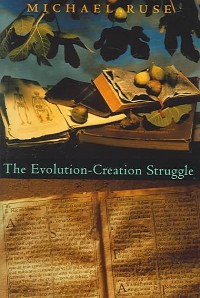
简介:Creation versus evolution: What seems like a cultural crisis of our day, played out in courtrooms and classrooms across the county, is in fact part of a larger story reaching back through the centuries. The views of both evolutionists and creationists originated as inventions of the Enlightenment - two opposed but closely related responses to a loss of religious faith in the Western world. In his latest book, Michael Ruse, a preeminent authority on Darwinian evolutionary thought and a leading participant in the ongoing debate, uncovers surprising similarities between evolutionist and creationist thinking. Exploring the underlying philosophical commitments of evolutionists, he reveals that those most hostile to religion are just as evangelical as their fundamentalist opponents. But more crucially, and reaching beyond the biblical issues at stake, he demonstrates that these two diametrically opposed ideologies have, since the Enlightenment, engaged in a struggle for the privilege of defining human origins, moral values, and the nature of reality. Highlighting modern-day partisans as divergent as Richard Dawkins and Left Behind authors Tim LaHaye and Jerry B. Jenkins, Ruse's bracing book takes on the assumptions of controversialists of every stripe and belief and offers to all a new and productive way of understanding this unifying, if often bitter, quest. - Dust jacket.
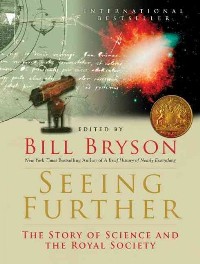
简介:As editor of "Seeing Further," Bryson has rounded up an extraordinary roster of scientists who write and writers who know science in order to celebrate 350 years of the Royal Society, Britain's scientific national academy. The contributors include Margaret Atwood, Steve Jones, Richard Dawkins, James Gleick, Richard Holmes, and Neal Stephenson, among many others, on subjects ranging from metaphysics to nuclear physics, from the threatened endtimes of flu and climate change to our evolving ideas about the nature of time itself, from the hidden mathematics that rule the universe to the cosmological principle that guides "Star Trek."
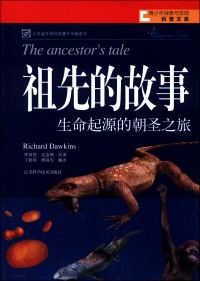
简介:The renowned biologist and thinker Richard Dawkins presents his most expansive work yet: a comprehensive look at evolution, ranging from the latest developments in the field to his own provocative views. Loosely based on the form of Chaucer's Canterbury Tales, Dawkins' Tale takes us modern humans back through four billion years of life on our planet. As the pilgrimage progresses, we join with other organisms at the forty "rendezvous points" where we find a common ancestor. The band of pilgrims swells into a vast crowd as we join first with other primates, then with other mammals, and so on back to the first primordial organism. Dawkins' brilliant, inventive approach allows us to view the connections between ourselves and all other life in a bracingly novel way. It also lets him shed bright new light on the most compelling aspects of evolutionary history and theory: sexual selection, speciation, convergent evolution, extinction, genetics, plate tectonics, geographical dispersal, and more. The Ancestor's Tale is at once a far-reaching survey of the latest, best thinking on biology and a fascinating history of life on Earth. Here Dawkins shows us how remarkable we are, how astonishing our history, and how intimate our relationship with the rest of the living world.
简介:"In this ambitious book, acclaimed writer Marilynne Robinson applies her astute intellect to some of the most vexing topics in the history of human thought: science, religion, and consciousness. Crafted with the same care and insight as her award-winning novels, Absence of Mind challenges postmodern atheists who crusade against religion under the banner of science. In Robinson's view, scientific reasoning does not denote a sense of logical infallibility, as thinkers like Richard Dawkins might suggest. Instead, in its purest form, science represents a search for answers. It engages the problem of knowledge, an aspect of the mystery of consciousness, rather than providing a simple and final model of reality ... Through keen interpretations of language, emotion, science, and poetry, Absence of Mind restores human consciousness to its central place in the religion-science debate." --Cover, p. 2.
简介: The renowned biologist and thinker Richard Dawkins presents his most expansive work yet: a comprehensive look at evolution, ranging from the latest developments in the field to his own provocative views. Loosely based on the form of Chaucer's Canterbury Tales, Dawkins's Tale takes us modern humans back through four billion years of life on our planet. As the pilgrimage progresses, we join with other organisms at the forty "rendezvous points" where we find a common ancestor. The band of pilgrims swells into a vast crowd as we join first with other primates, then with other mammals, and so on back to the first primordial organism. Dawkins's brilliant, inventive approach allows us to view the connections between ourselves and all other life in a bracingly novel way. It also lets him shed bright new light on the most compelling aspects of evolutionary history and theory: sexual selection, speciation, convergent evolution, extinction, genetics, plate tectonics, geographical dispersal, and more. The Ancestor's Tale is at once a far-reaching survey of the latest, best thinking on biology and a fascinating history of life on Earth. Here Dawkins shows us how remarkable we are, how astonishing our history, and how intimate our relationship with the rest of the living world.
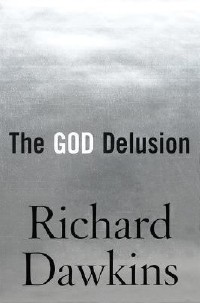
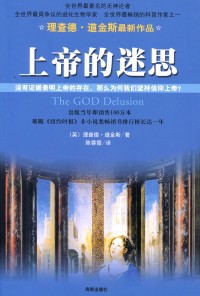
简介:Richard Dawkins was recently voted one of the world's top intellectuals (alongside Umberto Eco and Noam Chomsky) by Prospect Magazine. As the author of many classic works on science and philosophy, he has always asserted the irrationality of belief in God and the grievous harm it has inflicted on society. He now focuses his fierce intellect exclusively on this subject, denouncing its faulty logic and the suffering it causes. While Europe is becoming increasingly secularized, the rise of religious fundamentalism, whether in the Middle East of Middle America, is dramatically and dangerously dividing opinion around the world. In America and elsewhere, a vigorous dispute between "intelligent design" and Darwinism is seriously undermining and restricting the teaching of science. In many countries religious dogma from medieval times still serves to abuse basic human rights such as those of women and gay people. And all from a belief in a God whose existence lacks evidence of any kind. Dawkins attacks God in all his forms, form the sex-obsessed, cruel tyrant of the Old Testament to the more benign, but still illogical, Celestial Watchmaker favoured by some Enlightenment thinkers. He eviscerates the major arguments for religion and demonstrates the ultimate improbability of a supreme being. He shows how religion fuels war, foments bigotry and abuses children. In The God Delusion Dawkins presents a hard-hitting, impassioned rebuttal of religion of all types and does so in the lucid, witty, and powerful language for which he is renowned. It is a brilliantly argued, fascinating polemic that will be required reading for anyone interested in this most emotion and important subject. - Dust jacket.
简介:Discover magazine recently called Richard Dawkins "Darwin"s Rottweiler" for his fierce and effective defense of evolution. Prospect magazine voted him among the top three public intellectuals in the world (along with Umberto Eco and Noam Chomsky). Now Dawkins turns his considerable intellect on religion, denouncing its faulty logic and the suffering it causes. He critiques God in all his forms, from the sex-obsessed tyrant of the Old Testament to the more benign (but still illogical) Celestial Watchmaker favored by some Enlightenment thinkers. He eviscerates the major arguments for religion and demonstrates the supreme improbability of a supreme being. He shows how religion fuels war, foments bigotry, and abuses children, buttressing his points with historical and contemporary evidence. In so doing, he makes a compelling case that belief in God is not just irrational, but potentially deadly. Dawkins has fashioned an impassioned, rigorous rebuttal to religion, to be embraced by anyone who sputters at the inconsistencies and cruelties that riddle the Bible, bristles at the inanity of "intelligent design," or agonizes over fundamentalism in the Middle East - or Middle America. - Publisher.
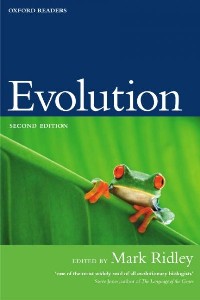
简介:Summary: Publisher Summary 1 This anthology contains extracts from more than 60 scientific papers, by authors such as Stephen Jay Gould, Richard Dawkins, Francis Crick and Jacques Monod. It starts with Charles Darwin, but concentrates on modern research, including genomics. The extracts are organized in sections, enabling the reader to sample a range of views on each topic, and have been chosen for their readability as well as their scientific importance.
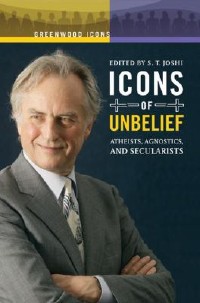
简介:Editor, critic, and scholar Joshi's anthology of essays offers insight into some of Western civilization's most significant agnostics, atheists, and secularists of the past 300 years. The 21 contributors discuss the work of intellectuals and philosophers, journalists and publicists, as well as authors. The focus is primarily on the religious and philosophical thinking of the subjects. The author notes that his intent is to add to society's continuing discussion regarding the place of religion, atheism, agnosticism, and secularism in our personal, political, and social lives--particularly since it is highly unlikely that advocates for religion and atheism are likely to disappear. The unusual collection of subjects ranges from John Stuart Mill and Fredrich Nietzsche to H.P. Lovecraft and Samuel Clemens, and from Richard Dawkins and Albert Einstein to Bertrand Russell and John Dewey. Annotation 漏2009 Book News, Inc., Portland, OR (booknews.com)
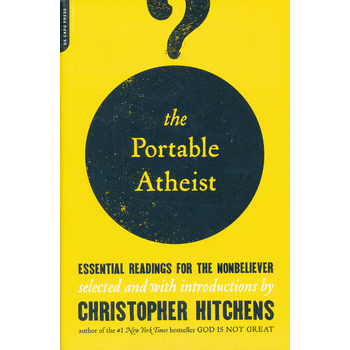
作者: Christopher
出版社:Perseus 2007年11月
简介:
From the #1 New York Times best-selling author of God Is NotGreat, a provocative and entertaining guided tour of atheist andagnostic thought through the ages--with never-before-publishedpieces by Salman Rushdie, Ian McEwan, and Ayaan HirsiAli.Christopher Hitchens continues to make the case for asplendidly godless universe in this first-ever gathering of theinfluential voices--past and present--that have shaped his side ofthe current (and raging) God/no-god debate. With Hitchens as yourerudite and witty guide, you’ll be led through a wealth ofphilosophy, literature, and scientific inquiry, including generousportions of the words of Lucretius, Benedict de Spinoza, CharlesDarwin, Karl Marx, Mark Twain, George Eliot, Bertrand Russell, EmmaGoldman, H. L. Mencken, Albert Einstein, Daniel Dennett, SamHarris, Richard Dawkins, and many others well-known and lesserknown. And they’re all set in context and commented upon as onlyChristopher Hitchens--“political and literary journalistextraordinaire” (Los Angeles Times)--can. Atheist? Believer?Uncertain? No matter: The Portable Atheist will speak to you andengage you every step of the way.
【媒体评论】
Review
"Those objections and the writings Hitchens assembles to buttressthem will surely bring on new controversies, which is just the sortof thing on which he has thrived over a long and fruitfulcareer."—Kirkus
"My prayers are answered!"—The New York Observer
"A fascinating collection of articles that just say no toreligion…Required reading for anyone who believes, disbelieves, orjust isn’t sure yet."—People, "Critic's Choice"
"Hitchens has returned to the Belief Wars backed by a fullarmy…the Godless Warrior marshals in an Atheist A-Team…to buttresshis own arguments…Hitchens is the guide as well as the commentartorlinking it all together."—San Diego Tribune
"Contrarian Christopher Hitchens' The Portable Atheist: EssentialReadings for the Nonbeliever should be sufficient fodder for anyoneuncomfortable with the notion of a creator."—Hartford Courant