共找到 10 项 “Hernando” 相关结果
- 全部分类
- 全部
- 文学
- 历史
- 哲学/宗教
- 法律
- 政治/社会
- 医学
- 教育/心理学
- 艺术/传媒
- 研究生考试
- 资格认证考试
- 公开课
- 语言
- 经济金融
- 管理学
- IT/计算机
- 自然科学
- 工学/工程
- 体育
- 行业资料
- 音乐
- 汽车机械制造
- 文档模板
- 创业
- 农学
- 生活
- 数据库教程
- 民族
The Mystery of Capital:Why Capitalism Triumphs in the West and Fails Everywhere Else
作者: (秘鲁)赫尔南多·德·索托(Hernando de Soto)著;王晓冬译
出版社:江苏人民出版社,2005
简介:由秘鲁著名经济学家赫尔南多·德·索托著的《资本的秘密》一书认为,资本并不是积累下来的资产,而是蕴藏在资产中、能够开展新的生产的潜能,也就是说,资产并不生下来就成为资本,只有被用于生产过程并满足资本家对剩余价值的欲求,才转化为资本。要使资产成为资本,必需有一个转化过程,即创造一合适的所有权机制,使资产的潜能发挥出来并被加工成实实在在的东西,便于人们清楚地认识、掌握和使用。 该书作者索托在这本书中向人们展示了所有权制度所具有的六种效应: 1.可以确定资产的经济潜能。正如高山顶上的湖泊所具有的势能可以被确认、然后被转化成动能一样,一幢房屋、一块砖瓦的潜在价值也能通过明确的所有权表述释放出来并转化为活跃的资本。正规的所有权表述可以通过提供信息、参考、规章和执行机制,成为获取其他团体的利益、建立责任制度的出发点。 2.可以把分散的信息综合融入一个制度。资本主义之所以在西方取得成功而在世界其他各国却难以为继,是因为西方国家的大多数资产已经被综合融入一套正规的产权表述制度之中。 3.可以建立责任制度。发达国家的正规的所有权制度把享有资产所有权的人转化成能够担负责任的个体,人们不再需要依赖邻里关系或地方性协定来保护他们对资产的权利。资产的拥有者从具有限制性的地方法规中解脱出来,进入一个更为全面的法律制度,便于他们在全国范围内负起责任。 4.使资产能够互换。在西方,正规所有权制度的重要任务之一就是使资产更加容易取得,从而使其能够用于创造剩余价值。在正规所有权制度下,每件资产好像是一块冰,所有权制度使人们可以把冰溶解成水,或把它加工成水蒸气,使其能够带动涡轮发动机的叶片旋转或者为轮船提供动力,但它作为水的本质并未改变。 5.可以建立人际关系网。合法的所有权制度是西方的第一个真正的互联网———它是一个有生命的实体,能够随着每一次交易成长,从不断发展的表述中识别出新的经济潜能和额外作用。正规的所有权制度使资产可以互换,为资产的所有人和资产、资产和地址、所有权地位和执行机制联系起来,使人们可以方便地得到资产所有者的全部资料。 6.西方国家的正规所有权制度像网络一样发挥作用。其中一个重要原因在于,无论时间和空间如何变换,全部的所有权记录始终都能找到并一直受到保护。这些记录保证了资产以合适的形式得到恰当、准确的表述,能够随时更新,便于查找。 既然正规的所有权制度有诸多好处,通过何种途径达到“彼岸”呢?索托认为最有效的方式莫过于———尊重业已存在的被当局视为非法的制度创新———将实际上是富有效率的“不合理法规”融入正规的法律制度中并加以推广。新中国发展的历程,特别是改革开放以来的发展过程,同样可以说明正视生产力发展现实、尊重劳动人民的选择,就能提高生产力。 近些年,党中央颁发的方针、政策、法规从根本上说都是在确认基层人民的创新———个体私营经济、股份合作制、资本市场、劳动力市场等的发展莫不是例证。也正因为党和国家政策的正确,才有今天社会经济的健康发展。
简介:La seleccio n de autores es muy amplia, pero todos representan un pensamiento directamente enfocado hacia la praxis. (En el prefacio se reconoce este hecho, diferenciado de las comunidades acade micas que buscan una teori a y la argumentan.) Los grande temas y los correspondientes autores estudiados son: Resistencia y liberacio n (Rigoberta Menchu?, Domitila Barrios de Chungara); Teologi a, filosofi a y pedagogi a de la liberacio n (Gutie rrez, Boff, Cardenal, Dussel, Paulo Freire); Teori a de la dependencia (Galeano, Prebisch, Faletto, Teotonio dos Santos y los autores del Manual del perfecto idiota latinoamericano); Guerrilla y socialismo (Guevara, Marighela, movimiento zapatista). Tambie n se consideran autores posteriores al fin de la Guerra fri a (Evelina Dagnino, Jorge Castan eda, Salinas de Gortari, Roberto Mangabeira Unger, Hernando de Soto). [JCTE]
作者: (秘)赫尔南多·德·索托(Hernando de Soto)著;于海生译
出版社:华夏出版社,2007
简介:本书是一部伟大的作品,它在拉美国家和西方社会有着巨大的影响,被学术界认为是论述发展中国家“地下经济”(亦即非正规经济)的最经典著作。作者细致而精辟的论述远远超越了秘鲁本身的状况,并具有一种世界性的价值和意义,所有负责发展中国家政治、经济和文化领域的人士,若想让国家走向繁荣和昌盛,都应该对它进行认真的研究。 作者简介 赫尔南多·德·索托,秘鲁自由与民主学会主席。该学会总部位于秘鲁首都利马,《经济学家》将其列为世界上两个最重要的“智囊团”之一。德?索托被《时代》和《福布斯》杂志称为世界上最具号召力的改革家之一,如今,他正在为全世界20多个国家和政府首脑制定所有权改革计划。德·索托的主要活动,是和自由与民主学会一起为亚洲、拉美和中东的贫困国家制定和推行资本形成计划。
简介:Summary: Publisher Summary 1 "Here we have a fascinating glimpse of a Nahua historian's version of a well-known conquest narrative, infusing it with detail from a more local, indigenous perspective, and informed by hindsight. Chimalpahin's Conquest is a significant contribution to the growing literature on the conquest of Mexico." This volume presents the story of Hernando Cortes's conquest of Mexico, as recounted by a contemporary Spanish historian and edited by Mexico's premier Nahua historian. Francisco Lopez de Gomara's monumental Historia de las Indias y Conquista de Mexico was published in 1552 to instant success. Despite being banned from the Americas by Prince Philip of Spain, La conquista fell into the hands of the seventeenth-century Nahua historian Chimalpahin, who took it upon himself to make a copy of Lopez de Gomara's great tome. As he copied, Chimalpahin rewrote large sections of La conquista, adding information about Emperor Moteuczoma and other key indigenous figures who participated in those first encounters. Chimalpahin's Conquest is thus not only the first scholarly modern English translation of Lopez de Gomara's La conquista, an invaluable source in itself of information about the conquest and native peoples, but it also adds Chimalpahin's unique perspective of Nahua culture to what has traditionally been a very Hispanic portrayal of the conquest Publisher Summary 2 This volume presents the story of Hernando Cortés's conquest of Mexico, as recounted by a contemporary Spanish historian and edited by Mexico's premier Nahua historian. Francisco López de Gómara's monumental Historia de las Indias y Conquista de Méxicowas published in 1552 to instant success. Despite being banned from the Americas by Prince Philip of Spain, La conquistafell into the hands of the seventeenth-century Nahua historian Chimalpahin, who took it upon himself to make a copy of the tome. As he copied, Chimalpahin rewrote large sections of La conquista, adding information about Emperor Moctezuma and other key indigenous people who participated in those first encounters. Chialpahin's Conquestis thus not only the first complete modern English translation of López de Gómara's La conquista, an invaluable source in itself of information about the conquest and native peoples; it also adds Chimalpahin's unique perspective of Nahua culture to what has traditionally been a very Hispanic portrayal of the conquest.
简介:"Five years ago, Hernando de Soto and his research team closed their books and opened their eyes. They went into the streets of developing and former communist nations to learn what real people are achieving inside and outside the underground economy. Their findings are dramatic. The data they have collected demonstrate that the world's poor have accumulated all the assets needed for successful capitalism." "Why then are these countries so underdeveloped? Why can't they turn these assets into liquid capital - the kind of capital that generates new wealth? De Soto reminds us that the present global crisis is the same kind of crisis that the advanced nations suffered during the Industrial Revolution, when they themselves were Third World countries teeming with black markets, pervasive mafias, widespread poverty and flagrant disregard of the law. The Western nations, he argues, created the key conversion process 150 years ago, and their Economies began to soar into wealth without their ever realizing what they had done. De Soto explains how this unwitting process, hidden deep in thousands of pieces of property law throughout the West, came to be, how it works, and how today it can be deliberately set up in developing and former communist nations."--BOOK JACKET.
简介:Muhammad -- Isaac Newton -- Jesus Christ -- Buddha -- Confucius -- St. Paul -- Ts'ai Lun -- Johann Gutenberg -- Christopher Columbus -- Albert Einstein -- Louis Pasteur -- Galileo Galilei -- Aristotle -- Euclid -- Moses -- Charles Darwin -- Shih Huang Ti -- Augustus Caesar -- Nicolaus Copernicus -- Antoine Laurent Lavoisier -- Constantine the Great -- James Watt -- Michael Faraday -- James Clerk Maxwell -- Martin Luther -- George Washington -- Karl Marx -- Orville Wright and Wilber Wright -- Genghis Khan -- Adam Smith. Edward de Vere (better known as "William Shakespeare") -- John Dalton -- Alexander the Great -- Napoleon Bonaparte -- Thomas Edison -- Antony van Leeuwenhoek -- William T.G. Morton -- Guglielmo Marconi -- Adolf Hitler -- Plato -- Oliver Cromwell -- Alexander Graham Bell -- Alexander Fleming -- John Locke -- Ludwig van Beethoven -- Werner Heisenberg -- Louis Daguerre -- Simon Bolivar -- Rene Descartes -- Michelangelo -- Pope Urban II -- "Umar ibn al-Khattab -- Asoka -- St. Augustine -- William Harvey. Ernest Rutherford -- John Calvin -- Gregor Mendel -- Max Planck -- Joseph Lister -- Nikolaus August Otto -- Francisco Pizarro -- Hernando Cortes -- Thomas Jefferson -- Queen Isabella I -- Joseph Stalin -- Julius Caesar -- William the Conqueror -- Sigmund Freud -- Edward Jenner -- William Conrad Rontgen -- Johann Sebastian Bach -- Lao Tzu -- Voltaire -- Johannes Kepler -- Enrico Fermi -- Leonhard Euler -- Jean-Jacques Rousseau -- Niccolo Machiavelli -- Thomas Malthus -- John F. Kennedy -- Gregory Pincus -- Mani -- Lenin. Sui Wen Ti -- Vasco da Gama -- Cyrus the Great -- Peter the Great -- Mao Zedong -- Francis Bacon -- Henry Ford -- Mencius -- Zoroaster -- Queen Elizabeth I -- Mikhail Gorbachev -- Menes -- Charlemagne -- Homer -- Justinian I -- Mahavira -- Honorable mentions and interesting misses : St. Thomas Aquinas -- Archimedes -- Charles Babbage -- Cheops -- Marie Curie -- Benjamin Franklin -- Mohandas Gandhi -- Abraham Lincoln -- Ferdinander
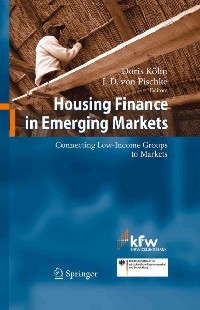
简介:The growth of urban areas and population in middle and low income countries is a continuing trend. Urbanization expands as rural to urban migration offers better income opportunities in cities. This trend is both a source of development opportunities and challenges for the housing sector. On the one hand, housing is a large and growing market, and on the other, massive slums confirm the poor housing conditions in many developing countries. These adverse conditions mirror inadequate housing policies, inefficient or absent property registration, as well as limits to access to housing finance. Provision of affordable housing is therefore an important topic in the fight against poverty. This book focuses on solutions that improve the enabling environment for the poor in accessing housing finance. It explores how to develop and integrate housing finance into a sustainable financial system for developing countries and offers ways in which low-income families can obtain better access to housing finance. This book provides a conceptual framework for housing finance development and addresses practical solutions in the provision of housing finance and compares different approaches. The global financial crisis which originated in the US sub-prime housing market has not altered the underlying reality of global housing finance: the majority of people in developing countries still do not have access to formal housing finance. Nor has it answered the biggest question: how can they be served in a sustainable way? Connecting this unserved group to appropriate housing finance products through robust financial systems must remain a top policy priority if these nations are to enjoy long term, broad-based economic growth. It is also a great opportunity for new and existing housing finance providers. DAVID PORTEOUS, Director, Bankable Frontier Associates Where property in the form of private homes is secure, people can focus on work rather than protecting their property. One of the major effects of the property rights reform driven by Hernando de Soto in Peru put more children into school. Why? Adults spent less time safeguarding their property and could search for and find better jobs. This enabled them to send their children to school. Houses are also important for those who start up businesses. The most practical source of finance beyond help from family and friends tends to be a mortgage on property. For a mortgage market to develop, banks have to be able to foreclose on property of those who cannot pay back. The obvious attractions of housing policy as a plank of social policy can also lead to policies that backfire, as the recent example of the United States shows. Housing finance is a major component of the fight against poverty. For property to yield all its benefits, institutional reforms are required 鈥?chief among them secure property rights for owners and enforceable creditor rights for financiers. Sensible regulations for zoning and construction also help. However, political pressure on banks to ignore the credit risk of home ownership or to cease foreclosures when things go wrong risks undermining sustainable housing finance. MICHAEL KLEIN, Consultant, Former Chief Economist International Finance Corporation (IFC)