共找到 97 项 “William James.” 相关结果
- 全部分类
- 全部
- 文学
- 历史
- 哲学/宗教
- 法律
- 政治/社会
- 医学
- 教育/心理学
- 艺术/传媒
- 研究生考试
- 资格认证考试
- 公开课
- 语言
- 经济金融
- 管理学
- IT/计算机
- 自然科学
- 工学/工程
- 体育
- 行业资料
- 音乐
- 汽车机械制造
- 文档模板
- 创业
- 农学
- 生活
- 数据库教程
- 民族
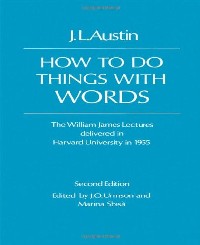
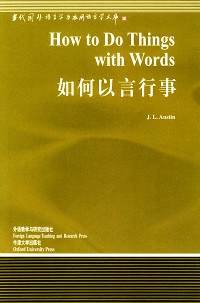
简介:John L. Austin was one of the leading philosophers of the twentieth century. The William James Lectures presented Austin's conclusions in the field to which he directed his main efforts on a wide variety of philosophical problems. These talks became the classic How to Do Things with Words . For this second edition, the editors have returned to Austin's original lecture notes, amending the printed text where it seemed necessary. Students will find the new text clearer, and, at the same time, more faithful to the actual lectures. An appendix contains literal transcriptions of a number of marginal notes made by Austin but not included in the text. Comparison of the text with these annotations provides new dimensions to the study of Austin's work.
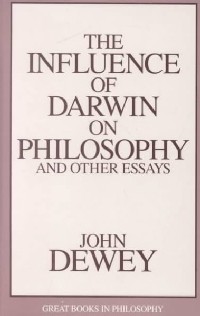
简介: Preeminent American philosopher and educator John Dewey (1859-1952) rejected Hegelian idealism for the pragmatism of William James. In this collection of informal, highly readable essays, originally published between 1897 and 1909, Dewey articulates his now classic philosophical concepts of knowledge and truth and the nature of reality. Here Dewey introduces his scientific method and uses critical intelligence to reject the traditional ways of viewing philosophical discourse. Knowledge cannot be divorced from experience: it is gradually acquired through interaction with nature. Philosophy, therefore, has to be regarded as itself a method of knowledge and not as a repository of disembodied, preexisting absolute truths.
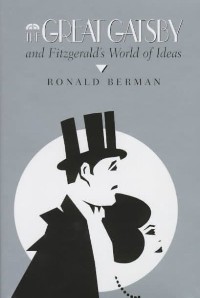
简介:"The Great Gatsby and Fitzgerald鈥檚 World of Ideas focuses on F. Scott Fitzgerald and the prevailing ideas and values that permeated American society in the late teens and early twenties, providing a vivid portrait of the intellectual and cultural milieu in which The Great Gatsby was produced." "This new and original reading of Gatsby discloses Fitzgerald鈥檚 remarkable awareness of the issues of his time and his debt to such philosophers and critics as William James, Josiah Royce, George Santayana, John Dewey, Walter Lippman, H. L. Mencken, and Edmund Wilson. Berman鈥檚 fresh approach considers the meaning of various ideas important to the novel: for example, those moral qualities governing both social and individual life. Berman鈥檚 reading of the text reveals extraordinary emphases on matters that could productively be described as philosophicalthe nature of friendship, love, and the good life. But the text of the novel has many echoes, and the same concern with moral issues - especially those issues affecting democratic life - can be found in a number of other texts of the first quarter of the century. Vigorously debated throughout Fitzgerald鈥檚 own lifetime, these texts shed a completely new light on the idealism of The Great Gatsby and on the penetrating view it has of life in a new form of American democracy." "Ronald Berman, noted Fitzgerald scholar, makes it clear that accepted interpretations of The Great Gatsby and of Fitzgerald鈥檚 work in general must be changed. Berman demonstrates that Fitzgerald wrote within a vast dialectic, relating the ideas of the twenties to those of the "old America" described in so many of his works. Gatsby, Nick Carraway, and the other characters of Fitzgerald鈥檚 greatest novel all have to consider not only their relationship to the present but also their distance from what was once a highly meaningful past."--BOOK JACKET.
简介:Summary: Publisher Summary 1 Winner of the 2002 William James Book Award presented by the Society for General Psychology, Division One of the American Psychological Association. This award is given for the best book which furthers the mission of the Society for General Psychology by bringing together researchers and ideas from the various subfields of neuroscience and psychology. The first edition of The Cognitive Neuroscienceshelped to define the field. The second edition reflects the many advances that have taken place-particularly in imaging and recording techniques. From the molecular level up to that of human consciousness, the contributions cover one of the most fascinating areas of science鈥攖he relationship between the structural and physiological mechanisms of the brain/nervous system and the psychological reality of mind. The majority of the chapters in this edition of The Cognitive Neurosciencesare new, and those from the first edition have been completely rewritten and updated. This major reference work is now available online as part of MIT CogNet, The Cognitive and Brain Sciences Community online. Sections and section editors: - Plasticity - Ira B. Black - Development - Pasko Rakic - Sensory Systems - J. Anthony Movshon and Colin Blakemore - Motor - Emilio Bizzi - Attention - Michael I. Posner - Memory - Endel Tulving - Language - Willem J. M. Levelt - Thought and Memory - Edward E. Smith and Stephen M. Kosslyn - Emotion - Joseph E. LeDoux - Evolution - Leda Cosmides and John Tooby - Consciousness - Daniel L. Schacter
简介:David Herd provides a critical language for a ppreciating the beauty and complexity of Ashbery's writing. Presenting the poet in all his forms--avant-garde, nostalgic, sublime, and camp--he demonstrates that the inventiveness of Ashbery's work has always been underpinned by the poet's desire to fit the poem to its occasion. Tracing Ashbery's development from his origins in the dazzling artistic world of 1950s New York, Herd portrays Ashbery as both an American pragmatist writing in the spirit of William James, and a committed literary internationalist learning from Boris Pasternak and the Russian avant-garde. His poetry is shown to be alive to such culturally defining issues as the growth of mass culture, the absence of God, the war in Vietnam, the emergence of AIDS, the erosion of tradition, and the decline of the avant-garde. Herd compares Ashbery's responses to the work of, among others, Robert Lowell, John Berryman, Kenneth Koch, and Frank O'Hara.--Publisher's description.
作者: (美)Lesley Jones,(英)Paul Simon,(澳)William James编著
出版社:北京大学出版社,2008
简介: 《主流英语国际通用教程:学习指导书(1)》是与《主流英语国际通用教程》配套的学习用书。《主流英语国际通用教程:学习指导书(1)》是“主流英语完美配套解决方案”的一个重要环节。它旨在帮助学习者更好地掌握教程中出现的重要词汇、表达方式和语法知识,大大节省了学习者查找资料和理解课文的时间,让学习变得更加有效率。《主流英语国际通用教程:学习指导书(1)》对学习者的英语学习进行巩固和检验,为学习者以后的英语学习打下了坚实的基础,并对今后学习主流英语的其他教辅用书和网络学习,起到了极大的帮助和提高的作用。
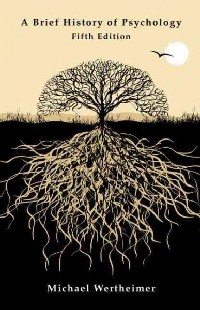
简介:Summary: Publisher Summary 1 This fifth edition approaches psychology as a discipline with antecedents in philosophical speculation and early scientific experimentation. The first three chapters cover these early developments, while the second section focuses on 19th-century German experimental psychology and empirical psychology in tradition of William James. The third and longest section of the book covers the 20th century. The earlier half of the century is dubbed "the age of schools" and dominated by psychoanalysis, behavioral-ism, structuralism, and Gestalt psychology. The latter half was concerned with a return to empirical methods and active models of human agency. Finally the last section evaluates psychology in the new millennium and developments in terms of women in psychology, industrial psychology and social justice. Psychology Press is an imprint of the Taylor & Francis Group. Annotation 漏2012 Book News, Inc., Portland, OR (booknews.com)
简介:Henry Levinson offers a major reinterpretation of the Spanish@-born American philosopher George Santayana (1863-1952), which highlights his relationship to the tradition of American pragmatism. He shows that Santayana's role in forming the pragmatist tradition was greater than has usually been recognized and that Santayana has much to offer contemporary pragmatists. Levinson puts Santayana at the forefront of pragmatism by emphasizing his reflections on the cultural structures that shape human life and expression. He explores Santayana's interest in solitude and society, his poetic construals of religious thought and ritual, his institutional rendition of pragmatism, and his concern to distinguish spirituality and politics. In doing so, he gives attention to Santayana's precursors, like Ralph Waldo Emerson; to his teachers and colleagues, including William James and Josiah Royce; to other pragmatists of his time, such as John Dewey and Sidney Hook; and to contemporary writers, including Richard Rorty and Milan Kundera. Levinson's book illuminates an area neglected in both American literary history and the history of pragmatism. No other book has so carefully and centrally focused on the development of Santayana's scholarship, and no other author captures the way in which Santayana's concern with spirituality connects his earlier and later works.
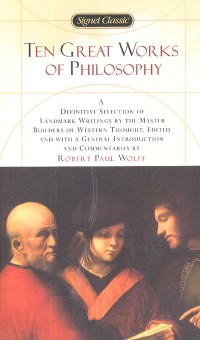
简介: From ancient Greece to nineteenth-century America, this collection traces the history of our civilization through the seminal works of its most influential thinkers. Perfect for anyone interested in understanding the progression of Western thought, this volume includes: Plato: Apology, Crito, and Death of Socrates from Phaedo Aristotle: Poetics St. Anselm: The Ontological Proof of St. Anselm, from Proslogium St. Thomas Aquinas: St. Thomas' Proofs of God's Existence, from The Summa Theologica René Descartes: Meditations on the First Philosophy David Hume: An Inquiry Concerning Human Understanding Immanuel Kant: Prolegomena to Any Future Metaphysics John Stuart Mill: Utilitarianism William James: The Will to Believe
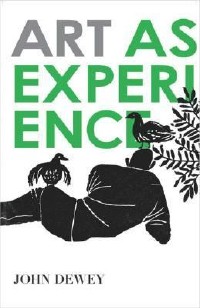
简介:"Based on John Dewey's lectures on aesthetics, delivered as the first William James Lecturer at Harvard (1932), Artas Experience has grown to be considered internationally as the most distinguished work every written by an American on the formal structure and characteristic effects of all the arts: architecture, sculpture, painting,music, and literature."--BOOK JACKET.
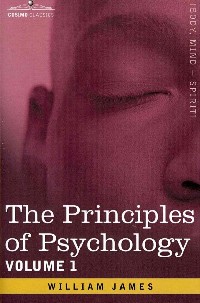
简介:The Principles of Psychology is a two-volume introduction to the study of the human mind. Based on his classroom lessons and first published in 1890, James has gathered together what he feels to be the most interesting and most accessible information for the beginning student. Psychology, according to James, deals with thoughts and feelings as its facts and does not attempt to determine where such things come from. This would be the realm of metaphysics, and he is careful to avoid crossing over from science into philosophy. This first volume contains discussions of the brain, methods for analyzing behavior, thought, consciousness, attention, association, time, and memory. Anyone wanting a thorough introduction to psychology will find this work useful and engaging. American psychologist and philosopher WILLIAM JAMES (1842-1910), brother of novelist Henry James, was a groundbreaking researcher at Harvard University and one of the most popular thinkers of the 19th century. Among his many works are Human Immortality (1898) and The Varieties of Religious Experience: A Study in Human Nature (1902).
简介:Discusses the theories of Socrates, Plato, Aristotle, Plotinus, St. Augustine, St. Thomas Aquinas, John Locke, George Berkeley, David Hume, David Hartley, Alexander Bain, Herbert Spencer, Immanuel Kant, Johann Herbart, Galen, Marshall Hall, Sir Charles Bell, Franz Joseph Gall, Hermann von Helmholtz, Ewald Hering, Ernest H. Weber, Gustav Theodor Fechner, Charles Darwin, Sir Francis Galton, Wilhelm Maximilian Wundt, William James, John Dewey, James Rowland Angell, Harvey A. Carr, Ivan Petrovich Pavlov, Vladimir Bekhterev, Edward Lee Thorndike, McDougall, Woodworth, John Broadus Watson, Albert P. Weiss, Karl Lashley, Walter S. Hunter, Edwin B. Holt, Edwin R. Guthrie, Clark L. Hull, J. R. Kantor, Burrhus Frederic Skinner, Albert Bandura, Immanuel Kant, John Stuart Mill, Franz Brentano, Carl Stumpf, Ernst Mach, Christian von Ehrenfels, Max Wertheimer, Lewin, Tolman, Jean Piaget, Noam Chomsky, Leibnitz, Schopenhauer, Nietzsche, Sigmund Freud, Alfred Adler, Carl Jung, Karen Horney, Erich Fromm, Harry Stack Sullivan, Erik Erikson, Carl Rogers, Soren Kierkegaard, Martin Heidegger, Jean-Paul Sartre, Karl Jaspers, Adrian von Kaam, Ludwig Binswanger, Medard Boss, Rollo May, and others.
简介:Professional philosophers have tended either to shrug off American philosophy as negligible or derivative or to date American philosophy from the work of twentieth century analytical positivists such as Quine. Russell Goodman expands on the revisionist position developed by Stanley Cavell, that the most interesting strain of American thought proceeds not from Puritan theology or from empirical science but from a peculiarly American kind of Romanticism. This insight leads Goodman, through Cavell, back to Emerson and Thoreau and thence to William James and John Dewey, as they assimilated to American circumstances and intellectual habits the currents of European thought from Kant to Wittgenstein.
简介:"Recent work in cognitive science has rooted our moral dispositions in the more ancient and less plastic regions of our brains, seeming to confirm Darwin's suspicion that a biological approach to human life must necessarily produce a narrowly conservative (and perhaps even immutable) account of ethics. This book, however, explores a now-forgotten suggestion made by William James and other early pioneers of cognitive science who saw art as a means to translate the experimental study of the mind into a skeptical, pluralist, and progressive approach to the good life. Using Hamlet and a number of other popular and influential seventeenth-century tragedies as case-studies, this book shows how aesthetic experience can help organize the biological functions of our brains into adaptive social networks that not only make us more resilient to the pressures of natural selection, but fulfill the human need for intentional life. Seen this way, art is not--as many recent cognitive scientists have suggested--simply a mirror of our natural mental functions. Rather, it is also an active contributor to new functions, a useful tool for translating the theoretical discoveries of science into progressive ethical practice"--
简介:"The academic study of religion has recently turned to theinvestigation of emotion as a crucial aspect of religious life. Seeking to better understand how one affects the other, researchers have begun exploring in nuanced ways the various intersections between our religious lives and our emotional states. This volume offers a collection of essays that together provide the most comprehensive overview of this new area of study, the interplay between religion and emotion." "The essays are grouped into four parts. Part I consists of essays on Buddhism, Christianity,Judaism, Islam, and other world religions. Part II highlights aspects of religious life with special emotional significance - ritual, music, gender, sexuality,and material culture - and how each shapes individual and communal emotional performance. Part III delves into the myriad roles of specific emotional states and how they function in assorted religious settings, and Part IV colors the overall discussion with historical perspectivesfrom key figures such as St. Augustine, Soren Kierkegaard,Jonathan Edwards, Emile Durkheim, and William James."--BOOK JACKET
简介: A bold, insightful book that rejects the myth of America the Unphilosophical, arguing that America today towers as the most philosophical culture in the history of the world, an unprecedented marketplace of truth and argument that far surpasses ancient Greece or any other place one can name. With verve and keen intelligence, Carlin Romano—Pulitzer Prize finalist, award-winning book critic, and professor of philosophy—takes on the widely held belief that ours is an anti–intellectual society. Instead, while providing a richly reported overview of American thought, Romano argues that ordinary Americans see through phony philosophical justifications faster than anyone else, and that the best of our thinkers abandon artificial academic debates for fresh intellectual enterprises, such as cyberphilosophy. Along the way, Romano seeks to topple philosophy’s most fiercely admired hero, Socrates, asserting that it is Isocrates, the nearly forgotten Greek philosopher who rejected certainty, whom Americans should honor as their intellectual ancestor. America the Philosophicalintroduces readers to a nation whose existence most still doubt: a dynamic, deeply stimulating network of people and places drawn together by shared excitement about ideas. From the annual conference of the American Philosophical Association, where scholars tack wiseguy notes addressed to Spinoza on a public bulletin board, to the eruption of philosophy blogs where participants discuss everything from pedagogy to the philosophy of science to the nature of agency and free will, Romano reveals a world where public debate and intellectual engagement never stop. And readers meet the men and women whose ideas have helped shape American life over the previous few centuries, from well-known historical figures like William James and Ralph Waldo Emerson, to modern cultural critics who deserve to be seen as thinkers (Kenneth Burke, Edward Said), to the iconoclastic African American, women, Native American, and gay mavericks (Cornel West, Susan Sontag, Anne Waters, Richard Mohr) who have broadened the boundaries of American philosophy. Smart and provocative, America the Philosophicalis a rebellious tour de force that both celebrates our country’s unparalleled intellectual energy and promises to bury some of our most hidebound cultural clichés.
简介:In this book, Robert Talisse critically examines the moral and political implications of pluralism, the view that our best moral thinking is indeterminate and that moral conflict is an inescapable feature of the human condition.?Through a careful engagement with the work of William James, Isaiah Berlin, John Rawls, and their contemporary followe... more 籸s, Talisse distinguishes two broad types of moral pluralism: metaphysical and epistemic.?After arguing that metaphysical pluralism does not offer a compelling account of value and thus cannot ground a viable conception of liberal politics, Talisse proposes and defends a distinctive variety of epistemic pluralism.?According to this view, certain value conflicts are at present undecidable rather than intrinsic. Consequently, epistemic pluralism countenances the possibility that further argumentation, enhanced reflection, or the acquisition of more information could yield rational resolutions to the kinds of value conflicts that metaphysical pluralists deem irresolvable as such. Talisse?s epistemic pluralism hence prescribes a politics in which deep value conflicts are to be addressed by ongoing argumentation and free engagement among citizens; the epistemic pluralist thus sees liberal democracy is the proper political response to ongoing moral disagreement.?While developing his view, Talisse engages central issues in contemporary liberal political theory, including toleration, state neutrality, public justification, and the accommodation of illiberal sub-cultures.?This book will be of interest to ethicists, political philosophers, and political scientists. ?less
简介:From later antiquity down to the close of the eighteenth century, most philosophers and men of science and, indeed, most educated men, accepted without question a traditional view of the plan and structure of the world. In this volume, which embodies the William James lectures for 1933, Professor Lovejoy points out the three principles--plenitude, continuity, and graduation--which were combined in this conception; analyzes their origins in the philosophies of Plato, Aristole, and the Neoplatonists; traces the most important of their diverse samifications in subsequent religious thought, in metaphysics, in ethics and asesthics, and in astronomical and biological theories; and copiously illustrates the influence of the conception as a whole, and of the ideas out of which it was compounded, upon the imagination and feelings as expressed in literature.
简介:Charles S. Peirce, William James, Josiah Royce, George Santayana, John Dewey, and George Herbert Mead: each of these individuals is an original and historically important thinker; each is an essential contributor to the period, perspective, and tradition of classical American philosophy; and each speaks directly, imaginatively, critically, and wisely to our contemporary global society, its distant possibilities for improvement, and its massive, pressing problems. From the initiative of pragmatism in approximately 1870 to Dewey's final work after World War II, classical American philosophy has come to represent the critical articulation of attitudes, outlooks, and forms of life imbedded in the culture from which it arose. John Stuhr brings together the works of these foremost thinkers to present a comprehensive collection in American philosophy. Extensive introductory essays, written especially for this volume by leading scholars of the subject, provide not only the bibliographical and cultural contexts necessary to a full appreciation of each thinker, but also original critical and interpretive philosophical observations.