

简介
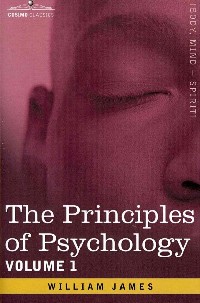
The Principles of Psychology is a two-volume introduction to the study of the human mind. Based on his classroom lessons and first published in 1890, James has gathered together what he feels to be the most interesting and most accessible information for the beginning student. Psychology, according to James, deals with thoughts and feelings as its facts and does not attempt to determine where such things come from. This would be the realm of metaphysics, and he is careful to avoid crossing over from science into philosophy. This first volume contains discussions of the brain, methods for analyzing behavior, thought, consciousness, attention, association, time, and memory. Anyone wanting a thorough introduction to psychology will find this work useful and engaging. American psychologist and philosopher WILLIAM JAMES (1842-1910), brother of novelist Henry James, was a groundbreaking researcher at Harvard University and one of the most popular thinkers of the 19th century. Among his many works are Human Immortality (1898) and The Varieties of Religious Experience: A Study in Human Nature (1902).
目录
Table Of Contents:
Chapter I The Scope Of Psychology, 1(11)
Mental Manifestations depend on Cerebral Conditions, 1(7)
Pursuit of ends and choice are the marks of Mind's presence, 8(4)
Chapter II The Functions Of The Brain, 12(69)
Reflex, semi-reflex, and voluntary acts, 12(2)
The Frog's nerve-centres, 14(6)
General notion of the hemispheres, 20(4)
Their Education-the Meynert scheme, 24(3)
The phrenological contrasted with the physiological conception, 27(3)
The localization of function in the hemispheres, 30(51)
The motor zone, 81(6)
Motor Aphasia, 87
The sight-centre, 41(7)
Mental blindness, 48(4)
The hearing-centre, 52(2)
Sensory Aphasia, 54(3)
Centres for smell and taste, 57(1)
The touch-centre, 58(7)
Man's Consciousness limited to the hemispheres, 65(2)
The restitution of function, 67(5)
Final correction of the Meynert scheme, 72(6)
Conclusions, 78(3)
Chapter III On Some General Conditions Of Brain-Activity, 81(23)
The summation of Stimuli, 82(3)
Reaction-time, 85(12)
Cerebral blood-supply, 97(2)
Cerebral Thermometry, 99(2)
Phosphorus and Thought, 101(3)
Chapter IV Habit, 104(24)
Due to plasticity of neural matter, 105(7)
Produces ease of action, 112(3)
Diminishes attention 115(1)
Concatenated performances, 116(4)
Ethical implications and pedagogic maxims, 120(8)
Chapter V The Automaton-Theory, 128(17)
The theory described, 128(5)
Reasons for it, 133(5)
Reasons against it, 138(7)
Chapter VI The Mind-Stuff Theory 145(38)
Evolutionary Psychology demands a Mind-dust, 146(4)
Some alleged proofs that it exists, 150(4)
Refutation of these proofs, 154(4)
Self-compounding of mental facts is inadmissible, 158(4)
Can states of mind be unconscious? 162(2)
Refutation of alleged proofs of unconscious thought, 164(12)
Difficulty of stating the connection between mind and brain, 176(4)
'The Soul' is logically the least objectionable hypothesis, 180(2)
Conclusion, 182(1)
Chapter VII The Methods And Snares Op Psychology, 183(16)
Psychology is a natural Science, 183(2)
Introspection, 185(7)
Experiment, 192(2)
Sources of error, 194(2)
The Psychologist's fallacy, 196(3)
Chapter VIII The Relations Of Minds To Other Things, 199(25)
Time relations: lapses of Consciousness-Locke v Descartes, 200(2)
The 'unconsciousness' of hysterics not genuine, 202(4)
Minds may split into dissociated parts, 206(8)
Space-relations the Seat of the Soul, 214(2)
Cognitive relations, 216(2)
The Psychologist's point off view, 218(3)
Two kinds of knowledge, acquaintance and knowledge about, 221(3)
Chapter IX The Stream Of Thought, 224(67)
Consciousness tends to the personal form, 225(4)
It is in constant change, 229(8)
It is sensibly continuous, 237(6)
'Substantive' and 'transitive' parts of Consciousness, 243(2)
Feelings of relation, 245(4)
Feelings of tendency, 249(9)
The 'fringe' of the object, 258(3)
The feeling of rational sequence, 261(4)
Thought possible in any kind of mental material, 265(2)
Thought and language, 267(4)
Consciousness is cognitive, 271(4)
The word Object, 275(1)
Every cognition is due to one integral pulse of thought, 276(3)
Diagrams of Thought's stream, 279(5)
Thought is always selective, 284(7)
Chapter X The Consciousness Op Self, 291(111)
The Empirical Self or Me, 291(1)
Its constituents, 292(1)
The material self, 292(1)
The Social Self, 293(3)
The Spiritual Self, 296(3)
Difficulty of apprehending Thought as a purely spiritual activity, 299(6)
Emotions of Self, 305(4)
Rivalry and conflict of one's different selves, 309(4)
Their hierarchy, 313(4)
What Self we love in 'Self love,' 317(12)
The Pure Ego, 329(3)
The verifiable ground of the sense of personal identity, 332(6)
The passing Thought is the only Thinker which Psychology requires, 338(4)
Theories of Self-consciousness:
1 The theory of the Soul, 342(8)
2 The Associationist theory, 350(30)
3 The Transcendentalist theory, 380
The mutations of the Self, 373(2)
Insane delusions, 375(4)
Alternating selves, 379(19)
Mediumships or possessions, 398(2)
Summary, 400(2)
Chapter XI Attention, 402(57)
Its neglect by English psychologists, 402(2)
Description of it, 404(1)
To how many things can we attend at once? 405(5)
Wundt's experiments on displacement of date of impressions simultaneously attended to, 410(8)
Personal equation, 418
The varieties of attention, 416(2)
Passive attention, 418(2)
Voluntary attention, 420(5)
Attention's effects on sensation, 425(1)
Attention's effects on discrimination, 426(1)
Attention's effects on recollection, 427(1)
Attention's effects on reaction-time, 427(7)
The neural process in attention:
1 Accommodation of sense-organ, 434(4)
2 Pre-perception, 438(9)
Is voluntary attention a resultant or a force? 447(3)
The effort to attend can be conceived as a resultant, 450(3)
Conclusion, 453(2)
Acquired Inattention, 455(4)
Chapter XII Conception, 459(24)
The sense of sameness, 459(2)
Conception defined, 461(3)
Conceptions are unchangeable, 464(4)
Abstract ideas, 468(5)
Universals, 473(7)
The conception of the same is not the 'same state' of mind, 480(3)
Chapter XIII Discrimination And Comparison, 483(67)
Locke on discrimination, 488
Martineau ditto, 484(4)
Simultaneous sensations originally fuse into one object, 488(1)
The principle of mediate comparison, 489(1)
Not all differences are differences of composition, 490(4)
The conditions of discrimination, 494(1)
The sensation of difference, 495(3)
The transcendentalist theory of the perception of differences uncalled for, 498(4)
The process of analysis, 502(3)
The process of abstraction, 505(3)
The improvement of discrimination by practice, 508(2)
Its two causes, 510(5)
Practical interests limit our discrimination, 515(8)
Reaction time after discrimination, 523(5)
The perception of likeness, 528(2)
The magnitude of differences, 530(3)
The measurement of discriminative sensibility: Weber's law, 533(54)
Fechner's interpretation of this as the psycho-physic law, 587
Criticism thereof, 545(5)
Chapter XIV Association, 550(55)
The problem of the connection of our thoughts, 550(3)
It depends on mechanical conditions, 553(1)
Association is of objects thought of, not of 'ideas,' 554(3)
The rapidity of association, 557(4)
The law of contiguity, 561(5)
The elementary law of association, 566(3)
Impartial reintegration, 569(2)
Ordinary or mixed association, 571(1)
The law of interest, 572(6)
Association by similarity, 578(3)
Elementary expression of the difference between the three kinds of association, 581(2)
Association in voluntary thought, 583(7)
Similarity no elementary law, 590(4)
History of the doctrine of association, 594(11)
Chapter XV The Perception Of Time, 605(38)
The sensible present, 606(2)
Its duration is the primitive time-perception, 608(3)
Accuracy of our estimate of short durations, 611(8)
We have no sense for empty time, 619(5)
Variations of our time-estimate, 624(3)
The feeling of past time is a present feeling, 627(5)
Its cerebral process, 632(11)
Chapter XVI Memory, 643
Primary memory, 648(1)
Analysis of the phenomenon of memory, 648(10)
Retention and reproduction are both caused by paths of association in the brain, 658(1)
The conditions of goodness in memory, 659(9)
Native retentiveness is unchangeable, 668
All improvement of memory consists in better thinking, 667(2)
Other conditions of good memory, 669(9)
Recognition, or the sense of familiarity, 678(1)
Exact measurements of memory, 678(1)
Forgetting, 679(2)
Pathological cases, 681(6)
Professor Ladd criticised, 687
Chapter I The Scope Of Psychology, 1(11)
Mental Manifestations depend on Cerebral Conditions, 1(7)
Pursuit of ends and choice are the marks of Mind's presence, 8(4)
Chapter II The Functions Of The Brain, 12(69)
Reflex, semi-reflex, and voluntary acts, 12(2)
The Frog's nerve-centres, 14(6)
General notion of the hemispheres, 20(4)
Their Education-the Meynert scheme, 24(3)
The phrenological contrasted with the physiological conception, 27(3)
The localization of function in the hemispheres, 30(51)
The motor zone, 81(6)
Motor Aphasia, 87
The sight-centre, 41(7)
Mental blindness, 48(4)
The hearing-centre, 52(2)
Sensory Aphasia, 54(3)
Centres for smell and taste, 57(1)
The touch-centre, 58(7)
Man's Consciousness limited to the hemispheres, 65(2)
The restitution of function, 67(5)
Final correction of the Meynert scheme, 72(6)
Conclusions, 78(3)
Chapter III On Some General Conditions Of Brain-Activity, 81(23)
The summation of Stimuli, 82(3)
Reaction-time, 85(12)
Cerebral blood-supply, 97(2)
Cerebral Thermometry, 99(2)
Phosphorus and Thought, 101(3)
Chapter IV Habit, 104(24)
Due to plasticity of neural matter, 105(7)
Produces ease of action, 112(3)
Diminishes attention 115(1)
Concatenated performances, 116(4)
Ethical implications and pedagogic maxims, 120(8)
Chapter V The Automaton-Theory, 128(17)
The theory described, 128(5)
Reasons for it, 133(5)
Reasons against it, 138(7)
Chapter VI The Mind-Stuff Theory 145(38)
Evolutionary Psychology demands a Mind-dust, 146(4)
Some alleged proofs that it exists, 150(4)
Refutation of these proofs, 154(4)
Self-compounding of mental facts is inadmissible, 158(4)
Can states of mind be unconscious? 162(2)
Refutation of alleged proofs of unconscious thought, 164(12)
Difficulty of stating the connection between mind and brain, 176(4)
'The Soul' is logically the least objectionable hypothesis, 180(2)
Conclusion, 182(1)
Chapter VII The Methods And Snares Op Psychology, 183(16)
Psychology is a natural Science, 183(2)
Introspection, 185(7)
Experiment, 192(2)
Sources of error, 194(2)
The Psychologist's fallacy, 196(3)
Chapter VIII The Relations Of Minds To Other Things, 199(25)
Time relations: lapses of Consciousness-Locke v Descartes, 200(2)
The 'unconsciousness' of hysterics not genuine, 202(4)
Minds may split into dissociated parts, 206(8)
Space-relations the Seat of the Soul, 214(2)
Cognitive relations, 216(2)
The Psychologist's point off view, 218(3)
Two kinds of knowledge, acquaintance and knowledge about, 221(3)
Chapter IX The Stream Of Thought, 224(67)
Consciousness tends to the personal form, 225(4)
It is in constant change, 229(8)
It is sensibly continuous, 237(6)
'Substantive' and 'transitive' parts of Consciousness, 243(2)
Feelings of relation, 245(4)
Feelings of tendency, 249(9)
The 'fringe' of the object, 258(3)
The feeling of rational sequence, 261(4)
Thought possible in any kind of mental material, 265(2)
Thought and language, 267(4)
Consciousness is cognitive, 271(4)
The word Object, 275(1)
Every cognition is due to one integral pulse of thought, 276(3)
Diagrams of Thought's stream, 279(5)
Thought is always selective, 284(7)
Chapter X The Consciousness Op Self, 291(111)
The Empirical Self or Me, 291(1)
Its constituents, 292(1)
The material self, 292(1)
The Social Self, 293(3)
The Spiritual Self, 296(3)
Difficulty of apprehending Thought as a purely spiritual activity, 299(6)
Emotions of Self, 305(4)
Rivalry and conflict of one's different selves, 309(4)
Their hierarchy, 313(4)
What Self we love in 'Self love,' 317(12)
The Pure Ego, 329(3)
The verifiable ground of the sense of personal identity, 332(6)
The passing Thought is the only Thinker which Psychology requires, 338(4)
Theories of Self-consciousness:
1 The theory of the Soul, 342(8)
2 The Associationist theory, 350(30)
3 The Transcendentalist theory, 380
The mutations of the Self, 373(2)
Insane delusions, 375(4)
Alternating selves, 379(19)
Mediumships or possessions, 398(2)
Summary, 400(2)
Chapter XI Attention, 402(57)
Its neglect by English psychologists, 402(2)
Description of it, 404(1)
To how many things can we attend at once? 405(5)
Wundt's experiments on displacement of date of impressions simultaneously attended to, 410(8)
Personal equation, 418
The varieties of attention, 416(2)
Passive attention, 418(2)
Voluntary attention, 420(5)
Attention's effects on sensation, 425(1)
Attention's effects on discrimination, 426(1)
Attention's effects on recollection, 427(1)
Attention's effects on reaction-time, 427(7)
The neural process in attention:
1 Accommodation of sense-organ, 434(4)
2 Pre-perception, 438(9)
Is voluntary attention a resultant or a force? 447(3)
The effort to attend can be conceived as a resultant, 450(3)
Conclusion, 453(2)
Acquired Inattention, 455(4)
Chapter XII Conception, 459(24)
The sense of sameness, 459(2)
Conception defined, 461(3)
Conceptions are unchangeable, 464(4)
Abstract ideas, 468(5)
Universals, 473(7)
The conception of the same is not the 'same state' of mind, 480(3)
Chapter XIII Discrimination And Comparison, 483(67)
Locke on discrimination, 488
Martineau ditto, 484(4)
Simultaneous sensations originally fuse into one object, 488(1)
The principle of mediate comparison, 489(1)
Not all differences are differences of composition, 490(4)
The conditions of discrimination, 494(1)
The sensation of difference, 495(3)
The transcendentalist theory of the perception of differences uncalled for, 498(4)
The process of analysis, 502(3)
The process of abstraction, 505(3)
The improvement of discrimination by practice, 508(2)
Its two causes, 510(5)
Practical interests limit our discrimination, 515(8)
Reaction time after discrimination, 523(5)
The perception of likeness, 528(2)
The magnitude of differences, 530(3)
The measurement of discriminative sensibility: Weber's law, 533(54)
Fechner's interpretation of this as the psycho-physic law, 587
Criticism thereof, 545(5)
Chapter XIV Association, 550(55)
The problem of the connection of our thoughts, 550(3)
It depends on mechanical conditions, 553(1)
Association is of objects thought of, not of 'ideas,' 554(3)
The rapidity of association, 557(4)
The law of contiguity, 561(5)
The elementary law of association, 566(3)
Impartial reintegration, 569(2)
Ordinary or mixed association, 571(1)
The law of interest, 572(6)
Association by similarity, 578(3)
Elementary expression of the difference between the three kinds of association, 581(2)
Association in voluntary thought, 583(7)
Similarity no elementary law, 590(4)
History of the doctrine of association, 594(11)
Chapter XV The Perception Of Time, 605(38)
The sensible present, 606(2)
Its duration is the primitive time-perception, 608(3)
Accuracy of our estimate of short durations, 611(8)
We have no sense for empty time, 619(5)
Variations of our time-estimate, 624(3)
The feeling of past time is a present feeling, 627(5)
Its cerebral process, 632(11)
Chapter XVI Memory, 643
Primary memory, 648(1)
Analysis of the phenomenon of memory, 648(10)
Retention and reproduction are both caused by paths of association in the brain, 658(1)
The conditions of goodness in memory, 659(9)
Native retentiveness is unchangeable, 668
All improvement of memory consists in better thinking, 667(2)
Other conditions of good memory, 669(9)
Recognition, or the sense of familiarity, 678(1)
Exact measurements of memory, 678(1)
Forgetting, 679(2)
Pathological cases, 681(6)
Professor Ladd criticised, 687
- 名称
- 类型
- 大小
光盘服务联系方式: 020-38250260 客服QQ:4006604884
云图客服:
用户发送的提问,这种方式就需要有位在线客服来回答用户的问题,这种 就属于对话式的,问题是这种提问是否需要用户登录才能提问
Video Player
×
Audio Player
×
pdf Player
×
