作者:
出版社:
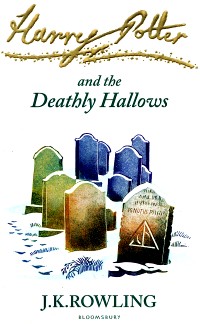
简介: 万众瞩目的《哈利波特》大结局——《哈利波特与死亡圣器》终于在7月21日揭开了她神秘的面纱。不论是该书的哈迷,还是该书的作者J.K.罗琳,都感觉非常失落,因为陪伴大家多年的哈利波特至此完成了他的使命。在大结局问世后首次现身伦敦签售并接受采访的她表示:“在写完《哈7》之后,自己感觉就像失去亲人一样的难受。”谈及未来,她表示,“我再也写不出这么受欢迎的书了……我会做些跟写《哈利波特》时相同的事——写些自己真的想写的东西,如果那跟《哈》相似,那没问题,如果很不相同,那也没问题。”
如今靠《哈利波特》小说名成利就的罗琳完成结局篇后可说是一身轻,不必再承受出版社催稿的压力,也可拋开书迷的殷切期望,目前她与丈夫和3名子女居于苏格兰爱丁堡,过着平静的生活。
据国外媒体23日报道,全球最大在线销售网站“亚马逊”和美国最大连锁书店巴诺(Barnes&Noble)均宣布,《哈利·波特与死圣》的预订量超过
100万册。在一个披头士乐队式的疯狂时刻,亚马逊网站22日当天畅销商品排行榜前七位均是与“哈利·波特”有关的产品,如《哈利·波特与死圣》CD。
《哈利·波特与死圣》在全美引发的狂潮让负责出品哈利·波特系列影片的美国华纳兄弟影业公司有点儿坐不住了。该公司承认,“哈利·波特”系列电影之五《哈利·
波特与凤凰社》的票房受到一些影响,因为“哈迷”已经忙地不可开交,哪有时间到电影院看电影。华纳兄弟影业公司发行部主任丹·菲尔曼表示:“他们希望在周六就买到那本书,然后将自己关在房间内,沉迷于哈利·波特的魔幻世界。他们可不希望自己的朋友捷足先登,在周一比自己先知道故事内容。”
如失去亲人般痛苦
“哈迷”对《哈利·波特与死亡圣器》这本书的评价几乎是异口同声的溢美之词,尽管一些“捣蛋者”在网上提前泄密了大结局,但仍无法阻挡读者对它的热情,一如既往对哈利·波特充满期待。“哈迷”网站的版主梅利莎·安妮尔说:“这本书情节引人入胜,我想在搞明白《哈利·波特7》全部内容之前,起码先大致浏览一遍。我认为书中充满了最令人激动、最令人惊喜的时刻。”
安妮尔说,她在周六一天一口气儿就读完了759页的《哈利·波特与死亡圣器》。她说:“合上书,我既狂喜又失落,故事情节和故事展开的方式不禁令人折服,失落之处在于这个童话就此结束了。感觉就像失去亲人般难受,感觉就像同多年至交说再见。”
20
岁的纽约州立大学电影系学生安娜·托德也是一名忠实的“哈迷”,为了早一点看到“哈利·波特”,她周六午夜就到巴诺连锁书店在曼哈顿的联合广场排队取书。她在晚上时断时续小睡了几觉,并最终得偿所愿,拿到了哈利·波特与死亡圣器》。托德说:“J.K.罗琳确实没有令读者失望。我想她真是太棒了。有时,我害怕一直读下去,因为读完就只能永远地同‘哈利·波特’告别了,这种感觉真是难受。”
她不禁哀叹,“我永远不会再彻夜看新的《哈利·波特》书了,也永远不会再体验半夜排队购书的经历了,永远不会再编造有关哈利的各种荒诞说法了。一切都就此结束了。感觉就好像是与最好、最亲的一个朋友永别。我能做就是一遍遍地阅读,将来我有孩子的时候,我会同他们一起分享这些书。我期待那一天早日到来。”
亚马逊网同时为您奉上:
《哈利波特与死圣》(美国版)
《哈利波特与死圣》(美国豪华版)
《哈利波特与死圣》(英国特别版)
Amazon.co.uk Review
The Final Chapter
The pubdate of the seventh and final Harry Potter book has been
announced, and the rumours are already circulating - what are the
Deathly Hallows? Who will make it through to the end? This special
edition of Harry Potter and the Deathly Hallows is for any major
fan of the series, offering a luxury jacket and binding, this is
set to make the perfect present for any muggle!
From Publishers Weekly
Potter fans, relax—this review packs no spoilers. Instead, we’re
taking advantage of our public platform to praise Rowling for the
excellence of her plotting. We can’t think of anyone else who has
sustained such an intricate, endlessly inventive plot over seven
thick volumes and so constantly surprised us with twists, well-laid
traps and Purloined Letter-style tricks. Hallows continues the
tradition, both with sly feats of legerdemain and with several
altogether new, unexpected elements. Perhaps some of the surprises
in Hallows don’t have quite the punch as those of earlier books,
but that may be because of the thoroughness and consistency with
which Rowling has created her magical universe, and because we’ve
so raptly absorbed its rules.
We’re also seizing the occasion to wish out loud that her editors
had done their jobs more actively. It’s hard to escape the notion
that the first three volumes were more carefully edited than the
last four. Hallows doesn’t contain the extraneous scenes found in,
say, Goblet of Fire, but the momentum is uneven. Rowling is much
better at comedy than at fight scenes, and no reader of the sixth
book will be startled to hear that Hallows has little humor or that
its characters engage in more than a few fights. Surely her editors
could have helped her find other methods of building suspense
besides the use of ellipses and dashes? And craft fight dialogue
that sounds a bit less like it belongs in a comic book? Okay, we’re
quibbling. We know these minor nuisances won’t dent readers’
enjoyment, at least not this generation of readers; we couldn’t put
Hallows down ourselves. But we believe Rowling, and future readers,
deserved even better. Ages 9-12. (July)
Synopsis
'His hand closed automatically around the fake Horcrux, but in
spite of everything, in spite of the dark and twisting path he saw
stretching ahead for himself, in spite of the final meeting with
Voldemort he knew must come, whether in a month, in a year, or in
ten, he felt his heart lift at the thought that there was still one
last golden day of peace left to enjoy with Ron and Hermione.' With
these words "Harry Potter and the Half-Blood Prince" draws to a
close. And here, in this seventh and final book, Harry discovers
what fate truly has in store for him as he inexorably makes his way
to that final meeting with Voldemort. In this thrilling climax to
the phenomenally bestselling series, J.K. Rowling will reveal all
to her eagerly waiting readers.
More Information about Harry Potter and the Deathly Hallows
Harry Potter and the Deathly Hallows is the seventh and final
book in the Harry Potter series of novels by J. K. Rowling. On 21
July 2007, all editions but the American were released at a minute
past midnight (00:01) BST; the American and Canadian editions was
released at a minute past midnight (00:01), local time. It was
released globally in 93 countries.The book reached the top spot on
both the Amazon.com and Barnes and Noble best-seller lists just a
few hours after the date of publication was announced on 1 February
2007.
Why We Love Harry
Favorite Moments from the Series
There are plenty of reasons to love Rowling's wildly popular
series--no doubt you have several dozen of your own. Our list
features favorite moments, characters, and artifacts from the first
five books. Keep in mind that this list is by no means exhaustive
(what we love about Harry could fill ten books!) and does not
include any of the spectacular revelatory moments that would spoil
the books for those (few) who have not read them. Enjoy.
The Series of Harry Potter
The Harry Potter series was originally published as a children's
book by British publisher Bloomsbury, and American publisher
Scholastic Press. However, it rapidly became a phenomenal success
amongst children and adults alike. The books each chronicle one
year at school for the characters concerned and follows a long
tradition of children's series about life in schools. Perhaps
unlike some of the traditional series of this format, each book has
matured and expanded in complexity and scope compared to the last,
approximately developing with the age of the principal characters
(later books are also significantly darker in tone than earlier
ones). Although the author has said that she comprehensively
plotted the entire series of books before the first was published,
and that this plot remains unchanged, she has also stated that it
has undergone a number of revisions as it has progressed. The books
started as relatively slim volumes (223 pages Philosopher's Stone
UK ed.), but have grown as the series progressed (766 pages Order
of the Phoenix UK ed.).
The books contain a significant element of fantasy and magic, but
this is combined with a detective-novel approach to the story. Each
volume contains a complete problem and task for the heroes to
complete, but each has also added to the background information
about the wizarding world in general and contains many pieces of
information whose importance only becomes apparent in later volumes
(known as foreshadowing). Thus a considerable fan following has
developed of people wanting to discover how the many loose ends and
unfinished adventures in the book will finally be completed. The
author has stated that, more than with any other book in the
series, the final volume continues the unfinished story in book
six. She has also stated that she doesn't have plans for any other
novels concerning Harry Potter.
Harry Potter and the Sorcerer's Stone
* Harry's first trip to the zoo with the Dursleys, when a boa
constrictor winks at him.
* When the Dursleys' house is suddenly besieged by letters for
Harry from Hogwarts. Readers learn how much the Dursleys have been
keeping from Harry. Rowling does a wonderful job in displaying the
lengths to which Uncle Vernon will go to deny that magic
exists.
* Harry's first visit to Diagon Alley with Hagrid. Full of
curiosities and rich with magic and marvel, Harry's first trip
includes a trip to Gringotts and Ollivanders, where Harry gets his
wand (holly and phoenix feather) and discovers yet another
connection to He-Who-Must-No-Be-Named. This moment is the reader's
first full introduction to Rowling's world of witchcraft and
wizards.
* Harry's experience with the Sorting Hat.
Harry Potter and the Chamber of Secrets
* The de-gnoming of the Weasleys' garden. Harry discovers that
even wizards have chores--gnomes must be grabbed (ignoring angry
protests "Gerroff me! Gerroff me!"), swung about (to make them too
dizzy to come back), and tossed out of the garden--this delightful
scene highlights Rowling's clever and witty genius.
* Harry's first experience with a Howler, sent to Ron by his
mother.
* The Dueling Club battle between Harry and Malfoy. Gilderoy
Lockhart starts the Dueling Club to help students practice spells
on each other, but he is not prepared for the intensity of the
animosity between Harry and Draco. Since they are still young,
their minibattle is innocent enough, including tickling and dancing
charms.
Harry Potter and the Prisoner of Azkaban
* Ron's attempt to use a telephone to call Harry at the
Dursleys'.
* Harry's first encounter with a Dementor on the train (and just
about any other encounter with Dementors). Harry's brush with the
Dementors is terrifying and prepares Potter fans for a darker,
scarier book.
* Harry, Ron, and Hermione's behavior in Professor Trelawney's
Divination class. Some of the best moments in Rowling's books occur
when she reminds us that the wizards-in-training at Hogwarts are,
after all, just children. Clearly, even at a school of witchcraft
and wizardry, classes can be boring and seem pointless to
children.
* The Boggart lesson in Professor Lupin's classroom.
* Harry, Ron, and Hermione's knock-down confrontation with
Snape.
Harry Potter and the Goblet of Fire
* Hermione's disgust at the reception for the veela (Bulgarian
National Team Mascots) at the Quidditch World Cup. Rowling's fourth
book addresses issues about growing up--the dynamic between the
boys and girls at Hogwarts starts to change. Nowhere is this more
plain than the hilarious scene in which magical cheerleaders nearly
convince Harry and Ron to jump from the stands to impress
them.
* Viktor Krum's crush on Hermione--and Ron's objection to
it.
* Malfoy's "Potter Stinks" badge.
* Hermione's creation of S.P.E.W., the intolerant bigotry of the
Death Eaters, and the danger of the Triwizard Tournament. Add in
the changing dynamics between girls and boys at Hogwarts, and
suddenly Rowling's fourth book has a weight and seriousness not as
present in early books in the series. Candy and tickle spells are
left behind as the students tackle darker, more serious issues and
take on larger responsibilities, including the knowledge of illegal
curses.
Harry Potter and the Order of the Phoenix
* Harry's outburst to his friends at No. 12 Grimmauld Place. A
combination of frustration over being kept in the dark and fear
that he will be expelled fuels much of Harry's anger, and it all
comes out at once, directly aimed at Ron and Hermione. Rowling
perfectly portrays Harry's frustration at being too old to shirk
responsibility, but too young to be accepted as part of the fight
that he knows is coming.
* Harry's detention with Professor Umbridge. Rowling shows her
darker side, leading readers to believe that Hogwarts is no longer
a safe haven for young wizards. Dolores represents a bureaucratic
tyrant capable of real evil, and Harry is forced to endure their
private battle of wills alone.
* Harry and Cho's painfully awkward interactions. Rowling clearly
remembers what it was like to be a teenager.
* Harry's Occlumency lessons with Snape.
* Dumbledore's confession to Harry.
Harry Potter and the Half-Blood Prince
* The introduction of the Horcrux.
* Molly Weasley asking Arthur Weasley about his "dearest
ambition." Rowling has always been great at revealing little
intriguing bits about her characters at a time, and Arthur’s answer
"to find out how airplanes stay up" reminds us about his obsession
with Muggles.
* Harry's private lessons with Dumbledore, and more time spent
with the fascinating and dangerous pensieve, arguably one of
Rowling’s most ingenious inventions.
* Fred and George Weasley’s Joke Shop, and the slogan: "Why Are
You Worrying About You-Know-Who? You Should Be Worrying About
U-NO-POO--the Constipation Sensation That's Gripping the
Nation!"
* Luna's Quidditch commentary. Rowling created scores of Luna
Lovegood fans with hilarious and bizarre commentary from the most
unlikely Quidditch commentator.
* The effects of Felix Felicis.
More About Author
J. K. (Jo) Rowling was born in Chipping Sodbury in the UK in
1965. Such a funny-sounding name for a birthplace may have
contributed to her talent for collecting odd names.
Jo moved house twice when she was growing up. The first move was
from Yate (just outside Bristol in the south west of England) to
Winterbourne. Jo, her sister and friends used to play together in
her street in Winterbourne. Two of her friends were a brother and
sister whose surname just happened to be Potter! The second move
was when Jo was nine and she moved to Tutshill near Chepstow in the
Forest of Dean. Jo loved living in the countryside and spent most
of her time wandering across fields and along the river Wye with
her sister. For Jo, the worst thing about her new home was her new
school.
Tutshill Primary School was a very small and very old-fashioned
place. The roll-top desks in the classrooms still had the old ink
wells. Jo's teacher, Mrs Morgan, terrified her. On the first day of
school, she gave Jo an arithmetic test, which she failed, scoring
zero out of ten. It wasn't that Jo was stupid - she had never done
fractions before. So Jo was seated in the row of desks far to the
right of Mrs Morgan. Jo soon realised that Mrs Morgan seated her
pupils according to how clever she thought they were: the brightest
sat to her left, and those she thought were dim were seated to her
right. Jo was in the 'stupid' row, 'as far right as you could
possibly get without sitting in the playground'.
From Tutshill Primary, Jo went to Wyedean Comprehensive. She was
quiet, freckly, short-sighted and not very good at sports. She even
broke her arm playing netball. Her favourite subject by far was
English, but she also liked languages.
Jo always loved writing more than anything. 'The first story that
I ever wrote down, when I was five or six, was about a rabbit
called Rabbit. He got the measles and was visited by his friends,
including a giant bee called Miss Bee. And ever since Rabbit and
Miss Bee, I have wanted to be a writer, though I rarely told anyone
so. I was afraid they'd tell me I didn't have a hope.'
At school, Jo would entertain her friends at lunchtime with
stories. 'I used to tell my equally quiet and studious friends long
serial stories at lunchtimes.' In these stories, Jo and her friends
would be heroic and daring.
As she got older, Jo kept writing but she never showed what she
had written to anyone, except for some of her funny stories that
featured her friends as heroines.
After school, Jo attended the University of Exeter in Devon where
she studied French. Her parents hoped that by studying languages,
she would enjoy a great career as a bilingual secretary. But as Jo
recalls, 'I am one of the most disorganised people in the world
and, as I later proved, the worst secretary ever.' She claims that
she never paid much attention in meetings because she was too busy
scribbling down ideas. 'This is a problem when you are supposed to
be taking the minutes of the meeting,' she says.
When she was 25, Jo started writing a third novel ('I abandoned
the first two when I realised how bad they were'). A year later,
she went to Portugal to teach English, which she really enjoyed.
Working afternoons and evenings, she had mornings free to write.
The new novel was about a boy who was a wizard.
When she returned to the UK, Jo had a suitcase full of stories
about Harry Potter. She moved to Edinburgh with her young daughter
and worked as a French teacher. She also set herself a target: she
would finish the 'Harry' novel and get it published. In 1996, one
year after finishing the book, Bloomsbury bought Jo's first novel,
Harry Potter and the Philosopher's Stone.
'The moment I found out that Harry would be published was one of
the best of my life,’ says Jo. A few months after 'Harry' was
accepted for publication in Britain, an American publisher bought
the rights for enough money to enable Jo to give up teaching and
write full time - her life's ambition!
Book Dimension
length: (cm)24.1 width:(cm)15.5