共找到 661 项 “Unknown” 相关结果
- 全部分类
- 全部
- 文学
- 历史
- 哲学/宗教
- 法律
- 政治/社会
- 医学
- 教育/心理学
- 艺术/传媒
- 研究生考试
- 资格认证考试
- 公开课
- 语言
- 经济金融
- 管理学
- IT/计算机
- 自然科学
- 工学/工程
- 体育
- 行业资料
- 音乐
- 汽车机械制造
- 文档模板
- 创业
- 农学
- 生活
- 数据库教程
- 民族
Introduction to microbiology : a case history approach / 3rd ed.
光盘作者: John L. Ingraham, Catherine A. Ingraham.
简介: Would you like to bring guest lectures like researchers, physicians, or fellow instructors into you microbiology course? With this third edition of INTRODUCTION TO MICROBIOLOGY you get the perspective of all of those three professionals. John Ingraham, a professor of microbiology at University of California at Davis, and Catherine Ingraham, his daughter and a practicing physician, utilize their experience within a case history approach complemented by a great technology package. Each chapter in INTRODUCTION TO MICROBIOLOGY now consistently begins with a case history, which John Ingraham has found very motivational to students who are new to the study of basic science. Because Catherine Ingraham studied to become a physician by interviewing patients, determining causes and implementing solutions, she knows mastry comes from high interest human stories rather than clinical presentations. Many of the case histories found in this book are taken from Catherine's experience as a physician. This combination of experiences and talent brings a case-based quality to every lecture and homework session. This unique author team also provides up-to-the-minute currency. Coverage of new microbial "events" such as biological warfare, studied by John and its effects prepared for in Catherine's office, keeps students interested. The authors also highlight reemerging diseases, such as tuberculoses and smallpox. As with previous editions, this book takes a "body systems" organization. Students are exposed to the unknown, the world of the microbes, through the known, and the different parts of their own bodies. And, because art is so important, there is again a multimedia manager with this title, but with more exciting capabilities than ever before. Instructors receive powerful PowerPoint slides for all the illustrations, tables and figures from the text, plus several animations are at your fingertips. ...
作者: (美)戴尔·卡耐基(Dali Carnegie)著;岳玉庆[等]译
出版社:中国宇航出版社,2010
简介:《林肯传(英汉双语)》内容简介:亲爱的读者,您如果碰巧拿起了《林肯传(英汉双语)》,您就拿起了一本关于一个伟人的不朽传记,而它的作者就是驰名世界的戴尔·卡耐基。关于林肯的图书多如牛毛,但是以上几个因素注定了这本传记具有永恒的魅力,是-本不容错过的佳作。卡耐基善于讲故事,一开始就引人人胜,继而慢慢展开,宛如一幅幅画卷,读起来让人感到起伏跌宕,深受启迪,催人奋进。 在美国,大人以前喜欢问小孩:你长大想当总统吗?这反映出美国人的梦想:人人都渴望大获成功,哪怕你一无所有。林肯就是这样一位从平民到总统的幸运儿。他是美国人心中的偶像和英雄。著名导演斯皮尔伯格正在酝酿拍摄电影《林肯传》,由此也可以看出现在林肯在美国仍然有巨大的影响力。 阅读名人传记,既可以向书本学习,又可以了解成功人士的经历,可以获得一举两得的收获。尤其是青少年读者阅读名人传记,不仅可以丰富历史和文学知识,而且对激发志气,培养健康人格,增强克服困难与挫折的勇气,增长处事的智慧,提高写作水平,都有一定的借鉴启迪作用。阅读名人传记,对人的一生影响非常大。 要想学习一门语言,光靠单纯去记几个单词和几条语法,不但枯燥,而且效果难以保证。要掌握英语,就要了解英语国家的人物、历史、文化、宗教、文学和艺术等。因此,阅读故事性强的名人传记就是通往英语自由境界的捷径之一。《林肯传(英汉双语)》的英语简单易懂,少数难点都做了注释。同时,我们配有忠实通顺的汉语译文,逐段对照,为阅读和学习提供了极大的方便。
简介: Introduction Foreword About the Author Core MFC The MFC Architecture A Brief History of MFC The MFC Class Hierarchy CObject CCmdTarget CWinThread CWinApp CWnd CFrameWnd CView CDocument Summary MFC Dialogs, Controls, and Data Interaction Creating an Application Starting and Using MFC AppWizard The AppWizard-Generated Code Modifying the Application Adding Dialog Controls Adding Initialization Using Dialog Controls ToolTips Enabling ToolTips Displaying Text Dialog Data Exchange Standard DDX UpdateData Using Standard Dialog Boxes File Open/Save Color Selector Font Selector Print Dialog Summary The Windows Common Controls Initializing and Using the Common Controls Notifications for Windows Common Controls The Notification Message Structure Overview of the Notification Process A Better Notification Handling Scheme Specifying Notification Ranges with ON_NOTIFY_RANGE Hot Key Controls: Class CHotKeyCtrl CHotKeyCtrl Class Methods Creating and Initializing a CHotKeyCtrl Object Using a Hot Key Control Spin Controls: Class CSpinButtonCtrl Spin Control Styles CSpinButtonCtrl Messages CSpinButtonCtrl Class Methods Creating and Initializing a Spin Control Sample Program: SPIN1 Slider Controls: Class CSliderCtrl Slider Control Styles CSliderCtrl Messages CSliderCtrl Class Methods Creating and Initializing a Slider Control Sample Program: Slider Controls (SLIDER1) Sample Program: SLIDER1 Progress Bar Controls: Class CProgressCtrl CProgressCtrl Class Methods Creating and Initializing a CProgressCtrl Object Using a Progress Control Image Lists: Class CImageList CImageList Class Methods Creating and Initializing a CImageList Control List View Controls: Class CListCtrl List View Control Styles Image Lists and the List View Control List View Items and Subitems List View Notification Messages Creating and Initializing a CListCtrl Object Using the List View Control Tree View Controls: Class CTreeCtrl Tree View Control Styles Tree View Notification Messages CTreeCtrl Class Methods Creating and Initializing a Tree View Control Using a CTreeCtrl Object Sample Program: TREELIST.EXE Tab Controls: Class CTabCtrl Tab Control Styles Tab Control Notification Messages CTabCtrl Class Methods The Tab Item Structure (TC_ITEM) Creating and Initializing a Tab Control Using a Tab Control Animate Controls: Class CAnimateCtrl Animate Control Styles Animate Control Notification Messages CAnimateCtrl Class Methods Creating and Initializing an Animate Control Using an Animate Control Rich Edit Controls: Class CRichEditCtrl Rich Edit Control Window Styles The Character Format Structure (CHARFORMAT) The Paragraph Format Structure (PARAFORMAT) CRichEditCtrl Class Methods CRichEditCtrl Line-Related Methods CRichEditCtrl Text-Selection Methods CRichEditCtrl Formatting Methods CRichEditCtrl Editing Methods CRichEditCtrl Clipboard Methods CRichEditCtrl General-Purpose Methods Creating and Initializing a Rich Edit Control Using a Rich Edit Control Summary Painting, Device Contexts, Bitmaps, and Fonts Device Contexts The Graphics Device Interface MFC Wrapping MFC Device Context Classes The Base Class: CDC Painting with Class CPaintDC Managing Client Areas with Class CClientDC Managing Frame Windows with Class CWindowDC Windows Graphic Objects Pens: Class CPen Brushes: Class CBrush Fonts: Class CFont Bitmaps: Class CBitmap Palettes: Class CPalette Regions: Class CRgn GDI Coordinate Systems Logical Mapping Modes Vector Graphics Drawing Modes Lines and Polylines Rectangles Regions Polygons Ellipses Bezier Curves Fonts and Text Font Characteristics The TEXTMETRIC Structure The LOGFONT Structure Font Creation Drawing Text Sample Program: Vector Graphics and Text Methods (VECTEXT1.EXE) Raster Graphics Named Raster Operations (ROPs) Bitmaps Device-Dependent Bitmaps Device-Independent Bitmaps (DIBs) The CBitmap Class Transferring and Contorting Bitmaps Bitmap Resources Tacking Resources onto an Executable File Getting Image Resources out of an Executable File Sample Program: Exploring Bitmap Resources (BITMAP1) Summary Custom Control Development Window Classes Versus C++ Classes A Validating Edit Control The Clock Static Control Control Metrics Painting the Face Locating the Hands Painting the Hands Setting the Time Pitfalls of Subclassing Standard Controls The Hyperlink Control Implementation Strategy Font Processing Painting the Window Controlling the Cursor Mouse Input Keyboard Input Launching the Link Advanced Custom Control Topics Subclassing Limitations Notifications Using the Resource Editor with Custom Classes Summary The MFC Application Object, Message Routing, and Idle Processing The MFC Application Object CWinApp and Application Lifetime The CWinApp Data Members The CWinApp Member Functions Application-Specific Initialization Functionality in InitInstance OLE Container Support 3D Look for Windows NT 3.5x Registry Usage Most Recently Used Files List SDI and MDI Document/View Main Frame Window Creation Automation Support Rich Edit Control Support Command-Line Handling Message Routing, Message Maps, and Message Categories Message Routing PreTranslateMessage Message Maps Idle Processing OnIdle Idle Processing for Dialogs The Splash Screen Component Summary Documents, Views, and Applications That Use Them The Document/View Architecture Documents, Frames, and Views Document Templates Creating New Documents Opening New Files Single Versus Multiple Document Templates Views The CView Class The CScrollView Class The CFormView Class The Database View Classes The Control Views Changing Views in an SDI Using the MDI Summary Extending the User Interface Responding to the User Keyboard Messaging Handling Keyboard Messages Mouse Messaging Handling Mouse Messages User Interfaces and AppWizard Extending Menus Obtaining Menus and Pop-up Menus Adding Menu Items Using Floating Pop-up Menus Putting Control Bars to Use Using Toolbars and Rebars Using Status Bars Showing and Hiding Control Bars Supporting ToolTips Updating the User Interface Property Sheets and Wizards MFC's Support for Property Sheets and Wizards Creating a Simple Wizard Splitting a View Summary Printing Printing Fundamentals Printing with MFC Printing in the View The PrintInfo Object Printing Menu Commands Printing and GDI Mapping Modes WYSIWYG Printing Application Resources The Application Class The View Class Pagination Printing with a Known Page Count Printing with an Unknown Page Count Printing Page Numbers Stopping and Aborting Print Jobs Halting a Print Job in OnPrepareDC() Halting a Print Job in OnPrint() Summary MFC and COM Programming COM A Little History Interfaces, Objects, and Methods Some Terminology A Real-World View The IUnknown Interface Servers, Clients, and Classes The COM Runtime Environment Defining the Class Factory How Are COM Objects Reused? Marshaling and Threading Marshaling Threading COM, OLE, and Automation IDispatch Automation Servers, Objects, and Controllers Supporting Both IDispatch and IUnknown Persisting COM Data Structured Storage Identifying COM Data (Monikers) Transferring Data Uniform Data Transfer Connectable Objects DCOM Object Creation Invoking Methods Security Issues Some Important Information BSTR SAFEARRAY HRESULT VARIANT Further Reading Summary COM and MFC Understanding the Afx Global Functions Application Lifetime Control Client Control Management Connection Point Management Control Registration Exceptions Initialization Licensing Type Information Reviewing the OLE Macros Class Factories Client/Container Common Commands Control Property Persistence Dialog Data Exchange Dispatch Maps Event Maps Property Page Data Mapping Property Pages Type Library Access MFC and the OLE Class Categories Active Document Automation Common Dialogs for OLE Container Control Drag and Drop (Universal Data Transfer) Document Servers Support Summary MFC OLE Servers Document Servers Server Types Full Server Active Document Container/Server Mini-Server Document Server Design OLE Documents Active Documents Building an Active Document Server Persistence Rendering the View Automation Servers IDispatch GetIDsOfNames GetTypeInfo GetTypeInfoCount Invoke IDispatch-Derived Interface in ODL Calling Methods Through IDispatch GetIDsOfNames Type Information Methods Invoke Dispinterfaces Differ from Interfaces Calling Methods Through IDispatch Dual Interfaces The Variant An Automation Server Using MFC Server Type Declaring and Defining Additional Dispinterfaces Adding Methods and Properties Summary MFC OLE Clients IDispatch and Its Place in Automation Interface Definition for Automation Servers IDL and ATL ODL and MFC Dual Interfaces MFC and Automation Controller Connecting to a Server Server Review Building a Controller Using COleDispatchDriver Using #import Remote Automation Summary MFC ActiveX Controls Development Strategy MFC ATL MFC and ATL Control Development Two Faces of a Control Runtime Design Time Subclassing a Control MFC ATL Component Categories ICatRegister ICatInformation Methods, Properties, and Events Properties Methods Events Property Pages Property Pages in ATL Property Pages in MFC Component Registration Registration Scripts Registration and Controls COM Object Subkeys Building an MFC Control Interface Definition A Quick ATL Port Summary MFC ActiveX Control Containers Active Document Container Storage Site Objects In-Place Activation Document Extensions Building the Simplest Active Document Container OLE Controls Adding Containment to an Existing Project ActiveX Container Control Containment and Events Summary Using MFC and ATL What Is ATL and Why Is It Important for Programming in MFC? Helpful ATL COM Support for MFC Applications COM Pointers the Smart Way Other ATL COM Support Advanced ATL Support for MFC Applications Begin with Your MFC Application Add the Required ATL Support Summary Scripting Your MFC Application Scripting Basics Scripting Interfaces Dual Interfaces Object Models Implementing a Scripted Application Object Implementation Summary MFC Database Programming MFC Database Processing Relational Database Concepts Tables Columns Records Cursors Transactions Storing and Retrieving Data SELECT INSERT DELETE UPDATE Database Communication Mechanisms ODBC DAO Which Methodology Should I Use? ODBC/MFC CDatabase CRecordset DAO CDaoWorkspace CDaoDatabase CDaoRecordset CDaoTableDef CDaoQueryDef Summary Advanced Database Support The COM Approach OLE DB ADO Which One Should I Use? OLE DB Consumers Using the ATL Wrapper Classes CDataSource CSession Accessors Rowsets Accessing Datasource Data Using the ADO C++ Interfaces ADOConnection ADORecordset ADOCommand ADOField ADOProperty ADOParameter ADOError Summary MFC Utility Classes Strings and Collections Strings and String Classes Inside the CString Class Practical CString Usage CString Summary Collections Inside Collection Classes Templated Collections The UNL_MultiEd Application Overview An STL Approach Summary File I/O and MFC The CFile Class Processing Files with CFile Inside the CFile Class The CStdioFile Class The CMemFile Class The CSharedFile Class The CFileDialog Class The User-Defined CFileDialog Class Practical Usage of CFile and CFileDialog Opening a File Reading Data from a File A Classical Approach What Are Streams? Summary Exceptions What Are They Good For? Types of Exceptions Structured Exception Handlers Nesting of Structured Exception Handlers Raising Structured Exceptions Cleaning Up After an Exception C++ Exceptions Defining a C++ Exception Class MFC Exceptions MFC CException-Derived Classes CMemoryException CNotSupportedException CArchiveException CFileException CResourceException COleException CDbException COleDispatchException CUserException CDaoException CInternetException Deriving Your Own MFC-Compliant Exception Objects Deleting Exceptions Using MFC Exception Macros Mixing Exceptions Summary MFC and the Web MFC and DHTML DHTML, MSIE, and the Internet Using the Internet Explorer Web ActiveX Control Internet Explorer ActiveX Control Basics CHtmlView CHtmlView and the Document/View Relationship CHtmlView and COM Using the Internet Explorer ActiveX Control in a Dialog Box Using DHTML The DHTML Object Model The Document Object Other DHTML Objects Collection Objects DHTML COM Interfaces Obtaining the Document DHTML Interface Obtaining the DHTML Collections Interfaces Using the DHTML Interface The DHTML Element Interface Methods Document Navigation Summary CSocket Programming How Do Network Communications Work? Sockets, Ports, and Addresses Winsock and MFC Initializing the Winsock Environment Creating a Socket Making a Connection Sending and Receiving Messages Closing the Connection Socket Events Controlling Event Triggering Detecting Errors Getting Socket Information Sockets and I/O Serialization Building a Networked Application Creating the Application Shell Window Layout and Startup Functionality Inheriting from the CAsyncSocket Class Connecting the Application Sending and Receiving Ending the Connection Summary WinInet Programming Web Application Protocols and WinInet Hypertext Transfer Protocol File Transfer Protocol Gopher Protocol WinInet API and MFC Internet Session Basics CInternetSession CInternetFile CInternetException CInternetConnection Building a Simple WinInet Application Application-Level Functionality HTTP Classes FTP Classes Gopher Classes Building a Simple FTP Client Summary ISAPI Extensions The Foundation From There to Here From GET to POST Adding Some Form Elements Change the Form Change the Parse Map Declare and Use the Handler Function Add a Radio Button Other Form Input Elements Change the Form Change the Parse Map Change the Handler Function Summary MAPI and MFC The Messaging Application Programming Interface Client Applications Two Higher-Level Alternatives: Simple MAPI and CMC Simple MAPI Common Messaging Calls The MapiMessage Structure The MapiFileDesc Structure Limited MAPI Functionality in MFC The CDocument Connection Doing MAPI the MFC Way The CDocument::OnFileSendMail() Method Sample Program: MAPI1.EXE Summary TAPE and MFC Overview Assisted Telephony Basic Telephony Service Supplemental Telephony Service Extended Telephony Service History of TAPI TAPI 1.3 TAPI 1.4 TAPI 1.5 TAPI 2 TAPI 2.1 TAPI 2.2 TAPI 3 Using Assisted Telephony Using Basic Telephony Configuring TAPI Connecting with TAPI Transmitting Data with TAPI Disconnection with TAPI Terminating a TAPI Session Summary MFC and Graphics Programming MFC and OpenGL What Is OpenGL? Graphics Boot Camp Core Terms and Key Concepts The Basic Mathematics of Graphics Programming OpenGL Boot Camp OpenGL Datatypes OpenGL Function Naming Conventions OpenGL Render Function Scoping The OpenGL Matrix Stack The OpenGL Rendering Context Minimal OpenGL Program and a Custom View Creating Your Basic MFC Application Adding the Custom OpenGL Base Class Integrate the Custom View Class into Your Application Build Your 3D Scene Add the OpenGL Libraries to Your Project抯 Link List 2D and 3D Models Basic Model Development Model Transformations Display Lists Light The Basics of Light in OpenGL Types of Light Object Material Properties Texture Mapping OpenGL Images and Windows Device-Independent Bitmaps Applying Texture Special Effects Blending Fog Summary MFC and DirectX What Is DirectX? DirectX in a Nutshell DirectX Components DirectX Basics Differences in COM Programming Style and DirectX DirectX Component Startup Sequence DirectDraw Basics Initializing DirectDraw DirectDraw and Palettes DirectDraw Surfaces DirectDraw Page Flipping DirectDraw from a Window Using DirectDraw in Practice Surfaces and Bitmaps Windowed Rendering Error Handling DirectDraw Shutdown Summary Multimedia and MFC Multimedia Fundamentals The DirectX Media Player Control Media Formats Supported by the Media Player Control Inside the Media Player Control The CMediaPlayer Class Using the Media Player Control Playing Sound Working with Waves Revisiting DirectSound Using DirectSound to Play Sound Effects Summary Advanced MFC Inside the Registry Registry Usage Configuration Services Information State User Preferences The Registry Structure Programmatic Control of the Registry The Registry API The Registry Sample Application The Registry Key Editor Dialog Creating a New Key Deleting a Key Deleting a Name/Value Pair A Word About Wrapping the Registry Functions A Word About Installation Summary Writing and Using DLLs Advantages of DLLs Code Elimination Modularity and Packaging Extensibility Inside an AFX DLL Exporting Classes, Functions, and Data The Big Deal About Exports Mangled Names Exporting Classes What Goes Around, Comes Around Exporting Explicit Functions Exporting Data Exporting MFC Data Exporting the Destructor Export Toolkit include Files What to Export Other DLL Issues AfxLoadLibrary and AfxFreeLibrary Designing for Extensibility and Reuse Resource Location Multiple Module Definition Files Load Addresses and the Linker Summary Creating Custom Wizards Property Sheets and Property Pages The CPropertySheet and CPropertyPage Classes The Wizard Walk and the Property Sheet Connection Creating a Wizard Setting the Wizard Mode Enabling the Wizard Buttons Displaying the Wizard Wizard Notification Messages Sample Program: Off to See the Wizard (WIZARD1.EXE) Creating Wizard Page Dialog Template Resources Create a Dialog Class for Each Dialog Resource Exploring the Welcome Page: Class CIntroPage Exploring the About You Page: Class CPage1 Updating Wizard Information for CPage2 and CPage3 Creating and Displaying the Wizard Summary Index
简介: Save yourself some money! This complete classroom-in-a-book on penetration testing provides material that can cost upwards of $1,000 for a fraction of the price! Thomas Wilhelm has delivered pen testing training to countless security professionals and now through the pages of this book you can benefit from his years of experience as a professional penetration tester and educator. After reading this book you will be able to create a personal penetration test lab that can deal with real-world vulnerability scenarios. Penetration testing is the act of testing a network to find security vulnerabilities before they are exploited by phishers, digital piracy groups, and countless other organized or individual malicious hackers. The material presented will be useful to beginners all the way through to advanced practitioners. Find out how to turn hacking and pen testing skills into a professional career Understand how to conduct controlled attacks on a network through real-world examples of vulnerable and exploitable servers Master project management skills necessary for running a formal penetration test and setting up a professional ethical hacking business Discover metrics and reporting methodologies that provide experience crucial to a professional penetration tester Learn through video - the DVD includes instructional videos that replicate classroom instruction and live, real-world vulnerability simulations of complete servers with known and unknown vulnerabilities to practice hacking skills in a controlled lab environment
简介:Potential readers/users are students of Photogrammetry, Geodesy, Geography and other sciences, but also all who are interested in this topic. No prior knowledge is necessary, except the handling of standard PCs. Theory is presented true to the motto "as little as possible, but as much as necessary". The main part of the book contains several tutorials. In increasing complexity, accompanied by texts explaining further theory, the reader can proceed step by step through the particular working parts.聽Most of the standard work in Digital Photogrammetry is shown and trained for example scanning, image orientation, mono and stereo plotting, aerial triangulation measurement (manual and automatic), block adjustment, automatic creation of surface models via image matching, creation of ortho images and mosaics, and others. Not only standard situations are dealt with but also more complex ones, such as unknown camera data, extreme relief or areas with very low contrast. Examples of both aerial and close-range photogrammetry present the power of these type of measurement techniques. The software is not limited to the example data included but may be used for personal projects. Part of the book comprises a complete description of the software.
简介:The third edition is an "all-in-one" combination of basic theory and practical exercises with software and data included on a CD-ROM. Potential readers/users are students of Photogrammetry, Geodesy, Geography and other sciences, but also all who are interested in this topic. No prior knowledge is necessary, except the handling of standard PCs. Theory is presented true to the motto "as little as possible, but as much as necessary".The main part of the book contains several tutorials. In increasing complexity, accompanied by texts explaining further theory, the reader can proceed step by step through the particular working parts. All intermediate as well as the final results are discussed with reference to accuracy and error handling, and included on the CD-ROM to provide controls. Most of the standard work in Digital Photogrammetry is shown and trained for example scanning, image orientation, mono and stereo plotting, aerial triangulation measurement (manual and automatic), block adjustment, automatic creation of surface models via image matching, creation of ortho images and mosaics, and others. Not only standard situations are dealt with but also more complex ones, such as unknown camera data, extreme relief or areas with very low contrast. Examples of both aerial and close-range photogrammetry present the power of these type of measurement techniques.The software is not limited to the example data included but may be used for personal projects. Part of the book comprises a complete description of the software. On the CD-ROM, versions in German, English and Spanish are available. Even 3-D images can be viewed with the accompanying 3-D glasses.
Self-localization technologies of mobile robot under unknown environments
作者: 于金霞,王璐,蔡自兴著
出版社:电子工业出版社,2011
简介: 本书以未知环境中移动机器人导航控制中自定位技术作为研究内容,对 未知环境中移动机器人自定位技术的基本原理、典型技术和研究进展进行了 比较详细的介绍和讨论,并融入了作者多年来的相关研究成果。本书共分八 章,重点介绍了内外部定位传感器误差分析、复杂地形下的航迹推测、动态 环境中基于环境感知的自定位、未知数据关联下基于概率技术的并发建图与 定位等方面的研究进展,意在推动认知科学、模式识别等学科的前沿问题的 研究,对提高探测移动机器人导航控制中的自定位技术水平具有重要的意义 。 本书可作为高等院校计算机科学与技术、智能科学与技术、自动化等专 业的研究生或高年级本科生的专业基础课辅助教材,亦可供广大从事智能机 器人、人工智能、智能控制和智能系统研究、设计、应用和开发领域的科技 工作者和高等院校的师生阅读和参考。
作者: David Hewson 著
出版社:经济日报 2008年9月
简介:The picture possessed a frightful beauty, one which burned so brightly that, once witnessed, could never be unseen...Even the presence of two corpses, one clearly murdered, the other dead through strange and suspicious circumstances, did nothing to distract their attention from the canvas...In a hidden studio in an area of Rome where the Vatican liked to keep an eye on the city's prostitutes, an art expert from the Louvre is found dead in front of one of the most beautiful paintings that Nic Costa has ever seen - an unknown Caravaggio masterpiece. But before long tragedy will strike Nic far closer to home.The main suspect's identity is known, but he remains untouchable - protected in his grand palazzo by a fleet of lawyers and a sinister cult known as the Ekstasists. If Costa and his team can crack the reasons for the cult's existence, he may well stand a chance of nailing the double-killer. But the mystery will take him right back to Caravaggio himself and the reasons he had to flee Rome all those centuries before……
Statistical treatment of experimental data
简介:This book is primarily intended for researchers wishing to analyse experimental data using statistical methods. Statistical concepts and methods which may be employed to treat experimental data are explained, and the ideas and reasoning behind statistical methodology are clarified. Formal results are illustrated by many numerical worked examples... more 籱ainly taken from the laboratory. Concepts, practical methodology, and worked examples are integrated in the text. Consideration is given in this work to a large number of practical topics which are often omitted from standard texts. These include; obtaining an approximate confidence interval for a function of some unknown parameters; testing for outliers, stabilization of heterogeneous variances, and significant differences between means; estimation of parameters after performing tests; deciding what numbers of significant figures to quote for sample means and variances; straight-line and polynomial regression, through the origin or not, using weighted points, and testing the homogeneity of a set of such lines or curves. The numerous examples which are provided throughout the text will serve as models for the various problems encountered by the readers when employing statistical methods to treat experimental data. Neither a strong mathematical background nor a prior knowledge of probability or statistics is required in order to make use of this work. In addition to research workers in universities and industry, the book will be of use for first-year students of statistics, and would be expecially suitable as the basis of a graduate course in experimental sciences. ?less
简介: Understanding Patent Reform Implications is an authoritative, insider's perspective on the benefits and drawbacks of proposed U.S. patent reforms. Featuring partners and shareholders from some of the nation's leading law firms, these experts provide descriptions of the current proposed reform legislation and discuss the controversies related to those reforms, including the first-to-file system, inequitable conduct reform, and reforms related to litigation venue and damages. These top lawyers outline the economic impact of proposed reforms, the response from various industry sectors, and the effect of U.S. legislation on the international community and vice-versa. Additionally, these leaders evaluate the likelihood of certain reforms, offer thoughts on how to advise clients on what to expect, and outline potential issues that have not yet been covered by current legislative proposals. The different niches presented and the breadth of perspectives presented enable readers to get inside some of the great legal minds of today, as these experienced lawyers offer up their thoughts around the keys to navigating this ever-evolving area of law. Inside the Minds provides readers with proven business intelligence from C-Level executives (Chairman, CEO, CFO, CMO, Partner) from the world's most respected companies nationwide, rather than third-party accounts from unknown authors and analysts. Each chapter is comparable to an essay/thought leadership piece and is a future-oriented look at where an industry, profession or topic is headed and the most important issues for the future. Through an exhaustive selection process, each author was hand-picked by the Inside the Minds editorial board to author a chapter for this book. Chapters Include: 1. Mark V. Campagna, Partner, Jones Day Understanding Patent Reforms in the Context of Litigation 2. David N. Makous, Chair and Mina I. Hamilton, Partner, Intellectual Property Group, Lewis Brisbois Bisgaard & Smith LLP Patent Law Reform and the Future 3. Ben Hattenbach, Partner, Irell & Manella LLP The Changing Face of Patent Law: Globalization Meets Legislative and Judicial Activism 4. Scott J. Bornstein, Co-Chair, Patent Litigation Group and Barry J. Schindler, Co-Chair, Patent Prosecution Group, Greenberg Traurig LLP A Look at the Past, Present, and Future of Patent Reform 5. William S. Parks, Counsel, Wyatt, Tarrant & Combs LLP Patent Law Reform and the U.S. Patent and Trademark Office 6. Scott R. Bialecki and Mark L. Yaskanin, Partners, Holme Roberts & Owen LLP Overcoming Obstacles to Patent Reform 7. Donald L. Rhoads, Partner, Kramer Levin Naftalis & Frankel LLP Key Concepts in Patent Reform 8. Stephen Hash, Partner, Vinson & Elkins LLP A Litigator s Perspective on Recent Reform Efforts 9. Kory D. Christensen, Principal, Stoel Rives LLP Recent Developments in the Patent Reform Movement: Potential Benefits and Unintended Consequences 10. Shawn G. Hansen, Partner, Manatt, Phelps & Phillips LLP Perspectives on U.S. Patent Reform: The Next Steps Are Crucial
The most beautiful molecule : the discovery of the buckyball /
简介:"Houston, Texas, 1985. Two industrious chemists discover a previously unknown form of carbon and christen it buckminsterfullerene, for its striking resemblance to American architect Richard Buckminster Fuller’s geodesic domes. This unusual molecule - also known as the buckyball - is composed of 60 carbon atoms arranged in a hollow sphere, with hexagonal and pentagonal configurations similar to those found on a soccer ball." "The discovery of buckminsterfullerene - by American physicist and chemist Richard Smalley and British physical chemist Harry Kroto - rocked the scientific community. After all, generations believed graphite and diamond to be the only pure forms of carbon. How had this third form gone undetected?" "In fact, the actual discovery was merely the beginning of an intense - and ongoing - quest to master this newest form of the most basic of elements. Confirmation would take five years and launch an unprecedented flood of investigation and investment. The unique physical structure of buckminsterfullerene - a "cage" into which atoms of other materials may be inserted - had huge commercial potential and inspired scientists, industrial laboratories, and corporations alike. Backed by such giants as AT&T, DuPont, Exxon, and IBM, a highly competitive search for practical applications began - and continues." "Possibilities range from the creation of a revolutionary rocket fuel to nanotechnology - the construction of microscopic "molecular machines" - to developments in the fight against AIDS."--BOOK JACKET.
Uncertain Judgements: Eliciting Expert Probabilities不确定判断:引发专家概率
出版社: 2006-9-1
简介:Elicitation is the process of extracting expert knowledge about some unknown quantity or quantities, and formulating that information as a probability distribution. Elicitation is important in situations, such as modelling the safety of nuclear installations or assessing the risk of terrorist attacks, where expert knowledge is essentially the only source of good information. It also plays a major role in other contexts by augmenting scarce observational data, through the use of Bayesian statistical methods. However, elicitation is not a simple task, and practitioners need to be aware of a wide range of research findings in order to elicit expert judgements accurately and reliably. Uncertain Judgements introduces the area, before guiding the reader through the study of appropriate elicitation methods, illustrated by a variety of multi-disciplinary examples. 作者简介 Professor Anthony O’Hagan is the Director of The Centre for Bayesian Statistics in Health Economics at the University of Sheffield. The Centre is a collaboration between the Department of Probability and Statistics and the School of Health and Related Research (ScHARR). The Department of Probability and Statistics is internationally respected for its research in Bayesian statistics, while ScHARR is one of the leading UK centres for economic evaluation. Prof O’Hagan is an internationally leading expert in Bayesian Statistics. Co-authors: Professor Paul Gathwaite – Open University, Prof of Statistics, Maths and Computing. Dr Jeremy Oakley – Sheffield University.
作者: 吴文智,方雪梅主编
出版社:宁波出版社,2012
简介: 《每天读点好英文:遇见未知的自己》内容简介:从一粒沙子看到一个世界,从一朵野花看到一个天堂,握在你手心里的就是无限,恒河也就消融于一个时辰。如果雨后还是雨,如果忧伤之后还是忧伤,请让我们从容面对这离别之后的离别,微笑着去寻找一个不可能出现的你。大风它吹走的,大雨它带走的,谁也不能强留,看那今天的白云明天的梦,是否依然有你的天空? 子刊作为双语读物,《遇见未知的自己》让英语学习变得轻松有趣,在阅读中潜移默化地学习。原文中的“单词速记营”——选择常用的,并且有一定难度的单词加以解释,使阅读更加流畅,同时也能扩充词汇量;“记忆填空”——阅读原文后,回忆文章内容,将适当的词语填入空白处,加深记忆,训练英语语感;“佳句翻译”——选出译文中的经典句子,尝试翻译成英文,提高英文的整体运用能力;“短语应用”——列出文中出现过的英语短语与例句,利用短语造句,灵活运用。
简介: “汤姆森英语教师丛书”精选自汤姆森学习出版集团设计的多套论著和教程,均为当代语言教育领域的力作。由当今国际语言教育界的权威人士编著,并由国内英语教育界专家学者撰写导读。本丛书19个选题都是目前英语教师需要了解的课题,可用作英语教师专业化教育与发展和英语专业硕士研究生教育的教材,并可供在职大、中学英语教师和语言教育研究者使用。 Index Chapter 1 Introduction Should Vocabulary Be Taught? Approaches to Vocabulary Learning Points to Consider in Vocabulary Learning Chapter 2 The Goals Vocabulary Learning and Vocabulary Size How Many Words Does a Second Language Learner Need? How Do We Choose What Vocabulary to Teach? Setting Goals for Your Learners Application Chapter 3 What Is Involved in Learning a Word? What Is a Word? What Is Involved in Knowing a Word? What Features Make Learning a Word Difficult? Application Chapter 4 Communicating Meaning The Teaching of Meaning Concepts Definitions Communicating Meaning and Remembering the Meaning Investigating Learning Application Chapter 5 Assessing Vocabulary Size Measuring Total Vocabulary Size Measuring Knowledge of a Particular Group of Words Application Chapter 6 Vocabulary and Listening What Vocabulary Is Needed to Understand Spoken English? How Can You Test the Size of a Learner's Listening Vocabulary? What Sould You Do When Your Learners Do Not Have Enough Vocabulary to Understand Spoden English? Application Chapter 7 Vocabulary and Speaking What Vocabulary Is Needed to Speak English? What Should You Do When Learners Do Not Have Enough Vocabulary to Speak? Application Chapter 8 Vocabulary and Reading What Vocabulary Is Needed to Read English? How Do You Test a Learner's Reading Vocabulary? What Should You Do When Learners Do Not Have Enough Vocabulary to Read Their Set Texts? What Should You Do When There Are Some Unknown Words in a Text? What Should You Do When There Are Unknown Words in and English for Special Purposes Text? Application Chapter 9 Vocabulary and Writing What Vocabulary Is Needed to Write English? What Should You Do When Learners Do Not Have Enough Vocabulary to Write? Application Chapter 10 Learner Strategies Guessing Words in Context Using Mnemonic Techniques Using Prefixes, Roots, and Suffixes Application Chapter 11 Simplification of Reading Material Why Simplify? How to Simplify Application Chapter 12 Directions in Vocabulary Studies Vocabulary Learning Goals Organizing Vocabulary Learning Vocabulary and Reading Quality of Vocabulary Knowledge Bibliography Appendix 1 Words from the General Service List Which Are Not Likely to Be Well-Known Appendix 2 A University Word List Appendix 3 A Passage with Words of Various Frequency Levels Omitted Appendix 4 Words in Context Appendix 5 To Examine the Vocabulary of a Textbook Appendix 6 Conjunction Relationships Appendix 7 Vocabulary Puzzles Appendix 8 A Vocabulary Levels Test
简介:Summary: Publisher Summary 1 Clement Greenberg (1909-1994) was a colossus of twentieth-century American art, achieving a degree of authority almost unimaginable for a critic today. For more than thirty years he was both lionized as a proponent of formalism and criticized for his perceived dogmatism. In the postwar period Greenberg used his position of influence to advocate the importance of abstract expressionism and color-field painting and to establish the careers of such artists as Jackson Pollock, Hans Hofmann, Barnett Newman, and Willem de Kooning. With the coming of pop art, performance and conceptual art, and postmodernism, however, Greenberg found his position increasingly challenged. Edited with an introduction by critic Robert C. Morgan, Clement Greenberg, Late Writings is the first collection from the period 1970 to 1990, and the only comprehensive resource for Greenberg’s thought during the last third of his life. While earlier works have covered Greenberg’s early and middle career, this volume spans his mature period, during which he reevaluates and refines many of his earlier tenets in some of his most carefully crafted and engaging work. Exploring a surprising breadth of issues and mediums and demonstrating a depth of aesthetic and philosophical insights, in these relatively unknown works Greenberg incites a new direction for modernism beyond the twentieth century. This essential volume includes five interviews from the end of his life in which Greenberg revisits some of the concerns of his formative years, illuminating the progression of his thought. Late Writingsis an integral resource as issues of quality and significance in the dynamic world of art continue to be redefined. Clement Greenberg was the most influential art critic of the postwar period. He was the author of numerous books, and his essays appeared in art magazines as well as such publications as Partisan Review, Commentary, and The Nation. Robert C. Morgan is the author of The End of the Art Worldand of a monograph on the optical painter Vasarely. In addition to his work as a critic, artist, art historian, and curator, he is visiting professor of art at Hunter College in New York City.
作者: (奥)斯蒂芬·茨威格(Stefan Zweig)著;李晨译
简介: 《世界文学名著典藏:一个陌生女人的来信(全译本)》是具有国际声誉的奥地利小说家、传记作家茨威格最著名的短篇小说之一,也是世界文学史上最负盛誉的经典爱情小说之一。该小说曾多次被搬上银幕,同名电影风靡全球,引发了持续升温的“茨威格热”。 茨威格是20世纪欧洲文坛王,与俄国契诃夫、法国莫里亚克齐名的中短篇小说家。他以塑造女性形象和刻画心理见长,因而被高尔基誉为“世界上最了解女人的作家”,罗曼·罗兰称其为一个“灵魂的猎者”。 一个陌生的女人,在她生命的最后时刻,饱蘸着一生的痴情,写下了一封凄婉动人的长信,向一位著名的作家袒露了自己绝望的爱慕之情。小说以这名女子最痛苦的经历,写出了爱的深沉与奉献。高尔基都曾为女主人公而泣。小说曾多次被搬上银幕,同名电影风靡全球,近期徐静蕾执导的这部同名电影获得国际大奖,更引发了一场“我爱你与你无关”的情感模式的探讨。
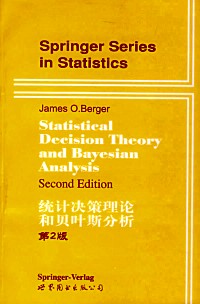
简介: The relationships (both conceptual and mathematical) between Bayesian analysis and statistical decision theory are so strong that it is somewhat unnatural to learn one without the other. Nevertheless, major portions of each have developed separately. On the Bayesian side, there is an extensively developed Bayesian theory of statistical inference (both subjective and objective versions). This theory recognizes the importance of viewing statistical analysis conditionally (i.e., treating observed data as known rather than unknown), even when no loss function is to be incorporated into the analysis. There is also a well-developed (frequentist) decision theory, which avoids formal utilization of prior distributions and seeks to provide a foundation for frequentist statistical theory. Although the central thread of the book will be Bayesian decision theory, both Bayesian inference and non-Bayesian decision theory will be extensively discussed. Indeed, the book is written so as to allow, say, the teaching of a course on either subject separately.
作者: (英)乔治·弗兰克尔(George Frankl)著;刘翠玲译
出版社:国际文化出版公司,2006
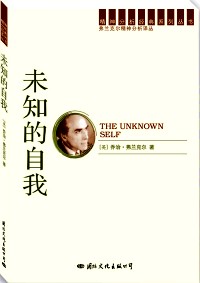
简介:本书以弗兰克尔长达四十多年的精神分析医师经历中的观察为基础,从多方面为《探索潜意识》中所阐述的精神分析技术提供了理论基础。乔治·弗兰克尔是以我们今天称之为“古典”的精神分析模式开始他的精神分析工作的,他拓展并深化了弗洛伊德所提出的概念,向我们展示了那些先驱者们所没有能够到达的全新的关于精神的维度。他的催眠分析方法使得病人能够回忆起并重新经历一些他们生活中被遗忘了很长时间的经历,从而拓宽了我们对于潜意识心理的理解的范围。《未知的自我》一书对个体从幼儿早期阶段开始的心理发展历程进行了追踪,展示了造成大范围神经冲突和精神冲突的各种原因。书中将严谨的学术知识和深刻的人文关怀结合在一起,让读者能够经历那些自我认知的、启蒙性的时刻,向我们提供了一个对儿童的变幻莫测的行为的一种全新的理解。 弗兰克尔的精神分析理论是精神分析运动的最新进展之一。这次译介了他的几本著作:《心灵考古》、《文明:乌托邦与悲剧》、《未知的自我》、《探索潜意识》、《健全社会的蓝图》、《道德的基础》和《性革命的失败》等,这差不多是他关于精神分析的著作的全部。在这些著作里,弗兰克尔广征博引,用他高度的智慧和清晰的笔触向我们展示了有关人性、人性与社会等方方面面的宏大画卷。本书是其中之一《未知的自我》。
作者: (奥)斯蒂芬·茨威格著;张威译
出版社:中国宇航出版社,2011
简介: 一个男子在41岁生日当天收到一封没有署名和地址的信,这封信出自一个临死的女人,讲述了一相刻骨铭心的爱情故事,而这个故事的男主人公也就是收信的男人对此一无所知。《一个陌生女人的来信》始自18年前,她初遇男人的刹那,她还是个孩子,而后经历了少女的痴迷、青春的激情,甚而流落风尘,但未曾改变对男人的爱,直至临死前才决定告白――她躺在凄凉的命运的甲板上,雪白的泡沫把她推向了虚无…… 《一个陌生女人的来信》由斯蒂芬?茨威格编著。
作者: (美)戴尔·卡耐基著;高宝萍译
出版社:民主与建设出版社,2014
简介:编辑推荐一:《人性的光辉》——成功学大师的唯一传记作品 本书是成功学大师戴尔?卡耐基的扛鼎之作,也是他一生之中唯一的一部传记作品。为了撰写这部作品,作者特意来到林肯的家乡,在林肯生活过的地方与这位伟大的总统共呼吸、同感受。作品语言平实,笔触感人至深,文字充满力量。 生动再现了一个内心忧郁、富于理想、愈挫愈勇、满怀仁慈之心的平民总统形象。 编辑推荐二:《人性的光辉》——出生平民的伟大总统的传奇一生 亚伯拉罕?林肯是美国历史上最伟大的总统之一,是当今美国总统巴拉克?奥巴马最推崇的英雄之一。林肯总统困苦的童年岁月、坎坷的求学之路、不幸的婚姻生活、忍辱负重的白宫生涯……无一不反映了这位伟大总统身上的人性光辉。他在坎坷中百折不挠的精神,至今仍然激励着后人,成为人类历史上搏击人生的典范。