共找到 214 项 “Duke” 相关结果
- 全部分类
- 全部
- 文学
- 历史
- 哲学/宗教
- 法律
- 政治/社会
- 医学
- 教育/心理学
- 艺术/传媒
- 研究生考试
- 资格认证考试
- 公开课
- 语言
- 经济金融
- 管理学
- IT/计算机
- 自然科学
- 工学/工程
- 体育
- 行业资料
- 音乐
- 汽车机械制造
- 文档模板
- 创业
- 农学
- 生活
- 数据库教程
- 民族
简介:Since they began in 1955, the Duke Longitudinal Studies have aging have been regarded as landmark investigations, amassing invaluable data on the typical physical changes that accompany aging, typical patterns of mental health and mental illness, psychological aging, and the normal social roles, self-concepts, satisfactions, and adjustments to retirement of the aged. Comprising information on more than 750 aged and middle-aged persons, these studies have contributed enormously to our ability to distinguish normal and inevitable processes of aging from those that may accompany aging because of accident, stress, maladjustment, or disuse.
Translating strategy into action
作者: (美)杜克公司教育部(Duke Corperate Education)[编];卢小生译
出版社:中国社会科学出版社,2007
简介:在领导从中层管理者开始系列丛书《把战略付诸行动》中,杜克公司教育部资深战略实践者和学者为你准备了驾驭转换者所需要的角色。 对于管理者来说,现在的经营环境比以往任何时候都更具动态性和复杂性。技术的不断进步、良好的信息沟通以及利益相关客户、地理范围的扩大和法律环境的不断变化等因素的共同作用,必然会改变游戏规则。随着战略开发和执行过程的融合,管理者必须改变战略的某些方面,以建立这种观念,不断地提高团队的协作程度和责任感。 如果你是一位组织的中层管理者,这本书正好为你提供帮助!《把战略付诸行动》会教你如何:理解企业战略的总方向和关键问题;确认你的团队在支持企业战略的具体领域扮演着什么角色;把战略变成有意义的行动计划,指导团队的日常工作,并获得成果;把短期决策和行动与长期目标较好地结合起来;计划和开发你成功所需要的能力-人员、环境、制度和结构。 《把战略付诸行动》有助于你清楚地阐述你的愿景即你想到哪儿去,评估你的现状,然后,安排实施步骤的顺序,建立实现目标所需要的能力。更多>>
简介:
Alexandra Cooper has a tough case to prosecute. Brendan Quillan, a wealthy businessman from the Upper East Side, has been charged with hiring an assassin to kill his wife, but the evidence is flimsy and the defendant has one of the most successful defence lawyers on his side. Then an explosion kills Quillan's brother, one of the construction workers in a tunnel being built to secure Manhattan's water supply. The blast isn't a terrorist act, nor is it an accident, but it looks as though Duke Quillan was the target. And none of the team investigating the murder had come across any hint that Brendan had a brother, never mind one so far on the other side of the tracks. With another case to solve, Alex, together with Detectives Chapman and Mercer, discover that Quillan's upbringing is very different from what they'd first assumed, and in the cupboard of his estranged family there are many skeletons, not all of them metaphorical. In a cliff-hanging whodunnit, Linda Fairstein takes the reader on a roller-coaster ride through New York and deep beneath its streets, to a conclusion which is as surprising as it is frightening.
简介: Book Description The World Literature series reproduces the greatest books the world over with only the highest production standards. History, philosophy, psychology, political theory, fiction, and ancient texts are now accessible to everyone at an extremely affordable price. This text presents Freud's theory that man is unable to tolerate too much reality, and that dreams are the contraband representations of the beast within man which are smuggled into awareness during sleep. The analysis of dreams is the key to unlocking the vital secrets of the unconscious mind. Synopsis: This groundbreaking new translation of The Interpretation of Dreams is the first to be based on the original text published in November 1899. It restores Freud's original argument, unmodified by revisions he made following the book's critical reception. Reading the first edition reveals Freud's original emphasis on the use of words in dreams and on the difficulty of deciphering them and Joyce Crick captures with far greater immediacy and accuracy than previous translations by Strachey's Freud's emphasis and terminology. An accessible introduction by Ritchie Robertson summarizes and comments on Freud's argument and relates it to his early work. Close annotation explains Freud's many autobiographical, literary and historical allusions and makes this the first edition to present Freud's early work in its full intellectual and cultural context. Amazon.com Whether we love or hate Sigmund Freud, we all have to admit that he revolutionized the way we think about ourselves. Much of this revolution can be traced to The Interpretation of Dreams, the turn-of-the-century tour de force that outlined his theory of unconscious forces in the context of dream analysis. Introducing the id, the superego, and their problem child, the ego, Freud advanced scientific understanding of the mind immeasurably by exposing motivations normally invisible to our consciousness. While there's no question that his own biases and neuroses influenced his observations, the details are less important than the paradigm shift as a whole. After Freud, our interior lives became richer and vastly more mysterious. These mysteries clearly bothered him--he went to great (often absurd) lengths to explain dream imagery in terms of childhood sexual trauma, a component of his theory jettisoned mid-century, though now popular among recovered-memory therapists. His dispassionate analyses of his own dreams are excellent studies for cognitive scientists wishing to learn how to sacrifice their vanities for the cause of learning. Freud said of the work contained in The Interpretation of Dreams, "Insight such as this falls to one's lot but once in a lifetime." One would have to feel quite fortunate to shake the world even once. --Rob Lightner From The New England Journal of Medicine(March 23, 2000) The 100th anniversary of Freud's The Interpretation of Dreams saw the publication of a new translation by Joyce Crick and a "neurophilosophical" treatise on the subject by Owen Flanagan, professor of philosophy, experimental psychology, and neurobiology at Duke University. Taken together, they beg to be read in the light of current ideas about dreams. How far Freud has fallen in the past few decades is clearly reflected in the introduction to the new translation, written by Ritchie Robertson. No, Robertson acknowledges, Freud's theory of dreaming is not scientific; it is not falsifiable, it is embarrassingly sexual and sexist, it undervalues imagery and emotions, and it overvalues verbal repartee. Indeed, Robertson admits, "the scientific study of the mind can proceed with little reference to Freud." Still, he insists, Freud has "helped us to understand the psyche as deep, complex, and mysterious." Is his theory only of historical interest? Freud's own review of the scientific literature of the time suggests that he has not contributed as much as we might think. The content of dreams was already seen by pre-Freudians as determined by previous experiences and as arising in what Ludwig Strumpell referred to as "almost memory-less isolation" from those experiences. Dreams were already seen as bizarre and chaotic, driven, as Freud described the theories of Wilhelm Wundt, by "internal... excitations of the sensory organs." The views of this pre-Freudian scientific community were remarkably similar to those held by neurobiologists and cognitive neuroscientists today. What, then, did Freud add to the study of dreams? Beautiful literature, but mostly bad theory and methodology. Dreams serve to discharge pent-up energy associated with unsatisfied infantile wishes. Dream construction follows a tortured path, with the condensation of many ideas into one and the displacement of their "energies" to unrelated images, all to keep the forbidden wishes from reaching consciousness. Freud's interpretations are stunning: a woman's dream about going to Italy (gen Italien -- to Italy) reflects a hidden wish concerning genitals (Genitalien). Why? Because it is obvious. One is reminded of Plato's "proof" in the Republic that the philosopher-king leads a life that is 729 times more pleasant than that of a tyrant. All in all, Freud's theory of dreams can probably best be described as 50 percent right and 100 percent wrong. Many of his observations about dreams (not their interpretation) are insightful. If viewed as a historical work, perhaps metaphorically, The Interpretation of Dreams can be enjoyable and thought-provoking. But those looking for a scientific explanation of dreaming had best look elsewhere. Even those seeking to use dream interpretation as a clinical tool deserve a more useful model, one more consonant with modern scientific theory. A hundred years after Freud, we seem to be back where he started. In Dreaming Souls, Flanagan seeks to answer philosophical questions about dreaming in the light of what we know about neurobiology. Still, when he talks about dreaming, he is referring specifically to the conscious experience of dreaming, with or without subsequent recall on waking, and not to the underlying physiology of the dreaming state. Although this minimal and somewhat naive attention to physiology is disappointing, it does not make his book uninteresting. Consciousness, he proposes, evolved to solve specific problems, such as how to permit the selective allocation of limited brain resources to just one of many competing sensory inputs -- what we call "attention." What, one might ask, does consciousness offer that the underlying neurophysiology could not handle equally well? Perhaps, Flanagan seems to suggest, consciousness just happened to appear before a "mindless" physiologic alternative did, and it worked well enough. Maybe consciousness and emotions represent just one of many solutions that could have evolved to deal with these problems. Perhaps (and it is a terrifying thought) consciousness could just as easily not have evolved. What about dreaming? This, Flanagan argues, is merely an unintended side effect of waking consciousness; evolution forgot to turn the conscious mind off at night, resulting in dreams that "neither help nor hinder fitness." For Flanagan, the neurobiologic processes underlying consciousness in both waking and sleeping states are of only passing interest and may be, in the end, unimportant. He clearly feels that cognitive processing during sleep serves no evolutionary value, a position that flies in the face of most recent research (for example, on sleep and consolidation of memory). What, then, is sleep for? Flanagan seems to fall back on an old suggestion of Allan Hobson's, that sleep merely serves to allow stockpiles of neurotransmitters in the brain to be replenished. Such an explanation woefully underestimates both the cost and the value of sleep. Still, Flanagan provides a fascinating view of dreaming from the perspective of a modern philosopher. He presents an elegant explication of how dreams, constructed through a chaotic process without intent on the part of the dreamer, can not only still have meaning, but also be self-revealing and useful as well. Even if the experience of dreaming (as opposed to its underlying physiology) arose without evolutionary selection, he argues, it does not follow that dreams are meaningless or that dreaming is useless. Much of what we are was never selected for -- the abilities to solve partial differential equations and to write sonnets and soliloquies were not selected by evolutionary pressures. What we are and what we have evolved to be are not the same. Destiny is not biology, and dreams are not just noise produced by the sleeping brain. Flanagan's provocative commentary would make quick and enjoyable reading for anyone interested in the thoughtful study of dreaming and may yet provide the basis for a new framework for understanding what dreams mean and how they can be used: the goal of dream interpretation. But the big scientific questions remain unanswered. What is the role of sleep in cognitive and emotional processing? How do we integrate these physiologic processes with the phenomenology of dreaming? The time is ripe to address these questions. What might answers to these questions look like? Over the past 10 to 15 years, cognitive neuroscience has proved the existence of multiple, physically distinct memory systems, including working-memory, episodic-memory, and semantic-memory systems. As a consequence, the old idea of consolidating short-term memories into long-term memories has expanded to include concepts of transferring memories from one system to another and then integrating them into complex associative networks. New research suggests that these activities may depend on sleep and might even be the main function of sleep. Processes of memory transfer and integration occur both intentionally (through the frontal cortex) and automatically (through "self-organizing" bottom-up processes). These processes are more complex and more time-consuming than simpler forms of memory consolidation, and they appear to use the same brain regions required for sensory processing. Taken together, they beg for a state in which sensory input is blocked and conscious control of cognitive and affective processing is turned off. Although such a state would be optimal for the automatic reactivation and reprocessing of ensembles of preexisting memories, it would leave the organism dissociated from its environment and unable to interact with it safely. By adding immobility to these other conditions, sleep makes this state of "off-line" memory reprocessing both safe and effective; herein lies the evolutionary pressure for sleep. This, perhaps, is the beginning of a theory worth consideration by neurobiologists, cognitive scientists, and philosophers alike, and the questions it raises are both important and exciting. How would the reliable changes in chemical neuromodulation that are dependent on the stage of sleep, sensory-input gating, generation of electroencephalographic waves, and regional brain activation facilitate off-line memory reprocessing? Which component parts of such a memory-reprocessing system would each sleep stage support? For example, during rapid-eye-movement (REM) sleep, distant and unpredictable cortical associations, but not episodic memories, appear to be preferentially activated, leading to the bizarre, symbolic, and hyperemotional narratives found in classic dreams. In contrast, during non-REM sleep, mentation is generally more linear and thoughtlike. How and why would the brain modulate memory-reprocessing systems in these ways? And, finally, what function, if any, might our conscious awareness of this reprocessing -- what we call dreaming -- serve? I hope that the answers to these questions are not too far away. Reviewed by Robert Stickgold, Ph.D. From AudioFile Freud's most famous and polemic book presents a challenge to narrator Robert Whitfield, who interprets the heavy rhetoric with dispatch and precision, while relating the fascinating dreams with expressive interest and skill. The German text is translated into unstilted English, but the remaining French allows Whitfield to exploit his bilingual ability. Modern medicines have made psychoanalysis less popular than in its heyday, but the impact of Freudian theory on our civilization can never be ignored. For the curious and the serious, Whitfield aptly augments the exploration of this classic book just as a guide aids the tour of an old church. J.A.H. From Library Journal This volume of essays (part of a new series) reflects a wide range of disciplines: sociology, history, literature, and philosophy. Several are works of historic importance by major thinkers, including Wittgenstein and Erikson. Others are more recent works informed by modern thinkers, most notably Lacan. Though of limited appeal to the lay reader in its assumption of a working knowledge of Freud's dream work and its failure to link the essays, the book will interest scholars, particularly those in the humanities concerned with psychoanalysis. Several essays, particularly Meredith Skura's concerning the literary use of dream interpretation, are outstanding commentaries on Freud's landmark work. Paul Hymowitz, Psychiatry Dept., Cornell Medical Ctr., New York About Author Sigmund Freud was born in 1856 at Freiburg in Moravia and died in London in 1939. He embarked on medical studies in Vienna, working at the same time at the Institute for Cerebral Anatomy. Financial circumstances compelled him to postpone his prime interest, pure research, and he became a clinical neurologist. In 1884 he was introduced by Dr. Josef Breuer, a Viennese physician, to the "cathartic" method of treatment of hysteria, which was the starting point of what later became psychoanalysis. Studies in Hysteria was the result of Freud's and Breuer's collaboration in this area. Freud then went on alone to work at "psychoanalysis," examining the structure, nature, and diseases of the mind. As a result of his studies in literature, art, mythology, and religion, he found further evidence to support the revolutionary theories he had discovered in therapeutic practice. The Interpretation of Dreams was first published in 1900. Freud wrote of it in 1931: "It contains, even according to my present-day judgment, the most valuable of all the discoveries it has been my good fortune to make. Insight such as this falls to one's lot but once in a lifetime." Book Dimension : length: (cm)19.8 width:(cm)12.6
Roly Poly: Ocean 神奇翻转书:海洋-哈佛大学教育专家吴敏兰重点推荐读物! ISBN9789810745264
作者: Scholastic
简介:
Roly Poly Pop-Up: Nursery Rhymes is a completely original design. They roll out and pop-up to provide a whole host of tactile and visual surprises for children of any age.
【编辑推荐】
学英语儿歌很枯燥乏味?孩子不愿学?那就选择Roly Poly神奇翻转书系列!翻转书内共包括10首儿歌,分别是:
Grand Old Duke of York
Pat-a-cake, Pat-a-cake
Pussy Cat, Pussy Cat
Little Miss Muffet
Once I caught a Fish alive
The Cat and the Fiddle
Georgie Porgie
Doctor Foster
Incy Wincy Spider
Humpty Dumpty
读来朗朗上口哦,末页还有意外惊喜哦~让孩子便玩边学习英语儿歌,寓教于乐,激发孩子学习自主性,学习英语也可以很有趣。这几首儿歌爸爸妈妈还可以在网上搜寻相应的歌谣,比如第九首Incy Wincy Spider就有相应的儿歌,爸爸妈妈可以结合翻转书,歌谣一起,从视觉、听觉、触觉多角度刺激宝宝,让宝宝学起来更快,更开心~本系列书籍适合3岁及以上孩子阅读。
作者: 吾淳
出版社:五洲传播出版社 2015年05月
简介:
本书不是以历史的线索而是以专题的线索来叙述中国哲学。全书共分五个专题,分别是:世界的性质是怎样的;事物的关系是怎样的;社会的准则是怎样的;人生的取向是怎样的;认识的结构是怎样的。其中前两部分是关于自然或世界的看法,第三、四部分是关于社会和人生的看法,第五部分则是对认识与智慧本身的看法。本书的目的在于使读者对中国博大精深的哲学思想有一个*基本的了解,也即对古代中国那些**秀、*伟大的智者和智慧有一个*基本的了解。
【目录】
Contents
Preface
WHAT IS THE NATURE OF THE WORLD?
The Birth of Beliefs
Shen, the Religious Source of Chinese Philosophical Ideas
Atheism
The Formation of Concepts about Nature
Yin and Yang and the Five Elements: the Intellectual Source of Chinese Philosophical Ideas
Vestiges of Magic
Observation and Thinking about Phenomena
The Concept of Difference or Diversity
The Concept of Change or Changeability
Sameness and Difference, Constancy and Change
The Quest for Essence and Laws
Dao
Li
Qi
WHAT ARE THE RELATIONSHIPS BETWEEN THINGS?
The Relationship Between Heaven and the Human, and its Religious and Intellectual Background
The Religious Approach to the Heaven- Human Relationship
The Intellectual Approach to the Heaven- human Relationship
The Dialectical Outlook
Opposition
Mutual Reliance
Transformation
Relativity
The Holistic Outlook
The Golden Mean
Consideration of Both Sides
Synthesis
Association
WHAT ARE SOCIAL NORMS?
Moral Consciousness and the Establishment of Confucian Moral Principles
The Zhou Dynasty: the Origin of the Sense of Morality
Confucius: the Tradition of Rites and the Spirit of Benevolence
The Development of Confucian Social Norms
Mencius’ Idea of Benevolent Rule and Xun Zi’s Idea of “Propriety and Law”
Edification and the Ethical Tradition of Chinese Civilization
The Confucian View on “Righteousness vs. Profit” and “Heavenly Principle vs. Human Desire”
Reflections on Social Issues in Other Schools of Thought
The Taoist Idea of Non-action
The Legalist Idea of Rule by Law
Views on History
Various Views on History
The Circulatory Theory of History
WHAT IS THE PROPER ORIENTATION OF LIFE?
The Ideal Confucian Character and its Cultivation
The Ideal Confucian Character Established by Confucius
The Cultivation of the Ideal Character
Music and Character Building
Completion through Music
Equilibrium and Harmony
The Confucian Theory of Human Nature
Mencius’ Doctrine of the Goodness of Human Nature
Xun Zi’s Doctrine of the Evil of Human Nature
The Development of Theories on Human Nature
The Taoist Outlook on Life
Lao Tzu’s Outlook on Life
Chuang Tzu’s Outlook on Life
WHAT IS THE STRUCTURE OF KNOWLEDGE?
The Source and Ability of Knowledge
Knowing and Not Knowing
Mind and Object
Name and Substance
Language and Meaning
The Structure or Form of Knowledge
Information and Thinking
Gradual Study and Epiphany
Investigating Things and Gaining Knowledge
Removing Obstructions
Receptiveness and Serenity
Views on Knowledge and Action
The Foundation of Early Views on Knowledge and Action
Word and Action, Knowledge and Practice
Zhu Xi’s View on Knowledge and Action
Wang Yangming’s View on Knowledge and Action
Wang Fuzhi’s View on Knowledge and Action
Appendix
【免费在线读】
The Ideal Confucian Character and Its Cultivation
Confucians held the ideal that one should possess the sage’s virtue and practice the ruler’s policy. The latter issue was discussed was discussed in Chapter 3, and it was also mentioned in relation to the Eight Terms (Ba Tiao Mu) in Great Learning: to regulate the family, to maintain the state rightly and to make all peaceful. Practicing the ruler’s policy was, in fact, linked to the idea of the sage’s virtue, which was mentioned in Great Learning as being about “cultivating morality” (Xiu Shen) and as comprising righteousness and sincerity. Great Learning began with: “The great learning teaches to act in accordance with morality (Ming De), to respect citizens, and to maintain the perfectness,” (Zhi Shan). Here, Ming De and Zhi Shan are referring to the ideal cultivation of morality, which would lead to the development of an ideal human character. Actually, the idea of the ideal character was first established in the Confucianism of Pre-Qin times.
The Ideal Confucian Character Established by Confucius
The ideal Confucian character consisted of the following principles (which were mainly established by Confucius):
One: Tao and Righteousness. These principles mainly centered on righteousness and profit and included three rules.
1. Righteousness is the most important principle of the ideal character. Confucius said, “A gentleman gives priority (Shang) to righteousness,” (The Analects, Yang Huo). Here, Shang meant “the first place.” Xun Zi elaborated on this idea further, “A gentleman can be insulted by power but not by the loss of Righteousness,” (Xun Zi, On Righteousness). Tao and Righteousness were so important that Confucius said, “I can die in the dusk as long as I know what Tao means in the morning,” (The Analects, Li Ren).
2. Value righteousness and underestimate profit. The edict that “righteousness is the most important” also meant that “profit has the least importance.” Confucius said, “I remind myself of righteousness when facing profit,” (Xian Wen) and “It is meaningless to me when I obtain wealth and power but act against righteousness,” (Shu Er). However, Mencius overstated the value of righteousness, “It is unnecessary to mention profit as there is only benevolence and righteousness,” (Mencius, King Hui of Liang I).
3. Be satisfied with poverty and devoted to Tao. This rule indicated how a person should act in the face of poverty. Confucius stressed, “Wealth and power are what man desires, but he must not enjoy them if he obtains them in an improper manner. Poverty and humanness are what man dislikes, but he must not abandon them if he abandons them in the wrong way. How should a gentleman be called a gentleman if he discards benevolence? A gentleman cannot live without benevolence even when he has dinner, even when he faces urgency, and even when he suffers homelessness.” (Li Ren) Confucius took Yan Hui, his disciple, as an example: “Yan Hui, so virtuous! He lives with a bamboo dish of rice and a gourd of drink in a remote lane. When others worry him, he does not change his devotion. Yan Hui, so virtuous! (Yong Ye).” Here, Confucianism places the gentleman in opposition to the petty man.
Two: The principle for ideal. This was mainly based on moralism and included four rules.
1. Improving oneself. This rule stated that a man should follow the rule “improve oneself” when faced with the goodness and evil (in the same way that he should follow the rule “satisfied with poverty and devoted to Tao” in the face of poverty). Confucius said, “One should serve the ruler when Tao is practiced and seclude oneself when Tao is not practiced,” (Tai Bo) and “One should take a small raft and live a secluded life when Tao is not practiced,” (Gong Ye Chang). Mencius also stated, “In poverty, one should maintain one’s integrity; when on the rise, one should make perfect the whole country,” (With All Heart I).
2. Adhere to goodness. This rule highlighted the importance of upholding the truth, as Confucius said, “One should adhere to benevolence and even surpass his teacher,” (King Ling of Wei) and “One should be devoted to honesty, learning, and goodness with whole heart,” (Tai Bo).
3. Maintain integrity. Confucius said, “One can carry off the commander from a whole army, but cannot take away the will of the common folk,” (Zi Han). Zeng Sen said, “Could a man be called a gentleman, to whom a ruler can entrust his young successor and the whole country, who does not change his will in the face of peril? Yes, he must be a gentleman,” (Tai Bo).
4. Devote your life to Tao. The final rule was to devote one’s life to Tao. Confucius said, “One with “ideal” sacrifices himself to practice benevolence rather than harm benevolence for his survival,” (King Ling of Wei). Mencius said, “One with “ideal” does not fear if he is deserted in the wild; one with valor does not fear if he is killed,” (Duke of Wen of Teng II) and “One should devote himself to Tao when Tao is not practiced,” (With All Heart I). This rule elevated Confucian morality to the highest level, as it called for the highest and most noble of sacrifices.
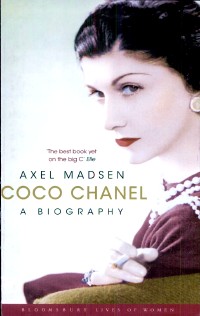
简介: Coco Chanel\''s genius for fashion may have been distilled in simplicity, but her life was an extravaganza. A brilliant array of luminaries fell under her spell - Picasso, Churchill, Cocteau; lovers included the Grand Duke Dmitri; the English roue, Boy Capel; a French poet; and, a German spy and the Duke of Westminster, who offered to leave his wife for her permanently, if she would only bear him an heir. Paradoxically, though she might have been regarded in some lights as a pioneering feminist - sacrificing marriage to a revolutionary career in couture - Chanel was utterly baffled by the idea of women\''s politics. Educated women? \''A woman\''s education consists of two lessons: never leave the house without stockings, never go out without a hat\''. Chanel\''s rise from penniless orphan to millionaire designer - \''inventing\'' sportswear, the little black dress and number 5 - makes compelling reading, not least because she was inclined to design her own life as deftly as she did her fashions. Axel Madsen negotiates Chanel\''s smoke screens with skill, bringing this tantalizing woman to life in all her alluring complexity.
简介: Compiling significant advances from more than a decade of research, this text presents breakthroughs in the prevention, treatment, and control of cancer-exploring the origin, function, and behavior of cancerous cells and promoting the development of effective therapeutics for common malignancies of the breast, lung, prostate, and gastrointestinal tract, as well as other major systems of the body. Highlights an author-maintained web-site offering an extended series of slide illustrations for clear and concise oncology lectures! Completely revised and expanded throughout, the Fourth Edition of Fundamentals of Oncology contains new chapters detailing · the utilization of genetic data for possible elimination of disease · emerging families of chemotherapeutic drugs, such as taxols and topoisomerase inhibitors · the characteristics of promoting agents and environmental carcinogens · host-tumor relationships · endocrine and stromal responses and provides · current strategies to halt disease progression · additional tables, drawings, and micrographs · an extended list of glossary terms Fundamentals of Oncology, Fourth Edition is a timely and definitive text for upper-level undergraduate, graduate, and medical students taking courses in oncology, pathology, pathophysiology, cell biology, pharmacology, toxicology, and epidemiology. Here are just some of the colleges and universities that have benefited from previous editions of the Fundamentals of Oncology: University of Alabama University of Alaska University of Arizona Boston University University of California, Davis University of California, Los Angeles University of California, Santa Barbara University of Connecticut, Storrs C.W. Post Drew University Duke University Eastern Michigan University Florida Atlantic University Gloucester County College University of Massachusetts at Worcester Michigan State University University of North Carolina at Chapel Hill Northeastern University Northern Kentucky University University of Pittsburgh College of Saint Rose University of Saskatchewan, Saskatoon Seattle University University of South Carolina, Columbia University of South Florida, Tampa University of Tennessee at Knoxville University of Tennessee at Oak Ridge Tulane University University of Utah, Salt Lake City University of Wisconsin-Madison University of Wisconsin-Whitewater Virginia Commonwealth University Williams College
作者: William Shakespeare ; edited by David Bevington ; David Scott Kastan, James Hammersmith, and Robe...
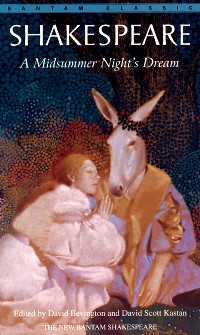
简介: 在线阅读本书 Book Description Magic, love spells, and an enchanted wood provide the materials for one of Shakespeare’s most delightful comedies. When four young lovers, fleeing the Athenian law and their own mismatched rivalries, take to the forest of Athens, their lives become entangled with a feud between the King and Queen of the Fairies. Some Athenian tradesmen, rehearsing a play for the forthcoming wedding of Duke Theseus and his bride, Hippolyta, unintentionally add to the hilarity. The result is a marvelous mix-up of desire and enchantment, merriment and farce, all touched by Shakespeare’s inimitable vision of the intriguing relationship between art and life, dreams and the waking world. Each Edition Includes: ? Comprehensive explanatory notes ? Vivid introductions and the most up-to-date scholarship ? Clear, modernized spelling and punctuation, enabling contemporary readers to understand the Elizabethan English ? Completely updated, detailed bibliographies and performance histories ? An interpretive essay on film adaptations of the play, along with an extensive filmography From the Publisher An exciting new edition of the complete works of Shakespeare with these features: Illustrated with photographs from New York Shakespeare Festival productions, vivid readable readable introductions for each play by noted scholar David Bevington, a lively personal foreword by Joseph Papp, an insightful essay on the play in performance, modern spelling and pronunciation, up-to-date annotated bibliographies, and convenient listing of key passages. Book Dimension : length: (cm)17.6 width:(cm)11
作者: William Shakespeare ; edited by David Bevington ; David Scott Kastan, James Hammersmith, and Robe...
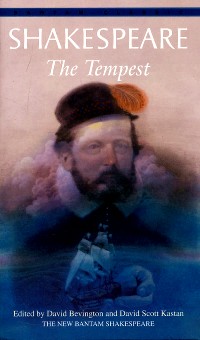
简介: This joyous play, the last comedy of Shakespeare's career, sums up his stagecraft with a display of seemingly effortless skill. Prospero, the exiled Duke of Milan, who is living on an enchanted island, has the opportunity to punish and forgive his enemies when he raises a tempest that drives them ashore-as well as to forestall a rebellion, to arrange the meeting of his daughter, Miranda, with an eminently suitable young prince, and, most important, to relinquish his magic,powers in recognition of his advancing age. Richly filled with music and magic, romance and comedy, play's theme of love and reconciliation offers a splendid feast for the senses and the heart. ...
作者: Eloisa James.
简介: A Duke in Retreat Gina was forced into marriage with the Duke of Girton at an age when she'd have been better off in a schoolroom than a ballroom. Directly after the ceremony her handsome spouse promptly fled to the continent, leaving the marriage unconsummated and Gina "quite" indignant. A Lady In the Middle Now, she is one of the most well-known ladies in London ... living on the edge of scandal--desired by many men, but resisting giving herself to any one. A Duchess in Love Finally, Camden, the Duke of Girton, has returned home, to discover that his naive bride has blossomed into the toast of the "ton." Which leaves Cam in the most uncomfortable position of discovering that he has the bad manners to be falling in love--with his own wife
Statistics in molecular biology and genetics : selected proceedings of a 1997 Joint AMS-IMS-SIAM...
作者: Francoise Seillier-Moiseiwitsch, editor.
简介:This e-book is the product of Project Euclid and its mission to advance scholarly communication in the field of theoretical and applied mathematics and statistics. Project Euclid was developed and deployed by the Cornell University Library and is jointly managed by Cornell and the Duke University Press.
Duke University : an architectural tour /
作者: by John M. Bryan ; photographs by Robert C. Lautman ; foreword by Tallman Trask III.
简介:Summary: Publisher Summary 1 Duke University was officially founded in 1924. Until 1950 it was designed primarily by Julian Abele, one of the few professional African-American architects working in the United States at that time. The campus architecture is best known for its medieval-style Gothic buildings, notably Duke Chapel.
BSAVA manual of canine and feline anaesthesia and analgesia / 2nd ed.
作者: editors, Chris Seymour and Tanya Duke-Novakovski.
简介:Summary: Publisher Summary 1 The administration of safe and reliable anaesthesia is important for all veterinary surgeons, and good control of pain after injury, either traumatic or surgical, is one of the most important ethical responsibilities. This new edition has retained the broad sections from the previous edition - Basic principles, Pharmacology and Anaesthetic management in specific clinical situations - but the new co-editorial team has added a new section on Pain assessment and management. Anaesthetic equipment, patient monitoring and anaesthetic accidents and emergencies are covered in much greater detail, and the chapters on pharmacology and specific patient management have been revised or completely rewritten. The book is aimed primarily at veterinary surgeons and students, but nurses and technicians will also find a wealth of useful information.
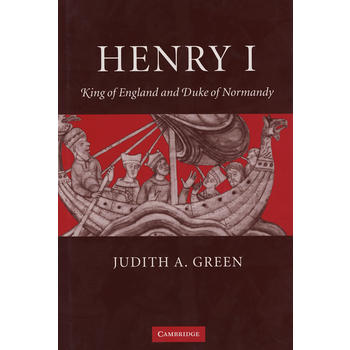
Henry I: King of England and Duke of Normandy亨利一世: 英国国王与诺曼底公爵
简介:
Judith Green argues that although Henry's primary concern was defence of his inheritance, it did not preclude expansion where circumstances were propitious, notably into Welsh territory. His skillful dealings with the Scots permitted consolidation of Norman rule in the northern counties of England, while in Normandy every sinew was strained to defend frontiers through political alliances and stone castles. Green claims that although Henry's own outlook was essentially traditional, the legacy of this fascinating but repellent personality included some hugely significant developments in governance.
The first biography to offer a fully rounded treatment of the life of Henry I, the youngest son of William the Conqueror, this book presents a major new interpretation of the man and his methods. Green argues that although Henry's primary concern was defence of his inheritance this did not preclude expansion where circumstances were propitious, notably into Wales. Although Henry's outlook was essentially traditional, the legacy of this fascinating but repellent personality included some hugely significant developments in governance. The book also offers a fresh perspective on Henry's court.
作者简介:
Judith Green is Professor of Medieval History, Queen's University Belfast. She is the author of The Government of England under Henry I (1986) and The Aristocracy of Norman England (1997) and is a Fellow of the Royal Historical Society.
作者: 黄达夫医学教育促进基金会
出版社:青岛出版社 2017年03月
简介:
美国杜克大学奠基于1838年,杜克医学院则是在1935年成立。 创办人詹姆士?杜克先生(Mr. James Buchanan Duke)期待,杜克大学的校园会是一个充满学习热情的优质环境,而进入杜克大学的学生必须是热爱学习的人,招聘来的教师则是愿意献身教学工作的学者。 1999年起,黄达夫医学教育促进基金会每年都会选派三至五位优秀医学生到杜克大学医学院实习,拓宽医学生的视野,并带回珍贵的临床经验。受惠的五十位学生也已开枝散叶,遍布台湾各医学领域。本书就是中国台湾地区医学生在杜克医学院的亲身见证实录,分为热情、理解、坚忍、审慎、眼界、合作、承诺、希望八堂课,涵盖医院各专科的内容,为所有医师、医学生、以及有志于医学的学子,带来身历其境的感受,拾得从医这份神圣工作的初心。
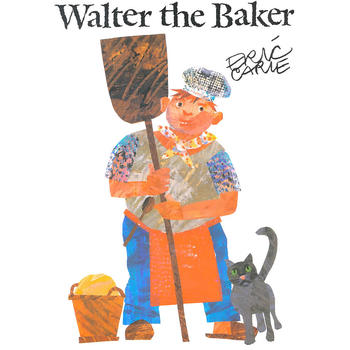
Walter the Baker [Paperback] 面包师沃尔特 ISBN 9780689820885
作者: Eric
简介:
An engaging tale from one of America's most beloved artistsand storytellers. When the Duke notices that Walter the baker hassubstituted water for milk in his sweet rolls, he presents Walterwith a challenge: create from one piece of dough a roll the sun canshine through three times, or be banished from the Duchy. Fullcolor.
【媒体评论】
From the author of The Very Hungry Caterpillar comes the storyof a baker who invents the pretzel. Carle's whimsical, freneticcollages seem fresh from the oven, even though they were firstpublished 25 years ago. Ages 4-8.
Copyright 1998 Reed Business Information, Inc.