共找到 459 项 “Brothers” 相关结果
- 全部分类
- 全部
- 文学
- 历史
- 哲学/宗教
- 法律
- 政治/社会
- 医学
- 教育/心理学
- 艺术/传媒
- 研究生考试
- 资格认证考试
- 公开课
- 语言
- 经济金融
- 管理学
- IT/计算机
- 自然科学
- 工学/工程
- 体育
- 行业资料
- 音乐
- 汽车机械制造
- 文档模板
- 创业
- 农学
- 生活
- 数据库教程
- 民族
作者: 齐葳总编导;苏扬解说
出版社:中国国际电视总公司,[2013]
简介:非洲,一片神奇而美丽的大陆,数百万年前孕育了古人类的第一粒胚胎,野生动物把这里当作天堂,热带植物在这里茂密生长……在第五届中非合作论坛部长级会议即将在北京隆重开幕之际,中央电视台《携手》摄制组来到了非洲,30天的行程,14个国家的探访,我们努力寻找那些关于发生在那片陌生大陆的人物和故事,我们寻找中非合作论坛召开12年来,中国和非洲发生的变化,我们也寻找大历史事件背后小人物的命运,我们看到了这块大陆,在中非合作论坛的助力下,梦想实现的故事,那也许是这块大陆的希望所在……
简介:This book engages the reader in a journey of discovery through a spirited discussion among three characters: Philosopher, Teacher and Student. Throughout the book, Philosopher pursues his dream of a unified theory of conics, here exceptions are banished. With a helpful teacher and example-hungry student, the trio soon finds that conics reveal much of their beauty when viewed over the complex numbers. In their odyssey, they uncover a goldmine of unsuspected results. They experience a series of "Aha!" moments as they stumble upon living brothers to familiar conics objects like foci and directrices. They also discover a normally-unseen ellipse spanning the gap between the branches of any hyperbola. On the applied side, they learn how two interfering wave sources create systems of hyperbolas; these are used in making astonishingly precise astronomical observations. All these discoveries are profusely illustrated with pictures, worked-out examples, a generous selection of exercises, and a CD containing 36 applets. If you've ever needed a conics formula for area, eccentricity, curvature and the like, look in the formula appendix. Here are dozens of useful formulas-a set for each of eight different ways of looking at a conic: as a cone slice; as the path of a planet moving under the influence of a fixed sun; as a figure constructed using two stakes and string; plus five other sets. Conics is written in an easy, conversational style, and many historical tidbits and other points of interest are scattered throughout the text. Many students self-study the book without outside help. This book is ideal for anyone having a little exposure to linear algebra and complex numbers. - Back cover.
作者: 余华著
出版社:上海文艺出版社,2005
简介: 十年磨一剑,余华回来了。 十年,对于一个作家,这不仅仅只是个时间概念!更多的是一种压力、一种难言名状的含辛茹苦!阔别文坛多年后,在读者的千呼万唤声中,今天,余华终于携其最新力作长篇小说《兄弟》重返文坛,遥忆当年,身为先锋派的领军人物,余华一扫文坛寂寞,为读者带来一系列的精品小说,被广大读者尤为推崇的《活着》至今仍震撼着一批又一批的读者,那种对苦难的惨酷描写直达灵魂深处,余华创造了小说史上的一个高峰。九十年代以来,长篇小说很少有出《活着》左右者,很多读者都是流着泪、痛苦压抑地看完《活着》。由张艺谋执导、葛优主演的同名电影在也国际电影界屡获大奖。在接受《 新京报》专访中,余华坦言了这十年来的创作历程,作家特别强调了新作《兄弟》的故事叙述强度及其突出细节描写的手法,相比于前期作品,《兄弟》少了几许压抑,多了几丝温馨!余华自称这部作品写作风格有“狄更斯”小说的味道,残酷与温馨并存。 继《许三观卖血记》发表10年之后,余华终于携其最新的长篇小说《兄弟》回来了。在后记中,余华坦言:起初我的构思是一部10万字左右的小说,可是叙述统治了我的写作,篇幅超过了40万字。写作就是这样奇妙,从狭窄开始往往写出宽广,从宽广开始反而写出狭窄。这和人生一模一样,从一条宽广大路出发的人常常走投无路,从一条羊肠小道出发的人却能够走到遥远的天边。 作者余华介绍,其实最初的想法只是通过一部10万字的长篇小说来恢复自己写小说的能力,结果仅上部就写了18万字,下部已经写了20多万字。对善于控制节奏的余华来说,这次的写作似乎有些“反常”。余华坦陈,“写《兄弟》我失控了。因为我们的现实和历史左右了我的写作”。 《兄弟》讲述了江南小镇两兄弟李光头和宋钢的人生,李光头的父亲不怎么光彩地意外身亡,而同一天李光头出生。宋钢的父亲宋凡平在众人的嘲笑声中挺身而出,帮助了李光头的母亲李兰,被后者视为恩人。几年后宋钢的母亲也亡故,李兰和宋凡平在互相帮助中相爱并结婚,虽然这场婚姻遭到了镇上人们的鄙夷和嘲弄,但两人依然相爱甚笃,而李光头和宋钢这对没有血缘关系的兄弟也十分投缘。 通过一个重新组合的家庭在“文革”劫难中的崩溃过程,展示了个人命运与权力意志之间不可抗衡的灾难性景象,也凸现了人性之爱与活着之间的坚实关系。余华全新的叙述方式相信会让喜爱他的读者觉得十年的等待完全值得。 《兄弟》是两个时代相遇以后产生的小说,前一个是“文革”中的故事,后一个是现在的故事。余华曾说过:“写作不是一种生活,而是一种发现,它通过一个什么事情,调动过去的生活积累,同时又给它一种新的生活容貌。”《兄弟》在叙述过去的生活时,虽然并没有绕开那些共识性的历史记忆,但是,它却从特定的历史苦难中发现了爱的宽广。余华还说,“事实上,我是写到下部的时候,才知道自己是在写作一部什么样的小说。作家都愿意去写作久远的故事,因为在久远的时代里更容易找到文学中最引人入胜的传奇性。当我写到下部时,我突然发现今天的中国充满了传奇性,应该说是现实和传奇合二为一了。这是一个叙述者千载难逢的时代,只要写下了真实的现在,也就同时写下了持久的传奇。” 在《兄弟》上部里所有有名有姓的人物,只要他们还健在,在下部里都会有更加充分的表演,而且令人哭笑不得。上部和下部是两个截然不同的时代,是里面人物悲喜交集的命运将小说的上下两部呼应起来。“想想今天的中国,再回忆一下‘文革’时的中国,天壤之别的两个时代,却发生在同样的人身上,这是人类文明史上的两个极端,却由同一代人连结起来,我写作的激情来自于此。”
简介:Adams traveled thousands of miles and interviewed scores of experts and individuals to piece together his story of Wilbur and Orville Wright. Adams helps us understand the talent and intensity of the brothers and their family, including the fascinating, deeply complex, and at times tragic bond between Orville and Katherine, his younger sister. The Flyer is a wonderfully rich narrative that brings an unprecedented spirit and immediacy to one of history's most dramatic stories.
简介:《Hepatic Caudate Lobe Resection(肝尾叶切除术)》内容简介:This book is dedicated to my sisters, Dr. Lillian S.C. Pang, MD, PhD, FRCPath; Dr.Shuyi Peng, MD; Madam Shutuo Peng, MA; and my brothers, Dr. Shugan Peng,MD; Shujue Peng, MD. Without their consistent encouragement and support, Iwould not have undertaken my study of liver diseases and surgical career. This book is also dedicated to all my patients whose desire for life and living well is what makes this entire effort meaningful and worthwhile.
作者: 婉达·盖格
出版社:天津人民出版社 2015年04月
简介:Millions of catsWinner of Newbery Honor, Wanda Gág's timeless tales tells of an oldman who sets off in search of a beautiful cat to bring home as a companion forhis wife. But instead of one cat, he comes back with “Hundreds of cats,thousands of cats, Millions and billions and trillions of cats”…Snippy and SnappyIn this charming book, we are introduced to brother and sister fieldmice living with their mother and father in a cozy nook in a hay field. Theirfather enthralls them with stories about gardens in big fields, houses in biggardens, kitchen cupboards in big houses, and bigyellow cheeses in big kitchen cupboards.One day Snippy and Snappy wander away from home while playing withtheir mother's yarn ball. Their journey takes them to a large house full ofmysterious things, including cupboards full of wonderful-smelling cheese. Justas Snappy begins to nibble at a piece of cheese in a mousetrap, their fatherjumps down to rescue them and lead them safely back home.Gág's delightfully detailed illustrations capture the coziness, wonder,and playfulness of Snippy and Snappy's adventures.Nothing at all"Nothing-at-all" is the name of an orphaned puppy living withhis two brothers until two children come to adopt them. Unfortunately,Nothing-at-all gets inadvertently left behind-not out of cruelty, but because he is invisible!He is horribly lonely until he meets a bird, a Jackdaw, who saysthat he knows how to make the puppy visible. Nothingat- all doesn't think muchof the bird at first, but follows the instructions anyway, and after a littletime, hard work, and a lot of dizziness, the puppy becomes visible and isadopted along with his brothers.The Funny ThingThe Funny Thing is Wanda Gág’s follow-up to her well-loved classic,Millions of Cats . It tells the story of a curious dragonlike “aminal” thateats children’s dolls. A kindly man named Bobo cannot stand by and allow thisto happen. He entices it to eat the concoction “jum-jills.”A happy ending is assured when the Funny Thing discovers he lovesthem and never eats another doll.THE ABC BUNNYAn unfortunate accident with an Apple drives Bunny from Bunnyland toElsewhere. Every letter in the alphabet is represented in Bunny’s journey,through what he eats (Greens), to whom he meets (Insects, Jay, Kitten, Lizard),and then a little sleep (Nap), to Tripping back to town, right side Up andUp-sidedown.This edition is a special ABC book for children, Wanda Ga'g illustratesthe pictures with 26 letters, Karen L. Smith from Canada is invited to bringyoung readers with the story of Bunny. A marvelous book for family reading!GONE IS GONEIn this delightful story we meet Fritzl, a farmer who lives with hiswife Liesi, theirbaby kinndli, and Spitz, their dog. Fritzl works hardin the fields every day. Liesi works hard all day, too, but Fritzl somehowfeels that he works harder. When he complains about how hard he works and howeasy Liesi has it, and Liesi suggests they trade places.The tale’s sly peasant humor and conversational style combined withGág’s expressive black-and-white illustrations made the book an instantclassic. The hilarious outcomes of Fritzl's calamitous day at home areportrayed in Gág's singular illustrations. In the end Fritzl admits that hiswife's work is "none too easy” and begs to return to his fields and not do housework anotherday. And they live in peace and happiness for ever andever.
作者: 林语堂著
出版社:外语教学与研究出版社,2009
简介:《京华烟云》为英文版,One morning in 1905, or the 31th year of the reign of Emperor Guangxu of Qing Dynasty, two brothers set out by boat from their hometown Boa-ah, amountain hamlet in Fujian Province on the southern coast of China, for theport city of Xiamen, some sixty miles away. The boys were full of excitementand chatter, especially the younger one. Yutang was ten years old, and today, hewas taking leave of his hometown and going with his brother to study in Xiamen.They were sons of Pastor Lin Zhicheng, who was born in the poor village ofWulisha. Pastor Lin was sending his sons to free missionary schools in Xiamen. The Pastor was not a follower of convention, so the boys did not wearqueues. Yutang was a little guy, deeply tanned, with a prominent forehead, apair of sparkling eyes, and a narrow chin. Six miles later, when the skiff cameto Xiaoxi, the boys changed to a five-sail junk, and sailed toward Zhangzhouon West River. There were paddy fields and farmhouses on either side ofthe river, and tall mountains stood behind them, clad in grey-purplishhues. Yutang thought it inexpressibly beautiful. After a day's journey, the junkwas tied up against the bank under some bamboo trees. Yutang was told to liedown, cover himself with a blanket and go to sleep. 从诗到诗——中国古诗词英译 从诗到诗(中国古诗词英译) 古文观止 古文观止精选(汉英对照) 人文胜迹——初中以上英文水平读者 莎翁故居 国王谷:人文胜迹 雅典卫城:人文胜迹 庞贝城与赫库兰尼姆城:人文胜迹 哈德良长城 林语堂英文作品集 印度的智慧(林语堂英文作品集)(月亮石) 武则天传 京华烟云(英文版) 京华烟云 吾国与吾民 吾国与吾民(英文版) 老子的智慧 生活的艺术 生活的艺术(林语堂英文作品集)(月亮石) 风声鹤唳(林语堂英文作品集)(月亮石) 京华烟云 吾国与吾民 生活的艺术
作者: 余华著
出版社:上海文艺出版社,2006
简介:作为去年中国“最会制造悬念”的小说家―――余华,去年7月出版18万字的《兄弟》上部之后,今年2月下旬完成了《兄弟》下部33万字的创作。余华最长的一部作品由此诞生。 《兄弟》是余华第一次在写作时用到“尾声”的作品,下部包括尾声在内共有51章,前面有两三章写两兄弟自己有工资以后的幸福而平静的生活。接下来,有七章写了兄弟俩和林红之间的“三角关系”,长达六万多字。 《兄弟》上部中,有人说于华从宋钢父亲宋凡平之死就开始“烹调死亡的盛宴”。在下部里面,他不会继续“烹调死亡盛宴”―――除了宋钢自杀是非正常死亡外,别的人,譬如宋钢爷爷、老关剪刀、张裁缝等,都是再正常不过的生老病死。 宋钢在下部里面遭遇的命运是他所在的工厂破产,他也越来越潦倒,后来因为各种各样复杂的原因,他在40多岁时自杀了。他自杀时,林红和李光头正在同一张床上。宋钢在临死之前,给林红和李光头都写了一封信。 林红是一个典型的连接今天和过去的女性,不同于80年代以后出生的女性。宋钢的死,让她在生意场上变得像以前的李光头一样很成功,而李光头则变得没有了任何欲望,挣钱没有了任何兴趣,唯一的愿望就是,上太空,把哥哥的骨灰盒拿到太空去。 在尾声里,余华交代了李光头的命运。“他要上太空去。他还专门请了两个俄罗斯留学生教他俄语,还进行体能锻炼。因为李光头在电视里看到,在太空的轨道上,每天可以看16次日出和16次日落。李光头要把宋钢的骨灰盒放在,太空的轨道上,让宋钢遨游在月亮和星星之间,最后,李光头用俄语说:‘我的兄弟宋钢就是外星人了’。”
作者: 余华[著]
出版社:作家出版社,2008
简介:《兄弟》分上、下两部,讲述了江南小镇两兄弟李光头和宋钢,重新组合成的家庭在文革劫难中的崩溃过程。这是两个时代相遇以后出生的小说,前一个是文革中的故事,那是一个精神狂热、本能压抑和命运惨烈的时代,相当于欧洲的中世纪;后一个是现在的故事,那是一个伦理颠覆、浮躁纵欲和众生万象的时代,更甚于今天的欧洲。一个西方人活四百年才能经历这样两个天壤之别的时代,一个中国人只需四十年就经历了。四百年间的动荡万变浓缩在了四十年之中,这是弥足珍贵的经历。连接这两个时代的纽带就是这兄弟两人,他们的生活在裂变中裂变,他们的悲喜在爆发中爆发,他们的命运和这两个时代一样地天翻地覆,最终他们必须恩怨交集地自食其果。 强力推荐: Brothers 英文原版火热发售
作者: (美)R. 格伦·哈伯德(R. Glenn Hubbard),(美)安东尼 P. 奥布赖恩(Anthony P. O’Brien)著;张军等译
出版社:机械工业出版社,2007
简介:《经济学原理》的替代图书 首版预定超过十万册 轰动美国的经济学教材 教辅资源丰富 国内知名学者推崇 【豪华的推荐者阵容】 钱颖一:清华大学经管学院 院长 白重恩:清华大学经管学院 经济系主任 史晋川:浙江大学经济学院 副院长 舒 元:中山大学岭南(大学)学院 院长 袁志刚:复旦大学经济学院 院长 邹恒甫:北京大学光华管理学院 应用经济学系主任 【内容简介】 这是一部激发学生通过真实商务案例学习宏观经济学的经典著作。本书紧紧把握时代脉搏,立足于现实的商业世界和经济政策,引导学生的兴趣,培养学生的经济学直觉和理解力。作者强调经济学原理在当前经济事件中的应用,所选的实例更注重商业现实,同时以适宜的难度详细介绍了所有核心概念。全书共分6个部分,以非常清晰的主题结构,从导论、国内经济和国际经济中的企业、宏观经济基础与长期经济增长、短期经济波动、货币政策和财政政策,以及国际经济等方面阐述了经济学的原理。另外书中还附加了可选的商务新论题,并以引人入胜的观点,在分开独立的章节中讲解货币和财政政策(大部分教材都将这两部分内容合成一章),解除学生对这两项迥乎不同的政策概念的迷惑。 本书适用于经济类专业的大学本科生、MBA学生及教师使用,也可以作为研究人员以及企业经营管理者的参考用书。 【本书特色】 ※Hubbard 和O’Brien 强调经济学原理对当前经济事件的应用,他们所使用的实例通常更注重商业问题。 ※书中提供了非常清晰的主题结构,非常易读易懂。 ※本书适合于初次接触经济学的学生,提供了足够多的实例和直觉知识来简化概念,同时以适当的难度详细地介绍了所有的核心概念。 ※注重以应用和政策问题来吸引学生的注意、激发他们对经济学的兴趣,通过引入广泛的实例并让学生们应用所学到的东西,来帮助强化学生们的直觉。 【结构特点】 ※每章开篇案例都会介绍一些大公司面临的现实环境,这些公司包括思科、福特汽车,以及房屋营建商Toll Brothers 公司。在每章的文字、图表和教学特色栏目中都会出现篇首公司的身影。许多开篇案例都会强调企业家在开发新产品和促进新产品上市中所起到的作用。 ※通过每章的案例透视部分,学生可以了解到如何使用经济学概念来分析报纸上的文章。读报纸和杂志是了解当前经济环境的一项重要工作。在每章的最后有两页的杂志分析,包括文章摘录、文章分析、图表和关键思考问题。 ※在经济学概念与现实世界之间建立联系。在每章的“建立联系”部分,我们都提供一些相关的、能启发思考的有趣新闻故事,主要是经济方面的。 【关于本书】 ※解决问题部分提供了一种实际应用的学习方法。许多学生在处理实际经济问题时都存在很大困难,我们在每章中都会提供2~3 个实际问题解决的例子,这些问题都与篇首的学习目标和有关定量信息紧密相关。这么做是为了使学生集中关注每章的主要理论思想,同时为学生提供逐步将经济问题分解来解决问题的方法模型。在每章最后还有一部分与每个问题解决例子有关的练习。 ※“不要让它发生在你身上!”通过多年的教学实践,我们清楚地知道学生对于哪些概念理解起来困难最大。所以在每章都提供了一个小提示栏,提醒学生最常见的一些错误。 ※在每章后面的“问题和应用”部分,我们提出相关问题,来测试学生的理解程度。 【体例安排】 ※学习目标:若干明确的学习目标会在每一章的开头列出,在正文中重复,并在章尾总结。 ※页边定义:在页边上给出术语的定义。 ※关键术语:各章的末尾都列出了关键术语以及对应的页码。 ※复习问题以及习题和应用:各章末尾的问题和习题有助于学生们掌握经济学概念。 ※配套网站:www.prenhall.com/hubbard 这个免费网站让学生可以看到部分章末习题的答案、即时反馈的互动学习指导、经济学方面的最新资料、学生的PPT 演示材料,还有帮助学生在经济学原理课程的学习中取得成功的许多其他资源。 【教辅材料】 ※教师:PPT(教师用PPT,课堂应答系统);教师手册;习题库;习题生成器;配套网站;Blackboard 平台的配套资源包 ※学生:学习指南;学生用网站 【审校者简介】 张军教授—— ○复旦大学经济学教授,中国经济研究中心主任 ○国务院特殊津贴获得者 ○复旦大学经济学博士 ○1992~1993年及1994~1995年分别在英国University of Sussex和美国Washington State University从事博士后阶段的研究工作 ○1997年以来,他曾在伦敦经济学院、哈佛大学、东京都立大学、韩国庆北国立大学、中欧国际工商学院、上海交通大学安泰管理学院等做访问研究员和讲座教授 ○中国有影响的经济学家之一,对中国的工业改革、经济增长和当代中国的经济政策有深厚的研究 ○用中文和英文在包括《经济研究》、《经济学季刊》、《中国社会科学》、Journal of Asian Economics、Journal of Chinese Economics and Business Studies、East Asian Review等在内的中外学术刊物上发表了数十篇研究论文 ○对中国经济问题的评论和观点频繁见之于国内外重要的媒体,包括BBC、New York Times、Financial Times ○《经济观察报》、《上海证券报》等多家财经专栏作家
作者: eds., Charlotte & Peter Fiell ; introduction by Luigi Spinelli ; essay by Fulvio Irace.
简介: Domus" presents its "Volume XI - 1990-1994". This series features the quintessential works of modernism. For eight decades, "domus" has been hailed as the world's most influential architecture and design journal. Founded in 1928 by the great Milanese architect Gio Ponti, the magazine's central agenda has always remained that of creating a privileged insight toward identifying the style of a particular age, from Art Deco, Modern Movement, Functionalism and Postwar to Pop, Postmodernism and Late Modern. Beautifully designed and comprehensively documented, page after page "domus" presents some of the most exciting design and architecture projects from around the world. Each of the 12 volumes in Taschen's "domus" reprint collection reproduces a selection of the magazine's pages as they originally appeared, and is packed with articles that bring to light the incredible history of modern design and architecture. Available as separate volumes covering the period of 1928-1999, this series is a major publishing achievement and an important must-have for all design and architecture teaching institutions, practicing architects, designers, collectors, students, and anyone who loves design. This title covers the years 1990-1994 - the next generation. The first half of the 1990s, this volume's focus, marked a shifting of the generations in architecture and design. "domus" - up to date as always - documented the work of this new generation with elaborate articles and reports. The architects Tadao Ando, Jean Nouvel, David Chipperfield, Philippe Starck, Rem Koolhaas, Peter Eisenman, Jacques Herzog, and Pierre de Meuron made their debuts in domus during this period. In addition, established architectural greats like Frank O. Gehry, Mario Bellini, Richard Meier, Renzo Piano, Norman Foster, Santiago Calatrava, and Zaha Hadid were also featured. In product design, Marc Newson, Rodney Kinsman, Jasper Morrison as well as the brothers Fernando and Humberto Campana appeared in the spotlight. 作者简介: Charlotte J. and Peter M. Fiell run a design consultancy in London. They have lectured widely, curated a number of exhibitions, and written numerous articles and books on design, including TASCHEN's 1000 Lights, 1000 Chairs, Design of the 20th Century, Industrial Design A-Z, Scandinavian Design, Graphic Design for the 21st Century, Designing the 21st Century, and domus 1928-1999.
作者: 傅伟勋著
出版社:北京大学出版社,2006
简介:托尔斯泰小说名著《伊凡·伊里奇之死》的启蒙意义 任何读过19世纪俄国大文豪托尔斯泰的日记与传记(不计其数)的读者都 知道,西方文学史上几乎找不到一个作家,像他那样惧怕死亡,也没有一个 作家像他那样自幼幻想死亡(情状),凝视死亡(真相),并想尽办法超克死亡 。他在1884年完成的“死亡文学”的不朽作品《伊凡·伊里奇之死》,便是 显著的例证。这一作品的创作灵感,来自1881年一位法官濒死之前,针对往 逝的生命)-JS~自我总结与评价的真实故事。托尔斯泰经由夫人的转述得知 此事,大大激发了他的写作兴趣与灵感。我们可以说,《伊凡·伊里奇之死 》虽取材于那位俄国法官的生死挣扎,实质上却反映着托尔斯泰自己多次有 关生死问题的亲自体验,充分彰显了他日后在《艺术论》(Wh口t Is Art?) 中所极力标榜的“艺术为人生”(art for life’s sake)立场。总之,这一 中篇小说是托尔斯泰为了超越生死大关,而获得终身不渝的宗教与道德的根 本改信之后,首次发表出来的力作。从此以后,他的一切作品(包括第三部 长篇小说《复活》与《艺术论》在内)全然抹去纯文艺色彩,只为耶教的博 爱主义与道德的社会主义服务了。 《伊凡·伊里奇之死》1ti版之后不久,著名作家斯塔索夫(Stasov)函 告托尔斯泰说,他从未读过如此精彩的杰作:“人间还未产生过这样伟大的 创作。与你这篇70页左右的作品相比,其他一切作品就未免显得无足轻重了 。”作曲家柴可夫斯基(Tchaikovsky)也在日记中写道:“我刚读完《伊凡 .伊里奇之死》,因而更加确信,托尔斯泰是地球上最伟大的作家。”由此 可见《伊凡.伊里奇之死》的文学成就之高,尤其在“死亡文学”这一领域 里,无疑是首屈一指的最高成就。1880年威尔(Robert Weir)教授所编成的 《文学中的死亡》(Death in Literature),就在结论部分专门收录了这一 篇作品,可见它的现代意义与文学价值。它的现代意义在于:它是“死亡学 ”与临终精神医学研究以及“死亡教育”经常使用的不可或缺的阅读资料。 我们如果细读《伊凡·伊里奇之死》,则不难发现,托尔斯泰的心理描写淋 漓尽致——如伊凡对医生的不信任,对上帝的“埋怨”,对妻女外出的嫉妒 与愤恨,绝望无助的孤离感,在生命尽头对于死亡的“接受”等等,已经预 见了库布勒·罗斯医师观察所得的心理反应及其阶段之种种,实在令人叹赏 不已。 《伊凡·伊里奇之死》在文学创作与哲学思想层面,也预见了20世纪两 次世界大战以来,盛极一时的欧洲实存主义(或称存在主义)的思想胎动与探 索问题的主要趋向;并与后起之秀陀斯妥耶夫斯基(Dostoyevsky)的《卡拉 马佐夫兄弟们》(The Brothers Karamazov)等名著相互辉映,构成实存主义 文学的先驱典范之作,可以说对于整个现代实存主义文学运动的酝酿与发展 ,极尽开拓之功。再者,我们知道,“实存(兼涵现实存在与真实存在二义) ”(existence)、“实存的抉择”(existential choice)、(生死关头的)“ 极限境况”(the border’一situation)、“实存的本然性或真实性”(existential authenticity)、“实存的非本然性”(existential inauthenticity)、“ 存在的勇气”(the COUr’age tobe)等实存主义的惯用概念,都是20世纪20 年代以来经由海德格尔(Hei.degger)、雅斯培(Jaspers)、萨特(Sartre)、 田立克(1'illich)等人的哲学探索而逐渐形成的。这些概念今天已是现代西 方思潮方面的一般常识或口头禅。但是一百多年前,托尔斯泰居然能以《伊 凡·伊里奇之死》的小说体裁,步步挖掘人在面临死亡(极限境况)之时显现 出来的实存意识(不论是真实本然性的或非本然性的),实在不能不令人叹服 他那生来独特的生死体验,犀利无比的心理描写与实存分析(existential analysis),以及呼应20世纪实存主义思潮的(新)时代预感。譬如海德格尔 在划时代的哲学名著《存在与时间》中所作的关涉生死问题的人的存在分析 ,多半可在半个世纪以前问世的《伊凡·伊里奇之死》中,找到实存文学的 线索或例证。事实上,海德格尔在书中附注提到了这篇作品的重要性,可见 它对海德格尔的“死亡”讨论极有影响。 表面上看来,《伊凡·伊里奇之死》的情节与结构都很简单,而故事的 展开也多半平铺直叙,没有复杂的曲折。因此,缺乏“创造地阅读”能力的 普通读者,容易误认为这篇作品平淡无奇,不过如此,而完全忽略其中的深 意。其实,托尔斯泰善用他那平生最擅长的白描手法与写实笔调,所刻画出 来的人际关系与人间形象,以及所透视出来的(主要登场人物的)心理反应、 (伊凡在死亡边缘的)最后挣扎、(生死问题)的终极关怀等等,在一百多年后 的今天仔细阅读,仍然具有令人激赏而发人深省的现代意义
Last of the imperious rich:Lehman brothers, 1844-2008
作者: (美)彼得·查普曼(Peter Chapman)著;张艳云译
出版社:中信出版社,2011
简介: 1844年9月,22岁的亨利?雷曼作为德国移民从巴伐利亚漂洋过海到达 美国纽约的亚拉巴马,从此扎根于这个到处充满“美国梦”的梦想之地。 起初,他和两位兄弟经营棉花生意,规模逐步扩大,于1850年创立了棉花 经纪公司,这便是雷曼兄弟的雏形。雷曼兄弟公司正是起源于人们看得见 、摸得着的实实在在的东西。 2008年9月,雷曼兄弟公司的崩溃为金融界带来了一场冲击波。迪克? 富尔德,雷曼兄弟的最后一任首席执行官。经历了美国历史上最惨痛的金 融危机和公司破产。历经158年,曾经是一家名声赫赫、受人敬仰的投资银 行,如今却沦落到破产清算的地步。作为世界上最受尊敬的公司之一,雷 曼兄弟公司的失败留给了人们无数的疑问。 《最后的财富帝国:雷曼兄弟走过的一个半世纪》详细记载了金融巨 头雷曼兄弟公司一个半世纪以来从白手起家到最终崩溃的全过程。 《最后的财富帝国:雷曼兄弟走过的一个半世纪》由彼得?查普曼所 著。
Chinese Educational Mission Students
作者: 钱钢,胡劲草著
出版社:文汇出版社,2004
简介:1847年1月5日,跟随着布朗牧师,容闳、黄宽、黄胜乘坐美国阿立芬特兄弟(The Olyphant Brothers)公司的“女猎人”(Huntress)号运茶帆船出发了。这是帆船时代一条典型的商业航线:借助自东北吹向西南的“贸易风”,船由香港起航,过好望角,进大西洋,驶向美国东海岸。 惊涛骇浪中的九十八个日夜,是容闳八年留学生涯的开端。在大西洋上的圣海伦娜岛——那个曾经幽禁拿破仑的地方,他在拿破仑墓前折下一根柳枝。八年后,当容闳在耶鲁大学毕业时,他带到美国栽种的细柳,已长成垂条万缕的大树。 容闳就像这根柳枝。他来到麻省孟松(Monson)的孟松学校(Monson Academy),当时美国最著名的大学预备学校。他在那里苦读拉丁文、希腊文和英国文学。在精通英国文学的校长海门(Charles Hammond)的亲授下,他在这里读了许多英国作家的名著。海门反对把学生训练成“会走路的百科全书”或是“有灵性的鹦鹉”,所以他又特别注重培养学生的“优美的品格”。 容闳很自然地融入了新英格兰地区那充满新教精神的生活。当时美国的生活程度不高,贫苦的学生,稍稍为人工作,就不难得到学费,每星期只要得到1.25美元,就足可以支付食宿、燃料等费用;而劈柴、生火、烧炭等,需学生自己料理。容闳“甚乐为此”,认为正可以磨练筋骨。住处距学校半英里,每天要往返三次,即使在寒冬,雪深三尺,也要徒步。容闳同样乐此不疲,长年的运动,使这个十八岁的男孩胃口大开,食量过人。 1848年秋天,同去的黄胜因病回国。另一位同学黄宽,从孟松学校毕业后,进入苏格兰爱丁堡大学医学院。 容闳原本也可以得到去爱丁堡大学的资助,但他更神往海门校长和布朗牧师的母校耶鲁。他到了人生的十字路口:按照孟松学校的惯例,有一定的名额资助贫苦学生进入大学;但接受资助的学生须填写志愿书,承诺毕业后担任传教士。容闳知道没有希望——“我虽然穷,却不能没有自由”,他在他的自传《西学东渐记》中回忆,“传道固然好,却不是造福中国的独 一无二的事业。
简介: From Publishers Weekly Celebrated primatologist de Waal expands on his earlier work in Good Natured: The Origins of Right and Wrong in Humans and Other Animals to argue that human traits of fairness, reciprocity and altruism develop through natural selection. Based on his 2004 Tanner Lectures at Princeton, this book argues that our morality grows out of the social instincts we share with bonobos, chimpanzees and apes. De Waal criticizes what he calls the "veneer theory," which holds that human ethics is simply an overlay masking our "selfish and brutish nature." De Waal draws on his own work with primates to illustrate the evolution of morality. For example, chimpanzees are more favorably disposed to others who have performed a service for them (such as grooming) and more likely to share their food with these individuals. In three appendixes, de Waal ranges briefly over anthropomorphism, apes and a theory of mind, and animal rights. The volume also includes responses to de Waal by Robert Wright, Christine M. Korsgaard, Philip Kitcher and Peter Singer. Although E.O. Wilson and Robert Wright have long contended that altruism is a product of evolution, de Waal demonstrates through his empirical work with primates the evolutionary basis for ethics. (Oct.) ------------------------------------------ From Scientific American It was not until a year and a half after his voyage on board the Beagle that Charles Darwin first came face to face with an ape. He was standing by the giraffe house at the London Zoo on a warm day in late March of 1838. The zoo had just acquired an orangutan named Jenny. One of the keepers was teasing her—showing her an apple, refusing to hand it over. Poor Jenny "threw herself on her back, kicked & cried, precisely like a naughty child," Darwin wrote in a letter to his sister. In the secret notebooks that he kept after the voyage, Darwin was speculating about evolution from every angle, including the emotional, and he was fascinated by Jenny’s tantrum. What is it like to be an ape? Does an orangutan’s frustration feel a lot like ours? Might she cherish some sense of right and wrong? Will an ape despair because her keeper is breaking the rules—because he is just not playing fair? Our own species has been talking, volubly and passionately, for at least 50,000 years, and it’s a fair guess that arguments about right and wrong were prominent in our conversation pretty much from the beginning. We started writing things down 5,000 years ago, and some of our first texts were codes of ethics. Our innumerable volumes of scripture and law, our Departments of Justice, High Courts, Low Courts, and Courts of Common Pleas are unique in the living world. But did we human beings invent our feeling for justice, or is it part of the package of primal emotions that we inherited from our ancestors? In other words: Did morality evolve? Dutch-born psychologist, ethologist and primatologist Frans de Waal has spent his career watching the behavior of apes and monkeys, mostly captive troupes in zoos. As a young student, he sat on a wooden stool day after day for six years, observing a colony of chimpanzees at the Arnhem Zoo. Today he watches chimpanzees from an observation post at Emory University’s Yerkes National Primate Research Center in Atlanta and at other zoos and primate centers. His work, along with primatologist Jane Goodall’s, has helped lift Darwin’s conjectures about the evolution of morality to a new level. He has documented tens of thousands of instances of chimpanzee behavior that among ourselves we would call Machiavellian and about as many moments that we would call altruistic, even noble. In his scientific papers and popular books (including Chimpanzee Politics, Our Inner Ape and Good Natured), he argues that Darwin was correct from that first glimpse of Jenny at the zoo. Sympathy, empathy, right and wrong are feelings that we share with other animals; even the best part of human nature, the part that cares about ethics and justice, is also part of nature. De Waal’s latest book, Primates and Philosophers, is based on the Tanner Lectures that he delivered at Princeton University’s Center for Human Values in 2004. In this book he tries—as he has many times before—to refute a popular caricature of Darwinism. Many people assume that to be good, be nice, behave, play well with others, we have to rise above our animal nature. It’s a dog-eat dog world out there—or, as the Romans put it, homo homini lupus, man is wolf to man (a curious proverb for a people whose founding myth was the suckling by a wolf of the infant twins Romulus and Remus). Thomas Henry Huxley, Darwin’s self-appointed bulldog, promoted this dark, cold view of life in a famous lecture, Evolution and Ethics. "The ethical progress of society depends, not on imitating the cosmic process, still less in running away from it, but in combating it," he declared. In Fyodor Dostoyevsky’s The Brothers Karamazov, Ivan puts it another way: if there is no God, then we are lost in a moral chaos. "Everything is permitted." De Waal calls this "Veneer Theory." In this view, human morality is a thin crust on a churning urn of boiling funk. In reality, de Waal reminds us, dogs are social, wolves are social, chimps and macaques are social, and we ourselves are "social to the core." Goodness, generosity and genuine kindness come just as naturally to us as meaner feelings. We didn’t have to invent compassion. When our ancestors began writing down the first codes of conduct, precepts, laws and commandments, they were elaborating on feelings that evolved thousands or even millions of years before they were born. "Instead of empathy being an endpoint," de Waal writes, "it may have been the starting point." Back in the 1950s and 1960s, when animal psychologists talked about "sympathy" and "empathy," they always put those words between quotation marks, de Waal notes. Now he wants to take away the quotation marks. He describes one of his best-known demonstrations that animals care about fairness. In the experiment, he had pairs of capuchin monkeys perform simple tasks in their cages. For successfully completing each task they would get a reward, sometimes a slice of cucumber, sometimes a grape. All the monkeys would work for and eat the cucumber slices, but they preferred grapes. If one monkey kept getting paid in cucumber and it could see that its partner in the next cage was getting grapes, it would get mad, like Darwin’s Jenny. After a while the monkey would refuse to eat or throw the cucumber right out of the cage. Is de Waal right about all this? In the second half of Primates and Philosophers, his arguments are critiqued by a series of commentators, all of whom have written important studies of evolutionary ethics. They cite Freud, Kant, Hume, Nietzsche and Adam Smith. They circle and circle around those pairs of capuchin monkeys: "A capuchin rejects a cucumber when her partner is offered a grape—is she protesting the unfairness, or is she just holding out for a grape?" writes Christine M. Korsgaard, Arthur Kingsley Porter Professor of Philosophy at Harvard University. "Of course, if the lucky capuchin were to throw down the grape until his comrade had a similar reward, that would be very interesting!" writes Philip Kitcher, John Dewey Professor of Philosophy at Columbia University. They disagree, they discuss, they bicker a little, like all primates and philosophers. They illuminate not only ageless questions of ethics but also current concerns such as the Geneva convention and "why universal empathy is such a fragile proposal," as de Waal writes in his response to his critics. By the end of the book it seems clear that we can no longer look at morality as a sort of civilized veneer on a cold and selfish animal, even though that view goes back long before Darwin went to the zoo. Its origin lies in the Western concept of original sin—when Adam and Eve ate their first apple.
简介:From the first white performers who blackened their faces with burnt cork to contemporary rapper Eminem, whites have been fascinated with performing in the guise and style of African Americans. White America's obsession with black music spans centuries. That fixation is more than skin deep - it's a primordial itch of the psyche to dance like nobody's watching and sing like no one else can hear. White Americans have long believed that no one sings or dances like the African Americans who were brought to this country at gunpoint. To envy the creative freedom of a race brought to America enslaved sets up a fascinating irony, and Souled American: How Black Music Transformed White Culture is an ambitious and comprehensive look at race relations in the United States as seen through the prism of music from slavery to the present. Equal parts social history and pop culture, this book argues that no form of American music can be described accurately as ethnically pure, and fleshes out the tug-of-war between blacks and whites as they create, recreate, and claim each innovation in popular music. Taking a thoughtful and thought-provoking look at how genres such as rock 'n' roll, rhythm 'n blues, jazz, blues, soul, country, and hip-hop emerged through changing times and the dynamic personalities that shaped them, author Kevin Phinney chronicles the history of American music through its succession of black and white composers, performers, and entrepreneurs who have stepped into the limelight with one set of rules in place and departed having transformed not only the music, but the structure of society as well. By using each era's greatest commercial successes as a roadmap, he connects the signposts of America's musical evolution and societal shifts into a panoramic whole. Tracing a direct line from plantation field hollers to gangsta rap, Phinney explains how jazz sprang up in New Orleans when military band instruments were abandoned after the Civil War, how spirituals matured into gospel, and even how the teen idols of yesteryear forecast the paths of New Kids on the Block and Boyz II Men, who in turn ensured that bands like the Backstreet Boys would be million-selling superstars waiting to happen. In doing so, he carefully recreates each era to help readers understand how these cultural milestones occurred, what the participants felt about them at the time, and the ways they recombined to create the music of today-including work songs, spirituals, bebop, rock, soul, and rap. Anecdotes are rich and plentiful as the focus shifts from slavery and blackface to jazz, the British Invasion, and the MTV generation. White and black artists speak candidly about sharing the limelight, with jazz great Art Blakey complaining that the only way a white musician can swing "is from a rope." Show business insider stories include Donny Osmond's recollection that he was ushered into the Osmond Brothers barbershop group in order to transform them into a white Jackson 5, and Stevie Ray Vaughan's belief that on the best nights, his band sounded "like niggas." Also contained are appreciations of unsung music icons, among them James Reese Europe, the black man behind the Fox Trot, the organizer of the first black musician's union in New York City, and the man credited with bringing jazz to the European continent as the leader of a World War I military band of combat heroes. Meticulously researched, this book includes dozens of exclusive celebrity interviews, culminating in revealing perspectives and statements from such music luminaries as Artie Shaw, Ray Charles, Willie Nelson, Little Richard, B.B. King, Sly Stone, Steve Cropper, Joe Cocker, Buddy Guy, Donny Osmond, Bill Withers, Eric Burdon, Donna Summer, Lyle Lovett, Chaka Khan, Jerry Wexler, George Clinton, David Byrne, Bonnie Raitt, Nile Rodgers, Beck, and members of groups ranging from Fats Walle's band, The Rhythm, to Motown's Supremes, Temptations, Four Tops, and Jackson 5, up through the Bee Gees, the Time, and beyond. Filmmakers John Landis (The Blues Brothers) and Ken Burns (JAZZ) join scholars, critics, deejays, veejays, and record executives to add their pieces to the 400-year-old puzzle. The emphasis throughout is not on sex and drugs, but on the inspirations for such memorable compositions as "Oh, Susannah," "Alexander's Ragtime Band," "Rhapsody in Blue," "My Funny Valentine," "Rock Around the Clock," "The Thrill Is Gone," and "The Real Slim Shady." In the connections it makes and the conclusions it draws, Souled American stands well apart from most music books. Its goal is a search for significance rather than another chronology of names, dates, and chart positions. Illuminating rather than regurgitating, revealing rather than rehashing, the book keeps an eye on the present as even today, music and race continue to cast a shadow play over what we mean to each other and who we are as black and white Americans. - Dust jacket.
作者: 筷子兄弟(Chopsticks Brothers)著
出版社:江苏文艺出版社,2011
简介: 本书是筷子兄弟首部长篇小说,亦是经典怀旧剧情《老男孩》的后续故事,延续筷子兄弟一贯的感人怀旧风,再加以更为饱满的催泪情节,再次将无法磨灭的梦想与不可避免的衰老趋势展现眼前。 筷子兄弟一夜成名之后,肖大宝却因意外车祸成为了植物人……印着杰克逊的王小帅会为自己的梦想继续单飞么?校花马玲最终离开了包子,她是否会回到植物人肖大宝身边?昔日好友们大都落魄,梦想真的可以照进现实么?如果还有明天,一切真的会好么? 爱情如面纱,生活如幻影。 我们最先衰老的从来都不是容颜,而是内心那份不顾一切的闯劲。当这两个老男孩再次站在台上的那一瞬间。我们才意识到,原来我们可以继续怀揣梦想,生活下去。
简介:President Barack Obama, in his 2011 State of the Union Address, called America "the nation of Edison and the Wright brothers" and "of Google and Facebook." U.S. Chief Information Officer, Steven VanRoekel, said that America has become a "Facebook nation" that demands increased transparency and interactivity from the federal government. Facebook as a nation in 2012 would be the third largest country in the world with over 900 million citizens, after China and India. This book portrays the social media ecosystem as a world of increasing Total Information Awareness, which is essentially a civilian version of the controversial Total Information Awareness program unveiled in 2002 by the Defense Advanced Research Projects Agency (DARPA) at the U.S. Department of Defense. Back in the 60's, DARPA initiated and funded the research and development of Advanced Research Projects Agency Network (ARPANET) that went online in 1969. The success of ARPANET gave rise to the global commercial Internet in the 90's and the new generation of Fortune 500 companies today including Amazon.com, Google, eBay, and Yahoo!. As if life comes full circle in the 21st century, private businesses and the ubiquity of social networks such as Facebook, Google+, Twitter, and YouTube are creating the technologies and infrastructures necessary for the DARPA-proposed Total Information Awareness program. WikiLeaks founder Julian Assange called Facebook "the most appalling spying machine that has ever been invented." Indeed, military and civilian technologies have interwoven into every fabric of our society, as Facebook co-founder and CEO Mark Zuckerberg said, "We exist at the intersection of technology and social issues." This book offers discourse and practical advice on the privacy issue in the age of big data, the rise of Facebook nation, and Total Information Awareness. Opening with President Ronald Reagan's 1984 National Security Decision Directive and ending with George Orwell's novel 1984, the author takes us on a roller-coaster ride through Facebook's botched IPO, Carrier IQ, Kony 2012, SOPA/PIPA blackout, cyber bullying, crime fighting, and a host of other timely issues facing our Facebook nation. Social media strategists, information architects, social scientists, policymakers, and academic scholars in the Program in Science, Technology, and Society (STS) will find this book a valuable asset.
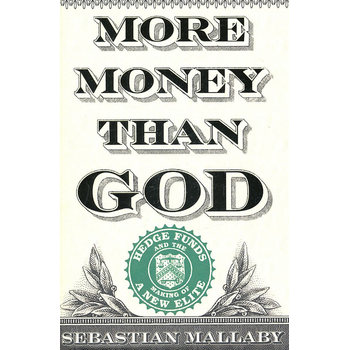
作者: Sebastian
出版社:Penguin 2010年06月
简介:
The first authoritative history of hedge funds-from their rebel beginnings to their role in defining the future of finance.
Based on author Sebastian Mallaby's unprecedented access to the industry, including three hundred hours of interviews, More Money Than God tells the inside story of hedge funds, from their origins in the 1960s and 1970s to their role in the financial crisis of 2007- 2009.
Wealthy, powerful, and potentially dangerous, hedge fund moguls have become the It Boys of twenty-firstcentury capitalism. Ken Griffin of Citadel started out trading convertible bonds from his dorm room at Harvard. Julian Robertson staffed his hedge fund with college athletes half his age, then he flew them to various retreats in the Rockies and raced them up the mountains. Paul Tudor Jones posed for a magazine photograph next to a killer shark and happily declared that a 1929- style crash would be "total rock-and-roll" for him. Michael Steinhardt was capable of reducing underlings to sobs. "All I want to do is kill myself," one said. "Can I watch?" Steinhardt responded.
Finance professors have long argued that beating the market is impossible, and yet drawing on insights from physics, economics, and psychology, these titans have cracked the market's mysteries and gone on to earn fortunes. Their innovation has transformed the world, spawning new markets in exotic financial instruments and rewriting the rules of capitalism.
More than just a history, More Money Than God is a window on tomorrow's financial system. Hedge funds have been left for dead after past financial panics: After the stock market rout of the early 1970s, after the bond market bloodbath of 1994, after the collapse of Long Term Capital Management in 1998, and yet again after the dot-com crash in 2000. Each time, hedge funds have proved to be survivors, and it would be wrong to bet against them now. Banks such as CitiGroup, brokers such as Bear Stearns and Lehman Brothers, home lenders such as Fannie Mae and Freddie Mac, insurers such as AIG, and money market funds run by giants such as Fidelity-all have failed or been bailed out. But the hedge fund industry has survived the test of 2008 far better than its rivals. The future of finance lies in the history of hedge funds.