共找到 14 项 “Solzhenitsyn” 相关结果
- 全部分类
- 全部
- 文学
- 历史
- 哲学/宗教
- 法律
- 政治/社会
- 医学
- 教育/心理学
- 艺术/传媒
- 研究生考试
- 资格认证考试
- 公开课
- 语言
- 经济金融
- 管理学
- IT/计算机
- 自然科学
- 工学/工程
- 体育
- 行业资料
- 音乐
- 汽车机械制造
- 文档模板
- 创业
- 农学
- 生活
- 数据库教程
- 民族
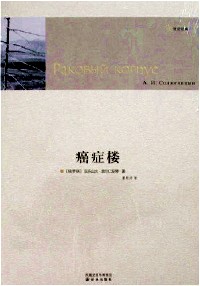
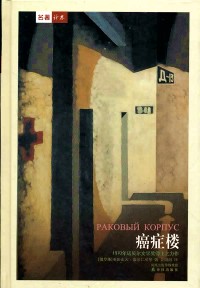
作者: (俄罗斯)亚历山大·索尔仁尼琴(Alexandre Solzhenitsyn)著;姜明河译
出版社:译林出版社,2007
简介: 一个复杂多变、充满巨大冲突的世纪已然过去。这个世纪里,人们的心灵中前所未有地弥漫着希望与失望、乐观与悲观的情绪﹔这个世纪的文坛,也因此空前地喧哗与骚动,文学作品数量繁多,审美倾向丰富多彩,思潮流派更替频繁。 文学即人学。当下读者全面认知20世纪和彼时文学情状的需求正在增加,作为多年来致力于外国文学译介的专业出版机构,我们希望以必要的责任心,翻译介绍更多更好启迪民智、打动心灵的现当代文学作品,以实现对人,特别是对其精神取向的尊重与关怀。是以译林出版社精心推出“20世纪经典”,从对20世纪世界文学的整体回望出发,遴选百年来的文学名著翻译出版,以供热爱文学的读者及各界人士丰富学养、陶冶性灵之需要,并力图借此实现对未来出版事业的积极开拓,为实现民族的伟大复兴奉献一己之力。 20世纪文学史上作品异彩纷呈,作家灿若群星。“20世纪经典”旨在以新世纪的历史视野和现实视角,选择在文坛已有定评且契合社会现实与人的心灵需求的作品,使丛书的每一选篇日久弥新、传之久远。出于对翻译出版现状的认真思索,我们在遴选的过程中,特别注重中译本的译文水准,无论名家新人,均以实力取舍。译林出版社努力以披沙拣金的态度,为读者献上品位高尚和质量一流的翻译作品。在整体装帧的庄谐雅俗上,也尽量考虑现时读者具有共性的需求。 由于时间仓促,加之自身水平所限以及选目因海外授权获得与否而受影响,这套丛书的不足之处恐在所难免,敬希读者海涵。“20世纪经典”的书目将是开放性的,我们热诚期待读者的评判与指正,帮助这一志存高远的事业高质量地进行下去。 索尔仁尼琴从流放地到塔什干治病的坎坷经历和所见所闻,构成了《癌症楼》这部小说的基本素材。作者写出了主人公科斯托格洛托夫及其同病房里的各个病人的不同命运和经历,他们性格的形成和人性的扭曲。作者写的是人生的坎坷,但实际上是社会悲剧的写照。一个个知识分子和忠心耿耿的干部被捕、流放、劳改的事实,使作者陷入痛楚的沉思,思考产生这些悲剧的缘由。
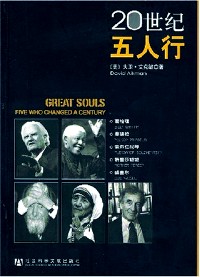
作者: (美)大卫·艾克敏(David Aikman)著;张卫族译
出版社:社会科学文献出版社,2008
简介: 《20世纪五人行》是五位人物的小传,他们分别是美国布道家葛培理 、前南非总统纳尔逊·曼德拉、“诺贝尔文学奖”获得者亚历山大·索尔 仁尼琴、特蕾莎嬷嬷和“诺贝尔和平奖”得主伊利·威塞尔。作者大卫· 艾克敏是前《时代》周刊高级记者,中国、俄罗斯和中东地区的专家。在 《时代》周刊工作的23年里,他的采访报道遍及了五大洲50多个国家。艾 克敏采访过许多著名人物,自然包括本书的五位主角。他们五位或多或少 为读者所知悉,但又可能只是一个模模糊糊的印象,甚或仅限于知道他们 的名字。作者用有限的篇幅以比较翔实的资料,较细致系统地描述了五位 人物的主要经历,介绍了他们从家庭成长到宗教、国际政治问题的基本观 点,对政界的影响。五位主人公既有成功的一面,也颇为人争议。涉及本 书部分人物的相关书籍坊间并不多见。作者特殊的经历有助于读者了解这 五个人物的生平。 20世纪各种矛盾错综复杂。对于人和事,不同立场的人们各有不同的 评价,本书表达的只是作者个人的见解,其立场和立论方式当然也不同于 我们。本书是为了读者能够更多地了解五位人物以及他们身上折射出的20 世纪的背景,并了解当今国际关系领域的多元观点。
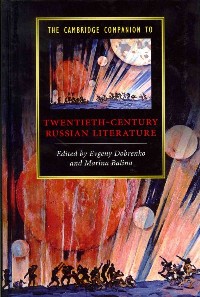
简介:"In Russian history, the twentieth century was an era of unprecedented, radical transformations - changes in social systems, political regimes, and economic structures. A number of distinctive literary schools emerged, each with their own voice, specific artistic character, and ideological background. As a single-volume compendium, the Companion provides a new perspective on Russian literary and cultural development, as it unifies both e;migre; literature and literature written in Russia. This volume concentrates on broad, complex, and diverse sources - from symbolism and revolutionary avant-garde writings to Stalinist, post-Stalinist, and post-Soviet prose, poetry, drama, and e;migre; literature, with forays into film, theatre, and literary policies, institutions and theories. The contributors present recent scholarship on historical and cultural contexts of twentieth-century literary development, and situate the most influential individual authors within these contexts, including Boris Pasternak, Alexander Solzhenitsyn, Joseph Brodsky, Osip Mandelstam, Mikhail Bulgakov and Anna Akhmatova"-- "The moniker 'Silver Age' refers to the epoch of early and high modernism in Russian culture, which began around the mid-1890s and was put to a rather abrupt end by the October 1917 Revolution. While the most fundamental feature of this time period is marked by its idealist philosophical revolution -- a trend Russia shared with other European cultures -- its most spectacular manifestation on the Russian scene undoubtedly belonged to poetry and art. In less than a quarter of a century, Russia produced a remarkable constellation of poets, quite a few of whom (Alexander Blok, Mikhail Kuzmin, Osip Mandelshtam, Anna Akhmatova, Boris Pasternak, Marina Tsvetaeva, Viktor Khlebnikov, Vladimir Mayakovsky) stood at the world-wide cutting edge of the poetic culture of their time. The very feeling of the era seemed to be saturated with poetry: even those authors whose main talent and achievements lay in the domain of prose -- such as Andrei Bely, Dmitrii Merezhkovsky, Zinaida Gippius, Fedor Sologub, and Ivan Bunin -- made significant contributions to the poetic landscape of the time as well. The flowery name of the age was probably indigenous to the epoch itself, although it never surfaced in documents of the time, perhaps because it was just too obvious to be mentioned. It lay dormant in the collective memory for almost half a century, until it surfaced almost simultaneously in two venues -- in the title of critic Sergei Makovsky's memoirs, On the Parnassus of the Silver Age (Munich, 1962), and in a line in Akhmatova's 'Poem without a Hero' (first published in 1965) which mentions 'the silver moon hovering brightly over the Silver Age'"--
作者: (俄)亚历山大·索尔仁尼琴(Alexandre Solzhenitsyn)著;姜明河译
出版社:译林出版社,2009
简介: 《名著译林:癌症楼》是一部充满象征和隐喻的作品。"癌症楼也叫做13号样楼"。科斯托格洛托夫经过二十几年的军队、劳改营、流放地的生活后,他得了癌症,直至奄奄一息才好不容易住进了癌症楼。接受放射治疗后,他的病情渐渐好转。但是,下一个疗程的"激素疗法"将使他失去性能力。在多年劳改、流放、沉冤蒙难的日子中,他已淡记了女人,当他来到"癌症楼"治疗的时候,性意识在他身上猛醒,强烈的情欲,本能的欲望,成为生命力后标志……《名著译林:癌症楼》是一部呼唤人性的人道主义作品,同时又是剖析社会"毒瘤"、反思时代和历史的作品。
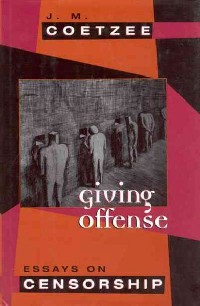
简介:In Giving Offense, South African writer J. M. Coetzee presents a coherent, unorthodox analysis of censorship from the perspective of a writer who has lived and worked under its shadow. Widely acclaimed for his many novels, Coetzee is also a brilliant literary critic and essayist. The essays collected here attempt to understand the passion that plays itself out in acts of silencing and censoring. Subscribing neither to the myth of the writer as a moral giant nor to that of the writer as persecuted innocent, Coetzee argues that a destructive dynamic of belligerence and escalation tends to overtake the rivals in any field ruled by censorship. From Osip Mandelstam commanded to compose an ode in praise of Stalin, to Breyten Breytenbach writing poems under and for the eyes of his prison guards, to Aleksandr Solzhenitsyn engaging in a trial of wits with the organs of the Soviet state, Giving Offense focuses on the ways authors have historically responded to censorship. It also analyzes the arguments of Catharine MacKinnon for the suppression of pornography and traces the operations of the old South African censorship system. Finally, Coetzee delves into the early history of apartheid and critizes the blankness of contemporary political science in its efforts to address the deeper motives behind apartheid.
简介: Book Description Fiction. Asian Studies. Winner of the Hemingway/PEN Award for first fiction for his story collection OCEAN OF WORDS, and of the Flannery O'Connor Award for short fiction for UNDER THE RED FLAG, Ha Jin is a writer of stark power, simple beauty and poignant irony. IN THE POND is a close, unsentimental depiction of life in a small faCtory town; the manuevering, posturing, petty jealousies and injustices of an ordinary man, Shao Bin, who tangles with the party bosses. In this first novel, as in his short fiction, Amazon.com In the Pondis a slim little book about some very big issues: power, vanity, art, injustice, and politics. Where Tom Wolfe would find the makings for a doorstop, however, debut novelist Ha Jin has created a rough-cut comic gem. Set in Communist China, the book takes as its hero a small, unprepossessing man named Shao Bin, a maintenance employee at the Harvest Fertilizer Plant and also a self-taught artist. Together with his wife and 2-year-old daughter, Bin inhabits a tiny 12-by-20-foot room. Bin is desperate to move into the newly built workers' compound, and he places his name on the waiting list with high hopes. But when the plant managers pass him over, despite the fact that he's been working there for years, Bin finally cracks. "In brief, the true scholar's brush must encourage good and warn against evil," he reads in The Essence of Ancient Chinese Thought, and inspired, he publishes a satirical cartoon protesting official corruption. The consequences of this simple act snowball, and in self-defense, Bin finds himself aiming his attacks ever higher up the bureaucratic ladder. This is a book that works on multiple levels: as character study, as political allegory, as sly bureaucratic satire, even, at times, as the broadest kind of slapstick. (One memorable scene involves Bin biting his superior on the butt.) Bin himself is half persecuted artist, half self-righteous boor; readers both sympathize with him and wonder along with one of his coworkers, "Why do you enjoy fighting so much?" Even his putative victory is left in doubt. As the book ends, Shao Bin has become perhaps a bigger fish, but there's no doubt about it; he's in the very same small pond where he started. --Mary Park From Publishers Weekly Prize-winning short-story writer Ha Jin (Ocean of Words won the PEN/Hemingway Award for first fiction; Under the Red Flag won the Flannery O'Connor Award) offers a wise and funny first novel that gathers meticulously observed images into a seething yet restrained tale of social injustice in modern China. Talented artist Shao Bin has an unsatisfying job at a large fertilizer plant. After being denied a decent housing assignment, he begins a series of retaliatory satirical cartoons, which illustrate his employers' flaws and in turn earn their wrath?which in turn inspires more cartoons. When his superiors try to transfer him, they are chagrined to discover that Bin is much in demand?and that any new job he gets is likely to be a step up. So they decide to keep him on. After an occasionally monotonous sequence of attacks and counterattacks, Bin finally gets promoted to the propaganda office. He is ecstatic, although his family must still make do with the same uncomfortable apartment that started the conflict. Luckily, the characters' complexity saves the story from political overkill. The supervisors, through moments of vulnerability, come to seem like genuinely detestable human beings rather than one-dimensional villains. Bin, similarly, is both justifiably indignant and annoying in his self-absorption. Ha Jin's humor initially appears clownish but almost always has a double purpose: when Bin's supervisor sits on his face to silence him, Bin bites the boss' posterior?illustrating rather vividly his refusal to kiss ass. Through Ha Jin's gently ironic treatment, Bin's struggle both to achieve power in his community and retain his own dignity transcends its Communist Chinese setting, engagingly illustrating a universal conundrum. From Kirkus Reviews A first novel by the Chinese dissident and poet whose previous stories (Under the Red Flag, 1997, etc.) have already entitled to him fair comparisons with Solzhenitsyn. Anyone in the West who picks up Ha Jin for the first time must experience a close approximation of what readers of Arthur Koestler or Isaac Babel felt 60 years ago, insofar as Ha Jin is the first Chinese Communist to make fictional use of daily life under the Party. Here, he describes the travails of Shao Bin, an amateur painter and calligrapher who works as a department-store fitter. Annoyed that his housing application has been passed over in favor of Party relatives and cronies, Shao Bin begins drawing and circulating satirical cartoons accusing the local Party heads of corruption. One of these eventually gets published in a Beijing newspaper, and Shao Bin finds himself at the center of a national debate on Party leadership and local politics. The ease with which Ha Jin's characters move between the old and new worlds that they simultaneously inhabit (praying to Buddha, for example, in order to receive Party preferment) lends a satiric edge to the daily ironies of Communist life in an essentially feudal society and gives Ha Jin's account a fabulous, almost allegorical tone much like that of Orwell's Animal Farm. If his prose occasionally gives off a leaden ring (``They had taken him for a mere bookworm, but all of a sudden he had emerged as a man of both strategy and action'') reminiscent of a Maoist Party slogan, it can only add to the atmosphere. Fascinating, refreshing, and uncommonly subtle: Ha Jin has made China available to a new world and a world of new readers. Inside Flap Copy National Book Award-winner Ha Jin's arresting debut novel , In the Pond,is a darkly funny portrait of an amateur calligrapher who wields his delicate artist's brush as a weapon against the powerful party bureaucrats who rule his provincial Chinese town. Shao Bin is a downtrodden worker at the Harvest Fertilizer Plant by day and an aspiring artist by night. Passed over on the list to receive a decent apartment for his young family, while those in favor with the party's leaders are selected ahead of him, Shao Bin chafes at his powerlessness. When he attempts to expose his corrupt superiors by circulating satirical cartoons, he provokes an escalating series of merciless counterattacks that send ripples beyond his small community. Artfully crafted and suffused with earthy wit, In the Pond is a moving tale about humble lives caught up in larger social forces. Book Dimension length: (cm)18.1 width:(cm)11
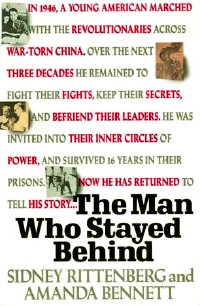
简介:""I never meant to stay in China ..."" "And so begins this gripping true-life saga of adventure, love, commitment, betrayal, despair, and hope. Sidney Rittenberg is The Man Who Stayed Behind." "Recounted in the best tradition of epic storytelling, Sidney Rittenberg鈥檚 story is destined to take a place beside the classics of its genre. Like T. E. Lawrence鈥檚 Seven Pillars of Wisdom, this is the story of a man who voyaged deep into a secret world and returned to tell the tale. Like Aleksandr Solzhenitsyn鈥檚 The Gulag Archipelago, it is the story of a man who looked evil in the face and survived. Like John Reed鈥檚 Ten Days That Shook the World, it is the story of a man who followed his convictions wherever they led him." "Sidney Rittenberg鈥檚 story is an eyewitness account of history as it unfolded. He went to China with the U.S. military in the mid-1940s. Deeply committed to helping the people, he sought out the Chinese Communists in their wartime headquarters in Yanan. He joined in overland marches and lived alongside the revolutionaries, taking part in secret meetings. He argued dogma with Mao Zedong, mused philosophy with Zhou Enlai, danced with Mao鈥檚 wife, Jiang Qing." "He shows a seldom-seen personal side of the revolutionaries: an insomniac Mao prowling the villages at night, his bodyguard fifty yards behind; a playful Mao, dancing to the strains of "Turkey in the Straw"; an enraged Mao, face contorted with fury, stomping away from a meeting with Khrushchev. Rittenberg also offers the only inside view available today of the takeover of power during the Cultural Revolution of a major Chinese government body." "He shows us firsthand the inhumanity of the Communist regime: His is an inspiring account of a triumphant struggle over madness and despair in prison during six years in solitary confinement on trumped-up spy charges. Then he tells of ten more years, a decade later, spent in solitary confinement alongside other political prisoners who fell afoul of the dominant factionand
简介:The original CliffsNotes study guides offer expert commentary on major themes, plots, characters, literary devices, and historical background. The latest generation of titles in this series also feature glossaries and visual elements that complement the classic, familiar format. In CliffsNotes on One Day in the Life of Ivan Denisovich, you explore the short book that established Alexander Solzhenitsyn's reputation and instantly placed him on the master list of human rights advocates. It describes a typical day in the life of an inmate in the Siberian prison camps of Stalinist Soviet Union. This study guide carefully documents the ordeal of prisoner S-854 through his ten-year sentence in the Gulag. You'll find a summary and critical analyses of each section of the novel, and explore the life and background of the author, Alexander Solzhenitsyn, and gain insight into how he came to write the novel. Other features that help you study include Character analyses of major and minor players A history of the Gulag prison system and what crimes could get people sentenced to them Critical essays on levels of meaning in the novel and narrative perspective A review section that tests your knowledge Suggested theme topics and a selected bibliography Classic literature or modern modern-day treasure - you'll understand it all with expert information and insight from CliffsNotes study guides.