作者:
出版社:
简介:
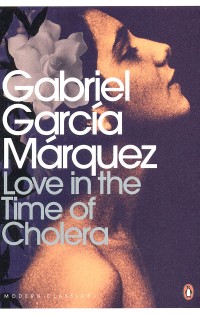
Considering Gabriel Garcia Márquez won the 1982 Nobel Prize in Literature, this novel is an excellent selection for Oprah's Book Club. His second novel, One Hundred Years of Solitude (1967), a previous Oprah Book Club selection, has sold 36 million copies to date. Having read it several times over the past twenty years, it remains one of my all-time favorites. Love in the Time of Cholera (El amor en los tiempos del cólera) (1985) is another favorite. Set in the late 19th and early 20th centuries, it tells the poignant story of the power of unrequited love, and how lovesickness (much like cholera) can plague human existence. The novel involves a love triangle between Fermina Daza, Florentino Ariza and Juvenal Urbino which endures for fifty years, revealed through a flashback from childhood to old age. As children, Fermina and Florentino experienced a brief romance leaving Florentino obsessed with Fermina and lovesick. In his unsuccessful attempts to alleviate his all-consuming longing for Fermina, Florentino not only engages in 622 affairs, but immerses himself in a life of poetry and literature. He identifies with romantic poets. Meanwhile, at the age of twenty-one, Fermina is forced by her father Lorenzo, a mule driver, to marry Juvenal Urbino, a doctor. Their arranged marriage endures. Fermina becomes a devoted wife, and critics have described her as a "freethinker." "She is the strong one," Márquez has said about Fermina Daza; "She is the novel." In contrast to Florentino, a romantic, Juvenal Urbino is a man of science, a doctor with a rational mind, committed to the eradication of cholera, and capable of providing Fermina with a sense of security. The novel opens with Juvenal's funeral, after which Florentino again declares his undying love for Fermina, which makes her furious. Until the novel returns to this scene and Florentino's renewed declaration of love for Fermina, one is left contemplating whether his love is a kind of nobility or a pathetic, Don Quixote-like foolishness. In the final pages of his novel, Márquez answers that question. As with One Hundred Years of Solitude, Love in the Time of Cholera reveals the extraordinary genius of Márquez. Highly recommended.
G. Merritt