共找到 33 项 “HARUKI” 相关结果
- 全部分类
- 全部
- 文学
- 历史
- 哲学/宗教
- 法律
- 政治/社会
- 医学
- 教育/心理学
- 艺术/传媒
- 研究生考试
- 资格认证考试
- 公开课
- 语言
- 经济金融
- 管理学
- IT/计算机
- 自然科学
- 工学/工程
- 体育
- 行业资料
- 音乐
- 汽车机械制造
- 文档模板
- 创业
- 农学
- 生活
- 数据库教程
- 民族
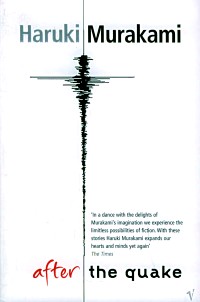
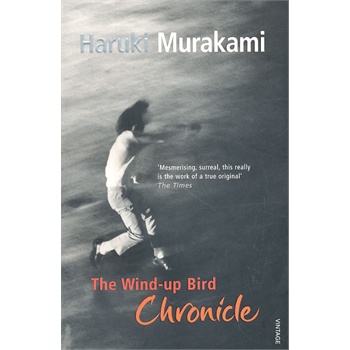
简介:The economy was booming. People had more money than they knew what to do with. And then the earthquake struck. For the characters in After the Quake, the Kobe earthquake is an echo from a past they buried long ago. Satsuki has spent thirty years hating one man: a lover who destroyed her chances of having children. Did her desire for revenge cause the earthquake? Junpei''s estranged parents live in Kobe. Should he contact them? Miyake left his family in Kobe to make midnight bonfires on a beach hundreds of miles away. Fourteen-year-old Sala has nightmares that the Earthquake Man is trying to stuff her inside a little box. Katagiri returns home to find a giant frog in his apartment on a mission to save Tokyo from a massive burrowing worm. ''When he gets angry, he causes earthquakes,'' says Frog. ''And right now he is very, very angry''. This new collection of stories, from one of the world''s greatest living writers, dissects the violence beneath the surface of modern Japan. 作者简介 Haruki Murakami was born in Kyoto in 1949.He met his wife,Yoko,at university and they openet a jazz club in Tokyo called Peter Cat.The massive success of his novel Norwegian Wood(1987)made him a ntional celebrity.He fled Japan and did not return until1995.His other books include Dance Dance Dance,Hare-boiled Wonderland and the End of the World,A Wild Sheep Cbase,The Wind-up Bird Chronicle,Underground,his first work of non-fiction,Sputnik Sweetheart,and Soutb of the Border,West of thd Sputnik Sweetheart,and soutb of the work of F.Scott Sun.He has translated into Japanese the work of F.Scott Fitzgerald,Truman Cppote,John Irving and Raymond Carver. Jay Rubin is a professor of Japanese literature at Harvartn University.He is the author of Haruki Murakami and the Music of Words and he has also translated Murakami''s Norwegian Wood and The Wind-up Bird Cbronicle.
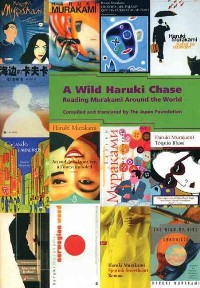
简介: “Youthful, slangy, political, and allegorical, Murakami is a writer who seems to be aware of every current American novel and popular song. Yet . . . [A Wild Sheep Chase] is clearly rooted in modern Japan.” —The New York Times “In every society, Murakami’s works are first accepted as texts that assuage the political disillusionment, romantic impulses, loneliness, and emptiness of readers. Only later do they fully realize that the author was born in Japan and that the books are actually translations.” —Inuhiko Yomota, Meiji Gakuen University Jay Rubin, Richard Powers, Kim Choon Mie, Inuhiko Yomota, Roland Kelts, Shozo Fujii, Shinya Machida, Ivan Sergeevich Logatchov, Koichi Oi, Issey Ogata With a special essay on translation by Haruki Murakami Japanese novelist Haruki Murakami’s best-selling books, including Norwegian Wood, The Wind-Up Bird Chronicle, and Kafka on the Shore, have been translated into over forty languages. His dreamlike prose delights readers across borders and datelines. What lies behind this phenomenal international appeal? The Japan Foundation asked novelists, translators, artists, and critics from around the world to answer this question. A Wild Haruki Chasepresents their intriguing findings. Neuroscience, revolution, a secret Chinese connection . . . you’ll never read Murakami the same way again. Includes a full-color review of book covers from around the world!
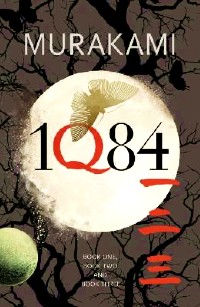
简介:"Murakami is like a magician who explains what he's doing as he performs the trick and still makes you believe he has supernatural powers . . . But while anyone can tell a story that resembles a dream, it's the rare artist, like this one, who can make us feel that we are dreaming it ourselves." --"The New York Times Book Review" " " The year is 1984 and the city is Tokyo. A young woman named Aomame follows a taxi driver's enigmatic suggestion and begins to notice puzzling discrepancies in the world around her. She has entered, she realizes, a parallel existence, which she calls 1Q84 --"Q is for 'question mark.' A world that bears a question." Meanwhile, an aspiring writer named Tengo takes on a suspect ghostwriting project. He becomes so wrapped up with the work and its unusual author that, soon, his previously placid life begins to come unraveled. As Aomame's and Tengo's narratives converge over the course of this single year, we learn of the profound and tangled connections that bind them ever closer: a beautiful, dyslexic teenage girl with a unique vision; a mysterious religious cult that instigated a shoot-out with the metropolitan police; a reclusive, wealthy dowager who runs a shelter for abused women; a hideously ugly private investigator; a mild-mannered yet ruthlessly efficient bodyguard; and a peculiarly insistent television-fee collector. A love story, a mystery, a fantasy, a novel of self-discovery, a dystopia to rival George Orwell's--"1Q84" is Haruki Murakami's most ambitious undertaking yet: an instant best seller in his native Japan, and a tremendous feat of imagination from one of our most revered contemporary writers.
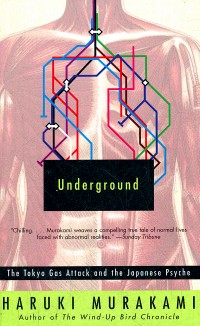
简介:Covers the 1995 Tokyo Gas Attack, during which agents of a Japanese cult released a gas deadlier than cyanide into the subway system, as documented in interviews with its survivors, perpetrators, and victim family members. In March 1995, agents of a Japanese religious cult attacked the Tokyo subway system with sarin, a gas twenty six times as deadly as cyanide. Attempting to discover why, Murakami conducted hundreds of interviews with the people involved, from the survivors to the perpetrators to the relatives of those who died. Underground is their story in their own voices. Concerned with the fundamental issues that led to the attack as well as these personal accounts, Underground is a document of what happened in Tokyo as well as a warning of what could happen anywhere. This is an enthralling and unique work of nonfiction that is timely, vital, and as brilliantly executed as Murakami's novels. From Haruki Murakami, internationally acclaimed author of the Wind-Up Bird Chronicle and Norwegian Wood, a work of literary journalism that is as fascinating as it is necessary, as provocative as it is profound. It was a clear spring day, Monday, March 20, 1995, when five members of the religious cult Aum Shinrikyo conducted chemical warfare on the Tokyo subway system using sarin, a poison gas twenty-six times as deadly as cyanide. The unthinkable had happened; a major urban transit system had become the target of a terrorist attack. Attempting to discover why, Murakami conducted hundreds of interviews with the people involved, from a subway authority employee with survivor guilt, to a fashion salesman with more venom for the media than for the perpetrators, to a young cult member who vehemently condemns the attack though he has not quit Aum. Through these and many other voices, Murakami exposes intriguing aspects of the Japanese psyche. And, as he discerns the fundamental issues leading to the attack, we achieve a clear vision of an event that could occur anytime, anywhere. Hauntingly compelling and inescapably important, Underground is a powerful work of journalistic literature from one of the world's most perceptive writers. Concerned with the fundamental issues that led to the attack as well as these personal accounts, Underground is a document of what happened in Tokyo as well as a warning of what could happen anywhere. This is an enthralling and unique work of nonfiction that is timely and vital and as wonderfully executed as Murakami's brilliant novels.
简介:With Kafka on the Shore, Haruki Murakami gives us a novel every bit as ambitious and expansive as The Wind-Up Bird Chronicle, which has been acclaimed both here and around the world for its uncommon ambition and achievement, and whose still-growing popularity suggests that it will be read and admired for decades to come. This magnificent new novel has a similarly extraordinary scope and the same capacity to amaze, entertain, and bewitch the reader. A tour de force of metaphysical reality, it is powered by two remarkable characters: a teenage boy, Kafka Tamura, who runs away from home either to escape a gruesome oedipal prophecy or to search for his long-missing mother and sister; and an aging simpleton called Nakata, who never recovered from a wartime affliction and now is drawn toward Kafka for reasons that, like the most basic activities of daily life, he cannot fathom. Their odyssey, as mysterious to them as it is to us, is enriched throughout by vivid accomplices and mesmerizing events. Cats and people carry on conversations, a ghostlike pimp employs a Hegel-quoting prostitute, a forest harbors soldiers apparently unaged since World War II, and rainstorms of fish (and worse) fall from the sky. There is a brutal murder, with the identity of both victim and perpetrator a riddle–yet this, along with everything else, is eventually answered, just as the entwined destinies of Kafka and Nakata are gradually revealed, with one escaping his fate entirely and the other given a fresh start on his own. Extravagant in its accomplishment, Kafka on the Shore displays one of the world’s truly great storytellers at the height of his powers. From the Hardcover edition.
简介: 在线阅读本书 Haruki Murakami, the internationally bestselling author of Norwegian Woodand The Wind-Up Bird Chronicle, plunges us into an urbane Japan of jazz bars, coffee shops, Jack Kerouac, and the Beatles to tell this story of a tangled triangle of uniquely unrequited loves. A college student, identified only as “K,” falls in love with his classmate, Sumire. But devotion to an untidy writerly life precludes her from any personal commitments–until she meets Miu, an older and much more sophisticated businesswoman. When Sumire disappears from an island off the coast of Greece, “K” is solicited to join the search party and finds himself drawn back into her world and beset by ominous, haunting visions. A love story combined with a detective story, Sputnik Sweetheartultimately lingers in the mind as a profound meditation on human longing. --This text refers to the Paperbackedition.
简介:In South of the Border, West of the Sunthe arc of an average man's life from childhood to middle age with its attendant rhythms of success and disappointment becomes the kind of exquisite literary conundrum that is Haruki Murakami's trademark. The plot is simple: Hajime meets and falls in love with a girl in elementary school but loses touch with her when his family moves to another town. He drifts through high school, college and his 20s before marrying and settling into a career as a successful bar owner. Then his childhood sweetheart returns weighed down with secrets: "When I went back into the bar, a glass and ashtray remained where she had been. A couple of lightly crushed cigarette butts were lined up in the ashtray, a faint trace of lipstick on each. I sat down and closed my eyes. Echoes of music faded away, leaving me alone. In that gentle darkness, the rain continued to fall without a sound". Murakami eschews the fantastic elements that appear in many of his other novels and stories, and readers hoping for a glimpse of the "Sheep Man" will be disappointed. Yet South of the Border, West of the Sunis as rich and mysterious as anything he has written. It is above all a complex, moving and honest meditation on the nature of love distilled into a work with the crystal clarity of a short story. A Nat King Cole song, a figure on a crowded street, a face pressed against a car window, a handful of ashes drifting down a river to the sea are woven together into a story that refuses to arrive at a simple conclusion. The classic love triangle may seem like a hackneyed theme for a writer as talented as Murakami but in his quietly dazzling way he bends us to his own unique geometry. --Simon Leake, Amazon.com
简介:Includes short stories by Washington Irving, Nathaniel Hawthorne, Edgar Allan Poe, Herman Melville, Leo Tolstoy, Mark Twain, Henry James, Sarah Orne Jewett, Guy de Maupassant, Kate Chopin, Joseph Conrad, Charles Chesnutt, Anton Chekhov, Charlotte Perkins Gilman, Edith Wharton, Stephen Crane, Sherwood Anderson, James Joyce, Virginia Woolf, Franz Kafka, D.H. Lawrence, Katherine Mansfield, Katherine Anne Porter, Isaac Babel, F. Scott Fitzgerald, William Faulkner, Ernest Hemingway, Jorge Luis Borges, John Steinbeck, Issac Bashevis Singer, R.K. Narayan, Eudora Welty, Naguib Mahfouz, John Cheever, Tillie Olsen, Bernard Malamud, Ralph Ellison, Doris Lessing, Grace Paley, Italo Calvino, Nadine Gordimer, James Baldwin, Kobo Abe, Flannery O'Connor, Yukio Mishima, Clarice Lispector, Gabriel Garcia Marquez, Chinua Achebe, John Barth, Donald Barthelme, Alice Munro, John Updike, Elena Poniatowska, Gerald Vizenor, Chen Rong, Bessie Head, Joyce Carol Oates, Raymond Carver, Margaret Atwood, Toni Cade Bambara, Amos Oz, Bharati Mukherjee, Bobbie Ann Mason, John Edgar Wideman, Isabel Allende, Sergio Ramirez, James Alan McPherson, Alice Walker, Robert Olen Butler, Tobias Wolff, Tim O'Brien, Ann Beattie, Leslie Marmon Silko, Jamaica Kincaid, Haruki Murakami, Gloria Naylor, Alberto Alvaro Rios, Gary Soto, Amy Tan, Sandra Cisneros, Louise Erdrich, Elizabeth Tallent, Reginald McKnight, and David Leavitt.
简介:John Updike's sixth collection of essays and literary criticism opens with a skeptical overview of literary biographies, proceeds to five essays on topics ranging from China and small change to faith and late works, and takes up, under the heading "General Considerations," books, poker, cars, and the American libido. The last, informal section of Due Considerations assembles more or less autobiographical pieces--reminiscences, friendly forewords, comments on the author's own recent works, responses to probing questions. In between, many books are considered, some in introductions--to such classics as Walden, The Portrait of a Lady, and The Mabinogion--and many more in reviews, usually for The New Yorker. Ralph Waldo Emerson and the five Biblical books of Moses come in for appraisal, along with Uncle Tom's Cabin and The Wizard of Oz. Contemporary American and English writers--Colson Whitehead, E. L. Doctorow, Don DeLillo, Norman Rush, William Trevor, A. S. Byatt, Muriel Spark, Ian McEwan-- receive attentive and appreciative reviews, as do Rohinton Mistry, Salman Rushdie, Peter Carey, Margaret Atwood, Gabriel Garc芒ia M芒arquez, Haruki Murakami, G猫unter Grass, and Orhan Pamuk. In factual waters, Mr. Updike ponders the sinking of the Lusitania and the "unsinkable career" of Coco Chanel, the adventures of Lord Byron and Iris Murdoch, the sexual revolution and the advent of female Biblical scholars, and biographies of Robert Frost, Sinclair Lewis, Marcel Proust, and S虏ren Kierkegaard.--From publisher's description.
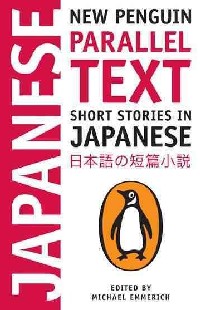
简介:Announcing the first expansion in more than 40 years of the venerable New Penguin Parallel Text series. Here is the perfect introduction to contemporary Japanese fiction. Featuring many stories appearing in English for the first time, this collection, with parallel translations, offers students at all levels the opportunity to enjoy a wide range of contemporary literature without having to constantly consult a dictionary. Richly diverse in themes and styles, the stories are by well-known writers-like Haruki Murakami and Banana Yoshimoto-as well as by emerging voices. Complete with notes, these selections make excellent reading in either language.
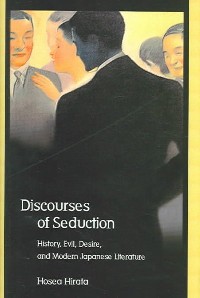
简介:Summary: Publisher Summary 1 If the postmodernist ethical onslaught has led to the demise of literature by exposing its political agenda, if all literature is compromised by its entanglement with power, why does literature's subterranean voice still seduce us into reading? Why do the madness and the scandal of transgressive literature, its power to force us to begin anew, its evil, escape the gaze of contemporary literary criticism? Why do we dare not reject ethics and the ethical approach to literature? If the primary task of literary criticism is to correct others' ethical missteps, should we not begin by confronting the seductiveness of ethics, our desire for ethics, the pleasure we take in being ethical? And what is the relationship between ethics and history in the study of literature? What would be the ethical consequences of an erasure of history from literary criticism? In a series of essays on the writings of Kawabata Yasunari, Murakami Haruki, Karatani Kjin, Furui Yoshikichi, Mishima Yukio, Oe Kenzaburo, Natsume Soseki, and Kobayashi Hideo, Hosea Hirata visits the primal force of the scandalous in an effort to repeat (in the Kierkegaardian sense) the originary scene that initiates the obscure yet insistent poetry that is literature and to confront the questions raised.