

简介
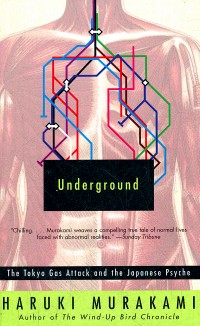
Covers the 1995 Tokyo Gas Attack, during which agents of a Japanese cult released a gas deadlier than cyanide into the subway system, as documented in interviews with its survivors, perpetrators, and victim family members. In March 1995, agents of a Japanese religious cult attacked the Tokyo subway system with sarin, a gas twenty six times as deadly as cyanide. Attempting to discover why, Murakami conducted hundreds of interviews with the people involved, from the survivors to the perpetrators to the relatives of those who died. Underground is their story in their own voices. Concerned with the fundamental issues that led to the attack as well as these personal accounts, Underground is a document of what happened in Tokyo as well as a warning of what could happen anywhere. This is an enthralling and unique work of nonfiction that is timely, vital, and as brilliantly executed as Murakami's novels.
From Haruki Murakami, internationally acclaimed author of the Wind-Up Bird Chronicle and Norwegian Wood, a work of literary journalism that is as fascinating as it is necessary, as provocative as it is profound. It was a clear spring day, Monday, March 20, 1995, when five members of the religious cult Aum Shinrikyo conducted chemical warfare on the Tokyo subway system using sarin, a poison gas twenty-six times as deadly as cyanide. The unthinkable had happened; a major urban transit system had become the target of a terrorist attack. Attempting to discover why, Murakami conducted hundreds of interviews with the people involved, from a subway authority employee with survivor guilt, to a fashion salesman with more venom for the media than for the perpetrators, to a young cult member who vehemently condemns the attack though he has not quit Aum. Through these and many other voices, Murakami exposes intriguing aspects of the Japanese psyche.
And, as he discerns the fundamental issues leading to the attack, we achieve a clear vision of an event that could occur anytime, anywhere. Hauntingly compelling and inescapably important, Underground is a powerful work of journalistic literature from one of the world's most perceptive writers. Concerned with the fundamental issues that led to the attack as well as these personal accounts, Underground is a document of what happened in Tokyo as well as a warning of what could happen anywhere. This is an enthralling and unique work of nonfiction that is timely and vital and as wonderfully executed as Murakami's brilliant novels.
目录
Map of the Tokyo Subway p. xi
Part 1 Underground
Preface p. 3
Tokyo Metropolitan Subway: Chiyoda Line p. 9
Nobody was dealing with things calmly Kiyoka Izumi p. 12
I've been here since I first joined Masaru Yuasa p. 19
At that point Takahashi was still alive Minoru Miyata p. 26
I'm not a sarin victim, I'm a survivor Toshiaki Toyoda p. 30
It's not even whether or not to take the subway, just to go out walking scares me now Tomoko Takatsuki p. 40
The day after the gas attack, I asked my wife for a divorce Mitsuteru Izutsu p. 45
Luckily I was dozing off Aya Kazaguchi p. 50
Everyone loves a scandal Hideki Sono p. 54
Tokyo Metropolitan Subway: Marunouchi Line (Destination: Ogikubo) p. 59
I felt like I was watching a program on TV Mitsuo Arima p. 63
Looking back, it all started because the bus was two minutes early Kenji Ohashi p. 66
That day and that day only I took the first door Soichi Inagawa p. 74
If I hadn't been there, somebody else would have picked up the packets Sumio Nishimura p. 78
I was in pain, yet I still bought my milk as usual Koichi Sakata p. 84
The night before the gas attack, the family was saying over dinner, "My, how lucky we are" Tatsuo Akashi p. 87
"li-yu-nii-an [Disneyland]" Shizuko Akashi p. 96
Tokyo Metropolitan Subway: Marunouchi Line (Destination: Ikebukuro) p. 104
"What can that be?" I thought Shintaro Komada p. 107
I knew it was sarin Ikuko Nakayama p. 112
Tokyo Metropolitan Subway: Hibiya Line (Departing: Naka-meguro) p. 118
"What if you never see your grandchild's face?" Hiroshige Sugazaki p. 121
I had some knowledge of sarin Kozo Ishino p. 127
I kept shouting, "Please, please, please!" in Japanese Michael Kennedy p. 132
That kind of fright is something you never forget Yoko Iizuka p. 138
Tokyo Metropolitan Subway: Hibiya Line (Departing: Kita-senju; Destination: Naka-meguro) p. 143
I'd borrowed the down payment, and my wife was expecting--it looked pretty bad Noburu Terajima p. 146
In a situation like that the emergency services aren't much help at all Masanori Okuyama p. 150
Ride the trains every day and you know what's regular air Michiaki p. 154
Tokyo Metropolitan Subway: Hibiya Line
Some crazy's probably sprinkled pesticides or something Takanori Ichiba p. 159
We'll never make it. If we wait for the ambulance we're done for Naoyuki Ogata p. 164
It'd be pathetic to die like this Michiru Kono p. 170
The day of the gas attack was my sixty-fifth birthday Kei'ichi Ishikura p. 177
Tokyo Metropolitan Subway: Kodemmacho Station
I saw his face and thought: "I've seen this character somewhere" Ken'ichi Yamazaki p. 183
He was such a kind person. He seemed to get even kinder before he died Yoshiko Wada p. 191
He was an undemanding child Kichiro and Sanae Wada p. 202
Sarin! Sarin! Koichiro Makita p. 209
The very first thing that came to mind was poison gas--cyanide or sarin Dr. Toru Saito p. 215
There is no prompt and efficient system in Japan for dealing with a major catastrophe Dr. Nobuo Yanagisawa p. 220
Blind Nightmare: Where Are We Japanese Going? p. 224
Part 2 The Place that was Promised
Preface p. 247
I'm still in Aum Hiroyuki Kano p. 251
Nostradamus had a great influence on my generation Akio Namimura p. 265
Each individual has his own image of the Master Mitsuharu Inaba p. 277
This was like an experiment using human beings Hajime Masutani p. 292
In my previous life I was a man Miyuki Kanda p. 304
"If I stay here," I thought, "I'm going to die" Shin'ichi Hosoi p. 317
Asahara tried to force me to have sex with him Harumi Iwakura p. 333
No matter how grotesque a figure Asahara appears, I can't just dismiss him Hidetoshi Takahashi p. 346
Afterword p. 359
Appendix p. 365
Part 1 Underground
Preface p. 3
Tokyo Metropolitan Subway: Chiyoda Line p. 9
Nobody was dealing with things calmly Kiyoka Izumi p. 12
I've been here since I first joined Masaru Yuasa p. 19
At that point Takahashi was still alive Minoru Miyata p. 26
I'm not a sarin victim, I'm a survivor Toshiaki Toyoda p. 30
It's not even whether or not to take the subway, just to go out walking scares me now Tomoko Takatsuki p. 40
The day after the gas attack, I asked my wife for a divorce Mitsuteru Izutsu p. 45
Luckily I was dozing off Aya Kazaguchi p. 50
Everyone loves a scandal Hideki Sono p. 54
Tokyo Metropolitan Subway: Marunouchi Line (Destination: Ogikubo) p. 59
I felt like I was watching a program on TV Mitsuo Arima p. 63
Looking back, it all started because the bus was two minutes early Kenji Ohashi p. 66
That day and that day only I took the first door Soichi Inagawa p. 74
If I hadn't been there, somebody else would have picked up the packets Sumio Nishimura p. 78
I was in pain, yet I still bought my milk as usual Koichi Sakata p. 84
The night before the gas attack, the family was saying over dinner, "My, how lucky we are" Tatsuo Akashi p. 87
"li-yu-nii-an [Disneyland]" Shizuko Akashi p. 96
Tokyo Metropolitan Subway: Marunouchi Line (Destination: Ikebukuro) p. 104
"What can that be?" I thought Shintaro Komada p. 107
I knew it was sarin Ikuko Nakayama p. 112
Tokyo Metropolitan Subway: Hibiya Line (Departing: Naka-meguro) p. 118
"What if you never see your grandchild's face?" Hiroshige Sugazaki p. 121
I had some knowledge of sarin Kozo Ishino p. 127
I kept shouting, "Please, please, please!" in Japanese Michael Kennedy p. 132
That kind of fright is something you never forget Yoko Iizuka p. 138
Tokyo Metropolitan Subway: Hibiya Line (Departing: Kita-senju; Destination: Naka-meguro) p. 143
I'd borrowed the down payment, and my wife was expecting--it looked pretty bad Noburu Terajima p. 146
In a situation like that the emergency services aren't much help at all Masanori Okuyama p. 150
Ride the trains every day and you know what's regular air Michiaki p. 154
Tokyo Metropolitan Subway: Hibiya Line
Some crazy's probably sprinkled pesticides or something Takanori Ichiba p. 159
We'll never make it. If we wait for the ambulance we're done for Naoyuki Ogata p. 164
It'd be pathetic to die like this Michiru Kono p. 170
The day of the gas attack was my sixty-fifth birthday Kei'ichi Ishikura p. 177
Tokyo Metropolitan Subway: Kodemmacho Station
I saw his face and thought: "I've seen this character somewhere" Ken'ichi Yamazaki p. 183
He was such a kind person. He seemed to get even kinder before he died Yoshiko Wada p. 191
He was an undemanding child Kichiro and Sanae Wada p. 202
Sarin! Sarin! Koichiro Makita p. 209
The very first thing that came to mind was poison gas--cyanide or sarin Dr. Toru Saito p. 215
There is no prompt and efficient system in Japan for dealing with a major catastrophe Dr. Nobuo Yanagisawa p. 220
Blind Nightmare: Where Are We Japanese Going? p. 224
Part 2 The Place that was Promised
Preface p. 247
I'm still in Aum Hiroyuki Kano p. 251
Nostradamus had a great influence on my generation Akio Namimura p. 265
Each individual has his own image of the Master Mitsuharu Inaba p. 277
This was like an experiment using human beings Hajime Masutani p. 292
In my previous life I was a man Miyuki Kanda p. 304
"If I stay here," I thought, "I'm going to die" Shin'ichi Hosoi p. 317
Asahara tried to force me to have sex with him Harumi Iwakura p. 333
No matter how grotesque a figure Asahara appears, I can't just dismiss him Hidetoshi Takahashi p. 346
Afterword p. 359
Appendix p. 365
- 名称
- 类型
- 大小
光盘服务联系方式: 020-38250260 客服QQ:4006604884
云图客服:
用户发送的提问,这种方式就需要有位在线客服来回答用户的问题,这种 就属于对话式的,问题是这种提问是否需要用户登录才能提问
Video Player
×
Audio Player
×
pdf Player
×
