共找到 50 项 “Euripides” 相关结果
- 全部分类
- 全部
- 文学
- 历史
- 哲学/宗教
- 法律
- 政治/社会
- 医学
- 教育/心理学
- 艺术/传媒
- 研究生考试
- 资格认证考试
- 公开课
- 语言
- 经济金融
- 管理学
- IT/计算机
- 自然科学
- 工学/工程
- 体育
- 行业资料
- 音乐
- 汽车机械制造
- 文档模板
- 创业
- 农学
- 生活
- 数据库教程
- 民族
简介:Edited from Porson's notebooks by two of his Cambridge colleagues, Adversaria was published posthumously in 1812. It includes Porson's prelection (delivered when he was a candidate for the Regius Professorship of Greek) and notes and emendations to his monumental edition of Euripides as well as to editions of other Greek writings. Among his contributions to nineteenth-century classical scholarship was the discovery of a rule relating to the position of words in Greek trimeters which is still known as Porson's law. His scholarly style, which focused on metre and language rather than interpretation, set the standard for classical textual criticism at Cambridge for several decades. One of Porson's legacies was the design of a Greek typeface based on his handwriting, commissioned from Richard Austin by Cambridge University Press. 'Porson Greek' was widely used in British publications for well over a century.
简介:This third and final volume brings to completion James Diggle's major new edition of all the surviving plays of Euripides. It supersedes the third volume of Murray's Oxford Text of 1909. The work is based on new collations of all the relevant manuscripts and incorporates many new ideas for the improvement of the text suggested by recent scholars and the editor himself.
简介:Summary: Publisher Summary 1 The original CliffsNotes study guides offer expert commentary on major themes, plots, characters, literary devices, and historical background 鈥?all to help you gain greater insight into great works you're bound to study for school or pleasure.In CliffsNotes on Euripides' Electra & Medea,you explore two classic Greek tragedies by Euripides and discover how the playwright introduced many innovations into the drama of his time. Electraand Medeapresent enlightening psychological examinations of characters under extreme stress 鈥?namely the title characters: Electra, the daughter of Agamemnon who seeks revenge on her mother and uncle for murdering her father and forcing her to live in poverty; and Media, who seeks revenge against her husband Jason for betraying her and marrying another woman.In this study guide, you'll find Life of the Playwright, as well as character lists and Summaries and Commentaries of each play. You'll also find critical essays on the following topics:The background of the Greek tragedyAristotle on tragedyOther works by EuripidesNotes on the main characters of each playClassic literature or modern-day treasure 鈥?you'll understand it all with expert information and insight from CliffsNotes study guides.
简介:Orestes and Other Plays provides new translations of Ion, Orestes, The Phoenician Women and The Suppliant Women, plays that all explore ethical and political themes. Ion vividly portrays the role of chance in human life and the dynamics of family relationships. In Orestes, the most popular of the tragedian's plays about the ancient world, Euripides explores the emotional consequences of Orestes' murder of his mother on the individuals concerned, and makes the tale resonate with advice to Athens about the threat to democracy posed by political pressure groups. The Suppliant Women is a commentary on the politics of empire, as the Athenian king Theseus decides to use force of arms rather than persuasion against Thebes. The Phoenician Women transforms the terrible conflict between Oedipus' sons into one of the most savage indictments of civil war in Western literature by highlighting the personal tragedy it brings.
简介:Oedipus the King ? Antigone ? Electra ? Ajax Trachinian Women ? Philoctetes ? Oedipus at Colonus The greatest of the Greek tragedians, Sophocles wrote over 120 plays, surpassing his older contemporary Aeschylus and the younger Euripides in literary output as well as in the number of prizes awarded his works. Only the seven plays in this volume have survived intact. From the complex drama of Antigone, the heroine willing to sacrifice life and love for a principle, to the mythic doom embodied by Oedipus, the uncommonly good man brought down by the gods, Sophocles possessed a tragic vision that, in Matthew Arnold’s phrase, “saw life steadily and saw it whole.” This one-volume paperback edition of Sophocles’ complete works is a revised and modernized version of the famous Jebb translation, which has been called “the most carefully wrought prose version of Sophocles in English.”* *Moses Hadas
简介:Summary: Publisher Summary 1 Provides a translation of Aristotle's classic study of the nature of poetry. Publisher Summary 2 'The plot is the source and the soul of tragedy'In his near-contemporary account of Greek tragedy, Aristotle examines the dramatic elements of plot, character, language and spectacle that combine to produce pity and fear in the audience, and asks why we derive pleasure from this apparently painful process. Taking examples from the plays of Aeschylus, Sophocles and Euripides, the Poeticsintroduces into literary criticism such central concepts as mimesis('imitation'), hamartia('error'), and katharsis('purification'). Aristotle explains how the most effective tragedies rely on complication and resolution, recognition and reversals, centring on characters of heroic stature, idealized yet true to life. One of the most powerful, perceptive and influential works of criticism in Western literary history, the Poeticshas informed serious thinking about drama ever since.Malcolm Heath's lucid English translation makes the Poeticsfully accessible to the modern reader. It is accompanied by an extended introduction, which discusses the key concepts in detail and includes suggestions for further reading.
简介:Volume 1 includes writings from the Bible, Homer, Aeschylus, Thucydides, Sophocles, Euripides, Aristophanes, Plato, Aristotle, Lucretius, Cicero, Virgil, Petronius, St. Augustine, Dante Alighieri, Giovanni Boccaccio, Geoffrey Chaucer, Francis Petrarch, Desiderius Erasmus, Baldesar Castiglione, Niccolò Machiavelli, Fran ois Rabelais, Michel de Montaigne, Miguel de Cervantes, Christopher Marlowe, William Shakespeare, John Donne, Calderón de la Barca, John Milton, and anonymous authors. Volume 2 includes writings from Jean-Baptiste Poquelin Molière, Jean Racine, Fran ois, Duc de la Rochefoucauld, Jean de la Fontaine, Alexander Pope, Jonathan Swift, Fran ois-Marie Arouet de Voltaire, Jean-Jacques Rousseau, Johann Wolfgang von Goethe, William Blake, William Wordsworth, Samuel Taylor Coleridge, George Gordon, Lord Byron, Percy Bysshe Shelley, John Keats, Fran ois René de Chateaubriand, Alfred, Lord Tennyson, Robert Browning, Walt Whitman, Emily Dickinson, Herman Melville, Gustave Flaubert, Fyodor Dostoevsky, Leo Tolstoy, Henrik Ibsen, Anton Chekhov, William Butler Yeats, Luigi Pirandello, André Gide, Marcel Proust, Thomas Mann, Wallace Stevens, James Joyce, Virginia Woolf, Franz Kafka, D.H. Lawrence, T.S. Eliot, Anna Akhmatova, Katherine Anne Porter, William Faulkner, Bertolt Brecht, Jorge Luis Borges, Vladimir Nabokov, Jean-Paul Sartre, Richard Wright, and Albert Camus.
简介:Sixty years ago, the University of Chicago Press undertook a momentous project: a new translation of the Greek tragedies that would be the ultimate resource for teachers, students, and readers. They succeeded. Under the expert management of eminent classicists David Grene and Richmond Lattimore, those translations combined accuracy, poetic immediacy, and clarity of presentation to render the surviving masterpieces of Aeschylus, Sophocles, and Euripides in an English so lively and compelling that they remain the standard translations. Today, Chicago is taking pains to ensure that our Greek tragedies remain the leading English-language versions throughout the twenty-first century. In this highly anticipated third edition, Mark Griffith and Glenn W. Most have carefully updated the translations to bring them even closer to the ancient Greek while retaining the vibrancy for which our English versions are famous. This edition also includes brand-new translations of Euripides' "Medea", "The Children of Heracles", "Andromache", and "Iphigenia among the Taurians", fragments of lost plays by Aeschylus, and the surviving portion of Sophocles' satyr-drama "The Trackers". New introductions for each play offer essential information about its first production, plot, and reception in antiquity and beyond. In addition, each volume includes an introduction to the life and work of its tragedian, as well as notes addressing textual uncertainties and a glossary of names and places mentioned in the plays. In addition to the new content, the volumes have been reorganized both within and between volumes to reflect the most up-to-date scholarship on the order in which the plays were originally written. The result is a set of handsome paperbacks destined to introduce new generations of readers to these foundational works of Western drama, art, and life.
简介: Is "space" a thing, a container, an abstraction, a metaphor, or a social construct? This much is certain: space is part and parcel of the theater, of what it is and how it works. In The Play of Space, noted classicist-director Rush Rehm offers a strikingly original approach to the spatial parameters of Greek tragedy as performed in the open-air theater of Dionysus. Emphasizing the interplay between natural place and fictional setting, between the world visible to the audience and that evoked by individual tragedies, Rehm argues for an ecology of the ancient theater, one that "nests" fifth-century theatrical space within other significant social, political, and religious spaces of Athens. Drawing on the work of James J. Gibson, Kurt Lewin, and Michel Foucault, Rehm crosses a range of disciplines--classics, theater studies, cognitive psychology, archaeology and architectural history, cultural studies, and performance theory--to analyze the phenomenology of space and its transformations in the plays of Aeschylus, Sophocles, and Euripides. His discussion of Athenian theatrical and spatial practice challenges the contemporary view that space represents a "text" to be read, or constitutes a site of structural dualities (e.g., outside-inside, public-private, nature-culture). Chapters on specific tragedies explore the spatial dynamics of homecoming ("space for returns"); the opposed constraints of exile ("eremetic space" devoid of normal community); the power of bodies in extremis to transform their theatrical environment ("space and the body"); the portrayal of characters on the margin ("space and the other"); and the tragic interactions of space and temporality ("space, time, and memory"). An appendix surveys pre-Socratic thought on space and motion, related ideas of Plato and Aristotle, and, as pertinent, later views on space developed by Newton, Leibniz, Descartes, Kant, and Einstein. Eloquently written and with Greek texts deftly translated, this book yields rich new insights into our oldest surviving drama.
简介:Provides illuminating answers to many questions: why did Sophocles develop character-drawing? How and why does it differ from that of Aeschylus? Why are some of Euripides' plots so bad and others so good?.Post This BookLogin | RegisterISBN-13:9780416689006 ISBN-10:0416689000 Pages:401 Rating: Currently 0/5 Stars. ?
简介:This title explores key topics in the interpretation of the tragedies of Euripides. Taking account of the Greek poetic tradition and of the social and political structures of the poet鈥檚 world, it investigates their relation to the Greek poetic tradition and to the social and political structures of their original setting.
简介: One of antiquity's greatest poets, Euripides has been prized in every age for the pathos, terror, and intellectual probing of his dramatic creations. This volume completes the new six-volume Loeb Classical Library edition of his plays. In Bacchae, a masterpiece of tragic drama, Euripides tells the story of king Pentheus's resistance to the worship of Dionysus and his horrific punishment. Iphigenia at Aulis recounts the sacrifice of Agamemnon's daughter to Artemis, the price exacted by the goddess for favorable sailing winds. Rhesus (probably not by Euripides) dramatizes a pivotal incident in the Trojan War. David Kovacs presents a faithful and skillfully worded translation of the three plays, facing a freshly edited Greek text.
简介:Where is the pleasure in tragedy? This question, how suffering and sorrow become the stuff of aesthetic delight, is at the center of Charles Segal's new book, which collects and expands his recent explorations of Euripides' art. Alcestis, Hippolytus, andHecuba, the three early plays interpreted here, are linked by common themes of violence, death, lamentation and mourning, and by their implicit definitions of male and female roles. Segal shows how these plays draw on ancient traditions of poetic and ritual commemoration, particularly epic song, and at the same time refashion these traditions into new forms. In place of the epic muse of martial glory, Euripides, Segal argues, evokes a muse of sorrows who transforms the suffering of individuals into a "common grief for all the citizens," a community of shared feeling in the theater. Like his predecessors in tragedy, Euripides believes death, more than any other event, exposes the deepest truth of human nature. Segal examines the revealing final moments inAlcestis, Hippolytus, andHecuba, and discusses the playwright's use of these deaths--especially those of women--to question traditional values and the familiar definitions of male heroism. Focusing on gender, the affective dimension of tragedy, and ritual mourning and commemoration, Segal develops and extends his earlier work on Greek drama. The result deepens our understanding of Euripides' art and of tragedy itself.
简介:To begin with, Shakespeare had a complete grammar school education, and Euripides, Sophocles and Aristophanes were assigned reading! This book presents voluminous, striking, unmediated textual correspondences between the Greek and Shakespearean plays, and illuminating historical background. Not only should this prove the Shakespeare-Greek Drama connection, but that William Shakespeare became "Shakespeare" because of his mastery of the ancient Greek treasury of Drama. Many of us associate Lady Macbeth's special temper with some of the most blood-curdling lines in literature: I have given suck, and know How tender 'tis to love the babe that milks me; I would, while it was smiling in my face, Have pluck'd my nipple from his boneless gums, And dash'd the brains out, had I so sworn As you have done to this. Shakespeare's precise action image appears in 'Euripides' Iphigenia in Aulis', from verses spoken by Clytemnestra. She says to Agamemnon: It was not of my own free will but by force that Thou didst take and wed me, after slaying Tantalus, My former husband, and dashing my babe on the ground alive, When thou hadst torn him from my breast with brutal violence. The derivation of Lady Macbeth's dashing image cannot be in doubt.
简介:Der aufgekl?rte Naturforscher Demokrit versucht die Abderiten zu tolerantenund humanen Kosmopoliten zu erziehen. Die aber - besonders die so genanntenGelehrten - sind der bornierten Enge ihres Denkens und Handelns verhaftet.Also versuchen sie den unbequemen Mahner loszuwerden. Der Arzt Hippokratessoll dessen Geisteskrankheit konstatieren, doch dieser kann nur die Beschr?nktheitder Abderiten diagnostizieren. Euripides hingegen k?mpft an anderer Front.Er will den antiken Schildbürgern mit seinem Drama ihren dilettantischenund verfehlten Kunstgeschmack vor Augen führen. Aber auch er scheitert;an der Sch?nheit seiner Kunst verlieren sie den Verstand. In einer weiterenEpisode wird der sich ins Absurde steigernde politische Fanatismus derAbderiten thematisiert. So entzweien sich die Bürger tumultartig über einenProzess, der dem Schatten eines Esels gemacht wird. Und am Ende droht derStaat schlie?lich im fanatischen Sumpf der Froschreligion zu versinken.Die Abderiten müssen ihre Stadt verlassen und zerstreuen sich über diegesamte Welt.
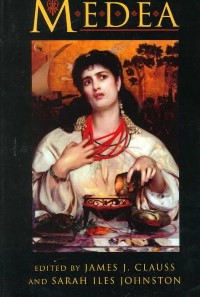
简介:Summary: Publisher Summary 1 From the dawn of European literature, the figure of Medea--best known as the helpmate of Jason and murderer of her own children--has inspired artists in all fields throughout all centuries. Euripides, Seneca, Corneille, Delacroix, Anouilh, Pasolini, Maria Callas, Martha Graham, Samuel Barber, and Diana Rigg are among the many who have given Medea life on stage, film, and canvas, through music and dance, from ancient Greek drama to Broadway. In seeking to understand the powerful hold Medea has had on our imaginations for nearly three millennia, a group of renowned scholars here examines the major representations of Medea in myth, art, and ancient and contemporary literature, as well as the philosophical, psychological, and cultural questions these portrayals raise. The result is a comprehensive and nuanced look at one of the most captivating mythic figures of all time.Unlike most mythic figures, whose attributes remain constant throughout mythology, Medea is continually changing in the wide variety of stories that circulated during antiquity. She appears as enchantress, helper-maiden, infanticide, fratricide, kidnapper, founder of cities, and foreigner. Not only does Medea's checkered career illuminate the opposing concepts of self and other, it also suggests the disturbing possibility of otherness within self. In addition to the editors, the contributors include Fritz Graf, Nita Krevans, Jan Bremmer, Dolores M. O'Higgins, Deborah Boedeker, Carole E. Newlands, John M. Dillon, Martha C. Nussbaum, Christiane Sourvinou-Inwood, and Marianne McDonald.
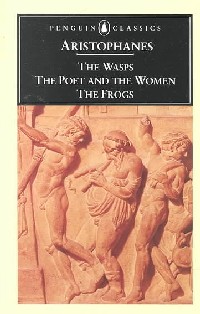
简介:The master of ancient Greek comic drama, Aristophanes combined slapstick, humour and cheerful vulgarity with acute political observations. In "The Frogs", written during the Peloponnesian War, Dionysus descends to the Underworld to bring back a poet who can help Athens in its darkest hour, and stages a great debate to help him decide between the traditional wisdom of Aeschylus and the brilliant modernity of Euripides. The clash of generations and values is also the object of Aristophanes' satire in "The Wasps", in which an old-fashioned father and his loose-living son come to blows and end up in court. And in "The Poet and the Women", Euripides, accused of misogyny persuades a relative to infiltrate an all-women festival to find out whether revenge is being plotted against him. In his introduction, David Barrett discusses the Athenian dramatic contests in which these plays first appeared, and conventions of Greek comedy - from its poetic language and the role of the Chorus to casting and costumes.
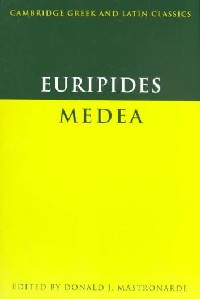
简介:Summary: Publisher Summary 1 Comprehensive edition of this classic play aimed at second-year students and above. Publisher Summary 2 This edition presents Medea, the most famous play of the Athenian tragedian Euripides, in ancient Greek, with commentary designed for university Greek classes, from second-year Greek upward. It helps students experience a classic drama as they work through the process of careful translation and gives them an appreciation of the work's artistry and its relation to its culture and performance tradition. The introduction summarizes interpretive and cultural issues raised by the play and provides background on important aspects of Greek tragedy, including language, style, and metre.
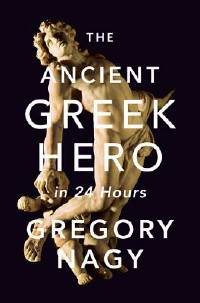
简介:S">The ancient Greeks' concept of "the hero" was very different from what we understand by the term today, Gregory Nagy argues--and it is only through analyzing their historical contexts that we can truly understand Achilles, Odysseus, Oedipus, and Herakles. In Greek tradition, a hero was a human, male or female, of the remote past, who was endowed with superhuman abilities by virtue of being descended from an immortal god. Despite their mortality, heroes, like the gods, were objects of cult worship. Nagy examines this distinctively religious notion of the hero in its many dimensions, in texts spanning the eighth to fourth centuries bce: the Homeric Iliad and Odyssey; tragedies of Aeschylus, Sophocles, and Euripides; songs of Sappho and Pindar; and dialogues of Plato. All works are presented in English translation, with attention to the subtleties of the original Greek, and are often further illuminated by illustrations taken from Athenian vase paintings. The fifth-century bce historian Herodotus said that to read Homer is to be a civilized person. In twenty-four installments, based on the Harvard University course Nagy has taught and refined since the late 1970s, The Ancient Greek Hero in 24 Hours offers an exploration of civilization's roots in the Homeric epics and other Classical literature, a lineage that continues to challenge and inspire us today.
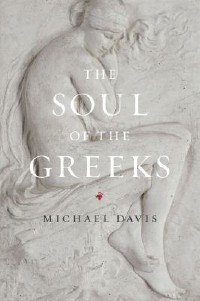
简介: The understanding of the soul in the West has been profoundly shaped by Christianity, and its influence can be seen in certain assumptions often made about the soul: that, for example, if it does exist, it is separable from the body, free, immortal, and potentially pure. The ancient Greeks, however, conceived of the soul quite differently. In this ambitious new work, Michael Davis analyzes works by Homer, Herodotus, Euripides, Plato, and Aristotle to reveal how the ancient Greeks portrayed and understood what he calls “the fully human soul.” Beginning with Homer’s Iliad, Davis lays out the tension within the soul of Achilles between immortality and life. He then turns to Aristotle’s De Anima and Nicomachean Ethics to explore the consequences of the problem of Achilles across the whole range of the soul’s activity. Moving to Herodotus and Euripides, Davis considers the former’s portrayal of the two extremes of culture—one rooted in stability and tradition, the other in freedom and motion—and explores how they mark the limits of character. Davis then shows how Helen and Iphigeneia among the Taurians serve to provide dramatic examples of Herodotus’s extreme cultures and their consequences for the soul. The book returns to philosophy in the final part, plumbing several Platonic dialogues—the Republic, Cleitophon, Hipparchus, Phaedrus, Euthyphro, and Symposium—to understand the soul’s imperfection in relation to law, justice, tyranny, eros, the gods, and philosophy itself. Davis concludes with Plato’s presentation of the soul of Socrates as self-aware and nontragic, even if it is necessarily alienated and divided against itself. The Soul of the Greeks thus begins with the imperfect soul as it is manifested in Achilles’ heroic, but tragic, longing and concludes with its nontragic and fuller philosophic expression in the soul of Socrates. But, far from being a historical survey, it is instead a brilliant meditation on what lies at the heart of being human.