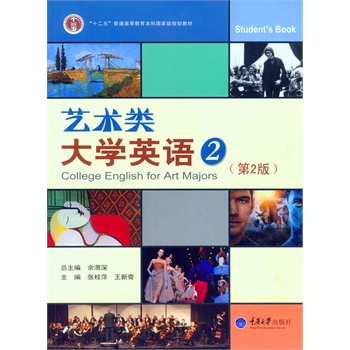
艺术类大学英语 2(第2版)
光盘
作者: 张桂萍 王新奇
出版社:重庆大学出版社 2015年05月
简介:Unit 1 Music — A Universal LanguageLead-in Entertain yourself with a piece of musicModule 1 Learn to talk Do you like classical music?Tips of Pragmatics: Likes and dislikesWhat kind of music do you like?A Popular MusicalModule 2 Learn to readPassage A Songs about Spring Can Be Happy or SadPassage B Symphony No.5 (Beethoven)Module 3 Culture LinkManners at a ConcertModule 4 Scenario Link Role play —Talking about your likes and dislikesWriting— about one of your favourite music worksUnit 2 Painting — Seeing or ThinkingLead-in Appreciate some great paintings Module 1 Learn to talkAre you planning to …?Tips of Pragmatics: Stating possibilities and intentionsThe Painter of the FutureModule 2 Learn to readPassage A Paul Cézanne: An Awkward Still LifePassage B Pablo Picasso: A “Real” ViolinModule 3 Culture LinkManners in Art MuseumsModule 4 Scenario Link Role play —Talking about PaintingsWriting — Draw a picture and write about what you’ve expressedUnit 3 Cinema — the Art of Conveying Stories with Moving ImagesLead-in Which film have you seen or Heard of?Module 1 Learn to talkWould you please…?Tips of pragmatics: Making a request and offering helpCan I give you a hand with …?Action Film and Science Fiction FilmModule 2 Learn to readPassage A Ang Lee and His Universal WorksPassage B An Interview with James Cameron about His Epic Adventure AvatorModule 3 Culture LinkTipping in AmericaModule 4 Scenario Link Role play —Interview a Famous Actor / ActressWriting — Comment on one of your favourite filmsUnit 4 Dance — A Dynamic ExpressionLead-in Entertain yourself with several kinds of danceModule 1 Learn to talkWould you like to…?Tips of Pragmatics: Extending and responding to invitationsDance Is Beautiful and FunModule 2 Learn to readPassage A RiverdancePassage B Moon Water from Cloud GateModule 3 Culture LinkTaboos in China and Western CulturesModule 4 Scenario Link Role play —Invite Classmates to Join a Dance ClubWriting — How to perform a kind of danceUnit 5 Fashion — a Charming SymbolLead-in Entertain yourself with two fashion designers’ worksModule 1 Learn to talkCongratulations my friend!Tips of Pragmatics: CongratulationsStories of SupermodelsModule 2 Learn to readPassage A New Look — the Turning Point in Fashion HistoryPassage B Coco Chanel’s Iconic LBDModule 3 Culture LinkThe Cultural Meaning of ColoursModule 4 Scenario Link Presentation of the Information on Coco ChanelWriting and performing — Winning speech as a fashion designer/model/makerUnit 6 Drama — Thinking and Entertainment Lead-in Entertain yourself with some scenes from drama playsModule 1 Learn to talkMay I…?Tips of Pragmatics: Asking for permission and giving reasonsThe Story of ShawModule 2 Learn to readPassage A Shakespeare’s Tragedy: HamletPassage B Henrik Ibsen’s Play: A Doll’s HouseModule 3 Culture LinkCoffee / Bar Culture Module 4 Scenario Link Role play—the Play: CinderellaWriting— Implications of the famous quotation “To be or not to be, that’s the question.”Unit 7 Theatre — an Art of Live Performance Lead-in Enjoy a piece of Beijing Opera Module 1 Learn to talkI’m afraid I have a complaint to make about…Tips of Pragmatics: How to complainStory of the Butterfly LoversModule 2 Learn to readPassage A The Drunken ConcubinePassage B Madama ButterflyModule 3 Culture LinkPlanning a PartyModule 4 Scenario Link Role play—Attending a Chinese Theatre Arts Exhibition Writing — Comment on your favourite Beijing Opera performanceUnit 8 Advertising — Shaping a Product’s ImageLead-in Entertain yourself with famous logos and slogansModule 1 Learn to talkExcuse me, I’m sorry to interrupt you…Tips of Pragmatics: Interrupting politelyI’ll get the cameraModule 2 Learn to readPassage A The WWF LogoPassage B Maxwell House’s Brand Module 3 Culture LinkEating Habits in Different Cultures Module 4 Scenario Link Role play—Talking about Chinese Eating Habits and Chinese CuisineWriting — Chinese eating habits