

简介
Summary:
Publisher Summary 1
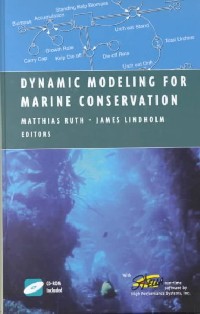
The effects of disturbed ecosystems, from devastating algal blooms to the loss of whale populations, have demonstrated the vulnerability of the oceans'biodiversity. This book provides methods for learning how ocean systems function, how natural and human actions put them in peril, and how we can influence the marine world in order to maintain biodiversity. The difficulties of research in the oceans make computer modeling particularly helpful for marine conservation. The authors demonstrate dynamic modeling through the use of the STELLA modeling program and case studies from marine conservation. All models and a run-time version of the STELLA software are included with the book on a CD-ROM.
目录
Table Of Contents:
Foreword v
Series Preface ix
Acknowledgments xi
Contributors xix
Part I. Concepts and Techniques 1(122)
Introduction 3(18)
Matthias Ruth
James Lindholm
Dynamic Modeling for Marine Conservation 3(2)
What Is Conservation Biology? 5(3)
Why Marine Conservation? 8(1)
What Is Dynamic Modeling? 9(3)
Using Dynamic Modeling to Generate Consensus 12(5)
Overview 17(3)
Questions and Tasks 20(1)
Modeling in STELLA 21(22)
Matthias Ruth
James Lindholm
Basic Population Model 21(6)
Closing a Model 27(5)
STELLA's Numeric Solution Techniques 32(5)
Sources of Model Errors 37(3)
Guidelines for the Development of a Dynamic Model 40(1)
Questions and Tasks 41(2)
Predator-Prey Dynamics 43(11)
Matthias Ruth
James Lindholm
Humpback Whales and Sand Lance 43(6)
Sectors 49(4)
Questions and Tasks 53(1)
Epidemics in the Marine System 54(20)
Matthias Ruth
Basic Model 55(7)
Sensitivity Analysis 62(6)
Parameter Values and Initial Conditions 62(2)
Model Structure 64(4)
Creating Submodels 68(5)
Questions and Tasks 73(1)
Impact of Fishing Pressure on Mean Length of Fish 74(24)
Matthias Ruth
Three-Age-Cohort Model and Fishing 74(16)
Arrays in the Population Cohort Model 90(7)
Questions and Tasks 97(1)
Spatial Fisheries Model 98(25)
Matthias Ruth
Basic Model 98(5)
Basic Model with Spatial Movement 103(8)
Fishery Reserve 111(5)
Development of a User Interface 116(4)
Questions and Tasks 120(3)
Part II. Applications 123(296)
Modeling Atmosphere-Ocean Interactions and Primary Productivity 125(19)
Joe Grzymski
Mark A. Moline
Jay T. Cullen
Introduction 125(1)
Greenhouse Gases and Climate 126(1)
High-Nutrient, Low-Chlorophyll (HNLC) Regions 127(1)
Atmosphere-Ocean Interaction Model 128(7)
Inorganic Carbon Fluxes 129(2)
Nutrient Regulation of Phytoplankton Carbon Fixation 131(4)
Model Results and Discussion 135(3)
Conclusions 138(1)
Questions and Tasks 139(5)
Impact of Dynamic Light and Nutrient Environments on Phytoplankton Communities in the Coastal Ocean 144(20)
Mark A. Moline
Oscar Schofield
Joe Grzymski
Introduction 144(1)
Model Formulation 145(7)
Physical Environment 145(1)
In Situ Light Field 146(1)
Phytoplankton Groups 147(1)
Nutrient Concentrations and Nutrient Requirements 148(4)
Model Results 152(6)
Physical Dynamics 152(1)
Light and Growth 153(2)
Nutrient Dynamics 155(3)
Conclusions 158(1)
Questions and Tasks 158(6)
Modeling Eelgrass (Zostera marina L.) Distributions in Great Bay, New Hampshire 164(27)
Pamela M. Behm
Roelof M. J. Bumans
Introduction 164(3)
Model Development 167(8)
Plant-Growth Sector 167(6)
Plant-Density Sector 173(2)
Plant Model Simulations 175(4)
Base-Run Results 176(1)
Light-Depletion Results 177(2)
Discussion 179(2)
Conclusions 181(1)
Questions and Tasks 182(9)
Life-Stage-Based Recovery Dynamics of Marine Invertebrates in Soft-Sediment Habitats 191(23)
Andrew M. Lohrer
Robert B. Whitlatch
Introduction 191(1)
Life-Stage-Based Invertebrate Model 192(9)
General Model Structure 192(7)
Larval Colonist Pool 199(1)
Post-Settler Colonist Pool 200(1)
Model Results 201(1)
Conclusions 202(5)
Questions and Tasks 207(7)
Horseshoe Crabs and Shorebirds 214(17)
Mark Maguire
Matthias Ruth
Introduction 214(1)
Horseshoe Crab and Shorebird Ecology 215(2)
Horseshoe Crabs 215(1)
Shorebirds 216(1)
Model Structure and Assumptions 217(4)
Sensitivity Analyses 221(2)
Model Results 223(4)
Conclusions 227(1)
Questions and Tasks 227(4)
Kelp, Urchins and Otters in the California Coastal Region 231(26)
Erin J. Tornatore
Matthias Ruth
Background 231(2)
Model Structure 233(5)
Results 238(4)
Conclusions 242(1)
Questions and Tasks 243(14)
Nile Perch Population Dynamics in Lake Victoria: Implications for Management and Conservation 257(57)
Les Kaufman
Jesse Schwartz
Introduction 257(1)
The Lake and Its Fishes 258(2)
The Past Twenty Years 259(1)
The Model 260(14)
Model Structure and Development 260(2)
General Model Structure 262(1)
Prey Modules 262(2)
Fishery Module 264(3)
Nile Perch Module 267(7)
Model Behavior 274(4)
Conclusions 278(1)
Questions and Tasks 279(35)
Dynamics of Multiple Fish Species Under Variable Levels of Exploitation 314(28)
Matthias Ruth
James Lindholm
Introduction 314(1)
The Model 315(4)
Key Parameters, Initial Conditions and Assumptions 319(2)
Results 321(5)
Discussion 326(1)
Questions and Tasks 327(15)
Fish Population Responses to Sea Floor Habitat Alteration: Implications for the Design of Marine Protected Areas 342(14)
James Lindholm
Peter Auster
Matthias Ruth
Les Kaufman
Introduction 342(2)
The Model 344(3)
Model Assumptions 347(1)
Model Results 348(1)
Juvenile Movement Rate and MPA Size 348(1)
Post-Settlement Juvenile Cod Density and MPA Size 349(1)
Discussion 349(5)
Questions and Tasks 354(2)
Management of the Commons: Social Behavior and Resource Extraction 356(20)
Brynhildur Davidsdottir
Introduction 356(2)
Three Case Studies of Communal Resource Management 358(2)
The Model 360(6)
Results 366(6)
Discussion and Conclusions 372(1)
Questions and Tasks 373(3)
An Age-Structured Model of Fish Population Enhancement: Implications for Conservation and Economic Sustainability 376(19)
Richard Langton
James Lindholm
James Wilson
Sally Sherman
Introduction 376(1)
Model Description 377(1)
Hatchery Sector 378(2)
Life History Sector 380(1)
Financial Flow Sector 381(1)
Model Input Values 382(2)
Model Results 384(1)
Discussion 385(3)
Questions and Tasks 388(7)
The Global Shrimp Market 395(24)
Denise Johnston
Chris Soderquist
Donnella Meadows
Introduction 395(2)
Wild Shrimp Fisheries 395(1)
Shrimp Aquaculture 396(1)
The Model 397(4)
Preliminary Insights 401(3)
Unbounded Aquaculture 401(1)
The Environment Strikes back 402(1)
Help for Wild Fisheries 403(1)
Best Practice for the Shrimp Aquaculturists 404(1)
Discussion 404(1)
Conclusions 405(1)
Questions and Tasks 406(13)
Part III. Conclusion 419(6)
Reflections on the Parts and the Whole 421(4)
James Lindholm
Matthias Ruth
Glossary 425(6)
Appendix: Installation Instructions for Dynamic Modeling for Marine Conservation 431(2)
References 433(14)
Index 447
Foreword v
Series Preface ix
Acknowledgments xi
Contributors xix
Part I. Concepts and Techniques 1(122)
Introduction 3(18)
Matthias Ruth
James Lindholm
Dynamic Modeling for Marine Conservation 3(2)
What Is Conservation Biology? 5(3)
Why Marine Conservation? 8(1)
What Is Dynamic Modeling? 9(3)
Using Dynamic Modeling to Generate Consensus 12(5)
Overview 17(3)
Questions and Tasks 20(1)
Modeling in STELLA 21(22)
Matthias Ruth
James Lindholm
Basic Population Model 21(6)
Closing a Model 27(5)
STELLA's Numeric Solution Techniques 32(5)
Sources of Model Errors 37(3)
Guidelines for the Development of a Dynamic Model 40(1)
Questions and Tasks 41(2)
Predator-Prey Dynamics 43(11)
Matthias Ruth
James Lindholm
Humpback Whales and Sand Lance 43(6)
Sectors 49(4)
Questions and Tasks 53(1)
Epidemics in the Marine System 54(20)
Matthias Ruth
Basic Model 55(7)
Sensitivity Analysis 62(6)
Parameter Values and Initial Conditions 62(2)
Model Structure 64(4)
Creating Submodels 68(5)
Questions and Tasks 73(1)
Impact of Fishing Pressure on Mean Length of Fish 74(24)
Matthias Ruth
Three-Age-Cohort Model and Fishing 74(16)
Arrays in the Population Cohort Model 90(7)
Questions and Tasks 97(1)
Spatial Fisheries Model 98(25)
Matthias Ruth
Basic Model 98(5)
Basic Model with Spatial Movement 103(8)
Fishery Reserve 111(5)
Development of a User Interface 116(4)
Questions and Tasks 120(3)
Part II. Applications 123(296)
Modeling Atmosphere-Ocean Interactions and Primary Productivity 125(19)
Joe Grzymski
Mark A. Moline
Jay T. Cullen
Introduction 125(1)
Greenhouse Gases and Climate 126(1)
High-Nutrient, Low-Chlorophyll (HNLC) Regions 127(1)
Atmosphere-Ocean Interaction Model 128(7)
Inorganic Carbon Fluxes 129(2)
Nutrient Regulation of Phytoplankton Carbon Fixation 131(4)
Model Results and Discussion 135(3)
Conclusions 138(1)
Questions and Tasks 139(5)
Impact of Dynamic Light and Nutrient Environments on Phytoplankton Communities in the Coastal Ocean 144(20)
Mark A. Moline
Oscar Schofield
Joe Grzymski
Introduction 144(1)
Model Formulation 145(7)
Physical Environment 145(1)
In Situ Light Field 146(1)
Phytoplankton Groups 147(1)
Nutrient Concentrations and Nutrient Requirements 148(4)
Model Results 152(6)
Physical Dynamics 152(1)
Light and Growth 153(2)
Nutrient Dynamics 155(3)
Conclusions 158(1)
Questions and Tasks 158(6)
Modeling Eelgrass (Zostera marina L.) Distributions in Great Bay, New Hampshire 164(27)
Pamela M. Behm
Roelof M. J. Bumans
Introduction 164(3)
Model Development 167(8)
Plant-Growth Sector 167(6)
Plant-Density Sector 173(2)
Plant Model Simulations 175(4)
Base-Run Results 176(1)
Light-Depletion Results 177(2)
Discussion 179(2)
Conclusions 181(1)
Questions and Tasks 182(9)
Life-Stage-Based Recovery Dynamics of Marine Invertebrates in Soft-Sediment Habitats 191(23)
Andrew M. Lohrer
Robert B. Whitlatch
Introduction 191(1)
Life-Stage-Based Invertebrate Model 192(9)
General Model Structure 192(7)
Larval Colonist Pool 199(1)
Post-Settler Colonist Pool 200(1)
Model Results 201(1)
Conclusions 202(5)
Questions and Tasks 207(7)
Horseshoe Crabs and Shorebirds 214(17)
Mark Maguire
Matthias Ruth
Introduction 214(1)
Horseshoe Crab and Shorebird Ecology 215(2)
Horseshoe Crabs 215(1)
Shorebirds 216(1)
Model Structure and Assumptions 217(4)
Sensitivity Analyses 221(2)
Model Results 223(4)
Conclusions 227(1)
Questions and Tasks 227(4)
Kelp, Urchins and Otters in the California Coastal Region 231(26)
Erin J. Tornatore
Matthias Ruth
Background 231(2)
Model Structure 233(5)
Results 238(4)
Conclusions 242(1)
Questions and Tasks 243(14)
Nile Perch Population Dynamics in Lake Victoria: Implications for Management and Conservation 257(57)
Les Kaufman
Jesse Schwartz
Introduction 257(1)
The Lake and Its Fishes 258(2)
The Past Twenty Years 259(1)
The Model 260(14)
Model Structure and Development 260(2)
General Model Structure 262(1)
Prey Modules 262(2)
Fishery Module 264(3)
Nile Perch Module 267(7)
Model Behavior 274(4)
Conclusions 278(1)
Questions and Tasks 279(35)
Dynamics of Multiple Fish Species Under Variable Levels of Exploitation 314(28)
Matthias Ruth
James Lindholm
Introduction 314(1)
The Model 315(4)
Key Parameters, Initial Conditions and Assumptions 319(2)
Results 321(5)
Discussion 326(1)
Questions and Tasks 327(15)
Fish Population Responses to Sea Floor Habitat Alteration: Implications for the Design of Marine Protected Areas 342(14)
James Lindholm
Peter Auster
Matthias Ruth
Les Kaufman
Introduction 342(2)
The Model 344(3)
Model Assumptions 347(1)
Model Results 348(1)
Juvenile Movement Rate and MPA Size 348(1)
Post-Settlement Juvenile Cod Density and MPA Size 349(1)
Discussion 349(5)
Questions and Tasks 354(2)
Management of the Commons: Social Behavior and Resource Extraction 356(20)
Brynhildur Davidsdottir
Introduction 356(2)
Three Case Studies of Communal Resource Management 358(2)
The Model 360(6)
Results 366(6)
Discussion and Conclusions 372(1)
Questions and Tasks 373(3)
An Age-Structured Model of Fish Population Enhancement: Implications for Conservation and Economic Sustainability 376(19)
Richard Langton
James Lindholm
James Wilson
Sally Sherman
Introduction 376(1)
Model Description 377(1)
Hatchery Sector 378(2)
Life History Sector 380(1)
Financial Flow Sector 381(1)
Model Input Values 382(2)
Model Results 384(1)
Discussion 385(3)
Questions and Tasks 388(7)
The Global Shrimp Market 395(24)
Denise Johnston
Chris Soderquist
Donnella Meadows
Introduction 395(2)
Wild Shrimp Fisheries 395(1)
Shrimp Aquaculture 396(1)
The Model 397(4)
Preliminary Insights 401(3)
Unbounded Aquaculture 401(1)
The Environment Strikes back 402(1)
Help for Wild Fisheries 403(1)
Best Practice for the Shrimp Aquaculturists 404(1)
Discussion 404(1)
Conclusions 405(1)
Questions and Tasks 406(13)
Part III. Conclusion 419(6)
Reflections on the Parts and the Whole 421(4)
James Lindholm
Matthias Ruth
Glossary 425(6)
Appendix: Installation Instructions for Dynamic Modeling for Marine Conservation 431(2)
References 433(14)
Index 447
- 名称
- 类型
- 大小
光盘服务联系方式: 020-38250260 客服QQ:4006604884
云图客服:
用户发送的提问,这种方式就需要有位在线客服来回答用户的问题,这种 就属于对话式的,问题是这种提问是否需要用户登录才能提问
Video Player
×
Audio Player
×
pdf Player
×
亲爱的云图用户,
光盘内的文件都可以直接点击浏览哦
无需下载,在线查阅资料!
