

简介
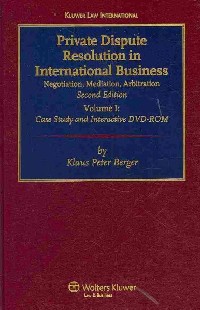
"Private Dispute Resolution in International Business" consists of two books and an interactive DVD ROM. Volume I follows the progress of a dispute between two companies, in step-by-step detail, through negotiation, mediation, and arbitration in turn. Volume II provides precise, informed solutions to the problems raised in the first volume's case study. The DVD ROM contains not only all contracts and other written documentation produced during the dispute - including all procedural orders and awards rendered by the arbitral tribunal during the arbitration, the text of legal materials such as arbitration laws and rules and international conventions, and further learning and teaching aids-but also almost 100 videos dramatising the negotiation, mediation, and arbitration proceedings described in the books, conducted by highly experienced practitioners active in the field of international dispute resolution. Subtitles in the videos refer the viewer to paragraphs in the books where each relevant legal problem is analysed.
In addition, an internet home page provides regular updates. To summarise: the Case Study (Volume I) provides a realistic and highly practical approach to learning and teaching the law and practice of private dispute resolution in international business; the Handbook (Volume II) provides a comprehensive comparative study of the law of international dispute resolution; the DVD ROM allows for a highly innovative, interactive teaching and learning experience, and provides a comprehensive collection of arbitration rules and other documentary material; and, the videos on the DVD ROM clearly manifest the soft skills and advocacy skills required to successfully resolve international business disputes, including the unique opportunity to draw on-screen comparisons between the negotiation, mediation, and arbitration methods. With its concrete and highly practical approach, this innovative teaching and training tool for international dispute resolution will be of immeasurable value to students and teachers of dispute resolution, corporate counsel, international lawyers, and business people. The DVD-ROM has a large number of interactive teaching and learning features which you can use simultaneously with the books or separately.
目录
Table Of Contents:
Preface to the Second Edition v
Preface to the First Edition vii
Acknowledgements xi
User's Guide xv
Part 1 - Negotiations 1(24)
The Contract 3(4)
Contract Conclusion in International Business
Offer and Acceptance
Confirmation of Order
Standard Terms
`Battle of Forms'
Involvement of Lawyers in Contract Negotiations
The Dispute 7(4)
Conflict Theory
Types of Disputes
Language and Culture
The `Human Factor'
Difference between `Dispute' and `Conflict'
Legal Disputes
International Business Disputes
Zero-Sum Thinking
Escalation of Disputes
Dispute Resolution Processes
ADR
Conflict Manager
DIS Conflict Management Rules
Dispute Avoidance
Renegotiation Clauses
Hardship and Renegotiation of Contracts
Dispute Review Boards
Developing Strategies 11(4)
Control of Negotiation Venue
Schedule and Agenda
Negotiation as Information Game
`Best Alternative to a Negotiated Agreement' (BATNA)
Reservation Price
`Zone of Possible Agreement' (ZOPA)
Negotiator's Dilemma
Bargaining Tactics
Bargaining Power
Telephone Negotiations
The Negotiations in the Hague: Morning Session 15(4)
Meaning of `Negotiations'
Strategy and Tactics
Skills and Styles
Negotiation Theory
Distributive Negotiations
Integrative Negotiations
Principled Negotiations
Lawyers' Perspective of Disputes
No-Negotiation Style
Use of Bluffs and Threats
Use of Apologies
Lawyers' Adversarial Approach to Negotiations
The Negotiations in the Hague: Afternoon Session 19(6)
Positional Bargaining
`Arab Bazaar'
Mutt and Jeff Tactics
The Six Phases of a Negotiation
Deal-Making Negotiations
Dispute Settlement Negotiations
Emotions in Negotiations
Change from Competitive to Integrative Bargaining Style
Part 2 - Mediation 25(56)
The Proposal to Mediate (`Getting to the Table') 27(6)
Pro-Active Dispute Resolution Planning
Corporate ADR-Pledge
Definition of Mediation
Origins and Characteristics of Mediation
The Parties' Decision-Making Power and Self-Responsibility
The Mediator's Role
Significance of Involvement of Top-Management
Enforceability of ADR Agreements
Role of Lawyers in Mediation
Qualifications of Mediators
Institution and `Ad Hoc' Mediation
Appointment of Mediators
Neutrality of the Mediator
Pre-Mediation Communication between Mediator and Parties
Legal Significance of Choice of Venue
Significance of `Contextual Factors'
The Mediation - Phase 1: The Mediator's Opening Statement and Conclusion of the Negotiation Agreement 33(4)
Fairness of the Mediation
Rapport between Mediator and Parties
Neuro-Linguistic Programming (NLP)
The Five Phases of a Mediation
Negotiation Agreement
Mediator's Contract
Mediation Privilege (Confidentiality)
The Parties' Self-Responsibility
The Mediation - Phase 2: The Parties' Opening Presentations 37(4)
Opening Statements by the Parties
Mediator as Guardian of the Principle of Self-Determination
Application of Neutral Decision-Making Principles
The Mediation - Phase 2: Identifying Issues and Interests 41(6)
Drafting an Agenda for the Negotiations
Unveiling Issues and Discussion Topics by the Mediator
Emotions in Mediation
The Mediator's Intervention Strategies
Active Listening
Interest-Oriented Bargaining Techniques
Reframing and Visualizing Issues and Interests
The Mediation - Phase 3: Fixing the Agenda and Gathering Information 47(10)
Building Negotiation Packages
Ensuring the Openness of the Negotiation Process
Making Parties Change their Perspective of the Dispute
Legal Analysis as Basis for the Parties' BATNA
Decision-Tree Analysis
Making the Parties Step into the Shoes of the Other Side
Change of Bargaining Approach
Changing Atmosphere at the Negotiation Table
The Mediation - Phase 4: Generating Options for Settlement of the AX-100 Special Dispute (`Group I' Issues) and Bargaining 57(8)
Psychological Closure
Emotional Satisfaction
Agreement-in-Principle Approach to Fixing Common Vision
Mediator as `Catalyst of Creativity'
`Enlarging the Cake'
Logrolling
`Facilitative', `Evaluative' and `Transformative' Mediation
The Mediator's Right to Propose a Settlement
Envelope Procedure
Use of Games of Chance
Zone of Possible Agreement
The Parties' Self-Determination and Self-Responsibility
Communication in Mediation
Characteristics of Negotiation and Mediation Compared
The Mediation - Phase 4: Restructuring the Future Business Relationship between NedTrans and ALT (`Group II' Issues) 65(6)
Business Secrets in Mediation
Caucus Sessions
`Shuttle' Mediation
Brainstorming Sessions
SWOT-Analysis
`SMART' Settlement Agreements
The Mediation - Phase 4: Mr. Jaeggi's Limits of Authority 71(4)
Limits of Authority
Informal Business Memorandum
Formal Settlement Agreement
Right to Revoke the Settlement
Weakness of Package Deal Concept
Meaning of `Success' of Mediation
The Mediation - Phase 5: Signing of the Settlement Agreement and Termination of the Mediation 75(2)
The Parties' Commitment to the Settlement Terms
Symbolic Conflict Termination Activities
Signing Ceremony
Revocation of the Settlement Agreement (`From Interests to Positions') 77(4)
Frequency of Successful Mediations
Strategic Mistakes of the Parties
Disputes not Apt for Mediation
Mediation as Basis for Settlement Outside the Court Room
Mediation as Learning Experience for Lawyers
Mediation/Arbitration
Use of Mediation Window
Reasons to Arbitrate
Settlement in the Shadow of the Arbitration
Part 3 - Arbitration 81(64)
The Commencement of the Arbitration 83(4)
Definition of Arbitration
Nature of Arbitration
Advantages of Arbitration
Best Practices
`Pro-Active' Arbitrator
Hierarchy of Rules
Transnationalization of Arbitration
Place (`Seat') of Arbitration
UNCITRAL Model Law on International Commercial Arbitration
Ad Hoc/Institutional Arbitration
German Institution of Arbitration (DIS)
Fast Track Arbitration
Effects of Arbitration Agreement
Anti-Suit Injunctions in Aid of Arbitration
Confidentiality
Objective and Subjective Arbitrability
Law Applicable to Parties' Representation
Request for Arbitration/Statement of Claim
Interruption of Period of Limitation
Structure of Legal Briefs
Qualifications and Skills of Party-Appointed Arbitrator
The Arbitrator's Duty to Disclose
Nomination of Arbitrator
Filing of Request for Arbitration
The Administration of the Statement of Claim by the German Institution of Arbitration (DIS) 87(2)
Task and Role of Arbitral Institution
New Version of Institutional Arbitration Rules
Calculation of Administration Fee and Advance on Costs
The Respondent's Reaction 89(2)
Court Control of Arbitral Jurisdiction
Contacts between Party and Nominee for Party-Appointed Arbitrator
Constitution of the Tribunal 91(4)
Nomination and Appointment of Arbitrator
Constitution of Arbitral Tribunal
Arbitrators' Contract
Qualities and Skills Required from Chairman
Nationality of Arbitrators
Party-Agreements on Qualifications of Arbitrators
Non-Lawyers as Arbitrators
Challenge of the Tribunal's Jurisdiction 95(6)
Seat of Arbitration
Language of the Proceedings
Documents-Only Arbitration
Pre-Hearing Conference
Pro-active Case Management Techniques
ICC Terms of Reference
`Kompetenz-Kompetenz'
Separability of Arbitration Agreement
Tribunal's Positive and Negative Decision on Jurisdiction
Conflict-of-Laws Issues
Law Applicable to Arbitration Agreement
Formal and Substantive Validity of Arbitration Agreement
Arbitration Clause in Standard Forms
Construction of Arbitration Agreements
`In Favorem' Principle
Interim Measures of Protection 101(4)
Tribunal's Competence for Interim Relief
`Mareva-Type' Injunctions
Types of Arbitral Interim Relief
Security for Costs
Prerequisites for Arbitral Interim Relief
Pre-Arbitral Referee
Types of Arbitral Interim Relief
Ex Parte Orders
Enforceability of Arbitral Interim Relief Orders
Relationship between Court-Ordered and Arbitral Interim Relief
Settlement in Arbitration; Request for Postponement; Change of Ownership in one of the Parties 105(2)
Settlement and Arbitration
Settlement Inside and Outside the Hearing Room
The Arbitrator's Role in Settlement Talks of the Parties
Settlement Privilege
Integration of Mediation Techniques
Award on Agreed Terms
Transfer of Ownership in One of the Parties during Arbitration
Challenge of Arbitrator 107(4)
Grounds for Challenge
IBA Guidelines on Conflicts of Interest
Independence and Impartiality
Objective, `Reasonable Third Person'-Test
Remoteness of Arbitrator's Business Contacts with Parties
Duty to Disclose During Proceedings (Subjective Test)
Failure to Disclose as Independent Ground for Challenge
Timing of Challenge
Participation of Challenged Arbitrator in Tribunal's Decision on Challenge
Court Control
Continuation of Arbitration after Challenge
Resignation of Arbitrator
The First Day of the Hearing: The Legal Issues (I) 111(8)
Applicable Law
Conflict-of-Laws Rules for Arbitrators
Choice of Law by Parties
Closest Connection Test by Arbitrators
Non-Applicability of General Conflict-of-Laws Rules
UN Sales Convention (CISG)
Claim for Damages under CISG
Claim for Repayment of Down Payment under CISG
Art. 79 CISG
Force Majeure
Hardship
`Last Limit of Economic Sacrifice'
Distribution of Supply Risk
Transfer of Supply Risk
Foreseeability of Macro-Economic Crisis
The First Day of the Hearing: The Legal Issues (II) 119(6)
Penalty Clause
Application of Art. 79 CISG to Liability under Penalty Clause
Set-Off in Arbitration
Interest Claim
Arbitrators' Duty to Decide on Costs of Arbitration
Costs for In-House Counsel
The Second Day of the Hearing: Taking of Evidence 125(8)
Means of Evidence
`Hybrid' Evidence Procedures
IBA Rules on the Taking of Evidence
Witness, Party Witness and Expert Witness
Examination-in-Chief, Cross-Examination and Re-Direct Examination
Soft Skills Required
Written Witness Statements
Documentary Discovery
Document Production in Arbitration
`Request to Produce'
Internal Documents
Electronic Disclosure
Client-Attorney Privilege
Guidelines for Evaluation of Evidence by the Tribunal
Court Assistance
Comparison of Negotiation, Mediation and Arbitration
Deliberation of the Tribunal and Rendering of the Award 133(4)
Costs for Translation of Documentary Evidence
Closure of Proceedings
Guidelines for Tribunal's Deliberations
Drafting of Award by Chairman
The Role of the Secretary to the Tribunal in the Drafting of the Award
Dissenting Opinion
Truncated Tribunal
Refusal of Arbitrator to Sign Award
Structure and Contents of Arbitral Award
Award without Reasons
Award with Signatures of Only Two Arbitrators
Types of Arbitral Awards
Request for Correction, Additional Award and Setting Aside of the Award 137(4)
Correction and Interpretation of Award
Additional Award on Costs
Purpose of Setting Aside
Principle of Finality of Awards
Court Competence for Action to Set Aside Awards
Grounds for Setting Aside
Meaning of Public Policy
Prohibition of Revision au Fond
Effect of Setting Aside
Exclusion Agreements
Enforcement of the Award 141(4)
Meaning of Recognition and Enforcement
New York Convention
Formal and Substantive Requirements
Grounds for Refusal of Recognition and Enforcement under Art. V New York Convention
`Second Look' Doctrine
Prohibition of Revision au Fond
Glossary of Terms 145(540)
Preface to the Second Edition v
Preface to the First Edition vii
Acknowledgements xi
User's Guide xv
List of Abbreviations xix
Part 1 - Negotiations 1(114)
The Contract 3(14)
Contract Conclusion in International Business
Offer and Acceptance
Confirmation of Order
Standard Terms
`Battle of Forms'
Involvement of Lawyers in Contract Negotiations
The Dispute 17(44)
Conflict Theory
Types of Disputes
Language and Culture
The `Human Factor'
Difference between `Dispute' and `Conflict'
Legal Disputes
International Business Disputes
Zero-Sum Thinking
Escalation of Disputes
Dispute Resolution Processes
ADR
Conflict Manager
DIS Conflict Management Rules
Dispute Avoidance
Renegotiation Clauses
Hardship and Renegotiation of Contracts
Dispute Review Boards
Developing Strategies 61(16)
Control of Negotiation Venue
Schedule and Agenda
Negotiation as Information Game
Best Alternative to a Negotiated Agreement (BATNA)
Reservation Price
Zone of Possible Agreement (ZOPA)
Negotiator's Dilemma
Bargaining Tactics
Bargaining Power
Telephone Negotiations
The Negotiations in the Hague: Morning Session 77(22)
Meaning of `Negotiations'
Strategy and Tactics
Skills and Styles
Negotiation Theory
Distributive Negotiations
Integrative Negotiations
Principled Negotiations
Lawyers' Perspective of Disputes
No-Negotiation Style
Use of Bluffs and Threats
Use of Apologies
Lawyers' Adversarial Approach to Negotiations
The Negotiations in the Hague: Afternoon Session 99(16)
Positional Bargaining
`Arab Bazaar'
Mutt and Jeff Tactics
The Six Phases of a Negotiation
Deal-Making Negotiations
Dispute Settlement Negotiations
Emotions in Negotiations
Change from Competitive to Integrative Bargaining Style
Part 2 - Mediation 115(186)
The Proposal to Mediate (`Getting to the Table') 117(46)
Pro-Active Dispute Resolution Planning
Corporate ADR-Pledge
Definition of Mediation
Origins and Characteristics of Mediation
The Parties' Decision-Making Power and Self-Responsibility
The Mediator's Role
Significance of Involvement of Top-Management
Enforceability of ADR Agreements
Role of Lawyers in Mediation
Qualifications of Mediators
Institution and `Ad Hoc' Mediation
Appointment of Mediators
Neutrality of the Mediator
Pre-Mediation Communication between Mediator and Parties
Legal Significance of Choice of Venue
Significance of `Contextual Factors'
The Mediation - Phase 1: The Mediator's Opening Statement and Conclusion of the Negotiation Agreement 163(22)
Fairness of the Mediation
Rapport between Mediator and Parties
Neuro-Linguistic Programming (NLP)
The Five Phases of a Mediation
Negotiation Agreement
Mediator's Contract
Mediation Privilege (Confidentiality)
The Parties' Self-Responsibility
The Mediation - Phase 2: The Parties' Opening Presentations 185(8)
Opening Statements by the Parties
Mediator as Guardian of the Principle of Self-Determination
Application of Neutral Decision-Making Principles
The Mediation - Phase 2: Identifying Issues and Interests 193(12)
Drafting an Agenda for the Negotiations
Unveiling Issues and Discussion Topics by the Mediator
Emotions in Mediation
The Mediator's Intervention Strategies
Active Listening
Interest-Oriented Bargaining Techniques
Reframing and Visualizing Issues and Interests
The Mediation - Phase 3: Fixing the Agenda and Gathering Information 205(32)
Building Negotiation Packages
Ensuring the Openness of the Negotiation Process
Making Parties Change their Perspective of the Dispute
Legal Analysis as Basis for the Parties' BATNA
Decision-Tree Analysis
Making the Parties Step into the Shoes of the Other Side
Change of Bargaining Approach
Changing Atmosphere at the Negotiation Table
The Mediation - Phase 4: Generating Options for Settlement of the AX-100 Special Dispute (`Group I' Issues) and Bargaining 237(28)
Psychological Closure
Emotional Satisfaction
Agreement-in-Principle Approach to Fixing Common Vision
Mediator as `Catalyst of Creativity
`Enlarging the Cake'
Logrolling
`Facilitative', `Evaluative' and `Transformative' Mediation
The Mediator's Right to Propose a Settlement
Envelope Procedure
Use of Games of Chance
Zone of Possible Agreement
The Parties' Self-Determination and Self-Responsibility
Communication in Mediation
Characteristics of Negotiation and Mediation Compared
The Mediation - Phase 4: Restructuring the Future Business Relationship between NedTrans and ALT (`Group II' Issues) 265(12)
Business Secrets in Mediation
Caucus Sessions
`Shuttle' Mediation
Brainstorming Sessions
SWOT-Analysis
`SMART' Settlement Agreements
The Mediation - Phase 4: Mr. Jaeggi's Limits of Authority 277(8)
Limits of Authority
Informal Business Memorandum
Formal Settlement Agreement
Right to Revoke the Settlement
Weakness of Package Deal Concept
Meaning of `Success' of Mediation
The Mediation - Phase 5: Signing of the Settlement Agreement and Termination of the Mediation 285(4)
The Parties' Commitment to the Settlement Terms
Symbolic Conflict Termination Activities
Signing Ceremony
Revocation of the Settlement Agreement (`From Interests to Positions') 289(12)
Frequency of Successful Mediations
Strategic Mistakes of the Parties
Disputes not Apt for Mediation
Mediation as Basis for Settlement Outside the Court Room
Mediation as Learning Experience for Lawyers
Mediation/Arbitration
Use of Mediation Window
Reasons to Arbitrate
Settlement in the Shadow of the Arbitration
Part 3 - Arbitration 301(384)
The Commencement of the Arbitration 303(76)
Definition of Arbitration
Nature of Arbitration
Advantages of Arbitration
Best Practices
`Pro-Active' Arbitrator
Hierarchy of Rules
Transnationalization of Arbitration
Place (`Seat') of Arbitration
UNCITRAL Model Law on International Commercial Arbitration
Ad Hoc/Institutional Arbitration
German Institution of Arbitration (DIS)
Fast Track Arbitration
Effects of Arbitration Agreement
Anti-Suit Injunctions in Aid of Arbitration
Confidentiality
Objective and Subjective Arbitrability
Law Applicable to Parties' Representation
Request for Arbitration/Statement of Claim
Interuption of Period of Limitation
Structure of Legal Briefs
Qualifications and Skills of Party-Appointed Arbitrator
The Arbitrator's Duty to Disclose
Nomination of Arbitrator
Filing of Request for Arbitration
The Administration of the Statement of Claim by the German Institution of Arbitration (DIS) 379(12)
Task and Role of Arbitral Institution
New Version of Institutional Arbitration Rules
Calculation of Administration Fee and Advance on Costs
The Respondent's Reaction 391(10)
Court Control of Arbitral Jurisdiction
Contacts between Party and Nominee for Party-Appointed Arbitrator
Constitution of the Tribunal 401(12)
Nomination and Appointment of Arbitrator
Constitution of Arbitral Tribunal
Arbitrators' Contract
Qualities and Skills Required from Chairman
Nationality of Arbitrators
Party-Agreements on Qualifications of Arbitrators
Non-Lawyers as Arbitrators
Challenge of the Tribunal's Jurisdiction 413(40)
Seat of Arbitration
Language of the Proceedings
Documents-Only Arbitration
Pre-Hearing Conference
Pro-active Case Management Techniques
ICC Terms of Reference
`Kompetenz-Kompetenz'
Separability of Arbitration Agreement
Tribunal's Positive and Negative Decision on Jurisdiction
Conflict of Laws Issues
Law Applicable to Arbitration Agreement
Formal and Substantive Validity of Arbitration Agreement
Arbitration Clause in Standard Forms
Construction of Arbitration Agreements
`In Favorem' Principle
Interim Measures of Protection 453(20)
Tribunal's Competence for Interim Relief
`Mareva-Type' Injunctions
Types of Arbitral Interim Relief
Security for Costs
Prerequisites for Arbitral Interim Relief
Pre-Arbitral Referee
Types of Arbitral Interim Relief
Ex-Parte Orders
Enforceability of Arbitral Interim Relief Orders
Relationship between Court Ordered and Arbitral Interim Relief
Settlement in Arbitration; Request for Postponement; Change of Ownership in One of the Parties 473(22)
Settlement and Arbitration
Settlement Inside and Outside the Hearing Room
The Arbitrator's Role in Settlement Talks of the Parties
Award on Agreed Terms
Settlement Privilege
Integration of Mediation Techniques
Transfer of Ownership in One of the Parties during Arbitration
Challenge of Arbitrator 495(26)
Grounds for Challenge
IBA Guidelines on Conflicts of Interest
Independence and Impartiality
Objective, `Reasonable Third Person'-Test
Remoteness of Arbitrator's Business Contacts with Parties
Duty to Disclose during proceedings (Subjective Test)
Failure to Disclose as Independent Ground for Challenge
Timing of Challenge
Participation of Challenged Arbitrator in Tribunal's Decision on Challenge
Court Control
Continuation of Arbitration after Challenge
Resignation of Arbitrator
The First Day of the Hearing: The Legal Issues (I) 521(36)
Applicable Law
Conflict of Laws Rules for Arbitrators
Choice of Law by Parties
Closest Connection Test by Arbitrators
Non-Applicability of General Conflict of Laws Rules
UN Sales Convention (CISG)
Claim for Damages under CISG
Claim for Repayment of Down Payment under CISG
Art. 79 CISG
Force Majeure
Hardship
`Last Limit of Economic Sacrifice'
Distribution of Supply Risk
Transfer of Supply Risk
Foreseeability of Macro-Economic Crisis
The First Day of the Hearing: The Legal Issues (II) 557(22)
Penalty Clause
Application of Art. 79 CISG to Liability under Penalty Clause
Set-Off in Arbitration
Interest Claim
Arbitrators' Duty to Decide on Costs of Arbitration
Costs for In-House Counsel
The Second Day of the Hearing: Taking of Evidence 579(36)
Means of Evidence
`Hybrid' Evidence Procedures
IBA Rules on the taking of Evidence
Witness, Party Witness and Expert Witness
Examination-in-Chief, Cross-Examination and Re-Direct Examination
Soft Skills Required
Written Witness Statements
Documentary Discovery
Document Production in Arbitration
`Request to Produce'
Internal documents
Electronic Disclosure
Client-Attorney Privilege
Guidelines for Evaluation of Evidence by the Tribunal
Court Assistance
Comparison of Negotiation, Mediation and Arbitration
Deliberation of the Tribunal and Rendering of the Award 615(22)
Costs for Translation of Documentary Evidence
Closure of Proceedings
Guidelines for Tribunal's Deliberations
Drafting of Award by Chairman
The Role of the Secretary to the Tribunal in the Drafting of the Award
Dissenting Opinion
Truncated Tribunal
Refusal of Arbitrator to Sign Award
Structure and Contents of Arbitral Award
Award without Reasons
Award with Signatures of Only Two Arbitrators
Types of Arbitral Awards
Request for Correction, Additional Award and Setting Aside of the Award 637(38)
Correction and Interpretation of Award
Additional Award on Costs
Purpose of Setting Aside
Principle of Finality of Awards
Court Competence for Action to Set Aside Awards
Grounds for Setting Aside
Meaning of Public Policy
Prohibition of Revision au Fond
Effect of Setting Aside
Exclusion Agreements
Enforcement of the Award 675(10)
Meaning of Recognition and Enforcement
New York Convention
Formal and Substantive Requirements
Grounds for Refusal of Recognition and Enforcement under Art. V New York Convention
`Second Look' Doctrine
Prohibition of Revision au Fond
Bibliography 685(34)
Subject Index 719
Preface to the Second Edition v
Preface to the First Edition vii
Acknowledgements xi
User's Guide xv
Part 1 - Negotiations 1(24)
The Contract 3(4)
Contract Conclusion in International Business
Offer and Acceptance
Confirmation of Order
Standard Terms
`Battle of Forms'
Involvement of Lawyers in Contract Negotiations
The Dispute 7(4)
Conflict Theory
Types of Disputes
Language and Culture
The `Human Factor'
Difference between `Dispute' and `Conflict'
Legal Disputes
International Business Disputes
Zero-Sum Thinking
Escalation of Disputes
Dispute Resolution Processes
ADR
Conflict Manager
DIS Conflict Management Rules
Dispute Avoidance
Renegotiation Clauses
Hardship and Renegotiation of Contracts
Dispute Review Boards
Developing Strategies 11(4)
Control of Negotiation Venue
Schedule and Agenda
Negotiation as Information Game
`Best Alternative to a Negotiated Agreement' (BATNA)
Reservation Price
`Zone of Possible Agreement' (ZOPA)
Negotiator's Dilemma
Bargaining Tactics
Bargaining Power
Telephone Negotiations
The Negotiations in the Hague: Morning Session 15(4)
Meaning of `Negotiations'
Strategy and Tactics
Skills and Styles
Negotiation Theory
Distributive Negotiations
Integrative Negotiations
Principled Negotiations
Lawyers' Perspective of Disputes
No-Negotiation Style
Use of Bluffs and Threats
Use of Apologies
Lawyers' Adversarial Approach to Negotiations
The Negotiations in the Hague: Afternoon Session 19(6)
Positional Bargaining
`Arab Bazaar'
Mutt and Jeff Tactics
The Six Phases of a Negotiation
Deal-Making Negotiations
Dispute Settlement Negotiations
Emotions in Negotiations
Change from Competitive to Integrative Bargaining Style
Part 2 - Mediation 25(56)
The Proposal to Mediate (`Getting to the Table') 27(6)
Pro-Active Dispute Resolution Planning
Corporate ADR-Pledge
Definition of Mediation
Origins and Characteristics of Mediation
The Parties' Decision-Making Power and Self-Responsibility
The Mediator's Role
Significance of Involvement of Top-Management
Enforceability of ADR Agreements
Role of Lawyers in Mediation
Qualifications of Mediators
Institution and `Ad Hoc' Mediation
Appointment of Mediators
Neutrality of the Mediator
Pre-Mediation Communication between Mediator and Parties
Legal Significance of Choice of Venue
Significance of `Contextual Factors'
The Mediation - Phase 1: The Mediator's Opening Statement and Conclusion of the Negotiation Agreement 33(4)
Fairness of the Mediation
Rapport between Mediator and Parties
Neuro-Linguistic Programming (NLP)
The Five Phases of a Mediation
Negotiation Agreement
Mediator's Contract
Mediation Privilege (Confidentiality)
The Parties' Self-Responsibility
The Mediation - Phase 2: The Parties' Opening Presentations 37(4)
Opening Statements by the Parties
Mediator as Guardian of the Principle of Self-Determination
Application of Neutral Decision-Making Principles
The Mediation - Phase 2: Identifying Issues and Interests 41(6)
Drafting an Agenda for the Negotiations
Unveiling Issues and Discussion Topics by the Mediator
Emotions in Mediation
The Mediator's Intervention Strategies
Active Listening
Interest-Oriented Bargaining Techniques
Reframing and Visualizing Issues and Interests
The Mediation - Phase 3: Fixing the Agenda and Gathering Information 47(10)
Building Negotiation Packages
Ensuring the Openness of the Negotiation Process
Making Parties Change their Perspective of the Dispute
Legal Analysis as Basis for the Parties' BATNA
Decision-Tree Analysis
Making the Parties Step into the Shoes of the Other Side
Change of Bargaining Approach
Changing Atmosphere at the Negotiation Table
The Mediation - Phase 4: Generating Options for Settlement of the AX-100 Special Dispute (`Group I' Issues) and Bargaining 57(8)
Psychological Closure
Emotional Satisfaction
Agreement-in-Principle Approach to Fixing Common Vision
Mediator as `Catalyst of Creativity'
`Enlarging the Cake'
Logrolling
`Facilitative', `Evaluative' and `Transformative' Mediation
The Mediator's Right to Propose a Settlement
Envelope Procedure
Use of Games of Chance
Zone of Possible Agreement
The Parties' Self-Determination and Self-Responsibility
Communication in Mediation
Characteristics of Negotiation and Mediation Compared
The Mediation - Phase 4: Restructuring the Future Business Relationship between NedTrans and ALT (`Group II' Issues) 65(6)
Business Secrets in Mediation
Caucus Sessions
`Shuttle' Mediation
Brainstorming Sessions
SWOT-Analysis
`SMART' Settlement Agreements
The Mediation - Phase 4: Mr. Jaeggi's Limits of Authority 71(4)
Limits of Authority
Informal Business Memorandum
Formal Settlement Agreement
Right to Revoke the Settlement
Weakness of Package Deal Concept
Meaning of `Success' of Mediation
The Mediation - Phase 5: Signing of the Settlement Agreement and Termination of the Mediation 75(2)
The Parties' Commitment to the Settlement Terms
Symbolic Conflict Termination Activities
Signing Ceremony
Revocation of the Settlement Agreement (`From Interests to Positions') 77(4)
Frequency of Successful Mediations
Strategic Mistakes of the Parties
Disputes not Apt for Mediation
Mediation as Basis for Settlement Outside the Court Room
Mediation as Learning Experience for Lawyers
Mediation/Arbitration
Use of Mediation Window
Reasons to Arbitrate
Settlement in the Shadow of the Arbitration
Part 3 - Arbitration 81(64)
The Commencement of the Arbitration 83(4)
Definition of Arbitration
Nature of Arbitration
Advantages of Arbitration
Best Practices
`Pro-Active' Arbitrator
Hierarchy of Rules
Transnationalization of Arbitration
Place (`Seat') of Arbitration
UNCITRAL Model Law on International Commercial Arbitration
Ad Hoc/Institutional Arbitration
German Institution of Arbitration (DIS)
Fast Track Arbitration
Effects of Arbitration Agreement
Anti-Suit Injunctions in Aid of Arbitration
Confidentiality
Objective and Subjective Arbitrability
Law Applicable to Parties' Representation
Request for Arbitration/Statement of Claim
Interruption of Period of Limitation
Structure of Legal Briefs
Qualifications and Skills of Party-Appointed Arbitrator
The Arbitrator's Duty to Disclose
Nomination of Arbitrator
Filing of Request for Arbitration
The Administration of the Statement of Claim by the German Institution of Arbitration (DIS) 87(2)
Task and Role of Arbitral Institution
New Version of Institutional Arbitration Rules
Calculation of Administration Fee and Advance on Costs
The Respondent's Reaction 89(2)
Court Control of Arbitral Jurisdiction
Contacts between Party and Nominee for Party-Appointed Arbitrator
Constitution of the Tribunal 91(4)
Nomination and Appointment of Arbitrator
Constitution of Arbitral Tribunal
Arbitrators' Contract
Qualities and Skills Required from Chairman
Nationality of Arbitrators
Party-Agreements on Qualifications of Arbitrators
Non-Lawyers as Arbitrators
Challenge of the Tribunal's Jurisdiction 95(6)
Seat of Arbitration
Language of the Proceedings
Documents-Only Arbitration
Pre-Hearing Conference
Pro-active Case Management Techniques
ICC Terms of Reference
`Kompetenz-Kompetenz'
Separability of Arbitration Agreement
Tribunal's Positive and Negative Decision on Jurisdiction
Conflict-of-Laws Issues
Law Applicable to Arbitration Agreement
Formal and Substantive Validity of Arbitration Agreement
Arbitration Clause in Standard Forms
Construction of Arbitration Agreements
`In Favorem' Principle
Interim Measures of Protection 101(4)
Tribunal's Competence for Interim Relief
`Mareva-Type' Injunctions
Types of Arbitral Interim Relief
Security for Costs
Prerequisites for Arbitral Interim Relief
Pre-Arbitral Referee
Types of Arbitral Interim Relief
Ex Parte Orders
Enforceability of Arbitral Interim Relief Orders
Relationship between Court-Ordered and Arbitral Interim Relief
Settlement in Arbitration; Request for Postponement; Change of Ownership in one of the Parties 105(2)
Settlement and Arbitration
Settlement Inside and Outside the Hearing Room
The Arbitrator's Role in Settlement Talks of the Parties
Settlement Privilege
Integration of Mediation Techniques
Award on Agreed Terms
Transfer of Ownership in One of the Parties during Arbitration
Challenge of Arbitrator 107(4)
Grounds for Challenge
IBA Guidelines on Conflicts of Interest
Independence and Impartiality
Objective, `Reasonable Third Person'-Test
Remoteness of Arbitrator's Business Contacts with Parties
Duty to Disclose During Proceedings (Subjective Test)
Failure to Disclose as Independent Ground for Challenge
Timing of Challenge
Participation of Challenged Arbitrator in Tribunal's Decision on Challenge
Court Control
Continuation of Arbitration after Challenge
Resignation of Arbitrator
The First Day of the Hearing: The Legal Issues (I) 111(8)
Applicable Law
Conflict-of-Laws Rules for Arbitrators
Choice of Law by Parties
Closest Connection Test by Arbitrators
Non-Applicability of General Conflict-of-Laws Rules
UN Sales Convention (CISG)
Claim for Damages under CISG
Claim for Repayment of Down Payment under CISG
Art. 79 CISG
Force Majeure
Hardship
`Last Limit of Economic Sacrifice'
Distribution of Supply Risk
Transfer of Supply Risk
Foreseeability of Macro-Economic Crisis
The First Day of the Hearing: The Legal Issues (II) 119(6)
Penalty Clause
Application of Art. 79 CISG to Liability under Penalty Clause
Set-Off in Arbitration
Interest Claim
Arbitrators' Duty to Decide on Costs of Arbitration
Costs for In-House Counsel
The Second Day of the Hearing: Taking of Evidence 125(8)
Means of Evidence
`Hybrid' Evidence Procedures
IBA Rules on the Taking of Evidence
Witness, Party Witness and Expert Witness
Examination-in-Chief, Cross-Examination and Re-Direct Examination
Soft Skills Required
Written Witness Statements
Documentary Discovery
Document Production in Arbitration
`Request to Produce'
Internal Documents
Electronic Disclosure
Client-Attorney Privilege
Guidelines for Evaluation of Evidence by the Tribunal
Court Assistance
Comparison of Negotiation, Mediation and Arbitration
Deliberation of the Tribunal and Rendering of the Award 133(4)
Costs for Translation of Documentary Evidence
Closure of Proceedings
Guidelines for Tribunal's Deliberations
Drafting of Award by Chairman
The Role of the Secretary to the Tribunal in the Drafting of the Award
Dissenting Opinion
Truncated Tribunal
Refusal of Arbitrator to Sign Award
Structure and Contents of Arbitral Award
Award without Reasons
Award with Signatures of Only Two Arbitrators
Types of Arbitral Awards
Request for Correction, Additional Award and Setting Aside of the Award 137(4)
Correction and Interpretation of Award
Additional Award on Costs
Purpose of Setting Aside
Principle of Finality of Awards
Court Competence for Action to Set Aside Awards
Grounds for Setting Aside
Meaning of Public Policy
Prohibition of Revision au Fond
Effect of Setting Aside
Exclusion Agreements
Enforcement of the Award 141(4)
Meaning of Recognition and Enforcement
New York Convention
Formal and Substantive Requirements
Grounds for Refusal of Recognition and Enforcement under Art. V New York Convention
`Second Look' Doctrine
Prohibition of Revision au Fond
Glossary of Terms 145(540)
Preface to the Second Edition v
Preface to the First Edition vii
Acknowledgements xi
User's Guide xv
List of Abbreviations xix
Part 1 - Negotiations 1(114)
The Contract 3(14)
Contract Conclusion in International Business
Offer and Acceptance
Confirmation of Order
Standard Terms
`Battle of Forms'
Involvement of Lawyers in Contract Negotiations
The Dispute 17(44)
Conflict Theory
Types of Disputes
Language and Culture
The `Human Factor'
Difference between `Dispute' and `Conflict'
Legal Disputes
International Business Disputes
Zero-Sum Thinking
Escalation of Disputes
Dispute Resolution Processes
ADR
Conflict Manager
DIS Conflict Management Rules
Dispute Avoidance
Renegotiation Clauses
Hardship and Renegotiation of Contracts
Dispute Review Boards
Developing Strategies 61(16)
Control of Negotiation Venue
Schedule and Agenda
Negotiation as Information Game
Best Alternative to a Negotiated Agreement (BATNA)
Reservation Price
Zone of Possible Agreement (ZOPA)
Negotiator's Dilemma
Bargaining Tactics
Bargaining Power
Telephone Negotiations
The Negotiations in the Hague: Morning Session 77(22)
Meaning of `Negotiations'
Strategy and Tactics
Skills and Styles
Negotiation Theory
Distributive Negotiations
Integrative Negotiations
Principled Negotiations
Lawyers' Perspective of Disputes
No-Negotiation Style
Use of Bluffs and Threats
Use of Apologies
Lawyers' Adversarial Approach to Negotiations
The Negotiations in the Hague: Afternoon Session 99(16)
Positional Bargaining
`Arab Bazaar'
Mutt and Jeff Tactics
The Six Phases of a Negotiation
Deal-Making Negotiations
Dispute Settlement Negotiations
Emotions in Negotiations
Change from Competitive to Integrative Bargaining Style
Part 2 - Mediation 115(186)
The Proposal to Mediate (`Getting to the Table') 117(46)
Pro-Active Dispute Resolution Planning
Corporate ADR-Pledge
Definition of Mediation
Origins and Characteristics of Mediation
The Parties' Decision-Making Power and Self-Responsibility
The Mediator's Role
Significance of Involvement of Top-Management
Enforceability of ADR Agreements
Role of Lawyers in Mediation
Qualifications of Mediators
Institution and `Ad Hoc' Mediation
Appointment of Mediators
Neutrality of the Mediator
Pre-Mediation Communication between Mediator and Parties
Legal Significance of Choice of Venue
Significance of `Contextual Factors'
The Mediation - Phase 1: The Mediator's Opening Statement and Conclusion of the Negotiation Agreement 163(22)
Fairness of the Mediation
Rapport between Mediator and Parties
Neuro-Linguistic Programming (NLP)
The Five Phases of a Mediation
Negotiation Agreement
Mediator's Contract
Mediation Privilege (Confidentiality)
The Parties' Self-Responsibility
The Mediation - Phase 2: The Parties' Opening Presentations 185(8)
Opening Statements by the Parties
Mediator as Guardian of the Principle of Self-Determination
Application of Neutral Decision-Making Principles
The Mediation - Phase 2: Identifying Issues and Interests 193(12)
Drafting an Agenda for the Negotiations
Unveiling Issues and Discussion Topics by the Mediator
Emotions in Mediation
The Mediator's Intervention Strategies
Active Listening
Interest-Oriented Bargaining Techniques
Reframing and Visualizing Issues and Interests
The Mediation - Phase 3: Fixing the Agenda and Gathering Information 205(32)
Building Negotiation Packages
Ensuring the Openness of the Negotiation Process
Making Parties Change their Perspective of the Dispute
Legal Analysis as Basis for the Parties' BATNA
Decision-Tree Analysis
Making the Parties Step into the Shoes of the Other Side
Change of Bargaining Approach
Changing Atmosphere at the Negotiation Table
The Mediation - Phase 4: Generating Options for Settlement of the AX-100 Special Dispute (`Group I' Issues) and Bargaining 237(28)
Psychological Closure
Emotional Satisfaction
Agreement-in-Principle Approach to Fixing Common Vision
Mediator as `Catalyst of Creativity
`Enlarging the Cake'
Logrolling
`Facilitative', `Evaluative' and `Transformative' Mediation
The Mediator's Right to Propose a Settlement
Envelope Procedure
Use of Games of Chance
Zone of Possible Agreement
The Parties' Self-Determination and Self-Responsibility
Communication in Mediation
Characteristics of Negotiation and Mediation Compared
The Mediation - Phase 4: Restructuring the Future Business Relationship between NedTrans and ALT (`Group II' Issues) 265(12)
Business Secrets in Mediation
Caucus Sessions
`Shuttle' Mediation
Brainstorming Sessions
SWOT-Analysis
`SMART' Settlement Agreements
The Mediation - Phase 4: Mr. Jaeggi's Limits of Authority 277(8)
Limits of Authority
Informal Business Memorandum
Formal Settlement Agreement
Right to Revoke the Settlement
Weakness of Package Deal Concept
Meaning of `Success' of Mediation
The Mediation - Phase 5: Signing of the Settlement Agreement and Termination of the Mediation 285(4)
The Parties' Commitment to the Settlement Terms
Symbolic Conflict Termination Activities
Signing Ceremony
Revocation of the Settlement Agreement (`From Interests to Positions') 289(12)
Frequency of Successful Mediations
Strategic Mistakes of the Parties
Disputes not Apt for Mediation
Mediation as Basis for Settlement Outside the Court Room
Mediation as Learning Experience for Lawyers
Mediation/Arbitration
Use of Mediation Window
Reasons to Arbitrate
Settlement in the Shadow of the Arbitration
Part 3 - Arbitration 301(384)
The Commencement of the Arbitration 303(76)
Definition of Arbitration
Nature of Arbitration
Advantages of Arbitration
Best Practices
`Pro-Active' Arbitrator
Hierarchy of Rules
Transnationalization of Arbitration
Place (`Seat') of Arbitration
UNCITRAL Model Law on International Commercial Arbitration
Ad Hoc/Institutional Arbitration
German Institution of Arbitration (DIS)
Fast Track Arbitration
Effects of Arbitration Agreement
Anti-Suit Injunctions in Aid of Arbitration
Confidentiality
Objective and Subjective Arbitrability
Law Applicable to Parties' Representation
Request for Arbitration/Statement of Claim
Interuption of Period of Limitation
Structure of Legal Briefs
Qualifications and Skills of Party-Appointed Arbitrator
The Arbitrator's Duty to Disclose
Nomination of Arbitrator
Filing of Request for Arbitration
The Administration of the Statement of Claim by the German Institution of Arbitration (DIS) 379(12)
Task and Role of Arbitral Institution
New Version of Institutional Arbitration Rules
Calculation of Administration Fee and Advance on Costs
The Respondent's Reaction 391(10)
Court Control of Arbitral Jurisdiction
Contacts between Party and Nominee for Party-Appointed Arbitrator
Constitution of the Tribunal 401(12)
Nomination and Appointment of Arbitrator
Constitution of Arbitral Tribunal
Arbitrators' Contract
Qualities and Skills Required from Chairman
Nationality of Arbitrators
Party-Agreements on Qualifications of Arbitrators
Non-Lawyers as Arbitrators
Challenge of the Tribunal's Jurisdiction 413(40)
Seat of Arbitration
Language of the Proceedings
Documents-Only Arbitration
Pre-Hearing Conference
Pro-active Case Management Techniques
ICC Terms of Reference
`Kompetenz-Kompetenz'
Separability of Arbitration Agreement
Tribunal's Positive and Negative Decision on Jurisdiction
Conflict of Laws Issues
Law Applicable to Arbitration Agreement
Formal and Substantive Validity of Arbitration Agreement
Arbitration Clause in Standard Forms
Construction of Arbitration Agreements
`In Favorem' Principle
Interim Measures of Protection 453(20)
Tribunal's Competence for Interim Relief
`Mareva-Type' Injunctions
Types of Arbitral Interim Relief
Security for Costs
Prerequisites for Arbitral Interim Relief
Pre-Arbitral Referee
Types of Arbitral Interim Relief
Ex-Parte Orders
Enforceability of Arbitral Interim Relief Orders
Relationship between Court Ordered and Arbitral Interim Relief
Settlement in Arbitration; Request for Postponement; Change of Ownership in One of the Parties 473(22)
Settlement and Arbitration
Settlement Inside and Outside the Hearing Room
The Arbitrator's Role in Settlement Talks of the Parties
Award on Agreed Terms
Settlement Privilege
Integration of Mediation Techniques
Transfer of Ownership in One of the Parties during Arbitration
Challenge of Arbitrator 495(26)
Grounds for Challenge
IBA Guidelines on Conflicts of Interest
Independence and Impartiality
Objective, `Reasonable Third Person'-Test
Remoteness of Arbitrator's Business Contacts with Parties
Duty to Disclose during proceedings (Subjective Test)
Failure to Disclose as Independent Ground for Challenge
Timing of Challenge
Participation of Challenged Arbitrator in Tribunal's Decision on Challenge
Court Control
Continuation of Arbitration after Challenge
Resignation of Arbitrator
The First Day of the Hearing: The Legal Issues (I) 521(36)
Applicable Law
Conflict of Laws Rules for Arbitrators
Choice of Law by Parties
Closest Connection Test by Arbitrators
Non-Applicability of General Conflict of Laws Rules
UN Sales Convention (CISG)
Claim for Damages under CISG
Claim for Repayment of Down Payment under CISG
Art. 79 CISG
Force Majeure
Hardship
`Last Limit of Economic Sacrifice'
Distribution of Supply Risk
Transfer of Supply Risk
Foreseeability of Macro-Economic Crisis
The First Day of the Hearing: The Legal Issues (II) 557(22)
Penalty Clause
Application of Art. 79 CISG to Liability under Penalty Clause
Set-Off in Arbitration
Interest Claim
Arbitrators' Duty to Decide on Costs of Arbitration
Costs for In-House Counsel
The Second Day of the Hearing: Taking of Evidence 579(36)
Means of Evidence
`Hybrid' Evidence Procedures
IBA Rules on the taking of Evidence
Witness, Party Witness and Expert Witness
Examination-in-Chief, Cross-Examination and Re-Direct Examination
Soft Skills Required
Written Witness Statements
Documentary Discovery
Document Production in Arbitration
`Request to Produce'
Internal documents
Electronic Disclosure
Client-Attorney Privilege
Guidelines for Evaluation of Evidence by the Tribunal
Court Assistance
Comparison of Negotiation, Mediation and Arbitration
Deliberation of the Tribunal and Rendering of the Award 615(22)
Costs for Translation of Documentary Evidence
Closure of Proceedings
Guidelines for Tribunal's Deliberations
Drafting of Award by Chairman
The Role of the Secretary to the Tribunal in the Drafting of the Award
Dissenting Opinion
Truncated Tribunal
Refusal of Arbitrator to Sign Award
Structure and Contents of Arbitral Award
Award without Reasons
Award with Signatures of Only Two Arbitrators
Types of Arbitral Awards
Request for Correction, Additional Award and Setting Aside of the Award 637(38)
Correction and Interpretation of Award
Additional Award on Costs
Purpose of Setting Aside
Principle of Finality of Awards
Court Competence for Action to Set Aside Awards
Grounds for Setting Aside
Meaning of Public Policy
Prohibition of Revision au Fond
Effect of Setting Aside
Exclusion Agreements
Enforcement of the Award 675(10)
Meaning of Recognition and Enforcement
New York Convention
Formal and Substantive Requirements
Grounds for Refusal of Recognition and Enforcement under Art. V New York Convention
`Second Look' Doctrine
Prohibition of Revision au Fond
Bibliography 685(34)
Subject Index 719
- 名称
- 类型
- 大小
光盘服务联系方式: 020-38250260 客服QQ:4006604884
云图客服:
用户发送的提问,这种方式就需要有位在线客服来回答用户的问题,这种 就属于对话式的,问题是这种提问是否需要用户登录才能提问
Video Player
×
Audio Player
×
pdf Player
×
亲爱的云图用户,
光盘内的文件都可以直接点击浏览哦
无需下载,在线查阅资料!
