

简介
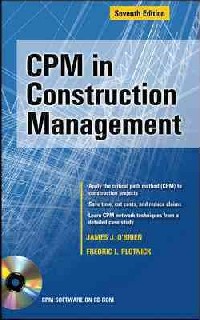
Accelerate with CPM--and this Leading Guide to Construction Planning and Scheduling
CD-ROM Includes Full-Function Deltek Open Plan CPM Software
A $2000-retail-value, unrestricted license to this world-class product is provided on the included CD-ROM. No limits to number of activities, time for evaluation, or usage. With instruction on CPM and powerful software, you are ready for business now.
The CD-ROM also provides:
Links to download powerful software from Oracle (Primavera), Microsoft, and othersA PDF file of full-color and scalable copy for all screen shots in the textAdditional chapter on screen-by-screen instructions for classic Primavera P3 softwareA computer-readable PDF of two sample CPM specifications
The critical path method (CPM) of planning and scheduling is a powerful tool for engineering and construction project design and management. When it comes to applying CPM to day-to-day construction situations, this guide, known as the industry bible, is the one you'll want to have. Written by the former vice chair of the celebrated construction management firm that renovated San Francisco's cable car system and redeveloped New York's JFK airport, and by one of America's leading construction scheduling experts, the Seventh Edition of CPM in Construction Managementarms you with the critical knowledge and power to model the project and master the software for smooth handling of complex jobs.
This highly informative, practical book shows you how CPM:
Works--and how to make it work for youServes as the analytical tool of choice for evaluation, negotiation, resolution, and/or litigation of construction claimsCuts costs in a one-person operation or the most complex multinational enterpriseHelps you stay on top of every aspect of complicated projectsSaves you big money in delay avoidance, accurate cost predictions, and claims reductionsMultiplies the effectiveness of your instincts, experience, and knowledgeCan be successfully implemented by properly utilizing the power of leading scheduling software products
Specifications of major engineering firms call for the project CPM to be prepared and administered in accordance with this text, which also serves as a primary resource for PSP and PMI-SP exam preparation. With case studies of major global construction projects and a "John Doe" example project that's followed throughout, this book will simplify your application of CPM. Cut project time to the minimum. Determine which deliveries to expedite, and which may slide. Know instantly the impact of change-and how to thrive while others fail. Understand CPM's courtroom evidentiary value--and watch disputes be amicably resolved. This updated classic is the construction tool that makes everything around you work better, faster, and more economically.
目录
Table Of Contents:
Preface xvii
Acknowledgments xxi
Part 1 Introduction to CPM Planning and Scheduling
Chapter 1. Introduction to CPM Planning and Scheduling 3
1.1 Scheduling Is for Everyone 3
1.2 We Teach Carpentry鈥擭ot "How to Use Your New Power Saw" 4
1.3 History of Scheduling Systems 5
1.4 The Ordered "ToDo" List 6
1.5 Gantt Charts and Bar Charts 6
1.6 Development of the Critical Path Method of Scheduling 9
1.7 Development of the PERT Method of Scheduling 11
1.8 Comparison of CPM and PERT 12
Chapter 2. Project Control Systems Evolve in Academia 15
2.1 1960-1965: Logic Systems Gain Acceptance 15
2.2 1966-1970:The Fight between CPM and PERT 17
2.3 PDM 18
2.4 SPERT and GERT 19
2.5 RDM 20
Chapter 3. Project Control Systems Evolve in the Marketplace 25
3.1 Commercialization 1965-1970 25
3.2 Commercialization 1970-1980 26
3.3 Early Legal Recognition 26
3.4 The Advent of the Personal Computer 1980-1990 27
3.5 Maturity of Personal Computers 1990-2000 28
3.6 Emergence of Enterprise Systems 2000-2010 28
3.7 Projections for Scheduling Software 2010-2015 29
Part 2 The Theory of CPM Planning and Scheduling
Chapter 4. Your New Tool-Read Before Using 33
4.1 Primavera and Your Power Saw-Useful But Dangerous Tools 34
4.2 How Does Primavera (or Other Scheduling Software) Work? 36
4.3 Input to Scheduling Software Products 36
4.4 The Logic of the Logic Network 37
4.5 Arrow Diagram 37
4.6 Logic Diagrams 40
4.7 Logical Loop 43
4.8 Nonconstruction Examples 46
4.9 Summary 47
Chapter 5. Network Construction 49
5.1 Form and Format 49
5.2 Events 52
5.3 Problems with Multi-Sheet Networks 63
5.4 Form and Format for Networks in PERT 64
5.5 Form and Format for Networks in PDM 65
5.6 Form and Format for Networks in RDM 68
5.7 Summary 69
Chapter 6. The Durations of the Logic Network 71
6.1 Definition of an Activity 72
6.2 Setting a Minimum and Maximum Duration 73
6.3 Estimating versus Scheduling Durations 75
6.4 CPM versus PERT Durations 77
6.5 Lags in PDM and RDM-Durations between Activities 78
6.6 Summary 79
Chapter 7. Output of Calculations 81
7.1 Attributes of an Event 82
7.2 Attributes of an Activity 82
7.3 The Forward Pass-TE, ES, and EF 83
7.4 The Backward Pass-TL, LF, and LS 83
7.5 The Backward Pass-TF, FF, and IF 83
7.6 Calculating the Attributes of an Event or Activity 85
7.7 The Forward Pass-TE, ES, and EF 85
7.8 The Backward Pass-TL, LF, and LS 86
7.9 The Backward Pass-TF, FF, and IF 87
7.10 Summary 88
Chapter 8. Cranking the Engine 89
8.1 Manual and Computer Solutions for PERT and ADM-The Matrix Method 89
8.2 Manual and Computer Solution for PERT and ADM-The Intuitive Method 96
8.3 Activity Start and Finish Times 101
8.4 Critical Activities 103
8.5 Total Float 104
8.6 Free Float 107
8.7 Independent Float 110
8.8 Time Scale Network 111
8.9 Computation Time 112
8.10 Writing Your Own CPM Software 113
8.11 Manual and Computer Solution for PDM with Durations between Activities 115
8.12 Summary 118
Chapter 9. Adding Complexity 119
9.1 Enhancements to the Basic System 119
9.2 Original versus Remaining Durations 120
9.3 Percent Complete 120
9.4 Defined Subtasks and Check-Off Updating 121
9.5 Calendar versus Work Period Conventions 123
9.6 Multiple Calendars 124
9.7 Multiple Starting and Ending Activities 127
9.8 Artificial Constraints to Dates 129
9.9 Artificial Constraints to Algorithms 132
9.10 Negative Float 132
9.11 Definition of Criticality 133
9.12 Continuous versus Interruptible Performance 138
9.13 Actual Start and Finish Dates 138
9.14 Retained Logic versus Progress Overrides 139
9.15 Events and Milestones 139
9.16 Hammocks and Summary Network Logic 141
9.17 Summary Activity Bars 142
9.18 User-Defined Code Fields 145
9.19 Adding Resources to Activities 145
9.20 Adding Costs and Cost Codes to Activities 146
9.21 Resource Driven Scheduling 148
9.22 Master Schedules Local versus System-Wide Updating 149
9.23 Activity Types 151
9.24 Hierarchical Codes 153
9.25 Summary 155
Chapter 10. PDM and Precedence Networks 157
10.1 Precedence Logic 158
10.2 Work Package Calculations 162
10.3 Computer Calculation 163
10.4 Project Example 166
10.5 Summary 169
Chapter 11. Respecting the Power of PDM 171
11.1 Durations between Activities: Percent Lead/Lag Relationships 171
11.2 Defining Overlapping Activities: Durations between Activities 173
11.3 Negative Durations between Activities 177
11.4 Remaining Durations between Activities 178
11.5 Impact of Percent Complete upon Durations between Activities 179
11.6 PDM and Hammocks 179
11.7 Continuous versus Interruptible Progress 183
11.8 Undefined Subtasks and Relationships to Other Activities 184
11.9 Multiple Calendars 185
11.10 Retained Logic versus Progress Override 186
11.11 Total Float Calculation 187
11.12 Erroneous Loop Errors 188
11.13 Summary 189
Chapter 12. PERT, SPERT, and GERT 191
12.1 PERT 192
12.2 SPERT 192
12.3 GERT 196
12.4 Computers Add Power 196
12.5 Summary 198
Chapter 13. RDM Networks Restore the Promise 199
13.1 Relationship Logic 199
13.2 Design of the Methodology for Calculation 205
13.3 Additional Attributes of RDM-Tj, JLF, JLS, and JTF 206
13.4 The Backward Pass-Tj, JLF, JLS, and JTF 207
13.5 Implementation by Oracle Primavera Pertmaster Risk Analysis 207
13.6 The Road Ahead for RDM 216
13.7 Summary 225
Chapter 14. Overview of Prevalent Software Products 227
14.1 Overview of Primavera Project Planner P3 228
14.2 Overview of SureTrak Project Planner 229
14.3 Overview of Primavera 231
14.4 Detailed Instruction for P6 235
14.5 P6 Web Browser Interface 241
14.6 P6 Reflection Change Maintenance Feature 242
14.7 P6 Multiple Float Paths 247
14.8 P6 Enterprise Functionality and Administration 250
14.9 Overview of Primavera Contractor and P6 Professional 251
14.10 Overview of Primavera Pertmaster aka Oracle Primavera Risk Analysis 252
14.11 Overview of Microsoft Project Professional 2007 256
14.12 Overview of Deltek Open Plan Enterprise Project Management Software 267
14.13 Summary of Overviews 272
Part 3 The Tools of CPM Planning and Scheduling
Chapter 15. Measure Twice-Cut Once 275
15.1 Preparing to Collect the Input 275
15.2 The Pure Logic Diagram 276
15.3 A Team Effort... on the Blackboard or Sketch Pad 276
15.4 Format for Ease of Data Collection versus for Ease of Data Entry to Chosen Software 276
15.5 Bar Chart: May Be Based upon Logic, but Is Not a Logic Network 277
15.6 Logic Restrained Bar Chart 278
15.7 Freehand 278
15.8 PERT, GERT, PDM, and RDM 278
15.9 Summary 283
Chapter 16. Choosing Codes 285
16.1 Calendar 285
16.2 Deliverable and Responsible Entity: SHT1, SHT2, RESP, and SUBC 288
16.3 Key Resources: CRTY, CRSZ, MHRS, SUPV, and EQUIP 289
16.4 Overtime, Night Work, Special Supervision, and Inspection 289
16.5 Quantities and Rates of Productivity 290
16.6 Location, Location, Location 290
16.7 Budget Codes for Cost: Labor, Equipment, and Materials 291
16.8 A Word about Codes Tied to the Activity ID 292
16.9 A Word about Aliases 294
16.10 Summary 296
Chapter 17. Acquiring Information to Initial Schedule 297
17.1 The Activity Description-a Gross Abbreviation 298
17.2 Activity ID, Activity Codes, and Logs 299
17.3 The Activity Further Defined by Resources Assigned 299
17.4 The Activity Further Defined by Predecessors and Successors 299
17.5 The Checklist of Subtasks 300
17.6 The Checklist of Subdeliverables (Events) 300
17.7 Summary 300
Chapter 18. Acquiring the Durations 301
18.1 Best Estimate with Utilization of Resources Envisioned 301
18.2 Compare with PERT Durations: Optimistic, Most Likely, Pessimistic 302
18.3 Schedule Durations versus Estimating Durations 302
18.4 Estimated Durations versus Calculated Durations 303
18.5 Do We Add Contingency Here? 303
18.6 Estimated Durations versus Expected Completion Dates: "As Good as the Promise" 304
18.7 Productivity 304
18.8 Durations and the Project Calendar or Calendars 304
18.9 Durations between Activities 307
18.10 Summary 309
Chapter 19. Specifying Restraints 311
19.1 Mandatory and Discretionary Physical Restraints 311
19.2 Mandatory and Discretionary Resource Restraints 312
19.3 Mandatory and Discretionary Timing Constraints 313
19.4 The Misuse of Restraints and Constraints: "Nailing the Bar Down Where It Belongs" 314
19.5 The Need to Document the Basis of Each Restraint and Constraint 314
19.6 Choosing the Type of Relationship between Activities 314
19.7 The Case for Restricting Relationships to Traditional "FS" without Lag 315
19.8 The Need for Nontraditional Relationships 315
19.9 The Desire for Nontraditional Relationship and Resulting Misuse 317
19.10 Nontraditional Relationships Supported by Popular Software 318
19.11 Minimum Restrictions for Proper Usage of PDM 319
19.12 Review the Strengths of ADM: Expand the Definitions 319
19.13 Start of Each Activity Must Have Predecessor 319
19.14 Finish of Each Activity Must Have Successor 319
19.15 Real World Relationships between Activities 320
19.16 The Final Forward Pass 320
19.17 The Final Backward Pass 321
19.18 Choosing the Algorithm for the Initial Schedule 321
19.19 Summary 323
Chapter 20. Example Project: The John Doe Project 325
20.1 Acquiring Information to Initial Schedule 325
20.2 Choosing Appropriate Codes 330
20.3 Activity List 330
20.4 Could We Prepare a Bar Chart? 333
20.5 Network Logic in ADM 334
20.6 Logic Changes Examples 342
20.7 Network Logic in PDM 344
20.8 Network Logic in RDM 348
20.9 Populating the Codes 350
20.10 Checking the Output 350
20.11 Calendar Dates 359
20.12 Summary 361
Part 4 The Practice of CPM Planning and Scheduling
Chapter 21. Equipment and Workforce Planning 365
21.1 Workforce Leveling 365
21.2 Computerized Resources Planning 373
21.3 Resource Leveling and Smoothing 378
21.4 Limitations of Algorithms 379
21.5 Driving Resources 380
21.6 Resource Calendars 381
21.7 Practical Solutions 381
21.8 Summary of Resource Leveling 382
21.9 Turnaround Application 383
21.10 Examples of Resource Loading on John Doe Project 386
21.11 Resource Leveling Significance 388
21.12 Summary 391
Chapter 22. Procurement 393
22.1 Scheduling Materials Procurement 393
22.2 John Doe Example 400
22.3 Summary 405
Chapter 23. Preconstruction 407
23.1 Predesign Phase 409
23.2 Design 411
23.3 Summary 418
Chapter 24. Evolution of the Project Schedule 419
24.1 Preliminary Schedule 419
24.2 Preconstruction Analysis 420
24.3 Contractor Preconstruction Analysis 420
24.4 Milestones 421
24.5 The John Doe Schedule 422
24.6 Resources 423
24.7 Fast Track 425
24.8 Responsibility 426
24.9 Schedule versus Calendar 427
24.10 Contingency 428
24.11 Schedule Manipulation 433
24.12 Working Schedule 435
24.13 Summary 437
Chapter 25. CPM and Cost Control 439
25.1 CPM Cost Estimate 439
25.2 Progress Payments 442
25.3 Cost Forecasting 446
25.4 Network Time Expediting 452
25.5 Minimum Cost Expediting 459
25.6 Summary 462
Chapter 26. Enterprise Scheduling 463
26.1 Multiproject Scheduling 463
26.2 Multiproject Leveling 467
26.3 Summarization by Enterprise Organization 469
26.4 The Dashboard 472
26.5 Program and Portfolio Management 472
26.6 Enterprise Software 474
26.7 Summary 478
Part 5 The Practice of CPM Scheduling
Chapter 27. Converting the Team Plan to the Calculated Schedule 481
27.1 Data Entry Made Easy 481
27.2 Check and Set Schedule Algorithm Options 484
27.3 First Run and Debugging the Logic 485
27.4 Loop Detection and Correction 485
27.5 Technical Review: The Primavera Diagnostic Report 487
27.6 Beyond the Primavera Diagnostic 490
27.7 First Review of Calculated Output: Reality Check 1 495
27.8 Detail Views of Output of Schedule Calculations 495
27.9 Timescaled Logic Diagram 502
27.10 Tailoring Initial Output to the Chosen Audiences 507
27.11 Whatever Owner Wants, Owner Gets 507
27.12 "You Can't Always Get What You Want, But ...You Get What You Need" 508
27.13 Reports and Views for the Foreman Performing the Work 509
27.14 Reports and Views for the Contractor's Superintendent 511
27.15 Reports and Views for the Contractor's Upper Management 513
27.16 The Narrative Report for Each Audience 514
27.17 Summary 515
Chapter 28. Engineer's Review of the Submitted Initial CPM 517
28.1 Legal Aspects of a Review 519
28.2 Reviewing the Plan 520
28.3 Technical Review 521
28.4 Reschedule and Review the Diagnostic Report 521
28.5 But Is the Logic Realistic? The Smell Test 524
28.6 Project Calendar or Calendars 525
28.7 Summary 525
Chapter 29. Updating the Schedule 527
29.1 Why Update the Schedule? 528
29.2 Acquiring the Data for an Update 528
29.3 Distinguishing Updates from Revisions 531
29.4 Purpose of an Update 531
29.5 The Purpose of a Revision 531
29.6 Who Should Collect Data for an Update? 532
29.7 Who Should Prepare Data for a Revision? 532
29.8 Information Required for Schedule Control: AS, RD, AF 532
29.9 Determination of Actual Start and Actual Finish Dates 533
29.10 Determination of Remaining Duration of Activities: Repeat the Steps of the Master 533
29.11 Expected Completion and Renewing Promises 534
29.12 Automatic Updates 534
29.13 The Forgotten Step: Determination of Remaining Duration between Activities 535
29.14 Save and Rename: Naming Strategies 538
29.15 Reports and Views to Assist Acquiring Data for an Update 539
29.16 Electronic Tools to Assist Acquiring Data for an Update 540
29.17 Choosing the Correct Algorithm for Updates 540
29.18 Scheduling the Update: Interpreting the Results 541
29.19 Technical Review: The Primavera Diagnostic Report 541
29.20 What to Look for When Reviewing the Update 542
29.21 Tailoring Update Output to the Chosen Audiences 543
29.22 The Narrative Report for Each Audience 545
29.23 Summary 546
Chapter 30. Engineer's Review of the Submitted Update 547
30.1 Is This an Update or a Revision? 547
30.2 The Technical Review 548
30.3 The Critical Path 548
30.4 What to Accept and What to Reject 549
30.5 Summary 550
Chapter 31. Revising the Logic Network 551
31.1 "What If" versus Committed Changes 551
31.2 Changes: Approved, Constructive, and at Contractor's Cost 553
31.3 Revised Baseline 554
31.4 Update Then Revise 555
31.5 Summary 555
Chapter 32. Engineer's Review of the Submitted Revision 557
32.1 Minor Revision 557
32.2 Major Revision 558
32.3 Recovery Schedule 559
32.4 Summary 559
Chapter 33. Case Histories 561
33.1 Chicago Courthouse 561
33.2 Times Tower 562
33.3 Airport Construction 562
33.4 High-Rise Construction 563
33.5 NASA 565
33.6 Housing 565
33.7 Manufacturing Facilities 566
33.8 SEPTA Rail Works 566
33.9 New Jersey Turnpike Authority 1990-1995 Widening Program 568
33.10 JFK Redevelopment 569
33.11 Toronto Transit's "Let's Move" Program 572
33.12 Phoenixville-Mont Claire Bridge 575
33.13 Graduate Hospital Diagnostic Building 578
33.14 Interstate 76, 202, and 422 Interchange 580
33.15 Port Authority of New York and New Jersey 582
33.16 Maricopa County Jail Design and Construction Program 582
33.17 Summary 583
Part 6 Advanced Topics
Chapter 34. Specifying CPM 587
34.1 Attorney's Viewpoint to Writing a CPM Specification 587
34.2 Pure Logic Drawing 588
34.3 Content of the Logic Network 589
34.4 Updates and Revisions 591
34.5 Standard References 592
34.6 Sample CPM Specification 595
34.7 Summary 595
Chapter 35. CPM in Claims and Litigation 597
35.1 Introduction 597
35.2 Evidentiary Use of CPM 599
Chapter 36. Delay Analysis 607
36.1 Delay versus Disruption 607
36.2 Responsibility/Types/Force Majeure 608
36.3 As-Planned Logic Network 610
36.4 As-Should-Have-Been CPM Network 612
36.5 As-Planned Schedule 613
36.6 As-Built Schedule 614
36.7 As-Built Logic Network 615
36.8 Causative Factors 616
36.9 As-Impacted Logic Network 618
36.10 As-Impacted Schedule 618
36.11 Time Impact Evaluations 619
36.12 Zeroing to a Collapsed As-Impacted Logic Network 620
36.13 Zeroing Out to an As-Should-Have-Been CPM 621
36.14 Limitations of the TIE Methodology 622
36.15 TIE Example of John Doe Project 623
36.16 Windows Analysis 629
36.17 Zeroing Out within the Windows Analysis 631
36.18 Windows Example of John Doe Project 631
36.19 Summary 632
Chapter 37. Disruption Analyses 633
37.1 Traditional Methodologies 633
37.2 CPM Out-of-Sequence Methodology 634
37.3 Adoption by the Industry 636
37.4 Summary 637
Chapter 38. Other Claim Methods 639
38.1 Frye versus Daubert 640
38.2 AACEi RP-29 642
38.3 Comparison of 3 Methods for John Doe Project 650
38.4 Evolve or Die 653
36.5 The 50 Ways 654
38.6 Summary of Other Delay Claim Methodologies 655
Chapter 39. Conclusion 657
Appendix A. Sample CPM Specification as a Guideline for Preparing Your Own Specification 659
Appendix B. Unified Facilities Guide Specification 675
Appendix C. Navigating the CD-ROM 699
Index 703
Preface xvii
Acknowledgments xxi
Part 1 Introduction to CPM Planning and Scheduling
Chapter 1. Introduction to CPM Planning and Scheduling 3
1.1 Scheduling Is for Everyone 3
1.2 We Teach Carpentry鈥擭ot "How to Use Your New Power Saw" 4
1.3 History of Scheduling Systems 5
1.4 The Ordered "ToDo" List 6
1.5 Gantt Charts and Bar Charts 6
1.6 Development of the Critical Path Method of Scheduling 9
1.7 Development of the PERT Method of Scheduling 11
1.8 Comparison of CPM and PERT 12
Chapter 2. Project Control Systems Evolve in Academia 15
2.1 1960-1965: Logic Systems Gain Acceptance 15
2.2 1966-1970:The Fight between CPM and PERT 17
2.3 PDM 18
2.4 SPERT and GERT 19
2.5 RDM 20
Chapter 3. Project Control Systems Evolve in the Marketplace 25
3.1 Commercialization 1965-1970 25
3.2 Commercialization 1970-1980 26
3.3 Early Legal Recognition 26
3.4 The Advent of the Personal Computer 1980-1990 27
3.5 Maturity of Personal Computers 1990-2000 28
3.6 Emergence of Enterprise Systems 2000-2010 28
3.7 Projections for Scheduling Software 2010-2015 29
Part 2 The Theory of CPM Planning and Scheduling
Chapter 4. Your New Tool-Read Before Using 33
4.1 Primavera and Your Power Saw-Useful But Dangerous Tools 34
4.2 How Does Primavera (or Other Scheduling Software) Work? 36
4.3 Input to Scheduling Software Products 36
4.4 The Logic of the Logic Network 37
4.5 Arrow Diagram 37
4.6 Logic Diagrams 40
4.7 Logical Loop 43
4.8 Nonconstruction Examples 46
4.9 Summary 47
Chapter 5. Network Construction 49
5.1 Form and Format 49
5.2 Events 52
5.3 Problems with Multi-Sheet Networks 63
5.4 Form and Format for Networks in PERT 64
5.5 Form and Format for Networks in PDM 65
5.6 Form and Format for Networks in RDM 68
5.7 Summary 69
Chapter 6. The Durations of the Logic Network 71
6.1 Definition of an Activity 72
6.2 Setting a Minimum and Maximum Duration 73
6.3 Estimating versus Scheduling Durations 75
6.4 CPM versus PERT Durations 77
6.5 Lags in PDM and RDM-Durations between Activities 78
6.6 Summary 79
Chapter 7. Output of Calculations 81
7.1 Attributes of an Event 82
7.2 Attributes of an Activity 82
7.3 The Forward Pass-TE, ES, and EF 83
7.4 The Backward Pass-TL, LF, and LS 83
7.5 The Backward Pass-TF, FF, and IF 83
7.6 Calculating the Attributes of an Event or Activity 85
7.7 The Forward Pass-TE, ES, and EF 85
7.8 The Backward Pass-TL, LF, and LS 86
7.9 The Backward Pass-TF, FF, and IF 87
7.10 Summary 88
Chapter 8. Cranking the Engine 89
8.1 Manual and Computer Solutions for PERT and ADM-The Matrix Method 89
8.2 Manual and Computer Solution for PERT and ADM-The Intuitive Method 96
8.3 Activity Start and Finish Times 101
8.4 Critical Activities 103
8.5 Total Float 104
8.6 Free Float 107
8.7 Independent Float 110
8.8 Time Scale Network 111
8.9 Computation Time 112
8.10 Writing Your Own CPM Software 113
8.11 Manual and Computer Solution for PDM with Durations between Activities 115
8.12 Summary 118
Chapter 9. Adding Complexity 119
9.1 Enhancements to the Basic System 119
9.2 Original versus Remaining Durations 120
9.3 Percent Complete 120
9.4 Defined Subtasks and Check-Off Updating 121
9.5 Calendar versus Work Period Conventions 123
9.6 Multiple Calendars 124
9.7 Multiple Starting and Ending Activities 127
9.8 Artificial Constraints to Dates 129
9.9 Artificial Constraints to Algorithms 132
9.10 Negative Float 132
9.11 Definition of Criticality 133
9.12 Continuous versus Interruptible Performance 138
9.13 Actual Start and Finish Dates 138
9.14 Retained Logic versus Progress Overrides 139
9.15 Events and Milestones 139
9.16 Hammocks and Summary Network Logic 141
9.17 Summary Activity Bars 142
9.18 User-Defined Code Fields 145
9.19 Adding Resources to Activities 145
9.20 Adding Costs and Cost Codes to Activities 146
9.21 Resource Driven Scheduling 148
9.22 Master Schedules Local versus System-Wide Updating 149
9.23 Activity Types 151
9.24 Hierarchical Codes 153
9.25 Summary 155
Chapter 10. PDM and Precedence Networks 157
10.1 Precedence Logic 158
10.2 Work Package Calculations 162
10.3 Computer Calculation 163
10.4 Project Example 166
10.5 Summary 169
Chapter 11. Respecting the Power of PDM 171
11.1 Durations between Activities: Percent Lead/Lag Relationships 171
11.2 Defining Overlapping Activities: Durations between Activities 173
11.3 Negative Durations between Activities 177
11.4 Remaining Durations between Activities 178
11.5 Impact of Percent Complete upon Durations between Activities 179
11.6 PDM and Hammocks 179
11.7 Continuous versus Interruptible Progress 183
11.8 Undefined Subtasks and Relationships to Other Activities 184
11.9 Multiple Calendars 185
11.10 Retained Logic versus Progress Override 186
11.11 Total Float Calculation 187
11.12 Erroneous Loop Errors 188
11.13 Summary 189
Chapter 12. PERT, SPERT, and GERT 191
12.1 PERT 192
12.2 SPERT 192
12.3 GERT 196
12.4 Computers Add Power 196
12.5 Summary 198
Chapter 13. RDM Networks Restore the Promise 199
13.1 Relationship Logic 199
13.2 Design of the Methodology for Calculation 205
13.3 Additional Attributes of RDM-Tj, JLF, JLS, and JTF 206
13.4 The Backward Pass-Tj, JLF, JLS, and JTF 207
13.5 Implementation by Oracle Primavera Pertmaster Risk Analysis 207
13.6 The Road Ahead for RDM 216
13.7 Summary 225
Chapter 14. Overview of Prevalent Software Products 227
14.1 Overview of Primavera Project Planner P3 228
14.2 Overview of SureTrak Project Planner 229
14.3 Overview of Primavera 231
14.4 Detailed Instruction for P6 235
14.5 P6 Web Browser Interface 241
14.6 P6 Reflection Change Maintenance Feature 242
14.7 P6 Multiple Float Paths 247
14.8 P6 Enterprise Functionality and Administration 250
14.9 Overview of Primavera Contractor and P6 Professional 251
14.10 Overview of Primavera Pertmaster aka Oracle Primavera Risk Analysis 252
14.11 Overview of Microsoft Project Professional 2007 256
14.12 Overview of Deltek Open Plan Enterprise Project Management Software 267
14.13 Summary of Overviews 272
Part 3 The Tools of CPM Planning and Scheduling
Chapter 15. Measure Twice-Cut Once 275
15.1 Preparing to Collect the Input 275
15.2 The Pure Logic Diagram 276
15.3 A Team Effort... on the Blackboard or Sketch Pad 276
15.4 Format for Ease of Data Collection versus for Ease of Data Entry to Chosen Software 276
15.5 Bar Chart: May Be Based upon Logic, but Is Not a Logic Network 277
15.6 Logic Restrained Bar Chart 278
15.7 Freehand 278
15.8 PERT, GERT, PDM, and RDM 278
15.9 Summary 283
Chapter 16. Choosing Codes 285
16.1 Calendar 285
16.2 Deliverable and Responsible Entity: SHT1, SHT2, RESP, and SUBC 288
16.3 Key Resources: CRTY, CRSZ, MHRS, SUPV, and EQUIP 289
16.4 Overtime, Night Work, Special Supervision, and Inspection 289
16.5 Quantities and Rates of Productivity 290
16.6 Location, Location, Location 290
16.7 Budget Codes for Cost: Labor, Equipment, and Materials 291
16.8 A Word about Codes Tied to the Activity ID 292
16.9 A Word about Aliases 294
16.10 Summary 296
Chapter 17. Acquiring Information to Initial Schedule 297
17.1 The Activity Description-a Gross Abbreviation 298
17.2 Activity ID, Activity Codes, and Logs 299
17.3 The Activity Further Defined by Resources Assigned 299
17.4 The Activity Further Defined by Predecessors and Successors 299
17.5 The Checklist of Subtasks 300
17.6 The Checklist of Subdeliverables (Events) 300
17.7 Summary 300
Chapter 18. Acquiring the Durations 301
18.1 Best Estimate with Utilization of Resources Envisioned 301
18.2 Compare with PERT Durations: Optimistic, Most Likely, Pessimistic 302
18.3 Schedule Durations versus Estimating Durations 302
18.4 Estimated Durations versus Calculated Durations 303
18.5 Do We Add Contingency Here? 303
18.6 Estimated Durations versus Expected Completion Dates: "As Good as the Promise" 304
18.7 Productivity 304
18.8 Durations and the Project Calendar or Calendars 304
18.9 Durations between Activities 307
18.10 Summary 309
Chapter 19. Specifying Restraints 311
19.1 Mandatory and Discretionary Physical Restraints 311
19.2 Mandatory and Discretionary Resource Restraints 312
19.3 Mandatory and Discretionary Timing Constraints 313
19.4 The Misuse of Restraints and Constraints: "Nailing the Bar Down Where It Belongs" 314
19.5 The Need to Document the Basis of Each Restraint and Constraint 314
19.6 Choosing the Type of Relationship between Activities 314
19.7 The Case for Restricting Relationships to Traditional "FS" without Lag 315
19.8 The Need for Nontraditional Relationships 315
19.9 The Desire for Nontraditional Relationship and Resulting Misuse 317
19.10 Nontraditional Relationships Supported by Popular Software 318
19.11 Minimum Restrictions for Proper Usage of PDM 319
19.12 Review the Strengths of ADM: Expand the Definitions 319
19.13 Start of Each Activity Must Have Predecessor 319
19.14 Finish of Each Activity Must Have Successor 319
19.15 Real World Relationships between Activities 320
19.16 The Final Forward Pass 320
19.17 The Final Backward Pass 321
19.18 Choosing the Algorithm for the Initial Schedule 321
19.19 Summary 323
Chapter 20. Example Project: The John Doe Project 325
20.1 Acquiring Information to Initial Schedule 325
20.2 Choosing Appropriate Codes 330
20.3 Activity List 330
20.4 Could We Prepare a Bar Chart? 333
20.5 Network Logic in ADM 334
20.6 Logic Changes Examples 342
20.7 Network Logic in PDM 344
20.8 Network Logic in RDM 348
20.9 Populating the Codes 350
20.10 Checking the Output 350
20.11 Calendar Dates 359
20.12 Summary 361
Part 4 The Practice of CPM Planning and Scheduling
Chapter 21. Equipment and Workforce Planning 365
21.1 Workforce Leveling 365
21.2 Computerized Resources Planning 373
21.3 Resource Leveling and Smoothing 378
21.4 Limitations of Algorithms 379
21.5 Driving Resources 380
21.6 Resource Calendars 381
21.7 Practical Solutions 381
21.8 Summary of Resource Leveling 382
21.9 Turnaround Application 383
21.10 Examples of Resource Loading on John Doe Project 386
21.11 Resource Leveling Significance 388
21.12 Summary 391
Chapter 22. Procurement 393
22.1 Scheduling Materials Procurement 393
22.2 John Doe Example 400
22.3 Summary 405
Chapter 23. Preconstruction 407
23.1 Predesign Phase 409
23.2 Design 411
23.3 Summary 418
Chapter 24. Evolution of the Project Schedule 419
24.1 Preliminary Schedule 419
24.2 Preconstruction Analysis 420
24.3 Contractor Preconstruction Analysis 420
24.4 Milestones 421
24.5 The John Doe Schedule 422
24.6 Resources 423
24.7 Fast Track 425
24.8 Responsibility 426
24.9 Schedule versus Calendar 427
24.10 Contingency 428
24.11 Schedule Manipulation 433
24.12 Working Schedule 435
24.13 Summary 437
Chapter 25. CPM and Cost Control 439
25.1 CPM Cost Estimate 439
25.2 Progress Payments 442
25.3 Cost Forecasting 446
25.4 Network Time Expediting 452
25.5 Minimum Cost Expediting 459
25.6 Summary 462
Chapter 26. Enterprise Scheduling 463
26.1 Multiproject Scheduling 463
26.2 Multiproject Leveling 467
26.3 Summarization by Enterprise Organization 469
26.4 The Dashboard 472
26.5 Program and Portfolio Management 472
26.6 Enterprise Software 474
26.7 Summary 478
Part 5 The Practice of CPM Scheduling
Chapter 27. Converting the Team Plan to the Calculated Schedule 481
27.1 Data Entry Made Easy 481
27.2 Check and Set Schedule Algorithm Options 484
27.3 First Run and Debugging the Logic 485
27.4 Loop Detection and Correction 485
27.5 Technical Review: The Primavera Diagnostic Report 487
27.6 Beyond the Primavera Diagnostic 490
27.7 First Review of Calculated Output: Reality Check 1 495
27.8 Detail Views of Output of Schedule Calculations 495
27.9 Timescaled Logic Diagram 502
27.10 Tailoring Initial Output to the Chosen Audiences 507
27.11 Whatever Owner Wants, Owner Gets 507
27.12 "You Can't Always Get What You Want, But ...You Get What You Need" 508
27.13 Reports and Views for the Foreman Performing the Work 509
27.14 Reports and Views for the Contractor's Superintendent 511
27.15 Reports and Views for the Contractor's Upper Management 513
27.16 The Narrative Report for Each Audience 514
27.17 Summary 515
Chapter 28. Engineer's Review of the Submitted Initial CPM 517
28.1 Legal Aspects of a Review 519
28.2 Reviewing the Plan 520
28.3 Technical Review 521
28.4 Reschedule and Review the Diagnostic Report 521
28.5 But Is the Logic Realistic? The Smell Test 524
28.6 Project Calendar or Calendars 525
28.7 Summary 525
Chapter 29. Updating the Schedule 527
29.1 Why Update the Schedule? 528
29.2 Acquiring the Data for an Update 528
29.3 Distinguishing Updates from Revisions 531
29.4 Purpose of an Update 531
29.5 The Purpose of a Revision 531
29.6 Who Should Collect Data for an Update? 532
29.7 Who Should Prepare Data for a Revision? 532
29.8 Information Required for Schedule Control: AS, RD, AF 532
29.9 Determination of Actual Start and Actual Finish Dates 533
29.10 Determination of Remaining Duration of Activities: Repeat the Steps of the Master 533
29.11 Expected Completion and Renewing Promises 534
29.12 Automatic Updates 534
29.13 The Forgotten Step: Determination of Remaining Duration between Activities 535
29.14 Save and Rename: Naming Strategies 538
29.15 Reports and Views to Assist Acquiring Data for an Update 539
29.16 Electronic Tools to Assist Acquiring Data for an Update 540
29.17 Choosing the Correct Algorithm for Updates 540
29.18 Scheduling the Update: Interpreting the Results 541
29.19 Technical Review: The Primavera Diagnostic Report 541
29.20 What to Look for When Reviewing the Update 542
29.21 Tailoring Update Output to the Chosen Audiences 543
29.22 The Narrative Report for Each Audience 545
29.23 Summary 546
Chapter 30. Engineer's Review of the Submitted Update 547
30.1 Is This an Update or a Revision? 547
30.2 The Technical Review 548
30.3 The Critical Path 548
30.4 What to Accept and What to Reject 549
30.5 Summary 550
Chapter 31. Revising the Logic Network 551
31.1 "What If" versus Committed Changes 551
31.2 Changes: Approved, Constructive, and at Contractor's Cost 553
31.3 Revised Baseline 554
31.4 Update Then Revise 555
31.5 Summary 555
Chapter 32. Engineer's Review of the Submitted Revision 557
32.1 Minor Revision 557
32.2 Major Revision 558
32.3 Recovery Schedule 559
32.4 Summary 559
Chapter 33. Case Histories 561
33.1 Chicago Courthouse 561
33.2 Times Tower 562
33.3 Airport Construction 562
33.4 High-Rise Construction 563
33.5 NASA 565
33.6 Housing 565
33.7 Manufacturing Facilities 566
33.8 SEPTA Rail Works 566
33.9 New Jersey Turnpike Authority 1990-1995 Widening Program 568
33.10 JFK Redevelopment 569
33.11 Toronto Transit's "Let's Move" Program 572
33.12 Phoenixville-Mont Claire Bridge 575
33.13 Graduate Hospital Diagnostic Building 578
33.14 Interstate 76, 202, and 422 Interchange 580
33.15 Port Authority of New York and New Jersey 582
33.16 Maricopa County Jail Design and Construction Program 582
33.17 Summary 583
Part 6 Advanced Topics
Chapter 34. Specifying CPM 587
34.1 Attorney's Viewpoint to Writing a CPM Specification 587
34.2 Pure Logic Drawing 588
34.3 Content of the Logic Network 589
34.4 Updates and Revisions 591
34.5 Standard References 592
34.6 Sample CPM Specification 595
34.7 Summary 595
Chapter 35. CPM in Claims and Litigation 597
35.1 Introduction 597
35.2 Evidentiary Use of CPM 599
Chapter 36. Delay Analysis 607
36.1 Delay versus Disruption 607
36.2 Responsibility/Types/Force Majeure 608
36.3 As-Planned Logic Network 610
36.4 As-Should-Have-Been CPM Network 612
36.5 As-Planned Schedule 613
36.6 As-Built Schedule 614
36.7 As-Built Logic Network 615
36.8 Causative Factors 616
36.9 As-Impacted Logic Network 618
36.10 As-Impacted Schedule 618
36.11 Time Impact Evaluations 619
36.12 Zeroing to a Collapsed As-Impacted Logic Network 620
36.13 Zeroing Out to an As-Should-Have-Been CPM 621
36.14 Limitations of the TIE Methodology 622
36.15 TIE Example of John Doe Project 623
36.16 Windows Analysis 629
36.17 Zeroing Out within the Windows Analysis 631
36.18 Windows Example of John Doe Project 631
36.19 Summary 632
Chapter 37. Disruption Analyses 633
37.1 Traditional Methodologies 633
37.2 CPM Out-of-Sequence Methodology 634
37.3 Adoption by the Industry 636
37.4 Summary 637
Chapter 38. Other Claim Methods 639
38.1 Frye versus Daubert 640
38.2 AACEi RP-29 642
38.3 Comparison of 3 Methods for John Doe Project 650
38.4 Evolve or Die 653
36.5 The 50 Ways 654
38.6 Summary of Other Delay Claim Methodologies 655
Chapter 39. Conclusion 657
Appendix A. Sample CPM Specification as a Guideline for Preparing Your Own Specification 659
Appendix B. Unified Facilities Guide Specification 675
Appendix C. Navigating the CD-ROM 699
Index 703
- 名称
- 类型
- 大小
光盘服务联系方式: 020-38250260 客服QQ:4006604884
云图客服:
用户发送的提问,这种方式就需要有位在线客服来回答用户的问题,这种 就属于对话式的,问题是这种提问是否需要用户登录才能提问
Video Player
×
Audio Player
×
pdf Player
×
亲爱的云图用户,
光盘内的文件都可以直接点击浏览哦
无需下载,在线查阅资料!
