

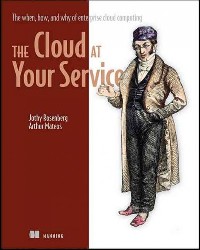
简介
A guide to cloud computing covers such topics as building scalable applications, migrating existing IT to the cloud, and cloud data security.
目录
Table Of Contents:
foreword xiii
preface xv
acknowledgments xvii
about this book xix
1 What is cloud computing? 1(17)
1.1 Five main principles that define cloud computing 3(3)
Pooled computing resources 3(1)
Virtualization of compute resources 4(1)
Elasticity as resource demands grow and shrink 5(1)
Automation of new resource deployment 5(1)
Metered billing that charges only for what you use 6(1)
1.2 Benefits that can be garnered from moving to the cloud 6(2)
Economic benefits of the change from capital to operational expenses 6(1)
Agility benefits from not having to procure and provision servers 7(1)
Efficiency benefits that may lead to competitive advantages 7(1)
Security stronger and better in the cloud 8(1)
1.3 Evolution of IT leading to cloud computing 8(5)
Origin of the "cloud" metaphor 8(2)
Major computing paradigm shifts: mainframes to client-server to web 10(1)
Housing of physical computing resources: data center evolution 11(1)
Software componentization and remote access: SOA, virtualization, and SanS 12(1)
1.4 Classifying cloud layers: different types for different uses 13(4)
Infrastructure as a Service (IaaS) 15(1)
Platform as a Service (PaaS) 16(1)
Software as a Service (SaaS) and Framework as a Service (FaaS) 16(1)
Private clouds as precursors- of public clouds 16(1)
1.5 Summary 17(1)
2 Understanding cloud computing classifications 18(32)
2.1 The technological underpinnings of cloud computing 19(18)
Achieving high economies of scale with cloud data centers 19(5)
Ensuring high server utilization in the cloud with virtualization 24(3)
Controlling remote servers with a cloud API 27(2)
Saving persistent data in cloud storage 29(1)
Storing your application's structured data in a cloud database 30(6)
Elasticity: scaling your application as demand rises and falls 36(1)
2.2 Understanding the different classifications of clouds 37(9)
Amazon EC2: Infrastructure as a Service 37(2)
Microsoft Azure: Infrastructure as a Service 39(3)
Google App Engine: Platform as a. Service 42(1)
Ruby on Rails in a cloud: Platform as a Service 43(1)
Salesforce.com's Force.com: Platform as a Service 44(1)
Private clouds: Datacenter as a Service (DoaS) 44(2)
2.3 Matching cloud providers to your needs 46(3)
Amazon web services IaaS cloud 46(1)
Microsoft Windows Azure IaaS and PaaS cloud 47(1)
Google App Engine PaaS cloud 47(1)
Ruby on Rails PaaS cloud 48(1)
Force.com PaaS cloud 48(1)
2.4 Summary 49(1)
3 The business case for cloud computing 50(22)
3.1 The economics of cloud computing 51(8)
Traditional internal IT vs. colocation vs. managed service vs. cloud model 51(2)
A detailed comparison of the cost of deploying in different models 53(6)
3.2 Where does the cloud make sense? 59(4)
Limited lifetime requirement/short-term need 60(1)
Scale variability/volatility 60(2)
Nonstrategic applications/low organizational value 62(1)
3.3 Where does the cloud not make sense? 63(1)
Legacy systems 63(1)
Applications involving real-time/mission-critical scenarios 63(1)
Applications dealing with confidential data 63(1)
3.4 Zero-capital startups 64(3)
Then and now: setting up shop as startup ca. 2000 vs. startup ca. 2010 64(1)
Is venture capital funding a necessity? 65(1)
Example 1: FlightCaster鈥攁irline flight-delay prediction 66(1)
Example 2: business intelligence SaaS 66(1)
3.5 Small and medium businesses 67(2)
Low-tech example: corporate website 67(1)
Medium-tech example: backup and file-storage systems 68(1)
High-tech example: new product development 68(1)
3.6 Cloud computing in the enterprise 69(2)
Eli Lilly: large data set, high-compute scenarios 69(1)
Washington Post: deadline-driven, large compute problems 70(1)
Virgin Atlantic: online web presence and community 70(1)
3.7 Summary 71(1)
4 Security and the private cloud 72(28)
4.1 Information security in the public cloud 73(11)
Security concerns slowing cloud adoption 73(2)
Major cloud data center security 75(1)
Public cloud access control measures 76(4)
Major cloud network and data security 80(3)
Application owner's roles and responsibilities 83(1)
4.2 Rationale for a private cloud 84(8)
Defining a private cloud 84(1)
Security considerations 85(1)
Certainty of resource availability 86(1)
Large utility-computing community 87(1)
Economies of scale 87(1)
Some concerns about deploying a private cloud 87(1)
Private cloud deployment options 88(4)
4.3 A virtual private cloud 92(3)
How it works 92(1)
The API 93(1)
Implications 94(1)
4.4 Private clouds in practice 95(3)
Sprint: private cloud for fraud detection application 95(1)
Bechtel Project Services Network (PSN) 96(1)
Government private clouds 96(2)
4.5 The long-term viability of private clouds 98(1)
4.6 Summary 98(2)
5 Designing and architecting for cloud scale 100(31)
5.1 High-scale application patterns that fit the cloud best 101(2)
Transference 101(1)
Internet scale 101(1)
Burst compute 102(1)
Elastic storage 102(1)
Summarizing the application patterns 103(1)
5.2 Designing and architecting for internet scale: sharding 103(12)
Application issues that prevent scaling 104(1)
Sharding defined: a parallel database architecture for massive scaling 104(3)
How sharding changes an application 107(1)
Sharding in contrast with traditional database architectures 107(2)
Sharding in practice: the most common database partitioning schemes 109(3)
Sharding challenges and problems 112(1)
Sharding in real life: how Flickr's sharding works 113(2)
5.3 Designing for on-demand capacity: cloudbursting 115(9)
Cloudbursting defined 116(1)
The best of both worlds: internal data center plus cloud 116(1)
Cloudbursting business case 117(2)
Cloudbursting architecture 119(1)
A recipe for implementing cloudbursting 120(1)
Cloudbursting: calling out for standards 121(1)
The data-access problem with cloudbursting 122(2)
5.4 Designing for exponentially expanding storage 124(6)
Cloud storage defined 124(1)
Amazon S3 125(1)
Example cloud storage API (using S3) 125(3)
Costs 128(1)
Mountable file systems in the cloud 128(1)
Addressing the challenging issue of latency 129(1)
5.5 Summary 130(1)
6 Achieving high reliability at cloud scale 131(17)
6.1 SOA as a precursor to the cloud 132(7)
Distributed systems 132(1)
Loose coupling 133(2)
SOA 135(1)
SOA and loose coupling 136(1)
SOA and web services 137(1)
SOA and cloud computing 138(1)
Cloud-based into process communication 138(1)
6.2 Distributed high-performance cloud reliability 139(8)
Redundancy 140(1)
MapReduce 141(5)
Hadoop: the open source MapReduce 146(1)
6.3 Summary 147(1)
7 Testing, deployment, and operations in the cloud 148(21)
7.1 Typical software deployments 149(3)
Traditional deployment architecture 149(1)
Defining staging and testing environments 150(2)
Budget calculations 152(1)
7.2 The cloud to the rescue 152(5)
Improving production operations with the cloud 152(3)
Accelerating development and testing 155(2)
7.3 The power of parallelization 157(11)
Unit testing 157(2)
Functional testing 159(3)
Load testing 162(3)
Visual testing 165(2)
Manual testing 167(1)
7.4 Summary 168(1)
8 Practical considerations 169(19)
8.1 Choosing a cloud vendor 170(8)
Business considerations 170(1)
Technical operational considerations 171(7)
8.2 Public cloud providers and SLAs 178(3)
Amazon's AWS SLA 178(1)
Microsoft Azure SLA 179(1)
Rackspace Cloud SLA 180(1)
8.3 Measuring cloud operations 181(5)
Visibility, as provided by cloud vendors 181(4)
Visibility through third-party providers 185(1)
8.4 Summary 186(2)
9 Cloud 9: the future of the cloud 188(30)
9.1 The most significant transformation IT has ever undergone 189(9)
The consumer internet and the cloud 189(5)
The cloud in the enterprise 194(4)
9.2 Ten predictions about how the cloud will evolve 198(7)
Cheaper, more reliable, more secure, and easier to use 198(1)
Engine of growth for early adopters 199(1)
Much lower costs than corporate data centers 199(1)
500,000 servers costing $1 billion by 2020 200(1)
Ratio of administrators to servers: 1:10,000 by 2020 201(1)
Open source dominance 201(1)
Pragmatic standards via Amazon's APIs 202(1)
Ultimate ISO cloud standard 203(1)
Government leadership in cloud adoption 204(1)
SaaS use of basic web standards 204(1)
9.3 Ten predictions about how application development will evolve 205(7)
Role of application frameworks 205(1)
Second and third tiers running in the cloud 206(1)
Rapid evolution for different storage mechanisms 207(1)
Stronger options to protect sensitive data 207(1)
Higher-level services with unique APIs 208(1)
Adoption and growth of mashups 208(2)
PaaS and FaaS as predominant tools 210(1)
Evolution of development tools to build mashups 210(2)
Success of non-Western developers 212(1)
Development cost no longer a barrier 212(1)
9.4 Summary 212(6)
Five main principles of cloud computing 212(1)
Significant benefits of adopting the cloud 213(1)
Reaching the cloud through an evolutionary process 213(1)
Cloud classifications from IaaS to SanS 213(1)
Technological underpinnings 214(1)
Paying only for what you use 214(1)
Overblown security concerns 214(1)
Private clouds as a temporary phenomenon 215(1)
Designing for scale and sharding 215(1)
Designing for reliability and MapReduce 215(1)
Better testing, deployment, and operations in the cloud 216(1)
Choosing a cloud vendor 216(1)
Monitoring public clouds and SLAs 216(1)
The future of cloud computing 217(1)
appendix Information security refresher 218(6)
index 224
foreword xiii
preface xv
acknowledgments xvii
about this book xix
1 What is cloud computing? 1(17)
1.1 Five main principles that define cloud computing 3(3)
Pooled computing resources 3(1)
Virtualization of compute resources 4(1)
Elasticity as resource demands grow and shrink 5(1)
Automation of new resource deployment 5(1)
Metered billing that charges only for what you use 6(1)
1.2 Benefits that can be garnered from moving to the cloud 6(2)
Economic benefits of the change from capital to operational expenses 6(1)
Agility benefits from not having to procure and provision servers 7(1)
Efficiency benefits that may lead to competitive advantages 7(1)
Security stronger and better in the cloud 8(1)
1.3 Evolution of IT leading to cloud computing 8(5)
Origin of the "cloud" metaphor 8(2)
Major computing paradigm shifts: mainframes to client-server to web 10(1)
Housing of physical computing resources: data center evolution 11(1)
Software componentization and remote access: SOA, virtualization, and SanS 12(1)
1.4 Classifying cloud layers: different types for different uses 13(4)
Infrastructure as a Service (IaaS) 15(1)
Platform as a Service (PaaS) 16(1)
Software as a Service (SaaS) and Framework as a Service (FaaS) 16(1)
Private clouds as precursors- of public clouds 16(1)
1.5 Summary 17(1)
2 Understanding cloud computing classifications 18(32)
2.1 The technological underpinnings of cloud computing 19(18)
Achieving high economies of scale with cloud data centers 19(5)
Ensuring high server utilization in the cloud with virtualization 24(3)
Controlling remote servers with a cloud API 27(2)
Saving persistent data in cloud storage 29(1)
Storing your application's structured data in a cloud database 30(6)
Elasticity: scaling your application as demand rises and falls 36(1)
2.2 Understanding the different classifications of clouds 37(9)
Amazon EC2: Infrastructure as a Service 37(2)
Microsoft Azure: Infrastructure as a Service 39(3)
Google App Engine: Platform as a. Service 42(1)
Ruby on Rails in a cloud: Platform as a Service 43(1)
Salesforce.com's Force.com: Platform as a Service 44(1)
Private clouds: Datacenter as a Service (DoaS) 44(2)
2.3 Matching cloud providers to your needs 46(3)
Amazon web services IaaS cloud 46(1)
Microsoft Windows Azure IaaS and PaaS cloud 47(1)
Google App Engine PaaS cloud 47(1)
Ruby on Rails PaaS cloud 48(1)
Force.com PaaS cloud 48(1)
2.4 Summary 49(1)
3 The business case for cloud computing 50(22)
3.1 The economics of cloud computing 51(8)
Traditional internal IT vs. colocation vs. managed service vs. cloud model 51(2)
A detailed comparison of the cost of deploying in different models 53(6)
3.2 Where does the cloud make sense? 59(4)
Limited lifetime requirement/short-term need 60(1)
Scale variability/volatility 60(2)
Nonstrategic applications/low organizational value 62(1)
3.3 Where does the cloud not make sense? 63(1)
Legacy systems 63(1)
Applications involving real-time/mission-critical scenarios 63(1)
Applications dealing with confidential data 63(1)
3.4 Zero-capital startups 64(3)
Then and now: setting up shop as startup ca. 2000 vs. startup ca. 2010 64(1)
Is venture capital funding a necessity? 65(1)
Example 1: FlightCaster鈥攁irline flight-delay prediction 66(1)
Example 2: business intelligence SaaS 66(1)
3.5 Small and medium businesses 67(2)
Low-tech example: corporate website 67(1)
Medium-tech example: backup and file-storage systems 68(1)
High-tech example: new product development 68(1)
3.6 Cloud computing in the enterprise 69(2)
Eli Lilly: large data set, high-compute scenarios 69(1)
Washington Post: deadline-driven, large compute problems 70(1)
Virgin Atlantic: online web presence and community 70(1)
3.7 Summary 71(1)
4 Security and the private cloud 72(28)
4.1 Information security in the public cloud 73(11)
Security concerns slowing cloud adoption 73(2)
Major cloud data center security 75(1)
Public cloud access control measures 76(4)
Major cloud network and data security 80(3)
Application owner's roles and responsibilities 83(1)
4.2 Rationale for a private cloud 84(8)
Defining a private cloud 84(1)
Security considerations 85(1)
Certainty of resource availability 86(1)
Large utility-computing community 87(1)
Economies of scale 87(1)
Some concerns about deploying a private cloud 87(1)
Private cloud deployment options 88(4)
4.3 A virtual private cloud 92(3)
How it works 92(1)
The API 93(1)
Implications 94(1)
4.4 Private clouds in practice 95(3)
Sprint: private cloud for fraud detection application 95(1)
Bechtel Project Services Network (PSN) 96(1)
Government private clouds 96(2)
4.5 The long-term viability of private clouds 98(1)
4.6 Summary 98(2)
5 Designing and architecting for cloud scale 100(31)
5.1 High-scale application patterns that fit the cloud best 101(2)
Transference 101(1)
Internet scale 101(1)
Burst compute 102(1)
Elastic storage 102(1)
Summarizing the application patterns 103(1)
5.2 Designing and architecting for internet scale: sharding 103(12)
Application issues that prevent scaling 104(1)
Sharding defined: a parallel database architecture for massive scaling 104(3)
How sharding changes an application 107(1)
Sharding in contrast with traditional database architectures 107(2)
Sharding in practice: the most common database partitioning schemes 109(3)
Sharding challenges and problems 112(1)
Sharding in real life: how Flickr's sharding works 113(2)
5.3 Designing for on-demand capacity: cloudbursting 115(9)
Cloudbursting defined 116(1)
The best of both worlds: internal data center plus cloud 116(1)
Cloudbursting business case 117(2)
Cloudbursting architecture 119(1)
A recipe for implementing cloudbursting 120(1)
Cloudbursting: calling out for standards 121(1)
The data-access problem with cloudbursting 122(2)
5.4 Designing for exponentially expanding storage 124(6)
Cloud storage defined 124(1)
Amazon S3 125(1)
Example cloud storage API (using S3) 125(3)
Costs 128(1)
Mountable file systems in the cloud 128(1)
Addressing the challenging issue of latency 129(1)
5.5 Summary 130(1)
6 Achieving high reliability at cloud scale 131(17)
6.1 SOA as a precursor to the cloud 132(7)
Distributed systems 132(1)
Loose coupling 133(2)
SOA 135(1)
SOA and loose coupling 136(1)
SOA and web services 137(1)
SOA and cloud computing 138(1)
Cloud-based into process communication 138(1)
6.2 Distributed high-performance cloud reliability 139(8)
Redundancy 140(1)
MapReduce 141(5)
Hadoop: the open source MapReduce 146(1)
6.3 Summary 147(1)
7 Testing, deployment, and operations in the cloud 148(21)
7.1 Typical software deployments 149(3)
Traditional deployment architecture 149(1)
Defining staging and testing environments 150(2)
Budget calculations 152(1)
7.2 The cloud to the rescue 152(5)
Improving production operations with the cloud 152(3)
Accelerating development and testing 155(2)
7.3 The power of parallelization 157(11)
Unit testing 157(2)
Functional testing 159(3)
Load testing 162(3)
Visual testing 165(2)
Manual testing 167(1)
7.4 Summary 168(1)
8 Practical considerations 169(19)
8.1 Choosing a cloud vendor 170(8)
Business considerations 170(1)
Technical operational considerations 171(7)
8.2 Public cloud providers and SLAs 178(3)
Amazon's AWS SLA 178(1)
Microsoft Azure SLA 179(1)
Rackspace Cloud SLA 180(1)
8.3 Measuring cloud operations 181(5)
Visibility, as provided by cloud vendors 181(4)
Visibility through third-party providers 185(1)
8.4 Summary 186(2)
9 Cloud 9: the future of the cloud 188(30)
9.1 The most significant transformation IT has ever undergone 189(9)
The consumer internet and the cloud 189(5)
The cloud in the enterprise 194(4)
9.2 Ten predictions about how the cloud will evolve 198(7)
Cheaper, more reliable, more secure, and easier to use 198(1)
Engine of growth for early adopters 199(1)
Much lower costs than corporate data centers 199(1)
500,000 servers costing $1 billion by 2020 200(1)
Ratio of administrators to servers: 1:10,000 by 2020 201(1)
Open source dominance 201(1)
Pragmatic standards via Amazon's APIs 202(1)
Ultimate ISO cloud standard 203(1)
Government leadership in cloud adoption 204(1)
SaaS use of basic web standards 204(1)
9.3 Ten predictions about how application development will evolve 205(7)
Role of application frameworks 205(1)
Second and third tiers running in the cloud 206(1)
Rapid evolution for different storage mechanisms 207(1)
Stronger options to protect sensitive data 207(1)
Higher-level services with unique APIs 208(1)
Adoption and growth of mashups 208(2)
PaaS and FaaS as predominant tools 210(1)
Evolution of development tools to build mashups 210(2)
Success of non-Western developers 212(1)
Development cost no longer a barrier 212(1)
9.4 Summary 212(6)
Five main principles of cloud computing 212(1)
Significant benefits of adopting the cloud 213(1)
Reaching the cloud through an evolutionary process 213(1)
Cloud classifications from IaaS to SanS 213(1)
Technological underpinnings 214(1)
Paying only for what you use 214(1)
Overblown security concerns 214(1)
Private clouds as a temporary phenomenon 215(1)
Designing for scale and sharding 215(1)
Designing for reliability and MapReduce 215(1)
Better testing, deployment, and operations in the cloud 216(1)
Choosing a cloud vendor 216(1)
Monitoring public clouds and SLAs 216(1)
The future of cloud computing 217(1)
appendix Information security refresher 218(6)
index 224
- 名称
- 类型
- 大小
光盘服务联系方式: 020-38250260 客服QQ:4006604884
云图客服:
用户发送的提问,这种方式就需要有位在线客服来回答用户的问题,这种 就属于对话式的,问题是这种提问是否需要用户登录才能提问
Video Player
×
Audio Player
×
pdf Player
×
亲爱的云图用户,
光盘内的文件都可以直接点击浏览哦
无需下载,在线查阅资料!
