

简介
Summary:
Publisher Summary 1
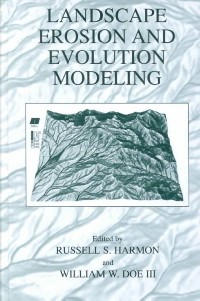
In this interdisciplinary review of the latest in modeling of soil erosion and landscape evolution based on 1999 workshops, 17 contributed chapters by international experts unearth the complex natural processes impacted by land use. Such models serve as the basis for decision support systems for public land managers, with the accent here on issues facing the US Army's Land Management System (LMS). Harmon (Army Research Laboratory, Research Triangle Park, NC) and Doe (Center for Environmental Management of Military Land, Colorado State U., Fort Collins) provide context for soil erosion processes, best management practices, modeling approaches, and linking models to reality. The final section treats model successes, limitations, and future LMS directions. Lacks information on the companion CD-ROM. Annotation c. Book News, Inc., Portland, OR (booknews.com)
Publisher Summary 2
Landscapes are characterized by a wide variation, both spatially and temporally, of tolerance and response to natural processes and anthropogenic stress. These tolerances and responses can be analyzed through individual landscape parameters, such as soils, vegetation, water, etc., or holistically through ecosystem or watershed studies. However, such approaches are both time consuming and costly. Soil erosion and landscape evolution modeling provide a simulation environment in which both the short- and long-term consequences of land-use activities and alternative land use strategies can be compared and evaluated. Such models provide the foundation for the development of land management decision support systems.
Landscape Erosion and Evolution Modelingis a state-of-the-art, interdisciplinary volume addressing the broad theme of soil erosion and landscape evolution modeling from different philosophical and technical approaches, ranging from those developed from considerations of first-principle soil/water physics and mechanics to those developed empirically according to sets of behavioral or empirical rules deriving from field observations and measurements. The validation and calibration of models through field studies is also included.
This volume will be essential reading for researchers in earth, environmental and ecosystem sciences, hydrology, civil engineering, forestry, soil science, agriculture and climate change studies. In addition, it will have direct relevance to the public and private land management communities.
目录
Table Of Contents:
Preface xv
Acknowledgements xvii
Contributors xix
Introduction to Soil Erosion and Landscape Evolution Modeling
Soil Erosion Management and Model Development 1(2)
Soil Erosion Processes 3(4)
Models and Modeling Approaches 7(5)
Linking Reality and Modeling 12(3)
Acknowledgements 13(1)
References 13(2)
Erosion Problems on U.S. Army Training Lands
Introduction 15(4)
Regulatory Controls 19(2)
Plant Material Development and Use on Military Lands 21(2)
Physical Erosion and Sediment Controls 23(4)
Applying Science in Erosion and Sediment Control 27(2)
References 28(1)
Effects of Freeze-Thaw Cycling on Soil Erosion
Introduction 29(4)
Landscape Evolution and Soil Erosion 29(1)
Effects of Military Maneuvers on Soil-Erosion Mechanics 30(3)
Effects of Soil Freeze-Thaw Cycling 33(17)
Soil Freeze-Thaw Regimes and Associated Soil-Water Redistribution 34(4)
Soil Erodibility 38(1)
Soil Density 39(1)
Soil Strength 40(3)
Infiltration and Runoff 43(3)
Soil-Surface Geometry 46(1)
Soil Fluffing and Frost Heave 46(1)
Rut and Rill Cross-Sectional Shape 47(3)
Summary and Conclusions 50(1)
Future Research Needs 51(6)
Acknowledgements 52(1)
References 52(5)
Determination of Slope Displacement Mechanisms and Causes
Introduction 57(2)
Bluff Geometry and Stratigraphy 59(3)
Ground Water Conditions 62(1)
Soil Characteristics 62(5)
Slope Displacement Monitoring Methods 67(4)
Displacement Models 71(4)
Causes of Displacement 75(6)
Waves and Lake Levels 76(2)
Precipitation 78(2)
Air Temperatures and Ground Water Levels 80(1)
Processes of Bluff Failure 81(1)
Limit Equilibrium Analyses 82(2)
Conclusions 84(5)
Acknowledgements 85(1)
References 85(4)
Using Cosmogenic Nuclide Measurements in Sediments to Understand Background Rates of Erosion and Sediment Transport
Introduction 89(3)
Methods 92(1)
Cosmogenic Nuclide Systematics and Interpretative Models 93(2)
Case Studies 95(16)
Drift Creek, Coast Range, Oregon 95(5)
Trephina Creek, Northern Territory, Australia 100(1)
Sandy Creek, Llano Uplift, Central Texas 101(2)
Yuma Proving Ground, Southwestern Arizona 103(4)
Nahal Yael, Southern Negev Desert, Israel 107(1)
Camp Iron Mountain, Mojave Desert, California 108(3)
Implications Of Sediment Cosmogenic Nuclide Measurements 111(6)
Acknowledgements 113(1)
References 113(4)
Erosion Modeling
Introduction 117(2)
Empirical Models 119(3)
USLE and Related Models 119(1)
Alternatives to the USLE 120(2)
Process-Based Models 122(5)
Examples of Available Models 122(1)
Steady State Versus Dynamic Simulations 123(1)
Erosion Process Simulations 124(2)
Grid Versus Polygon Models 126(1)
Model Testing 127(3)
Sensitivity Analysis 127(2)
Rationality 129(1)
Model Validation 130(6)
Uncertainty in Model Output 130(3)
Importance of Topographic Position 133(2)
Is Validation Feasible? 135(1)
Model Application 136(2)
Policy Evaluation 136(1)
Evaluating Global Change 137(1)
Slope Evolution 138(1)
Conclusions 138(7)
References 139(6)
The Water Erosion Prediction Project (WEPP) Model
Introduction 145(1)
WEPP Model Development History 146(5)
User Requirements 148(1)
WEPP Experimental Research Program 149(2)
WEPP Hillslope Model Component 151(15)
Introduction 151(1)
Weather Generation 152(1)
Irrigation 153(1)
Hydrology 154(1)
Infiltration and Runoff 154(1)
Water Balance 155(1)
Soil Component 156(1)
Effective Hydraulic Conductivity 157(1)
Soil Erodibility 158(2)
Plant Growth 160(1)
Residue Decomposition and Management 161(1)
Overland Flow Hydraulics 162(1)
Soil Erosion 163(3)
WEPP Model Watershed Component 166(16)
Introduction 166(1)
Watershed Component Development 167(1)
Conceptual Framework 167(2)
Watershed Processes 169(1)
Range of Application 170(1)
Channel Hydrology Processes 171(1)
Runoff Volume 171(2)
Channel Water Balance 173(1)
Channel Peak Runoff Rate 173(1)
Modified Rational Equation 174(1)
The CREAMS Equation 175(1)
Effective Runoff Duration 176(1)
Channel Erosion Processes 176(1)
Effective Channel Length 177(2)
Sediment Load 179(1)
Sediment Detachment/Transport/Deposition 179(2)
Watershed Component Summary 181(1)
Model Validation Study Results 182(5)
Data and Model Uncertainty: Impacts on Model Evaluation and Application 187(4)
WEPP Model Status and Current Activities 191(10)
References 193(8)
A Simulation Model for Erosion and Sediment Yield at the Hillslope Scale
Introduction 201(1)
Background 201(1)
Purpose, Scope, and Limitations 202(1)
Review of Erosion and Sediment Yield Modeling at the Hillslope Scale 202(7)
Historical Perspective 202(2)
Water Erosion Modeling on Non-Croplands 204(1)
Examples of Rangeland, Hillslope Scale Water Erosion Models 205(2)
Hillslope Erosion Processes 207(2)
Development of the Hillslope Erosion Model 209(3)
Overland Flow and Erosion Equations 209(2)
Analytic Solutions and an Integrated Sediment Yield Equation 211(1)
The Hillslope Erosion Model 211(1)
Calibration and Validation of the Hillslope Erosion Model 212(11)
Specified Parameters and Relationships 212(2)
Optimizing the Relative (Dimensionless) Erodibility Parameter 214(5)
Relative Erodibility by Soil Texture Class 219(1)
Selected Validation Studies Using Data from the Walnut Gulch Experimental Watershed 219(4)
Applications of the Hillslope Erosion Model at the Fort Carson Military Reservation and the Pinon Canyon Maneuver Site 223(8)
Introduction - The Fort Carson Military Reservation and the Pinon Canyon Maneuver Site 223(1)
The Land Condition-Trend Analysis (LCTA) Program 224(1)
Description of Hillslope Profile Data Collection 225(1)
Estimation of Runoff Using the IRS Model 226(1)
IRS Model Results and Analyses 227(1)
Estimation of Sediment Yield using the Hillslope Erosion Model - Application at Fort Carson and Pinon Canyon 227(1)
Model Results and Analyses 228(1)
Comparisons with Data from Erosion Control Structures 229(1)
Fort Carson 229(1)
Pinon Canyon Maneuver Site 230(1)
Discussion and Summary 231(2)
Conclusions 233(6)
References 234(5)
Waterbots
Introduction 239(4)
The Waterbot Model 243(2)
Hillslope Diffusion 245(1)
Bedrock Erosion 246(2)
Weathering 248(1)
Other Landscape Transport Processes 248(1)
Nonlinear Effects 249(3)
Contributing Area and Hydrographs 252(2)
Example - Setting up the DEM and Raining on the Black Mountains 254(7)
Dimensionless Numbers in the Black Mountains 261(4)
The Case of Gower Gulch: A Change in Flow Regime 265(7)
Summary 272(5)
Acknowledgements 273(1)
References 273(4)
Two-Dimensional Watershed-Scale Erosion Modeling with CASC2D
Introduction 277(3)
Hydrologic/Erosion Model CASC2D 280(10)
Model development history 280(1)
Main Features of CASC2D 281(1)
Governing Equations 282(1)
Two-Dimensional Overland Flow Routing 282(4)
Open Channel Flow Routing 286(1)
Overland Erosion 286(2)
Channel Erosion and Sediment Transport 288(2)
USDA-ARS Goodwin Creek Experimental Watershed 290(5)
Watershed Characteristics 290(2)
Watershed Climatology 292(1)
Runoff of Water and Sediments 293(2)
Calibration of CASC2D Erosion Parameters on Goodwin Creek 295(6)
Background 295(4)
Automated Calibration Using Shuffled Complex Evolution Method 299(1)
Selection of Cost Function 299(1)
Erosion Model Parameter Assignment 299(2)
Erosion Model Performance 301(10)
Automated Calibration Sensitivity to Cost Function 301(3)
Split-Sample Calibration-Verification Test 304(2)
Evaluation of CASC2D Performance at Internal Gaging Locations 306(1)
Event of May 25, 1982 306(2)
Event of June 3-4, 1982 308(1)
Performance Under Heavy Rainfall 308(3)
Discussion 311(4)
Time-Variant Parameters 312(1)
Ground Cover 313(1)
Rill and Gully Erosion 313(1)
Microtopography 313(1)
Soil Crusting, Detachment, and Aggregate Breakdown 314(1)
Bank Failure 314(1)
Spatial Calibration 315(1)
Conclusions 315(6)
Acknowledgements 316(1)
References 316(5)
Multiscale Soil Erosion Simulations for Land Use Management
Introduction 321(1)
Methods 322(6)
Process-based Overland Water and Sediment Flow Model 323(1)
Shallow Overland Flow 323(1)
Erosion and Sediment Transport by Overland Flow 324(2)
Path Sampling Solution Method 326(2)
Simplified Special Cases and Model Extensions 328(6)
Simple Erosion and Deposition Models 329(1)
Detachment-limited Case 329(1)
Transport Capacity-limited Case 330(2)
Water Depth in Flat Areas and Depressions 332(1)
Multiscale Water and Sediment Flow Simulation 332(2)
Landscape Scale Erosion Prevention Planning and Design 334(8)
Watershed Scale Erosion Risk Assessment and Evaluation of Conservation Strategies with Simple Distributed Models 336(2)
Wetlands and Drainage 338(1)
Topographic Potential for Wetlands 338(1)
Drainage Location Design 338(1)
Concentrated Flow Erosion and Grassed Waterways 339(1)
Concentrated Flow Erosion 339(1)
Grassed Waterways 340(2)
Conclusions 342(7)
Acknowledgements 343(1)
References 344(5)
The Channel-Hillslope Integrated Landscape Development Model (CHILD)
Introduction 349(1)
Background 350(2)
Model Formulation 352(28)
Overview 352(2)
Continuity of Mass and Topographic Change 354(1)
Spatial Framework 355(2)
Temporal Framework 357(1)
Stochastic Rainfall: Example 358(1)
Surface Hydrology and Runoff Generation 359(2)
Hortonian (Infiltration-Excess) Runoff 361(1)
Excess Storage Capacity Runoff 361(1)
Saturation-Excess Runoff 361(1)
Example 362(1)
Hillslope Mass Transport 362(2)
Water Erosion and Sediment Transport 364(2)
Detachment-Limited Case 366(1)
Transport-Limited Case 366(1)
Mixed-Channel Systems 367(1)
Example 367(2)
Extension to Multiple Grain Sizes 369(1)
Deposition and Stratigraphy 370(1)
Example 371(3)
Lateral Stream Channel Migration (Meandering) 374(3)
Floodplains: Overbank Sedimentation 377(2)
Example 379(1)
Discussion: Application and Limitations 380(2)
Summary and Conclusions 382(7)
Acknowledgements 383(1)
References 384(5)
Simulation of Streambank Erosion Processes with a Two-Dimensional Numerical Model
Introduction 389(9)
The Hasegawa Approach 392(1)
The Odgaard Approach 393(2)
The Hickin - Nanson Approach 395(1)
Comparison s of Previous Research 396(2)
Theoretical Analysis 398(12)
Erosion Rate of River Bank Due to Flow 398(1)
Submerged Weight 398(1)
The Lift Force 399(1)
The Cohesive Force 399(1)
Particle Entrainment 399(2)
Bank Erosion 401(2)
Bank Erosion Due to Bank Failure 403(7)
Conclusions - Theoretical Analysis 410(1)
Numerical Simulation 410(19)
Introduction 410(2)
Flow Simulation 412(1)
Sediment Transport Model 413(3)
Bed Load Transport 416(2)
Mixing Bed Material Layer 418(1)
Bed Elevation Changes 419(1)
Bank Erosion Simulation 419(3)
Test and Verifications 422(3)
Conclusions - Numerical Simulation 425(1)
Summary 425(2)
Acknowledgements 427(1)
References 427(2)
Spatial Analysis of Erosion Conservation Measures with LISEM
Introduction 429(1)
LISEM Theoretical Framework 430(7)
Rainfall Interception 432(1)
Infiltration and Soil Water Transport 432(1)
Storage in Micro-Depressions 432(2)
Different Surface Types in a Grid Cell 434(1)
Erosion and Deposition 435(1)
Overland Flow and Channel Flow 436(1)
Integration into a Raster GIS 437(1)
Wheel Tracks and Tillage Networks 437(3)
A Case Study: Grass Strips and Tillage Direction in the Netherlands 440(7)
Context 440(1)
Results and Conclusions 441(3)
References 444(3)
Numerical Simulation of Sediment Yield, Storage, and Channel Bed Adjustments
Introduction 447(1)
Model Equations 448(4)
Numerical Simulation 452(4)
Initial and Transient Boundary Conditions 456(5)
Simulation Results 461(13)
Sediment Yields 461(3)
Bed Elevation Changes 464(2)
Channel Slope Adjustments 466(5)
Summary of Adjustments 471(1)
Discussion 472(2)
Conclusions 474(3)
References 475(2)
The Limits of Erosion Modeling
Introduction 477(19)
Process Representation in Erosion Models 478(2)
Why the Emphasis on Processes? 480(1)
Temporal and Spatial Aspects of Erosion Models And Model Applications 481(1)
Time, Space, and Process Representation 481(3)
Spatial Scale in Real-World Erosion Modeling 484(1)
The Ergodic Assumption in Erosion Modeling 484(1)
Spatio-Temporal Resolution and Scale-Crossing in Erosion Modeling 485(3)
Simplicity and Complexity in Erosion Modeling 488(1)
The Increasing Complexity of Erosion Models 488(1)
Should a Simple or Complex Model be Used 489(4)
Model Results: Validation and Uncertainty 493(2)
User Issues 495(1)
The Policy Context of Model Development and Use 496(4)
Why Use a Model at All? 496(1)
The Erosion Model Life-Cycle 496(1)
The 'Standard' Erosion Model 497(3)
Case Studies 500(7)
Erosion and Flooding Risk at Breaky Bottom: Human Impact Legal Issues 500(4)
TMDL Legislation in the U.S.A. 504(3)
Conclusions 507(10)
Recommendations 507(2)
The Way Forward 509(1)
Acknowledgements 510(1)
References 510(7)
Envisioning a Future Framework for Managing Land and Water Resources
Introduction 517(1)
Use of Technology in Resource Management - Today 518(1)
Major Aquatic Ecosystems 519(5)
Military Installation Management 519(1)
Watershed Analysis 520(1)
Use of Technology in Resource Management - Within 10 Years 521(3)
Development of the Land Management System 524(10)
Decision Support Level 526(1)
Modeling and Simulation Level 526(2)
Manage Data Level 528(1)
Conceptual Model Development Level 528(1)
Network Empowerment 529(5)
LMS Development Timeline 534(1)
Summary 534(1)
Index 535
Preface xv
Acknowledgements xvii
Contributors xix
Introduction to Soil Erosion and Landscape Evolution Modeling
Soil Erosion Management and Model Development 1(2)
Soil Erosion Processes 3(4)
Models and Modeling Approaches 7(5)
Linking Reality and Modeling 12(3)
Acknowledgements 13(1)
References 13(2)
Erosion Problems on U.S. Army Training Lands
Introduction 15(4)
Regulatory Controls 19(2)
Plant Material Development and Use on Military Lands 21(2)
Physical Erosion and Sediment Controls 23(4)
Applying Science in Erosion and Sediment Control 27(2)
References 28(1)
Effects of Freeze-Thaw Cycling on Soil Erosion
Introduction 29(4)
Landscape Evolution and Soil Erosion 29(1)
Effects of Military Maneuvers on Soil-Erosion Mechanics 30(3)
Effects of Soil Freeze-Thaw Cycling 33(17)
Soil Freeze-Thaw Regimes and Associated Soil-Water Redistribution 34(4)
Soil Erodibility 38(1)
Soil Density 39(1)
Soil Strength 40(3)
Infiltration and Runoff 43(3)
Soil-Surface Geometry 46(1)
Soil Fluffing and Frost Heave 46(1)
Rut and Rill Cross-Sectional Shape 47(3)
Summary and Conclusions 50(1)
Future Research Needs 51(6)
Acknowledgements 52(1)
References 52(5)
Determination of Slope Displacement Mechanisms and Causes
Introduction 57(2)
Bluff Geometry and Stratigraphy 59(3)
Ground Water Conditions 62(1)
Soil Characteristics 62(5)
Slope Displacement Monitoring Methods 67(4)
Displacement Models 71(4)
Causes of Displacement 75(6)
Waves and Lake Levels 76(2)
Precipitation 78(2)
Air Temperatures and Ground Water Levels 80(1)
Processes of Bluff Failure 81(1)
Limit Equilibrium Analyses 82(2)
Conclusions 84(5)
Acknowledgements 85(1)
References 85(4)
Using Cosmogenic Nuclide Measurements in Sediments to Understand Background Rates of Erosion and Sediment Transport
Introduction 89(3)
Methods 92(1)
Cosmogenic Nuclide Systematics and Interpretative Models 93(2)
Case Studies 95(16)
Drift Creek, Coast Range, Oregon 95(5)
Trephina Creek, Northern Territory, Australia 100(1)
Sandy Creek, Llano Uplift, Central Texas 101(2)
Yuma Proving Ground, Southwestern Arizona 103(4)
Nahal Yael, Southern Negev Desert, Israel 107(1)
Camp Iron Mountain, Mojave Desert, California 108(3)
Implications Of Sediment Cosmogenic Nuclide Measurements 111(6)
Acknowledgements 113(1)
References 113(4)
Erosion Modeling
Introduction 117(2)
Empirical Models 119(3)
USLE and Related Models 119(1)
Alternatives to the USLE 120(2)
Process-Based Models 122(5)
Examples of Available Models 122(1)
Steady State Versus Dynamic Simulations 123(1)
Erosion Process Simulations 124(2)
Grid Versus Polygon Models 126(1)
Model Testing 127(3)
Sensitivity Analysis 127(2)
Rationality 129(1)
Model Validation 130(6)
Uncertainty in Model Output 130(3)
Importance of Topographic Position 133(2)
Is Validation Feasible? 135(1)
Model Application 136(2)
Policy Evaluation 136(1)
Evaluating Global Change 137(1)
Slope Evolution 138(1)
Conclusions 138(7)
References 139(6)
The Water Erosion Prediction Project (WEPP) Model
Introduction 145(1)
WEPP Model Development History 146(5)
User Requirements 148(1)
WEPP Experimental Research Program 149(2)
WEPP Hillslope Model Component 151(15)
Introduction 151(1)
Weather Generation 152(1)
Irrigation 153(1)
Hydrology 154(1)
Infiltration and Runoff 154(1)
Water Balance 155(1)
Soil Component 156(1)
Effective Hydraulic Conductivity 157(1)
Soil Erodibility 158(2)
Plant Growth 160(1)
Residue Decomposition and Management 161(1)
Overland Flow Hydraulics 162(1)
Soil Erosion 163(3)
WEPP Model Watershed Component 166(16)
Introduction 166(1)
Watershed Component Development 167(1)
Conceptual Framework 167(2)
Watershed Processes 169(1)
Range of Application 170(1)
Channel Hydrology Processes 171(1)
Runoff Volume 171(2)
Channel Water Balance 173(1)
Channel Peak Runoff Rate 173(1)
Modified Rational Equation 174(1)
The CREAMS Equation 175(1)
Effective Runoff Duration 176(1)
Channel Erosion Processes 176(1)
Effective Channel Length 177(2)
Sediment Load 179(1)
Sediment Detachment/Transport/Deposition 179(2)
Watershed Component Summary 181(1)
Model Validation Study Results 182(5)
Data and Model Uncertainty: Impacts on Model Evaluation and Application 187(4)
WEPP Model Status and Current Activities 191(10)
References 193(8)
A Simulation Model for Erosion and Sediment Yield at the Hillslope Scale
Introduction 201(1)
Background 201(1)
Purpose, Scope, and Limitations 202(1)
Review of Erosion and Sediment Yield Modeling at the Hillslope Scale 202(7)
Historical Perspective 202(2)
Water Erosion Modeling on Non-Croplands 204(1)
Examples of Rangeland, Hillslope Scale Water Erosion Models 205(2)
Hillslope Erosion Processes 207(2)
Development of the Hillslope Erosion Model 209(3)
Overland Flow and Erosion Equations 209(2)
Analytic Solutions and an Integrated Sediment Yield Equation 211(1)
The Hillslope Erosion Model 211(1)
Calibration and Validation of the Hillslope Erosion Model 212(11)
Specified Parameters and Relationships 212(2)
Optimizing the Relative (Dimensionless) Erodibility Parameter 214(5)
Relative Erodibility by Soil Texture Class 219(1)
Selected Validation Studies Using Data from the Walnut Gulch Experimental Watershed 219(4)
Applications of the Hillslope Erosion Model at the Fort Carson Military Reservation and the Pinon Canyon Maneuver Site 223(8)
Introduction - The Fort Carson Military Reservation and the Pinon Canyon Maneuver Site 223(1)
The Land Condition-Trend Analysis (LCTA) Program 224(1)
Description of Hillslope Profile Data Collection 225(1)
Estimation of Runoff Using the IRS Model 226(1)
IRS Model Results and Analyses 227(1)
Estimation of Sediment Yield using the Hillslope Erosion Model - Application at Fort Carson and Pinon Canyon 227(1)
Model Results and Analyses 228(1)
Comparisons with Data from Erosion Control Structures 229(1)
Fort Carson 229(1)
Pinon Canyon Maneuver Site 230(1)
Discussion and Summary 231(2)
Conclusions 233(6)
References 234(5)
Waterbots
Introduction 239(4)
The Waterbot Model 243(2)
Hillslope Diffusion 245(1)
Bedrock Erosion 246(2)
Weathering 248(1)
Other Landscape Transport Processes 248(1)
Nonlinear Effects 249(3)
Contributing Area and Hydrographs 252(2)
Example - Setting up the DEM and Raining on the Black Mountains 254(7)
Dimensionless Numbers in the Black Mountains 261(4)
The Case of Gower Gulch: A Change in Flow Regime 265(7)
Summary 272(5)
Acknowledgements 273(1)
References 273(4)
Two-Dimensional Watershed-Scale Erosion Modeling with CASC2D
Introduction 277(3)
Hydrologic/Erosion Model CASC2D 280(10)
Model development history 280(1)
Main Features of CASC2D 281(1)
Governing Equations 282(1)
Two-Dimensional Overland Flow Routing 282(4)
Open Channel Flow Routing 286(1)
Overland Erosion 286(2)
Channel Erosion and Sediment Transport 288(2)
USDA-ARS Goodwin Creek Experimental Watershed 290(5)
Watershed Characteristics 290(2)
Watershed Climatology 292(1)
Runoff of Water and Sediments 293(2)
Calibration of CASC2D Erosion Parameters on Goodwin Creek 295(6)
Background 295(4)
Automated Calibration Using Shuffled Complex Evolution Method 299(1)
Selection of Cost Function 299(1)
Erosion Model Parameter Assignment 299(2)
Erosion Model Performance 301(10)
Automated Calibration Sensitivity to Cost Function 301(3)
Split-Sample Calibration-Verification Test 304(2)
Evaluation of CASC2D Performance at Internal Gaging Locations 306(1)
Event of May 25, 1982 306(2)
Event of June 3-4, 1982 308(1)
Performance Under Heavy Rainfall 308(3)
Discussion 311(4)
Time-Variant Parameters 312(1)
Ground Cover 313(1)
Rill and Gully Erosion 313(1)
Microtopography 313(1)
Soil Crusting, Detachment, and Aggregate Breakdown 314(1)
Bank Failure 314(1)
Spatial Calibration 315(1)
Conclusions 315(6)
Acknowledgements 316(1)
References 316(5)
Multiscale Soil Erosion Simulations for Land Use Management
Introduction 321(1)
Methods 322(6)
Process-based Overland Water and Sediment Flow Model 323(1)
Shallow Overland Flow 323(1)
Erosion and Sediment Transport by Overland Flow 324(2)
Path Sampling Solution Method 326(2)
Simplified Special Cases and Model Extensions 328(6)
Simple Erosion and Deposition Models 329(1)
Detachment-limited Case 329(1)
Transport Capacity-limited Case 330(2)
Water Depth in Flat Areas and Depressions 332(1)
Multiscale Water and Sediment Flow Simulation 332(2)
Landscape Scale Erosion Prevention Planning and Design 334(8)
Watershed Scale Erosion Risk Assessment and Evaluation of Conservation Strategies with Simple Distributed Models 336(2)
Wetlands and Drainage 338(1)
Topographic Potential for Wetlands 338(1)
Drainage Location Design 338(1)
Concentrated Flow Erosion and Grassed Waterways 339(1)
Concentrated Flow Erosion 339(1)
Grassed Waterways 340(2)
Conclusions 342(7)
Acknowledgements 343(1)
References 344(5)
The Channel-Hillslope Integrated Landscape Development Model (CHILD)
Introduction 349(1)
Background 350(2)
Model Formulation 352(28)
Overview 352(2)
Continuity of Mass and Topographic Change 354(1)
Spatial Framework 355(2)
Temporal Framework 357(1)
Stochastic Rainfall: Example 358(1)
Surface Hydrology and Runoff Generation 359(2)
Hortonian (Infiltration-Excess) Runoff 361(1)
Excess Storage Capacity Runoff 361(1)
Saturation-Excess Runoff 361(1)
Example 362(1)
Hillslope Mass Transport 362(2)
Water Erosion and Sediment Transport 364(2)
Detachment-Limited Case 366(1)
Transport-Limited Case 366(1)
Mixed-Channel Systems 367(1)
Example 367(2)
Extension to Multiple Grain Sizes 369(1)
Deposition and Stratigraphy 370(1)
Example 371(3)
Lateral Stream Channel Migration (Meandering) 374(3)
Floodplains: Overbank Sedimentation 377(2)
Example 379(1)
Discussion: Application and Limitations 380(2)
Summary and Conclusions 382(7)
Acknowledgements 383(1)
References 384(5)
Simulation of Streambank Erosion Processes with a Two-Dimensional Numerical Model
Introduction 389(9)
The Hasegawa Approach 392(1)
The Odgaard Approach 393(2)
The Hickin - Nanson Approach 395(1)
Comparison s of Previous Research 396(2)
Theoretical Analysis 398(12)
Erosion Rate of River Bank Due to Flow 398(1)
Submerged Weight 398(1)
The Lift Force 399(1)
The Cohesive Force 399(1)
Particle Entrainment 399(2)
Bank Erosion 401(2)
Bank Erosion Due to Bank Failure 403(7)
Conclusions - Theoretical Analysis 410(1)
Numerical Simulation 410(19)
Introduction 410(2)
Flow Simulation 412(1)
Sediment Transport Model 413(3)
Bed Load Transport 416(2)
Mixing Bed Material Layer 418(1)
Bed Elevation Changes 419(1)
Bank Erosion Simulation 419(3)
Test and Verifications 422(3)
Conclusions - Numerical Simulation 425(1)
Summary 425(2)
Acknowledgements 427(1)
References 427(2)
Spatial Analysis of Erosion Conservation Measures with LISEM
Introduction 429(1)
LISEM Theoretical Framework 430(7)
Rainfall Interception 432(1)
Infiltration and Soil Water Transport 432(1)
Storage in Micro-Depressions 432(2)
Different Surface Types in a Grid Cell 434(1)
Erosion and Deposition 435(1)
Overland Flow and Channel Flow 436(1)
Integration into a Raster GIS 437(1)
Wheel Tracks and Tillage Networks 437(3)
A Case Study: Grass Strips and Tillage Direction in the Netherlands 440(7)
Context 440(1)
Results and Conclusions 441(3)
References 444(3)
Numerical Simulation of Sediment Yield, Storage, and Channel Bed Adjustments
Introduction 447(1)
Model Equations 448(4)
Numerical Simulation 452(4)
Initial and Transient Boundary Conditions 456(5)
Simulation Results 461(13)
Sediment Yields 461(3)
Bed Elevation Changes 464(2)
Channel Slope Adjustments 466(5)
Summary of Adjustments 471(1)
Discussion 472(2)
Conclusions 474(3)
References 475(2)
The Limits of Erosion Modeling
Introduction 477(19)
Process Representation in Erosion Models 478(2)
Why the Emphasis on Processes? 480(1)
Temporal and Spatial Aspects of Erosion Models And Model Applications 481(1)
Time, Space, and Process Representation 481(3)
Spatial Scale in Real-World Erosion Modeling 484(1)
The Ergodic Assumption in Erosion Modeling 484(1)
Spatio-Temporal Resolution and Scale-Crossing in Erosion Modeling 485(3)
Simplicity and Complexity in Erosion Modeling 488(1)
The Increasing Complexity of Erosion Models 488(1)
Should a Simple or Complex Model be Used 489(4)
Model Results: Validation and Uncertainty 493(2)
User Issues 495(1)
The Policy Context of Model Development and Use 496(4)
Why Use a Model at All? 496(1)
The Erosion Model Life-Cycle 496(1)
The 'Standard' Erosion Model 497(3)
Case Studies 500(7)
Erosion and Flooding Risk at Breaky Bottom: Human Impact Legal Issues 500(4)
TMDL Legislation in the U.S.A. 504(3)
Conclusions 507(10)
Recommendations 507(2)
The Way Forward 509(1)
Acknowledgements 510(1)
References 510(7)
Envisioning a Future Framework for Managing Land and Water Resources
Introduction 517(1)
Use of Technology in Resource Management - Today 518(1)
Major Aquatic Ecosystems 519(5)
Military Installation Management 519(1)
Watershed Analysis 520(1)
Use of Technology in Resource Management - Within 10 Years 521(3)
Development of the Land Management System 524(10)
Decision Support Level 526(1)
Modeling and Simulation Level 526(2)
Manage Data Level 528(1)
Conceptual Model Development Level 528(1)
Network Empowerment 529(5)
LMS Development Timeline 534(1)
Summary 534(1)
Index 535
- 名称
- 类型
- 大小
光盘服务联系方式: 020-38250260 客服QQ:4006604884
云图客服:
用户发送的提问,这种方式就需要有位在线客服来回答用户的问题,这种 就属于对话式的,问题是这种提问是否需要用户登录才能提问
Video Player
×
Audio Player
×
pdf Player
×
亲爱的云图用户,
光盘内的文件都可以直接点击浏览哦
无需下载,在线查阅资料!
