

简介
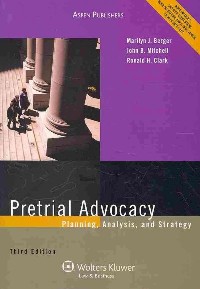
This book/CD-ROM/DVD text package provides students with the experience of being a practicing attorney engaged in pretrial activities, through criminal and civil problems, videos, real-life role playing simulations, and writing assignments. Assignments simulate different adversarial practice situations, and each contains a preparation section that refers to background reading from the text and case files, plus rules of evidence, civil procedure, and criminal procedure. For real-life simulations, the text provides an actor's guide to help students play their roles. The CD-ROM contains case files, and the DVD contains video tours and courtroom examples, computer animations, a documentary, and mediation videos. A companion web site includes articles, sample pleadings, and links to court documents. This third edition is updated to reflect rule changes, and offers more detailed explanation of ADR advocacy skills and more material on Internet searches. Berger teaches law at Seattle University School of Law.
目录
Table Of Contents:
Preface xxxi
Acknowledgments xxxv
Introduction xxxvii
Entering the Advocate's World 1(14)
Pretrial Advocacy 3(1)
The Advocate's World 4(3)
Human Relationships 4(1)
Resource Constraints 4(1)
Ethical Relationships 5(1)
Dependence 5(1)
Power 5(1)
Influence 5(1)
Client, Justice System, and Society 6(1)
Your Reputation 7(1)
D. A System Moving in Time 7(1)
Progression of a Civil Case 7(4)
Initial Stage 7(1)
Pleading 8(1)
Discovery 8(1)
Motions and Negotiation 9(1)
Counseling 9(1)
Alternative Dispute Resolution 10(1)
Trial Sequence 10(1)
Progression of Criminal Case 11(4)
Initial Stage 11(1)
Charging 11(1)
Arraignment and Bail 12(1)
Discovery 12(1)
Motions and Negotiation 13(1)
Counseling 13(1)
Trial Sequence 13(2)
Formulating the Case Theory 15(32)
Case Theory 17(1)
Developing the Case Theory 17(3)
Case Theory Components 17(1)
Legal Theory 18(1)
Relationship Between the Legal and Factual Theory Components 19(1)
Client's Objectives 19(1)
Evidence 19(1)
Plaintiff's Case Theory 20(10)
Legal Theory 20(1)
Civil Plaintiff 20(1)
The Prosecutor 20(1)
Selecting the Legal Theory 20(1)
Identifying Potential Legal Theories 21(1)
Assessing Strengths and Weaknesses 21(2)
Factual Theory 23(1)
Factually Sufficient 23(2)
Persuasive 25(5)
Defense Case Theory 30(9)
Types of Theories 30(1)
Attacking Weaknesses in the Plaintiff's Case Theory 31(1)
Counterattack or Affirmative Defense 31(1)
Negotiation and Settlement 32(1)
Legal Insufficiency 32(1)
Factual Insufficiency 33(1)
Persuasive Insufficiency 34(3)
Procedural Insufficiency 37(1)
Affirmative Defense 37(2)
Multiple Legal Theories 39(1)
Evidence Gathering 39(1)
Strategic Sequence 39(1)
Alternatives 39(1)
Case Theory as a Guide to All Pretrial Activities 40(1)
Ethical Considerations 41(6)
A Case Theory Checklist 42(5)
Developing and Managing the Case 47(38)
Developing and Managing the Case 49(1)
Planning Case Development 50(11)
Case Theory as a Guide 50(2)
Legal Theory---Researching the Law 52(1)
Research Areas 52(1)
Research Resources 53(1)
Organizing the Fact Investigation 53(1)
Avoiding Tunnel Vision 54(2)
Focus Groups---A Valuable Way to Test Assumptions 56(1)
Economic Factors 57(1)
Informal and Formal Fact Investigation 58(1)
Civil Case Development 58(3)
Criminal Case Development 61(1)
Informal Case Development 61(14)
The Investigator 61(1)
The Internet 62(1)
The Expert: Consulatant and Witness 62(1)
The Fact Development Diagram 62(2)
The Elimination Process: Should You Retain an Expert? 64(3)
A Model for Selecting an Expert 67(1)
Conclusions Compatible with Your Case Theory 68(2)
Skills of the Expert 70(2)
Practical Problems 72(2)
Handling Demonstrative, Physical, and Documentary Evidence 74(1)
Managing the Case 75(6)
Electronic Case Management 75(2)
Database 77(1)
Search and Retrieval 77(1)
Case Analysis 77(1)
Hosting the Database 78(1)
Discovery 78(1)
Pretrial, Trial, and Settlement Presentations 78(1)
Everything in Its Place 78(1)
Journal 79(1)
To-Do List 79(1)
Thinking File 79(1)
Trial System 80(1)
Ethical Considerations in Case Development and Management 81(4)
Supervising the Investigation 81(1)
The Expert 81(1)
Preservation and Spoliation 82(1)
The Case Development Checklist 82(3)
Forging the Attorney-Client Relationship 85(32)
The Attorney-Clent Relationship 87(2)
Legal Relationship 87(1)
Economic Relationship 88(1)
Cooperative Relationship 88(1)
Planning for the Initial Interview 89(4)
Setting the Objectives for the Interview 89(1)
Preparing for the Interview 90(1)
Learn About the Prospective Client's Situation 90(2)
Preliminary Research of Applicable Law 92(1)
Anticipate Interpersonal Matters and Problems 93(1)
Conducting the Interview 93(10)
Information Gathering 93(2)
Developing and Maintaining the Three Relationships: Legal, Economic, and Cooperative 95(1)
Building the Legal Relationship 95(1)
Establishing the Economic Relationship 96(4)
The Cooperative Relationship 100(2)
Imparting Information---Client Expectations 102(1)
Deciding Whether to Enter into the Relationship 103(1)
Ensuring an Ethical Relationship 104(3)
Solicitation 104(1)
Billing 105(1)
Frivolous Actions 106(1)
Competency 106(1)
Effective Case Management for the New Client 107(10)
The Client's File 107(2)
The Client Interview Checklist 109(2)
Model General Authorization to Release Documents to Attorney 111(1)
Memoranda Report for the Initial Client Contract 111(2)
Model Employment and Contingency Fee Agreement 113(4)
Counseling the Client 117(18)
Counseling 119(1)
Planning Counseling 120(8)
Identifying the Problem 120(1)
Preparation 120(1)
Information Gathering 120(1)
Setting Counseling Objectives 121(1)
Objective 1: Maintaining a Good Attorney-Clent Relationship 121(1)
Objectives 2 and 3: Achieving the Client's Long-Term Case Strategy and Achieving the Client's Short-Term Counseling Objectives 122(1)
Deciding Whether to Counsel 123(1)
The Extent of Counseling 124(2)
Counseling Advice 126(1)
The Process 126(1)
The Client's Questionable Decision 127(1)
Counseling Techniques 128(3)
Authoritarian and Partnership Approaches 128(1)
Authoritarian 128(1)
Partnership 129(1)
Written or Verbal Advice 130(1)
Follow-Up on Counseling 131(1)
Ethical Considerations 131(4)
Counseling Checklist 132(3)
Witness Interviewing 135(30)
The Witness Interview 137(1)
Whom to Interview 138(1)
Identifying and Locating Witnesses and Other Evidence 138(1)
Deciding Whom to Interview 138(1)
Planning for the Interview 139(6)
Setting Objectives 139(1)
Preparing for the Interview 140(1)
Familiarizing Yourself with the Case 140(1)
Prepare the Potential Legal Theories---the Value of Jury Instructions 141(1)
Planning Logistics and Strategies 142(1)
When to Inerview 142(1)
Where to Conduct the Inerview 142(2)
Whether or Not to Be Accompanied 144(1)
Preserving the Interview Information 144(1)
Model Approach to the Information Gathering Interview 145(9)
Case Theory as a Guide 145(1)
Developing a Rapport 146(1)
Gathering Basic Information 146(1)
Funnel Structure of the Interview 147(1)
Open-Ended Inquiry 148(1)
Organize the Information 149(1)
Confirm and Clarify the Information Is Complete and Accurate 150(3)
The Closing 153(1)
Unfriendly Witness Interview 154(1)
Develop a Rapport if Possible: Use Commanding Statements and Probing Questions 154(1)
Statements and Probing Questions 154(1)
Focus on Important Information 154(1)
Lock in Witness Information 154(1)
Special Witness Issues 154(2)
Preparing the Witness to Testify 156(4)
Preparing the Witness for the Courtroom 156(1)
Preparing the Witness on the Substance 157(1)
The Witness's Role and Preparation on the Substance 157(1)
Direct Examination 158(1)
Preparing the Witness on How to Testify 158(1)
Appearance 159(1)
Courtroom Rules 159(1)
Communication on Direct Examination 159(1)
Communication on Cross-Examination 160(1)
Ensuring an Ethical Relationship 160(5)
The Witness Interview---Checklist 161(4)
Strategic Pleading 165(64)
Pleadings 167(4)
Civil Pleading 167(1)
Affirmative Pleading 168(1)
Responsive Pleading 168(2)
Criminal Pleadings 170(1)
Planning the Civil Pleading 171(15)
Setting the Objectives for Pleading 171(1)
Discovery and Pleading 171(1)
Negotiation and Pleading 172(1)
Overall Case Strategy and Pleading 172(1)
Preparing to Draft Pleadings---Civil Case Theory Development 172(2)
Legal Sufficiency 174(1)
Factual Sufficiency 175(1)
Organizing the Information---Mapping the Potential Pleading 176(2)
Plaintiff's Complaint Chart--- Caption, Parties, Jurisdiction 178(1)
Plaintiff's Complaint Chart---Claim, Party, and Relief 179(1)
Defendant's Answer Chart---Responding to Plaintiff's Allegations 179(4)
Defendant's Answer Chart---Affirmative Defense, Counterclaim, Third-Party Complaint 183(3)
Drafiting the Civil Pleading 186(25)
Case Theory and Strategy as Guides 186(1)
Pleading Subject Matter Jurisdiction and Venue 186(1)
Considerations in Selecting a Forum 186(1)
Subject Matter Jurisdiction 187(1)
Venue 188(1)
Claims and Defenses 188(1)
Legal Theories as Guides 188(2)
Burden of Pleading 190(1)
Joinder of Claims or Defenses 191(1)
Case Strategies as Guides 191(1)
Proper Parties 192(1)
Legal Theories as Guides 193(1)
Rules Governing Joinder of Parties 193(1)
Case Strategy as a Guide 194(1)
Pleading a Claim for Relief 195(1)
Legal Theory as a Guide 195(1)
Case Strategy as a Guide 195(1)
Damages and Other Forms of Relief 196(1)
The Amount of Information to Plead 197(1)
Bare-Bones Pleading 197(1)
Fully Dressed Pleading---Storytelling 197(2)
The Strategic Considerations 199(1)
Anticipating Attacks on the Pleading 200(1)
Satisfying Procedural and Technical Requirements 201(1)
Pleading Sources 201(1)
Technical Format 202(1)
Writing an Effective Pleading 203(1)
Focusing on the Answer 204(1)
A Motion, an Answer, or Both 204(1)
Motion 205(1)
Framing the Answer 206(1)
Affirmative Defenses, Counterclaims, Cross-Claims, and Third-Party Claims 207(1)
Other Strategic Issues 208(1)
Deciding When to File 208(1)
Deciding What Additional Pleading You Will Do 209(1)
Filing, Service and Electronic Means 209(1)
Filing and Serving a Pleading 209(1)
E-Filing and Service 210(1)
Learning by Example: Civil Pleadings 211(6)
Planning and Drafting Criminal Pleadings 217(6)
Setting the Objectives for Pleading 217(1)
Preparing to Draft the Charging Document---Case Theory Development 218(1)
Legal Sufficiency 219(1)
Factual Sufficiency 220(1)
The Charges to File, if Any 220(1)
Evidentiary Standards 220(2)
Non-Evidentiary Reasons to Decline Charges 222(1)
Number and Nature of Charges 222(1)
Ethical Considerations 223(6)
Civil 224(1)
Criminal 225(1)
Drafting Pleadings Checklist 226(3)
Creating a Coordinated Discovery Plan 229(70)
Discovery 231(7)
Civil Discovery 232(1)
Procedural and Substantive Rules 232(1)
What Is Discoverable? 232(1)
Initial Disclosure and Formal Discovery 233(1)
Formal Discovery 234(2)
Protective Order 236(1)
Criminal Discovery 237(1)
Freedom of Information Act 238(1)
Planning Civil Discovery 238(25)
Setting Discovery Objectives 238(1)
Discovery and Case Strategy 239(1)
Developing a Discovery Plan---Case Theory as a Guide 240(1)
A Focused Discovery Plan 240(1)
A Coordinated Discovery Plan 240(1)
Case Theory and Discovery 241(3)
Five-Step Strategy for Coordinated Discovery 244(1)
Step One---Using the Case Theories as Guides, Determine What Information You Want 244(1)
Categories of Information to Seek 244(1)
Case Theory Narrows the Focus 245(1)
Step Two---Identify Likely Persons and Entities That Could Provide That Information 246(2)
Step Three---Identify the Types of Information to Seek 248(1)
Step Four---Select the Discovery Tool Suitable to the Task 249(3)
Step Five---Determine the Timing and Sequencing of Discovery 252(1)
Preservation and Spoliation 253(1)
The Lawyer's Signature---Certification 254(1)
E-Discovery 254(1)
"Electronically Stored Information" 255(1)
Early E-Discovery Plan 255(1)
Form of Production 256(1)
Preservation and Sanctions 256(1)
Not Reasonably Accessible 257(1)
Privileged or Trial-Preparation Material 257(1)
Report of Senate Committee on the Judiciary 258(2)
Responding Party's Best Practices and Strategies 260(3)
Requesting Party's Best Practices and Strategies 263(1)
Drafting Civil Discovery Requests 263(18)
Drafting Interrogatories 263(1)
Preamble and Definitions 264(2)
Combine Broad and Narrow Questions 266(2)
Unambiguous Questions 268(1)
Require Identification of Persons and Documents 268(1)
Drafting Responses to Interrogatories 269(1)
The Ambiguous Interrogatory 269(1)
Privileged Information 270(2)
E-Discovery and Business Records 272(1)
Drafting Requests for Production 273(1)
Preface 273(1)
Particularity 273(1)
Interlink Requests for Production with Interrogatories 274(1)
Protect Against Destruction 274(1)
Drafting Responses to Requests for Production 275(1)
Duty to Preserve 275(1)
Form or Forms of Production 275(1)
Formulating the Response 276(1)
Drafting Requests for Admissions 277(3)
Drafting Responses to Requests for Admissions 280(1)
Criminal Discovery 281(3)
Discovery Rules, Statutes, and Devices 281(1)
Court Rules and Statutes 282(1)
Open-File Policy or Defense Motion 282(1)
Other Tools for Discovery 283(1)
Brady Material 283(1)
Motion to Compel Discovery and Request Sanctions 284(3)
Determining When to Make a Motion to Compel Discovery 284(1)
Considerations 284(1)
Resolving Disputes over Civil Discovery 285(1)
Sanctions 285(1)
Drafting a Motion to Compel Discovery 286(1)
Ethical Considerations 287(2)
Effective Case Management 289(10)
Civil Discovery Checklist 290(4)
Sample Criminal Discovery Motion 294(5)
Taking and Defending Depositions 299(60)
Depositions 301(6)
Procedural and Substantive Rules 301(1)
Who Can Be Deposed 302(1)
When a Deposition Can Be Taken 302(1)
How Many Depositions and Duration 303(1)
Service, Subpoena, and Notice 303(1)
Production of Materials---Subpoena Duces Tecum 303(1)
Where and When 304(1)
Persons Present 304(1)
Recording the Deposition 304(1)
Objections 305(1)
Form and Procedure 305(1)
Grounds for Objections 305(2)
Deponent's Review 307(1)
Who to Depose 307(1)
Deciding Who to Depose 307(1)
Other Considerations 308(1)
Planning to Take a Deposition 308(9)
Setting the Deposition Objectives 308(1)
Deposition Objectives 308(3)
Five-Step Approach for a Coordinated Discovery Plan 311(2)
Using the Case Theories as Guides, Determine What Information You Want 313(1)
Identify Likely Persons and Entities That Could Provide That Information 313(1)
Identify the Types of Information to Seek and Select the Discovery Tool Suitable to the Task 313(1)
Determine the Timing and Sequencing of Discovery 314(1)
Preparation for Taking the Deposition 314(1)
Know Your Case 314(1)
Notice and Documents 314(1)
Recording the Deposition 315(1)
Location and Setting for the Deposition 315(1)
Stipulations 316(1)
Objections and Directions Not to Answer 316(1)
Exhibits 317(1)
Model Approach to Taking a Deposition 317(2)
Opening Remarks 318(1)
Closing Remarks 319(1)
Deposition Strategies Driven by the Deposition's Objectives and the Type of Deponent 319(27)
Absent Witness---Preservation Examination 320(1)
Rule Regarding Preservation 320(1)
Creating Evidence for Trial 320(2)
Discovery Deposition---Going Fishing 322(2)
Concession-Based Examination---Adverse Witness 324(1)
Content 325(4)
Construction 329(5)
Control 334(2)
Opposing Party's Expert Witness 336(1)
Expert Witness Fees 337(1)
Preparation to Take the Expert's Deposition 337(1)
The Expert's Methodology 338(4)
Overcoming Problems with Defending Counsel 342(3)
The Visual Deposition 345(1)
Defending the Deposition 346(7)
The Defending Counsel's Role 346(1)
Preparing for a Deposition 347(1)
Preparing the Deponent 347(3)
Preparing to Object and to Direct the Deponent Not to Answer 350(1)
Preparing the Expert Deponent 351(1)
Scheduling 352(1)
Assembling the Expert's File 352(1)
Topics for Examination 352(1)
Seeking Judicial Intervention 353(1)
Ethical Considerations 353(6)
Taking the Deposition Checklist 354(4)
Defending the Deposition Checklist 358(1)
Creating Visuals 359(24)
Visuals 361(5)
Why Use Visuals? 362(1)
High-Medium-Low, No-Tech 363(1)
Choosing Media 363(1)
The Options 364(1)
The Software and Hardware 364(2)
Planning Visuals 366(4)
Case Theory as the Guide 366(1)
Scene Visit 367(1)
Evidentiary Foundation 368(1)
Preparing the Visual 369(1)
Preparing to Use the Visual 369(1)
Examples of Visuals 370(10)
Storytelling---Opening Statement 370(3)
Complexities 373(1)
Technical Information 374(1)
A Large Quantity of Information 374(2)
Improbability of the Opposing Party's Story 376(1)
Courtroom Demonstrations 377(1)
Argument Visuals 378(2)
Ethical Considerations 380(3)
Visuals Checklist 380(1)
Pretrial Litigation Library 381(2)
Pretrial Motion Advocacy 383(54)
Pretrial Motion Practice 385(1)
Planning the Motion 386(12)
Setting Objectives: Ends-Means Thinking 386(1)
Developing a Motion Theory 387(1)
Motion Legal Theory 387(1)
Identifying Your MLT 388(2)
Identifying the Standard Motion Legal Theory An Illustration 390(1)
Creating a Non-Standard Motion 391(1)
Putting a Standard Motion to a Creative Use 392(1)
Motion Factual Theory 392(1)
Factually Sufficient 393(1)
Persuasiveness 393(1)
Responding to a Party's Motion Theory 393(1)
Putting the Process Together---The Motion Theory---An Illustration 394(1)
Legal Theory 395(1)
Factual Theory 396(1)
Motion Theme 397(1)
Relationship Between the Motion Theory and Case Theory 397(1)
Making the Factual Record 398(2)
The Burden and the Type of Record 398(1)
Documentary Factual Record 398(1)
Evidentiary Hearing Factual Record 399(1)
Hearing on the Motion 400(2)
Filing and Service 400(1)
Conference with Opposing Counsel 401(1)
Single Hearing or Separately 401(1)
Notice of Motion 401(1)
Writing the Compelling Motion or Response 402(10)
The Essential Baker's Dozen Elements 402(1)
Heading and Caption 402(1)
Notice of Motion 402(1)
Motion and Memorandum of Law 403(1)
Signing, Filing, Submitting, or Later Advocating 403(1)
Relief Requested 404(1)
Statement of Case 404(1)
Statement of Facts 404(1)
Statement of the Issues 404(1)
Argument 404(1)
Conclusion 405(1)
Attachments 405(1)
Proposed Order 405(1)
Proof of Service 405(1)
The Response 406(1)
Telling a Persuasive Story---The Statement of Facts 406(1)
Factually Sufficient 406(1)
Persuasive Storytelling 406(1)
Framing the Issues---The Statement of Issues 407(1)
Arguing the Law---The Argument Section 408(2)
Interweaving the Theme 410(1)
Writing Style, Structure, and Gaffes 410(2)
Persuasively Arguing the Motion or Response 412(8)
The Beginning---Get the Judge's Attention 412(1)
The Middle---Use Compelling Legal and Factual Arguments 412(1)
Organization 412(1)
Factual Argument 413(1)
Legal Argument 414(1)
The End---Present a Strong Conclusion 414(1)
Know the Judge 414(1)
Fielding Questions---A Dialogue with the Bench 415(1)
Be Prepared on the Facts and Law 416(1)
Courtesy and Respect 416(1)
Courtroom Positioning 417(1)
Visuals 417(1)
The Technology 418(1)
The Software 418(1)
Appearance and Delivery 419(1)
Body Language 419(1)
Speaking Techniques 420(1)
On Time 420(1)
The Adverse Ruling 420(2)
Reconsideration 421(1)
Appellate Review 421(1)
Appealable? 421(1)
Sensible? 421(1)
Ethical Considerations 422(15)
Opposing Legal Authority 422(1)
Not Frivolous 423(1)
Not for an Improper Purpose 423(1)
The Pretrial Motion Advocacy Checklist 424(4)
Sample Notice for Civil Motion 428(1)
Sample Exhibit 429(2)
Sample Proposed Order 431(1)
Sample Memorandum of Law 432(4)
Sample Declaration of Service 436(1)
Negotiating the Best Disposition 437(54)
Negotiation 439(1)
Planning Negotiation 440(9)
Setting Objectives 440(1)
Developing a Negotiation Theory 440(2)
Facts 442(1)
Law 443(1)
Supporting Legal Precedent 444(1)
Guideline for Optimum Solution 445(1)
Limitation on Optimum Disposition 445(1)
Client's Needs and Wishes 445(2)
Incentives 447(1)
Non-Economic 447(2)
Economic 449(1)
The Bargaining Range 449(7)
A Persuasive Range of Solutions 449(1)
Determining the Range 450(1)
The Optimum Solution 451(1)
Settlement Value 451(1)
The Least Desirable Solution 452(1)
Settlement Value 453(1)
The Client's Recovery 454(1)
Client's Needs and Wishes 454(1)
Reconsider---Alternatives and Consequences 454(2)
Solutions Within the Range 456(1)
Successful Negotiation 456(7)
The Right Frame of Mind 456(1)
Ends-Means Thinking 456(1)
Creative Thinking 457(1)
Reasonable and Rational 458(1)
Demand Letter 458(1)
Negotiation Styles---Competitive Versus Cooperative 459(2)
Applying the Negotiation Theory 461(2)
Negotiation Techniques 463(9)
Administrative Matters 464(1)
A Favorable Setting and Time 465(1)
Bargaining 466(1)
Choices in Bargaining Tactics 466(1)
Applying the Bargaining Tactics 467(1)
Pressure 468(1)
Carrot or Stick 468(1)
Ultimatum 469(1)
Exchanging Information 469(1)
Persuasion---Settlement Presentations 469(1)
Discovery---Gathering Information 470(1)
Settlement Conference 470(1)
Bringing Negotiation to Closure 471(1)
Split the Difference 471(1)
Cooling Off 472(1)
Settlement 472(3)
Settlement Agreement 473(1)
The Contract 473(1)
Types of Settlement Agreements 473(1)
Other Settlement Documents 474(1)
Dismissal 474(1)
A Release 474(1)
Covenant Not to Sue 475(1)
Ethical Considerations 475(3)
False Representations 475(1)
The Client's Decision 476(1)
Communication with the Client 477(1)
Negotiation in the Criminal Justice System: Parallels to and Contrasts with Civil Case Negotiation 478(13)
Parallels 478(1)
Whether to Negotiate 478(1)
Preparation for Negotiation 479(1)
Plan a Hierarchy of Solutions 479(3)
Peripheral Benefits 482(1)
Contrasts 482(1)
Moral Values 482(1)
Protection of the Innocent 483(1)
Institutional Players 483(1)
Constitutional Rights 484(1)
Civil Negotiation Checklist 485(3)
Sample Demand Letter 488(1)
Sample Settlement Agreement 489(1)
Stipulation of Dismissal 490(1)
Alternative Dispute Resolution Advocacy 491(32)
Alternative Dispute Resolution 493(1)
Choosing the ADR Process 494(1)
Planning and Preparing for an ADR Process 495(2)
Attributes of Arbitration and Mediation 497(1)
Arbitration 497(5)
The Arbitration Process 497(1)
Voluntary or Mandatory 498(1)
Voluntary 498(1)
Mandatory 499(1)
The Arbitrator 499(1)
Arbitration Proceedings 500(2)
Appeal 502(1)
Mediation 502(15)
The Mediation Process 502(2)
Participation 504(1)
Confidentiality 504(4)
Advocacy Techniques and Strategies 508(1)
Law and Evidence 508(1)
Knowing the Mediator 509(1)
Selecting the Mediator 509(1)
Mediator Techniques 510(1)
Advocating to and Through the Mediator 511(1)
Advocating the Case Theory 512(1)
Advocating for Money 513(2)
Visual Advocacy 515(1)
Mediation Settlement Agreement 516(1)
Hybrid ADR Processes 517(1)
Ethical Considerations 518(1)
Scope of Representation, Allocation of Authority, and Communication 518(1)
The Client's Decision 518(1)
Communication with the Client 518(1)
Aggregate Settlement 519(1)
Client Counseling 519(1)
ADR Checklist 519(3)
Characteristics of ADR Processes and Litigation 522(1)
Introducing the Cases and Assignments 523(102)
Experiential Learning 525(1)
Factual Summary 526(2)
The CD 528(1)
The Case Files 528(1)
The DVD 528(1)
Rules of the "Game" 529(7)
Jurisdiction 529(1)
The Procedural and Professional Responsibility Rules 529(1)
Dates 529(1)
Civil Case 530(1)
Your Responsibilities 530(1)
The "Game" 531(1)
Assignment Table of Contents 532(4)
Pretrial Advocacy: Assignments 536(84)
The Role of an Attorney in the Adversary System 536(1)
Prosecutor: Initial Development of a Case Theory (Homicide) 536(1)
Defense Attorney: Initial Development of a Case Theory (Charge of Premeditated First Degree Murder) 537(1)
Plaintiffs' Attorney: Theorizing About Summers V. Hard 538(1)
Attorney for Defendant Hard: Theorizing About Summers v. Hard 539(2)
Attorney for Defendant Davola: Theorizing About Summers v. Hard 541(1)
Attorneys for Defendants Hard and Davola: Meeting and Theorizing About Summers v. Hard 542(1)
Prosecutor and Defense Attorney: Case Fact Development Overview 543(1)
Plaintiffs' and Defendants' Attorneys: Case Fact Development Overview 544(1)
Plaintiffs' and Defendants' Attorneys: Utilizing Case Analysis and Management Software 545(1)
Defense Attorney: Interviewing Ed Hard Regarding a First-Degree Murder (the Formation of an Attorney-Client Relationship) 546(1)
Defense Attorney: Interviewing Ed Hard for a Bail Reduction Motion (Charge of First-Degree Murder) 547(1)
Plaintiffs' Attorney: Interview of Deborah Summers 548(1)
Plaintiffs' Attorney: Interview of Ronnie Summers 548(1)
Attorney for Defendant Hard: Client Interview 549(1)
Attorney for Defendant Davola: Client Interview 549(2)
Attorney for Defendant Davola: Interview of Mary Apple 551(1)
Prosecutor: Counseling a Witness whether to Talk to Your Adversary (Peter Dean) 552(1)
Prosecutor: Counseling a Key Witness Who Is Threatening to Leave Town (Deborah Summers) 553(1)
Defense Attorney: Counseling the Defendant Concerning a Drinking Problem and Testifying at a Suppression Motion 554(1)
Plaintiffs' Attorney: Counseling Client to See a Psychologist (Deborah Summers) 555(1)
Plaintiffs' Attorney: Counseling Client Concerning Remarriage (Deborah Summers) 556(1)
Plaintiffs' Attorney: Counseling Client Concerning Granddaughter's School Truancy (Gretchen Summers) 557(1)
Attorney for Defendant Hard: Counseling Client Concerning His Objections to Deposition of Advedrse Witness (Deborah Summers) 558(1)
Attorney for Defendant Davola: Counseling Client About the Litigation 559(1)
Plaintiff's and Defendants' Attorneys: Counseling Clients to Accept Settlement 560(1)
Prosecutor: Interview of Dr. L. H. Jackson (Medical Examiner) 561(1)
Prosecutor: Interview of Peter Dean 562(1)
Prosecutor: Interview of Jack Waters 562(2)
Prosecutor: Interview of Detective Tharp(Investigating Officer for the Case) 564(1)
Defense Attorney: Interview of John Gooding 565(1)
Defense Attorney: Interview of Cindy Rigg 566(1)
Defense Attorney: Interview of Marty Saunders (Witness for a Suppression Motion) 566(2)
Defense Attorney: Interview of James Raven(Polygrapher) 568(1)
Plaintiff's Attorney: Interview of Bert Kain 568(1)
Plaintiffs' Attorney: Interview of Dr. Brett Day 569(1)
Plaintiffs' Attorney: Interview of Karen Sway 570(1)
Attorney for Defendant Hard: Interview of Rebecca Karr 571(1)
Ekko Attorney for Defendant Dacvola: Interview fo Roberta Montbank 572(1)
Prosecutor: Drafting a Criminal Pleading 573(1)
Plaintiffs' Attorney: Planning and Drafting Pleadings 574(1)
Defendants' Attorneys: Planning and Drafting Responsive Pleadings 575(1)
Defense Attorney: Seeking Discovery from the Government 576(2)
Plaintiffs' and Defendants' Attorneys: Discovery Planning 578(1)
Plaintiffs and Defendants' Attorneys: Initial Disclosure and Written Dicovery' Requests 579(1)
Plaintiffs' Attorney: Preparing a Client for a Deposition (Deborah Summers) 580(1)
Attorney for Defendant Davola: Preparing a Client for a Deposition (M. C. Davola) 581(1)
Attorney for Defendant Davola : Preparing an Expert Witness for a Deposition (Dr. Thomas Monday, Economist) 582(1)
Plaintiffs' Attorney: Preparing an Expert Withness for a Depostion (Dr. Brett Day, Treating Physician) 583(1)
Plaintiffs' Attorney: Taking the Deposition of an Adverse Party (Tom Donaldson) 584(1)
Attorney for Defendant Hard: Taking the Deposition of an Adverse Party (Deborah Summers) 585(1)
Attorney for Defendant Hard: Taking the Deposition of an Adverse Party (Gretchen Summers) 586(1)
Attorney for Defendant Davola: Taking the Deposition of a Neutral Witness (Roberta Montbank) 587(1)
Attorney for Defendant Davola: Taking the Deposition of Neutral Witness (Bert Kain) 588(2)
Attorney for Defendant Davola: Taking the Deposition of Neutral Witness (Betty Frank, Nurse) 590(1)
Defendant Davola's Attorney: Taking the Deposition of an Adverse Expert Witness (Dr. David Bowman, Plaintiffs' Behavioral Psychologist) 591(1)
Defendants' Attorneys : Taking the Deposition of an Adverse Expert Witness (Dr.Bruce Hann, Plaintiffs' Economist) 592(2)
Attorney for Defendant Hard: Taking the Deposition of an Adverse Expert Witness (Dr. Brett Day, Plaintiffs' Medical Expert) 594(1)
Defendants' Atorneys: Taking the Deposition of an Adverse Expert Witness (Hao Tredwell, Firearms EXpert) 595(1)
Defendants' Attorneys: Taking the Deposition of an Adverse Expert Witness (Dr. Pat Gage, Psychiatrist) 596(1)
Plaintiffs' Attorneys: Taking the Depositin of an Adverse Expert Witness (Dr. Ennis Martinez, Psychologist) 597(1)
Plaintiffs' Attorneys: Taking the Deposition of an Adverse Expert Witness (Dr. Dale Thompson, Hotel Management) 598(1)
Prosecutor and Defense Attorney: Planning and Visting the Scene 599(1)
Prosecutor and Defense Attorney Prepare Exhibits and Other Visuals 600(1)
Plaintiffs' and Defendants' Attorneys: Planning and Visting the Scene 601(1)
Plaintiffs' and Defendants' Attorneys Prepare Exhibits and Other Visuals 602(1)
Defense Attorney: Planning Constitution Based Pretrial Motions 603(1)
Prosecutor: Planning Responses to Constitution-Based Pretrial Motions (Suppression Motions) 604(1)
Defense Attorney and Prosecutor: Constitution-Based Pretrial Motion (Suppression of Ed Hard's Gun) 605(1)
Defense Attorney: Constitution-Based Pretrial Motion (Evidentiary Hearing: Suppression of Statements to Officer Yale) 606(2)
Defense Attorney and Prosecutor: Constitution-Based Pretrial Motion (Suppression of the Statement Given to Detective Tharp) 608(2)
Defendants' and Plaintiffs' Attorneys: Defendants' Motion for Summary Judgment and Plaintiffs' Response (Mental Distress) 610(1)
Plaintiffs' Attorney and Defendant Davola's Ekko Attorney: Plaintiffs' Motion to Comple Production of Documents and Defendant Davola's Response 611(3)
Defense Attorney and Prosecutor: Negotiation (Plea Bargaining) 614(1)
Attorney for Plaintiff Deborah Summers: Draft a Demand Letter 615(1)
Attorneys for Defendant Hard and Sapo Insurance Company: Negotiation Concerning Duty to Defend 616(1)
Planintiffs' and Defendants' Attorneys: Negotiation Between Planitiffs and Defendants 617(1)
Plaintiff's and Defendants' Attorneys: Arbitration and Mediation 618(2)
Table of Contents for Case Files on CD 620(5)
Index 625
Preface xxxi
Acknowledgments xxxv
Introduction xxxvii
Entering the Advocate's World 1(14)
Pretrial Advocacy 3(1)
The Advocate's World 4(3)
Human Relationships 4(1)
Resource Constraints 4(1)
Ethical Relationships 5(1)
Dependence 5(1)
Power 5(1)
Influence 5(1)
Client, Justice System, and Society 6(1)
Your Reputation 7(1)
D. A System Moving in Time 7(1)
Progression of a Civil Case 7(4)
Initial Stage 7(1)
Pleading 8(1)
Discovery 8(1)
Motions and Negotiation 9(1)
Counseling 9(1)
Alternative Dispute Resolution 10(1)
Trial Sequence 10(1)
Progression of Criminal Case 11(4)
Initial Stage 11(1)
Charging 11(1)
Arraignment and Bail 12(1)
Discovery 12(1)
Motions and Negotiation 13(1)
Counseling 13(1)
Trial Sequence 13(2)
Formulating the Case Theory 15(32)
Case Theory 17(1)
Developing the Case Theory 17(3)
Case Theory Components 17(1)
Legal Theory 18(1)
Relationship Between the Legal and Factual Theory Components 19(1)
Client's Objectives 19(1)
Evidence 19(1)
Plaintiff's Case Theory 20(10)
Legal Theory 20(1)
Civil Plaintiff 20(1)
The Prosecutor 20(1)
Selecting the Legal Theory 20(1)
Identifying Potential Legal Theories 21(1)
Assessing Strengths and Weaknesses 21(2)
Factual Theory 23(1)
Factually Sufficient 23(2)
Persuasive 25(5)
Defense Case Theory 30(9)
Types of Theories 30(1)
Attacking Weaknesses in the Plaintiff's Case Theory 31(1)
Counterattack or Affirmative Defense 31(1)
Negotiation and Settlement 32(1)
Legal Insufficiency 32(1)
Factual Insufficiency 33(1)
Persuasive Insufficiency 34(3)
Procedural Insufficiency 37(1)
Affirmative Defense 37(2)
Multiple Legal Theories 39(1)
Evidence Gathering 39(1)
Strategic Sequence 39(1)
Alternatives 39(1)
Case Theory as a Guide to All Pretrial Activities 40(1)
Ethical Considerations 41(6)
A Case Theory Checklist 42(5)
Developing and Managing the Case 47(38)
Developing and Managing the Case 49(1)
Planning Case Development 50(11)
Case Theory as a Guide 50(2)
Legal Theory---Researching the Law 52(1)
Research Areas 52(1)
Research Resources 53(1)
Organizing the Fact Investigation 53(1)
Avoiding Tunnel Vision 54(2)
Focus Groups---A Valuable Way to Test Assumptions 56(1)
Economic Factors 57(1)
Informal and Formal Fact Investigation 58(1)
Civil Case Development 58(3)
Criminal Case Development 61(1)
Informal Case Development 61(14)
The Investigator 61(1)
The Internet 62(1)
The Expert: Consulatant and Witness 62(1)
The Fact Development Diagram 62(2)
The Elimination Process: Should You Retain an Expert? 64(3)
A Model for Selecting an Expert 67(1)
Conclusions Compatible with Your Case Theory 68(2)
Skills of the Expert 70(2)
Practical Problems 72(2)
Handling Demonstrative, Physical, and Documentary Evidence 74(1)
Managing the Case 75(6)
Electronic Case Management 75(2)
Database 77(1)
Search and Retrieval 77(1)
Case Analysis 77(1)
Hosting the Database 78(1)
Discovery 78(1)
Pretrial, Trial, and Settlement Presentations 78(1)
Everything in Its Place 78(1)
Journal 79(1)
To-Do List 79(1)
Thinking File 79(1)
Trial System 80(1)
Ethical Considerations in Case Development and Management 81(4)
Supervising the Investigation 81(1)
The Expert 81(1)
Preservation and Spoliation 82(1)
The Case Development Checklist 82(3)
Forging the Attorney-Client Relationship 85(32)
The Attorney-Clent Relationship 87(2)
Legal Relationship 87(1)
Economic Relationship 88(1)
Cooperative Relationship 88(1)
Planning for the Initial Interview 89(4)
Setting the Objectives for the Interview 89(1)
Preparing for the Interview 90(1)
Learn About the Prospective Client's Situation 90(2)
Preliminary Research of Applicable Law 92(1)
Anticipate Interpersonal Matters and Problems 93(1)
Conducting the Interview 93(10)
Information Gathering 93(2)
Developing and Maintaining the Three Relationships: Legal, Economic, and Cooperative 95(1)
Building the Legal Relationship 95(1)
Establishing the Economic Relationship 96(4)
The Cooperative Relationship 100(2)
Imparting Information---Client Expectations 102(1)
Deciding Whether to Enter into the Relationship 103(1)
Ensuring an Ethical Relationship 104(3)
Solicitation 104(1)
Billing 105(1)
Frivolous Actions 106(1)
Competency 106(1)
Effective Case Management for the New Client 107(10)
The Client's File 107(2)
The Client Interview Checklist 109(2)
Model General Authorization to Release Documents to Attorney 111(1)
Memoranda Report for the Initial Client Contract 111(2)
Model Employment and Contingency Fee Agreement 113(4)
Counseling the Client 117(18)
Counseling 119(1)
Planning Counseling 120(8)
Identifying the Problem 120(1)
Preparation 120(1)
Information Gathering 120(1)
Setting Counseling Objectives 121(1)
Objective 1: Maintaining a Good Attorney-Clent Relationship 121(1)
Objectives 2 and 3: Achieving the Client's Long-Term Case Strategy and Achieving the Client's Short-Term Counseling Objectives 122(1)
Deciding Whether to Counsel 123(1)
The Extent of Counseling 124(2)
Counseling Advice 126(1)
The Process 126(1)
The Client's Questionable Decision 127(1)
Counseling Techniques 128(3)
Authoritarian and Partnership Approaches 128(1)
Authoritarian 128(1)
Partnership 129(1)
Written or Verbal Advice 130(1)
Follow-Up on Counseling 131(1)
Ethical Considerations 131(4)
Counseling Checklist 132(3)
Witness Interviewing 135(30)
The Witness Interview 137(1)
Whom to Interview 138(1)
Identifying and Locating Witnesses and Other Evidence 138(1)
Deciding Whom to Interview 138(1)
Planning for the Interview 139(6)
Setting Objectives 139(1)
Preparing for the Interview 140(1)
Familiarizing Yourself with the Case 140(1)
Prepare the Potential Legal Theories---the Value of Jury Instructions 141(1)
Planning Logistics and Strategies 142(1)
When to Inerview 142(1)
Where to Conduct the Inerview 142(2)
Whether or Not to Be Accompanied 144(1)
Preserving the Interview Information 144(1)
Model Approach to the Information Gathering Interview 145(9)
Case Theory as a Guide 145(1)
Developing a Rapport 146(1)
Gathering Basic Information 146(1)
Funnel Structure of the Interview 147(1)
Open-Ended Inquiry 148(1)
Organize the Information 149(1)
Confirm and Clarify the Information Is Complete and Accurate 150(3)
The Closing 153(1)
Unfriendly Witness Interview 154(1)
Develop a Rapport if Possible: Use Commanding Statements and Probing Questions 154(1)
Statements and Probing Questions 154(1)
Focus on Important Information 154(1)
Lock in Witness Information 154(1)
Special Witness Issues 154(2)
Preparing the Witness to Testify 156(4)
Preparing the Witness for the Courtroom 156(1)
Preparing the Witness on the Substance 157(1)
The Witness's Role and Preparation on the Substance 157(1)
Direct Examination 158(1)
Preparing the Witness on How to Testify 158(1)
Appearance 159(1)
Courtroom Rules 159(1)
Communication on Direct Examination 159(1)
Communication on Cross-Examination 160(1)
Ensuring an Ethical Relationship 160(5)
The Witness Interview---Checklist 161(4)
Strategic Pleading 165(64)
Pleadings 167(4)
Civil Pleading 167(1)
Affirmative Pleading 168(1)
Responsive Pleading 168(2)
Criminal Pleadings 170(1)
Planning the Civil Pleading 171(15)
Setting the Objectives for Pleading 171(1)
Discovery and Pleading 171(1)
Negotiation and Pleading 172(1)
Overall Case Strategy and Pleading 172(1)
Preparing to Draft Pleadings---Civil Case Theory Development 172(2)
Legal Sufficiency 174(1)
Factual Sufficiency 175(1)
Organizing the Information---Mapping the Potential Pleading 176(2)
Plaintiff's Complaint Chart--- Caption, Parties, Jurisdiction 178(1)
Plaintiff's Complaint Chart---Claim, Party, and Relief 179(1)
Defendant's Answer Chart---Responding to Plaintiff's Allegations 179(4)
Defendant's Answer Chart---Affirmative Defense, Counterclaim, Third-Party Complaint 183(3)
Drafiting the Civil Pleading 186(25)
Case Theory and Strategy as Guides 186(1)
Pleading Subject Matter Jurisdiction and Venue 186(1)
Considerations in Selecting a Forum 186(1)
Subject Matter Jurisdiction 187(1)
Venue 188(1)
Claims and Defenses 188(1)
Legal Theories as Guides 188(2)
Burden of Pleading 190(1)
Joinder of Claims or Defenses 191(1)
Case Strategies as Guides 191(1)
Proper Parties 192(1)
Legal Theories as Guides 193(1)
Rules Governing Joinder of Parties 193(1)
Case Strategy as a Guide 194(1)
Pleading a Claim for Relief 195(1)
Legal Theory as a Guide 195(1)
Case Strategy as a Guide 195(1)
Damages and Other Forms of Relief 196(1)
The Amount of Information to Plead 197(1)
Bare-Bones Pleading 197(1)
Fully Dressed Pleading---Storytelling 197(2)
The Strategic Considerations 199(1)
Anticipating Attacks on the Pleading 200(1)
Satisfying Procedural and Technical Requirements 201(1)
Pleading Sources 201(1)
Technical Format 202(1)
Writing an Effective Pleading 203(1)
Focusing on the Answer 204(1)
A Motion, an Answer, or Both 204(1)
Motion 205(1)
Framing the Answer 206(1)
Affirmative Defenses, Counterclaims, Cross-Claims, and Third-Party Claims 207(1)
Other Strategic Issues 208(1)
Deciding When to File 208(1)
Deciding What Additional Pleading You Will Do 209(1)
Filing, Service and Electronic Means 209(1)
Filing and Serving a Pleading 209(1)
E-Filing and Service 210(1)
Learning by Example: Civil Pleadings 211(6)
Planning and Drafting Criminal Pleadings 217(6)
Setting the Objectives for Pleading 217(1)
Preparing to Draft the Charging Document---Case Theory Development 218(1)
Legal Sufficiency 219(1)
Factual Sufficiency 220(1)
The Charges to File, if Any 220(1)
Evidentiary Standards 220(2)
Non-Evidentiary Reasons to Decline Charges 222(1)
Number and Nature of Charges 222(1)
Ethical Considerations 223(6)
Civil 224(1)
Criminal 225(1)
Drafting Pleadings Checklist 226(3)
Creating a Coordinated Discovery Plan 229(70)
Discovery 231(7)
Civil Discovery 232(1)
Procedural and Substantive Rules 232(1)
What Is Discoverable? 232(1)
Initial Disclosure and Formal Discovery 233(1)
Formal Discovery 234(2)
Protective Order 236(1)
Criminal Discovery 237(1)
Freedom of Information Act 238(1)
Planning Civil Discovery 238(25)
Setting Discovery Objectives 238(1)
Discovery and Case Strategy 239(1)
Developing a Discovery Plan---Case Theory as a Guide 240(1)
A Focused Discovery Plan 240(1)
A Coordinated Discovery Plan 240(1)
Case Theory and Discovery 241(3)
Five-Step Strategy for Coordinated Discovery 244(1)
Step One---Using the Case Theories as Guides, Determine What Information You Want 244(1)
Categories of Information to Seek 244(1)
Case Theory Narrows the Focus 245(1)
Step Two---Identify Likely Persons and Entities That Could Provide That Information 246(2)
Step Three---Identify the Types of Information to Seek 248(1)
Step Four---Select the Discovery Tool Suitable to the Task 249(3)
Step Five---Determine the Timing and Sequencing of Discovery 252(1)
Preservation and Spoliation 253(1)
The Lawyer's Signature---Certification 254(1)
E-Discovery 254(1)
"Electronically Stored Information" 255(1)
Early E-Discovery Plan 255(1)
Form of Production 256(1)
Preservation and Sanctions 256(1)
Not Reasonably Accessible 257(1)
Privileged or Trial-Preparation Material 257(1)
Report of Senate Committee on the Judiciary 258(2)
Responding Party's Best Practices and Strategies 260(3)
Requesting Party's Best Practices and Strategies 263(1)
Drafting Civil Discovery Requests 263(18)
Drafting Interrogatories 263(1)
Preamble and Definitions 264(2)
Combine Broad and Narrow Questions 266(2)
Unambiguous Questions 268(1)
Require Identification of Persons and Documents 268(1)
Drafting Responses to Interrogatories 269(1)
The Ambiguous Interrogatory 269(1)
Privileged Information 270(2)
E-Discovery and Business Records 272(1)
Drafting Requests for Production 273(1)
Preface 273(1)
Particularity 273(1)
Interlink Requests for Production with Interrogatories 274(1)
Protect Against Destruction 274(1)
Drafting Responses to Requests for Production 275(1)
Duty to Preserve 275(1)
Form or Forms of Production 275(1)
Formulating the Response 276(1)
Drafting Requests for Admissions 277(3)
Drafting Responses to Requests for Admissions 280(1)
Criminal Discovery 281(3)
Discovery Rules, Statutes, and Devices 281(1)
Court Rules and Statutes 282(1)
Open-File Policy or Defense Motion 282(1)
Other Tools for Discovery 283(1)
Brady Material 283(1)
Motion to Compel Discovery and Request Sanctions 284(3)
Determining When to Make a Motion to Compel Discovery 284(1)
Considerations 284(1)
Resolving Disputes over Civil Discovery 285(1)
Sanctions 285(1)
Drafting a Motion to Compel Discovery 286(1)
Ethical Considerations 287(2)
Effective Case Management 289(10)
Civil Discovery Checklist 290(4)
Sample Criminal Discovery Motion 294(5)
Taking and Defending Depositions 299(60)
Depositions 301(6)
Procedural and Substantive Rules 301(1)
Who Can Be Deposed 302(1)
When a Deposition Can Be Taken 302(1)
How Many Depositions and Duration 303(1)
Service, Subpoena, and Notice 303(1)
Production of Materials---Subpoena Duces Tecum 303(1)
Where and When 304(1)
Persons Present 304(1)
Recording the Deposition 304(1)
Objections 305(1)
Form and Procedure 305(1)
Grounds for Objections 305(2)
Deponent's Review 307(1)
Who to Depose 307(1)
Deciding Who to Depose 307(1)
Other Considerations 308(1)
Planning to Take a Deposition 308(9)
Setting the Deposition Objectives 308(1)
Deposition Objectives 308(3)
Five-Step Approach for a Coordinated Discovery Plan 311(2)
Using the Case Theories as Guides, Determine What Information You Want 313(1)
Identify Likely Persons and Entities That Could Provide That Information 313(1)
Identify the Types of Information to Seek and Select the Discovery Tool Suitable to the Task 313(1)
Determine the Timing and Sequencing of Discovery 314(1)
Preparation for Taking the Deposition 314(1)
Know Your Case 314(1)
Notice and Documents 314(1)
Recording the Deposition 315(1)
Location and Setting for the Deposition 315(1)
Stipulations 316(1)
Objections and Directions Not to Answer 316(1)
Exhibits 317(1)
Model Approach to Taking a Deposition 317(2)
Opening Remarks 318(1)
Closing Remarks 319(1)
Deposition Strategies Driven by the Deposition's Objectives and the Type of Deponent 319(27)
Absent Witness---Preservation Examination 320(1)
Rule Regarding Preservation 320(1)
Creating Evidence for Trial 320(2)
Discovery Deposition---Going Fishing 322(2)
Concession-Based Examination---Adverse Witness 324(1)
Content 325(4)
Construction 329(5)
Control 334(2)
Opposing Party's Expert Witness 336(1)
Expert Witness Fees 337(1)
Preparation to Take the Expert's Deposition 337(1)
The Expert's Methodology 338(4)
Overcoming Problems with Defending Counsel 342(3)
The Visual Deposition 345(1)
Defending the Deposition 346(7)
The Defending Counsel's Role 346(1)
Preparing for a Deposition 347(1)
Preparing the Deponent 347(3)
Preparing to Object and to Direct the Deponent Not to Answer 350(1)
Preparing the Expert Deponent 351(1)
Scheduling 352(1)
Assembling the Expert's File 352(1)
Topics for Examination 352(1)
Seeking Judicial Intervention 353(1)
Ethical Considerations 353(6)
Taking the Deposition Checklist 354(4)
Defending the Deposition Checklist 358(1)
Creating Visuals 359(24)
Visuals 361(5)
Why Use Visuals? 362(1)
High-Medium-Low, No-Tech 363(1)
Choosing Media 363(1)
The Options 364(1)
The Software and Hardware 364(2)
Planning Visuals 366(4)
Case Theory as the Guide 366(1)
Scene Visit 367(1)
Evidentiary Foundation 368(1)
Preparing the Visual 369(1)
Preparing to Use the Visual 369(1)
Examples of Visuals 370(10)
Storytelling---Opening Statement 370(3)
Complexities 373(1)
Technical Information 374(1)
A Large Quantity of Information 374(2)
Improbability of the Opposing Party's Story 376(1)
Courtroom Demonstrations 377(1)
Argument Visuals 378(2)
Ethical Considerations 380(3)
Visuals Checklist 380(1)
Pretrial Litigation Library 381(2)
Pretrial Motion Advocacy 383(54)
Pretrial Motion Practice 385(1)
Planning the Motion 386(12)
Setting Objectives: Ends-Means Thinking 386(1)
Developing a Motion Theory 387(1)
Motion Legal Theory 387(1)
Identifying Your MLT 388(2)
Identifying the Standard Motion Legal Theory An Illustration 390(1)
Creating a Non-Standard Motion 391(1)
Putting a Standard Motion to a Creative Use 392(1)
Motion Factual Theory 392(1)
Factually Sufficient 393(1)
Persuasiveness 393(1)
Responding to a Party's Motion Theory 393(1)
Putting the Process Together---The Motion Theory---An Illustration 394(1)
Legal Theory 395(1)
Factual Theory 396(1)
Motion Theme 397(1)
Relationship Between the Motion Theory and Case Theory 397(1)
Making the Factual Record 398(2)
The Burden and the Type of Record 398(1)
Documentary Factual Record 398(1)
Evidentiary Hearing Factual Record 399(1)
Hearing on the Motion 400(2)
Filing and Service 400(1)
Conference with Opposing Counsel 401(1)
Single Hearing or Separately 401(1)
Notice of Motion 401(1)
Writing the Compelling Motion or Response 402(10)
The Essential Baker's Dozen Elements 402(1)
Heading and Caption 402(1)
Notice of Motion 402(1)
Motion and Memorandum of Law 403(1)
Signing, Filing, Submitting, or Later Advocating 403(1)
Relief Requested 404(1)
Statement of Case 404(1)
Statement of Facts 404(1)
Statement of the Issues 404(1)
Argument 404(1)
Conclusion 405(1)
Attachments 405(1)
Proposed Order 405(1)
Proof of Service 405(1)
The Response 406(1)
Telling a Persuasive Story---The Statement of Facts 406(1)
Factually Sufficient 406(1)
Persuasive Storytelling 406(1)
Framing the Issues---The Statement of Issues 407(1)
Arguing the Law---The Argument Section 408(2)
Interweaving the Theme 410(1)
Writing Style, Structure, and Gaffes 410(2)
Persuasively Arguing the Motion or Response 412(8)
The Beginning---Get the Judge's Attention 412(1)
The Middle---Use Compelling Legal and Factual Arguments 412(1)
Organization 412(1)
Factual Argument 413(1)
Legal Argument 414(1)
The End---Present a Strong Conclusion 414(1)
Know the Judge 414(1)
Fielding Questions---A Dialogue with the Bench 415(1)
Be Prepared on the Facts and Law 416(1)
Courtesy and Respect 416(1)
Courtroom Positioning 417(1)
Visuals 417(1)
The Technology 418(1)
The Software 418(1)
Appearance and Delivery 419(1)
Body Language 419(1)
Speaking Techniques 420(1)
On Time 420(1)
The Adverse Ruling 420(2)
Reconsideration 421(1)
Appellate Review 421(1)
Appealable? 421(1)
Sensible? 421(1)
Ethical Considerations 422(15)
Opposing Legal Authority 422(1)
Not Frivolous 423(1)
Not for an Improper Purpose 423(1)
The Pretrial Motion Advocacy Checklist 424(4)
Sample Notice for Civil Motion 428(1)
Sample Exhibit 429(2)
Sample Proposed Order 431(1)
Sample Memorandum of Law 432(4)
Sample Declaration of Service 436(1)
Negotiating the Best Disposition 437(54)
Negotiation 439(1)
Planning Negotiation 440(9)
Setting Objectives 440(1)
Developing a Negotiation Theory 440(2)
Facts 442(1)
Law 443(1)
Supporting Legal Precedent 444(1)
Guideline for Optimum Solution 445(1)
Limitation on Optimum Disposition 445(1)
Client's Needs and Wishes 445(2)
Incentives 447(1)
Non-Economic 447(2)
Economic 449(1)
The Bargaining Range 449(7)
A Persuasive Range of Solutions 449(1)
Determining the Range 450(1)
The Optimum Solution 451(1)
Settlement Value 451(1)
The Least Desirable Solution 452(1)
Settlement Value 453(1)
The Client's Recovery 454(1)
Client's Needs and Wishes 454(1)
Reconsider---Alternatives and Consequences 454(2)
Solutions Within the Range 456(1)
Successful Negotiation 456(7)
The Right Frame of Mind 456(1)
Ends-Means Thinking 456(1)
Creative Thinking 457(1)
Reasonable and Rational 458(1)
Demand Letter 458(1)
Negotiation Styles---Competitive Versus Cooperative 459(2)
Applying the Negotiation Theory 461(2)
Negotiation Techniques 463(9)
Administrative Matters 464(1)
A Favorable Setting and Time 465(1)
Bargaining 466(1)
Choices in Bargaining Tactics 466(1)
Applying the Bargaining Tactics 467(1)
Pressure 468(1)
Carrot or Stick 468(1)
Ultimatum 469(1)
Exchanging Information 469(1)
Persuasion---Settlement Presentations 469(1)
Discovery---Gathering Information 470(1)
Settlement Conference 470(1)
Bringing Negotiation to Closure 471(1)
Split the Difference 471(1)
Cooling Off 472(1)
Settlement 472(3)
Settlement Agreement 473(1)
The Contract 473(1)
Types of Settlement Agreements 473(1)
Other Settlement Documents 474(1)
Dismissal 474(1)
A Release 474(1)
Covenant Not to Sue 475(1)
Ethical Considerations 475(3)
False Representations 475(1)
The Client's Decision 476(1)
Communication with the Client 477(1)
Negotiation in the Criminal Justice System: Parallels to and Contrasts with Civil Case Negotiation 478(13)
Parallels 478(1)
Whether to Negotiate 478(1)
Preparation for Negotiation 479(1)
Plan a Hierarchy of Solutions 479(3)
Peripheral Benefits 482(1)
Contrasts 482(1)
Moral Values 482(1)
Protection of the Innocent 483(1)
Institutional Players 483(1)
Constitutional Rights 484(1)
Civil Negotiation Checklist 485(3)
Sample Demand Letter 488(1)
Sample Settlement Agreement 489(1)
Stipulation of Dismissal 490(1)
Alternative Dispute Resolution Advocacy 491(32)
Alternative Dispute Resolution 493(1)
Choosing the ADR Process 494(1)
Planning and Preparing for an ADR Process 495(2)
Attributes of Arbitration and Mediation 497(1)
Arbitration 497(5)
The Arbitration Process 497(1)
Voluntary or Mandatory 498(1)
Voluntary 498(1)
Mandatory 499(1)
The Arbitrator 499(1)
Arbitration Proceedings 500(2)
Appeal 502(1)
Mediation 502(15)
The Mediation Process 502(2)
Participation 504(1)
Confidentiality 504(4)
Advocacy Techniques and Strategies 508(1)
Law and Evidence 508(1)
Knowing the Mediator 509(1)
Selecting the Mediator 509(1)
Mediator Techniques 510(1)
Advocating to and Through the Mediator 511(1)
Advocating the Case Theory 512(1)
Advocating for Money 513(2)
Visual Advocacy 515(1)
Mediation Settlement Agreement 516(1)
Hybrid ADR Processes 517(1)
Ethical Considerations 518(1)
Scope of Representation, Allocation of Authority, and Communication 518(1)
The Client's Decision 518(1)
Communication with the Client 518(1)
Aggregate Settlement 519(1)
Client Counseling 519(1)
ADR Checklist 519(3)
Characteristics of ADR Processes and Litigation 522(1)
Introducing the Cases and Assignments 523(102)
Experiential Learning 525(1)
Factual Summary 526(2)
The CD 528(1)
The Case Files 528(1)
The DVD 528(1)
Rules of the "Game" 529(7)
Jurisdiction 529(1)
The Procedural and Professional Responsibility Rules 529(1)
Dates 529(1)
Civil Case 530(1)
Your Responsibilities 530(1)
The "Game" 531(1)
Assignment Table of Contents 532(4)
Pretrial Advocacy: Assignments 536(84)
The Role of an Attorney in the Adversary System 536(1)
Prosecutor: Initial Development of a Case Theory (Homicide) 536(1)
Defense Attorney: Initial Development of a Case Theory (Charge of Premeditated First Degree Murder) 537(1)
Plaintiffs' Attorney: Theorizing About Summers V. Hard 538(1)
Attorney for Defendant Hard: Theorizing About Summers v. Hard 539(2)
Attorney for Defendant Davola: Theorizing About Summers v. Hard 541(1)
Attorneys for Defendants Hard and Davola: Meeting and Theorizing About Summers v. Hard 542(1)
Prosecutor and Defense Attorney: Case Fact Development Overview 543(1)
Plaintiffs' and Defendants' Attorneys: Case Fact Development Overview 544(1)
Plaintiffs' and Defendants' Attorneys: Utilizing Case Analysis and Management Software 545(1)
Defense Attorney: Interviewing Ed Hard Regarding a First-Degree Murder (the Formation of an Attorney-Client Relationship) 546(1)
Defense Attorney: Interviewing Ed Hard for a Bail Reduction Motion (Charge of First-Degree Murder) 547(1)
Plaintiffs' Attorney: Interview of Deborah Summers 548(1)
Plaintiffs' Attorney: Interview of Ronnie Summers 548(1)
Attorney for Defendant Hard: Client Interview 549(1)
Attorney for Defendant Davola: Client Interview 549(2)
Attorney for Defendant Davola: Interview of Mary Apple 551(1)
Prosecutor: Counseling a Witness whether to Talk to Your Adversary (Peter Dean) 552(1)
Prosecutor: Counseling a Key Witness Who Is Threatening to Leave Town (Deborah Summers) 553(1)
Defense Attorney: Counseling the Defendant Concerning a Drinking Problem and Testifying at a Suppression Motion 554(1)
Plaintiffs' Attorney: Counseling Client to See a Psychologist (Deborah Summers) 555(1)
Plaintiffs' Attorney: Counseling Client Concerning Remarriage (Deborah Summers) 556(1)
Plaintiffs' Attorney: Counseling Client Concerning Granddaughter's School Truancy (Gretchen Summers) 557(1)
Attorney for Defendant Hard: Counseling Client Concerning His Objections to Deposition of Advedrse Witness (Deborah Summers) 558(1)
Attorney for Defendant Davola: Counseling Client About the Litigation 559(1)
Plaintiff's and Defendants' Attorneys: Counseling Clients to Accept Settlement 560(1)
Prosecutor: Interview of Dr. L. H. Jackson (Medical Examiner) 561(1)
Prosecutor: Interview of Peter Dean 562(1)
Prosecutor: Interview of Jack Waters 562(2)
Prosecutor: Interview of Detective Tharp(Investigating Officer for the Case) 564(1)
Defense Attorney: Interview of John Gooding 565(1)
Defense Attorney: Interview of Cindy Rigg 566(1)
Defense Attorney: Interview of Marty Saunders (Witness for a Suppression Motion) 566(2)
Defense Attorney: Interview of James Raven(Polygrapher) 568(1)
Plaintiff's Attorney: Interview of Bert Kain 568(1)
Plaintiffs' Attorney: Interview of Dr. Brett Day 569(1)
Plaintiffs' Attorney: Interview of Karen Sway 570(1)
Attorney for Defendant Hard: Interview of Rebecca Karr 571(1)
Ekko Attorney for Defendant Dacvola: Interview fo Roberta Montbank 572(1)
Prosecutor: Drafting a Criminal Pleading 573(1)
Plaintiffs' Attorney: Planning and Drafting Pleadings 574(1)
Defendants' Attorneys: Planning and Drafting Responsive Pleadings 575(1)
Defense Attorney: Seeking Discovery from the Government 576(2)
Plaintiffs' and Defendants' Attorneys: Discovery Planning 578(1)
Plaintiffs and Defendants' Attorneys: Initial Disclosure and Written Dicovery' Requests 579(1)
Plaintiffs' Attorney: Preparing a Client for a Deposition (Deborah Summers) 580(1)
Attorney for Defendant Davola: Preparing a Client for a Deposition (M. C. Davola) 581(1)
Attorney for Defendant Davola : Preparing an Expert Witness for a Deposition (Dr. Thomas Monday, Economist) 582(1)
Plaintiffs' Attorney: Preparing an Expert Withness for a Depostion (Dr. Brett Day, Treating Physician) 583(1)
Plaintiffs' Attorney: Taking the Deposition of an Adverse Party (Tom Donaldson) 584(1)
Attorney for Defendant Hard: Taking the Deposition of an Adverse Party (Deborah Summers) 585(1)
Attorney for Defendant Hard: Taking the Deposition of an Adverse Party (Gretchen Summers) 586(1)
Attorney for Defendant Davola: Taking the Deposition of a Neutral Witness (Roberta Montbank) 587(1)
Attorney for Defendant Davola: Taking the Deposition of Neutral Witness (Bert Kain) 588(2)
Attorney for Defendant Davola: Taking the Deposition of Neutral Witness (Betty Frank, Nurse) 590(1)
Defendant Davola's Attorney: Taking the Deposition of an Adverse Expert Witness (Dr. David Bowman, Plaintiffs' Behavioral Psychologist) 591(1)
Defendants' Attorneys : Taking the Deposition of an Adverse Expert Witness (Dr.Bruce Hann, Plaintiffs' Economist) 592(2)
Attorney for Defendant Hard: Taking the Deposition of an Adverse Expert Witness (Dr. Brett Day, Plaintiffs' Medical Expert) 594(1)
Defendants' Atorneys: Taking the Deposition of an Adverse Expert Witness (Hao Tredwell, Firearms EXpert) 595(1)
Defendants' Attorneys: Taking the Deposition of an Adverse Expert Witness (Dr. Pat Gage, Psychiatrist) 596(1)
Plaintiffs' Attorneys: Taking the Depositin of an Adverse Expert Witness (Dr. Ennis Martinez, Psychologist) 597(1)
Plaintiffs' Attorneys: Taking the Deposition of an Adverse Expert Witness (Dr. Dale Thompson, Hotel Management) 598(1)
Prosecutor and Defense Attorney: Planning and Visting the Scene 599(1)
Prosecutor and Defense Attorney Prepare Exhibits and Other Visuals 600(1)
Plaintiffs' and Defendants' Attorneys: Planning and Visting the Scene 601(1)
Plaintiffs' and Defendants' Attorneys Prepare Exhibits and Other Visuals 602(1)
Defense Attorney: Planning Constitution Based Pretrial Motions 603(1)
Prosecutor: Planning Responses to Constitution-Based Pretrial Motions (Suppression Motions) 604(1)
Defense Attorney and Prosecutor: Constitution-Based Pretrial Motion (Suppression of Ed Hard's Gun) 605(1)
Defense Attorney: Constitution-Based Pretrial Motion (Evidentiary Hearing: Suppression of Statements to Officer Yale) 606(2)
Defense Attorney and Prosecutor: Constitution-Based Pretrial Motion (Suppression of the Statement Given to Detective Tharp) 608(2)
Defendants' and Plaintiffs' Attorneys: Defendants' Motion for Summary Judgment and Plaintiffs' Response (Mental Distress) 610(1)
Plaintiffs' Attorney and Defendant Davola's Ekko Attorney: Plaintiffs' Motion to Comple Production of Documents and Defendant Davola's Response 611(3)
Defense Attorney and Prosecutor: Negotiation (Plea Bargaining) 614(1)
Attorney for Plaintiff Deborah Summers: Draft a Demand Letter 615(1)
Attorneys for Defendant Hard and Sapo Insurance Company: Negotiation Concerning Duty to Defend 616(1)
Planintiffs' and Defendants' Attorneys: Negotiation Between Planitiffs and Defendants 617(1)
Plaintiff's and Defendants' Attorneys: Arbitration and Mediation 618(2)
Table of Contents for Case Files on CD 620(5)
Index 625
- 名称
- 类型
- 大小
光盘服务联系方式: 020-38250260 客服QQ:4006604884
云图客服:
用户发送的提问,这种方式就需要有位在线客服来回答用户的问题,这种 就属于对话式的,问题是这种提问是否需要用户登录才能提问
Video Player
×
Audio Player
×
pdf Player
×
亲爱的云图用户,
光盘内的文件都可以直接点击浏览哦
无需下载,在线查阅资料!
