

简介
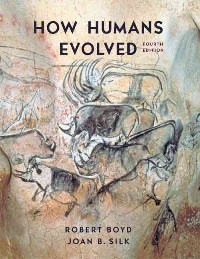
Robert Boyd and Joan B. Silk bring their respective specialties to the groundbreaking Fourth Edition of How Humans Evolved . Using the broad perspective of behavioral ecology—how human behavior has been influenced by the evolutionary process—the authors offer a balanced discussion, drawing on updated coverage of the human fossil record. The well-structured pedagogical framework of the text, with its emphasis on overarching ideas, makes the material accessible to introductory students.
目录
Preface p. XV
Prologue: Why Study Human Evolution? p. XX
How Evolution Works
Adaptation by Natural Selection p. 2
Explaining Adaptation before Darwin p. 2
Darwin's Theory of Adaptation p. 4
Darwin's Postulates p. 5
An Example of Adaptation by Natural Selection p. 6
Individual Selection p. 11
The Evolution of Complex Adaptations p. 12
Why Small Variations Are Important p. 12
Why Intermediate Steps Are Favored by Selection p. 14
Rates of Evolutionary Change p. 17
Darwin's Difficulties Explaining Variation p. 21
Genetics p. 24
Mendelian Genetics p. 24
Cell Division and the Role of Chromosomes in Inheritance p. 26
Mitosis and Meiosis p. 27
Chromosomes and Mendel's Experimental Results p. 28
Linkage and Recombination p. 32
More On Recombination p. 34
Molecular Genetics p. 37
Genes Are DNA p. 38
Structural Genes Code for Proteins p. 40
Regulatory Sequences Control Gene Expression p. 46
Not All DNA Codes for Proteins p. 48
The Modern Synthesis p. 51
Population Genetics p. 51
Genes in Populations p. 52
Genotypic Frequencies after Two Generations of Random Mating p. 57
How Random Mating and Sexual Reproduction Change Genotypic Frequencies p. 53
How Natural Selection Changes Gene Frequencies p. 57
The Modern Synthesis p. 58
The Genetics of Continuous Variation p. 58
How Variation Is Maintained p. 62
Natural Selection and Behavior p. 66
Constraints on Adaptation p. 69
Correlated Characters p. 70
Disequilibrium p. 72
Genetic Drift p. 73
Local versus Optimal Adaptations p. 77
Other Constraints on Evolution p. 78
The Geometry of Area/Volume Ratios p. 79
Speciation and Phylogeny p. 83
What Are Species? p. 83
The Biological Species Concept p. 85
The Ecological Species Concept p. 86
The Origin of Species p. 88
Allopatric Speciation p. 89
Parapatric and Sympatric Speciation p. 91
The Tree of Life p. 94
Why Reconstruct Phylogenies? p. 97
How to Reconstruct Phylogenies p. 99
The Role of Phylogeny in the Comparative Method p. 100
Problems Due to Convergence p. 101
Problems Due to Ancestral Characters p. 102
Using Genetic-Distance Data to Date Phylogenetic Events p. 105
Taxonomy: Naming Names p. 107
Primate Ecology and Behavior
Introduction to the Primates p. 114
Two Reasons to Study Primates p. 114
Primates Are Our Closest Relatives p. 115
Primates Are a Diverse Order p. 115
Features That Define the Primates p. 116
What's in a Tooth? p. 120
Primate Biogeography p. 121
A Taxonomy of Living Primates p. 122
The Prosimians p. 122
The Anthropoids p. 124
Primate Conservation p. 131
Primate Ecology p. 136
The Distribution of Food p. 137
Dietary Adaptations of Primates p. 142
Activity Patterns p. 145
Ranging Behavior p. 147
Predation p. 149
Primate Sociality p. 152
Forms of Social Groups among Primates p. 133
The Distribution of Females p. 156
Dominance Hierarchies p. 158
The Distribution of Males p. 161
Primate Mating Systems p. 164
The Language of Adaptive Explanations p. 165
The Evolution of Reproductive Strategies p. 166
Reproductive Strategies of Females p. 169
Sources of Variation in Female Reproductive Performance p. 170
Reproductive Trade-offs p. 174
Sexual Selection and Male Mating Strategies p. 177
Intrasexual Selection p. 179
Intersexual Selection p. 181
Male Reproductive Tactics p. 182
Investing Males p. 183
Male-Male Competition in Nonmonogamous Groups p. 184
Infanticide p. 187
Paternal Care in Nonmonogamous Groups p. 192
Female Mate Choice p. 193
The Evolution of Social Behavior p. 196
Kinds of Social Interactions p. 197
Altruism: A Conundrum p. 198
Kin Selection p. 200
Group Selection p. 201
Hamilton's Rule p. 202
Evidence of Kin Selection in Primates p. 205
How Relationships Are Maintained p. 209
Reciprocal Altruism p. 213
Primate Life Histories and the Evolution of Intelligence p. 218
Big Brains and Long Lives p. 218
Life History Theory p. 219
The Evolution of Primate Life Histories p. 222
Selective Pressures Favoring Large Brains p. 223
What Do Monkeys Know? p. 229
Ecological Knowledge p. 229
Social Knowledge p. 230
The Value of Studying Primate Behavior p. 238
The History of the Human Lineage
From Tree Shrew to Ape p. 242
Continental Drift and Climate Change p. 245
The Methods of Paleontology p. 247
Using Deep-Sea Cores to Reconstruct Ancient Climates p. 248
The Evolution of the Early Primates p. 251
The First Anthropoids p. 255
Facts that Teeth Can Reveal p. 258
Missing Links p. 262
The Emergence of the Hominoids p. 264
From Hominoid to Hominin p. 269
At the Beginning p. 271
Ardipithecus p. 271
Orrorin tugenensis p. 272
Sahelanthropus tchadensis p. 272
The Hominin Community Diversifies p. 273
Australopithecus p. 275
A. anamensis p. 275
A. afarensis p. 276
A. africanus p. 282
A. garhi p. 284
A. habilis/rudolfensis p. 285
Paranthropus p. 288
Chemical Clues about the Diet of Paranthropines p. 291
Kenyanthropus p. 292
Hominin Phylogenies p. 293
The Evolution of Early Hominin Morphology and Behavior p. 295
The Evolution of Bipedalism p. 295
Early Hominin Subsistence p. 297
Early Hominin Social Organization p. 300
Oldowan Toolmakers and the Origin of Human Life History p. 304
The Oldowan Toolmakers p. 306
Ancient Toolmaking and Tool Use p. 306
Complex Foraging Shapes Human Life History p. 308
What Meat Eating Favors Food Sharing p. 312
Evidence for Complex Foraging by Oldowan Toolmakers p. 314
Archaeological Evidence for Meat Eating p. 316
Hunters or Scavengers? p. 320
Domestic Lives of Oldowan Toolmakers p. 323
Back to the Future: The Transition to Modern Human Life Histories p. 323
From Hominin to Homo p. 327
Hominins of the Lower Pleistocene: Homo ergaster p. 328
Morphology p. 330
Tools and Subsistence p. 333
Hominins of the Early Middle Pleistocene (900 to 300 kya) p. 337
Eastern Asia: Homo erectus p. 340
Africa and Western Eurasia: Homo heidelbergensis p. 343
Hominins of the Later Pleistocene (300 to 50 kya) p. 345
Eastern Eurasia: Homo erectus and Homo heidelbergensis p. 346
Western Eurasia: The Neanderthals p. 348
Africa: The Road to Homo sapiens? p. 356
The Sources of Change p. 357
The Muddle in the Middle p. 358
Homo sapiens and the Evolution of Modern Human Behavior p. 362
Modern Homo sapiens p. 363
The Evolution of the Human Genome p. 365
Archaeological Evidence for Modern Human Behavior p. 367
Upper Paleolithic Technology and Culture p. 369
The Origin and Spread of Modern Humans p. 376
Genetic Data p. 377
Mitochondrial Eve p. 382
Evidence from Fossils and Tool Kits p. 388
Modern Human Behavior: Revolution or Evolution? p. 390
The African Archaeological Record during the Later Pleistocene p. 391
How Modern Human Behavior Evolved p. 395
Arcy-sur-Cure and the Causes of Modern Human Behavior p. 397
Evolution and Modern Humans
Human Genetic Diversity p. 402
Explaining Human Variation p. 402
Variation in Traits Influenced by Single Genes p. 406
Causes of Genetic Variation within Groups p. 408
Calculating Gene Frequencies for a Balanced Polymorphism p. 410
Causes of Genetic Variation among Groups p. 411
Variation in Complex Phenotypic Traits p. 417
Genetic Variation within Groups p. 419
Genetic Variation among Groups p. 420
The Race Concept p. 423
Evolution and Human Behavior p. 431
Why Evolution Is Relevant to Human Behavior p. 431
Understanding How We Think p. 434
Inbreeding Avoidance p. 436
Why Inbred Matings Are Bad News p. 437
Human Language p. 440
Evolution and Human Culture p. 445
Culture Is a Derived Trait in Humans p. 445
Culture Is an Adaptation p. 451
Understanding the Sources of Behavioral Variation p. 449
Human Mate Choice and Parenting p. 457
The Psychology of Human Mate Preferences p. 458
Some Social Consequences of Mate Preferences p. 468
Kipsigis Bridewealth p. 468
Nyinba Polyandry p. 470
Raising Children p. 473
Parenting Effort and Mating Effort p. 473
Grandparental Care p. 476
Discriminative Parental Solicitude p. 477
Prenatal Investment p. 477
Infanticide p. 479
Adoption p. 481
Adoption in Oceania p. 481
Adoption in Industrialized Societies p. 482
Is Human Evolution Over? p. 484
Epilogue: There Is Grandeur in This View of Life ... p. 487
The Skeletal Anatomy of Primates p. 1
Glossary p. 3
Credits p. 17
Index p. 23
Prologue: Why Study Human Evolution? p. XX
How Evolution Works
Adaptation by Natural Selection p. 2
Explaining Adaptation before Darwin p. 2
Darwin's Theory of Adaptation p. 4
Darwin's Postulates p. 5
An Example of Adaptation by Natural Selection p. 6
Individual Selection p. 11
The Evolution of Complex Adaptations p. 12
Why Small Variations Are Important p. 12
Why Intermediate Steps Are Favored by Selection p. 14
Rates of Evolutionary Change p. 17
Darwin's Difficulties Explaining Variation p. 21
Genetics p. 24
Mendelian Genetics p. 24
Cell Division and the Role of Chromosomes in Inheritance p. 26
Mitosis and Meiosis p. 27
Chromosomes and Mendel's Experimental Results p. 28
Linkage and Recombination p. 32
More On Recombination p. 34
Molecular Genetics p. 37
Genes Are DNA p. 38
Structural Genes Code for Proteins p. 40
Regulatory Sequences Control Gene Expression p. 46
Not All DNA Codes for Proteins p. 48
The Modern Synthesis p. 51
Population Genetics p. 51
Genes in Populations p. 52
Genotypic Frequencies after Two Generations of Random Mating p. 57
How Random Mating and Sexual Reproduction Change Genotypic Frequencies p. 53
How Natural Selection Changes Gene Frequencies p. 57
The Modern Synthesis p. 58
The Genetics of Continuous Variation p. 58
How Variation Is Maintained p. 62
Natural Selection and Behavior p. 66
Constraints on Adaptation p. 69
Correlated Characters p. 70
Disequilibrium p. 72
Genetic Drift p. 73
Local versus Optimal Adaptations p. 77
Other Constraints on Evolution p. 78
The Geometry of Area/Volume Ratios p. 79
Speciation and Phylogeny p. 83
What Are Species? p. 83
The Biological Species Concept p. 85
The Ecological Species Concept p. 86
The Origin of Species p. 88
Allopatric Speciation p. 89
Parapatric and Sympatric Speciation p. 91
The Tree of Life p. 94
Why Reconstruct Phylogenies? p. 97
How to Reconstruct Phylogenies p. 99
The Role of Phylogeny in the Comparative Method p. 100
Problems Due to Convergence p. 101
Problems Due to Ancestral Characters p. 102
Using Genetic-Distance Data to Date Phylogenetic Events p. 105
Taxonomy: Naming Names p. 107
Primate Ecology and Behavior
Introduction to the Primates p. 114
Two Reasons to Study Primates p. 114
Primates Are Our Closest Relatives p. 115
Primates Are a Diverse Order p. 115
Features That Define the Primates p. 116
What's in a Tooth? p. 120
Primate Biogeography p. 121
A Taxonomy of Living Primates p. 122
The Prosimians p. 122
The Anthropoids p. 124
Primate Conservation p. 131
Primate Ecology p. 136
The Distribution of Food p. 137
Dietary Adaptations of Primates p. 142
Activity Patterns p. 145
Ranging Behavior p. 147
Predation p. 149
Primate Sociality p. 152
Forms of Social Groups among Primates p. 133
The Distribution of Females p. 156
Dominance Hierarchies p. 158
The Distribution of Males p. 161
Primate Mating Systems p. 164
The Language of Adaptive Explanations p. 165
The Evolution of Reproductive Strategies p. 166
Reproductive Strategies of Females p. 169
Sources of Variation in Female Reproductive Performance p. 170
Reproductive Trade-offs p. 174
Sexual Selection and Male Mating Strategies p. 177
Intrasexual Selection p. 179
Intersexual Selection p. 181
Male Reproductive Tactics p. 182
Investing Males p. 183
Male-Male Competition in Nonmonogamous Groups p. 184
Infanticide p. 187
Paternal Care in Nonmonogamous Groups p. 192
Female Mate Choice p. 193
The Evolution of Social Behavior p. 196
Kinds of Social Interactions p. 197
Altruism: A Conundrum p. 198
Kin Selection p. 200
Group Selection p. 201
Hamilton's Rule p. 202
Evidence of Kin Selection in Primates p. 205
How Relationships Are Maintained p. 209
Reciprocal Altruism p. 213
Primate Life Histories and the Evolution of Intelligence p. 218
Big Brains and Long Lives p. 218
Life History Theory p. 219
The Evolution of Primate Life Histories p. 222
Selective Pressures Favoring Large Brains p. 223
What Do Monkeys Know? p. 229
Ecological Knowledge p. 229
Social Knowledge p. 230
The Value of Studying Primate Behavior p. 238
The History of the Human Lineage
From Tree Shrew to Ape p. 242
Continental Drift and Climate Change p. 245
The Methods of Paleontology p. 247
Using Deep-Sea Cores to Reconstruct Ancient Climates p. 248
The Evolution of the Early Primates p. 251
The First Anthropoids p. 255
Facts that Teeth Can Reveal p. 258
Missing Links p. 262
The Emergence of the Hominoids p. 264
From Hominoid to Hominin p. 269
At the Beginning p. 271
Ardipithecus p. 271
Orrorin tugenensis p. 272
Sahelanthropus tchadensis p. 272
The Hominin Community Diversifies p. 273
Australopithecus p. 275
A. anamensis p. 275
A. afarensis p. 276
A. africanus p. 282
A. garhi p. 284
A. habilis/rudolfensis p. 285
Paranthropus p. 288
Chemical Clues about the Diet of Paranthropines p. 291
Kenyanthropus p. 292
Hominin Phylogenies p. 293
The Evolution of Early Hominin Morphology and Behavior p. 295
The Evolution of Bipedalism p. 295
Early Hominin Subsistence p. 297
Early Hominin Social Organization p. 300
Oldowan Toolmakers and the Origin of Human Life History p. 304
The Oldowan Toolmakers p. 306
Ancient Toolmaking and Tool Use p. 306
Complex Foraging Shapes Human Life History p. 308
What Meat Eating Favors Food Sharing p. 312
Evidence for Complex Foraging by Oldowan Toolmakers p. 314
Archaeological Evidence for Meat Eating p. 316
Hunters or Scavengers? p. 320
Domestic Lives of Oldowan Toolmakers p. 323
Back to the Future: The Transition to Modern Human Life Histories p. 323
From Hominin to Homo p. 327
Hominins of the Lower Pleistocene: Homo ergaster p. 328
Morphology p. 330
Tools and Subsistence p. 333
Hominins of the Early Middle Pleistocene (900 to 300 kya) p. 337
Eastern Asia: Homo erectus p. 340
Africa and Western Eurasia: Homo heidelbergensis p. 343
Hominins of the Later Pleistocene (300 to 50 kya) p. 345
Eastern Eurasia: Homo erectus and Homo heidelbergensis p. 346
Western Eurasia: The Neanderthals p. 348
Africa: The Road to Homo sapiens? p. 356
The Sources of Change p. 357
The Muddle in the Middle p. 358
Homo sapiens and the Evolution of Modern Human Behavior p. 362
Modern Homo sapiens p. 363
The Evolution of the Human Genome p. 365
Archaeological Evidence for Modern Human Behavior p. 367
Upper Paleolithic Technology and Culture p. 369
The Origin and Spread of Modern Humans p. 376
Genetic Data p. 377
Mitochondrial Eve p. 382
Evidence from Fossils and Tool Kits p. 388
Modern Human Behavior: Revolution or Evolution? p. 390
The African Archaeological Record during the Later Pleistocene p. 391
How Modern Human Behavior Evolved p. 395
Arcy-sur-Cure and the Causes of Modern Human Behavior p. 397
Evolution and Modern Humans
Human Genetic Diversity p. 402
Explaining Human Variation p. 402
Variation in Traits Influenced by Single Genes p. 406
Causes of Genetic Variation within Groups p. 408
Calculating Gene Frequencies for a Balanced Polymorphism p. 410
Causes of Genetic Variation among Groups p. 411
Variation in Complex Phenotypic Traits p. 417
Genetic Variation within Groups p. 419
Genetic Variation among Groups p. 420
The Race Concept p. 423
Evolution and Human Behavior p. 431
Why Evolution Is Relevant to Human Behavior p. 431
Understanding How We Think p. 434
Inbreeding Avoidance p. 436
Why Inbred Matings Are Bad News p. 437
Human Language p. 440
Evolution and Human Culture p. 445
Culture Is a Derived Trait in Humans p. 445
Culture Is an Adaptation p. 451
Understanding the Sources of Behavioral Variation p. 449
Human Mate Choice and Parenting p. 457
The Psychology of Human Mate Preferences p. 458
Some Social Consequences of Mate Preferences p. 468
Kipsigis Bridewealth p. 468
Nyinba Polyandry p. 470
Raising Children p. 473
Parenting Effort and Mating Effort p. 473
Grandparental Care p. 476
Discriminative Parental Solicitude p. 477
Prenatal Investment p. 477
Infanticide p. 479
Adoption p. 481
Adoption in Oceania p. 481
Adoption in Industrialized Societies p. 482
Is Human Evolution Over? p. 484
Epilogue: There Is Grandeur in This View of Life ... p. 487
The Skeletal Anatomy of Primates p. 1
Glossary p. 3
Credits p. 17
Index p. 23
- 名称
- 类型
- 大小
光盘服务联系方式: 020-38250260 客服QQ:4006604884
云图客服:
用户发送的提问,这种方式就需要有位在线客服来回答用户的问题,这种 就属于对话式的,问题是这种提问是否需要用户登录才能提问
Video Player
×
Audio Player
×
pdf Player
×
亲爱的云图用户,
光盘内的文件都可以直接点击浏览哦
无需下载,在线查阅资料!
