

简介
Summary:
Publisher Summary 1
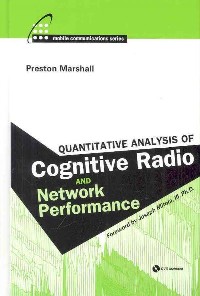
Marshall (electrical engineering, USC) provides measurements and analysis techniques for determining the quantitative contribution of cognitive radio in analogous terms to current evaluations of conventional radio and network architectures. After reviewing the basic principles of radio design and spectrum management, the textbook characterizes spectrum environments, explains how cognitive radio can increase the density of wireless devices, and suggests several approaches for implementing cognitive radio functionality. The accompanying DVD contains a link margin spreadsheet, processed frequency domain samples, and MATLAB routines. Annotation 漏2011 Book News, Inc., Portland, OR (booknews.com)
目录
Table Of Contents:
Foreword xv
Preface xix
Chapter 1 Introduction to Cognitive Radio 1(14)
1.1 Motivation for Cognitive Radio 1(1)
1.2 Objectives of This Book 2(1)
1.3 Summary of Cognitive Radio Conceptual Development 3(3)
1.4 Cognitive Radio Capability Metrics 6(2)
1.5 General Assessment Methodology 8(1)
1.6 A Cognitive Radio Use Case 9(1)
1.7 Structure of This Book 10(4)
Exercises 14(1)
References 14(1)
Chapter 2 A General Introduction to Radio Design and Operations 15(26)
2.1 Introduction to Radio Design 15(2)
2.2 Baseline Superheterodyne Receiver Design 17(4)
2.2.1 Antenna 18(1)
2.2.2 Preselector Filter 19(1)
2.2.3 Low Noise Amplifier (LNA) 20(1)
2.2.4 Local Oscillator (LO) 20(1)
2.2.5 Mixer 20(1)
2.2.6 Intermediate Frequency Filter 21(1)
2.2.7 Demodulator 21(1)
2.3 Nontraditional Receiver Design 21(1)
2.4 Signal Processing 22(4)
2.4.1 Modulation 22(2)
2.4.2 Error Detection and Correction 24(1)
2.4.3 Architecture and Channel Access 25(1)
2.5 Impact of Noise on Signal Channels 26(1)
2.6 Impact of Out-of-Band and Adjacent Channel Signals 27(4)
2.7 Radio Signal Propagation 31(7)
2.7.1 Path Loss and Link Margins 31(3)
2.7.2 Attenuating Effects 34(1)
2.7.3 Multipath Effects 34(4)
2.8 Emerging RF Technologies 38(1)
2.8.1 RF Integrated Circuits (RFIC) 38(1)
2.8.2 Software-Defined Radio (SDR) 39(1)
Exercises 39(1)
References 40(1)
Chapter 3 Conventional and Dynamic Spectrum Management Principles 41(16)
3.1 Importance of Spectrum Access to Cognitive Radio Concepts 41(1)
3.2 Conventional Spectrum Management Principles and Practices 42(5)
3.2.1 Overview 42(1)
3.2.2 Spectrum Allocations 43(3)
3.2.3 Frequency Assignment 46(1)
3.3 Dynamic Spectrum Access Principles 47(3)
3.4 Other Spectrum Management Considerations 50(1)
3.4.1 Assumed "Squatter's Rights" 50(1)
3.4.2 Out-of-Band Effects 51(1)
3.5 Emerging DSA Opportunity---TV "White Space" 51(1)
3.6 DSA's Role in Cognitive Radio 52(1)
Exercises 53(1)
References 54(3)
Chapter 4 A Short Introduction to Cognitive Radio Development 57(20)
4.1 Overview 57(2)
4.2 Objective 59(5)
4.2.1 Spectrum Sharing 59(1)
4.2.2 Generalized Spectrum Sharing 60(1)
4.2.3 Band-Specific Sharing 61(2)
4.2.4 Link Operation Enhancement 63(1)
4.2.5 Flexibility for Adaptive Networking and Upper Layers 63(1)
4.2.6 User Behavior Analysis 63(1)
4.3 Implementation 64(2)
4.3.1 Learning and Genetic Algorithms 64(1)
4.3.2 Declarative 64(1)
4.3.3 Knowledge and Trust 65(1)
4.4 Experimentation 66(2)
4.4.1 Equipment-Level Experimentation 67(1)
4.4.2 System-Level Experimentation 67(1)
4.5 Policy and Standards Infrastructure 68(1)
4.5.1 Policy and Economics 68(1)
4.5.2 Standards Development 69(1)
Exercises 69(1)
References 70(7)
Chapter 5 General Operating Concept of a Cognitive Radio 77(24)
5.1 Overview of Cognitive Radio Operation 77(2)
5.2 Band, Frequency, and Emission Characterization and Selection 79(8)
5.2.1 Overview 79(4)
5.2.2 Physical Layer Opportunities 83(2)
5.2.3 Network Topology Options 85(2)
5.3 A General Model of Cognitive Radio Decision Making 87(5)
5.4 Algorithmic Description of Decision Processing 92(6)
Exercises 98(1)
References 99(2)
Chapter 6 Characterizing Spectrum Occupancy of Signaling Bandwidths 101(22)
6.1 Introduction 101(3)
6.2 Spectrum Occupancy and Access Characteristics 104(6)
6.3 Analytic Model of Spectrum Occupancy 110(6)
6.4 Closed-Form Estimate of Spectrum Occupancy 116(5)
Exercises 121(1)
References 122(1)
Chapter 7 Characterizing High-Energy Environments 123(20)
7.1 Distribution of High-Energy Signals 123(7)
7.2 Analytic Treatment of High-Energy Distribution 130(5)
7.3 Analytic Generation of Front-End Distributions 135(5)
7.4 Application of Spectrum Distribution Parameters 140(1)
Exercises 140(1)
References 141(2)
Chapter 8 Synthesizing Distribution Characteristics of Arbitrary Spectrum Environments 143(8)
8.1 Need for Generalized Environmental Expressions 143(2)
8.2 Generalized Determinations of Spectrum Occupancy 145(1)
8.3 Generalized Determinations of High-Energy Spectrum Characteristics 146(1)
8.4 Example of Spectrum Distribution Synthesis 147(1)
8.5 Summary 147(1)
Exercises 148(1)
References 149(2)
Chapter 9 Analysis of Spectrum Occupancy and False Alarm Rates 151(8)
9.1 Time-Domain Considerations of Spectrum Occupancy 151(1)
9.2 The Possibility of False Alarms 152(1)
9.3 Methods for Reducing the Effect of False Alarm Rate 153(4)
Exercises 157(1)
References 157(2)
Chapter 10 Noise Floor Elevation Due to Intermodulation 159(16)
10.1 Phenomenology of Front-End Intermodulation 159(4)
10.2 Analysis of Spectrum Environments 163(5)
10.3 Front-End Linearity Adaptation Evaluation Metrics 168(5)
10.3.1 Probability of Front-End Overload 168(2)
10.3.2 Intermodulation Induced Front-End Noise Elevation 170(3)
Exercises 173(1)
References 174(1)
Chapter 11 Front-End Linearity Management Algorithms 175(20)
11.1 Introduction to Front-End Linearity Management 175(1)
11.2 Pick Quietest Band First Strategy 176(5)
11.3 Marginal Noise Impact Strategy 181(1)
11.4 Front-End Linearity Management Benefits 182(1)
11.5 Reduction in Probability of Front-End Overload 183(4)
11.6 Reduction of Front-End Noise Floor Elevation 187(5)
11.7 Front-End Energy Management Conclusions 192(2)
Exercises 194(1)
References 194(1)
Chapter 12 Selection of Channels to Minimize the Environmental Noise Floor 195(20)
12.1 Introduction 195(4)
12.2 Noise Floor Reference Evaluation Metric 199(1)
12.3 Noise Floor Management Algorithms and Methods 200(12)
12.4 Noise Floor Management Benefits 212(1)
Exercises 213(1)
References 213(2)
Chapter 13 Achieving Interference Tolerance in Cognitive Radios 215(26)
13.1 Interference and Cognitive Radio 215(6)
13.2 Dynamic Spectrum Access Role in Interference Avoidance and Tolerance 221(4)
13.3 Spectrum Management Analysis Cases 225(3)
13.4 Analysis Approach and Assumptions 228(9)
13.4.1 Communications Range and Receiver Characteristics 229(2)
13.4.2 Mobility Characteristics 231(1)
13.4.3 Propagation Characteristics 232(2)
13.4.4 Operating Characteristics 234(1)
13.4.5 Analysis Approach 235(1)
13.4.6 A Quantitative Example 235(2)
Exercises 237(1)
References 238(3)
Chapter 14 Analysis of Interfering and Noninterfering Wireless Operation 241(24)
14.1 Impact of Spectrum Assignment Methodology 241(1)
14.2 Interference-Free DSA Operation 242(8)
14.3 Interference-Tolerant DSA Operation 250(11)
14.4 Dynamic Spectrum Access Benefits 261(1)
14.5 Dynamic Spectrum Access Conclusions 262(1)
Exercises 262(1)
References 263(2)
Chapter 15 Minimizing the Spatial Interference Footprint by Cognitive Radio 265(14)
15.1 Spatial Footprint Management Objectives 265(6)
15.2 Spectral Footprint Reference Evaluation Metrics 271(4)
15.3 α-Aware Waveform Selection Principles 275(1)
Exercises 276(1)
References 277(2)
Chapter 16 Determination of the Density of Cognitive Radio Networks 279(16)
16.1 DSA and Spectral Footprint Management Impacts on Network Scaling 279(1)
16.2 Classical Model of MANET Scaling 280(1)
16.3 DSA-Based Scaling Analysis 281(3)
16.4 Computation of Density 284(7)
16.5 DSA Network Scaling Conclusions 291(1)
Exercises 292(1)
References 293(2)
Chapter 17 Network Layer Performance Implications of Cognitive Radio 295(18)
17.1 Implications on Network-Level Decision Making 295(1)
17.2 The Open System Interconnection Reference Model 296(4)
17.3 Dynamic Bandwidth Topology 300(1)
17.4 Cognitive Radio Enabled Dynamic Networks 301(3)
17.5 Network Topology 304(1)
17.6 Quantitative Impacts of Multitransceiver Nodes 305(5)
Exercises 310(1)
References 311(2)
Chapter 18 Cognitive Radio Application of Content-Based Networking 313(14)
18.1 General Principles of Content-Based Networking 313(3)
18.2 DTN as a Metaphor for Content-Based Networks 316(1)
18.3 Introduction of Content Networking into Cognitive Radio Systems 317(2)
18.4 Infrastructureless Networking 319(2)
18.5 Quantitative Effects of Content Management 321(3)
18.6 Content and Infrastructure Conclusion 324(1)
Exercises 324(1)
References 325(2)
Chapter 19 Policy and Decision Making in Cognitive Radios 327(26)
19.1 Implementation Approaches for Cognitive Radios 327(1)
19.2 Overview of Policy Processing Objectives 328(1)
19.3 Example Policy Processing Architecture 329(2)
19.4 Policy Reasoning Technical Issues 331(6)
19.5 Policy Representation 337(1)
19.6 First-Order Predicate Calculus Policy Expressions 338(2)
19.7 Managing the Decision Making of a Cognitive Radio 340(5)
19.7.1 Addressing Probabilistic Decisions, Belief, and Uncertainty 341(2)
19.7.2 Decision Theory 343(2)
19.8 Overhead Costs of Cognitive Radio Implementation 345(2)
19.8.1 Environmental and Spectrum Sensing Resources 345(1)
19.8.2 Digital Processing and Storage Requirements 346(1)
19.8.3 Additional Communications for Awareness 347(1)
19.9 Summary 347(2)
Exercises 349(1)
References 350(3)
Chapter 20 Performance, Reliability, and Component Trades 353(20)
20.1 Overview of Cognitive Radio Analysis 353(1)
20.2 Reduction in Hardware Requirements 353(7)
20.2.1 Reduced Receive Energy Consumption 356(1)
20.2.2 Transmit Energy Reduction 357(2)
20.2.3 Reduction in Spectrum Requirements 359(1)
20.2.4 Enabling Effective Utilization of Spectrum Markets 359(1)
20.3 Increased Cognitive Radio Performance 360(8)
20.3.1 Increase in Operational Availability 361(5)
20.3.2 Decrease in Noise Floor Probability 366(1)
20.3.3 Increased Operating Period/Reduced Energy Storage Mass 367(1)
20.4 Fungibility of Benefits 368(2)
20.5 Conclusions 370(1)
Exercises 371(1)
References 371(2)
Chapter 21 Large-Scale System Experiments and Demonstrations 373(14)
21.1 Overview of Experimentation and Demonstration 373(2)
21.2 DARPA neXt Generation (XG) Program 375(3)
21.2.1 XG Program Overview 375(1)
21.2.2 XG Program Field Trials 375(2)
21.2.3 XG Radio Design 377(1)
21.3 DARPA Wireless Network after Next (WNaN) 378(4)
21.3.1 WNaN Objectives 378(3)
21.3.2 Notional Hardware Concept and Design 381(1)
21.4 Delay and Disruption Tolerance Networking 382(2)
21.4.1 DTN as a Vehicle for Content-Based Access 383(1)
21.5 Conclusion 384(1)
Exercises 385(1)
References 385(2)
Chapter 22 Desirable Cognitive Radio Implementation Technology Developments 387(14)
22.1 Enabling Technology Areas for Cognitive Radio 387(1)
22.2 Front-End Filters 388(3)
22.3 RF CMOS 391(3)
22.4 Policy Enforcement, Decision Making, and Air Interface Processing 394(3)
22.4.1 Air Interface Processing 394(1)
22.4.2 Cognitive Radio Decision Processing 395(2)
Exercises 397(1)
References 398(3)
Chapter 23 Future Research Needs Towards a Cognitive Radio Ecosystem 401(12)
23.1 Introduction 401(1)
23.2 Density and Scaling 402(1)
23.3 Cognitive Algorithms and Reasoning Expressions 403(1)
23.4 Assuring Cognitive Radio Stability 404(3)
23.5 Decision Theory in Cognitive Radio 407(1)
23.6 Information Theory in Cognitive Radio 408(1)
23.7 Security 409(1)
23.8 Conclusions 409(1)
Exercises 410(1)
References 411(2)
Appendix A Internet Protocol Networking for Cognitive Radios 413(10)
A.1 Introduction to IP Networking 413(1)
A.2 Basic IP Networking Principles 414(2)
A.2.1 IP Numbering 414(1)
A.2.2 IP Routing 415(1)
A.3 Impacts on Wireless Devices and Networks 416(4)
A.3.1 Wireless Network Topology 418(1)
A.3.2 Wireless Device Identity 418(2)
A.3.3 Opportunistic and Multihoming Internet Access 420(1)
A.3.4 Naming Services 420(1)
A.3.5 Dynamics 420(1)
A.4 Assumed Cost of Bandwidth and Network Scaling 420(1)
A.5 Summary 421(1)
References 421(2)
Appendix B DVD Contents 423(14)
B.1 Organization of Files 423(1)
B.2 Book Figures 423(2)
B.3 Communications Link Margin Spreadsheet 425(1)
B.4 Spectrum Measurements Data 425(9)
B.4.1 Overview 425(2)
B.4.2 Frequency Domain Files 427(2)
B.4.3 Spectrum Occupancy Statistics 429(1)
B.4.4 Front-End Statistics 429(5)
B.5 MATLAB Routines 434(3)
B.5.1 Monotonic Indices 434(1)
B.5.2 MATLAB Access Routine 434(3)
List of Acronyms and Abbreviations 437(6)
List of Symbols 443(6)
About the Author 449(2)
Index 451
Foreword xv
Preface xix
Chapter 1 Introduction to Cognitive Radio 1(14)
1.1 Motivation for Cognitive Radio 1(1)
1.2 Objectives of This Book 2(1)
1.3 Summary of Cognitive Radio Conceptual Development 3(3)
1.4 Cognitive Radio Capability Metrics 6(2)
1.5 General Assessment Methodology 8(1)
1.6 A Cognitive Radio Use Case 9(1)
1.7 Structure of This Book 10(4)
Exercises 14(1)
References 14(1)
Chapter 2 A General Introduction to Radio Design and Operations 15(26)
2.1 Introduction to Radio Design 15(2)
2.2 Baseline Superheterodyne Receiver Design 17(4)
2.2.1 Antenna 18(1)
2.2.2 Preselector Filter 19(1)
2.2.3 Low Noise Amplifier (LNA) 20(1)
2.2.4 Local Oscillator (LO) 20(1)
2.2.5 Mixer 20(1)
2.2.6 Intermediate Frequency Filter 21(1)
2.2.7 Demodulator 21(1)
2.3 Nontraditional Receiver Design 21(1)
2.4 Signal Processing 22(4)
2.4.1 Modulation 22(2)
2.4.2 Error Detection and Correction 24(1)
2.4.3 Architecture and Channel Access 25(1)
2.5 Impact of Noise on Signal Channels 26(1)
2.6 Impact of Out-of-Band and Adjacent Channel Signals 27(4)
2.7 Radio Signal Propagation 31(7)
2.7.1 Path Loss and Link Margins 31(3)
2.7.2 Attenuating Effects 34(1)
2.7.3 Multipath Effects 34(4)
2.8 Emerging RF Technologies 38(1)
2.8.1 RF Integrated Circuits (RFIC) 38(1)
2.8.2 Software-Defined Radio (SDR) 39(1)
Exercises 39(1)
References 40(1)
Chapter 3 Conventional and Dynamic Spectrum Management Principles 41(16)
3.1 Importance of Spectrum Access to Cognitive Radio Concepts 41(1)
3.2 Conventional Spectrum Management Principles and Practices 42(5)
3.2.1 Overview 42(1)
3.2.2 Spectrum Allocations 43(3)
3.2.3 Frequency Assignment 46(1)
3.3 Dynamic Spectrum Access Principles 47(3)
3.4 Other Spectrum Management Considerations 50(1)
3.4.1 Assumed "Squatter's Rights" 50(1)
3.4.2 Out-of-Band Effects 51(1)
3.5 Emerging DSA Opportunity---TV "White Space" 51(1)
3.6 DSA's Role in Cognitive Radio 52(1)
Exercises 53(1)
References 54(3)
Chapter 4 A Short Introduction to Cognitive Radio Development 57(20)
4.1 Overview 57(2)
4.2 Objective 59(5)
4.2.1 Spectrum Sharing 59(1)
4.2.2 Generalized Spectrum Sharing 60(1)
4.2.3 Band-Specific Sharing 61(2)
4.2.4 Link Operation Enhancement 63(1)
4.2.5 Flexibility for Adaptive Networking and Upper Layers 63(1)
4.2.6 User Behavior Analysis 63(1)
4.3 Implementation 64(2)
4.3.1 Learning and Genetic Algorithms 64(1)
4.3.2 Declarative 64(1)
4.3.3 Knowledge and Trust 65(1)
4.4 Experimentation 66(2)
4.4.1 Equipment-Level Experimentation 67(1)
4.4.2 System-Level Experimentation 67(1)
4.5 Policy and Standards Infrastructure 68(1)
4.5.1 Policy and Economics 68(1)
4.5.2 Standards Development 69(1)
Exercises 69(1)
References 70(7)
Chapter 5 General Operating Concept of a Cognitive Radio 77(24)
5.1 Overview of Cognitive Radio Operation 77(2)
5.2 Band, Frequency, and Emission Characterization and Selection 79(8)
5.2.1 Overview 79(4)
5.2.2 Physical Layer Opportunities 83(2)
5.2.3 Network Topology Options 85(2)
5.3 A General Model of Cognitive Radio Decision Making 87(5)
5.4 Algorithmic Description of Decision Processing 92(6)
Exercises 98(1)
References 99(2)
Chapter 6 Characterizing Spectrum Occupancy of Signaling Bandwidths 101(22)
6.1 Introduction 101(3)
6.2 Spectrum Occupancy and Access Characteristics 104(6)
6.3 Analytic Model of Spectrum Occupancy 110(6)
6.4 Closed-Form Estimate of Spectrum Occupancy 116(5)
Exercises 121(1)
References 122(1)
Chapter 7 Characterizing High-Energy Environments 123(20)
7.1 Distribution of High-Energy Signals 123(7)
7.2 Analytic Treatment of High-Energy Distribution 130(5)
7.3 Analytic Generation of Front-End Distributions 135(5)
7.4 Application of Spectrum Distribution Parameters 140(1)
Exercises 140(1)
References 141(2)
Chapter 8 Synthesizing Distribution Characteristics of Arbitrary Spectrum Environments 143(8)
8.1 Need for Generalized Environmental Expressions 143(2)
8.2 Generalized Determinations of Spectrum Occupancy 145(1)
8.3 Generalized Determinations of High-Energy Spectrum Characteristics 146(1)
8.4 Example of Spectrum Distribution Synthesis 147(1)
8.5 Summary 147(1)
Exercises 148(1)
References 149(2)
Chapter 9 Analysis of Spectrum Occupancy and False Alarm Rates 151(8)
9.1 Time-Domain Considerations of Spectrum Occupancy 151(1)
9.2 The Possibility of False Alarms 152(1)
9.3 Methods for Reducing the Effect of False Alarm Rate 153(4)
Exercises 157(1)
References 157(2)
Chapter 10 Noise Floor Elevation Due to Intermodulation 159(16)
10.1 Phenomenology of Front-End Intermodulation 159(4)
10.2 Analysis of Spectrum Environments 163(5)
10.3 Front-End Linearity Adaptation Evaluation Metrics 168(5)
10.3.1 Probability of Front-End Overload 168(2)
10.3.2 Intermodulation Induced Front-End Noise Elevation 170(3)
Exercises 173(1)
References 174(1)
Chapter 11 Front-End Linearity Management Algorithms 175(20)
11.1 Introduction to Front-End Linearity Management 175(1)
11.2 Pick Quietest Band First Strategy 176(5)
11.3 Marginal Noise Impact Strategy 181(1)
11.4 Front-End Linearity Management Benefits 182(1)
11.5 Reduction in Probability of Front-End Overload 183(4)
11.6 Reduction of Front-End Noise Floor Elevation 187(5)
11.7 Front-End Energy Management Conclusions 192(2)
Exercises 194(1)
References 194(1)
Chapter 12 Selection of Channels to Minimize the Environmental Noise Floor 195(20)
12.1 Introduction 195(4)
12.2 Noise Floor Reference Evaluation Metric 199(1)
12.3 Noise Floor Management Algorithms and Methods 200(12)
12.4 Noise Floor Management Benefits 212(1)
Exercises 213(1)
References 213(2)
Chapter 13 Achieving Interference Tolerance in Cognitive Radios 215(26)
13.1 Interference and Cognitive Radio 215(6)
13.2 Dynamic Spectrum Access Role in Interference Avoidance and Tolerance 221(4)
13.3 Spectrum Management Analysis Cases 225(3)
13.4 Analysis Approach and Assumptions 228(9)
13.4.1 Communications Range and Receiver Characteristics 229(2)
13.4.2 Mobility Characteristics 231(1)
13.4.3 Propagation Characteristics 232(2)
13.4.4 Operating Characteristics 234(1)
13.4.5 Analysis Approach 235(1)
13.4.6 A Quantitative Example 235(2)
Exercises 237(1)
References 238(3)
Chapter 14 Analysis of Interfering and Noninterfering Wireless Operation 241(24)
14.1 Impact of Spectrum Assignment Methodology 241(1)
14.2 Interference-Free DSA Operation 242(8)
14.3 Interference-Tolerant DSA Operation 250(11)
14.4 Dynamic Spectrum Access Benefits 261(1)
14.5 Dynamic Spectrum Access Conclusions 262(1)
Exercises 262(1)
References 263(2)
Chapter 15 Minimizing the Spatial Interference Footprint by Cognitive Radio 265(14)
15.1 Spatial Footprint Management Objectives 265(6)
15.2 Spectral Footprint Reference Evaluation Metrics 271(4)
15.3 α-Aware Waveform Selection Principles 275(1)
Exercises 276(1)
References 277(2)
Chapter 16 Determination of the Density of Cognitive Radio Networks 279(16)
16.1 DSA and Spectral Footprint Management Impacts on Network Scaling 279(1)
16.2 Classical Model of MANET Scaling 280(1)
16.3 DSA-Based Scaling Analysis 281(3)
16.4 Computation of Density 284(7)
16.5 DSA Network Scaling Conclusions 291(1)
Exercises 292(1)
References 293(2)
Chapter 17 Network Layer Performance Implications of Cognitive Radio 295(18)
17.1 Implications on Network-Level Decision Making 295(1)
17.2 The Open System Interconnection Reference Model 296(4)
17.3 Dynamic Bandwidth Topology 300(1)
17.4 Cognitive Radio Enabled Dynamic Networks 301(3)
17.5 Network Topology 304(1)
17.6 Quantitative Impacts of Multitransceiver Nodes 305(5)
Exercises 310(1)
References 311(2)
Chapter 18 Cognitive Radio Application of Content-Based Networking 313(14)
18.1 General Principles of Content-Based Networking 313(3)
18.2 DTN as a Metaphor for Content-Based Networks 316(1)
18.3 Introduction of Content Networking into Cognitive Radio Systems 317(2)
18.4 Infrastructureless Networking 319(2)
18.5 Quantitative Effects of Content Management 321(3)
18.6 Content and Infrastructure Conclusion 324(1)
Exercises 324(1)
References 325(2)
Chapter 19 Policy and Decision Making in Cognitive Radios 327(26)
19.1 Implementation Approaches for Cognitive Radios 327(1)
19.2 Overview of Policy Processing Objectives 328(1)
19.3 Example Policy Processing Architecture 329(2)
19.4 Policy Reasoning Technical Issues 331(6)
19.5 Policy Representation 337(1)
19.6 First-Order Predicate Calculus Policy Expressions 338(2)
19.7 Managing the Decision Making of a Cognitive Radio 340(5)
19.7.1 Addressing Probabilistic Decisions, Belief, and Uncertainty 341(2)
19.7.2 Decision Theory 343(2)
19.8 Overhead Costs of Cognitive Radio Implementation 345(2)
19.8.1 Environmental and Spectrum Sensing Resources 345(1)
19.8.2 Digital Processing and Storage Requirements 346(1)
19.8.3 Additional Communications for Awareness 347(1)
19.9 Summary 347(2)
Exercises 349(1)
References 350(3)
Chapter 20 Performance, Reliability, and Component Trades 353(20)
20.1 Overview of Cognitive Radio Analysis 353(1)
20.2 Reduction in Hardware Requirements 353(7)
20.2.1 Reduced Receive Energy Consumption 356(1)
20.2.2 Transmit Energy Reduction 357(2)
20.2.3 Reduction in Spectrum Requirements 359(1)
20.2.4 Enabling Effective Utilization of Spectrum Markets 359(1)
20.3 Increased Cognitive Radio Performance 360(8)
20.3.1 Increase in Operational Availability 361(5)
20.3.2 Decrease in Noise Floor Probability 366(1)
20.3.3 Increased Operating Period/Reduced Energy Storage Mass 367(1)
20.4 Fungibility of Benefits 368(2)
20.5 Conclusions 370(1)
Exercises 371(1)
References 371(2)
Chapter 21 Large-Scale System Experiments and Demonstrations 373(14)
21.1 Overview of Experimentation and Demonstration 373(2)
21.2 DARPA neXt Generation (XG) Program 375(3)
21.2.1 XG Program Overview 375(1)
21.2.2 XG Program Field Trials 375(2)
21.2.3 XG Radio Design 377(1)
21.3 DARPA Wireless Network after Next (WNaN) 378(4)
21.3.1 WNaN Objectives 378(3)
21.3.2 Notional Hardware Concept and Design 381(1)
21.4 Delay and Disruption Tolerance Networking 382(2)
21.4.1 DTN as a Vehicle for Content-Based Access 383(1)
21.5 Conclusion 384(1)
Exercises 385(1)
References 385(2)
Chapter 22 Desirable Cognitive Radio Implementation Technology Developments 387(14)
22.1 Enabling Technology Areas for Cognitive Radio 387(1)
22.2 Front-End Filters 388(3)
22.3 RF CMOS 391(3)
22.4 Policy Enforcement, Decision Making, and Air Interface Processing 394(3)
22.4.1 Air Interface Processing 394(1)
22.4.2 Cognitive Radio Decision Processing 395(2)
Exercises 397(1)
References 398(3)
Chapter 23 Future Research Needs Towards a Cognitive Radio Ecosystem 401(12)
23.1 Introduction 401(1)
23.2 Density and Scaling 402(1)
23.3 Cognitive Algorithms and Reasoning Expressions 403(1)
23.4 Assuring Cognitive Radio Stability 404(3)
23.5 Decision Theory in Cognitive Radio 407(1)
23.6 Information Theory in Cognitive Radio 408(1)
23.7 Security 409(1)
23.8 Conclusions 409(1)
Exercises 410(1)
References 411(2)
Appendix A Internet Protocol Networking for Cognitive Radios 413(10)
A.1 Introduction to IP Networking 413(1)
A.2 Basic IP Networking Principles 414(2)
A.2.1 IP Numbering 414(1)
A.2.2 IP Routing 415(1)
A.3 Impacts on Wireless Devices and Networks 416(4)
A.3.1 Wireless Network Topology 418(1)
A.3.2 Wireless Device Identity 418(2)
A.3.3 Opportunistic and Multihoming Internet Access 420(1)
A.3.4 Naming Services 420(1)
A.3.5 Dynamics 420(1)
A.4 Assumed Cost of Bandwidth and Network Scaling 420(1)
A.5 Summary 421(1)
References 421(2)
Appendix B DVD Contents 423(14)
B.1 Organization of Files 423(1)
B.2 Book Figures 423(2)
B.3 Communications Link Margin Spreadsheet 425(1)
B.4 Spectrum Measurements Data 425(9)
B.4.1 Overview 425(2)
B.4.2 Frequency Domain Files 427(2)
B.4.3 Spectrum Occupancy Statistics 429(1)
B.4.4 Front-End Statistics 429(5)
B.5 MATLAB Routines 434(3)
B.5.1 Monotonic Indices 434(1)
B.5.2 MATLAB Access Routine 434(3)
List of Acronyms and Abbreviations 437(6)
List of Symbols 443(6)
About the Author 449(2)
Index 451
- 名称
- 类型
- 大小
光盘服务联系方式: 020-38250260 客服QQ:4006604884
云图客服:
用户发送的提问,这种方式就需要有位在线客服来回答用户的问题,这种 就属于对话式的,问题是这种提问是否需要用户登录才能提问
Video Player
×
Audio Player
×
pdf Player
×
亲爱的云图用户,
光盘内的文件都可以直接点击浏览哦
无需下载,在线查阅资料!
