共找到 3 项 “by Thomas Hardy ” 相关结果
- 全部分类
- 全部
- 文学
- 历史
- 哲学/宗教
- 法律
- 政治/社会
- 医学
- 教育/心理学
- 艺术/传媒
- 研究生考试
- 资格认证考试
- 公开课
- 语言
- 经济金融
- 管理学
- IT/计算机
- 自然科学
- 工学/工程
- 体育
- 行业资料
- 音乐
- 汽车机械制造
- 文档模板
- 创业
- 农学
- 生活
- 数据库教程
- 民族
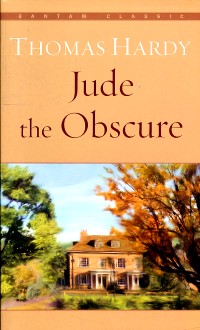
Jude the obscure / Bantam classic ed.
作者: by Thomas Hardy.
简介: 在线阅读本书 In 1895 Hardy’s final novel, the great tale of Jude the Obscure,sent shock waves of indignation rolling across Victorian England. Hardy had dared to write frankly about sexuality and to indict the institutions of marriage, education, and religion. But he had, in fact, created a deeply moral work. The stonemason Jude Fawley is a dreamer; his is a tragedy of unfulfilled aims. With his tantalizing cousin Sue Bridehead, the last and most extraordinary of Hardy’s heroines, Jude takes on the world—and discovers, tragically, its brutal indifference. The most powerful expression of Hardy’s philosophy, and a profound exploration of man’s essential loneliness, Jude the Obscureis a great and beautiful book. “His style touches sublimity.” —T. S. Eliot
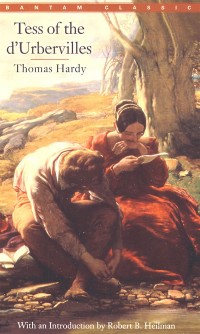
Tess of d'Urbervilles / Bantam classic ed.
作者: by Thomas Hardy ; intrduction by Robert B. Heilman.
简介: Hardy's novel tells the story of how John and Joan Durbeyfield became convinced that they are descended from the ancient family of d'Ubervilles. They encourage their daughter Tess to cement a connection with the Stoke-d'Uberville family of local gentry (who it turns out are themselves not entitled to the illustrious name) and she is raped by their son, the unprincipled Alec. It is a connection that returns to haunt her after she has married the pure parson's son Angel Clare. Tessfirst appeared in a serialized—and bowdlerized—form in The Graphicin 1891. A Pure Woman Faithfully Presented, as Hardy subtitled the work, represented a direct challenge to conventional notions of sexuality and femininity—and, though conventions have radically changed in the past century, the character of Tess has remained a challenging one. In her introduction Maier argues that we should not see Tess merely as a passive victim; she suggests that a combination of sexual vigour and moral rigour makes Tess not just one of the greatest but also one of the strongest women in the canon of English literature. This edition also includes contemproary reviews; the 'bowdlerized' as well as the author's original versions of passages censored by the early years of the novel's life; excerpts from Hardy's autobiography; and a wealth of other documents that shed light on the context from which this text emerged -- highlighting in particular gender-related issues that lie at the heart of the text. --This text refers to the Paperbackedition.
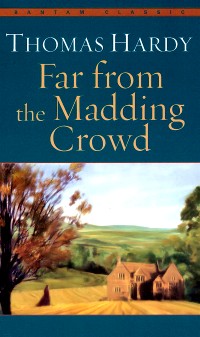
Far from the madding crowd / Bantam classic ed.
作者: by Thomas Hardy.
简介: IN reprinting this story for a new edition I am reminded that it was in the chapters of "Far from the Madding Crowd," as they appeared month by month in a popular magazine, that I first ventured to adopt the word "Wessex" from the pages of early English history, and give it a fictitious signifieance as the existing name of the district once included in that extinct kingdom. The series of novels I projected being mainly of the kind called local, they seemed to require a territorial definition of some sort to lend unity to their scene. Finding that the area of a single county did not afford a canvas largo enough for this purpose, and that there were objections to an invented name, I disinterred the old one. The region designated was known but vaguely, and I was often asked even by educated people where it lay. However, the press and the public were kind enough to welcome the fanciful plan, and willingly joined me in the anachronism of imagining a Wessex population living under Queen Victoria;-a modern Wessex of railways, the penny post, mowing and reaping machines, union workhouses, lucifer matches, labourers who could read and write, and National sebool children. But I believe I am correct in stating that, until the existence of this contemporaneous Wessex in place of the usual counties was announced in the present story, in 1874, it had never been heard of in fiction and current speech, if at all, and that the expression, "a Wessex peasant," or "a Wessex custom," would theretofore have been taken to refer to nothing later in date than the Norman Conquest.