共找到 18 项 “the invisible man” 相关结果
- 全部分类
- 全部
- 文学
- 历史
- 哲学/宗教
- 法律
- 政治/社会
- 医学
- 教育/心理学
- 艺术/传媒
- 研究生考试
- 资格认证考试
- 公开课
- 语言
- 经济金融
- 管理学
- IT/计算机
- 自然科学
- 工学/工程
- 体育
- 行业资料
- 音乐
- 汽车机械制造
- 文档模板
- 创业
- 农学
- 生活
- 数据库教程
- 民族
出版社:译林出版社,2007
简介: 从第二次世界大战结束到今天的当代美国文学中,有两部小说经过三十多年时间的考验,已被认为是“现代经典”:一部是黑人作家拉尔夫·艾里森的《无形人》(The Invisible Man,1952),一部就是本书。 小说一出版,就受到国内青少年的热烈欢迎,认为它道出了自己的心声,一时大、中学校的校园里到处都模仿小说主人公霍尔顿——他们在大冬天身穿风衣,倒戴着红色鸭舌帽,学着霍尔顿的言语动作。甚至在六十年代初期,外国学者只要跟美国学生一谈到文学,他们就马上提出了《麦田里的守望者》。 《麦田里的守望者》之所以受到重视,不仅是由于作者创造了一种新颖的艺术风格,通过第一人称以青少年的说话口吻叙述全书,更重要了资本主义社会精神文明的实质。人活着除了物质生活外,还要有精神生活,而且在一个比较富裕的社会里,精神生活往往比物质生活更为重要。 主人公是16岁的中学生霍尔顿·考尔德是当代美国文学中最早出现的反英雄形象之一,霍尔顿出身中纽约一个富裕的中产阶级家庭。学校里的老师和自己的家长强迫他好好读书,为的是出人头地,以便将来买辆凯迪拉克,而在学校里一天到晚干的,就是谈女人,酒和性,他看不惯周围的一切, 根本没心思用功读书,因而老是挨罚,到他第四次被开除时,他不敢回家。便只身在美国最繁华的纽约城游荡了一天两夜,住小客店,逛夜总会滥交女友他在电影院里百无聊赖地消磨时光,糊里糊涂地召了妓女,情不自禁的与虚荣的女友搂搂抱抱,与此同时,他的内心又十分苦闷,企图逃出虚伪的成人世界去寻批纯洁与真理的经历与感受。这种精神上无法调和的极度矛盾最终令他彻底崩溃,躺倒在精神病院里。
出版社:清华大学出版社,2009
简介:《时间机器/隐形人(中文导读英文版)》讲述了:The Time Machine,The Invisible Man中文译名分别为《时间机器》和《隐形人》,由英国著名作家赫伯特·乔治·威尔斯编著。《时间机器》讲述“时间旅行”的故事。时间旅行家发明了一种能穿越时空的时间机器,之后他乘坐该机器穿越了80多万年的时空抵达公元802701年,展现在他眼前的是一个恐怖的人吃人的世界:地球上生活着两支人,一支是生活在黑暗地下世界的摩洛克斯人,他们借助机器进行劳作,为生活在地面上的另一支身体已经退化的埃洛厄伊人创造生活必需品,而反过来摩洛克斯人把埃洛厄伊人作为他们的食物。《隐形人》讲述一个对隐形术充满狂热追求的科学家妄想借助科学对人类实行“恐怖统治”的故事。主人公格里芬是一位才华横溢的科学家,他研究出了一种隐形的方法,并把自己变成了隐形人。隐形实验的成功使格里芬欣喜若狂。由于隐形使他挣脱了社会“看得见”的监督,格里芬开始我行我素,痛殴他人、恐吓威胁、行窃、纵火与谋杀,最后甚至想建立“隐形王国”统治世界。朋友规劝他停止这些疯狂的举动,而他却一意孤行、众叛亲离,最后误入歧途的他在人们的喊打声中被剿灭。 这两部小说一经出版,很快就成为当时最受关注和最畅销的小说,至今已被译成几十种文字,并曾经先后多次被改编成电影、电视和动画片等。书中所展现的科幻故事伴随了一代又一代人的美丽童年、少年直至成年。无论作为语言学习的课本,还是作为通俗的文学读本,《时间机器/隐形人(中文导读英文版)》对当代中国的青少年都将产生积极的影响。为了使读者能够了解英文故事概况,进而提高阅读速度和阅读水平,在每章的开始部分增加了中文导读。
作者: Wells
出版社:Penguin 2010年10月
简介:
It's one of the most famous novels of the 19th century, and probably the one that's least actually read. *The Invisible Man,* first published in 1897, became the basis for the classic 1933 film starring Claude Rains-as well as its many spinoffs-but the novel is quite different: it's an early example of science fantasy that was as much about character as it was about concept. One of the most enduringly popular writers of modern literature, Wells here assured his position as one of the fathers of imaginative literature with his psychologically complex tale of a scientist who renders himself invisible and eventually goes mad because of it. And because it focuses more on people than on technology, it remains a compelling tale even more than a century after it was written. British author HERBERT GEORGE WELLS (1866-1946) is best known for his groundbreaking science fiction novels *The Time Machine* (1895), *The Invisible Man* (1897), and *The War of the Worlds* (1898).
作者: H.G.Wells
简介:Griffin, a university chemist, is overwhelmed, poisoned, and destroyed by his vain ambition, by a brilliant discovery used for corrupt purposes.
作者: (英)赫·乔·韦尔斯著;孙宗鲁译
出版社:广西师范大学出版社,2002
简介: 本书包括韦尔斯的《陷身人》《星际战争》两部科幻小说。 《隐身人》:格里芬研究出了一种隐身的方法,并把自己变成了隐身人,但他不能在其需要的时候随时显形。他在进一步研究的过程中遭到干扰,终于在狂怒中暴露了真面目。愤怒的他急于报仇,却悲惨地丧失了年轻的生命。 《星际战争》:一不明飞行物降落在距伦敦不远的地方,从中爬出了奇形怪状的火星人,开始用热线、毒气和火箭成批地杀灭包括军队在内的一切人,严重威协着人类的生存。但火星人却抵抗不住地球上病菌的人侵而全部倒毙了。
The Time Machine / The Invisible Man
作者: H.G
出版社:Penguin 2007年10月
简介:
The Time Machine (1895) and The Invisible Man(1897) are now more than a century old. Yet they endure as literarytexts, radio plays, and movies, because they appeal directly to twoof our deepest desires: immortality and omnipotence. The timemachine would allow us to escape death and gain knowledge of thefate of the earth, while invisibility would enable us to go andcome as we please, under the noses of friends and enemies. At thesame time, both fictions show us the dangers of fulfilled wishes:The Time Traveller discovers the future of humanity is not brightbut hideously dark, while the Invisible Man drowns in the madnessbrought about by his own experimentation.
Of course, what Herbert George Wells (1866–1946) wanted to expressin these fantasies and what generations of readers have made ofthem are two radically different things. Erroneously labeled“science fiction,” and tricked out in their film versions with allkinds of fanciful devices with flashing lights and ominous buzzersWells never mentions, they are really tales that enact the author’stheories and speculations about human society, human nature, andnatural history in allegorical fashion. That is, the “science” inWells’s fictions is nothing more than stage machinery. But,ironically, it is the machinery that has come to dominate ourcollective imagination.
There is nothing unique in this. Think of Gulliver’s Travels(whose long-forgotten original title is Travels into SeveralRemote Nations of the World), a book that Wells read as a boyand reread throughout his life. In 1726 Jonathan Swift (1667–1745)satirized English political parties, religious quarrels, theoriesof world government, and science, but his work was so grounded ineighteenth-century British culture that today’s readers needextensive preparation to fathom it. The story of Lemuel Gulliver’svisits to lands populated by giants or intelligent horses has,however, become a staple of children’s literature. The same appliesto Robinson Crusoe (1719), by Daniel Defoe (1660–1731). Onlyscholars see the relationship between Crusoe’s shipwreck andDefoe’s ideas on the fate of the middle classes during theRestoration, when Charles II returned to England in 1660. Defoe’smessage and all his political intentions have been lost, but hisstory endures as a wonderful demonstration of self-reliance. In theliterature of the United States, we have the example of HermanMelville (1819–1891) and his Moby-Dick (1851): Most readerslearn about the ambiguous struggle between good and evil embeddedin the work long after they’ve read a novel aboutnineteenth-century whaling and the strange characters engaged inthat dangerous work.
Much the same has taken place with Wells’s Time Machine andThe Invisible Man. Wells cloaked his ideas about the futureof society and the role of science in the world so well thatreaders simply do not see those issues and instead read his shortnovels as examples of a kind of fiction based on the simplest ofpropositions: “What if it were possible to travel through time bymeans of a machine?” or “What if it were possible to make oneselfinvisible?” In a world—one we share with Wells despite the factthat more than a hundred years separates the moment he publishedthese two works from our own age—when scientists seem to makediscoveries every day, it requires no great leap of imagination, no“willing suspension of disbelief,” to accept the basic premise ofeach text.
This is what differentiates Wells from Jules Verne (1828–1905),author of Voyage to the Center of the Earth (1864) andAround the World in Eighty Days (1873). Wells, in a 1934preface to a collection of his early fictions comments on why theyare not comparable to Verne’s writings:
These tales have been compared with the work of Jules Verne andthere was a disposition on the part of literary journalists at onetime to call me the English Jules Verne. As a matter of fact thereis no literary resemblance whatever between the anticipatoryinventions of the great Frenchman and these fantasies. His workdealt almost always with actual possibilities of invention anddiscovery, and he made some remarkable forecasts. . . . But thesestories of mine . . . do not pretend to deal with possible things;they are exercises of the imagination in a quite different field.They belong to a class of writing which includes the Golden Assof Apuleius, the True Histories of Lucian, PeterSchlemil, and the story of Frankenstein. . . . They areall fantasies; they do not aim to project a serious possibility;they aim indeed only at the same amount of conviction as one getsin a good gripping dream (The Complete Science Fiction Treasuryof H. G. Wells).
Wells links himself to a tradition, but at the same time hemisleads the reader. It is true, as he says in the same preface,that “The invention is nothing in itself,” by which he means thatthe applied science of Verne is of no interest in his kind of tale.It is also the reason why rediscoveries of Verne, especially films,are always set in the past: His projections became fact veryquickly. By the same token, this explains why Wells’s inventionsand their ramifications will always be modern.
出版社:人民文学出版社,2000
简介:《隐身人时间机器》的主要内容是:《隐身人》写的是化学家格里芬发现一种能使身体隐没的办法,并首先拿自己做了试验。但他隐身以后自我意识膨胀,开始与人类为敌,妄想依靠自己掌握的特殊技术统治人类,称霸全球,结果引起群众的恐慌与骚乱,以致被追逐,殴打,终于悲惨死亡。作品告诉人们,科学技术的发明如果不应用不当,会给社会造成危害,给人类带来灾难。《时间机器》是威尔斯的第一部科学幻想小说,一位科学家发明了时间机器,能在时间隧道中旅行,飞向过去或未来。他乘坐这台机器飞入八十多万年后的世界,在那里目睹了未来世界的衰败和人类退化的情景,并亲历了人类最终起向毁灭的过程。这部作品具有强烈的讽剌意义,表明社会中劳动者和剥削者的矛盾激化后将会出现的可怕后果,同时也揭示了人类只有辛勤劳作,过一种接近自然的健康生活,才能保持自己的活力,不断进化、发达。
简介:她吃不准自己是否听清了他的话,正准备再问一遍。 这时他回过头来望着她。“我宁可穿着,”他语气坚定地说道;她发现他戴着一副蓝色的大眼镜,衣领上一片虬髯,几乎整个面孔都被领子遮住了。 “那好吧,先生,”她说,“随您的便。用不了多久,房间会变得更加暖和。” 他一言不答,重新转过脸去,霍尔太太觉得自己讨了个没趣,便迅速摆好餐具,匆匆出了房间。当她再进来时,他仍然像个石头人似地站在那里,他的衣领向上翻起,帽檐朝下,差不多把他的脸和耳朵全给遮住了。她重重地把鸡蛋和肉放到桌上。尔后,她与其说是在跟他讲话,倒不如说是在冲着他喊: “午饭好啦,先生。” “谢谢,”他说。他站着不动,直到她关上房门。随后他转过身来,迫不及待地朝桌子走去。 霍尔太太在厨房里装满一碟黄油,端着它来到客厅。 她敲了一下门,即刻走了进去。正在这时,她的客人疾步闪开,她只看见一件白乎乎的东西隐没在桌子后面。他好像正在从地上拾什么东西。她把装着黄油的碟子放在桌上,发觉这位 客人的衣帽正挂在火炉前的一把椅子上。 “我想现在我可以把它们拿去烘一下了吧?”她用一种不容拒绝的口吻说道。 “别碰帽子,”她的客人说。她转过身去,看见他已抬起头,正看着自己。 她站在那里望了他好一会儿,惊愕得连话也说不出来。 She was not sure she had heard him, and was about to repeat the question. He, turned his head and looked at her over his shoulder. "I would rather keep them on," he said firmly; and she noticed that he wore big blue glasses, and had a bushy beard over his coat collar that almost hid his face. "Very well, sir," she said. "As you like. Very soon the room will be warmer." He made no answer, and turned his face away from her again, and Mrs Hall, feeling that her talk was unwelcome, finished laying the table quickly, and hurried out of the room. When she returned he was still standing there like a man of stone, his collar turned up, the edge of his hat turned down, almost hiding his face and ears. She put down the eggs and meat noisily, and, called rather than said to him: "Your lunch is served, sir." "Thank you," he said. He did not move until she was closing the door. Then he turned round and walked eagerly up to the table. Mrs Hall filled the butter dish in the kitchen, and took it to the parlour. She knocked and entered at once. As she did so her visitor moved quickly, so that she only saw something white disappearing behind the table. He seemed to be picking up something from the floor. She put down the butter dish on the table, and noticed that the visitor's hat and coat were hanging over a chair in front of the fire. "I suppose I may have them to dry now?" she said, in a voice that cpuld not be refused. "Leave the hat," said her visitor, and turning, she saw he had raised his head and was looking at her. For a moment she stood looking at him, too prised to speak. 霍尔瞪着眼睛站在那里。“他被狗咬了,”霍尔说,“我还是去看看他吧。”他找陌生人去了。他在走廊里遇见了妻子。“车夫的狗—咬了他,”他告诉她说。 他径直上了楼梯,推开陌生人的房门,走了进去。 室内窗帘低垂,光线昏暗。他一眼瞥见一只怪物,一只没有手的胳膊似乎正在向他挥动,一张白蒙蒙的脸上嵌着三个大黑点。接着,他的胸部挨了一击,整个人被撵出了房间,房门朝他迎面关上,然后被反锁了。这一切发生得如此之快,他根本来不及细看,只觉得有人影在眼前一晃,随后被狠狠打了一下,接下来的一声响就跟打枪一样。他站在黑暗狭窄的走廊里,弄不明白刚才看见的究竟是什么。 几分钟后,他回到了一聚集在旅店外面的那一小堆人的中间。费伦赛德在那里从头至尾讲述事情的经过,这是第二遍了;霍尔太太说他的狗不该咬她的客人;街对面的小店主人赫克斯特正在问这问那;桑迪·沃杰斯神情严肃,还有妇女和孩子,大家都在谈论。 霍尔先生站在台阶上注视着他们,一边侧耳细听,他觉得刚才在楼上竟会见到这等怪事实在是令人难以相信。 “他说他不需要帮忙,”他接着他太太的问话回答说,“我们还是把他的行李搬进去吧。” “他应该马上去治一治他的腿,”赫克斯特先生说。 “毙了这条狗,换了我就这么做,”人群中有个女士说。 突然,那条狗又咆哮起来。 Hall stood staring. "He was bitten," said Hall. "I'd better go and see him." And he went to find the stranger. He met his wife in the passage. "The carrier's dog - bit him," he told her. He went straight upstairs, pushed open the stranger's door and went in. The blind was down and the room dark. He caught sight of a strange thing, a handless arm that seemed to be waving towards him, and a face of three large dark spots on white. Then he was struck in the chest and thrown out of the room, and the door was shut in his face and locked. All this happened so fast that it gave him no time to see anything clearly. A waving of shapes, a blow and a noise like a gun. There he stood in the dark little passage wondering what he had seen. After a few minutes he came back to the little group that had formed outside the inn. There was Fearenside telling the story all over again for the second time; there was Mrs Hall saying his dog had no right to bite her guests; there was Huxter, the shopkeeper from over the road, asking questions; Sandy Wadgers looking solemn and women and children, all talking. Mr Hall, staring at them from the steps and listening could not believe that he had seen anything very strange happen upstairs. "He wants no help, he says," he said in answer to his wife's question. "We'd better take his luggage in." "He ought to have his leg looked after at once," said Mr Huxter. "I'd shoot the dog, that's what I'd do," said a lady in the group. Suddenly the dog began growling again. 黑胡子男人把枪放回口袋。就在这时,门锁断了,有什么东西从他们身边冲了过去,客厅的门猛地打开了。他们听见马弗尔大声尖叫,就跑过去救他。黑胡子男人的左轮枪响了,客厅后面的镜子顿时四分五裂,哗地一声掉落在地板上。 当酒吧间老板进人房间时,他看见马弗尔正在拼命顶住通向院子和厨房的门。那扇门猛地开了,马弗尔被拖进了厨房。 那位试图跑到酒吧间老板前面去的警察立刻冲了进去,车夫紧随其后。警察抓到了拉住马弗尔的那只看不见的手,可他的脸上挨了一拳,一下子跌倒在地上。接着马车夫也抓到了什么东西。 “我逮住他了,”马车夫说。 “他在这里!”酒吧间老板说。 马弗尔先生忽然趴倒在地上,企图爬到正在搏斗的那几个人的腿后面去。他们在门口打来打去,忽儿向前,忽儿向后。当警察踩到隐身人的脚时,人们第一次听到了他的声音。他大吼 一声,挥舞手臂乱打。马车夫突然叫了一声,跌倒在地,原来他的腹部挨了一脚。从厨房通向酒吧间的门砰地一声响,马弗尔先生逃了出去。厨房里的人发现他们自己都在当空乱打。 The man with the beard put the gun back in his pocket. As he did so, the lock of the door broke, something rushed past them, and tne parlour door burst open. They heard Marvel scream and ran to his rescue. The bearded man's revolver went-off, and the mirror at the back of the parlour came crashing down on the floor. As the barman came into the room, he saw Marvel struggling against the door that led to the yard and kitchen. The door flew open and Marvel was dragged into the kitchen. The policeman, who had been trying to pass the barman, rushed in, followed by the cabman, caught hold of the invisible hand that held Marvel, was hit in the face and fell down. Then the cabman took hold of something. "I've got him," said the cabman. "Here he is!" said the barman. Mr Marvel suddenly dropped to the ground, and made an attempt to creep behind the legs of the fighting men. The struggle went backwards and forwards about the door. The voice of the Invisible Man was heard for the first time, as the policeman stepped on his foot. Then he cried out, and his arms flew out. The cabman suddenly cried and fell, with a kick in the stomach. The door into the bar parlour from the kitchen slammed as Mr Marvel escaped through it. The men in the kitchen found themselves struggling with empty air. ……
The invisible man / Bantam Classic ed.
作者: by H.G. Wells ; with an introduction by Anthony West.
简介: Book Description The Invisible Man is a famous 1897 science fiction novel(la) by H.G. Wells. Wells's novel was originally serialized in Pearson's Magazine in 1897, and published as a novel the same year. The Invisible Man of the title is "Griffin", a scientist who theorizes that if a person's refractive index is changed to exactly that of air and his body does not absorb or reflect light, then he will not be visible. He successfully carries out this procedure on himself, but cannot become visible again, becoming mentally unstable as a result. From Library Journal Two of Wells's masterpieces get the red-carpet treatment here in these luxurious editions. Along with annotated texts, they feature scholarly introductions and appendixes, bibliographies, illustrations, and indexes. Though they are perhaps a tad pricey for most public libraries, academic collections supporting English departments should definitely invest in these volumes. From AudioFile Leonard Nimoy and John de Lancie gathered together Star Trek alumni to found Alien Voices, an audio theater devoted to dramatizations of classic science fiction. This free adaptation of H.G. Wells's The Invisible Man typifies the kind of fun they have with their infectiously high-energy productions. The writing may be silly, the acting all over the map, the production values less than elegant, but the ensemble invests in make-believe the way kids do. The listener can't help joining in the game. It's irresistible. Y.R. Publisher Comments: Spine-tingling and entertaining, The Invisible Man is a science fiction classic–and a penetrating, unflinching look into the heart of human nature. To its author, H. G. Wells, the novel was as compelling as “a good gripping dream.” But to generations of readers, the terrible and evil experiment of the demented scientist, Griffin, has conveyed a chilling nightmare of believable horror. An atmosphere of ever-increasing suspense begins with the arrival of a mysterious stranger at an English village inn and builds relentlessly to the stark terror of a victim pursued by a maniacal invisible man. The result is a masterwork: a dazzling display of the brilliant imagination, psychological insight, and literary craftsmanship that made H.G. Wells one of the most influential writers of his time. Book Dimension Height (mm) 174 Width (mm) 106
简介: The Time Machine and The Invisible Man , by H. G. Wells , is part of the Barnes & Noble Classics series, which offers quality editions at affordable prices to the student and the general reader, including new scholarship, thoughtful design, and pages of carefully crafted extras. Here are some of the remarkable features of Barnes & Noble Classics : New introductions commissioned from today's top writers and scholars Biographies of the authors Chronologies of contemporary historical, biographical, and cultural events Footnotes and endnotes Selective discussions of imitations, parodies, poems, books, plays, paintings, operas, statuary, and films inspired by the work Comments by other famous authors Study questions to challenge the reader's viewpoints and expectations Bibliographies for further reading Indices & Glossaries, when appropriateAll editions are beautifully designed and are printed to superior specifications; some include illustrations of historical interest. Barnes & Noble Classics pulls together a constellation of influences—biographical, historical, and literary—to enrich each reader's understanding of these enduring works. The Time Machine , H. G. Wells ’s first novel, is a tale of Darwinian evolution taken to its extreme. Its hero, a young scientist, travels 800,000 years into the future and discovers a dying earth populated by two strange humanoid species: the brutal Morlocks and the gentle but nearly helpless Eloi. The Invisible Man mixes chilling terror, suspense, and acute psychological understanding into a tale of an equally adventurous scientist who discovers the formula for invisibility—a secret that drives him mad. Immensely popular during his lifetime, H. G. Wells, along with Jules Verne, is credited with inventing science fiction. This new volume offers two of Wells’s best-loved and most critically acclaimed “scientific romances.” In each, the author grounds his fantastical imagination in scientific fact and conjecture while lacing his narrative with vibrant action, not merely to tell a “ripping yarn,” but to offer a biting critique on the world around him. “The strength of Mr. Wells,” wrote Arnold Bennett, “lies in the fact that he is not only a scientist, but a most talented student of character, especially quaint character. He will not only ingeniously describe for you a scientific miracle, but he will set down that miracle in the midst of a country village, sketching with excellent humour the inn-landlady, the blacksmith, the chemist’s apprentice, the doctor, and all the other persons whom the miracle affects.” Alfred Mac Adam teaches literature at Barnard College-Columbia University. He is a translator and art critic.
简介:Writings include The Time Machine, The War of the Worlds and The Invisible Man. Volume covers the period 1895-1940. Extras: Appendices list additional critical articles and a full chronology of Wells' published books. This title available in eBook format. Click here for more information . Visit our eBookstore at: www.ebookstore.tandf.co.uk .
简介: 在线阅读本书 Spring semester at the Lab School in Hyde Park finds Petra and Calder drawn into another mystery when unexplainable accidents and ghostly happenings throw a spotlight on Frank Lloyd Wright's Robie House, and it's up to the two junior sleuths to piece together the clues. Stir in the return of Calder's friend Tommy (which creates a tense triangle), H.G. Wells's The Invisible Man, 3-D pentominoes, and the hunt for a coded message left behind by Wright, and the kids become tangled in a dangerous web in which life and art intermingle with death, deception, and surprise.
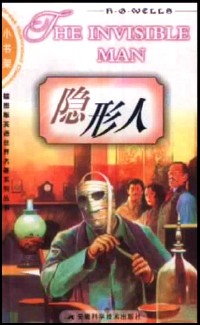
出版社:安徽科学技术出版社,2002
简介: 本书是《插图版英语世界名著系列丛书》中的一册,收录了英国著名作家威尔斯的《隐形人》,全书故事感人,情节生动,具有极强的可读性;经过当代人改编简写后,语言现代、精练简约、浅易易懂,篇幅适中,非常适合中学生阅读;为了方便读者阅读,编者特请了一批经验丰富的中学教师,对书中较难的词汇、句子和语法给予注释,并在每幅图下给出部分难句的的译文。书中惟妙惟肖的插图既可帮助读者理解内容,又可使阅读变得兴致盎然、轻松有趣。 本书前言 特色及评论 文章节选
作者: (英)赫伯特·乔治·威尔斯原著;(美)安东尼·莱尔斯改编
出版社:中国大百科全书出版社,2002
简介:隐形人的存在代表了两种彼此冲突的概念,人类面临科技文明与伦理道德之间的挣扎取舍。隐形实验的成功对科学而言,是项伟大的成就;但对人类心理而言,却是个巨大的威胁。 当隐形人还是个传说时,每个人或许都会感到新鲜好奇,然而当隐形人真实存在时,又有多少人能够不感到恐惧吗?人们恐惧着身边无声无息的窥视,恐惧着犯罪的欲望被发掘,恐惧感从此笼罩生活,一切恐惧皆因隐形人而起…… 在义平的小村庄里,闯入了一个来路不明的外人。他诡异的穿着打扮与行为举止,引起村中众议论纷纷。不论他如何小心地保持神秘,还是禁起长时间的考验。一旦发现隐形人存在时,震惊恐慌充满了每个村民的内心。接踵而来的当然是了揭开秘密的一连串探索。隐形人从此与村民形成了对立的局面。 隐形实验成了格里芬生活的全部,当成功的欲望充满他的心绪时,他已经失去了分辨是非善恶的能力,为了实现理想,他可以不惜一切代价。 隐形实验的成功让格里芬欣喜若狂。脱离了隐形的枷锁束缚之后,格里芬瓷意地我行我素,痛殴他人、恐吓威胁、行窃、纵火与谋杀。他的所作所为无法得到他人的认同。感到孤独的他转而痛恨所有人,发誓毁灭背叛他的人…… 《隐形人》以浅显易懂的现代美语改编而成,用英汉对照的方式,配以精心绘制的插图,带你进入隐形人悲恨交织的内心世界。惊悚、悬疑的紧张剧情绝对让您大呼过瘾。
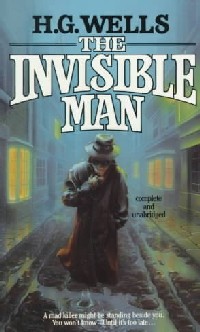
简介:Tor Classics are affordably-priced editions designed to attract the young reader. Original dynamic cover art enthusiastically represents the excitement of each story. Appropriate 'reader friendly' type sizes have been chosen for each title-offering clear, accurate, and readable text. All editions are complete and unabridged, and feature Introductions and Afterwords.This edition of The Invisible Man includes a Foreword, Biographical Note, and Afterword by Gregory Benford.It began with a quiet country inn--and a mysterious stranger, his features masked by gloves, dark glasses, and bandages that completely covered his head. Then came weird noises, the disembodied ravings, the phantom robberies, the haunted furniture....The violence....The rampages....The killing.An obscure scientist named Griffin had found a way to turn skin, flesh, blood and bones invisible--and tried the formula on himself. He could go anywhere; spy; steal; menace anyone. The Invisible Man had only two problems.He couldn''t turn visible again.And he had gone quite murderously insane.
时间机器与隐身人:THE TIME MACHINE & THE INVISIBLE MAN
作者: H.G.威尔斯
出版社:天津人民出版社 2019年02月
简介:
《时间机器》是令威尔斯声誉鹊起的处女作,也是其杰出代表作之一。通过《时间机器》,威尔斯表达了对人类终极处境的关怀,拨动了亿万颗不安的心灵。人类自诞生之日起就感叹生命的短暂,然而威尔斯竟设想出一架能自由穿梭于时空中的机器,而且从理论到实践均构思得天衣无缝,只要人类还为时空的局限所困,《时间机器》的魅力将永不消减。
1897年发表的《隐身人》亦是威尔斯流传深远、广受欢迎的作品。《隐身人》将视角转向了科学技术本身,向读者展现了科技无限发展后潜在的负面效应。威尔斯警示人们科学是把双刃剑,既可造福人类,又能招致灭顶之灾,在物欲横流的社会,科学发明一旦落入自私者之手,后果将不堪设想。
Immensely popular during his lifetime, H. G. Wells, along with Jules Verne, is credited with inventing science fiction. This new volume offers two of Wells’s best-loved and most critically acclaimed “scientific romances.”
The Time Machine, H. G. Wells’s first novel, is a tale of Darwinian evolution taken to its extreme. Its hero, a young scientist, travels 800,000 years into the future and discovers a dying earth populated by two strange humanoid species: the brutal Morlocks and the gentle but nearly helpless Eloi. The Time Machine has been adapted into three feature films of the same name, as well as two television versions, and a large number of comic book adaptations. It has also indirectly inspired many more works of fiction in many media productions.
The Invisible Man mixes chilling terror, suspense, and acute psychological understanding into a tale of an equally adventurous scientist who discovers the formula for invisibility—a secret that drives him mad. The Invisible Man has been adapted into films and TV series, stage play and audio drama.