作者:
出版社:
简介: Book Description
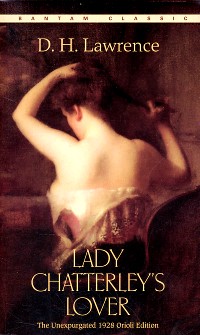
Inspired by the long-standing affair between Frieda, Lawrence’s German wife, and an Italian peasant who eventually became her third husband, Lady Chatterley’s Lover is the story of Constance Chatterley, who, while trapped in an unhappy marriage to an aristocratic mine owner whose war wounds have left him paralyzed and impotent, has an affair with Mellors, the gamekeeper. Frank Kermode calls the book Lawrence’s "great achievement" and Ana?s Nin describes it as "artistically . . . his best novel."
This Modern Library Paperback Classics edition includes the transcript of the judge's decision in the famous 1959 obscenity trial that allowed the novel to be published in the United States.
Amazon.com
Perhaps the most famous of Lawrence's novels, the 1928 Lady Chatterley's Lover is no longer distinguished for the once-shockingly explicit treatment of its subject matter--the adulterous affair between a sexually unfulfilled upper-class married woman and the game keeper who works for the estate owned by her wheelchaired husband. Now that we're used to reading about sex, and seeing it in the movies, it's apparent that the novel is memorable for better reasons: namely, that Lawrence was a masterful and lyrical writer, whose story takes us bodily into the world of its characters.
From AudioFile
Lawrence's classic tale of love and discovery comes alive in this audio presentation. Lady Chatterley is trapped in an unhappy marriage with a husband who is paralyzed physically and emotionally. Jill Daly reads in a quiet tone which ebbs and flows with the excitement of the characters. The indecisiveness of Lady Chatterley, the callousness of her husband, the persuasiveness of her lover--all are portrayed in a quiet, even voice until the climactic end. The abridgment is an excellent taste of D.H. Lawrence. Some language and imagery are explicit. M.B.K.
The Merriam-Webster Encyclopedia of Literature
Novel by D.H. Lawrence, published in a limited English-language edition in Florence (1928) and in Paris (1929). It was first published in England in an expurgated version in 1932. The full text was only published in 1959 in New York City and in 1960 in London, when it was the subject of a landmark obscenity trial (Regina v. Penguin Books Limited) that turned largely on the justification of the use in the novel of until-then taboo sexual terms. This last of Lawrence's novels reflects the author's belief that men and women must overcome the deadening restrictions of industrialized society and follow their natural instincts to passionate love. Constance (Connie) Chatterley is married to Sir Clifford, a wealthy landowner who is paralyzed from the waist down and is absorbed in his books and his estate, Wragby. After a disappointing affair, Connie turns to the estate's gamekeeper, Oliver Mellors, a symbol of natural man who awakens her passions.
Inside Flap Copy
Lyric and sensual, D.H. Lawrence's last novel is one of the major works of fiction of the twentieth century. Filled with scenes of intimate beauty, explores the emotions of a lonely woman trapped in a sterile marriage and her growing love for the robust gamekeeper of her husband's estate. The most controversial of Lawrence's books, Lady Chatterly's Lover joyously affirms the author's vision of individual regeneration through sexual love. The book's power, complexity, and psychological intricacy make this a completely original work--a triumph of passion, an erotic celebration of life.
More About Author
D. H. Lawrence was born on September 11, 1885, in Eastwood, Nottinghamshire, England. His father was a coal miner, his mother a former lace worker and unsuccessful haberdasher. He began school just before the age of four, but respiratory illness and a weak constitution forced him to remain home intermittently. Two months before his sixteenth birthday, he went to work as a clerk in a badly ventilated factory that made medical supplies, and eventually contracted pneumonia. After a long convalescence, he got a job as a student teacher, but privately he resolved to become a poet. He began writing seriously in 1906 and entered University College, Nottingham, to earn his teacher's certificate. Two years later he started teaching elementary school full time. He published his first poems in the English Review in 1909. When he contracted pneumonia a second time, he gave up teaching.
His first two novels, The White Peacock and The Trespasser, were published in 1911 and 1912. About three weeks after the publication of The Trespasser, he left England with Frieda Weekley, née von Richthofen, the German wife of Ernest Weekley, a British linguist who had been his French and German instructor at University College. He wrote the final version of his autobiographical novel Sons and Lovers (1913)--begun when his mother was dying of cancer in 1910--during their year-long courtship in Germany and Italy. It was immediately recognized as the first great modern restatement of the oedipal drama, but, like most of Lawrence's novels during his lifetime, sold poorly. They married in London in July 1914, immediately after Frieda's divorce became final, and lived peripatetically and in relative poverty.
They spent World War I in England, a country they both essentially disliked, and endured a series of clumsy surveillance and harassment campaigns by local police because of her nationality (several of her relatives were diplomats, statesmen, and politicians, and she was a distant cousin of Manfred von Richthofen, the 'Red Baron') and his apparent lack of patriotism (among other charges, The Prussian Officer, a collection of stories, published in November 1914, several months after Great Britain entered the war, was considered politically and morally offensive by conservative booksellers). Exempt from active service because of his health, he wrote The Rainbow and Women in Love, arguably his two greatest novels. The former was seized and burned by the police for indecency in November 1915, two months after publication; Lawrence was unable to find a publisher for the latter until six years later. Composition of these two novels coincided with bouts of erratic behavior in Lawrence that bordered on mental instability, sexual confusion and experimentation that threatened to undermine his marriage, and endless health reversals, including a diagnosis of tuberculosis. Twilight in Italy, a collection of acerbic travel essays believed by some to show a sympathy for fascism that became more explicit in, for example, his novel The Plumed Serpent (1926), was published in 1916. He recorded the vicissitudes of his marriage in an autobiographical poem cycle, Look! We Have Come Through (1917).
The Lawrences departed for Europe in late 1919 and spent most of the next two years in Italy and Germany. The Lost Girl, a novel, was published in 1920 and received the James Tait Black Memorial Prize the following year, which also saw the publication of Movements in European History, a text for schoolchildren; Psychoanalysis and the Unconscious, an anti-Freudian tract; Tortoises, a collection of poems; Sea and Sardinia, a travel book; and, belatedly, Women in Love. Early in 1922 he and Frieda went around the world by boat. They visited Ceylon, lived in Australia for a month and a half, and in the summer sailed to America, where they settled in New Mexico. Aaron's Rod, a novel; Fantasia of the Unconscious, a sequel to Psychoanalysis and the Unconscious; and England, My England, a collection of stories, were published that year. In the spring of 1923, after moving to Mexico, he and Frieda separated temporarily. He toured the western United States and briefly returned to Mexico; she moved to London. Kangaroo, his novel of Australia, and Birds, Beasts, and Flowers, a collection of poems, were published in the fall. He returned to Frieda in the winter. They went to New Mexico again in the spring of 1924; he suffered bouts of influenza, malaria, and typhoid fever the next year. The Lawrences eventually resettled in Italy in 1926.
He began writing his last novel, Lady Chatterley's Lover, in 1926. It was published two years later and banned in England and the United States as pornographic. An avid amateur painter, a selection of his paintings--grossly rendered, full-figured representational nudes--was exhibited in London in 1929. The show was raided on July 5 by the police, who removed thirteen of the canvases. Lawrence coincidentally suffered a violent tubercular hemorrhage in Italy the same day. He went to Bavaria to undergo a cure--it was unsuccessful--and in 1930 entered a sanatorium in Vence, France, where treatment similarly failed. He died in a villa in Vence on the night of March 2, a half year short of his forty-fifth birthday, and was buried in a local cemetery. His body was eventually disinterred and cremated, and his ashes transported to Frieda Lawrence's ranch outside Taos, New Mexico. In addition to numerous plays, collections of poetry, and other, lesser known works published during his lifetime, his novels The Virgin and the Gypsy and Mr. Noon were published posthumously.
Book Dimension
length: (cm)19.7 width:(cm)12.8