共找到 62 项 “Tadao” 相关结果
- 全部分类
- 全部
- 文学
- 历史
- 哲学/宗教
- 法律
- 政治/社会
- 医学
- 教育/心理学
- 艺术/传媒
- 研究生考试
- 资格认证考试
- 公开课
- 语言
- 经济金融
- 管理学
- IT/计算机
- 自然科学
- 工学/工程
- 体育
- 行业资料
- 音乐
- 汽车机械制造
- 文档模板
- 创业
- 农学
- 生活
- 数据库教程
- 民族
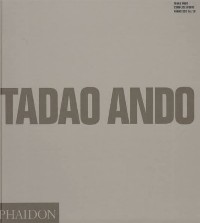
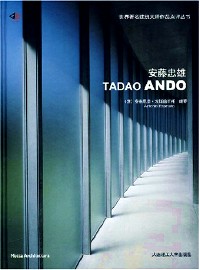
简介:Tadao Ando, 1995 Pritzker Prize laureate, is probably the most important and influential Japanese architect working today. He is famed for his spare and rigorous compositions and use of materials, notably concrete. In Ando's architecture the experience of space and nature - sunlight, sky and wind - is one of the main themes. Among his best-known buildings are the Wall House, the Rokko Housing Development, the Mount Rokko Chapel and the Museum of Literature in Himeji. This Studio Paperback covers important recent projects and buildings including the Japan Pavilion in Seville and the Vitra Seminar House in Weil/Basel. The author, Masao Furuyama, has worked closely with Tadao Ando on this book.
简介:Tadao Ando (b. 1941) is one of Japan's leading architects and designers. This book is a complete monograph of Ando's work, examining in detail over 100 buildings and projects, illustrated by drawings, sketches, plans and other material from the architect's own studio. This exhaustive survey ranges from the smallest of Ando's private houses from the 1970s to such major commissions as the Church on the Water, Hokkaido (1981), the Japanese Pavilion for Expo '92 in Seville and the Naoshima Contemporary Art Museum (1992). An interview with Ando conducted by Hiroshi Maruyama accompanies a selection of essays by a range of respected international critics including Peter Eisenman, Kenneth Frampton, Francois Chaslin and Frederic Jameson together with selected writings by Ando himself.
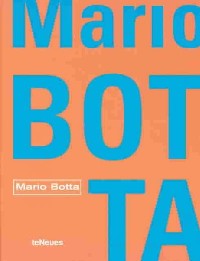
简介:Die Reihe Archipocketsaus dem te Neues Verlag bringt in komprimierter Form Wissenswertes zu den gr??ten zeitgen?ssischen Architekten. Viersprachig aufgemacht bleiben die Texte zwar relativ kurz und knapp, aber für einen ersten Eindruck sollte es dennoch ausreichen. Sehr sch?n sind die zahlreichen Abbildungen: auf einer Seite das beschriebene Bauwerk in kompletter Ansicht, danach ausführliche Detailaufnahmen, Innen-, Au?enansichten, Draufsichten, Skizzen, L?ngsschnitte, Grundrisse, je nach Objekt. Nach einem sehr kurzen, kursorischen Einstieg in Leben und Werk Bottas folgen die wichtigsten Bauwerke: San Francisco Museum of Modern Art; Chapel of Saint Mary of the Angels; Church of Saint John the Baptist; Cymbalista Synagogue; Municipal Library; Villa Redaelli; Dürrenmatt Center; National Sports Center; Noah's Ark Sculpture Garden; National Bank of Greece; Harting Offices; Museum of Moder Art of Rovereto and Trento. Eine chronogische Tafel über die Werke der Jahre 1990 bis 2002 beschlie?t den 80-seitigen Band. Andere lieferbare Titel der Archipocket-Reihe: Alvar Aalto, Tadao Ando, Foster and Partners, Rem Koolhaas, Legorreta + Legorreta, Mies van der Rohe, Miralles/Tagliabue, Jean Nouvel, Renzo Piano, Alvaro Siza, Eduardo Souto de Moura. --Kathrin Rüstig
简介: PAUL GOLDBERGERON THE AGE OF ARCHITECTUREThe Guggenheim Museum Bilbao by Frank Gehry, the CCTV Headquarters by Rem Koolhaas, the Getty Center by Richard Meier, the Times Building by Renzo Piano: Pulitzer Prize-winning critic Paul Goldberger's tenure at "The New Yorker "has documented a captivating era in the world of architecture, one in which larger-than-life buildings, urban schemes, historic preservation battles, and personalities have commanded an international stage. Goldberger's keen observations and sharp wit make him one of the most insightful and passionate architectural voices of our time. In this collection of fifty-seven essays, the critic Tracy Kidder called "America's foremost interpreter of public architecture" ranges from Havana to Beijing, from Chicago to Las Vegas, dissecting everything from skyscrapers by Norman Foster and museums by Tadao Ando to airports, monuments, suburban shopping malls, and white-brick apartment houses. This is a comprehensive account of the best--and the worst--of the "age of architecture." On Norman Foster: Norman Foster is the Mozart of modernism. He is nimble and prolific, and his buildings are marked by lightness and grace. He works very hard, but his designs don't show the effort. He brings an air of unnerving aplomb to everything he creates--from skyscrapers to airports, research laboratories to art galleries, chairs to doorknobs. His ability to produce surprising work that doesn't feel labored must drive his competitors crazy. On the Westin Hotel: The forty-five-story Westin is the most garish tall building that has gone up in New York in as long as I can remember. It is fascinating, if only because it makes Times Square vulgar in a whole new way, extending up into the sky. It is not easy, these days, to go beyond the bounds of taste. If the architects, the Miami-based firm Arquitectonica, had been trying to allude to bad taste, one could perhaps respect what they came up with. But they simply wanted, like most architects today, to entertain us. On Mies van der Rohe: Mies's buildings look like the simplest things you could imagine, yet they are among the richest works of architecture ever created. Modern architecture was supposed to remake the world, and Mies was at the center of the revolution, but he was also a counterrevolutionary who designed beautiful things. His spare, minimalist objects are exquisite. He is the only modernist who created a language that ranks with the architectural languages of the past, and while this has sometimes been troubling for his reputation . . . his architectural forms become more astonishing as time goes on.
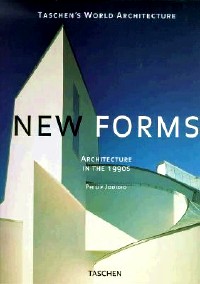
简介: New Forms Architecture in the 1990s In the 1990s architecture has evolved considerably despite economic constraints. The new architecture has been guided by the rapid progress of computer assisted design and a newly rediscovered affinity for the arts. Indeed, many architects - from France's Dominique Perrault, creator of the new Bibliothèque Nationale de France, to Japan's Tadao Ando - explain their work in terms of references to minimalism or land art. At the same time art itself has veered towards installations and works which approach architecture. These influences have enriched and diversified contemporary architecture in the developed world. The Author: Philip Jodidio (born 1954) studied art history and economics at Harvard and has been editor-in-chief of the French art magazine "Connaissance des Arts" in Paris since 1980. He has written numerous books and articles on contemporary architecture.
简介: Whether you are planning to build a contemporary-style home or are simply intrigued by the extraordinary innovation of domestic architecture today, Modern House Three, by Raul A. Barrenche, offers a brilliant survey of the best of the best. Third in a series initiated in 1993, the current volume offers stunning photographs and elegant descriptions of 33 houses in 15 countries. Some of these projects are by big-name architects (Tadao Ando, Richard Meier, Glenn Murcutt, John Hejduk); most are by designers you may never have hea ...
简介:Japan's economic and population growth during the twentieth century?created a fertile environment for building. Combined with its commitment?to advanced technology this led to the construction of a multitude of?significant architectural projects. The result is a country rich in?contemporary architecture that combines both Japan's stylist history and?its cutting-edge technology.? ?Architectural historian Botond Bognar, author of New Japanese?Architecture and Contemporary Japanese Architecture, focuses?primarily on buildings built after World War II in the latest addition to?our guidebook series, The Japan Guide. Bognar presents over 260?major projects (along with brief entries for 360 other buildings),?arranged geographically (see the table of contents).? ?The Japan Guidecontains the work of nearly 150 architects (listing?of projects by architect available), featuring Takefumi Aida, Tadao?Ando, Hiromi Fujii, Hiroshi Hara, Itsuko Hasegawa, Kunihiko Hayakawa,?Kazuhiro Ishii, Arata Isozaki, Toyo Ito, Atsushi Kitagarawa, Kisho?Kurokawa, Kunio Maekawa, Fumihiko Maki, Katsuo Shinohara, Seiichi Shirai,?Shin Takamatsu, Minoru Takeyama, Kenzo Tange, Team Zoo and Riken Yamamoto,?among others.? ?The Japan Guide,like every title in our guidebook series, includes?historical descriptions, theoretical analyses, and practical visitor?information about each project. Travelers to Japan will find the thirty?maps to be indispensable, and the 430 drawings and photographs that?illustrate the entries make this an invaluable resource for students and?armchair travellers. Professor Bognar's Introduction?provides general advice to navigating both the book and the streets of?Japan.
简介: Book Description The term Minimalism has not always been used in a favorable sense, especially in architecture, and even today it may be the cause of some confusion and ambiguity. The problem comes from the world's use in defining a creative current, school or trend when in fact it refers to an approach. At the same time, this approach is not chronologically well defined and, moreover, interacts with various disciplines. This explains why we find minimalist buildings in periods very far apart from each other and in architects as different as Tadao Ando, Eduardo Souto de Moura, Jacques Herzog & Pierre de Meuron or Luis Barragan. Book Dimension length: (cm)18.5 width:(cm)13.8
简介: Contemporary architecture by country TASCHEN's new architecture series brings a unique perspective to world architecture, highlighting architectural trends by country. Each book features 15 to 20 architects?from the firmly established to the up-and-coming?with the focus on how they have contributed to very recent architecture in the chosen nation. Entries include contact information and short biographies in addition to copiously illustrated descriptions of the architects' or firms' most significant recent projects. Crossing the globe from country to country, this new series celebrates the richly hued architectural personality of each nation featured. Architects featured: Matali Crasset Odile Decq Jean-Marie Duthilleul Edouard Fran?ois Manuelle Gautrand Jakob + MacFarlane Lacaton & Vassal Jean Nouvel Marin-Trottin/P?riph?riques Dominique Perrault Christian de Portzamparc Rudy Ricciotti Valode & Pistre Jean-Paul Viguier Jean-Michel Wilmotte Series author: Philip Jodidio studied art history and economics at Harvard University, and was Editor-in-Chief of the leading French art journal Connaissance des Arts for over two decades. He has published numerous articles and books, including TASCHEN's Architecture Now series, Building a New Millennium, and monographs on Norman Foster, Richard Meier, ?lvaro Siza, Tadao Ando, and Renzo Piano.
简介: Ando's complete works to date Philippe Starck describes him as a "mystic in a country which is no longer mystic." Philip Drew calls his buildings "land art" that "struggle to emerge from the earth." He is the only architect to have won the discipline's four most prestigious prizes: the Pritzker, Carlsberg, Praemium Imperiale, and Kyoto Prize. His name is Tadao Ando, and he is one of the greatest living architects. Combining influences from Japanese tradition with the best of Modernism, Ando has developed a completely unique building aesthetic that makes use of concrete, wood, water, light, space, and nature in a way that has never been witnessed in architecture. His designs include award-winning private homes, churches, museums, apartment complexes, and cultural spaces throughout Japan, as well as in France, Italy, Spain, and the USA. This book, created at the height of Ando's illustrious career, and thoroughly updated for this new 2010 edition, presents his complete works to date.
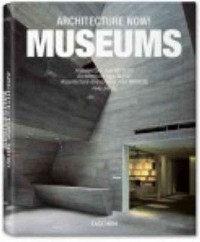
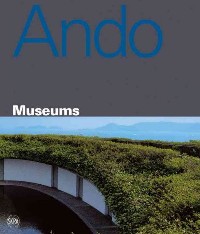
简介:Summary: Publisher Summary 1 Innovation and inspiration in today's museum architecture Star architects from Zaha Hadidto Herzog & de Meuronhave shaken up the formerly staid world of museum architecture, bringing bravura to new buildings and extensions. But the trend for new museums to opt for bold contemporary architecture goes well beyond the stunning work of Renzo Pianoor Tadao Ando. Many less well-known architects have also designed remarkable places to exhibit art and artifacts. Some have provoked controversy, like Mexican architect Teodoro Gonz谩lez de Le贸n'sUniversity Museum of Contemporary Art on the sprawling UNAM (National Autonomous University of Mexico) campus. Others have been warmly welcomed, like the sweeping, light-filled Art Gallery of Ontario Extension by Toronto-born Frank O. Gehry,his first commission in his native city. Others point out new horizons for reclaiming brownfield sites and reviving derelict industrial structures: Nicholas Grimshaw's conversion of a disused 1960s blast furnace into Horno 3, a welcoming extra gallery space for the Mexican city of Monterrey's Museum of Steel is a case in point. In Cartagena, Spain, Rafael Moneo's decade-long work on the Museum of the Roman Theater culminated in a structure that engages visitors in an archaeological manner, taking them on a tour of history as well as the site itself. Here then are more than 50 projects by the major talents pushing the limits of contemporary museum design, from established masters to the latest generation of brilliant architects. Featured architects and practices include: Hitoshi Abe, Acebo X Alonso Arquitectos, Aires Mateus, Jun Aoki, ARM, Shigeru Ban, Behnisch Architekten, David Chipperfield, Preston Scott Cohen, Coop Himmelb(l)au, Delugan Meissl Associated Architects, Ellis Williams, Frank O. Gehry, Teodoro Gonz谩lez de Le贸n, Graft, Nicholas Grimshaw, Zaha Hadid, Herzog & de Meuron, HOK, Arata Isozaki, KSV Kr眉ger Schuberth Vandreike, Bruno Mader, Fumihiko Maki, Francisco Mangado, Richard Meier, Paolo Mendes da Rocha, Rafael Moneo, Toshiko Mori, MVRDV, Nieto Sobejano, Ryue Nishizawa, Valerio Olgiati, I.M. Pei, Renzo Piano, Querkraft, SANAA/Kazuyo Sejima + Ryue Nishizawa, Sauerbruch Hutton, Hartwig N. Schneider, 脕lvaro Siza Vieira and Rudolf Finsterwalder, Sn酶hetta, Eduardo Souto de Moura, SSM Architekten, Randall Stout, Bernard Tschumi, UNStudio, Urbanus Architecture &聽Design, Wang Shu, Atelier Zhang Lei Publisher Summary 2 Here then are more than 50 projects by the major talents pushing the limits of contemporary museum design, from established masters to the latest generation of brilliant architects.
作者: 安藤忠雄著;龙国英译
出版社:商周出版,2009
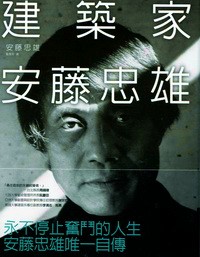
简介: 安藤忠雄唯一、親自執筆之自傳,攝影大師荒木經惟親自拍攝封面及安藤忠雄照片 書中收錄上百張珍貴照片(安藤忠雄幼年、青年等私人照片、手稿、建築照片)。歷經拳擊手、自學走向建築家之路。但並不是事事如願,人生很多經歷都以失敗收場。但他從剩餘的可能性中,抓住了微小的希望之光,拼命地生存下去。而現在,他不只是為建築而生,更致力於環保理念的宣揚、透過種樹與環境改造,倡導永續共生的概念。 偉大的建築家,平凡的人生 出生在大阪老街的安藤忠雄,是雙胞胎中的哥哥,但他因為從小就過繼給外婆家,所以是跟著阿嬤長大的孩子。安藤忠雄的阿嬤家是做買賣生意的,從小就沒人管他的功課或是生活。所以安藤忠雄每天放學回家就是找同學玩,或是到住家附近的鐵工廠、木工廠閒晃,看師傅工作,偶而也跟著學做一點東西。他從小的功課就是倒數幾名,也沒想過未來要做什麼。 阿嬤只教他:「守信、守時、不說謊、不找藉口。」連他生病都要他自己走路去醫院看醫生,完全訓練他獨立自主不依賴別人。 安藤忠雄到了高工二年級,跟著弟弟去打拳擊,練習不到一個月,就拿到拳擊手執照,第四場比賽就拿到四千元獎金,那時大學畢業生起新不過一萬元,所以他非常高興靠自己的身體工作而獲得報酬。 拳擊是一種孤單的運動,這種只能靠自己的毅力與努力去練習、上場比賽。安藤忠雄曾代表所屬拳擊館去泰國比賽,第一次一個人出國、看到不一樣的世界,卻也讓他更加感受到拳擊手這條路所要忍受的孤寂。後來,看到世界拳王的練習時,安藤忠雄才體認到自己不管再怎麼努力,都達不到那樣的成績,毅然決然放棄做一名拳擊手。 雖然他從小就喜歡動手做東西,但引導安藤忠雄走向建築之路的關鍵,是世界知名建築家柯比意。他深受柯比意的作品集而感動,不但自己做了一趟環日本之旅;一九六四年,他帶著六十萬日幣,搭船踏上七個月的世界建築之旅。在親眼看到柯比意的建築之後,他更加確定自己未來的方向。 一九六九年,安藤忠雄在大阪老街一排舊宅中,租了一兼房子當作自己的事務所。當時,和他一起的工作夥伴,成為他的妻子,一直陪伴他到今日。 在那個最早的出發點,他設計了住宅的出道作品「住吉的長屋」。這棟備受爭議的建築,卻也是安藤忠雄住宅建築的原點--他認為人類具備足夠的韌性與毅力去適應環境,也理當與自然怡然共處。 自許為都市游擊隊的安藤忠雄,並不是只有只有將眼光放在建築而已。對他來說,對抗都市的種種不合理現象、和一群抱持著共同理念的夥伴,一起為理想奮鬥。 安藤忠雄現在的名氣,令人想不到他也曾經被業主拒絕、吃大阪市政府的閉門羹,一個「蛋形」建築的夢想,曾經等了十多年才實現。充滿挫折的人生中,還是藏著許多沒有實現的夢想。 四十年來,安藤忠雄從沒沒無名、只能躺在事務所地板發呆、打滾、到處找空地發想建築樣式的非學院出身建築師,至今日爭相為世界各大學建築系聘請授課、並在世界各地留下各種融入自然環境的建築作品的建築家,他的六十八歲人生,幾乎都是站在黑暗中,朝著眼前的光明,不斷抓住機會拼命向前實現夢想。 安藤忠雄說:「我的人生經歷中找不到可以稱為卓越的藝術資質﹔只有與生俱來面對嚴酷的現實、絕不放棄、堅強活下去的韌性。 」 這不是世界知名建築家的自謙之詞,而是身為一個活在當下的人,對自己透徹的定義。 【作者簡介】 安藤忠雄(Tadao Ando) 1941年出生於大阪。建築家。旅行世界各國之後,以自學的方式學習建築,1969年創立安藤忠雄建築研究所。曾任耶魯大學、哥倫比亞大學、哈佛大學客座教授,1997年擔任東京大學授,2003年轉任名譽教授。作品有「住吉長屋」、「萬博會日本政府館」、「光之教會」、「大阪府立近飛鳥博物館」、「淡路夢舞台」、「兵庫縣立美術館」、「沃夫茲堡現代美術館」等。 1979年以「住吉長屋」獲得日本建築學會賞,2002年獲得美國建築家協會(AIA)金獎等多項得獎經歷。著作有《在建築中發現夢想--安藤忠雄談建築》、《連戰連敗》、《具備柯比意勇氣的住宅》等。 ★進行中的計畫 國立交通大學人文藝術館及建築館(2006-停工中) 上海國際設計中心(2006-) 亞洲大學創意設計學院大樓(藝術館)(2009-2010) 龍巖人本櫻花墓園(2009-2019) 新東京鐵塔【東京sky tree】監工(2006-2012) 九州新幹線熊本車站(2013-2016) 東急大井町線上野毛車站(2007-2011) 阿布達比海洋博物館(2007-2018) 水戶市大工町再開發專案(2006-2010) 【譯者簡介】 龍國英/Edward Ryu 1990年 赴日 1992~1994年 大阪藝術短期大學室內設計系 1994~1997年 京都精華大學藝術學部建築設計系 1997~1999年 京都精華大學研究所藝術研究科建築碩士 交換留學美國南加州建築大學SCI-ARC (1997) 曾於高松伸建築設計事務所工作,目前為龍國英建築事務所代表,忠泰生活開發公司創意顧問、台灣土地開發公司顧問。 為提供現代都市生活者的需求,引薦天童木工、NEXTMARUNI、AURA、TOYO KITCHEN STYLE、KITA’S喜多俊之、amadana等生活品牌進入台灣。 【審定者簡介】 褚炫初 安藤忠雄先生指定口譯,現為日商桔地設計台北辦事處代表。
作者: Tadao Ando.
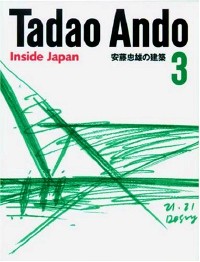
简介:Third and final volume in the series examining selected works designed by Tadao Ando over his 40 year long career as an architect. Inside attention is paid to Ando's public building projects realised in Japan, including art galleries, museums, religious buildings, commercial buildings, schools libraries and railway stations. Questioning the mean... more 籭ng of public facilities and challenging preconceived ideas, Ando has pioneered a new mode of public architecture in Japan. Buildings are extensively illustrated with full colour photographs and accompanied by technical drawings, models and several essays. ?less
The Modernist house. Abridged, rev. and updated ed.
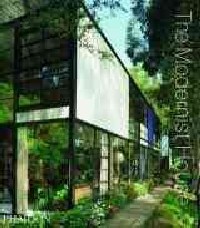
简介: "The Modernist House" is a comprehensive, worldwide survey of 100 iconic houses from this important movement. This illustrated, broad reference book features examples from the early twentieth century to the present day, ranging from early Bauhaus architecture to the latest interpretations of Modernism. Accessible and easy-to-use like Phaidon's bestselling "The House Book", "The Modernist House" presents a balanced selection of the best and most important houses of this revolutionary movement from around the world. Each house has been selected for its architectural merit, innovative design and contribution to the movement. The selection illustrates Modernism's rejection of traditional forms and analyses its concern for new materials, technology, non-ornamental abstraction and its predilection for white rendering and open plans. All key styles are featured, including functionalist forms, the minimalism of the 'International Style' and the eco designs of contemporary architects. Examples include the early promoters of Modernism, such as Frank Lloyd Wright, Adolf Loos and Walter Gropius as well as more recent followers of the device that function defines form, that 'less is more', such as Future Systems, lvaro Siza and Toyo Ito. Each entry consists of a full-page image with an accompanying text, detailing its historical and architectural significance. Organised chronologically, readers can trace the development of the Modernist House from Le Corbusier's Villa Savoye, Marcel Breuer's Breuer House II and Oscar Niemeyer's Farnsworth House to Adalberto Libera's Casa Malaparte, Richard Meier's Douglas House and Tadao Ando's Koshino House. The chronological sequence allows for interesting juxtapositions, demonstrating the comparatively different interpretations of the Modernist movement. The book also features a glossary of terms and movements, a directory of houses open to the public and an index. "The Modernist House" is a practical resource and easy-to-use guide, unique in its appeal to both the general public and the practicing architect.
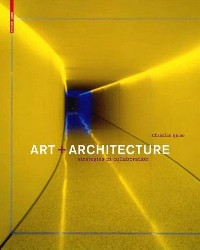
简介: Since the beginning of the 20th century, artists and architects have often been in collaboration. This relationship was not necessarily without conflict a " on the contrary, a productive tension and friction can often be found at the basis of their common endeavors. However, wherever art and architecture establish a common territory in the public arena, highly integrated schemes may result that are of particular appeal and quality. In recent years, the barriers between art and architecture have come down even further; while many artists are attracted to the spatial presence of architecture and its language and scale, contemporary architects also seek the inspiration of art and include artistic concepts into their designs. Great works of art/architecture have resulted from these cooperations and this book explores them in nine chapters from 1914 up to the present, highlighting the most striking examples of these interdisciplinary activities such as the LACMA scheme by Renzo Piano/Jeff Koons in Los Angeles, the Chichu Art Museum by Tadao Ando with its installation by Walter de Maria, the British Pavilion at the Venice Biennale by David Adjaye with artist Chris Ofili or the work by Keith Sonnier in the Munich Re Building by Baumschlager Eberle.
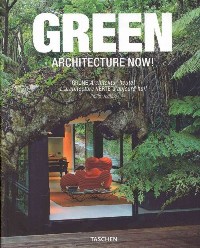
简介: These days, green is the name of the game. There has never been so much interest in the ecological impact of buildings as there is today. This is not a negligible fact in the struggle to control pollution and in the search for responsible "sustainable" methods of construction. Buildings are among the heaviest consumers of natural resources and account for a significant portion of the greenhouse gas emissions that affect climate change. With global warming now a significant international political issue, architecture itself is on the brink of significant changes, where style and matters of aesthetics are placed in a secondary position behind issues of sustainability. At a certain time, "green" buildings were ugly and complicated affairs, usually multicolored as though an entire rainbow in one building might be sufficient to prove a concern for ecology. This is surely no longer the case as buildings published in this current volume demonstrate. However, it may be that green architecture is not so much about architecture as it is about survival; the aesthetics of the architecture are secondary considerations when it comes to finally stopping the war with nature that has resulted in the creation of the asphalt jungle. Well-known architects from Tadao Ando to Thom Mayne figure in this book, but so too do many others that are far less famous today, but perhaps the stars of tomorrow. Find out who is making today s architecture go green in a big way.
简介:Der Erfolgsband Architecture Nowaus dem Taschen Verlag hat Nachwuchs bekommen: Architecture Now 2ist da und dem ersten Band in Gewicht, Ausstattung und in seiner architektonischen Bandbreite absolut ebenbürtig. Sogar das Motto ist immer noch gleich geblieben: "Zurück in die Zukunft" hei?t es im Umschlag beider schwer gewichtigen B?nde, die sich laut eigenen Worten auf "Die Suche nach einer neuen Architektur" begeben. Auf den fast 600 dreisprachigen und reichlich mit Farbbildern ausgestatteten Seiten tauchen auch alte Bekannte aus Band eins wieder auf, beispielsweise Santiago Calatrava, Asymptote, Bernard Tschumi, Frank O. Gehry und Tadao Ando. Die vorgestellten Bauwerke aus allen Teilen der Welt sind allerdings nicht bekannt aus dem ersten Band, sondern brandneue, innovative und zum Teil noch gar nicht vollendete Architekturprojekte. Der Fokus bei der Auswahl liegt diesmal allerdings noch mehr auf der Zukunft und dem Experimentellen: Computergestütztes Design und auch nur komplett virtuell existierende Architektur kommen ebenso zum Zug wie funktionelles Bauen. Der Herausgeber Philip Jodidio legt im Vorwort Wert darauf, dass auch ?kologische, kostengünstige und an die Gegebenheiten angepasste Bauweisen vorgestellt werden und auch die Sanierung bestehender Geb?ude thematisiert wird, da wir es in Zukunft massiv mit der Entscheidung abrei?en oder sinnvoll sanieren zu tun haben werden. Für Jodidio ist und bleibt jedoch die Frage nach der Flexibilit?t eines Bauwerkes die alles entscheidende Frage in der Zukunft der Architektur: "Flexibilit?t und auch die F?higkeit, sich funktionalen Notwendigkeiten und der Entwicklung der Zeit anzupassen, machen den grundlegenden Erfolg neuer Architektur aus." Genau nach diesen Ma?st?ben sind die hier vorgestellten Projekte ausgew?hlt: von biologisch anmutender Gestaltung ?ffentlicher Geb?ude bis hin zu minimalistischen Wohnh?usern ist alles dabei, was es an innovativer zeitgen?ssischer Architektur auf dem Globus gibt. Ein Muss also für jeden an Architektur Interessierten, ob Professional oder Laie, da es wohl in dieser Vollst?ndigkeit kaum ein anderes Buch gibt. Und wer Band eins noch nicht kennt und nun noch ein paar Bilder sehen m?chte, kann hier auch gleich einen Blick ins Buch werfen. --Gabi Bauer