共找到 11 项 “Manuel C. Molles, Jr.” 相关结果
- 全部分类
- 全部
- 文学
- 历史
- 哲学/宗教
- 法律
- 政治/社会
- 医学
- 教育/心理学
- 艺术/传媒
- 研究生考试
- 资格认证考试
- 公开课
- 语言
- 经济金融
- 管理学
- IT/计算机
- 自然科学
- 工学/工程
- 体育
- 行业资料
- 音乐
- 汽车机械制造
- 文档模板
- 创业
- 农学
- 生活
- 数据库教程
- 民族
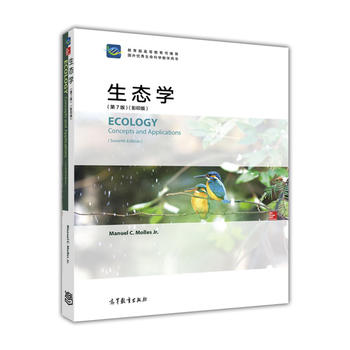
作者: Manuel
出版社:高等教育出版社 2016年06月
简介:
Manuel C. Molles Jr. is an emeritus Professor of Biology at the University of New Mexico, where he has been a member of the faculty and curator in the Museum of Southwestern Biology since 1975 and where he continues to write and conduct ecological research. He received his B.S. from Humboldt State University and his Ph.D. from the Department of Ecology and Evolutionary Biology at the University ofArizona. Seeking to broaden his geographic perspective, he has taught and conducted ecological research in Latin America, the Caribbean, and Europe. He was awarded a Fulbright Research Fellowship to conduct research on river ecology in Portugal and has held visiting professor appointments in the Department of Zoology at the University of Coimbra, Portugal, in the Laboratory of Hydrology at the Polytechnic University of Madrid, Spain, and at the University of Montana's F1athead Lake Biological Station.
OriginalManuel C. Molles Jr.y trained as a marine ecologist and fisheries biologist, the author has worked mainly on river and riparian ecology at the University of New Mexico. His research has covered a wide range of ecological levels, including behavioral ecology, population biology, community ecology, ecosystem ecology, biogeography of stream insects, and the influence of a large-scale climate system (El Nino) on the dynamics of southwestern river and riparian ecosystems. His current research concerns the influence of climate change and climatic variability on the dynamics of populations and communities along steep gradients of temperature and moisture in the mountains of the Southwest. Throughout his career, Dr. Molles has attempted to combine research, teaching, and service, involving undergraduate as well as graduate students in his ongo ing projects. At the University of New Mexico, he has taught a broad range of lower division, upper division, and graduate courses, including Principles of Biology, Evolution and Ecology, Stream Ecology, Limnology and Oceanography, Marine Biology, and Community and Ecosystem Ecology. He has taught courses in Global Change and River Ecology at the University of Coimbra, Portugal, and General Ecology and Groundwater and Riparian Ecology at the Flathead Lake Biological Station. Dr. Manuel Molles was named Teacher of the Year by the University of New Mexico for 1995-1996 and Potter Chair in Plant Ecology in 2000. In 2014, he received the Eugene P. Odum Award from the Ecological Society of America based on his "ability to relate basic ecological principles to human affairs through teaching, outreach and mentoring activities."
【媒体评论】
评论
【前言】
序言
Ecology : concepts and applications / 3rd ed.
简介:This introductory general ecology text features a strong emphasis on helping students grasp the main concepts of ecology, while keeping the presentation more applied than theoretical. An evolutionary perspective forms the foundation of the entire discussion. Evolution is brought to center stage throughout the book, as it is needed to support understanding of major concepts. The discussion begins with a brief introduction to the nature and history of the discipline of ecology, followed by section I, which includes two chapters on natural history - life on land and life in water. The intent is to establish a common foundation of natural history upon which to base the later discussions of ecological concepts. The introduction and natural history chapters can stand on their own and should be readily accessible to most students. They may be assigned as background reading, leaving 17 chapters to cover in a one-semester course. Sections II through VI build a hierarchical perspective: section II concerns the ecology of individuals: section III focuses on population ecology; section IV presents the ecology of interactions; section V summarizes community and ecosystem ecology; and finally, section VI discusses large-scale ecology and includes chapters on landscape, geographic, and global ecology. These topics were first introduced in section I within a natural history context. In summary, the book begins with the natural history of the planet, considers portions of the whole in the middle chapters, and ends with another perspective of the entire planet in the concluding chapter.
作者: Manuel
出版社:高等教育出版社 2016年06月
简介:
Manuel C. Molles Jr. is an emeritus Professor of Biology at the University of New Mexico, where he has been a member of the faculty and curator in the Museum of Southwestern Biology since 1975 and where he continues to write and conduct ecological research. He received his B.S. from Humboldt State University and his Ph.D. from the Department of Ecology and Evolutionary Biology at the University ofArizona. Seeking to broaden his geographic perspective, he has taught and conducted ecological research in Latin America, the Caribbean, and Europe. He was awarded a Fulbright Research Fellowship to conduct research on river ecology in Portugal and has held visiting professor appointments in the Department of Zoology at the University of Coimbra, Portugal, in the Laboratory of Hydrology at the Polytechnic University of Madrid, Spain, and at the University of Montana's F1athead Lake Biological Station.
OriginalManuel C. Molles Jr.y trained as a marine ecologist and fisheries biologist, the author has worked mainly on river and riparian ecology at the University of New Mexico. His research has covered a wide range of ecological levels, including behavioral ecology, population biology, community ecology, ecosystem ecology, biogeography of stream insects, and the influence of a large-scale climate system (El Nino) on the dynamics of southwestern river and riparian ecosystems. His current research concerns the influence of climate change and climatic variability on the dynamics of populations and communities along steep gradients of temperature and moisture in the mountains of the Southwest. Throughout his career, Dr. Molles has attempted to combine research, teaching, and service, involving undergraduate as well as graduate students in his ongo ing projects. At the University of New Mexico, he has taught a broad range of lower division, upper division, and graduate courses, including Principles of Biology, Evolution and Ecology, Stream Ecology, Limnology and Oceanography, Marine Biology, and Community and Ecosystem Ecology. He has taught courses in Global Change and River Ecology at the University of Coimbra, Portugal, and General Ecology and Groundwater and Riparian Ecology at the Flathead Lake Biological Station. Dr. Manuel Molles was named Teacher of the Year by the University of New Mexico for 1995-1996 and Potter Chair in Plant Ecology in 2000. In 2014, he received the Eugene P. Odum Award from the Ecological Society of America based on his "ability to relate basic ecological principles to human affairs through teaching, outreach and mentoring activities."
【媒体评论】
评论
【前言】
序言
作者: Manuel
出版社:高等教育出版社 2016年06月
简介:
Manuel C. Molles Jr. is an emeritus Professor of Biology at the University of New Mexico, where he has been a member of the faculty and curator in the Museum of Southwestern Biology since 1975 and where he continues to write and conduct ecological research. He received his B.S. from Humboldt State University and his Ph.D. from the Department of Ecology and Evolutionary Biology at the University ofArizona. Seeking to broaden his geographic perspective, he has taught and conducted ecological research in Latin America, the Caribbean, and Europe. He was awarded a Fulbright Research Fellowship to conduct research on river ecology in Portugal and has held visiting professor appointments in the Department of Zoology at the University of Coimbra, Portugal, in the Laboratory of Hydrology at the Polytechnic University of Madrid, Spain, and at the University of Montana's F1athead Lake Biological Station.
OriginalManuel C. Molles Jr.y trained as a marine ecologist and fisheries biologist, the author has worked mainly on river and riparian ecology at the University of New Mexico. His research has covered a wide range of ecological levels, including behavioral ecology, population biology, community ecology, ecosystem ecology, biogeography of stream insects, and the influence of a large-scale climate system (El Nino) on the dynamics of southwestern river and riparian ecosystems. His current research concerns the influence of climate change and climatic variability on the dynamics of populations and communities along steep gradients of temperature and moisture in the mountains of the Southwest. Throughout his career, Dr. Molles has attempted to combine research, teaching, and service, involving undergraduate as well as graduate students in his ongo ing projects. At the University of New Mexico, he has taught a broad range of lower division, upper division, and graduate courses, including Principles of Biology, Evolution and Ecology, Stream Ecology, Limnology and Oceanography, Marine Biology, and Community and Ecosystem Ecology. He has taught courses in Global Change and River Ecology at the University of Coimbra, Portugal, and General Ecology and Groundwater and Riparian Ecology at the Flathead Lake Biological Station. Dr. Manuel Molles was named Teacher of the Year by the University of New Mexico for 1995-1996 and Potter Chair in Plant Ecology in 2000. In 2014, he received the Eugene P. Odum Award from the Ecological Society of America based on his "ability to relate basic ecological principles to human affairs through teaching, outreach and mentoring activities."
【媒体评论】
评论
【前言】
序言
作者: Manuel
出版社:高等教育出版社 2016年06月
简介:
Manuel C. Molles Jr. is an emeritus Professor of Biology at the University of New Mexico, where he has been a member of the faculty and curator in the Museum of Southwestern Biology since 1975 and where he continues to write and conduct ecological research. He received his B.S. from Humboldt State University and his Ph.D. from the Department of Ecology and Evolutionary Biology at the University ofArizona. Seeking to broaden his geographic perspective, he has taught and conducted ecological research in Latin America, the Caribbean, and Europe. He was awarded a Fulbright Research Fellowship to conduct research on river ecology in Portugal and has held visiting professor appointments in the Department of Zoology at the University of Coimbra, Portugal, in the Laboratory of Hydrology at the Polytechnic University of Madrid, Spain, and at the University of Montana's F1athead Lake Biological Station.
OriginalManuel C. Molles Jr.y trained as a marine ecologist and fisheries biologist, the author has worked mainly on river and riparian ecology at the University of New Mexico. His research has covered a wide range of ecological levels, including behavioral ecology, population biology, community ecology, ecosystem ecology, biogeography of stream insects, and the influence of a large-scale climate system (El Nino) on the dynamics of southwestern river and riparian ecosystems. His current research concerns the influence of climate change and climatic variability on the dynamics of populations and communities along steep gradients of temperature and moisture in the mountains of the Southwest. Throughout his career, Dr. Molles has attempted to combine research, teaching, and service, involving undergraduate as well as graduate students in his ongo ing projects. At the University of New Mexico, he has taught a broad range of lower division, upper division, and graduate courses, including Principles of Biology, Evolution and Ecology, Stream Ecology, Limnology and Oceanography, Marine Biology, and Community and Ecosystem Ecology. He has taught courses in Global Change and River Ecology at the University of Coimbra, Portugal, and General Ecology and Groundwater and Riparian Ecology at the Flathead Lake Biological Station. Dr. Manuel Molles was named Teacher of the Year by the University of New Mexico for 1995-1996 and Potter Chair in Plant Ecology in 2000. In 2014, he received the Eugene P. Odum Award from the Ecological Society of America based on his "ability to relate basic ecological principles to human affairs through teaching, outreach and mentoring activities."
【媒体评论】
评论
【前言】
序言
简介: Manuel C. Molles Jr. is an emeritus Professor of Biology at the University of New Mexico, where he has been a member of the faculty and curator in the Museum of Southwestern Biology since 1975 and where he continues to write and conduct ecological research. He received his B.S. from Humboldt State University and his Ph.D. from the Department of Ecology and Evolutionary Biology at the University ofArizona. Seeking to broaden his geographic perspective, he has taught and conducted ecological research in Latin America, the Caribbean, and Europe. He was awarded a Fulbright Research Fellowship to conduct research on river ecology in Portugal and has held visiting professor appointments in the Department of Zoology at the University of Coimbra, Portugal, in the Laboratory of Hydrology at the Polytechnic University of Madrid, Spain, and at the University of Montana's F1athead Lake Biological Station. OriginalManuel C. Molles Jr.y trained as a marine ecologist and fisheries biologist, the author has worked mainly on river and riparian ecology at the University of New Mexico. His research has covered a wide range of ecological levels, including behavioral ecology, population biology, community ecology, ecosystem ecology, biogeography of stream insects, and the influence of a large-scale climate system (El Nino) on the dynamics of southwestern river and riparian ecosystems. His current research concerns the influence of climate change and climatic variability on the dynamics of populations and communities along steep gradients of temperature and moisture in the mountains of the Southwest. Throughout his career, Dr. Molles has attempted to combine research, teaching, and service, involving undergraduate as well as graduate students in his ongo ing projects. At the University of New Mexico, he has taught a broad range of lower division, upper division, and graduate courses, including Principles of Biology, Evolution and Ecology, Stream Ecology, Limnology and Oceanography, Marine Biology, and Community and Ecosystem Ecology. He has taught courses in Global Change and River Ecology at the University of Coimbra, Portugal, and General Ecology and Groundwater and Riparian Ecology at the Flathead Lake Biological Station. Dr. Manuel Molles was named Teacher of the Year by the University of New Mexico for 1995-1996 and Potter Chair in Plant Ecology in 2000. In 2014, he received the Eugene P. Odum Award from the Ecological Society of America based on his "ability to relate basic ecological principles to human affairs through teaching, outreach and mentoring activities."【媒体评论】评论【前言】序言