共找到 3 项 “Ivars Peterson.” 相关结果
- 全部分类
- 全部
- 文学
- 历史
- 哲学/宗教
- 法律
- 政治/社会
- 医学
- 教育/心理学
- 艺术/传媒
- 研究生考试
- 资格认证考试
- 公开课
- 语言
- 经济金融
- 管理学
- IT/计算机
- 自然科学
- 工学/工程
- 体育
- 行业资料
- 音乐
- 汽车机械制造
- 文档模板
- 创业
- 农学
- 生活
- 数据库教程
- 民族
作者: (美)伊瓦斯·彼德逊(Ivars Peterson)著;裘光明译
出版社:湖南教育出版社,2002
简介: 像其他科学一样,数学也有实验的分支。在发展和证明猜想的反复试验 的过程中,数学家收集数据,寻找模式和趋势。他们构造新颖的形式,寻求 逻辑论证以增强实例,而且寻找反例以摧毁论据或揭露错误。在这样或那样 的方式中,数学家像实验师一样地行动,不断测试他们的观点和方法。 然而,证明的概念为数学带来其他科学所缺的某种东西。一旦实验工作 完成,数学家有办法构造出可在任何猜想上贴“正确”或“失败”标记的逻 辑论断。物理学家可以没有势不可挡的证据去支持理论而安然无事。在数学 中,一个简单的反例就足以淹没美丽的猜想。正是因为这个原因,经过无数 次计算机试验收集到的任何一组优美图形也完全不足以替代数学证明。 对证明的强调既在数学家中造成了强烈的保守主义,也造成了极度的怀 疑论。他们的职业声望系于对重大猜想的数学证明,而带着一个正确证明为 争第一而狂奔又常引出了强烈的戏剧性或混乱。最近的两个例子阐明了横在 一个数学家道路上的陷阱。 1986年3月,英国数学家科林·罗尔克和他从葡萄牙来的学生爱德华· 雷哥宣布证明了庞加莱猜想。对数学家特别是拓扑学家而言,证明庞加莱猜 想就像是第一个登上珠穆朗玛峰。80多年来,无数的数学家跌倒在这个著名 的问题上,总是在沿途的某处犯了错误,有时只是微小的裂缝——埋藏在数 学页子中的微妙错误——促使攀登的停止。 如同在第4章中讨论过的,庞加莱猜想提出,数学上表现得像三维球面 那样的任意对象,不论其形状是怎样的扭曲和缠绕,在拓扑上总是三维球面 。虽然这个叙述看起来很明白,困难在于能枚举出在三维空间伸展和塑造而 形成称为流形的几何曲面的所有各种方式。 因为对庞加莱猜想在过去提出过如此之多的失败“证明”,数学家们谨 慎地看待新的声称。有相当多的怀疑。罗尔克和雷多证明猜想的方法类似于 数年前已不成功试过的想法。在检验以手稿形式写在几打纸张上的证明中, 最大的问题是数学家们是否愿意使用他们自己的工作时间。如果发生的错误 是微妙的,这个检验证明的工作会需要几年的工夫。 罗尔克如此确信此证明是正确的,他采取了对数学家来说很不寻常的方 式——在新闻报道中宣布此结果,并在1986年为一本大众科学杂志写了一篇 关于此证明的文章。当时,对此问题有强烈兴趣的众多数学家保持着沉默, 并简单地等待更好的证据。有些人对罗尔克不等待检验就发表其成就的做法 不满。正常情况下,数学家会静静地把他们的手稿传送给朋友 ……
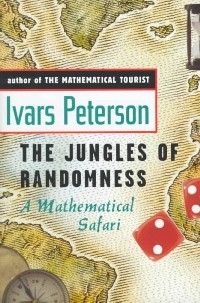
The jungles of randomness : a mathematical safari /
作者: Ivars Peterson.
简介:"Join acclaimed science writer Ivars Peterson on an adventurous trek through an exotic world of weird dice, fractal drums, firefly rhythms and chaotic amusement park rides, as he explores the wilds of randomness. A tricky, intriguing, even elusive concept, randomness affects our lives in an astonishing range of ways - from the fun of games we play and the noise that spoils the music we hear, to the ways viruses grow and atoms combine. Hidden rules and secret patterns lurk within apparently random events and chance encounters." "How likely is it that a fair coin will land heads up ten times in a row? How often might you meet a stranger at a party who shares your birthday? Are there really ways to win at roulette or beat a slot machine? How does the gait of a horse differ from that of a cockroach? Peterson uncovers the answers to a rich array of such tantalizing questions, revealing the surprising, ambiguous boundaries between order and chaos." "Along the way we also meet a host of characters, both charming and eccentric, who either made striking discoveries about randomness or were profoundly affected by it. There’s the case of Williard Longcor, a man gripped with a passion for throwing dice, who meticulously records the outcomes of millions of tosses and helps correct the theory of the distribution of runs. And there’s the tragic case of the brilliant novelist Fyodor Dostoyevsky, who became addicted to the random spin of the roulette wheel. The "wandering mathematician" Paul Erdos drops in with his famous greeting "my brain is open," and the visionary architect Buckminster Fuller remarks on the similarities between his geodesic domes and the structure of viruses." "The Jungles of Randomness offers a delightful journey into the exciting world of mathematical discovery and imparts a rare vision of the fundamental playfulness of mathematics in our lives."--BOOK JACKET.
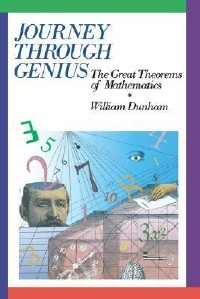
简介:Summary: Publisher Summary 1 Surveys the most enduring ideas in mathematics, looks at how difficult theorems are solved, and offers brief profiles of famous mathematicians Publisher Summary 2 Dunham (math, Hanover College, Indiana) explores the "masterpieces" of mathematics, seventeen landmarks spanning 2,300 years and representing ten mathematicians. He not only elucidates the theorems, but places each in the context of math at the time, and includes a biographical sketch of the mathematician. Annotation copyright Book News, Inc. Portland, Or. Publisher Summary 3 Praise for William Dunham s Journey Through Genius The Great Theorems of Mathematics "Dunham deftly guides the reader through the verbal and logical intricacies of major mathematical questions and proofs, conveying a splendid sense of how the greatest mathematicians from ancient to modern times presented their arguments." Ivars Peterson Author, The Mathematical Tourist Mathematics and Physics Editor, Science News "It is mathematics presented as a series of works of art; a fascinating lingering over individual examples of ingenuity and insight. It is mathematics by lightning flash." Isaac Asimov "It is a captivating collection of essays of major mathematical achievements brought to life by the personal and historical anecdotes which the author has skillfully woven into the text. This is a book which should find its place on the bookshelf of anyone interested in science and the scientists who create it." R. L. Graham, AT&T Bell Laboratories "Come on a time-machine tour through 2,300 years in which Dunham drops in on some of the greatest mathematicians in history. Almost as if we chat over tea and crumpets, we get to know them and their ideas ideas that ring with eternity and that offer glimpses into the often veiled beauty of mathematics and logic. And all the while we marvel, hoping that the tour will not stop." Jearl Walker, Physics Department, Cleveland State University Author of The Flying Circus of Physics