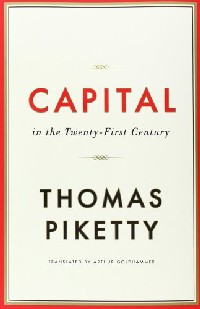
Capital in the Twenty-First Century 《21世纪资本论》《纽约时报》图书排行榜连续上榜超过20周 内容无删节 本书对当代资本主义制度的合理性提出了极有深度的疑问,引起了极大争论!当当网5星级英文学习产品
作者: Carol J. Loomis 著
出版社: 2014年3月
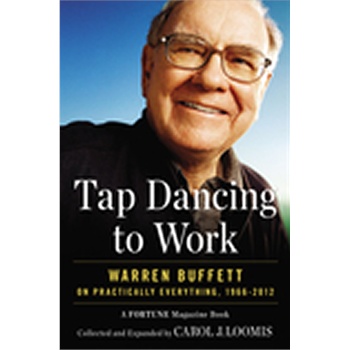
简介: 法国经济学家托马?皮克提(Thomas Piketty)著作《21世纪资本论》(Capital in the Twenty-First Century),2014年最重要经济学著作之一。 What are the grand dynamics that drive the accumulation and distribution of capital? Questions about the long-term evolution of inequality, the concentration of wealth, and the prospects for economic growth lie at the heart of political economy. But satisfactory answers have been hard to find for lack of adequate data and clear guiding theories. In Capital in the Twenty-First Century, Thomas Piketty analyzes a unique collection of data from twenty countries, ranging as far back as the eighteenth century, to uncover key economic and social patterns. His findings will transform debate and set the agenda for the next generation of thought about wealth and inequality. Piketty shows that modern economic growth and the diffusion of knowledge have allowed us to avoid inequalities on the apocalyptic scale predicted by Karl Marx. But we have not modified the deep structures of capital and inequality as much as we thought in the optimistic decades following World War II. The main driver of inequality--the tendency of returns on capital to exceed the rate of economic growth--today threatens to generate extreme inequalities that stir discontent and undermine democratic values. But economic trends are not acts of God. Political action has curbed dangerous inequalities in the past, Piketty says, and may do so again. A work of extraordinary ambition, originality, and rigor, Capital in the Twenty-First Century reorients our understanding of economic history and confronts us with sobering lessons for today. When Carol Loomis first mentioned a little-known Omaha hedge fund manager in a 1966 Fortune article, she didn’t dream that Warren Buffett would one day be considered the world’s greatest investor—nor that she and Buffett would quickly become close personal friends. As Buf?fett’s fortune and reputation grew over time, Loomis used her unique insight into Buffett’s thinking to chronicle his work for Fortune, writ?ing and proposing scores of stories that tracked his many accomplishments—and also his occa?sional mistakes. Now Loomis has collected and updated the best Buffett articles Fortune published between 1966 and 2012, including thirteen cover stories and a dozen pieces authored by Buffett himself. Loomis has provided commentary about each major arti?cle that supplies context and her own informed point of view. Readers will gain fresh insights into Buffett’s investment strategies and his thinking on management, philanthropy, public policy, and even parenting. Some of the highlights include: The 1966 A. W. Jones story in which Fortune first mentioned Buffett. The first piece Buffett wrote for the magazine, 1977’s “How Inf lation Swindles the Equity Investor.” Andrew Tobias’s 1983 article “Letters from Chairman Buffett,” the first review of his Berk?shire Hathaway shareholder letters. Buffett’s stunningly prescient 2003 piece about derivatives, “Avoiding a Mega-Catastrophe.” His unconventional thoughts on inheritance and philanthropy, including his intention to leave his kids “enough money so they would feel they could do anything, but not so much that they could do nothing.” Bill Gates’s 1996 article describing his early impressions of Buffett as they struck up their close friendship. Scores of Buffett books have been written, but none can claim this work’s combination of trust between two friends, the writer’s deep under?standing of Buffett’s world, and a very long-term perspective.