

简介
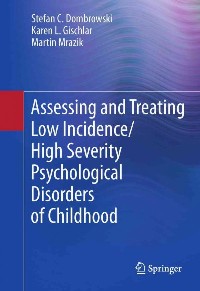
During the past several decades, interest in children鈥檚 psychological disorders has grown steadily within the research community, resulting in a burgeoning knowledge base. The majority of the attention and funding, not surprisingly, has focused on the more prevalent and well-known conditions. Although this raises the odds that young people with more well-known disorders such as ADHD, autism, and learning disorders will receive much-needed professional assessment and intervention, children with less frequently encountered disorders may experience a higher risk of misdiagnosis and inappropriate treatment. Useful data has been scattered throughout the literature for severe-but-less-frequent childhood psychological disorders, including: fire setting; gender identity disorder; impulse control disorders (i.e., kleptomania, trichotillomania, intermittent explosive disorder); selective mutism; Munchausen by proxy; childhood schizophrenia; gang involvement; sexual offending; self-injurious behavior; and feral children. This concise volume offers up-to-date information on these conditions, which, though relatively rare, may have profound effect not only on the children themselves but also their families, friends, and the community at large. Coverage of each disorder is presented in an accessible format covering: Overview and history. Description and diagnostic classification, with proposed changes to the DSM-V. Etiology and theory. Assessment tools and interview protocols. Commonly used psychological and pharmacological treatment options. Current research issues and directions for future investigation. Assessing and Treating Low Incidence/High Severity Psychological Disorders of Childhood is a must-have reference for researchers, clinicians, practitioners, and graduate students in clinical child and school psychology, pediatrics, psychiatry, social work, school counseling, education, and public policy.
目录
Acknowledgments 5
Contents 7
Chapter 1: Introduction 15
1.1 Introduction 15
1.2 Gap in the Literature 15
1.3 Chapter Format 16
1.4 Conclusion 17
Chapter 2: Juvenile Firesetters 18
2.1 Overview 18
2.2 Historical Context 19
2.3 Description and Diagnostic Classification 20
2.3.1 DSM-V 21
2.4 Developmental Course of Fire Behavior: From Fire Interest to Firesetting 22
2.4.1 Fire Interest 22
2.4.2 Firestarting 22
2.4.3 Firesetting 23
2.5 Etiological Hypotheses and Theoretical Frameworks 23
2.6 Typologies of Firesetting Risk 25
2.6.1 Curiosity Firesetters (Low Risk) 25
2.6.2 Crisis Firesetters (Definite Risk) 26
2.6.3 Delinquent Firesetting (Definite Risk) 26
2.6.4 Pathological Firesetting (Extreme Risk) 27
2.7 Assessment and Evaluation 27
2.8 Prevention and Intervention 29
2.8.1 Fire Service Collaboration 30
2.9 Treatment Modalities 31
2.9.1 Fire Safety Education 31
2.10 Psychological Intervention 32
2.10.1 Psychotherapy 32
2.10.2 Family Therapy 33
2.10.3 Hospitalization and Residential Treatment Facilities 33
2.10.4 Psychopharmacology 33
2.11 Recidivism 34
2.12 Future Directions 34
References 35
Chapter 3: Gender Identity Disorder 39
3.1 Overview 39
3.2 Controversy: Whether a Disorder and Whither to Treat? 40
3.2.1 Perspective 1: Accommodation 40
3.2.2 Perspective 2: Psychological Intervention 41
3.3 Description, Prevalence, and Diagnostic Classification 42
3.3.1 Prevalence 43
3.3.2 DSM-IV TR Diagnostic Criteria 43
3.3.3 Description 43
3.3.3.1 Identity Statements 44
3.3.3.2 Cross-Dressing 44
3.3.3.3 Toy and Role Play 45
3.3.3.4 Peer Relations 45
3.4 Developmental Course 45
3.5 Relationship Between Gender Atypicality and Homosexuality 46
3.6 Etiological Hypotheses and Theoretical Frameworks 47
3.6.1 Biological Correlates 47
3.6.1.1 Prenatal Sex Hormones 47
3.6.1.2 Behavior Genetics 48
3.6.1.3 Molecular Genetics 48
3.6.2 Social-Cultural Context 49
3.7 DSM-V TR: Change in Label and Revised Criteria? 49
3.7.1 Proposed DSM-V Diagnostic Criteria 50
3.7.1.1 Gender Dysphoria (in Children) 50
3.7.1.2 Gender Dysphoria (in Adolescents or Adults) 50
3.8 Assessment 51
3.9 Prevention and Intervention 54
3.10 Treatment Modalities 55
3.10.1 Behavior Therapy 55
3.10.2 Psychoanalysis 56
3.10.3 Group Therapy 57
3.10.4 Effectiveness of Psychotherapy 57
3.10.5 Transition to Preferred Gender 57
3.11 Conclusion and Future Directions 58
References 60
Chapter 4: Munchhausen Syndrome by Proxy 65
4.1 Overview 65
4.2 Historical Context 66
4.3 Description and Diagnostic Classification 67
4.3.1 Factitious Disorder by Proxy and Pediatric Condition Falsification 67
4.3.2 Warning Signs 68
4.3.3 Rosenberg\u2019s Diagnostic Criteria 69
4.3.4 The Diagnostic and Statistical Manual of Mental Disorders 69
4.4 Prevalence 70
4.5 Etiological Hypotheses and Theoretical Frameworks 70
4.5.1 Maternal Psychological and Psychiatric Histories 71
4.5.2 Characteristics of Perpetrators 73
4.5.3 The Parent/Professional Relationship 73
4.5.4 Factors Affecting the Parent/Child Relationship 74
4.6 Presentation of MSBP in Medical and Educational Contexts 75
4.6.1 The Medical Context 75
4.6.2 The Educational Context 76
4.7 Assessment 78
4.7.1 Burden of Proof: Video Surveillance 81
4.7.2 MSBP: To Label the Perpetrator or Not 82
4.8 Treatment and Intervention 83
4.8.1 Confrontation of the Caregiver 83
4.8.2 Placement in Protective Custody 83
4.8.3 Therapeutic Intervention 84
4.8.3.1 Therapy with the Mother 84
4.8.3.2 Therapy with the Husband and as a Couple 85
4.8.3.3 Therapy with the Child 85
4.8.3.4 Narrative Family Therapy 85
4.8.3.5 Treatment for Educational MSBP 86
4.8.3.6 Therapeutic Case Study 87
4.8.3.7 Conclusions Regarding Treatment for MSBP 87
4.9 Outcome and Prognostic Factors 88
4.10 Future Directions 88
References 90
Chapter 5: Feral Children 92
5.1 Overview 92
5.2 Historical Context 93
5.3 Description and Diagnosis 95
5.3.1 Animal-Reared Children 96
5.3.2 Children Reared in Wilderness Isolation 96
5.3.3 Children Reared Isolated in Confinement 97
5.3.4 Children Confined with Limited Human Contact 97
5.4 DSM-IV TR 97
5.5 Prevalence and Incidence 98
5.6 Assessment 98
5.7 Etiological Hypotheses and Theoretical Frameworks 99
5.8 Treatment and Intervention 100
5.8.1 Pharmacological 101
5.9 Outcome and Prognostic Factors 101
5.10 Future Directions 102
References 103
Chapter 6: The Youth Gang Member 105
6.1 Overview 105
6.2 Historical Context 106
6.2.1 Prominent Gangs in North America 109
6.2.1.1 The Crips 109
6.2.1.2 The Bloods 109
6.2.1.3 The Almighty Latin King and Queen Nation (ALKQA) 110
6.2.1.4 MS-13 110
6.3 Description and Diagnostic Classification 111
6.3.1 Definitions 111
6.3.2 Descriptions and Diagnosis 112
6.3.3 Prevalence/Incidence 113
6.3.4 Ethnicity 113
6.3.5 Gender 114
6.3.6 Leaving the Gang 115
6.4 Assessment Approaches 116
6.5 Etiological Hypotheses and Theoretical Frameworks 117
6.5.1 Sociological Theories 119
6.5.2 Biological Theories 120
6.5.3 Psychological Theories 121
6.5.3.1 Social Learning Theory 121
6.5.3.2 Goldsteins\u2019s Hyperadolescence Theory 121
6.5.3.3 Personality Theory 122
6.5.3.4 Causal Model 122
6.5.4 Summary 123
6.6 Treatment/Intervention 123
6.6.1 Community Prevention Programs 124
6.6.2 Social Interventions 125
6.6.3 Cognitive-Behavioral Intervention 126
6.6.4 Other Approaches 126
6.6.5 Pharmacological Treatment 127
6.7 Future Directions 127
References 128
Chapter 7: Impulse Control Disorders 133
7.1 Overview 133
7.2 Historical Context 134
7.3 Definition and Description 134
7.4 Trichotillomania 135
7.4.1 Historical Context 135
7.4.2 Description and Diagnosis 135
7.4.3 Etiology and Theoretical Frameworks 138
7.4.3.1 Biological Models 138
7.4.3.2 Environmental Models 139
7.4.4 Assessment 139
7.4.4.1 TTM Rating Scales 140
7.4.5 Treatment and Intervention 141
7.4.5.1 Pharmacological 141
7.4.5.2 Psychosocial Approaches 142
7.4.6 Prognosis 144
7.5 Kleptomania 145
7.5.1 Historical Context 145
7.5.2 Diagnosis and Description 146
7.5.3 Etiology and Theoretical Frameworks 148
7.5.3.1 Biological Models 148
7.5.3.2 Environmental Models 148
7.5.4 Assessment 149
7.5.5 Treatment and Intervention 149
7.5.5.1 Pharmacological Approaches 150
7.5.5.2 Behavioral and Cognitive-Behavioral Approaches 150
7.5.6 Prognosis 152
7.6 Intermittent Explosive Disorder 153
7.6.1 Historical Context 153
7.6.2 Diagnosis and Description 154
7.6.3 Etiology and Theoretical Frameworks 155
7.6.3.1 Biological Models 155
7.6.3.2 Psychosocial Models 156
7.6.4 Assessment 157
7.6.5 Treatment and Intervention 159
7.6.5.1 Pharmacological Approaches 159
7.6.5.2 Psychosocial Approaches 159
7.6.6 Prognosis 161
7.7 Impulse Control Disorders: A Global Perspective 162
7.7.1 DSM-V 163
7.8 Future Directions 163
References 164
Chapter 8: Selective Mutism 171
8.1 Overview 171
8.2 Historical Context 172
8.3 Description and Diagnostic Classification 172
8.3.1 Prevalence 173
8.3.2 Age of Onset 174
8.3.3 Ethnicity 174
8.3.4 Socioeconomic Status 175
8.4 Etiological Hypotheses 175
8.4.1 Psychodynamic Theory 175
8.4.2 Behavioral Theory 175
8.4.3 Family Dynamics 176
8.4.4 Trauma 176
8.4.5 Genetic Vulnerabilities 177
8.4.6 Externalizing (Oppositional) Behavior 178
8.4.7 Anxiety 179
8.5 Assessment 180
8.6 Treatment 181
8.6.1 Behavioral Interventions 182
8.6.1.1 Contingency Management 182
8.6.1.2 Systematic Desensitization 183
8.6.1.3 Self-Modeling 183
8.6.2 Cognitive-Behavioral Intervention 183
8.6.3 Family Therapy Intervention 184
8.6.4 Pharmacotherapy 184
8.7 Outcome and Prognosis 185
8.8 Future Directions 186
8.9 Summary 187
References 187
Chapter 9: Juvenile Sex Offender 191
9.1 Overview and Historical Context 191
9.2 Description and Classification 192
9.3 Etiology 192
9.3.1 Sexual Assault Cycle 193
9.3.2 Prior History of Sexual Abuse 193
9.3.3 Family Dysfunction 193
9.3.4 Individual Characteristics 194
9.3.5 Pornography Exposure 194
9.3.6 Substance Use 195
9.3.7 Cultural Context 195
9.4 Assessment 196
9.4.1 Self-Report Instruments 196
9.4.2 Objective Assessment Instruments 197
9.4.2.1 Plethysmography 198
9.4.2.2 Polygraph 198
9.4.3 Conclusion: Assessment of Juvenile Offenders 199
9.5 Prevention and Intervention 199
9.6 Treatment Modalities 199
9.6.1 Cognitive-Behavioral Therapy 199
9.6.1.1 Satiation 200
9.6.1.2 Covert Sensitization 200
9.6.1.3 Cognitive Restructuring 201
9.6.1.4 Combined Cognitive-Behavioral Approaches 201
9.6.1.5 Conclusion: Cognitive-Behavioral Therapy 201
9.6.2 Multisystemic Therapy 201
9.6.3 Relapse Prevention Model 202
9.6.4 Group Therapy 202
9.6.5 Issues for Therapists 203
9.7 Conclusion and Future Directions 203
References 204
Chapter 10: Childhood Onset Schizophrenia 208
10.1 Overview 208
10.2 Historical Context 209
10.2.1 The Late 1800s and Early 1900s 209
10.2.2 The Mid-1900s 210
10.2.3 More Recent Developments in Research 210
10.3 Description, Diagnosis, and Prevalence 211
10.3.1 DSM Diagnostic Criteria 211
10.3.2 Prevalence 212
10.3.2.1 Age at Onset 212
10.3.2.2 Gender Differences 213
10.4 Etiological Hypotheses and Theoretical Frameworks 213
10.4.1 Premorbid Behavioral Indicators 214
10.4.2 Brain Structural Differences 214
10.4.3 Dopamine Hypothesis 215
10.4.4 Genetic Indicators 215
10.4.5 Prenatal Exposures 216
10.4.5.1 Diabetes 216
10.4.5.2 Influenza 216
10.4.6 Environmental Risk Factors 218
10.5 Assessment 218
10.5.1 Behavioral History 219
10.5.2 Assessment of Symptoms 220
10.5.3 Standardized Measures 220
10.5.4 Stability of Diagnosis Over Time 221
10.6 Treatment and Intervention 221
10.6.1 Pharmacological Intervention 221
10.6.2 Psychotherapeutic Treatment 224
10.6.3 Educational Intervention 225
10.7 Outcome and Prognostic Factors 225
10.8 Future Directions 226
References 227
Chapter 11: Self-Injurious Behavior 231
11.1 Overview 231
11.2 Historical Aspects 232
11.3 Description, Diagnosis, and Prevalence 233
11.3.1 Description 233
11.3.1.1 Common Misperceptions 234
11.3.2 Diagnosis/Classification 234
11.3.2.1 DSM-V: Proposed Changes 235
11.3.3 Prevalence 237
11.4 Etiological Hypotheses and Theoretical Frameworks 238
11.4.1 Functional Approach to Classification 239
11.4.2 Pain Pathways 241
11.4.3 Conclusions: Syndromal vs. Functional Approaches 241
11.5 Assessment 242
11.5.1 Standardized Measures 243
11.5.2 Critical Need: Evaluation for Suicidality 244
11.5.3 Standardized Measures of NSSI 245
11.6 Treatment and Intervention 245
11.6.1 Dialectical Behavior Therapy 246
11.6.2 Psychodynamic Therapy 246
11.6.3 Narrative Therapy 246
11.6.4 Psychopharmacology 247
11.7 Prevention 248
11.8 Suicidal Ideation 249
11.9 Conclusion and Future Directions 250
References 250
Index 254
Contents 7
Chapter 1: Introduction 15
1.1 Introduction 15
1.2 Gap in the Literature 15
1.3 Chapter Format 16
1.4 Conclusion 17
Chapter 2: Juvenile Firesetters 18
2.1 Overview 18
2.2 Historical Context 19
2.3 Description and Diagnostic Classification 20
2.3.1 DSM-V 21
2.4 Developmental Course of Fire Behavior: From Fire Interest to Firesetting 22
2.4.1 Fire Interest 22
2.4.2 Firestarting 22
2.4.3 Firesetting 23
2.5 Etiological Hypotheses and Theoretical Frameworks 23
2.6 Typologies of Firesetting Risk 25
2.6.1 Curiosity Firesetters (Low Risk) 25
2.6.2 Crisis Firesetters (Definite Risk) 26
2.6.3 Delinquent Firesetting (Definite Risk) 26
2.6.4 Pathological Firesetting (Extreme Risk) 27
2.7 Assessment and Evaluation 27
2.8 Prevention and Intervention 29
2.8.1 Fire Service Collaboration 30
2.9 Treatment Modalities 31
2.9.1 Fire Safety Education 31
2.10 Psychological Intervention 32
2.10.1 Psychotherapy 32
2.10.2 Family Therapy 33
2.10.3 Hospitalization and Residential Treatment Facilities 33
2.10.4 Psychopharmacology 33
2.11 Recidivism 34
2.12 Future Directions 34
References 35
Chapter 3: Gender Identity Disorder 39
3.1 Overview 39
3.2 Controversy: Whether a Disorder and Whither to Treat? 40
3.2.1 Perspective 1: Accommodation 40
3.2.2 Perspective 2: Psychological Intervention 41
3.3 Description, Prevalence, and Diagnostic Classification 42
3.3.1 Prevalence 43
3.3.2 DSM-IV TR Diagnostic Criteria 43
3.3.3 Description 43
3.3.3.1 Identity Statements 44
3.3.3.2 Cross-Dressing 44
3.3.3.3 Toy and Role Play 45
3.3.3.4 Peer Relations 45
3.4 Developmental Course 45
3.5 Relationship Between Gender Atypicality and Homosexuality 46
3.6 Etiological Hypotheses and Theoretical Frameworks 47
3.6.1 Biological Correlates 47
3.6.1.1 Prenatal Sex Hormones 47
3.6.1.2 Behavior Genetics 48
3.6.1.3 Molecular Genetics 48
3.6.2 Social-Cultural Context 49
3.7 DSM-V TR: Change in Label and Revised Criteria? 49
3.7.1 Proposed DSM-V Diagnostic Criteria 50
3.7.1.1 Gender Dysphoria (in Children) 50
3.7.1.2 Gender Dysphoria (in Adolescents or Adults) 50
3.8 Assessment 51
3.9 Prevention and Intervention 54
3.10 Treatment Modalities 55
3.10.1 Behavior Therapy 55
3.10.2 Psychoanalysis 56
3.10.3 Group Therapy 57
3.10.4 Effectiveness of Psychotherapy 57
3.10.5 Transition to Preferred Gender 57
3.11 Conclusion and Future Directions 58
References 60
Chapter 4: Munchhausen Syndrome by Proxy 65
4.1 Overview 65
4.2 Historical Context 66
4.3 Description and Diagnostic Classification 67
4.3.1 Factitious Disorder by Proxy and Pediatric Condition Falsification 67
4.3.2 Warning Signs 68
4.3.3 Rosenberg\u2019s Diagnostic Criteria 69
4.3.4 The Diagnostic and Statistical Manual of Mental Disorders 69
4.4 Prevalence 70
4.5 Etiological Hypotheses and Theoretical Frameworks 70
4.5.1 Maternal Psychological and Psychiatric Histories 71
4.5.2 Characteristics of Perpetrators 73
4.5.3 The Parent/Professional Relationship 73
4.5.4 Factors Affecting the Parent/Child Relationship 74
4.6 Presentation of MSBP in Medical and Educational Contexts 75
4.6.1 The Medical Context 75
4.6.2 The Educational Context 76
4.7 Assessment 78
4.7.1 Burden of Proof: Video Surveillance 81
4.7.2 MSBP: To Label the Perpetrator or Not 82
4.8 Treatment and Intervention 83
4.8.1 Confrontation of the Caregiver 83
4.8.2 Placement in Protective Custody 83
4.8.3 Therapeutic Intervention 84
4.8.3.1 Therapy with the Mother 84
4.8.3.2 Therapy with the Husband and as a Couple 85
4.8.3.3 Therapy with the Child 85
4.8.3.4 Narrative Family Therapy 85
4.8.3.5 Treatment for Educational MSBP 86
4.8.3.6 Therapeutic Case Study 87
4.8.3.7 Conclusions Regarding Treatment for MSBP 87
4.9 Outcome and Prognostic Factors 88
4.10 Future Directions 88
References 90
Chapter 5: Feral Children 92
5.1 Overview 92
5.2 Historical Context 93
5.3 Description and Diagnosis 95
5.3.1 Animal-Reared Children 96
5.3.2 Children Reared in Wilderness Isolation 96
5.3.3 Children Reared Isolated in Confinement 97
5.3.4 Children Confined with Limited Human Contact 97
5.4 DSM-IV TR 97
5.5 Prevalence and Incidence 98
5.6 Assessment 98
5.7 Etiological Hypotheses and Theoretical Frameworks 99
5.8 Treatment and Intervention 100
5.8.1 Pharmacological 101
5.9 Outcome and Prognostic Factors 101
5.10 Future Directions 102
References 103
Chapter 6: The Youth Gang Member 105
6.1 Overview 105
6.2 Historical Context 106
6.2.1 Prominent Gangs in North America 109
6.2.1.1 The Crips 109
6.2.1.2 The Bloods 109
6.2.1.3 The Almighty Latin King and Queen Nation (ALKQA) 110
6.2.1.4 MS-13 110
6.3 Description and Diagnostic Classification 111
6.3.1 Definitions 111
6.3.2 Descriptions and Diagnosis 112
6.3.3 Prevalence/Incidence 113
6.3.4 Ethnicity 113
6.3.5 Gender 114
6.3.6 Leaving the Gang 115
6.4 Assessment Approaches 116
6.5 Etiological Hypotheses and Theoretical Frameworks 117
6.5.1 Sociological Theories 119
6.5.2 Biological Theories 120
6.5.3 Psychological Theories 121
6.5.3.1 Social Learning Theory 121
6.5.3.2 Goldsteins\u2019s Hyperadolescence Theory 121
6.5.3.3 Personality Theory 122
6.5.3.4 Causal Model 122
6.5.4 Summary 123
6.6 Treatment/Intervention 123
6.6.1 Community Prevention Programs 124
6.6.2 Social Interventions 125
6.6.3 Cognitive-Behavioral Intervention 126
6.6.4 Other Approaches 126
6.6.5 Pharmacological Treatment 127
6.7 Future Directions 127
References 128
Chapter 7: Impulse Control Disorders 133
7.1 Overview 133
7.2 Historical Context 134
7.3 Definition and Description 134
7.4 Trichotillomania 135
7.4.1 Historical Context 135
7.4.2 Description and Diagnosis 135
7.4.3 Etiology and Theoretical Frameworks 138
7.4.3.1 Biological Models 138
7.4.3.2 Environmental Models 139
7.4.4 Assessment 139
7.4.4.1 TTM Rating Scales 140
7.4.5 Treatment and Intervention 141
7.4.5.1 Pharmacological 141
7.4.5.2 Psychosocial Approaches 142
7.4.6 Prognosis 144
7.5 Kleptomania 145
7.5.1 Historical Context 145
7.5.2 Diagnosis and Description 146
7.5.3 Etiology and Theoretical Frameworks 148
7.5.3.1 Biological Models 148
7.5.3.2 Environmental Models 148
7.5.4 Assessment 149
7.5.5 Treatment and Intervention 149
7.5.5.1 Pharmacological Approaches 150
7.5.5.2 Behavioral and Cognitive-Behavioral Approaches 150
7.5.6 Prognosis 152
7.6 Intermittent Explosive Disorder 153
7.6.1 Historical Context 153
7.6.2 Diagnosis and Description 154
7.6.3 Etiology and Theoretical Frameworks 155
7.6.3.1 Biological Models 155
7.6.3.2 Psychosocial Models 156
7.6.4 Assessment 157
7.6.5 Treatment and Intervention 159
7.6.5.1 Pharmacological Approaches 159
7.6.5.2 Psychosocial Approaches 159
7.6.6 Prognosis 161
7.7 Impulse Control Disorders: A Global Perspective 162
7.7.1 DSM-V 163
7.8 Future Directions 163
References 164
Chapter 8: Selective Mutism 171
8.1 Overview 171
8.2 Historical Context 172
8.3 Description and Diagnostic Classification 172
8.3.1 Prevalence 173
8.3.2 Age of Onset 174
8.3.3 Ethnicity 174
8.3.4 Socioeconomic Status 175
8.4 Etiological Hypotheses 175
8.4.1 Psychodynamic Theory 175
8.4.2 Behavioral Theory 175
8.4.3 Family Dynamics 176
8.4.4 Trauma 176
8.4.5 Genetic Vulnerabilities 177
8.4.6 Externalizing (Oppositional) Behavior 178
8.4.7 Anxiety 179
8.5 Assessment 180
8.6 Treatment 181
8.6.1 Behavioral Interventions 182
8.6.1.1 Contingency Management 182
8.6.1.2 Systematic Desensitization 183
8.6.1.3 Self-Modeling 183
8.6.2 Cognitive-Behavioral Intervention 183
8.6.3 Family Therapy Intervention 184
8.6.4 Pharmacotherapy 184
8.7 Outcome and Prognosis 185
8.8 Future Directions 186
8.9 Summary 187
References 187
Chapter 9: Juvenile Sex Offender 191
9.1 Overview and Historical Context 191
9.2 Description and Classification 192
9.3 Etiology 192
9.3.1 Sexual Assault Cycle 193
9.3.2 Prior History of Sexual Abuse 193
9.3.3 Family Dysfunction 193
9.3.4 Individual Characteristics 194
9.3.5 Pornography Exposure 194
9.3.6 Substance Use 195
9.3.7 Cultural Context 195
9.4 Assessment 196
9.4.1 Self-Report Instruments 196
9.4.2 Objective Assessment Instruments 197
9.4.2.1 Plethysmography 198
9.4.2.2 Polygraph 198
9.4.3 Conclusion: Assessment of Juvenile Offenders 199
9.5 Prevention and Intervention 199
9.6 Treatment Modalities 199
9.6.1 Cognitive-Behavioral Therapy 199
9.6.1.1 Satiation 200
9.6.1.2 Covert Sensitization 200
9.6.1.3 Cognitive Restructuring 201
9.6.1.4 Combined Cognitive-Behavioral Approaches 201
9.6.1.5 Conclusion: Cognitive-Behavioral Therapy 201
9.6.2 Multisystemic Therapy 201
9.6.3 Relapse Prevention Model 202
9.6.4 Group Therapy 202
9.6.5 Issues for Therapists 203
9.7 Conclusion and Future Directions 203
References 204
Chapter 10: Childhood Onset Schizophrenia 208
10.1 Overview 208
10.2 Historical Context 209
10.2.1 The Late 1800s and Early 1900s 209
10.2.2 The Mid-1900s 210
10.2.3 More Recent Developments in Research 210
10.3 Description, Diagnosis, and Prevalence 211
10.3.1 DSM Diagnostic Criteria 211
10.3.2 Prevalence 212
10.3.2.1 Age at Onset 212
10.3.2.2 Gender Differences 213
10.4 Etiological Hypotheses and Theoretical Frameworks 213
10.4.1 Premorbid Behavioral Indicators 214
10.4.2 Brain Structural Differences 214
10.4.3 Dopamine Hypothesis 215
10.4.4 Genetic Indicators 215
10.4.5 Prenatal Exposures 216
10.4.5.1 Diabetes 216
10.4.5.2 Influenza 216
10.4.6 Environmental Risk Factors 218
10.5 Assessment 218
10.5.1 Behavioral History 219
10.5.2 Assessment of Symptoms 220
10.5.3 Standardized Measures 220
10.5.4 Stability of Diagnosis Over Time 221
10.6 Treatment and Intervention 221
10.6.1 Pharmacological Intervention 221
10.6.2 Psychotherapeutic Treatment 224
10.6.3 Educational Intervention 225
10.7 Outcome and Prognostic Factors 225
10.8 Future Directions 226
References 227
Chapter 11: Self-Injurious Behavior 231
11.1 Overview 231
11.2 Historical Aspects 232
11.3 Description, Diagnosis, and Prevalence 233
11.3.1 Description 233
11.3.1.1 Common Misperceptions 234
11.3.2 Diagnosis/Classification 234
11.3.2.1 DSM-V: Proposed Changes 235
11.3.3 Prevalence 237
11.4 Etiological Hypotheses and Theoretical Frameworks 238
11.4.1 Functional Approach to Classification 239
11.4.2 Pain Pathways 241
11.4.3 Conclusions: Syndromal vs. Functional Approaches 241
11.5 Assessment 242
11.5.1 Standardized Measures 243
11.5.2 Critical Need: Evaluation for Suicidality 244
11.5.3 Standardized Measures of NSSI 245
11.6 Treatment and Intervention 245
11.6.1 Dialectical Behavior Therapy 246
11.6.2 Psychodynamic Therapy 246
11.6.3 Narrative Therapy 246
11.6.4 Psychopharmacology 247
11.7 Prevention 248
11.8 Suicidal Ideation 249
11.9 Conclusion and Future Directions 250
References 250
Index 254
- 名称
- 类型
- 大小
光盘服务联系方式: 020-38250260 客服QQ:4006604884
云图客服:
用户发送的提问,这种方式就需要有位在线客服来回答用户的问题,这种 就属于对话式的,问题是这种提问是否需要用户登录才能提问
Video Player
×
Audio Player
×
pdf Player
×
