

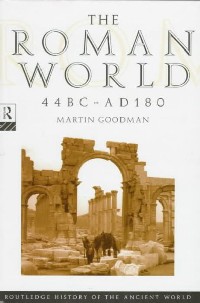
简介
"This volume provides a comprehensive outline of the Roman world from 44 BC to AD 180, the period from the death of Julius Caesar to Marcus Aurelius. Goodman presents a lucid and balanced picture of the Roman world, examining the Roman Empire from a variety of perspectives - cultural, political, civic, social and religious. Goodman's volume represents a broad approach to the study of the Roman Empire, exploring the influence of the provinces and the fringes of the Empire on Rome, and the effects of Rome on the provinces and the emergence within pagan society of rabbinic Judaism and Christianity." "The Roman World 44 BC-AD 180 will be of vital interest to the student of Roman history and civilization."--BOOK JACKET.
目录
Table Of Contents:
List of plates xiii(2)
List of figures xv(2)
Preface xvii(3)
List of dates xx(2)
List of abbreviations xxii
Part I Introduction 3(18)
1 SOURCES AND PROBLEMS 3(7)
The evidence 4(4)
From city to empire 8(2)
2 THE ROMAN WORLD IN 50 BC 10(11)
The sphere of Roman influence 10(6)
The city of Rome in 50 BC 16(5)
Part II Elite politics 21(60)
3 THE POLITICAL LANGUAGE OF ROME 21(7)
Political power 21(3)
Political methods 24(4)
4 CAESAR TO AUGUSTUS, 50 BC-AD 14 28(19)
Last years of Julius Caesar 28(3)
Augustus 31(16)
5 JULIO-CLAUDIANS, AD 14-68 47(11)
Tiberius 47(5)
Gaius 52(2)
Claudius 54(1)
Nero 55(3)
6 CIVIL WAR AND FLAVIANS, AD 68-96 58(9)
Galba 58(1)
Otho 59(1)
Vitellius 60(2)
Vespasian 62(2)
Titus 64(1)
Domitian 64(3)
7 NERVA TO MARCUS AURELIUS, AD 96-180 67(14)
Nerva 67(1)
Trajan 67(2)
Hadrian 69(2)
Antoninus Pius 71(2)
Marcus Aurelius and Lucius Verus 73(2)
Commodus 75(6)
Part III The state 81(78)
8 MILITARY AUTOCRACY 81(6)
Power of the army 81(3)
The praetorian guard 84(1)
State terror 85(2)
9 THE OPERATION OF THE STATE IN ROME 87(13)
Imperial bureaucracy 87(6)
Urban crowds 93(1)
The senate 94(2)
Magistrates and the courts 96(3)
State finances 99(1)
10 THE OPERATION OF THE STATE IN THE PROVINCES 100(13)
Taxes 100(1)
Provincial governors 101(3)
Expansion of frontiers 104(3)
Administration 107(3)
Client kings 110(3)
11 THE ARMY IN SOCIETY 113(10)
Professional soldiers 113(2)
Military life and pay 115(6)
Soldiers and civilians 121(2)
12 THE IMAGE OF THE EMPEROR 123(12)
Augustus: the model emperor 123(6)
The emperor as a god 129(4)
The creation of the image 133(2)
13 THE EXTENT OF POLITICAL UNITY 135(7)
Allies or subjects? 135(1)
Roman citizenship 136(1)
Acceptance of Roman rule? 137(1)
Provincial co-operation 138(1)
The emperor as unifier 139(3)
14 THE EXTENT OF ECONOMIC UNITY 142(7)
Flourishing private enterprise 142(1)
The role of the state in promoting trade 143(4)
Slaves and freedmen 147(1)
Agricultural produce 148(1)
15 THE EXTENT OF CULTURAL UNITY 149(10)
'Graeco-Roman' culture 149(1)
Architecture and art 150(2)
Literary culture 152(3)
Dominance of Greek culture in second century AD 155(4)
Part IV Society 159(128)
16 REACTIONS TO IMPERIAL RULE 159(6)
Types of evidence 160(1)
Accommodation 160(1)
Dissociation 161(1)
Opponents of the state 162(1)
Mass insurrection 163(2)
17 THE CITY OF ROME: SOCIAL ORGANIZATION 165(14)
The imperial court 167(1)
Senators 167(5)
Equites 172(2)
Plebs 174(1)
Women 175(2)
Slaves 177(2)
18 THE CITY OF ROME: CULTURE AND LIFE 179(11)
Literature 179(6)
Painting, sculpture and architecture 185(2)
Ordinary tastes 187(3)
19 ITALY AND SICILY 190(7)
Italy 190(5)
Sicily 195(2)
20 THE IBERIAN PENINSULA AND THE ISLANDS OF THE WESTERN MEDITERRANEAN 197(6)
The Iberian peninsula 197(5)
Sardinia and Corsica 202(1)
21 FRANCE AND BRITAIN 203(14)
Roman conquest of France 203(3)
Celtic society 206(1)
Effects of Roman conquest 207(1)
Roman conquest of Britain 208(3)
Rebellion against Rome in France and Britain 211(1)
Urbanization of France and Britain 212(2)
Assimilation and independence 214(1)
Economic prosperity under the Romans 215(2)
22 THE RHINELAND AND THE BALKANS 217(12)
The Rhineland 217(4)
The Alps 221(2)
The Danube and the Balkans 223(3)
Dacia 226(3)
23 GREECE AND THE AEGEAN COAST 229(8)
Greek attitudes to Roman rule 229(2)
Economic malaise 231(1)
Greek elites and Greek culture 232(3)
City life 235(2)
24 CENTRAL AND EASTERN TURKEY 237(5)
Galatia, Cappadocia and the Lycian Federation 238(1)
Social and cultural effects of Roman rule 239(1)
Economic effects of Roman rule 240(2)
25 THE NORTHERN LEVANT AND MESOPOTAMIA 242(9)
The northern Levant 242(2)
Parthia 244(2)
Mesopotamia 246(1)
Syria 246(2)
Cultural change 248(3)
26 THE SOUTHERN LEVANT 251(11)
Judaea 254(4)
Samaria 258(1)
Arabia 259(3)
27 EGYPT 262(14)
The Ptolemaic dynasty 264(1)
Roman rule in Egypt 265(3)
Jews in Egypt 268(2)
Egyptian villages 270(6)
28 NORTH AFRICA 276(11)
Africa before Roman rule 276(1)
Africa under Roman rule 277(4)
Urbanization 281(6)
Part V Humans and gods 287(44)
29 PAGANISM 287(15)
Religion in the Early Empire 287(2)
Pagan beliefs and practices 289(10)
The imperial cult 299(3)
30 JUDAISM 302(13)
Special characteristics of Judaism 302(2)
Interpretations of the Torah 304(2)
Hopes and speculations 306(1)
Pharisees, Sadducees and Essenes 307(3)
Philo 310(1)
Destruction of the Jerusalem Temple 311(2)
Rabbinic Judaism 313(2)
31 CHRISTIANITY 315(16)
Early history of Christianity 315(2)
Jesus 317(2)
Mission to the gentiles 319(2)
Organization of the Early Church 321(3)
Opposition to the Church 324(7)
Notes 331(28)
Bibliographical notes 359(8)
Index 367
List of plates xiii(2)
List of figures xv(2)
Preface xvii(3)
List of dates xx(2)
List of abbreviations xxii
Part I Introduction 3(18)
1 SOURCES AND PROBLEMS 3(7)
The evidence 4(4)
From city to empire 8(2)
2 THE ROMAN WORLD IN 50 BC 10(11)
The sphere of Roman influence 10(6)
The city of Rome in 50 BC 16(5)
Part II Elite politics 21(60)
3 THE POLITICAL LANGUAGE OF ROME 21(7)
Political power 21(3)
Political methods 24(4)
4 CAESAR TO AUGUSTUS, 50 BC-AD 14 28(19)
Last years of Julius Caesar 28(3)
Augustus 31(16)
5 JULIO-CLAUDIANS, AD 14-68 47(11)
Tiberius 47(5)
Gaius 52(2)
Claudius 54(1)
Nero 55(3)
6 CIVIL WAR AND FLAVIANS, AD 68-96 58(9)
Galba 58(1)
Otho 59(1)
Vitellius 60(2)
Vespasian 62(2)
Titus 64(1)
Domitian 64(3)
7 NERVA TO MARCUS AURELIUS, AD 96-180 67(14)
Nerva 67(1)
Trajan 67(2)
Hadrian 69(2)
Antoninus Pius 71(2)
Marcus Aurelius and Lucius Verus 73(2)
Commodus 75(6)
Part III The state 81(78)
8 MILITARY AUTOCRACY 81(6)
Power of the army 81(3)
The praetorian guard 84(1)
State terror 85(2)
9 THE OPERATION OF THE STATE IN ROME 87(13)
Imperial bureaucracy 87(6)
Urban crowds 93(1)
The senate 94(2)
Magistrates and the courts 96(3)
State finances 99(1)
10 THE OPERATION OF THE STATE IN THE PROVINCES 100(13)
Taxes 100(1)
Provincial governors 101(3)
Expansion of frontiers 104(3)
Administration 107(3)
Client kings 110(3)
11 THE ARMY IN SOCIETY 113(10)
Professional soldiers 113(2)
Military life and pay 115(6)
Soldiers and civilians 121(2)
12 THE IMAGE OF THE EMPEROR 123(12)
Augustus: the model emperor 123(6)
The emperor as a god 129(4)
The creation of the image 133(2)
13 THE EXTENT OF POLITICAL UNITY 135(7)
Allies or subjects? 135(1)
Roman citizenship 136(1)
Acceptance of Roman rule? 137(1)
Provincial co-operation 138(1)
The emperor as unifier 139(3)
14 THE EXTENT OF ECONOMIC UNITY 142(7)
Flourishing private enterprise 142(1)
The role of the state in promoting trade 143(4)
Slaves and freedmen 147(1)
Agricultural produce 148(1)
15 THE EXTENT OF CULTURAL UNITY 149(10)
'Graeco-Roman' culture 149(1)
Architecture and art 150(2)
Literary culture 152(3)
Dominance of Greek culture in second century AD 155(4)
Part IV Society 159(128)
16 REACTIONS TO IMPERIAL RULE 159(6)
Types of evidence 160(1)
Accommodation 160(1)
Dissociation 161(1)
Opponents of the state 162(1)
Mass insurrection 163(2)
17 THE CITY OF ROME: SOCIAL ORGANIZATION 165(14)
The imperial court 167(1)
Senators 167(5)
Equites 172(2)
Plebs 174(1)
Women 175(2)
Slaves 177(2)
18 THE CITY OF ROME: CULTURE AND LIFE 179(11)
Literature 179(6)
Painting, sculpture and architecture 185(2)
Ordinary tastes 187(3)
19 ITALY AND SICILY 190(7)
Italy 190(5)
Sicily 195(2)
20 THE IBERIAN PENINSULA AND THE ISLANDS OF THE WESTERN MEDITERRANEAN 197(6)
The Iberian peninsula 197(5)
Sardinia and Corsica 202(1)
21 FRANCE AND BRITAIN 203(14)
Roman conquest of France 203(3)
Celtic society 206(1)
Effects of Roman conquest 207(1)
Roman conquest of Britain 208(3)
Rebellion against Rome in France and Britain 211(1)
Urbanization of France and Britain 212(2)
Assimilation and independence 214(1)
Economic prosperity under the Romans 215(2)
22 THE RHINELAND AND THE BALKANS 217(12)
The Rhineland 217(4)
The Alps 221(2)
The Danube and the Balkans 223(3)
Dacia 226(3)
23 GREECE AND THE AEGEAN COAST 229(8)
Greek attitudes to Roman rule 229(2)
Economic malaise 231(1)
Greek elites and Greek culture 232(3)
City life 235(2)
24 CENTRAL AND EASTERN TURKEY 237(5)
Galatia, Cappadocia and the Lycian Federation 238(1)
Social and cultural effects of Roman rule 239(1)
Economic effects of Roman rule 240(2)
25 THE NORTHERN LEVANT AND MESOPOTAMIA 242(9)
The northern Levant 242(2)
Parthia 244(2)
Mesopotamia 246(1)
Syria 246(2)
Cultural change 248(3)
26 THE SOUTHERN LEVANT 251(11)
Judaea 254(4)
Samaria 258(1)
Arabia 259(3)
27 EGYPT 262(14)
The Ptolemaic dynasty 264(1)
Roman rule in Egypt 265(3)
Jews in Egypt 268(2)
Egyptian villages 270(6)
28 NORTH AFRICA 276(11)
Africa before Roman rule 276(1)
Africa under Roman rule 277(4)
Urbanization 281(6)
Part V Humans and gods 287(44)
29 PAGANISM 287(15)
Religion in the Early Empire 287(2)
Pagan beliefs and practices 289(10)
The imperial cult 299(3)
30 JUDAISM 302(13)
Special characteristics of Judaism 302(2)
Interpretations of the Torah 304(2)
Hopes and speculations 306(1)
Pharisees, Sadducees and Essenes 307(3)
Philo 310(1)
Destruction of the Jerusalem Temple 311(2)
Rabbinic Judaism 313(2)
31 CHRISTIANITY 315(16)
Early history of Christianity 315(2)
Jesus 317(2)
Mission to the gentiles 319(2)
Organization of the Early Church 321(3)
Opposition to the Church 324(7)
Notes 331(28)
Bibliographical notes 359(8)
Index 367
- 名称
- 类型
- 大小
光盘服务联系方式: 020-38250260 客服QQ:4006604884
云图客服:
用户发送的提问,这种方式就需要有位在线客服来回答用户的问题,这种 就属于对话式的,问题是这种提问是否需要用户登录才能提问
Video Player
×
Audio Player
×
pdf Player
×
