

简介
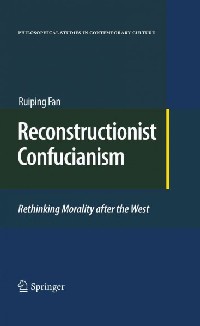
Contrasting with conventional Neo-Confucian attempts to recast the Confucian heritage in light of modern Western values, this book offers a Reconstructionist Confucian project to reclaim Confucian resources to meet contemporary moral and public policy challenges. Ruiping Fan argues that popular accounts of human goods and social justice within the dominant individualist culture of the West are too insubstantial to direct a life of virtue and a proper structure of society. Instead, he demonstrates that the moral insights of Confucian thought are precisely those needed to fill the moral vacuum developing in post-communist China and to address similar problems in the West. The book has a depth of reflection on the Confucian tradition through a comparative philosophical strategy and a breadth of contemporary issues addressed unrivaled by any other work on these topics. It is the first in English to explore not only the endeavor to revive Confucianism in contemporary China, but also brings such an endeavor to bear upon the important ethical, social, and political difficulties being faced in 21st century China. The book should be of interest to any philosopher working in application of traditional Chinese philosophy to contemporary issues as well as any reader interested in comparative cultural and ethical studies. FAN Ruiping's courageous book addresses the question of what should replace communism in China. He defends a Confucian morality that sharply contrasts with liberal individualism and draws implications for concrete issues like morality in business and health-care reform. The book is both provocative and plausible, and it is a must-read for anybody concerned about China's future. And perhaps it will inspire liberals to question their own commitments.-Daniel A. Bell, Tsinghua University This is an important volume in contemporary philosophical thought, deeply and creatively rooted in Confucian scholarship. It is the only major attempt in English to capture Confucian thought that does not distort that thought through background Western philosophical assumptions and commitments. Fan鈥檚 work will have an enduring impact. In a world in which no one can ignore contemporary Chinese thought, this volume is essential reading.-Nicholas Capaldi, Loyola University New Orleans
目录
Contents 7
Introduction 11
Part I Beyond Individualism: Familism as the Key to Virtuous Social Structure 21
1 Confucian Morality: Why It Is in Tension with Contemporary Western Moral Commitments 22
2 Virtue, Ren, and Familial Roles: Deflating Concerns with Individual Rights and Equality 30
2.1 Introduction 30
2.2 Are Rights Persuasive? 30
2.3 The Confucian Virtue-Based Personhood 33
2.4 Reflections on Equal Rights Vs. Unequal Virtues 37
2.5 Towards a Reconstructionist Confucian Bioethics 40
3 A Family-Oriented Civil Society: Treating People as Unequals 41
3.1 Introduction: Civil Society, Rule of Law and Conflicting World Views 41
3.2 Liberal Democratic Civil Society: Treating People as Equals 44
3.3 Confucian Anti-Egalitarian Civil Society: Treating People as Relatives 46
3.4 The Family: Stumbling Block for Justice or Keystone of Virtue? 50
3.5 Is a Confucian Family-Oriented Civil Society Possible? 52
3.6 Concluding Reflections: Towards a Familist Civil Society 57
Part II Virtue as a Way of Life: Social Justice Reconsidered 60
4 Virtue as the True Character of Social Obligations: Why Rawlsian Social Justice is Vicious 61
4.1 Introduction 61
4.2 The Distribution of Instrumental Goods Vs. The Pursuit of Intrinsic Virtues 63
4.3 Equality Vs. Harmony 67
4.4 Liberal Democracy Vs. Confucian Aristocracy 71
4.5 Liberal Rights Vs. Confucian Rights 72
4.6 Neutral Vs. Non-Neutral 77
4.7 Election Vs. Examination 78
4.8 Contractarian Neutrality Vs. Private-Property Economy 79
4.9 Conclusion 83
5 Giving Priority to Virtue Over Justice and Rebuilding Chinese Health Care Principles 85
5.1 The Challenges of Health Care in Todays China 85
5.2 Two Misleading Ethical Views 88
5.3 Reconstructionist Confucian Ethical Principles for Health Care 90
5.3.1 The Principle of Ren-Yi (Humanity-Righteousness) 92
5.3.2 The Principle of Cheng-Xin (Sincerity-Fidelity) 93
5.4 Health Care Policy Reforms 94
5.5 Concluding Remarks 98
6 Which Care? Whose Responsibility? And Why family? Filial Piety and Long Term Care for the Elderly 99
6.1 A Shocking Fact: Contemporary Elderly Persons in East Asia Tend to Commit Suicide 99
6.2 Family Care: Reminiscence or Renaissance? 101
6.3 Why has Family Care Become Difficult in Contemporary Society? 105
6.4 Childrens Responsibility: The Manifestation of De (Virtue) and Xiao (Filial Piety) 111
6.5 Why Family? A Confucian Account of the Family for Elderly Care 115
6.6 Concluding Remarks 117
Part III The Market, the Goodness of Profit, and the Proper Character of Chinese Public Policy 119
7 Towards a Directed, Benevolent Market Polity: Looking Beyond Social Democratic Approaches to Health Care 120
7.1 An Introduction to Confucian Health Care Policy and Bioethics 120
7.2 Beyond Social Democracy and Limited Democracy: A Directed Benevolent Market Polity in the Pacific Rim 121
7.3 The Confucian Perspective: Why It Is So Different 123
7.4 Chinese Health Care Reforms: Towards a Confucian Health Care Policy 125
7.5 A View from Asia: Not Bioethics as Usual 131
8 How Egalitarianism Corrupted Chinese Medicine: Recovering the Synergy of the Pursuit of Virtue and Profit 133
8.1 Three Varieties of Medical Corruption in Contemporary China 133
8.2 Distortions of the Medical Market 137
8.3 Proposals for Policy Reform 139
8.4 Restructuring Chinese Medical Ethics: Some Reflections on Confucian Moral Resources 142
8.5 Looking to the Future: Taking Both the Market and Traditional Morality Seriously 147
9 Honor, Shame, and the Pursuit of Excellence: Towards a Confucian Business Ethics 149
9.1 Understanding Confucian Management Concerns 149
9.2 Rights Alone Are Not Enough 150
9.3 Honor, Shame, and Motivation 153
9.4 An Honor-Based Vs. a Rights-Based Corporate Ethos 155
9.5 Why Rights Language is Blind to the Particularity of Culturally-Embedded Management Styles 157
9.6 Conclusion: Beyond Rights and Towards Excellence 158
10 Human Dominion Over Nature: Following the Sages 161
10.1 Introduction 161
10.2 A Weak Anthropocentric and Cosmic-Principle-Oriented Account of Man and Nature 164
10.3 Nature as a Garden 168
10.4 Placing the Natural Order Within a Human Order that Reflects Cosmic Principles 170
10.5 Home, Ritual, and Eternity 173
10.6 Conclusion 174
Part IV Rites, Not Rights: Towards a Richer Vision of the Human Condition 176
11 Rites as the Foundations of Human Civilization: Rethinking the Role of the Confucian Li 177
11.1 Introduction 177
11.2 Li as the Universal Social Practices of the Confucian Tradition 179
11.3 Two Types of the Confucian Rituals 183
11.4 The Function of Ritual and the Feeling of Shame 188
11.5 Concluding Remarks 192
11.6 Postscript: A Thesis on Confucian Ritual Reform 193
12 How Should We Solve Moral Dissensus? Liberals and Libertarians Have It All Wrong 201
12.1 Introduction: How Should We Deal with Moral Dissensus? 201
12.2 Bioethical Globalization: The Liberal View 202
12.3 Bioethical Communitization: The Libertarian View 208
12.4 Bioethical Localization: The Confucian Insight 212
12.5 Conclusion 223
13 Appeal to Rites and Personhood 226
13.1 Introduction 226
13.2 The Appeal to Creation Conception of Personhood: The Judeo-Christian Conception 227
13.3 The Appeal to Rights Conceptions of Personhood: Modern Western Conceptions 228
13.4 The Transcendental Conception of Personshood: A General Conception 232
13.5 The Appeal to Rites Conception of Personhood: A Confucian Conception 235
13.6 Concluding Remarks 240
14 Restoring the Confucian Personality and Filling the Moral Vaccum in Contemporary China 241
14.1 The Confucian Personality 241
14.2 The Communist Personality Disorder 244
14.3 The Post-Communist Personality Disorder 248
14.4 Can Confucianism Fill the Moral Vacuum in Contemporary China? 253
14.5 Concluding Remarks 258
Appendix Liberalism and Confucianism: A Disputatious Dialogue between Andrew Brennan and Ruiping Fan 260
Introduction 260
The Scene 6
The Dialogue 261
References 5
Index 297
Introduction 11
Part I Beyond Individualism: Familism as the Key to Virtuous Social Structure 21
1 Confucian Morality: Why It Is in Tension with Contemporary Western Moral Commitments 22
2 Virtue, Ren, and Familial Roles: Deflating Concerns with Individual Rights and Equality 30
2.1 Introduction 30
2.2 Are Rights Persuasive? 30
2.3 The Confucian Virtue-Based Personhood 33
2.4 Reflections on Equal Rights Vs. Unequal Virtues 37
2.5 Towards a Reconstructionist Confucian Bioethics 40
3 A Family-Oriented Civil Society: Treating People as Unequals 41
3.1 Introduction: Civil Society, Rule of Law and Conflicting World Views 41
3.2 Liberal Democratic Civil Society: Treating People as Equals 44
3.3 Confucian Anti-Egalitarian Civil Society: Treating People as Relatives 46
3.4 The Family: Stumbling Block for Justice or Keystone of Virtue? 50
3.5 Is a Confucian Family-Oriented Civil Society Possible? 52
3.6 Concluding Reflections: Towards a Familist Civil Society 57
Part II Virtue as a Way of Life: Social Justice Reconsidered 60
4 Virtue as the True Character of Social Obligations: Why Rawlsian Social Justice is Vicious 61
4.1 Introduction 61
4.2 The Distribution of Instrumental Goods Vs. The Pursuit of Intrinsic Virtues 63
4.3 Equality Vs. Harmony 67
4.4 Liberal Democracy Vs. Confucian Aristocracy 71
4.5 Liberal Rights Vs. Confucian Rights 72
4.6 Neutral Vs. Non-Neutral 77
4.7 Election Vs. Examination 78
4.8 Contractarian Neutrality Vs. Private-Property Economy 79
4.9 Conclusion 83
5 Giving Priority to Virtue Over Justice and Rebuilding Chinese Health Care Principles 85
5.1 The Challenges of Health Care in Todays China 85
5.2 Two Misleading Ethical Views 88
5.3 Reconstructionist Confucian Ethical Principles for Health Care 90
5.3.1 The Principle of Ren-Yi (Humanity-Righteousness) 92
5.3.2 The Principle of Cheng-Xin (Sincerity-Fidelity) 93
5.4 Health Care Policy Reforms 94
5.5 Concluding Remarks 98
6 Which Care? Whose Responsibility? And Why family? Filial Piety and Long Term Care for the Elderly 99
6.1 A Shocking Fact: Contemporary Elderly Persons in East Asia Tend to Commit Suicide 99
6.2 Family Care: Reminiscence or Renaissance? 101
6.3 Why has Family Care Become Difficult in Contemporary Society? 105
6.4 Childrens Responsibility: The Manifestation of De (Virtue) and Xiao (Filial Piety) 111
6.5 Why Family? A Confucian Account of the Family for Elderly Care 115
6.6 Concluding Remarks 117
Part III The Market, the Goodness of Profit, and the Proper Character of Chinese Public Policy 119
7 Towards a Directed, Benevolent Market Polity: Looking Beyond Social Democratic Approaches to Health Care 120
7.1 An Introduction to Confucian Health Care Policy and Bioethics 120
7.2 Beyond Social Democracy and Limited Democracy: A Directed Benevolent Market Polity in the Pacific Rim 121
7.3 The Confucian Perspective: Why It Is So Different 123
7.4 Chinese Health Care Reforms: Towards a Confucian Health Care Policy 125
7.5 A View from Asia: Not Bioethics as Usual 131
8 How Egalitarianism Corrupted Chinese Medicine: Recovering the Synergy of the Pursuit of Virtue and Profit 133
8.1 Three Varieties of Medical Corruption in Contemporary China 133
8.2 Distortions of the Medical Market 137
8.3 Proposals for Policy Reform 139
8.4 Restructuring Chinese Medical Ethics: Some Reflections on Confucian Moral Resources 142
8.5 Looking to the Future: Taking Both the Market and Traditional Morality Seriously 147
9 Honor, Shame, and the Pursuit of Excellence: Towards a Confucian Business Ethics 149
9.1 Understanding Confucian Management Concerns 149
9.2 Rights Alone Are Not Enough 150
9.3 Honor, Shame, and Motivation 153
9.4 An Honor-Based Vs. a Rights-Based Corporate Ethos 155
9.5 Why Rights Language is Blind to the Particularity of Culturally-Embedded Management Styles 157
9.6 Conclusion: Beyond Rights and Towards Excellence 158
10 Human Dominion Over Nature: Following the Sages 161
10.1 Introduction 161
10.2 A Weak Anthropocentric and Cosmic-Principle-Oriented Account of Man and Nature 164
10.3 Nature as a Garden 168
10.4 Placing the Natural Order Within a Human Order that Reflects Cosmic Principles 170
10.5 Home, Ritual, and Eternity 173
10.6 Conclusion 174
Part IV Rites, Not Rights: Towards a Richer Vision of the Human Condition 176
11 Rites as the Foundations of Human Civilization: Rethinking the Role of the Confucian Li 177
11.1 Introduction 177
11.2 Li as the Universal Social Practices of the Confucian Tradition 179
11.3 Two Types of the Confucian Rituals 183
11.4 The Function of Ritual and the Feeling of Shame 188
11.5 Concluding Remarks 192
11.6 Postscript: A Thesis on Confucian Ritual Reform 193
12 How Should We Solve Moral Dissensus? Liberals and Libertarians Have It All Wrong 201
12.1 Introduction: How Should We Deal with Moral Dissensus? 201
12.2 Bioethical Globalization: The Liberal View 202
12.3 Bioethical Communitization: The Libertarian View 208
12.4 Bioethical Localization: The Confucian Insight 212
12.5 Conclusion 223
13 Appeal to Rites and Personhood 226
13.1 Introduction 226
13.2 The Appeal to Creation Conception of Personhood: The Judeo-Christian Conception 227
13.3 The Appeal to Rights Conceptions of Personhood: Modern Western Conceptions 228
13.4 The Transcendental Conception of Personshood: A General Conception 232
13.5 The Appeal to Rites Conception of Personhood: A Confucian Conception 235
13.6 Concluding Remarks 240
14 Restoring the Confucian Personality and Filling the Moral Vaccum in Contemporary China 241
14.1 The Confucian Personality 241
14.2 The Communist Personality Disorder 244
14.3 The Post-Communist Personality Disorder 248
14.4 Can Confucianism Fill the Moral Vacuum in Contemporary China? 253
14.5 Concluding Remarks 258
Appendix Liberalism and Confucianism: A Disputatious Dialogue between Andrew Brennan and Ruiping Fan 260
Introduction 260
The Scene 6
The Dialogue 261
References 5
Index 297
- 名称
- 类型
- 大小
光盘服务联系方式: 020-38250260 客服QQ:4006604884
云图客服:
用户发送的提问,这种方式就需要有位在线客服来回答用户的问题,这种 就属于对话式的,问题是这种提问是否需要用户登录才能提问
Video Player
×
Audio Player
×
pdf Player
×
