

简介
Summary:
Publisher Summary 1
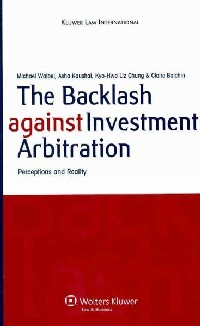
One may debate whether the tremors of a systemic crisis in investment arbitration are real and, if so, of a great enough magnitude to shake its foundations, but it is no longer possible to deny that the current system is coming under intensive scrutiny. International lawyers, who recognize the indispensability of a well-functioning system for settling investment disputes, should be concerned about enhancing the legitimacy and functionality of investment arbitration. A well-calibrated response to the challenges facing investment arbitration is essential to ensuring its long-term future. Critics must be answered, enquiries made, and reassessments undertaken. If crucial questions continue to be ignored or simply glossed over, the strength of and consequences flowing from the backlash are likely to be greater in scale.
This book, which grew out of a conference held at Harvard Law School in April 2008, aims to uncover the concerns driving the backlash against the present international investment regime. Thirty-one contributors - academics, practitioners, government officials, and representatives of civil society -analyse both the current state and future direction of the international investment regime and offer valuable insights into possible ways of improving the system. The concerns fuelling the backlash and addressed in this book include
目录
Table Of Contents:
Foreword to the Backlash against Investment Arbitration xxiii
Detlev Vagts
Biographies of Editors xxvii
Biographies of Contributors xxix
The Backlash against Investment Arbitration: Perceptions and Reality xxxvii
Michael Waibel
Asha Kaushal
Kyo-Hwa Liz Chung
Claire Balchin
Acknowledgments liii
PART I The Protection of International Investment: Assessing Treaty Obligations 1(110)
Chapter 1 Disregarding the Corporate Veil and Denial of Benefits Clauses: Testing Treaty Language and the Concept of "Investor" 3(26)
Rachel Thorn
Jennifer Doucleff
I . Introduction 3(2)
Part 1 Definitions of Investor in Investment Treaties and Denial of Benefits Clause: An Overview of Their History, Objective, and Purpose 5(1)
I Definition of Investor and Denial of Benefits Clauses 5(6)
A Definition of Investor 6(1)
1 Place of Incorporation 6(1)
2 Siege Social 7(1)
3 Control 8(1)
4 Combined Factors 8(1)
B Denial of Benefits Clauses 9(2)
Part 2 The Legal and Interpretive Issues Raised by the Definition of Investor and Denial of Benefits Clauses in the Decisions and Awards of International Tribunals 11(1)
I Disregarding the Corporate Form and the Definition of Investor 12(6)
A Investor Narrowly Defined as Place of Incorporation 13(2)
B Piercing the Corporate Veil to Determine Control 15(3)
II Piercing the Corporate Form for Abuse or Fraud 18(3)
III Defining the Threshold Level of Economic Activity within a Contracting Party 21(2)
IV Burden of Proof when a State Invokes a Denial of Benefits Clause 23(2)
V The Effect of Denial of Benefits Clause 25(1)
A Notice Requirement 25(1)
B When a Denial of Benefits Clause Must Be Invoked 25(1)
VI Concluding Remarks and Practical Implications 26(3)
Chapter 2 Private Enforcement of International Investment Law: Why We Need Investor Standing in BIT Dispute Settlement 29(22)
Stephan W. Schill
I Introduction 29(2)
II Credible Commitments, Dispute Settlement, and Investment Cooperation 31(2)
III The Lack of Efficient Dispute Resolution in Domestic Legal Orders 33(3)
IV The Structural Deficiencies of Customary International Law 36(9)
V The Insufficiencies of Alternative Schemes of Foreign Investment Promotion and Protection 45(3)
VI Conclusion 48(3)
Chapter 3 Drawing the Limits of Free Transfer Provisions 51(28)
Alejandro Turyn
Facundo Perez Aznar
I Introduction 51(4)
A. Early Cases 53(2)
II The Biwater Gauff Award: The Provision Is Not a Guarantee of Funds 55(1)
III The Continental Award 56(16)
A Background of the Argentine Emergency Situation 58(1)
B Landmark Findings of the Continental Award 59(7)
C Findings Regarding the Free Transfer Provision 66(6)
IV The Validity of Exchange Restrictions due to Balance-of-Payments Difficulties or Other Exceptional Situations 72(3)
V Free Transfers Provisions and the Applicability of Non-precluded Measures Clauses, Emergency Situations Clauses, and the Necessity Defense 75(2)
VI Conclusion 77(2)
Chapter 4 A Comparison of ICSID and UNCITRAL Arbitration: Areas of Divergence and Concern 79(32)
Stephen Jagusch
Jeffrey Sullivan
I Introduction 79(2)
II Constitution of the Tribunal 81(4)
A ICSID 81(1)
B UNCITRAL 82(2)
C Comment 84(1)
III Jurisdiction 85(3)
A ICSID 85(2)
UNCITRAL 87(1)
C Comment 88(1)
IV Provisional Measures 88(5)
A ICSID 89(2)
B UNCITRAL 91(1)
C Comment 92(1)
V Confidentiality and Transparency 93(3)
A ICSID 93(1)
B UNCITRAL 94(2)
C Comment 96(1)
VI Role of Domestic Courts 96(3)
A ICSID 97(1)
B UNCITRAL 97(1)
C Comment 98(1)
VII Recognition, Enforcement, and Review of Awards 99(6)
A ICSID 100(2)
B UNCITRAL 102(2)
C Comment 104(1)
VIII Costs 105(3)
A ICSID 105(1)
B UNCITRAL 106(1)
C Comment 107(1)
IX Conclusion 108(3)
PART II Parallel Proceedings and Conflicting Awards 111(76)
Chapter 5 The Issues Raised by Parallel Proceedings and Possible Solutions 113(14)
August Reinisch
I Introduction 113(1)
II Dangers of Multiple Proceedings 114(1)
III The Particularly Fragmented Universe of Investment Arbitration 114(1)
IV The Central Risk of Multiple Proceedings: Inconsistent Outcomes 115(3)
A Divergent Views on Legal Issues 115(1)
B Divergent Assessments of Identical Facts 116(1)
C Conflicting Results in the Same Dispute 117(1)
V Possible Solutions 118(9)
A An Appellate Mechanism for Investment Arbitration 118(1)
B Preliminary References in Investment Matters 118(1)
C Consolidation of Proceedings 119(1)
D Res judicata and. Lis pendens 120(4)
E Precedent 124(3)
Chapter 6 Parallel Proceedings: A Practitioner`s Perspective 127(24)
Richard H. Kreindler
I Parallel Proceedings in International Arbitration from the Practitioner`s Perspective 128(12)
A Parallel Proceedings in International Arbitration 128(1)
1 Lack of Contractual Privity 128(2)
2 Presence of Contractual Privity 130(2)
3 Parallel Proceedings and Issues of the Seat and/or Applicable Arbitral Rules 132(1)
4 The Applicable Substantive Law 133(5)
B Motivations for Forum Shopping from the Practitioner`s Perspective 138(2)
II Possibilities to Hold Arbitral Forum Shopping in Check 140(6)
III Do Parallel Proceedings and Forum Shopping Impact Negatively on International Arbitration? 146(5)
Chapter 7 Annulment and Its Role in the Context of Conflicting Awards 151(14)
Christina Knahr
I Introduction 151(1)
II Jurisdiction of Ad hoc Committees 152(1)
III Grounds for Annulment 153(7)
A Manifest Excess of Powers 154(3)
B Failure to State Reasons 157(2)
C Serious Departure from a Fundamental Rule of Procedure 159(1)
IV The Role of Annulment in the Context of Conflicting Awards 160(2)
A Manifest Excess of Powers? 161(1)
B Failure to State Reasons? 162(1)
V Conclusions 162(3)
Chapter 8 Compensation for Non-expropriatory Investment Treaty Breaches in the Argentine Gas Sector Cases: Issues and Implications 165(22)
Kathryn Khamsi
I Compensation for Non-expropriatory Investment Treaty Breach: Reasoning in ihe Argentine Gas Sector Cases 170(1)
II Use and Calculation of the "Fair Market Value" Measure in the CMS, Enron, Sempra, and BG Group Awards 171(5)
A. Refusal to Compensate Lost Future Profits in the LG&E Damages Award, and Consequent Rejection of the "Fair Market Value" Measure 174(2)
III Issues Raised by the Compensation Reasoning in the Argentine Gas Sector Cases 176(8)
A The Measure of Compensation: Its Choice and Implications 176(3)
B Compensating Lost Future Profits: The Requirement of Reasonable Certainty and Its Satisfaction 179(5)
IV Conclusion: Implications of the Compensation Reasoning in the Argentine Gas Sector Cases 184(3)
PART III Protecting The Public Interest 187(152)
Chapter 9 Arbitrator Integrity 189(64)
William W. Park
I Level Playing Fields 189(5)
A Heracleitus Meets the Psalmist 189(2)
B Why Bias Matters 191(2)
C Two Ways to Sabotage Arbitration 193(1)
II Problematic Relationships and Attitudes 194(11)
A The Basics: Independence and Impartiality 194(3)
B Can Integrity Be Waived? 197(2)
C The Devil in the Detail 199(1)
1 Clear Conflicts 199(1)
2 Variations on a Theme 199(2)
D The Parties' Role in Arbitrator Selection 201(4)
III New Frontiers 205(6)
A Issue Conflict and Role Confusion 205(2)
B Institutional Bias and Professional Affiliation 207(2)
C Repeat Players 209(1)
D Duty to Investigate 209(2)
IV Challenges in Investor-State Arbitration 211(22)
A The Paradigm Shift 211(1)
B Critiques of Arbitrator Integrity in Investor-State Cases 212(1)
1 Systemic Bias in Favor of Investors 213(3)
2 Disillusionment with Arbitration 216(4)
C Mechanics of Challenge: Basic Texts 220(3)
D Filling the Gaps 223(1)
1 The Effect of Institutional Rules and Case Law 223(2)
2 The Specificity of Investment Cases 225(1)
E Transnational Standards and "Soft Law" 226(2)
F Professional Guidelines 228(1)
1 International Bar Association Guidelines 228(1)
2 American Rules 229(2)
G Synthesizing Legal Norms 231(2)
V Three Recurring Problems 233(6)
A Trivial and "De minimis" Contacts 233(2)
B Saying Too Much Too Early 235(1)
C Barristers 236(1)
1 Shared Chambers 236(1)
2 The IBA Guidelines 237(1)
3 Collegiality and the "Outside" Arbitrator 238(1)
VI Intellectual Integrity 239(7)
A Baby Splitting 239(2)
B Amiable Composition 241(2)
C Creeping Legalism 243(2)
D Arbitrators and the Search for Truth 245(1)
VII The Object of an Arbitrator`s Duties 246(7)
Chapter 10 Amicus Curiae: A Panacea for Legitimacy in Investment Arbitration? 253(22)
Nigel Blackaby
Caroline Richard
I Introduction 254(3)
II Evolution of Amicus Curiae 257(9)
A Evolution of Amicus Curiae in Domestic Legal Systems 257(1)
B Evolution of Amicus Curiae in Interstate Dispute Resolution 258(1)
C Evolution of Amicus Curiae in Investment Treaty Arbitration 259(1)
1 Within NAFTA 259(3)
2 Within ICSID 262(4)
III Amicus Curiae Alone Cannot Cure the Democratic Deficit and Lack of Transparency in Investment Treaty Arbitration 266(7)
A The Admission of Amicus Curiae Briefs Alone Does Not Increase Transparency in Investment Treaty Arbitration 266(2)
B The Admission of Amicus Curiae Briefs Alone Does Not Cure the "Democratic Deficit" in Investment Treaty Arbitration 268(2)
C Increasing Transparency and the Legitimacy of Investment Arbitration as the Sole Reason for Admitting Amicus Curiae Briefs? 270(2)
D Public Participation and the Risk of the Politicization of the Investment Treaty Arbitration 272(1)
IV Conclusion 273(2)
Chapter 11 Participation of Non-governmental Organizations in Investment Arbitration as Amici Curiae 275(22)
Amokura Kawharu
I Introduction 275(2)
II NGO Participation in International Law 277(3)
II Why the Rise in NGO Interest in Investment Arbitration? 280(2)
IV Evaluating NGO Participation as Amici Curiae 282(13)
A Representation of an Interest 283(1)
1 Addressing a Legitimacy Deficit; Representation of Public Interest Considerations 283(5)
2 Representation of a Private Interest 288(1)
3 Implications Regarding Criteria for Admission of Amicus Briefs 289(2)
B Contribution of Expertise 291(1)
1 Assistance to the Tribunal 291(1)
2 The Issue of Relevancy 292(2)
C The Tribunal`s Role 294(1)
V Conclusion 295(2)
Chapter 12 Legality of Investments under ICSID Jurisprudence 297(18)
Gabriel Bottini
I Introduction 297(4)
I Illegal Investments before ICSID Tribunals 301(12)
A Inceysa Vallisoletana, S.L. v. Republic of El Salvador 301(3)
B World Duty Free v. Kenya 304(3)
C Fraport v. Philippines 307(3)
D Plama v. Bulgaria 310(3)
III Conclusion 313(2)
Chapter 13 Invoking State Defenses in Investment Treaty Arbitration 315(24)
Alexis Martinez
I Introduction 315(1)
II Force Majeure 316(2)
III Necessity 318(9)
IV Bribery/International Public Policy 327(4)
V Legitimate Exercise of Sovereignty 331(5)
VI Conclusion 336(3)
PART IV Investment Arbitration And Its Discontents 339(150)
Chapter 14 Backlash to Investment Arbitration: Three Causes 341(12)
Louis T. Wells
I Introduction 341(1)
II First Cause: Inconsistent Decisions 342(1)
III Second Cause: A Rigid View of Contract 342(5)
A One-Way Impact 345(2)
IV Third Cause: Corruption and Incompetence 347(1)
V Remedying the Causes of Backlash 348(3)
A Ideal: Multilateral Agreement 348(1)
B Appellate Process 349(1)
C Symmetry 350(1)
D Midpoint Guidance 351(1)
VI Conclusion 351(2)
Chapter 15 Denunciation of the ICSID Convention and Consent to Arbitration 353(16)
Christoph Schreuer
I Introduction 353(2)
II The Denunciation`s Effective Date 355(1)
III Consent to Jurisdiction under the ICSID Convention 355(9)
A The Reciprocal Nature of Consent 356(5)
B The Date of Consent 361(1)
C The Irrevocability of Consent 362(2)
IV Rights or Obligations under the Convention Arising out of Consent 364(2)
V Consent "Given by One of Them" 366(1)
VI Conclusions 367(2)
Chapter 16 Competing for Capital: The Diffusion of Bilateral Investment Treaties, 1960-2000 369(38)
Zachary Elkins
Andrew T. Guzman
Beth Simmons
I Securing Investors' Legal Rights 371(10)
A From Customary Law to Bilateral Investment Treaties 371(2)
B The Spread of BITs 373(5)
C Leaders and Followers in BIT Agreements 378(3)
II A Competitive Theory of Bit Diffusion 381(5)
A BITS as a Credible Commitment 381(2)
B Competitive BIT Signings: Logic and Implications 383(3)
III Empirical Methods and Data 386(9)
A Analytical Design 386(1)
B Data and Measures 387(1)
1 Spatial Lags of the Dependent Variable: Competition and Cultural Emulation 388(7)
IV Findings 395(6)
V Conclusion 401(6)
Chapter 17 The Argentine Financial Crisis: State Liability under BITs and the Legitimacy of the ICSID System 407(26)
William W. Burke-White
I Introduction 407(2)
II The Argentine Financial Crisis and the Government`s Response 409(2)
III Argentina`s Legal Arguments for Policy Flexibility in Response to an Economic Crisis 411(4)
IV The Jurisprudence of the ICSID Tribunals 415(10)
A The ICSID Tribunals and Non-precluded Measures Provisions 416(5)
B The ICSID Tribunals and the Customary Defense of Necessity 421(4)
V The CMS Annulment Committee Report and the Viability of ICSID Arbitration 425(6)
VI Conclusion 431(2)
Chapter 18 Perceived Bias in Investment Treaty Arbitration 433(22)
Gus Van Harten
I Introduction 433(1)
II The Uniqueness of Investment Treaty Arbitration 434(2)
III Standards of Impartiality and Independence of Domestic Courts 436(10)
A The Inappropriate Influence of Appointing Authorities 441(4)
B The Inappropriate Influence of Private Parties 445(1)
IV Responses to Possible Counterarguments 446(6)
V Conclusion 452(3)
Chapter 19 European Law Challenges to Investment Arbitration 455(28)
Markus Burgstaller
I European Law Challenges to Investment Arbitration: An Introduction 455(2)
II European Law Challenges to Jurisdiction: The Validity and Applicability of Member States' BITs 457(10)
III European Law Challenges on the Merits: The Applicability of EU Law in Investment Arbitration 467(5)
IV European Law Challenges to Enforcement: Securing the Correct Application of EU Law 472(3)
V European Law Challenges to Investment Arbitration: An Outlook 475(8)
Chapter 20 Out of Order 483(6)
Luke Peterson
I Costly Disputes 484(1)
II Treaties under Scrutiny 484(1)
III Closing the Floodgates 485(1)
IV Balanced Model 486(1)
V Playing Both Sides 487(1)
VI A Change of Nationality 488(1)
PART V ICSID Arbitration`s Fall From Grace: The Way Forward 489(114)
Chapter 21 Globalization: The Driving Force in International Investment Law 491(16)
Tillmann Rudolf Braun
I The Importance and Origins of International Investment Law 492(3)
II The Lynchpin of International Investment: Procedural Enforcement Mechanisms and Partial Subjectivity in International Law for the Individual 495(2)
III Norm Generation and Norm Interpretation: The Interplay Between State and Arbitral Responsibility 497(4)
IV Norm Generation and the Forming of International Investment Law 501(1)
V The Structure of the Actors in International Investment Law in Historical Context 502(5)
Chapter 22 A Dispute Systems Design Diagnosis of ICSID 507(30)
Ilija Mitrev Penusliski
I Introduction 507(2)
II Dispute Systems Design 509(6)
A Principles 509(3)
B Methodology 512(3)
III Applying DSD to ICSID: Assessing Foreign Investment Disputes 515(3)
A Nature of Foreign Investment 515(1)
B Stakeholders 516(1)
C Nature of Disputes 517(1)
IV Applying DSD to ICSID: Assessing ICSID`s Dispute Resolution Procedures 518(8)
A The ICSID Mechanism 518(2)
B ICSID in a Crisis? 520(1)
1 Encroachment of Regulatory Autonomy 520(2)
2 Impaired Legitimacy 522(3)
3 Cost and Length 525(1)
V Applying DSD to ICSID: A New Design for ICSID 526(7)
A Mediation 527(2)
B Appellate Body 529(2)
C Improved Judicial Scrutiny 531(1)
D Arbitrator Selection and Conduct 532(1)
VI Applying DSD to ICSID: Implementation 533(2)
VII Conclusions 535(2)
Chapter 23 The International Investment Protection Regime through the Lens of Economic Theory 537(18)
Anne van Aaken
I Introduction 537(1)
II International Investment Law: An Overview 538(2)
III The Contract Theory Approach 540(3)
IV A Contract Theory Approach to Investment Law 543(6)
A Flexibility through Explicit Escape Clauses and Exceptions 545(2)
B Flexibility through Vague Terms 547(2)
V The Instability of the Investment Protection Regime 549(5)
VI Conclusion and Outlook 554(1)
Chapter 24 "History Ain`t Changed": Why Investor-State Arbitration Will Survive the "New Revolution" 555(22)
Timothy G. Nelson
I Introduction 556(1)
II Concession Arbitrations 557(10)
A The Lena Goldfields Arbitration 557(2)
B Concession Arbitration: The Oil Cases of the 1950s and 1960s 559(1)
1 The Gulf State Cases of the Early 1950s 559(1)
2 The ARAMCO Arbitration 560(1)
3 Sapphire: An Early Iranian Expropriation 561(1)
C The 1970s: The Libyan Nationalization Cases 562(3)
D The ICSID Convention and UNCITRAL Rules Emerge 565(1)
E "Concession Arbitration" Continues 566(1)
III Claims Tribunal Arbitrations 567(6)
A Early Claims Tribunals 567(2)
B The ICJ and Limits on Diplomatic Protection 569(1)
C The Iran-US Claims Tribunal 570(1)
D More Recent Claims Tribunals 570(1)
E The ICSID/BIT System Lineal: Descendant of the Claims Tribunals 571(2)
IV Backlash? History Ain`t Changed 573(4)
Chapter 25 The State, a Perpetual Respondent in Investment Arbitration? Some Unorthodox Considerations 577(26)
Mehmet Toral
Thomas Schultz
I Introduction 577(1)
II The State as Claimant in Treaty-Based Arbitration 578(11)
A Private Parties, Human Rights, and Investment Treaties 580(5)
B Private Parties and Sustainable Development 585(3)
C Conclusion: Is the State the Sole Debtor under Investment Treaties? 588(1)
III The State as Claimant in Contract-Based Arbitration 589(13)
A Tanesco v. IPTL 591(4)
B East Kalimantan v. Kaltim Prima Coal 595(5)
C The State as Claimant in Investment Arbitration: Veering toward Political Dispute Resolution? 600(2)
IV Conclusion 602(1)
Index 603
Foreword to the Backlash against Investment Arbitration xxiii
Detlev Vagts
Biographies of Editors xxvii
Biographies of Contributors xxix
The Backlash against Investment Arbitration: Perceptions and Reality xxxvii
Michael Waibel
Asha Kaushal
Kyo-Hwa Liz Chung
Claire Balchin
Acknowledgments liii
PART I The Protection of International Investment: Assessing Treaty Obligations 1(110)
Chapter 1 Disregarding the Corporate Veil and Denial of Benefits Clauses: Testing Treaty Language and the Concept of "Investor" 3(26)
Rachel Thorn
Jennifer Doucleff
I . Introduction 3(2)
Part 1 Definitions of Investor in Investment Treaties and Denial of Benefits Clause: An Overview of Their History, Objective, and Purpose 5(1)
I Definition of Investor and Denial of Benefits Clauses 5(6)
A Definition of Investor 6(1)
1 Place of Incorporation 6(1)
2 Siege Social 7(1)
3 Control 8(1)
4 Combined Factors 8(1)
B Denial of Benefits Clauses 9(2)
Part 2 The Legal and Interpretive Issues Raised by the Definition of Investor and Denial of Benefits Clauses in the Decisions and Awards of International Tribunals 11(1)
I Disregarding the Corporate Form and the Definition of Investor 12(6)
A Investor Narrowly Defined as Place of Incorporation 13(2)
B Piercing the Corporate Veil to Determine Control 15(3)
II Piercing the Corporate Form for Abuse or Fraud 18(3)
III Defining the Threshold Level of Economic Activity within a Contracting Party 21(2)
IV Burden of Proof when a State Invokes a Denial of Benefits Clause 23(2)
V The Effect of Denial of Benefits Clause 25(1)
A Notice Requirement 25(1)
B When a Denial of Benefits Clause Must Be Invoked 25(1)
VI Concluding Remarks and Practical Implications 26(3)
Chapter 2 Private Enforcement of International Investment Law: Why We Need Investor Standing in BIT Dispute Settlement 29(22)
Stephan W. Schill
I Introduction 29(2)
II Credible Commitments, Dispute Settlement, and Investment Cooperation 31(2)
III The Lack of Efficient Dispute Resolution in Domestic Legal Orders 33(3)
IV The Structural Deficiencies of Customary International Law 36(9)
V The Insufficiencies of Alternative Schemes of Foreign Investment Promotion and Protection 45(3)
VI Conclusion 48(3)
Chapter 3 Drawing the Limits of Free Transfer Provisions 51(28)
Alejandro Turyn
Facundo Perez Aznar
I Introduction 51(4)
A. Early Cases 53(2)
II The Biwater Gauff Award: The Provision Is Not a Guarantee of Funds 55(1)
III The Continental Award 56(16)
A Background of the Argentine Emergency Situation 58(1)
B Landmark Findings of the Continental Award 59(7)
C Findings Regarding the Free Transfer Provision 66(6)
IV The Validity of Exchange Restrictions due to Balance-of-Payments Difficulties or Other Exceptional Situations 72(3)
V Free Transfers Provisions and the Applicability of Non-precluded Measures Clauses, Emergency Situations Clauses, and the Necessity Defense 75(2)
VI Conclusion 77(2)
Chapter 4 A Comparison of ICSID and UNCITRAL Arbitration: Areas of Divergence and Concern 79(32)
Stephen Jagusch
Jeffrey Sullivan
I Introduction 79(2)
II Constitution of the Tribunal 81(4)
A ICSID 81(1)
B UNCITRAL 82(2)
C Comment 84(1)
III Jurisdiction 85(3)
A ICSID 85(2)
UNCITRAL 87(1)
C Comment 88(1)
IV Provisional Measures 88(5)
A ICSID 89(2)
B UNCITRAL 91(1)
C Comment 92(1)
V Confidentiality and Transparency 93(3)
A ICSID 93(1)
B UNCITRAL 94(2)
C Comment 96(1)
VI Role of Domestic Courts 96(3)
A ICSID 97(1)
B UNCITRAL 97(1)
C Comment 98(1)
VII Recognition, Enforcement, and Review of Awards 99(6)
A ICSID 100(2)
B UNCITRAL 102(2)
C Comment 104(1)
VIII Costs 105(3)
A ICSID 105(1)
B UNCITRAL 106(1)
C Comment 107(1)
IX Conclusion 108(3)
PART II Parallel Proceedings and Conflicting Awards 111(76)
Chapter 5 The Issues Raised by Parallel Proceedings and Possible Solutions 113(14)
August Reinisch
I Introduction 113(1)
II Dangers of Multiple Proceedings 114(1)
III The Particularly Fragmented Universe of Investment Arbitration 114(1)
IV The Central Risk of Multiple Proceedings: Inconsistent Outcomes 115(3)
A Divergent Views on Legal Issues 115(1)
B Divergent Assessments of Identical Facts 116(1)
C Conflicting Results in the Same Dispute 117(1)
V Possible Solutions 118(9)
A An Appellate Mechanism for Investment Arbitration 118(1)
B Preliminary References in Investment Matters 118(1)
C Consolidation of Proceedings 119(1)
D Res judicata and. Lis pendens 120(4)
E Precedent 124(3)
Chapter 6 Parallel Proceedings: A Practitioner`s Perspective 127(24)
Richard H. Kreindler
I Parallel Proceedings in International Arbitration from the Practitioner`s Perspective 128(12)
A Parallel Proceedings in International Arbitration 128(1)
1 Lack of Contractual Privity 128(2)
2 Presence of Contractual Privity 130(2)
3 Parallel Proceedings and Issues of the Seat and/or Applicable Arbitral Rules 132(1)
4 The Applicable Substantive Law 133(5)
B Motivations for Forum Shopping from the Practitioner`s Perspective 138(2)
II Possibilities to Hold Arbitral Forum Shopping in Check 140(6)
III Do Parallel Proceedings and Forum Shopping Impact Negatively on International Arbitration? 146(5)
Chapter 7 Annulment and Its Role in the Context of Conflicting Awards 151(14)
Christina Knahr
I Introduction 151(1)
II Jurisdiction of Ad hoc Committees 152(1)
III Grounds for Annulment 153(7)
A Manifest Excess of Powers 154(3)
B Failure to State Reasons 157(2)
C Serious Departure from a Fundamental Rule of Procedure 159(1)
IV The Role of Annulment in the Context of Conflicting Awards 160(2)
A Manifest Excess of Powers? 161(1)
B Failure to State Reasons? 162(1)
V Conclusions 162(3)
Chapter 8 Compensation for Non-expropriatory Investment Treaty Breaches in the Argentine Gas Sector Cases: Issues and Implications 165(22)
Kathryn Khamsi
I Compensation for Non-expropriatory Investment Treaty Breach: Reasoning in ihe Argentine Gas Sector Cases 170(1)
II Use and Calculation of the "Fair Market Value" Measure in the CMS, Enron, Sempra, and BG Group Awards 171(5)
A. Refusal to Compensate Lost Future Profits in the LG&E Damages Award, and Consequent Rejection of the "Fair Market Value" Measure 174(2)
III Issues Raised by the Compensation Reasoning in the Argentine Gas Sector Cases 176(8)
A The Measure of Compensation: Its Choice and Implications 176(3)
B Compensating Lost Future Profits: The Requirement of Reasonable Certainty and Its Satisfaction 179(5)
IV Conclusion: Implications of the Compensation Reasoning in the Argentine Gas Sector Cases 184(3)
PART III Protecting The Public Interest 187(152)
Chapter 9 Arbitrator Integrity 189(64)
William W. Park
I Level Playing Fields 189(5)
A Heracleitus Meets the Psalmist 189(2)
B Why Bias Matters 191(2)
C Two Ways to Sabotage Arbitration 193(1)
II Problematic Relationships and Attitudes 194(11)
A The Basics: Independence and Impartiality 194(3)
B Can Integrity Be Waived? 197(2)
C The Devil in the Detail 199(1)
1 Clear Conflicts 199(1)
2 Variations on a Theme 199(2)
D The Parties' Role in Arbitrator Selection 201(4)
III New Frontiers 205(6)
A Issue Conflict and Role Confusion 205(2)
B Institutional Bias and Professional Affiliation 207(2)
C Repeat Players 209(1)
D Duty to Investigate 209(2)
IV Challenges in Investor-State Arbitration 211(22)
A The Paradigm Shift 211(1)
B Critiques of Arbitrator Integrity in Investor-State Cases 212(1)
1 Systemic Bias in Favor of Investors 213(3)
2 Disillusionment with Arbitration 216(4)
C Mechanics of Challenge: Basic Texts 220(3)
D Filling the Gaps 223(1)
1 The Effect of Institutional Rules and Case Law 223(2)
2 The Specificity of Investment Cases 225(1)
E Transnational Standards and "Soft Law" 226(2)
F Professional Guidelines 228(1)
1 International Bar Association Guidelines 228(1)
2 American Rules 229(2)
G Synthesizing Legal Norms 231(2)
V Three Recurring Problems 233(6)
A Trivial and "De minimis" Contacts 233(2)
B Saying Too Much Too Early 235(1)
C Barristers 236(1)
1 Shared Chambers 236(1)
2 The IBA Guidelines 237(1)
3 Collegiality and the "Outside" Arbitrator 238(1)
VI Intellectual Integrity 239(7)
A Baby Splitting 239(2)
B Amiable Composition 241(2)
C Creeping Legalism 243(2)
D Arbitrators and the Search for Truth 245(1)
VII The Object of an Arbitrator`s Duties 246(7)
Chapter 10 Amicus Curiae: A Panacea for Legitimacy in Investment Arbitration? 253(22)
Nigel Blackaby
Caroline Richard
I Introduction 254(3)
II Evolution of Amicus Curiae 257(9)
A Evolution of Amicus Curiae in Domestic Legal Systems 257(1)
B Evolution of Amicus Curiae in Interstate Dispute Resolution 258(1)
C Evolution of Amicus Curiae in Investment Treaty Arbitration 259(1)
1 Within NAFTA 259(3)
2 Within ICSID 262(4)
III Amicus Curiae Alone Cannot Cure the Democratic Deficit and Lack of Transparency in Investment Treaty Arbitration 266(7)
A The Admission of Amicus Curiae Briefs Alone Does Not Increase Transparency in Investment Treaty Arbitration 266(2)
B The Admission of Amicus Curiae Briefs Alone Does Not Cure the "Democratic Deficit" in Investment Treaty Arbitration 268(2)
C Increasing Transparency and the Legitimacy of Investment Arbitration as the Sole Reason for Admitting Amicus Curiae Briefs? 270(2)
D Public Participation and the Risk of the Politicization of the Investment Treaty Arbitration 272(1)
IV Conclusion 273(2)
Chapter 11 Participation of Non-governmental Organizations in Investment Arbitration as Amici Curiae 275(22)
Amokura Kawharu
I Introduction 275(2)
II NGO Participation in International Law 277(3)
II Why the Rise in NGO Interest in Investment Arbitration? 280(2)
IV Evaluating NGO Participation as Amici Curiae 282(13)
A Representation of an Interest 283(1)
1 Addressing a Legitimacy Deficit; Representation of Public Interest Considerations 283(5)
2 Representation of a Private Interest 288(1)
3 Implications Regarding Criteria for Admission of Amicus Briefs 289(2)
B Contribution of Expertise 291(1)
1 Assistance to the Tribunal 291(1)
2 The Issue of Relevancy 292(2)
C The Tribunal`s Role 294(1)
V Conclusion 295(2)
Chapter 12 Legality of Investments under ICSID Jurisprudence 297(18)
Gabriel Bottini
I Introduction 297(4)
I Illegal Investments before ICSID Tribunals 301(12)
A Inceysa Vallisoletana, S.L. v. Republic of El Salvador 301(3)
B World Duty Free v. Kenya 304(3)
C Fraport v. Philippines 307(3)
D Plama v. Bulgaria 310(3)
III Conclusion 313(2)
Chapter 13 Invoking State Defenses in Investment Treaty Arbitration 315(24)
Alexis Martinez
I Introduction 315(1)
II Force Majeure 316(2)
III Necessity 318(9)
IV Bribery/International Public Policy 327(4)
V Legitimate Exercise of Sovereignty 331(5)
VI Conclusion 336(3)
PART IV Investment Arbitration And Its Discontents 339(150)
Chapter 14 Backlash to Investment Arbitration: Three Causes 341(12)
Louis T. Wells
I Introduction 341(1)
II First Cause: Inconsistent Decisions 342(1)
III Second Cause: A Rigid View of Contract 342(5)
A One-Way Impact 345(2)
IV Third Cause: Corruption and Incompetence 347(1)
V Remedying the Causes of Backlash 348(3)
A Ideal: Multilateral Agreement 348(1)
B Appellate Process 349(1)
C Symmetry 350(1)
D Midpoint Guidance 351(1)
VI Conclusion 351(2)
Chapter 15 Denunciation of the ICSID Convention and Consent to Arbitration 353(16)
Christoph Schreuer
I Introduction 353(2)
II The Denunciation`s Effective Date 355(1)
III Consent to Jurisdiction under the ICSID Convention 355(9)
A The Reciprocal Nature of Consent 356(5)
B The Date of Consent 361(1)
C The Irrevocability of Consent 362(2)
IV Rights or Obligations under the Convention Arising out of Consent 364(2)
V Consent "Given by One of Them" 366(1)
VI Conclusions 367(2)
Chapter 16 Competing for Capital: The Diffusion of Bilateral Investment Treaties, 1960-2000 369(38)
Zachary Elkins
Andrew T. Guzman
Beth Simmons
I Securing Investors' Legal Rights 371(10)
A From Customary Law to Bilateral Investment Treaties 371(2)
B The Spread of BITs 373(5)
C Leaders and Followers in BIT Agreements 378(3)
II A Competitive Theory of Bit Diffusion 381(5)
A BITS as a Credible Commitment 381(2)
B Competitive BIT Signings: Logic and Implications 383(3)
III Empirical Methods and Data 386(9)
A Analytical Design 386(1)
B Data and Measures 387(1)
1 Spatial Lags of the Dependent Variable: Competition and Cultural Emulation 388(7)
IV Findings 395(6)
V Conclusion 401(6)
Chapter 17 The Argentine Financial Crisis: State Liability under BITs and the Legitimacy of the ICSID System 407(26)
William W. Burke-White
I Introduction 407(2)
II The Argentine Financial Crisis and the Government`s Response 409(2)
III Argentina`s Legal Arguments for Policy Flexibility in Response to an Economic Crisis 411(4)
IV The Jurisprudence of the ICSID Tribunals 415(10)
A The ICSID Tribunals and Non-precluded Measures Provisions 416(5)
B The ICSID Tribunals and the Customary Defense of Necessity 421(4)
V The CMS Annulment Committee Report and the Viability of ICSID Arbitration 425(6)
VI Conclusion 431(2)
Chapter 18 Perceived Bias in Investment Treaty Arbitration 433(22)
Gus Van Harten
I Introduction 433(1)
II The Uniqueness of Investment Treaty Arbitration 434(2)
III Standards of Impartiality and Independence of Domestic Courts 436(10)
A The Inappropriate Influence of Appointing Authorities 441(4)
B The Inappropriate Influence of Private Parties 445(1)
IV Responses to Possible Counterarguments 446(6)
V Conclusion 452(3)
Chapter 19 European Law Challenges to Investment Arbitration 455(28)
Markus Burgstaller
I European Law Challenges to Investment Arbitration: An Introduction 455(2)
II European Law Challenges to Jurisdiction: The Validity and Applicability of Member States' BITs 457(10)
III European Law Challenges on the Merits: The Applicability of EU Law in Investment Arbitration 467(5)
IV European Law Challenges to Enforcement: Securing the Correct Application of EU Law 472(3)
V European Law Challenges to Investment Arbitration: An Outlook 475(8)
Chapter 20 Out of Order 483(6)
Luke Peterson
I Costly Disputes 484(1)
II Treaties under Scrutiny 484(1)
III Closing the Floodgates 485(1)
IV Balanced Model 486(1)
V Playing Both Sides 487(1)
VI A Change of Nationality 488(1)
PART V ICSID Arbitration`s Fall From Grace: The Way Forward 489(114)
Chapter 21 Globalization: The Driving Force in International Investment Law 491(16)
Tillmann Rudolf Braun
I The Importance and Origins of International Investment Law 492(3)
II The Lynchpin of International Investment: Procedural Enforcement Mechanisms and Partial Subjectivity in International Law for the Individual 495(2)
III Norm Generation and Norm Interpretation: The Interplay Between State and Arbitral Responsibility 497(4)
IV Norm Generation and the Forming of International Investment Law 501(1)
V The Structure of the Actors in International Investment Law in Historical Context 502(5)
Chapter 22 A Dispute Systems Design Diagnosis of ICSID 507(30)
Ilija Mitrev Penusliski
I Introduction 507(2)
II Dispute Systems Design 509(6)
A Principles 509(3)
B Methodology 512(3)
III Applying DSD to ICSID: Assessing Foreign Investment Disputes 515(3)
A Nature of Foreign Investment 515(1)
B Stakeholders 516(1)
C Nature of Disputes 517(1)
IV Applying DSD to ICSID: Assessing ICSID`s Dispute Resolution Procedures 518(8)
A The ICSID Mechanism 518(2)
B ICSID in a Crisis? 520(1)
1 Encroachment of Regulatory Autonomy 520(2)
2 Impaired Legitimacy 522(3)
3 Cost and Length 525(1)
V Applying DSD to ICSID: A New Design for ICSID 526(7)
A Mediation 527(2)
B Appellate Body 529(2)
C Improved Judicial Scrutiny 531(1)
D Arbitrator Selection and Conduct 532(1)
VI Applying DSD to ICSID: Implementation 533(2)
VII Conclusions 535(2)
Chapter 23 The International Investment Protection Regime through the Lens of Economic Theory 537(18)
Anne van Aaken
I Introduction 537(1)
II International Investment Law: An Overview 538(2)
III The Contract Theory Approach 540(3)
IV A Contract Theory Approach to Investment Law 543(6)
A Flexibility through Explicit Escape Clauses and Exceptions 545(2)
B Flexibility through Vague Terms 547(2)
V The Instability of the Investment Protection Regime 549(5)
VI Conclusion and Outlook 554(1)
Chapter 24 "History Ain`t Changed": Why Investor-State Arbitration Will Survive the "New Revolution" 555(22)
Timothy G. Nelson
I Introduction 556(1)
II Concession Arbitrations 557(10)
A The Lena Goldfields Arbitration 557(2)
B Concession Arbitration: The Oil Cases of the 1950s and 1960s 559(1)
1 The Gulf State Cases of the Early 1950s 559(1)
2 The ARAMCO Arbitration 560(1)
3 Sapphire: An Early Iranian Expropriation 561(1)
C The 1970s: The Libyan Nationalization Cases 562(3)
D The ICSID Convention and UNCITRAL Rules Emerge 565(1)
E "Concession Arbitration" Continues 566(1)
III Claims Tribunal Arbitrations 567(6)
A Early Claims Tribunals 567(2)
B The ICJ and Limits on Diplomatic Protection 569(1)
C The Iran-US Claims Tribunal 570(1)
D More Recent Claims Tribunals 570(1)
E The ICSID/BIT System Lineal: Descendant of the Claims Tribunals 571(2)
IV Backlash? History Ain`t Changed 573(4)
Chapter 25 The State, a Perpetual Respondent in Investment Arbitration? Some Unorthodox Considerations 577(26)
Mehmet Toral
Thomas Schultz
I Introduction 577(1)
II The State as Claimant in Treaty-Based Arbitration 578(11)
A Private Parties, Human Rights, and Investment Treaties 580(5)
B Private Parties and Sustainable Development 585(3)
C Conclusion: Is the State the Sole Debtor under Investment Treaties? 588(1)
III The State as Claimant in Contract-Based Arbitration 589(13)
A Tanesco v. IPTL 591(4)
B East Kalimantan v. Kaltim Prima Coal 595(5)
C The State as Claimant in Investment Arbitration: Veering toward Political Dispute Resolution? 600(2)
IV Conclusion 602(1)
Index 603
- 名称
- 类型
- 大小
光盘服务联系方式: 020-38250260 客服QQ:4006604884
云图客服:
用户发送的提问,这种方式就需要有位在线客服来回答用户的问题,这种 就属于对话式的,问题是这种提问是否需要用户登录才能提问
Video Player
×
Audio Player
×
pdf Player
×
