

简介
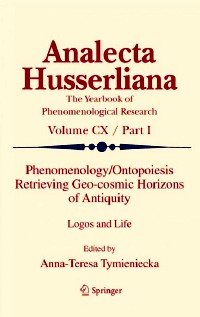
The controversy of flux and stasis as the groundwork of reality of Greek ancient philosophy reached its crux in the all encompassing doctrine of the logos by Heraclitus of Ephesus. It centers upon human soul in its role with the cosmos. Philosophy of the Occident corroborating Greek insights with the progress of culture in numerous interpretations (Kant, Kierkegaard, Husserl, Merleau-Ponty, Ricoeur鈥?, presented in this collection has neglected the cosmic sphere. While contemporary development of science revealed its grounding principles (papers by Grandpierre, Kule and Trutty-Coohill) the ancient logos fully emerges. Thus, logos hitherto hidden in our commerce with earth is revealed in its intertwinings with the cosmos through the trajectories of the phenomenology/ontopoiesis of life (Tymieniecka). The crucial link between the soul and the cosmos, in a new geo-cosmic horizon, is thus being retrieved.
目录
Table of Contents 5
Acknowledgements 10
Inaugural Lecture 11
Inspirations of Heraclitus from Ephesus Fulfilled in Our New Enlightenment 12
Part One: Flux Versus Stasis 13
Heraclitus. The Primogenital Philosophical Issues of Flux Versus Stasis 13
Heraclitus' Teaching Bequeaths Us the Outline of a Universal Approach for Searching Out the Innermost Depths of Reality in the Logos 15
Part Two: Through Life to Truth 15
The New Enlightenment in the Present Phase of Philosophical Reflection 15
Life. The Philosophical Quest and Its Radical Beginning 16
Illuminating Truth Along the Way: The Introduction of the Creative Spirit in the New Critique of Reason 17
The Individualizing-Ontopoietic Process of Life: Sense and Ordering 18
The Human-Condition-In-The-Unity-of-Everything-There-Is-Alive and Its Corollary 19
Notes 21
Section I Phenomenology of Life in the Critique of Reason 22
Was Plato A Platonist? 23
Notes 29
The Life of Being Refound with the Phenomenology of Life of Anna-Teresa Tymieniecka 31
The Life of Being Marginalized 31
The Vital Aspiration Surfaces Anew on the Horizon of Being 35
Life Refound in A.-T. Tymieniecka's Phenomenology of Life 36
Revitalization of the Phenomenological Method 36
The Living Metaphysics of the Logos of Life 39
Notes 42
Critique of Reason Projects with Reference to Antiquity: I. Kant and the Platonic Ideas, E. Husserl and the Mnemosinean Enticement, A.-T. Tymieniecka and the Dyonisian Logos 46
Ideas 47
E. Husserl and the Mnemosinean Enticement 48
A.-T. Tymieniecka and the Dionysian Logos 52
Notes 55
What was a Classic Until the Beginning of 20th Century? 57
Notes 62
Section II Logos and Life 64
The Existentialistic Subject Today 65
Absolute Freedom 66
The Authentic Choice 66
The Penetrating Look 67
Normative Implications -- A Consistent Moral Or a Philosophy of Life? 69
The Existentialistic Individual 71
The Antagonistic Individual 71
Sartre's Subject in a Consumer Society 74
Concluding Remarks 77
Notes 77
References 78
Re-Turning to the Real: Phenomenological Appropriations of Plato's \ 79
Notes 94
Living Life and Making Life 95
Questioning Life 95
The Emergence of Life 100
Let's Create Life 101
The Foundations 102
Notes 104
References 105
Man's World and Logos as Feeling 107
Notes 113
The Feast of Life or the Feast of Reason -- Kierkegaard Versus Plato 115
Dialogue at the Intersection of Literature and Philosophy 116
Negative Existential Maeutics 118
Kierkegaard's In Vino Veritas as Reenactment of Plato's Symposium 121
References 126
Gibt Es Ein Materiales Apriori? 127
Es gibt kein materiales Apriori: M. Schlicks Kritik an Husserl und Scheler 128
Die Wesensschau als genuine Methode der Erfassung des Apriori 130
Synthetisches Apriori und die Funktionalisierung der Wesenseinsicht 134
Notes 137
Literaturverzeichnis 140
Section III Logos and Education 143
The Idea of Paidea in the Context of Ontopoesis of Life 144
Notes 148
International Dimention of John Dewey's Pedagogy: Lessons for Tomorrow 150
Notes 170
Thinking Conditioned by Language and Tradition 173
References 182
How to Conduct Life (Arete and Phronesis) 183
Introduction 183
I 184
II 186
III 189
Bibliography 189
Section IV Husserl in the Context of Tradition 190
The Reason of the Crisis. Husserl's Re-Examination of the Concept of Rationality 191
Introduction 191
The Critique of Conventional Reason 193
Towards a New Formulation of Rationality 197
Conclusion 201
Notes 202
References 203
Logos as Signifier: Husserl in the Context of Tradition 206
Logocentrism 206
Logos and the Gospel 206
Logos and the Tradition 207
Heidegger Reinterpreting Tradition 207
Understanding \ 208
Heidegger's Critique of Logic 209
Logos Reinterpreted 209
Husserl's Influence on Heidegger 211
Husserl's Concept of Logic 211
Phenomenologic 212
Intentionality as Gathering 212
Concluding Remarks 213
Notes 214
The Axiology of Ontopoiesis and its Rationality 215
Introduction 215
Dynamis of \ 216
\ 217
Spiritual Acts 218
Axiology, Ontopoiesis and Rationality 220
Conclusions 222
Notes 223
References 223
Originating the Western World: A Cultural Phenomenology of Historical Consciousness 224
Notes 235
The Recovery of the Self. Plotinus on Self-Cognition 238
Notes 246
References 246
Social Connotations of the Category of the <> in the Late Writings of Edmund Husserl vs. J. Derrida and B. Waldenfels 247
A Polemic Against Derridean Anti-Presentialism 248
Husserlian Perspective of Plato's Metaxy\u2014Ich-Spaltung 255
Notes 258
References 260
Section V Cognition, Creativity, Embodiment 262
Pound, Propertius and Logopoeia 263
Pound's Own Definitions 264
Three Classical Scholars 264
Scholarship on Pound and on Laforgue 266
Summary and Conclusion 270
Notes 271
Phenomenology: Creation and Construction of Knowledge 273
Introduction 273
The Ways of Searching for Meaning 275
The Pathway and Layers of Searching for Meaning 277
Discussion 285
References 288
Perspicuous Representation: A Wittgensteinian Interpretation of Martin Heidegger's View of Truth 289
Critique of the Representational Theory of Truth 290
Heidegger's Alternative 292
Critique of Modernity 296
Conclusion 298
References 299
Origin and Features of Psychical Creations in an Ontopoietic Perspective 300
Introduction 300
Characteristics and Structures of the Creations of the Psyche 301
Dream and Myth: Similarities and Differences 301
Dream and Myth from the Perspective of Depth Psychology 303
Dream and Myth from an Ontopoietic Perspective 305
Notes 307
Section VI Nature, World, Continuity 308
Nature and Artifice in Manifesting/Producing the Being 309
The Human Being as a Problem 309
Manifestation of the Being and Production 310
The Weave of Nature and Artifice 311
Nature as a Fact and Nature as Essence 311
Nature and Power of the Will 312
Nature and Human Creativity 312
Permanence and Mutation of Human Nature 313
Genesis and Poiesis 313
The Human Being as an End 314
The Anthropological Protections 315
The Limits of Experience and the Visual of the Entire 315
The Unconditioned Being as Non Producible 316
The Relation Between Conditioned and Unconditioned 316
Measure of the Artifice and Challenges of the Post-human 317
Notes 318
Semiotics of Being and Uexkullian Phenomenology 319
Uexkullian Phenomenology 320
Eco-Existentialism, Eco-Phenomenology, and Semiotics of Nature 325
The Eco-Existentialism of Peter Wessel Zapffe 325
The Eco-Phenomenology of David Abram and Ted Toadvine 326
Semiotics of Nature (Biosemiotics, Ecosemiotics, Zoosemiotics) 327
Closing Remarks 328
Notes 330
References 331
The Place: Where We See the World as a Limited Whole 333
Notes 343
Lines for Contemporary Constructivism to Revisit and Reintegrate the Ancient Sense of Continuity between Men and Nature 346
Constructivism as a Complex Scenario: Suggested Reading 346
From Dual Logic... 347
...To the \ 348
The Ways of Constructivism 351
The Interactionist Way 351
The Social Way 355
The Socio-Cultural Way 356
Lines for Contemporary Constructivism to Revisit and Reintegrate the Ancient Sense of Continuity Between Men and Nature 358
References 360
Section VII Logos and the Self 362
Paul Ricoeur: Critical Consent of Logos to Life 364
The Paradox of Consent and Creativity 364
Consent and Critical Reason 366
Topics of Consent 370
Life as logos and Paradigm of Creativity 373
Life is the Gracious logos of an Original Generosity 373
Life is Creative Reason in Action 374
The logos of Life is Singularizing Self-Affection and Indivisible Unity 374
Logos of Life is Endowed Contingency Directly Re-bound 375
Logos of Life Gives Less Relevance to the Significance and the Reach of Death 376
From Reversed to Creative Consent 378
The Great Rejection as Reversed Consent 378
From Imperfect to Hyperbolic Consent 379
Creative Consent 382
Notes 384
The Phenomenological Significance and Relevance of the Reminders Assembled as \ 386
Notes 401
\ 404
Notes 411
The Self and the World: Vedanta, Sufism, and the Presocratics in a Phenomenological View 413
Phenomenological Egology 414
Vedanta: Self is the Only One Remaining 414
First Moment of Vedantic Self-Realization: Discovery of the Self 415
Sufism: The Self is The Light in the Mirror of the World 417
The Heart 419
Ancient Greeks: the World's Shaping of the Self 421
Tymieniecka: Subterranian Currents of Life 423
Notes 425
Trinitarian Appropriations of the Transcendentals: Givenness and Intentionality in Levinas, Marion, and Tymieniecka 429
Introduction 429
The Significance of Transcendentals in the Western Intellectual Tradition 431
The Meaning of the Trinitarian Appropriation of Transcendentals 432
Levinas, Marion, and Tymieniecka on Transcendentals and Givenness 436
Givenness in Levinas 436
God in Levinas 438
Givenness in Marion 439
God in Marion 440
Givenness in Tymieniecka 442
God in Tymieniecka 444
Revelation and the Givenness of the Good, the True, and the Beautiful 446
The Father and the Appropriation of the Good According to Levinas 448
The Son and the Appropriation of the Truth According to Marion 449
The Holy Spirit and the Appropriation of Beauty According to Tymieniecka 450
Notes 451
References 452
Section VIII Creativity and the Ontopoietic Logos 454
Blanchot's Inaugural Poetics: Visibility and the Infinite Conversation 455
I 455
II 459
III 463
IV 466
Notes 468
References and reading 470
Love of Life, Tragedy and Some Characters in Greek Mythology 472
I 472
II 475
III 478
Notes 480
Humor in the Perspective of Logos: The Inspirations of Ancient Greek Philosophy 481
Notes 491
The Ideal and the Real: Bridging the Gap 493
A Bad History 494
A Question of Balance 497
Art and the Ideal 498
Way to go 503
Notes 505
Historicity, Narrative and the Construction of Monstrosity in John Gardner's Grendel 506
Notes 521
The Power of Dance/Movement as a Means of Expression 524
Introduction 525
Dance/Movement and Individuals 527
Music, Poetry, Narration and Dance/Movement 528
The Narration Power of Dance/Movement 529
Conclusion 531
References 532
Section IX Intersubjectivity, Freedom, Justice 533
Making History Our Own -- Appropriation and Transgression of the Intentional History of Human Rights 534
Introduction 535
History from Within -- History as Teleology 536
The Appropriation of Narratives -- Generation of a Normal Lifeworld as Home 538
Transgression of Narratives -- Responsivity to Limit-Claims 540
Notes 541
Vitality and Wobbliness of Universal Moral Values in the Post-Modern World: Creativity and Regulative Function of the Logos of Life 542
Introduction 543
The Concept of \ 546
The Concept of \ 548
\ 549
Anna Teresa Tymieniecka's Universalist Ethics and the Issue of \ 550
Phenomenology of Life of A.T. Tymieniecka and Basic Ethical Problems 552
Ethics of Peter Singer and Richard Hare Vs. \ 555
Notes 559
A True and Better \ 561
War and Renewal 563
The Crisis 570
Notes 574
The Question of the Subject: Jan Patocka's Phenomenological Contribution 581
Notes 592
References 593
\ 594
Notes 608
References 609
Section X Seeking the Logos in Different Cultures 610
Theosis and Life in Nicolai Berdyaev's Philosophy 611
Notes 623
Harmonious Balance: The Ultimate Phenomenon of Life Experience, a Confucian Attempt and Approach 625
Harmonious Balance: The Fundamental Principle of Confucian World View 625
Implementation of Confucian World View in Human Behavior: The Concept of Ren and Its Practice 629
Ren as the Reflection of Humanity: Filial Piety in Reciprocity 629
Ren as the Prerequisite for Evolution: The First or Ultimate Cause of Human Existence, the Totality of Humanity 631
Ren as the Internalization or Individuation of the Original Mind: The Creation of the Universal Mind 633
Confucian Attempt on Family-Centered and Cosmopolitan Practices 635
\ 639
References 643
The Songlines: Dreaming the Ancestors and Sustaining the World in Aboriginal Art 644
Notes 650
Section XI Contemporary Retrieving of the Principles of the Universal Order 652
Logos and Life: Understanding of Rhythm 653
Notes 661
Life Powerful Force Between Virtuality and Enactment 662
Wonder and Classification 662
Appearance of Life and Beyond 664
Seeds of Logos 666
Notes 669
Visualizing Tymieniecka's Approach with String Theory 671
Notes 676
Universal Principles of the World and the Coordinate System on the Basis of Limit Dynamical Equilibrium 677
Notes 685
The Biological Principle of Natural Sciences and the Logos of Life of Natural Philosophy: A Comparison and the Perspectives of Unifying the Science and Philosophy of Life 686
Introduction 686
An Important Objection Against Recognizing the Fundamental Significance of the Physical Principle 690
The Essentially Complete Picture of the Structure of the Universe 692
Biology, the Science of the 21st Century, in a New Light 693
About the Relation Between Biology and Physics 694
Biological Principle, Logic and Logos of Life 695
Logic is the Basis and Partner of Laws of Nature 696
Mechanical Logic and Biological Logic 697
Animating Principle 699
Notes 700
References 701
Index 703
Program from the 60th International Congress of Phenomenology, Logos and Life: Phenomenology/Ontopoiesis Reviving Antiquity, Held in Bergen, Norway, 2010 714
Acknowledgements 10
Inaugural Lecture 11
Inspirations of Heraclitus from Ephesus Fulfilled in Our New Enlightenment 12
Part One: Flux Versus Stasis 13
Heraclitus. The Primogenital Philosophical Issues of Flux Versus Stasis 13
Heraclitus' Teaching Bequeaths Us the Outline of a Universal Approach for Searching Out the Innermost Depths of Reality in the Logos 15
Part Two: Through Life to Truth 15
The New Enlightenment in the Present Phase of Philosophical Reflection 15
Life. The Philosophical Quest and Its Radical Beginning 16
Illuminating Truth Along the Way: The Introduction of the Creative Spirit in the New Critique of Reason 17
The Individualizing-Ontopoietic Process of Life: Sense and Ordering 18
The Human-Condition-In-The-Unity-of-Everything-There-Is-Alive and Its Corollary 19
Notes 21
Section I Phenomenology of Life in the Critique of Reason 22
Was Plato A Platonist? 23
Notes 29
The Life of Being Refound with the Phenomenology of Life of Anna-Teresa Tymieniecka 31
The Life of Being Marginalized 31
The Vital Aspiration Surfaces Anew on the Horizon of Being 35
Life Refound in A.-T. Tymieniecka's Phenomenology of Life 36
Revitalization of the Phenomenological Method 36
The Living Metaphysics of the Logos of Life 39
Notes 42
Critique of Reason Projects with Reference to Antiquity: I. Kant and the Platonic Ideas, E. Husserl and the Mnemosinean Enticement, A.-T. Tymieniecka and the Dyonisian Logos 46
Ideas 47
E. Husserl and the Mnemosinean Enticement 48
A.-T. Tymieniecka and the Dionysian Logos 52
Notes 55
What was a Classic Until the Beginning of 20th Century? 57
Notes 62
Section II Logos and Life 64
The Existentialistic Subject Today 65
Absolute Freedom 66
The Authentic Choice 66
The Penetrating Look 67
Normative Implications -- A Consistent Moral Or a Philosophy of Life? 69
The Existentialistic Individual 71
The Antagonistic Individual 71
Sartre's Subject in a Consumer Society 74
Concluding Remarks 77
Notes 77
References 78
Re-Turning to the Real: Phenomenological Appropriations of Plato's \ 79
Notes 94
Living Life and Making Life 95
Questioning Life 95
The Emergence of Life 100
Let's Create Life 101
The Foundations 102
Notes 104
References 105
Man's World and Logos as Feeling 107
Notes 113
The Feast of Life or the Feast of Reason -- Kierkegaard Versus Plato 115
Dialogue at the Intersection of Literature and Philosophy 116
Negative Existential Maeutics 118
Kierkegaard's In Vino Veritas as Reenactment of Plato's Symposium 121
References 126
Gibt Es Ein Materiales Apriori? 127
Es gibt kein materiales Apriori: M. Schlicks Kritik an Husserl und Scheler 128
Die Wesensschau als genuine Methode der Erfassung des Apriori 130
Synthetisches Apriori und die Funktionalisierung der Wesenseinsicht 134
Notes 137
Literaturverzeichnis 140
Section III Logos and Education 143
The Idea of Paidea in the Context of Ontopoesis of Life 144
Notes 148
International Dimention of John Dewey's Pedagogy: Lessons for Tomorrow 150
Notes 170
Thinking Conditioned by Language and Tradition 173
References 182
How to Conduct Life (Arete and Phronesis) 183
Introduction 183
I 184
II 186
III 189
Bibliography 189
Section IV Husserl in the Context of Tradition 190
The Reason of the Crisis. Husserl's Re-Examination of the Concept of Rationality 191
Introduction 191
The Critique of Conventional Reason 193
Towards a New Formulation of Rationality 197
Conclusion 201
Notes 202
References 203
Logos as Signifier: Husserl in the Context of Tradition 206
Logocentrism 206
Logos and the Gospel 206
Logos and the Tradition 207
Heidegger Reinterpreting Tradition 207
Understanding \ 208
Heidegger's Critique of Logic 209
Logos Reinterpreted 209
Husserl's Influence on Heidegger 211
Husserl's Concept of Logic 211
Phenomenologic 212
Intentionality as Gathering 212
Concluding Remarks 213
Notes 214
The Axiology of Ontopoiesis and its Rationality 215
Introduction 215
Dynamis of \ 216
\ 217
Spiritual Acts 218
Axiology, Ontopoiesis and Rationality 220
Conclusions 222
Notes 223
References 223
Originating the Western World: A Cultural Phenomenology of Historical Consciousness 224
Notes 235
The Recovery of the Self. Plotinus on Self-Cognition 238
Notes 246
References 246
Social Connotations of the Category of the <
A Polemic Against Derridean Anti-Presentialism 248
Husserlian Perspective of Plato's Metaxy\u2014Ich-Spaltung 255
Notes 258
References 260
Section V Cognition, Creativity, Embodiment 262
Pound, Propertius and Logopoeia 263
Pound's Own Definitions 264
Three Classical Scholars 264
Scholarship on Pound and on Laforgue 266
Summary and Conclusion 270
Notes 271
Phenomenology: Creation and Construction of Knowledge 273
Introduction 273
The Ways of Searching for Meaning 275
The Pathway and Layers of Searching for Meaning 277
Discussion 285
References 288
Perspicuous Representation: A Wittgensteinian Interpretation of Martin Heidegger's View of Truth 289
Critique of the Representational Theory of Truth 290
Heidegger's Alternative 292
Critique of Modernity 296
Conclusion 298
References 299
Origin and Features of Psychical Creations in an Ontopoietic Perspective 300
Introduction 300
Characteristics and Structures of the Creations of the Psyche 301
Dream and Myth: Similarities and Differences 301
Dream and Myth from the Perspective of Depth Psychology 303
Dream and Myth from an Ontopoietic Perspective 305
Notes 307
Section VI Nature, World, Continuity 308
Nature and Artifice in Manifesting/Producing the Being 309
The Human Being as a Problem 309
Manifestation of the Being and Production 310
The Weave of Nature and Artifice 311
Nature as a Fact and Nature as Essence 311
Nature and Power of the Will 312
Nature and Human Creativity 312
Permanence and Mutation of Human Nature 313
Genesis and Poiesis 313
The Human Being as an End 314
The Anthropological Protections 315
The Limits of Experience and the Visual of the Entire 315
The Unconditioned Being as Non Producible 316
The Relation Between Conditioned and Unconditioned 316
Measure of the Artifice and Challenges of the Post-human 317
Notes 318
Semiotics of Being and Uexkullian Phenomenology 319
Uexkullian Phenomenology 320
Eco-Existentialism, Eco-Phenomenology, and Semiotics of Nature 325
The Eco-Existentialism of Peter Wessel Zapffe 325
The Eco-Phenomenology of David Abram and Ted Toadvine 326
Semiotics of Nature (Biosemiotics, Ecosemiotics, Zoosemiotics) 327
Closing Remarks 328
Notes 330
References 331
The Place: Where We See the World as a Limited Whole 333
Notes 343
Lines for Contemporary Constructivism to Revisit and Reintegrate the Ancient Sense of Continuity between Men and Nature 346
Constructivism as a Complex Scenario: Suggested Reading 346
From Dual Logic... 347
...To the \ 348
The Ways of Constructivism 351
The Interactionist Way 351
The Social Way 355
The Socio-Cultural Way 356
Lines for Contemporary Constructivism to Revisit and Reintegrate the Ancient Sense of Continuity Between Men and Nature 358
References 360
Section VII Logos and the Self 362
Paul Ricoeur: Critical Consent of Logos to Life 364
The Paradox of Consent and Creativity 364
Consent and Critical Reason 366
Topics of Consent 370
Life as logos and Paradigm of Creativity 373
Life is the Gracious logos of an Original Generosity 373
Life is Creative Reason in Action 374
The logos of Life is Singularizing Self-Affection and Indivisible Unity 374
Logos of Life is Endowed Contingency Directly Re-bound 375
Logos of Life Gives Less Relevance to the Significance and the Reach of Death 376
From Reversed to Creative Consent 378
The Great Rejection as Reversed Consent 378
From Imperfect to Hyperbolic Consent 379
Creative Consent 382
Notes 384
The Phenomenological Significance and Relevance of the Reminders Assembled as \ 386
Notes 401
\ 404
Notes 411
The Self and the World: Vedanta, Sufism, and the Presocratics in a Phenomenological View 413
Phenomenological Egology 414
Vedanta: Self is the Only One Remaining 414
First Moment of Vedantic Self-Realization: Discovery of the Self 415
Sufism: The Self is The Light in the Mirror of the World 417
The Heart 419
Ancient Greeks: the World's Shaping of the Self 421
Tymieniecka: Subterranian Currents of Life 423
Notes 425
Trinitarian Appropriations of the Transcendentals: Givenness and Intentionality in Levinas, Marion, and Tymieniecka 429
Introduction 429
The Significance of Transcendentals in the Western Intellectual Tradition 431
The Meaning of the Trinitarian Appropriation of Transcendentals 432
Levinas, Marion, and Tymieniecka on Transcendentals and Givenness 436
Givenness in Levinas 436
God in Levinas 438
Givenness in Marion 439
God in Marion 440
Givenness in Tymieniecka 442
God in Tymieniecka 444
Revelation and the Givenness of the Good, the True, and the Beautiful 446
The Father and the Appropriation of the Good According to Levinas 448
The Son and the Appropriation of the Truth According to Marion 449
The Holy Spirit and the Appropriation of Beauty According to Tymieniecka 450
Notes 451
References 452
Section VIII Creativity and the Ontopoietic Logos 454
Blanchot's Inaugural Poetics: Visibility and the Infinite Conversation 455
I 455
II 459
III 463
IV 466
Notes 468
References and reading 470
Love of Life, Tragedy and Some Characters in Greek Mythology 472
I 472
II 475
III 478
Notes 480
Humor in the Perspective of Logos: The Inspirations of Ancient Greek Philosophy 481
Notes 491
The Ideal and the Real: Bridging the Gap 493
A Bad History 494
A Question of Balance 497
Art and the Ideal 498
Way to go 503
Notes 505
Historicity, Narrative and the Construction of Monstrosity in John Gardner's Grendel 506
Notes 521
The Power of Dance/Movement as a Means of Expression 524
Introduction 525
Dance/Movement and Individuals 527
Music, Poetry, Narration and Dance/Movement 528
The Narration Power of Dance/Movement 529
Conclusion 531
References 532
Section IX Intersubjectivity, Freedom, Justice 533
Making History Our Own -- Appropriation and Transgression of the Intentional History of Human Rights 534
Introduction 535
History from Within -- History as Teleology 536
The Appropriation of Narratives -- Generation of a Normal Lifeworld as Home 538
Transgression of Narratives -- Responsivity to Limit-Claims 540
Notes 541
Vitality and Wobbliness of Universal Moral Values in the Post-Modern World: Creativity and Regulative Function of the Logos of Life 542
Introduction 543
The Concept of \ 546
The Concept of \ 548
\ 549
Anna Teresa Tymieniecka's Universalist Ethics and the Issue of \ 550
Phenomenology of Life of A.T. Tymieniecka and Basic Ethical Problems 552
Ethics of Peter Singer and Richard Hare Vs. \ 555
Notes 559
A True and Better \ 561
War and Renewal 563
The Crisis 570
Notes 574
The Question of the Subject: Jan Patocka's Phenomenological Contribution 581
Notes 592
References 593
\ 594
Notes 608
References 609
Section X Seeking the Logos in Different Cultures 610
Theosis and Life in Nicolai Berdyaev's Philosophy 611
Notes 623
Harmonious Balance: The Ultimate Phenomenon of Life Experience, a Confucian Attempt and Approach 625
Harmonious Balance: The Fundamental Principle of Confucian World View 625
Implementation of Confucian World View in Human Behavior: The Concept of Ren and Its Practice 629
Ren as the Reflection of Humanity: Filial Piety in Reciprocity 629
Ren as the Prerequisite for Evolution: The First or Ultimate Cause of Human Existence, the Totality of Humanity 631
Ren as the Internalization or Individuation of the Original Mind: The Creation of the Universal Mind 633
Confucian Attempt on Family-Centered and Cosmopolitan Practices 635
\ 639
References 643
The Songlines: Dreaming the Ancestors and Sustaining the World in Aboriginal Art 644
Notes 650
Section XI Contemporary Retrieving of the Principles of the Universal Order 652
Logos and Life: Understanding of Rhythm 653
Notes 661
Life Powerful Force Between Virtuality and Enactment 662
Wonder and Classification 662
Appearance of Life and Beyond 664
Seeds of Logos 666
Notes 669
Visualizing Tymieniecka's Approach with String Theory 671
Notes 676
Universal Principles of the World and the Coordinate System on the Basis of Limit Dynamical Equilibrium 677
Notes 685
The Biological Principle of Natural Sciences and the Logos of Life of Natural Philosophy: A Comparison and the Perspectives of Unifying the Science and Philosophy of Life 686
Introduction 686
An Important Objection Against Recognizing the Fundamental Significance of the Physical Principle 690
The Essentially Complete Picture of the Structure of the Universe 692
Biology, the Science of the 21st Century, in a New Light 693
About the Relation Between Biology and Physics 694
Biological Principle, Logic and Logos of Life 695
Logic is the Basis and Partner of Laws of Nature 696
Mechanical Logic and Biological Logic 697
Animating Principle 699
Notes 700
References 701
Index 703
Program from the 60th International Congress of Phenomenology, Logos and Life: Phenomenology/Ontopoiesis Reviving Antiquity, Held in Bergen, Norway, 2010 714
- 名称
- 类型
- 大小
光盘服务联系方式: 020-38250260 客服QQ:4006604884
云图客服:
用户发送的提问,这种方式就需要有位在线客服来回答用户的问题,这种 就属于对话式的,问题是这种提问是否需要用户登录才能提问
Video Player
×
Audio Player
×
pdf Player
×
