

简介
Summary:
Publisher Summary 1
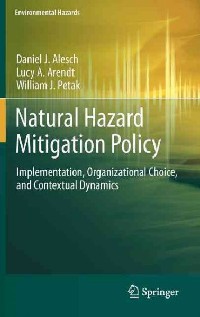
Here is a compelling, multifaceted analysis of California's effort to ensure that acute care hospitals survive earthquakes, and function afterward. Covers public policy design and administration, hazard mitigation investment by targeted organizations and more.
Publisher Summary 2
The negative consequences of natural hazard events are staggering and growing. Governments are acting to increase community resilience, reduce losses, and facilitate recovery, but these actions do not always yield anticipated consequences. This book is a compelling interdisciplinary analysis of California's efforts to ensure that acute care hospitals survive earthquakes and continue to function in the aftermath. The book weaves together several threads essential to understanding the effectiveness of public policies intended to reduce the consequences of natural hazard events: public policy design and administration, the hazard mitigation investment decision made by targeted organizations, and contextual dynamics.聽"A terrific study of shortfalls in the implementation of risk-reduction policy -- highly readable, full of insights, and very policy relevant."聽 Peter J. May, Donald R. Matthews Distinguished Professor of American Politics, University of Washington, Seattle USA聽"This is an exceptional book by three of the leading hazard mitigation researchers and must reading for both scholars and practitioners in the field." 聽William A. Anderson, National Research Council, National Academy of Sciences.
目录
Preface 5
Acknowledgements 9
Contents 11
Chapter 1: The Starting Point: A Confluence of Questions About Policy Design and Implementation 17
1.1 The Problem 17
1.2 Hazard Policy Implementation: Not a Trivial Concern 18
1.3 Three Critical Questions 20
1.3.1 Obstacles to Policy Implementation 21
1.3.2 The Hazard Mitigation Investment Decision 22
1.3.3 Improving the Design of Hazard Mitigation Policies to Enhance the Likelihood of Implementation 23
1.4 Approaches to Understanding Implementation 24
1.4.1 Emerging Perspectives 24
1.4.2 Our Perspective 26
1.5 The Case Study 27
1.6 Our Research Approach 30
1.7 The Plan of the Book 31
References 32
Part I: SB 1953: The Origins and the Experience Through 2010 34
Chapter 2: Origins and History of California Seismic Building Retrofit Regulations 35
2.1 In the Beginning 35
2.1.1 The Field Act of 1933 36
2.1.2 Riley Act of 1933 37
2.1.3 Garrison Act of 1939 37
2.1.4 The Greene Act of 1968 38
2.2 Pre-existing Buildings and Other Complexities 38
2.3 Threats to the Field Act Program and Primary Barriers to Success 39
References 41
Chapter 3: The Road to SB 1953 43
3.1 Waypoints Along the Road to Enactment 43
3.1.1 Waypoint 1. Formation of the Joint Committee on Seismic Safety 43
3.1.2 Waypoint 2. The February 9, 1971 San Fernando (Sylmar) Earthquake 44
3.1.3 Waypoint 3. The Hospital Facilities Seismic Safety Act of 1973 (Senate Bill 519) 46
3.1.4 Waypoint 4. Seismic Safety Commission Established in May 1975 48
3.1.5 Waypoint 5. The Palmdale Bulge 48
3.1.6 Waypoint 6. The Alfred E. Alquist Hospital Facilities Seismic Safety Act of 1983 49
3.1.7 Waypoint 7. The California Earthquake Hazards Reduction Act of 1986 and California at Risk 50
3.1.8 Waypoint 8. In December 1990, OSHPD Responds to Milestone 4 51
3.1.9 Waypoint 9. More Earthquakes 53
3.2 Enacting SB 1953 54
3.3 Many Actors Were Involved in Shaping the Legislation 55
References 57
Chapter 4: SB 1953: The Law, the Program, and the Implementation Challenge 58
4.1 The Legislative Declaration 58
4.2 The Substantive Content of SB 1953 59
4.3 OSPHD\u2019S SB 1953 Administrative Regulations 60
4.3.1 Concerns with Both Structural and Nonstructural Performance 61
4.3.2 Regulations Developed in the Context of Some Ambiguity 63
4.4 The Time Line 66
4.5 Structural Performance Categories 66
4.6 Nonstructural Performance Categories 68
4.7 A Massive Job and a Tight Timetable 69
References 72
Chapter 5: Implementing SB 1953: 1998 into 2005 74
5.1 Continually Escalating Costs of Compliance 74
5.2 A Broad Array of Responses, Depending on Circumstance 76
5.2.1 Responding to the Challenge 77
5.2.2 Hospital Closures Attributed, at Least in Part, to SB 1953 Costs 79
5.2.3 Special Challenges for Local Governments 81
5.3 First Things First: Seeking Solvency 83
5.4 Opting for Replacement Rather Than Retrofit 83
5.5 The Quest for Legislative Relief 85
5.6 The Voters Put Some of the Cost Burden onto the State\u2019s Shoulders 90
5.7 OSHPD\u2019S Construction Loan Insurance Program 91
5.8 OSHPD Seeks Relief 92
5.9 Seismic Safety: One Consideration Among Many in the Hospital Business Plan 93
References 95
Chapter 6: Implementation: Circa 2005 Through 2010 96
6.1 Prognosis at Mid-Decade 96
6.2 Hospital Financial Problems Persist 97
6.3 Lagging Implementation Spurs Governmental Adaptations 99
6.3.1 SB 1661: An Extension for Facilities with Active Compliance Projects Delayed for Circumstances Beyond Their Control 100
6.3.2 SB 306: Recognizing the Constraints of Financial Capacity 100
6.3.3 A Major Programmatic Adaptation: Using HAZUS to Reclassify Many Buildings from SPC-1 to SPC-2 101
6.3.4 Legislative Adjustments Continue into 2010 104
6.4 A Decade of Angst and Adjustments 104
6.4.1 An Updated Compliance Calendar 105
6.5 Where Things Stood at the End of 2010 and into 2011 105
6.5.1 Compliance 105
6.5.2 Unanticipated Consequences 108
6.5.2.1 Closures and Reduced Service Availability in Lower Income Areas 108
6.5.2.2 Others Were Placed in Danger 109
6.6 In Retrospect: A Well-Intended Intervention with Unfortunate Unanticipated Outcomes 110
6.7 Looking Ahead 112
References 114
Part II: Obstacles to Implementation: The Usual Suspects 116
Chapter 7: OSHPD, Administrative Agencies in General, and Implementing SB 1953 117
7.1 Introduction 117
7.2 OSHPD: Mission, Culture, and Perspectives 118
7.3 The Usual Suspects: Main Threads in the Literature About Administrative Agencies and Implementation 120
7.3.1 Complexity: The Number of Participating Agencies and Levels of Government and Checkpoints in the Process 120
7.3.2 Congruence Between Agency Culture and the Policy 120
7.3.3 Organizational Capacity and Capability 121
7.3.4 \u201cStreet Level\u201d Staffing, Complexity, and Judgment 122
7.3.5 Implementation and Small \u201cp\u201d Politics 123
7.4 OSHPD\u2019S Role 126
7.5 Looking for Answers Beyond the Usual Suspects 126
References 127
Part III: Beyond the Usual Suspects: The Regulated Parties, Prerequisites to Action, and the Hazard Mitigation Investment Decision 128
Chapter 8: Organizational Responses: Introduction to Hazard Mitigation Investment Decision Making in Hospitals 129
8.1 Introduction 129
8.2 Overview of Our Theoretical Framework 134
References 141
Chapter 9: Prerequisites to Organizational Action 142
9.1 Introduction 142
9.2 The Organization Is Aware of the Issue 142
9.3 The Organization Has an Internal Locus of Control 145
9.4 It Is in the Organization\u2019s Best Interests to Act Now 146
9.5 An Acceptable Solution Exists 148
9.6 The Organization Must Have the Capacity to Act 150
9.6.1 The Organizational Agenda 150
9.6.2 Organizational Capacity: Financial Considerations 151
9.6.3 The Organizational Environment 156
References 156
Chapter 10: Organizational Differences in Hazard Mitigation Investment Decision Making: Inside the Organization 158
10.1 Organizational Leadership Predictors 158
10.2 Organizational Strategy Predictors 163
10.3 Economic Predictors 167
References 172
Chapter 11: Organizational Differences in Hazard Mitigation Investment Decision Making: Outside the Organization 174
11.1 Institutional Predictors 174
11.1.1 External Institutional Pressures 174
11.1.2 Internal Institutional Pressures 183
11.2 Regulatory Relationship Predictors 191
References 199
Part IV: Beyond the Usual Suspects: Public Policy Design and Contextual Dynamics 201
Chapter 12: Mindsets, Policy Design, Congruence, and Related Obstacles to Policy Implementation 202
12.1 Obstacles to Implementing SB 1953 202
12.2 Problem Framing as an Obstacle to Implementation 203
12.2.1 A Problem from Whose Perspective? 203
12.2.2 Problem Framing 205
12.2.3 Factors Affecting Problem Framing 209
12.2.3.1 Government Structure: Silos Within Silos, Spheres of Mutual Non Intervention, and Institutionalized Access 209
12.2.3.2 Causal Models and Chance Events 211
12.2.3.3 Ideology and Politics 212
12.3 The Policy Itself and the Program Design as Obstacles 213
12.3.1 Matching the Policy and the Program to the Problem 213
12.3.2 Policy Making Is Inherently Political 215
12.3.3 The Agency Role in Policy Design 216
12.3.4 The Choice of Instrumentality: How to Achieve the Desired Ends 217
12.3.5 Path Dependency and Ignoring History 218
12.3.6 A Lack of Congruence Between the Policy and the Prerequisites to Action for the Targeted Organizations 219
12.3.7 Establishing Unrealistic Demands 220
12.4 In Summary: Barriers to Effective Implementation and Implications for Policy Design 221
12.4.1 Barriers 221
12.4.2 Implications for Policy Design 222
References 223
Chapter 13: Dynamic Contexts and Public Policy Implementation 224
13.1 Causal Textures, Butterflies, and Black Swans 224
13.2 Adaptation in the Face of Contextual Dynamics and Unanticipated Consequences 227
13.3 Morphing Problems and Adaptation 229
References 231
Part V: Putting It All Together 232
Chapter 14: The Ecology of Public Policy Implementation 233
14.1 Three Questions and Some Answers 233
14.2 What We Mean by the Ecology of Public Policy Implementation 236
14.3 Elements of the Ecology of Public Policy Implementation 237
14.3.1 Institutional Structure and Processes 238
14.3.2 Substantive Elements of the Problem 238
14.3.3 Participatory Involvement 239
14.3.4 Contextual Dynamics 240
14.4 Concluding Comment 240
References 240
Index 241
Acknowledgements 9
Contents 11
Chapter 1: The Starting Point: A Confluence of Questions About Policy Design and Implementation 17
1.1 The Problem 17
1.2 Hazard Policy Implementation: Not a Trivial Concern 18
1.3 Three Critical Questions 20
1.3.1 Obstacles to Policy Implementation 21
1.3.2 The Hazard Mitigation Investment Decision 22
1.3.3 Improving the Design of Hazard Mitigation Policies to Enhance the Likelihood of Implementation 23
1.4 Approaches to Understanding Implementation 24
1.4.1 Emerging Perspectives 24
1.4.2 Our Perspective 26
1.5 The Case Study 27
1.6 Our Research Approach 30
1.7 The Plan of the Book 31
References 32
Part I: SB 1953: The Origins and the Experience Through 2010 34
Chapter 2: Origins and History of California Seismic Building Retrofit Regulations 35
2.1 In the Beginning 35
2.1.1 The Field Act of 1933 36
2.1.2 Riley Act of 1933 37
2.1.3 Garrison Act of 1939 37
2.1.4 The Greene Act of 1968 38
2.2 Pre-existing Buildings and Other Complexities 38
2.3 Threats to the Field Act Program and Primary Barriers to Success 39
References 41
Chapter 3: The Road to SB 1953 43
3.1 Waypoints Along the Road to Enactment 43
3.1.1 Waypoint 1. Formation of the Joint Committee on Seismic Safety 43
3.1.2 Waypoint 2. The February 9, 1971 San Fernando (Sylmar) Earthquake 44
3.1.3 Waypoint 3. The Hospital Facilities Seismic Safety Act of 1973 (Senate Bill 519) 46
3.1.4 Waypoint 4. Seismic Safety Commission Established in May 1975 48
3.1.5 Waypoint 5. The Palmdale Bulge 48
3.1.6 Waypoint 6. The Alfred E. Alquist Hospital Facilities Seismic Safety Act of 1983 49
3.1.7 Waypoint 7. The California Earthquake Hazards Reduction Act of 1986 and California at Risk 50
3.1.8 Waypoint 8. In December 1990, OSHPD Responds to Milestone 4 51
3.1.9 Waypoint 9. More Earthquakes 53
3.2 Enacting SB 1953 54
3.3 Many Actors Were Involved in Shaping the Legislation 55
References 57
Chapter 4: SB 1953: The Law, the Program, and the Implementation Challenge 58
4.1 The Legislative Declaration 58
4.2 The Substantive Content of SB 1953 59
4.3 OSPHD\u2019S SB 1953 Administrative Regulations 60
4.3.1 Concerns with Both Structural and Nonstructural Performance 61
4.3.2 Regulations Developed in the Context of Some Ambiguity 63
4.4 The Time Line 66
4.5 Structural Performance Categories 66
4.6 Nonstructural Performance Categories 68
4.7 A Massive Job and a Tight Timetable 69
References 72
Chapter 5: Implementing SB 1953: 1998 into 2005 74
5.1 Continually Escalating Costs of Compliance 74
5.2 A Broad Array of Responses, Depending on Circumstance 76
5.2.1 Responding to the Challenge 77
5.2.2 Hospital Closures Attributed, at Least in Part, to SB 1953 Costs 79
5.2.3 Special Challenges for Local Governments 81
5.3 First Things First: Seeking Solvency 83
5.4 Opting for Replacement Rather Than Retrofit 83
5.5 The Quest for Legislative Relief 85
5.6 The Voters Put Some of the Cost Burden onto the State\u2019s Shoulders 90
5.7 OSHPD\u2019S Construction Loan Insurance Program 91
5.8 OSHPD Seeks Relief 92
5.9 Seismic Safety: One Consideration Among Many in the Hospital Business Plan 93
References 95
Chapter 6: Implementation: Circa 2005 Through 2010 96
6.1 Prognosis at Mid-Decade 96
6.2 Hospital Financial Problems Persist 97
6.3 Lagging Implementation Spurs Governmental Adaptations 99
6.3.1 SB 1661: An Extension for Facilities with Active Compliance Projects Delayed for Circumstances Beyond Their Control 100
6.3.2 SB 306: Recognizing the Constraints of Financial Capacity 100
6.3.3 A Major Programmatic Adaptation: Using HAZUS to Reclassify Many Buildings from SPC-1 to SPC-2 101
6.3.4 Legislative Adjustments Continue into 2010 104
6.4 A Decade of Angst and Adjustments 104
6.4.1 An Updated Compliance Calendar 105
6.5 Where Things Stood at the End of 2010 and into 2011 105
6.5.1 Compliance 105
6.5.2 Unanticipated Consequences 108
6.5.2.1 Closures and Reduced Service Availability in Lower Income Areas 108
6.5.2.2 Others Were Placed in Danger 109
6.6 In Retrospect: A Well-Intended Intervention with Unfortunate Unanticipated Outcomes 110
6.7 Looking Ahead 112
References 114
Part II: Obstacles to Implementation: The Usual Suspects 116
Chapter 7: OSHPD, Administrative Agencies in General, and Implementing SB 1953 117
7.1 Introduction 117
7.2 OSHPD: Mission, Culture, and Perspectives 118
7.3 The Usual Suspects: Main Threads in the Literature About Administrative Agencies and Implementation 120
7.3.1 Complexity: The Number of Participating Agencies and Levels of Government and Checkpoints in the Process 120
7.3.2 Congruence Between Agency Culture and the Policy 120
7.3.3 Organizational Capacity and Capability 121
7.3.4 \u201cStreet Level\u201d Staffing, Complexity, and Judgment 122
7.3.5 Implementation and Small \u201cp\u201d Politics 123
7.4 OSHPD\u2019S Role 126
7.5 Looking for Answers Beyond the Usual Suspects 126
References 127
Part III: Beyond the Usual Suspects: The Regulated Parties, Prerequisites to Action, and the Hazard Mitigation Investment Decision 128
Chapter 8: Organizational Responses: Introduction to Hazard Mitigation Investment Decision Making in Hospitals 129
8.1 Introduction 129
8.2 Overview of Our Theoretical Framework 134
References 141
Chapter 9: Prerequisites to Organizational Action 142
9.1 Introduction 142
9.2 The Organization Is Aware of the Issue 142
9.3 The Organization Has an Internal Locus of Control 145
9.4 It Is in the Organization\u2019s Best Interests to Act Now 146
9.5 An Acceptable Solution Exists 148
9.6 The Organization Must Have the Capacity to Act 150
9.6.1 The Organizational Agenda 150
9.6.2 Organizational Capacity: Financial Considerations 151
9.6.3 The Organizational Environment 156
References 156
Chapter 10: Organizational Differences in Hazard Mitigation Investment Decision Making: Inside the Organization 158
10.1 Organizational Leadership Predictors 158
10.2 Organizational Strategy Predictors 163
10.3 Economic Predictors 167
References 172
Chapter 11: Organizational Differences in Hazard Mitigation Investment Decision Making: Outside the Organization 174
11.1 Institutional Predictors 174
11.1.1 External Institutional Pressures 174
11.1.2 Internal Institutional Pressures 183
11.2 Regulatory Relationship Predictors 191
References 199
Part IV: Beyond the Usual Suspects: Public Policy Design and Contextual Dynamics 201
Chapter 12: Mindsets, Policy Design, Congruence, and Related Obstacles to Policy Implementation 202
12.1 Obstacles to Implementing SB 1953 202
12.2 Problem Framing as an Obstacle to Implementation 203
12.2.1 A Problem from Whose Perspective? 203
12.2.2 Problem Framing 205
12.2.3 Factors Affecting Problem Framing 209
12.2.3.1 Government Structure: Silos Within Silos, Spheres of Mutual Non Intervention, and Institutionalized Access 209
12.2.3.2 Causal Models and Chance Events 211
12.2.3.3 Ideology and Politics 212
12.3 The Policy Itself and the Program Design as Obstacles 213
12.3.1 Matching the Policy and the Program to the Problem 213
12.3.2 Policy Making Is Inherently Political 215
12.3.3 The Agency Role in Policy Design 216
12.3.4 The Choice of Instrumentality: How to Achieve the Desired Ends 217
12.3.5 Path Dependency and Ignoring History 218
12.3.6 A Lack of Congruence Between the Policy and the Prerequisites to Action for the Targeted Organizations 219
12.3.7 Establishing Unrealistic Demands 220
12.4 In Summary: Barriers to Effective Implementation and Implications for Policy Design 221
12.4.1 Barriers 221
12.4.2 Implications for Policy Design 222
References 223
Chapter 13: Dynamic Contexts and Public Policy Implementation 224
13.1 Causal Textures, Butterflies, and Black Swans 224
13.2 Adaptation in the Face of Contextual Dynamics and Unanticipated Consequences 227
13.3 Morphing Problems and Adaptation 229
References 231
Part V: Putting It All Together 232
Chapter 14: The Ecology of Public Policy Implementation 233
14.1 Three Questions and Some Answers 233
14.2 What We Mean by the Ecology of Public Policy Implementation 236
14.3 Elements of the Ecology of Public Policy Implementation 237
14.3.1 Institutional Structure and Processes 238
14.3.2 Substantive Elements of the Problem 238
14.3.3 Participatory Involvement 239
14.3.4 Contextual Dynamics 240
14.4 Concluding Comment 240
References 240
Index 241
- 名称
- 类型
- 大小
光盘服务联系方式: 020-38250260 客服QQ:4006604884
云图客服:
用户发送的提问,这种方式就需要有位在线客服来回答用户的问题,这种 就属于对话式的,问题是这种提问是否需要用户登录才能提问
Video Player
×
Audio Player
×
pdf Player
×
