

简介
Summary:
Publisher Summary 1
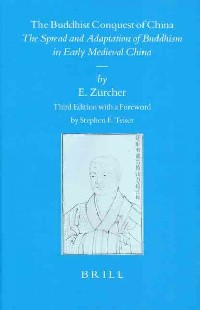
Z眉rcher (East Asian history emeritus, Leiden U., the Netherlands) describes the formation of gentry Buddhism and the amalgamation of Buddhism with the main trends of medieval thought, more from the perspective of Chinese history than the history of Buddhism. When it was originally published in 1959, it was the first attempt in a Western language to describe the rise of Buddhism in China. A 1972 second edition included printed Chinese characters, but what is now known to have been a transitional printing technology did not allow much other revision. That second edition is reprinted here as the classic articulation of the foundation of what has now become a thriving academic discipline. Annotation 漏2007 Book News, Inc., Portland, OR (booknews.com)
目录
Table Of Contents:
Preface ix
Preface to the Second Edition x
Social History and the Confrontation of Cultures: Foreword to the Third Edition xiii
Stephen F. Teiser
Bibliography xxix
Introductory Remarks 1(17)
``Chinese Buddhism'' 1(3)
``Gentry'' and ``Gentry Buddhism'' 4(2)
The cultured clergy 6(4)
Early sources: (A) Historical-biographical works 10(1)
(B) Early apologetic and propagandistic literature 11(7)
An historical survey from the first to the beginning of the fourth century AD 18(63)
Han Buddhism 18(25)
Buddhism in secular historical works 18(1)
Apocryphal stories and traditions about the introduction of Buddhism 19(3)
Infiltration from the North-West 22(1)
Buddhism among foreigners on Chinese soil 23(1)
The Chinese in Central Asia: Jing Lu and Ban Yong 24(2)
King Ying of Chu 26(1)
Buddhism in the region of Pengcheng, 193/194 AD 27(1)
Buddhism at Luoyang: first traces 28(1)
The Sutra in Forty-two Sections 29(1)
The Church of Luoyang in the second half of the second century; our sources 30(2)
An Shigao 32(2)
An Xuan and Yan Fotiao 34(1)
Lokaksema 35(1)
Other early translators 36(1)
The imperial sacrifice of 166 AD; Xiang Kai's memorial 36(2)
Connections with the bureaucracy in Han times 38(1)
The Chinese term for ``monastery'' 38(1)
The ``system'' of transcription 39(1)
Territorial expansion under the Later Han 40(3)
The Period of the Three Kingdoms (220-265/280) 43(14)
Political and social changes 43(2)
Changes in the field of thought 45(1)
Buddhism in the state of Wu, 220--284 AD; translators and translations 46(2)
Zhi Qian 48(3)
Kang Senghui 51(3)
Early commentaries 54(1)
Buddhism in the state of Wei, 220--265 AD 55(2)
The Western Jin (265--317 AD) 57(24)
The political scene 57(2)
Buddhism under the Western Jin; general remarks 59(2)
Zhu Shixing at Khotan 61(2)
The Church at Cangyuan and the translation of the Pancavimsatisahasrika prajnaparamita 63(2)
Dharmaraksa 65(4)
Dharmaraksa's translations and the classics of the Mahayana in China 69(1)
Other translators of the Western Jin 70(1)
The formation of gentry Buddhism 71(5)
Bo Yuan and Bo Fazuo 76(1)
Liu Yuanzhen and Zhu Daoqian 77(1)
Zhu Shulan, Zhi Xiaolong and Kang Sengyuan 78(3)
Buddhism at Jiankang and in the South-East, ca. 320--420 81(99)
Introductory Remarks 81(14)
The troubles of the yongjia era and the exodus to the South, 304--317 81(4)
The establishment of the ``Eastern Jin'' and the great families 85(1)
Mingjiao and xuanxue 86(1)
The zhengshi era 87(3)
The Zhuangzi commentary of Xiang Xiu/Guo Xiang 90(3)
Qingtan 93(2)
The First Phase (ca. 310--346) 95(15)
The supremacy of the Wang and Yu clans and of He Chong; the main political facts 95(2)
The first ``Eminent Monks'' at the southern capital and in the South-East 97(1)
Shi Daobao 97(1)
Zhu Daoqian 98(1)
Zhu Fayi and Kang Fachang 99(1)
Zhi Mindu 99(1)
Zhi Mindu's theory of the Non-existence of Mind 100(2)
Foreign masters in the South: Kang Sengyuan 102(1)
Srimitra 103(1)
The beginnings of court Buddhism 104(2)
The controversy about the autonomy of the sangha of 340 AD 106(3)
He Chong's sponsorship of Buddhism 109(1)
The Second Phase (ca. 346--402) 110(44)
The supremacy of the Huan, the Xie and Sima Daozi; the main political facts 110(3)
Buddhism on Chinese territory in the period 345--400; general remarks 113(3)
Zhi Dun (Zhi Daoling), 314--366 116(7)
Zhi Dun's teachings 123(7)
Zhi Dun's most prominent lay followers 130(7)
Monastic communities in the South-East; colleagues and disciples of Zhu Daoqian and Zhi Dun 137(3)
The masters of Yuanhuasi 140(3)
Zhu Fachong 143(1)
Masters of Huqiu Shan and Ruoye Shan 144(1)
The anachoretes 145(2)
Buddhism at the capital and at the court in the second half of the fourth century 147(7)
The Last Phase: Huan Xuan's usurpation and the rise of Liu Yu (402--420 AD) 154(6)
Sun En 154(1)
Huan Xuan's coup d'etat 155(1)
The conflict between Church and State in 403/404 AD 156(1)
The last years of the Eastern Jin (405--420) 157(1)
Concluding remarks 158(2)
Appendix A: documents concerning the controversy of 340 AD 160(4)
Appendix B: Xi Chao's Fengfa yao (``Essentials of Religion'') 164(13)
Appendix C: Zhi Dun's introduction to his ``Eulogy on an Image of the Buddha Sakyamuni'' 177(3)
The centres at Xiangyang, Jiangling and Lu Shan, and the influence of Northern Buddhism 180(74)
General remarks 180(1)
Buddhism at Xiangguo and Ye, ca. 312--349 181(3)
Geyi 184(1)
Dao'an and his followers in the North, 349--365 AD 184(3)
Dao'an at Xiangyang; monastic life and organization 187(2)
Contacts with gentry and court at Xiangyang 189(1)
Religious activities at Xiangyang 190(4)
Devotionalism 194(1)
Scholarly activities at Xiangyang 195(2)
The fall of Xiangyang and the dispersion of the community 197(2)
The centre at Jiangling 199(1)
Other disciples 200(1)
Dao'an at Chang'an 200(1)
Connections with the court at Chang'an 201(1)
Translation activities 202(2)
Shi Huiyuan (334--417 AD) 204(2)
Huiyuan's youth and early years at Xiangyang (334--378) 206(1)
Masters and mountains 207(1)
Huiyuan's community: colleagues, disciples and lay followers 208(3)
Contacts with court and gentry 211(6)
Huiyuan's lay followers at Lu Shan 217(2)
``Dhyana'' and the cult of Amitabha 219(4)
``The body of the Buddha'' 223(6)
Other religious activities: vinaya and abhidharma 229(1)
Scholarly activities 230(1)
The controversy of 402 AD about the status of the sangha 231(9)
Appendix: Translation of the biography of Shi Huiyuan 240(14)
``In the defense of faith'', anti-clericalism and Buddhist apologetic in the fourth and early fifth century 254(34)
Resistance against Buddhism in gentry circles: types of anti-clericalism 254(2)
anti-clericalism: political and economic arguments 256(6)
utilitarian arguments 262(1)
feelings of cultural superiority 262(4)
Buddhist counter-arguments 266(3)
Zong Bing's theory 269(2)
The Shanhai jing 271(1)
King Zhuang of Zhou 271(2)
King Zhao and king Mu 273(1)
Confucius and the Western Sage 274(2)
King Zhao of Yan 276(1)
The ``relics of Asoka'' 277(4)
anti-clericalism: moral arguments 281(5)
Appendix: The Zhoushu yiji and the original Zhushu jinian 286(2)
``The Conversion of the Barbarians'', the early history of a Buddho-Daoist conflict 288(33)
``Daoism'' 288(2)
The huahu theory 290(3)
The Huahu jing 293(14)
Buddhist reactions 307(2)
Upayakausalya 309(4)
The theory of the Three Saints going East 313(5)
The Buddhist reinterpretation of Fu Xi and Nu Gua 318(1)
Zhang Daoling in Buddhist guise 319(2)
Notes 321(127)
Index of Chinese names and terms 448(12)
Index of names and terms other than Chinese 460(9)
Additions and Corrections 469
Preface ix
Preface to the Second Edition x
Social History and the Confrontation of Cultures: Foreword to the Third Edition xiii
Stephen F. Teiser
Bibliography xxix
Introductory Remarks 1(17)
``Chinese Buddhism'' 1(3)
``Gentry'' and ``Gentry Buddhism'' 4(2)
The cultured clergy 6(4)
Early sources: (A) Historical-biographical works 10(1)
(B) Early apologetic and propagandistic literature 11(7)
An historical survey from the first to the beginning of the fourth century AD 18(63)
Han Buddhism 18(25)
Buddhism in secular historical works 18(1)
Apocryphal stories and traditions about the introduction of Buddhism 19(3)
Infiltration from the North-West 22(1)
Buddhism among foreigners on Chinese soil 23(1)
The Chinese in Central Asia: Jing Lu and Ban Yong 24(2)
King Ying of Chu 26(1)
Buddhism in the region of Pengcheng, 193/194 AD 27(1)
Buddhism at Luoyang: first traces 28(1)
The Sutra in Forty-two Sections 29(1)
The Church of Luoyang in the second half of the second century; our sources 30(2)
An Shigao 32(2)
An Xuan and Yan Fotiao 34(1)
Lokaksema 35(1)
Other early translators 36(1)
The imperial sacrifice of 166 AD; Xiang Kai's memorial 36(2)
Connections with the bureaucracy in Han times 38(1)
The Chinese term for ``monastery'' 38(1)
The ``system'' of transcription 39(1)
Territorial expansion under the Later Han 40(3)
The Period of the Three Kingdoms (220-265/280) 43(14)
Political and social changes 43(2)
Changes in the field of thought 45(1)
Buddhism in the state of Wu, 220--284 AD; translators and translations 46(2)
Zhi Qian 48(3)
Kang Senghui 51(3)
Early commentaries 54(1)
Buddhism in the state of Wei, 220--265 AD 55(2)
The Western Jin (265--317 AD) 57(24)
The political scene 57(2)
Buddhism under the Western Jin; general remarks 59(2)
Zhu Shixing at Khotan 61(2)
The Church at Cangyuan and the translation of the Pancavimsatisahasrika prajnaparamita 63(2)
Dharmaraksa 65(4)
Dharmaraksa's translations and the classics of the Mahayana in China 69(1)
Other translators of the Western Jin 70(1)
The formation of gentry Buddhism 71(5)
Bo Yuan and Bo Fazuo 76(1)
Liu Yuanzhen and Zhu Daoqian 77(1)
Zhu Shulan, Zhi Xiaolong and Kang Sengyuan 78(3)
Buddhism at Jiankang and in the South-East, ca. 320--420 81(99)
Introductory Remarks 81(14)
The troubles of the yongjia era and the exodus to the South, 304--317 81(4)
The establishment of the ``Eastern Jin'' and the great families 85(1)
Mingjiao and xuanxue 86(1)
The zhengshi era 87(3)
The Zhuangzi commentary of Xiang Xiu/Guo Xiang 90(3)
Qingtan 93(2)
The First Phase (ca. 310--346) 95(15)
The supremacy of the Wang and Yu clans and of He Chong; the main political facts 95(2)
The first ``Eminent Monks'' at the southern capital and in the South-East 97(1)
Shi Daobao 97(1)
Zhu Daoqian 98(1)
Zhu Fayi and Kang Fachang 99(1)
Zhi Mindu 99(1)
Zhi Mindu's theory of the Non-existence of Mind 100(2)
Foreign masters in the South: Kang Sengyuan 102(1)
Srimitra 103(1)
The beginnings of court Buddhism 104(2)
The controversy about the autonomy of the sangha of 340 AD 106(3)
He Chong's sponsorship of Buddhism 109(1)
The Second Phase (ca. 346--402) 110(44)
The supremacy of the Huan, the Xie and Sima Daozi; the main political facts 110(3)
Buddhism on Chinese territory in the period 345--400; general remarks 113(3)
Zhi Dun (Zhi Daoling), 314--366 116(7)
Zhi Dun's teachings 123(7)
Zhi Dun's most prominent lay followers 130(7)
Monastic communities in the South-East; colleagues and disciples of Zhu Daoqian and Zhi Dun 137(3)
The masters of Yuanhuasi 140(3)
Zhu Fachong 143(1)
Masters of Huqiu Shan and Ruoye Shan 144(1)
The anachoretes 145(2)
Buddhism at the capital and at the court in the second half of the fourth century 147(7)
The Last Phase: Huan Xuan's usurpation and the rise of Liu Yu (402--420 AD) 154(6)
Sun En 154(1)
Huan Xuan's coup d'etat 155(1)
The conflict between Church and State in 403/404 AD 156(1)
The last years of the Eastern Jin (405--420) 157(1)
Concluding remarks 158(2)
Appendix A: documents concerning the controversy of 340 AD 160(4)
Appendix B: Xi Chao's Fengfa yao (``Essentials of Religion'') 164(13)
Appendix C: Zhi Dun's introduction to his ``Eulogy on an Image of the Buddha Sakyamuni'' 177(3)
The centres at Xiangyang, Jiangling and Lu Shan, and the influence of Northern Buddhism 180(74)
General remarks 180(1)
Buddhism at Xiangguo and Ye, ca. 312--349 181(3)
Geyi 184(1)
Dao'an and his followers in the North, 349--365 AD 184(3)
Dao'an at Xiangyang; monastic life and organization 187(2)
Contacts with gentry and court at Xiangyang 189(1)
Religious activities at Xiangyang 190(4)
Devotionalism 194(1)
Scholarly activities at Xiangyang 195(2)
The fall of Xiangyang and the dispersion of the community 197(2)
The centre at Jiangling 199(1)
Other disciples 200(1)
Dao'an at Chang'an 200(1)
Connections with the court at Chang'an 201(1)
Translation activities 202(2)
Shi Huiyuan (334--417 AD) 204(2)
Huiyuan's youth and early years at Xiangyang (334--378) 206(1)
Masters and mountains 207(1)
Huiyuan's community: colleagues, disciples and lay followers 208(3)
Contacts with court and gentry 211(6)
Huiyuan's lay followers at Lu Shan 217(2)
``Dhyana'' and the cult of Amitabha 219(4)
``The body of the Buddha'' 223(6)
Other religious activities: vinaya and abhidharma 229(1)
Scholarly activities 230(1)
The controversy of 402 AD about the status of the sangha 231(9)
Appendix: Translation of the biography of Shi Huiyuan 240(14)
``In the defense of faith'', anti-clericalism and Buddhist apologetic in the fourth and early fifth century 254(34)
Resistance against Buddhism in gentry circles: types of anti-clericalism 254(2)
anti-clericalism: political and economic arguments 256(6)
utilitarian arguments 262(1)
feelings of cultural superiority 262(4)
Buddhist counter-arguments 266(3)
Zong Bing's theory 269(2)
The Shanhai jing 271(1)
King Zhuang of Zhou 271(2)
King Zhao and king Mu 273(1)
Confucius and the Western Sage 274(2)
King Zhao of Yan 276(1)
The ``relics of Asoka'' 277(4)
anti-clericalism: moral arguments 281(5)
Appendix: The Zhoushu yiji and the original Zhushu jinian 286(2)
``The Conversion of the Barbarians'', the early history of a Buddho-Daoist conflict 288(33)
``Daoism'' 288(2)
The huahu theory 290(3)
The Huahu jing 293(14)
Buddhist reactions 307(2)
Upayakausalya 309(4)
The theory of the Three Saints going East 313(5)
The Buddhist reinterpretation of Fu Xi and Nu Gua 318(1)
Zhang Daoling in Buddhist guise 319(2)
Notes 321(127)
Index of Chinese names and terms 448(12)
Index of names and terms other than Chinese 460(9)
Additions and Corrections 469
- 名称
- 类型
- 大小
光盘服务联系方式: 020-38250260 客服QQ:4006604884
云图客服:
用户发送的提问,这种方式就需要有位在线客服来回答用户的问题,这种 就属于对话式的,问题是这种提问是否需要用户登录才能提问
Video Player
×
Audio Player
×
pdf Player
×
