

简介
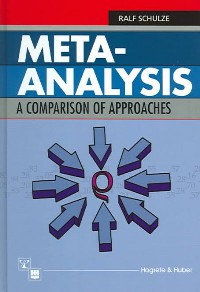
In many scientific fields, meta-analysis has become the standard method for summarizing research findings. The number of published applications of the method has been steadily growing in the last 25 years and the statistical procedures of meta-analysis continue to become more and more advanced. This book provides a comprehensive treatment of the statistical procedures for meta-analysis with correlations as an effect size. In the first part, the statistical fundamentals of existing meta-analytical approaches are explained in detail. Fixed as well as random effects models are described and several refinements to improve the performance of the procedures are presented. Additionally, the different procedures are compared from a theoretical viewpoint. In the second part, the results of a comprehensive Monte-Carlo study are presented to evaluate the performance of the major approaches in a large set of possible situations. It shows when the procedures of commonly applied approaches work and when they fail to provide reliable results.
目录
Part I Introduction 1
1 The Growth of Meta-Analysis and Implications for Methodological
Controversies 3
2 Basic Steps of Meta-Analysis and the Emergence of Approaches 9
2.1 Basic Steps of Meta-Analysis 9
2.2 On the Emergence of Approaches 14
Part II Statistical Methods of Meta-Analysis 17
3 Effect Sizes 19
3.1 Correlation Coefficients as Effect Sizes 20
3.2 Standardized Mean Differences as Effect Sizes 28
3.3 Conversion of Effect Sizes 30
4 General Frameworks of Meta-Analysis 33
4.1 Fixed Effects Model 35
4.2 Random Effects Model 39
4.3 Mixture Models 42
4.4 Hierarchical Linear Models 45
4.5 Classes of Situations for the Application of Meta-Analysis 48
5 Statistical Approaches to Meta-Analysis 55
5.1 Hedges and Olkin 56
5.1.1 Procedures for r as Effect Size 57
5.1.2 Procedures for d as Effect Size 59
5.2 Rosenthal and Rubin 61
5.3 Hunter and Schmidt 62
5.4 Refined Approaches 70
5.4.1 DerSimonian-Laird 71
5.4.2 Olkin and Pratt 72
5.5 Consequences of Choosing an Approach: Different Estimated
Parameters 75
5.6 Comparisons of Approaches: Statistical Procedures 82
6 Summary of Statistical Part 87
Part III Evaluation of Statistical Approaches: A Monte-Carlo Study 91
7 Aims, Design, and Implementation 93
7.1 General Aims and Procedure 94
7.2 General Expectations and Predictions for the Results 95
7.3 Distributions in the Universe of Studies 100
7.4 Parameters 102
7.5 Drawing Random Correlation Coefficients 105
7.5.1 Approximations to the Sampling Distribution of r 106
7.5.2 Evaluation of the Approximations 109
7.6 Details of Programming 114
7.7 Summary 114
8 Results 115
8.1 Preliminaries 115
8.2 Estimation of the Mean Effect Size in the Universe of Studies 117
8.2.1 Bias 118
8.2.1.1 Homogeneous Situation 61 118
8.2.1.2 Heterogeneous Situation 62 123
8.2.1.3 Heterogeneous Situation 63 130
8.2.2 Relative Efficiency 134
8.3 Significance Tests for the Mean Effect Size: Type I Errors and
Power 137
8.4 Confidence Intervals 148
8.5 Homogeneity Tests 158
8.5.1 Homogeneity Tests Based on the Q-Statistic 159
8.5.1.1 Homogeneous Situation 61: Type I Errors 159
8.5.1.2 Heterogeneous Situations 62 and 63: Power 161
8.5.2 The Hunter-Schmidt Approach to the Test of Homogene-
ity: The 75%- and 90%-rule 164
8.6 Estimation of Heterogeneity Variance 170
8.6.1 Homogeneous Situation 61 171
8.6.2 Heterogeneous Situations 62 and 63 175
Part IV Putting It All Together 181
9 Synopsis of Statistical Methods and Monte Carlo Study Results 183
10 Discussion and Conclusions 191
Nomenclature 197
References 201
Appendices 215
Appendix A Beta Distributions in the Universe of Effect Sizes 217
Appendix B Annotated Mathematica Notebook 223
Appendix C Tables of Results 229
Author Index 235
Subject Index 239
- 名称
- 类型
- 大小
光盘服务联系方式: 020-38250260 客服QQ:4006604884
云图客服:
用户发送的提问,这种方式就需要有位在线客服来回答用户的问题,这种 就属于对话式的,问题是这种提问是否需要用户登录才能提问
Video Player
×
Audio Player
×
pdf Player
×
