

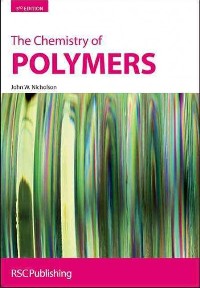
The chemistry of polymers / 3rd ed.
副标题:无
分类号:
ISBN:9780854046843
微信扫一扫,移动浏览光盘
简介
Chemistry of Polymers, Third Edition, is a well established and highly readable introductory text book on polymer science, ideal for chemists requiring a broad introduction to the subject. Like its predecessors it has been written primarily from an applications point of view, emphasising practical applications and providing a comprehensive introduction on all aspects of polymer science including polymer synthesis, characterisation, reaction kinetics and materials science. Specialised topics such as polymer degradation, polymers and pollution and a variety of technological developments are also discussed in an informative and up-to-date manner. This third edition has been extensively revised to include the latest developments in polymer science. Highlights and updates include a new chapter on dendrimers - a field of chemistry that has grown enormously in the last ten years. Coverage of 'Special topics in polymer chemistry' and 'Polymers in the environment' have both been updated to reflect recent developments in the field, including polymer recycling. This text is essential reading for university students, teachers and scientists who wish to acquire an up-to-the-minute overview of polymer science and its many specialised topics in an informative and easy to read style.
目录
Chapter 1 Polymer Chemistry I
L.1 Basic Concepts 1
1.2 The History of the Concept of the Macromolecule 2
1.3 Classification of Polymers 4
!.4 Structure and Properties of Polymers 5
14 1 Poly(ethylene) 6
1.4.2 Polyvpropylene) 7
1.A3 Poly(methyl methacrylate) 8
14.4 Poly(styrene) 9
1.4.5 Poly(vinyl chloride), PVC 10
14.6 The Nylons 11
1.4.7 Epoxy Resins 12
1.4.8 Phenol-Formaldehyde Polymers 13
1.4.9 Amino Resins 14
1.410 Poly(tetrafluoroethylene), PTFE 15
1.4.11 Polyurethanes 16
.4. 12 Poly(ether ether ketone) 17
1.4.13 Silicones 17
1.4.14 Naturally Occurring Polymers 18
1.4.15 Cellulose 18
1.4.16 Starch 9
1.4.17 Natural Rubber 19
1.4.18 Proteins 20
1.4.19 Poly(3-hydroxybutyrate) 21
Chapter 2 Polymerisation Reactions 23
2.1 Chain Polymerisation 23
2.1.1 Initiation 24
2.1.2 Propagation 25
2.1 3 rmination 25
2.1.4 Other Reactions 26
"22 Arrangement of Monomer Units 17
2.3 Kinetics of Chain Polymerisation 27
2.4 Autoacceleration 29
1.5 Practical Methods of Chain Polymerisation 30
2,5,1 Bulk Polymerisation 30
2.5.2 Solution Polymerisation 31
2.5.3 Suspension Polymerisation 31
2.5.4 Emulsion Polymerisation 32
2.5.5 The Loop Process 33
216 Other Chain Polymerisation Mechanisms 33
.7 Steep Polymerisation 35
2.8 Step polymerisation with Polyfunctional monomers 36
2.9 Copolymerisation 37
Chapter 3 Polymer Structure 40
3.1 Polyer Stereochemistry 40
32 Polymer Crystallinity 41
3.2.1 Orientation and Crystallisation 44
3.2.2 The Ctystalline Mvelting Point 44
3.2.3 Polyblends 45
313 Thermal and Mechanical Properties 45
33.1 The Glass Transition Temperature, T. 46
1.312 The Effect of Plasticisers 48
33.3 Methods of Determining Glass Transition
Temperature 49
3.3.4 The Effect of Polymer Stereochemistry on T 51
3.3,5 The Relationship between Crystalline
Melting Point and Ti 52
33.6 Other Thermal Transitions 53
Chapter 4 Crosslinking 54
4.1 Introduction 54
4.2 Phenol-Formaldehyde Resins 56
4.3 Unsaturated Polyester Resins 59
4.4 Polyurethanes 61
4.5 Epoxy Resins 63
Chapter 5 Polymer Solutions 66
5.1. Introduction 66
5.2 Dissolution of Polymers 66
5.3 oSolubility Parameters 67
5.4 Simple Liquid Mixtures and Raoult's Law 69
5.5 Entropy of Mixing 69
5.6 Real Molecules in Dilute Solution 72
5.7 Shapes of Polymer Molecules in Solution 73
5.8 Reptation Model of Molecular Motion 74
5 9 Water-Soluble Polymers 75
5.10 Uses of High-Viscosity Polymer Solutions 77
5.11 Poly mer Melts 78
Chapter 6 Methods of Determining Relative Molar Mass 80
6.1 Introduction 80
6.2 Molar Masses from Colligative Properties 81
6.2.1 Vapour Phase Osmometry 83
(63 Light Scattering 84
63.11 Experimental Determination 87
6.4 Viscosity Methods of Determining Relative Molar Mass 88
6 5 End Group Analysis 90
6.6 Gei Permeation Chromatography 91
Chapter 7 Mechanical Properties of Polymers 95
7.1 Introduction 95
7.2 Stress, Strain, and Young's Modulus 95
7.3 Brittle and Tough Fracture 96
7. 4 Types of Strength 98
7.5 The Influence of Surfaces 100
7.6 Viscoelasticity 102
7.7 Creep and Stress Relaxation 104
7.8 Cold Drawing 106
7.9 Dynamic Tests 107
7.10 Ti e/ Temperature Relationship 109
7. 1 Rubberlike Elasticity 110
7. 2 Reinforced Polymers 113
713 Practical Measurements of Mechanical Properties 115
7 14 Further Reading i 16
Chapter 8 Polymer Degradation 117
8.1 introduction 1 7
8.2 Behaviour of Polymers In Fires I 7
82. 1 The Behaviour of Individual Polymers 1 1
8.3 Assessment of Combustion Behaviour 119
8,4 Improvement of Stability of Polymers in Fires 120
8.5 Weathering of Polymers 121
S86 Protection of Polymers from Photo-oxidation 23
7 Biological Degradation of Polymers 125
"8 . Exploitation of Polymer Degradation 1 26
Chapter 9 Dendrimers 130
9.1 Introduction 130
9.2 Organic Dendrimers 133
9.3 Supramolecular Dendrimers 135
94 Shapes and Conformations of Dendrimers 136
9.5 Dendrimer Micelles 137
"9.6 Characterization of Dendrimers 138
9.6.1 Mass Spectroscopy 138
9.62 Gel Permeation Chromatography 139
9.63 High-Performance Liquid Chromatography 139
9.6.4 NMR Spectroscopy 140
9.6.5 X-Ray Diffraction 140
9.6.6 Titration 140
9.6.7 Small Angle Neutron Scattering 141
9.6.8 Atomic Force Microscopy 142
9.7 Applications of Dendrimers 142
9.8 Megamers 144
Further Reading 145
10.3 lonomers 149
10.4 Electronically Conducting Polymers 150
10,5 Interpenetrating Polymer Networks 153
10.6 Inorganic Polymers 154
10.7 Polymer Liquid Crystals 156
0.8 Polymers for Food Packaging 158
Chapter 11 Polymers and the Environment 161
1.1 Introduction 161
11.2 Pollution by Polymers 161
11.3 The Nature of the Problem 164
11 4 Polymers and Energy 165
S1.5 Recycling of Polymers 166
11.6 Degradable Polymers 167
11.7 The Future 169
Further Reading 169
The chemistry of polymers / 3rd ed.
- 名称
- 类型
- 大小
光盘服务联系方式: 020-38250260 客服QQ:4006604884
云图客服:
用户发送的提问,这种方式就需要有位在线客服来回答用户的问题,这种 就属于对话式的,问题是这种提问是否需要用户登录才能提问
Video Player
×
Audio Player
×
pdf Player
×
