

简介
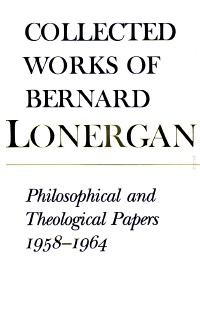
The period during which Bernard Lonergan delivered the eleven lectures in this volume was one of important transition for him: he was moving rapidly toward a new conception of theology and its method; and he was on the verge of what is now recognized as a major breakthrough in his thought on method, the idea that came to him in February 1965 of the eight functional specialities.
While the lectures maintain a continuity with Lonergan's previous work, they also reveal new and significant ideas, especially in regard to his drive toward a new conception of theology as a whole, and his particular concern for the relevance of theology to the spiritual life. The lectures here include 'The Redemption,' 'Method in Catholic Theology,' 'The Philosophy of History,' 'The Origins of Christian Realism,' 'Time and Meaning,' 'Consciousness and the Trinity,' 'Exegesis and Dogma,' 'The Mediation of Christ in Prayer,' 'The Analogy of Meaning,' 'Philosophical Positions with Regard to Knowing,' and 'Theology as Christian Phenomenon.'
This volume provides a key to understanding the development of Lonergan's philosophical and theological thought, his major influences, and the pivotal moments of transition in the road leading up to Method in Theology and beyond.
Bernard Lonergan (1904-1984), a professor of theology, taught at Regis College, Harvard University, and Boston College. An established author known for his Insightand Method in Theology, Lonergan received numerous honorary doctorates, was a Companion of the Order of Canada in 1971 and was named as an original members of the International Theological Commission by Pope Paul VI.
目录
Contents 6
Editors' Preface 12
1 The Redemption 20
1 Bibliography 20
2 Redemption as Communication 22
3 Intelligibility of the Redemption 25
3.1 Not a Necessity 25
3.2 A Dynamic Intelligibility 26
3.3 An Incarnate Intelligibility 27
3.4 A Complex Intelligibility 29
3.5 A Multiple Intelligibility 30
4 Aspects of the Redemption 31
4.1 Sacrifice 32
4.2 Redemption 33
4.3 Vicarious Satisfaction 36
4.4 Merit 40
4.5 Efficiency 41
5 Redemption as Mystery 41
2 Method in Catholic Theology 46
1 Five Precepts 49
1.1 Understand 49
1.2 Understand Systematically 52
1.3 Reverse Counterpositions and Develop Positions 53
1.4 Accept the Responsibility of Judgment 55
2 Applications to Catholic Theology 59
2.1 Understand 59
2.2 Understand Systematically 61
2.3 Reverse Counterpositions 63
2.4 Develop Positions 63
2.5 Accept the Responsibility of Judgment 68
3 The Philosophy of History 71
1 History as a Subject 71
1.1 Occasional History 72
1.2 Technical History 72
1.3 Explanatory History 77
2 Philosophy of ... 83
3 Philosophy of History 86
3.1 Philosophy and History That Is Written 87
3.2 Philosophy and History That Is Written About 88
4 Theology of History 95
5 Conclusion 96
4 The Origins of Christian Realism (1961) 97
1 Four Approaches to the Question 98
1.1 Christian Realism and Christian Philosophy 98
1.2 The Meaning of Realism 99
1.3 The Historical Issue 99
1.4 The Popular Approach 100
2 The God of the Theologians 100
2.1 Jewish-Christian Thinking 101
2.2 Christian Gnosticism 102
2.3 Rationalistic Types 103
2.4 Mainstream Problems 103
3 Christian Realism and the Word of God 110
5 Time and Meaning 111
1 Meaning 113
1.1 Varieties of Meaning 113
1.2 What Meaning Constitutes 121
2 Time 123
3 The Development of Meaning 125
3.1 Piaget's Analysis of Development 126
3.2 Distinct Types of Development 128
6 Consciousness and the Trinity 139
1 A Contemporary Context 139
2 Consciousness in the Divine Persons 141
3 Consciousness and the Psychological Analogy: Integration 144
4 Block to Integration: Notion of Reality 145
5 Block to Integration: Notion of Knowledge 147
Questions 150
7 Exegesis and Dogma 159
1 Three Exegetical Ideals 159
2 Dogmas and Classical Exegesis 165
3 Limitations and Value of Classical Exegesis 166
4 Romantic Exegesis 168
5 Value and Limitations of Romantic Exegesis 169
6 Points Regarding Exegesis 171
8 The Mediation of Christ in Prayer 177
1 Mediation in General 180
1.1 A Mechanical Example 180
1.2 Organic Examples 181
1.3 A Psychic Example 181
1.4 A Logical Example 181
2 Mutual Mediation: The Functional Whole 182
2.1 A Mechanical Example 182
2.2 Organic Examples 182
2.3 A Psychic Example 183
2.4 A Scientific Example 183
3 Self-mediation 184
3.1 The Living Organism 184
3.2 Consciousness 185
3.3 Self-consciousness 187
4 Mutual Self-mediation 191
5 The Mediation of Christ in Prayer 193
5.1 Objective Application 194
5.2 Subjective Application 195
9 The Analogy of Meaning 200
1 Meaning as Constitutive of Human Communication 202
1.1 Everyday Language 202
1.2 Intersubjective Meaning 204
1.3 Incarnate Meaning 205
1.4 Symbols 206
1.5 Artistic Meaning 208
1.6 Literary Meaning 209
1.7 Technical Meaning 210
2 Meaning as Constitutive of Human Potentiality 213
3 Meaning as Constitutive of Human Knowing 215
4 Meaning as Constitutive of Human Living 217
5 Common Meaning and Community 218
6 Meaning in Human Science 220
7 Meaning in Theology 222
8 Conclusion 223
Questions 224
10 Philosophical Positions with Regard to Knowing 231
1 Knowing 232
2 Knowing Knowing 238
3 The Objectivity of Knowing 243
3.1 The Position on Objectivity 244
3.2 Naive Realism and Objectivity 247
3.3 The Kantian View 248
3.4 Objectivity and the Universe of Being 249
4 Knowing and Intersubjectivity 251
Questions 253
11 Theology as Christian Phenomenon 261
1 The Greek Discovery of Mind 262
2 The Christian Apprehension of Christ 264
2.1 In the New Testament 264
2.2 ChristologicalErrors 267
2.3 The Development of Christological Dogma 270
Questions 286
Lexicon of Latin and Greek Words and Phrases 290
Works of Lonergan Referred to in Footnotes 292
Index 296
A 296
B 297
C 298
D 301
E 303
F 304
G 305
H 306
I 307
J 308
K 309
L 309
M 311
N 314
O 314
P 315
Q 316
R 317
S 318
T 321
U 322
V 322
W 323
X 323
Y 323
Editors' Preface 12
1 The Redemption 20
1 Bibliography 20
2 Redemption as Communication 22
3 Intelligibility of the Redemption 25
3.1 Not a Necessity 25
3.2 A Dynamic Intelligibility 26
3.3 An Incarnate Intelligibility 27
3.4 A Complex Intelligibility 29
3.5 A Multiple Intelligibility 30
4 Aspects of the Redemption 31
4.1 Sacrifice 32
4.2 Redemption 33
4.3 Vicarious Satisfaction 36
4.4 Merit 40
4.5 Efficiency 41
5 Redemption as Mystery 41
2 Method in Catholic Theology 46
1 Five Precepts 49
1.1 Understand 49
1.2 Understand Systematically 52
1.3 Reverse Counterpositions and Develop Positions 53
1.4 Accept the Responsibility of Judgment 55
2 Applications to Catholic Theology 59
2.1 Understand 59
2.2 Understand Systematically 61
2.3 Reverse Counterpositions 63
2.4 Develop Positions 63
2.5 Accept the Responsibility of Judgment 68
3 The Philosophy of History 71
1 History as a Subject 71
1.1 Occasional History 72
1.2 Technical History 72
1.3 Explanatory History 77
2 Philosophy of ... 83
3 Philosophy of History 86
3.1 Philosophy and History That Is Written 87
3.2 Philosophy and History That Is Written About 88
4 Theology of History 95
5 Conclusion 96
4 The Origins of Christian Realism (1961) 97
1 Four Approaches to the Question 98
1.1 Christian Realism and Christian Philosophy 98
1.2 The Meaning of Realism 99
1.3 The Historical Issue 99
1.4 The Popular Approach 100
2 The God of the Theologians 100
2.1 Jewish-Christian Thinking 101
2.2 Christian Gnosticism 102
2.3 Rationalistic Types 103
2.4 Mainstream Problems 103
3 Christian Realism and the Word of God 110
5 Time and Meaning 111
1 Meaning 113
1.1 Varieties of Meaning 113
1.2 What Meaning Constitutes 121
2 Time 123
3 The Development of Meaning 125
3.1 Piaget's Analysis of Development 126
3.2 Distinct Types of Development 128
6 Consciousness and the Trinity 139
1 A Contemporary Context 139
2 Consciousness in the Divine Persons 141
3 Consciousness and the Psychological Analogy: Integration 144
4 Block to Integration: Notion of Reality 145
5 Block to Integration: Notion of Knowledge 147
Questions 150
7 Exegesis and Dogma 159
1 Three Exegetical Ideals 159
2 Dogmas and Classical Exegesis 165
3 Limitations and Value of Classical Exegesis 166
4 Romantic Exegesis 168
5 Value and Limitations of Romantic Exegesis 169
6 Points Regarding Exegesis 171
8 The Mediation of Christ in Prayer 177
1 Mediation in General 180
1.1 A Mechanical Example 180
1.2 Organic Examples 181
1.3 A Psychic Example 181
1.4 A Logical Example 181
2 Mutual Mediation: The Functional Whole 182
2.1 A Mechanical Example 182
2.2 Organic Examples 182
2.3 A Psychic Example 183
2.4 A Scientific Example 183
3 Self-mediation 184
3.1 The Living Organism 184
3.2 Consciousness 185
3.3 Self-consciousness 187
4 Mutual Self-mediation 191
5 The Mediation of Christ in Prayer 193
5.1 Objective Application 194
5.2 Subjective Application 195
9 The Analogy of Meaning 200
1 Meaning as Constitutive of Human Communication 202
1.1 Everyday Language 202
1.2 Intersubjective Meaning 204
1.3 Incarnate Meaning 205
1.4 Symbols 206
1.5 Artistic Meaning 208
1.6 Literary Meaning 209
1.7 Technical Meaning 210
2 Meaning as Constitutive of Human Potentiality 213
3 Meaning as Constitutive of Human Knowing 215
4 Meaning as Constitutive of Human Living 217
5 Common Meaning and Community 218
6 Meaning in Human Science 220
7 Meaning in Theology 222
8 Conclusion 223
Questions 224
10 Philosophical Positions with Regard to Knowing 231
1 Knowing 232
2 Knowing Knowing 238
3 The Objectivity of Knowing 243
3.1 The Position on Objectivity 244
3.2 Naive Realism and Objectivity 247
3.3 The Kantian View 248
3.4 Objectivity and the Universe of Being 249
4 Knowing and Intersubjectivity 251
Questions 253
11 Theology as Christian Phenomenon 261
1 The Greek Discovery of Mind 262
2 The Christian Apprehension of Christ 264
2.1 In the New Testament 264
2.2 ChristologicalErrors 267
2.3 The Development of Christological Dogma 270
Questions 286
Lexicon of Latin and Greek Words and Phrases 290
Works of Lonergan Referred to in Footnotes 292
Index 296
A 296
B 297
C 298
D 301
E 303
F 304
G 305
H 306
I 307
J 308
K 309
L 309
M 311
N 314
O 314
P 315
Q 316
R 317
S 318
T 321
U 322
V 322
W 323
X 323
Y 323
- 名称
- 类型
- 大小
光盘服务联系方式: 020-38250260 客服QQ:4006604884
云图客服:
用户发送的提问,这种方式就需要有位在线客服来回答用户的问题,这种 就属于对话式的,问题是这种提问是否需要用户登录才能提问
Video Player
×
Audio Player
×
pdf Player
×
