

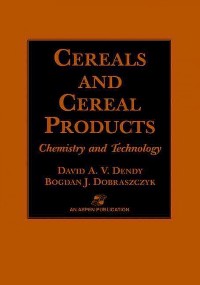
Cereals and cereal products : chemistry and technology /
副标题:无
作 者:David A.V. Dendy, Bogdan J. Dobraszczyk.
分类号:
ISBN:9780834217676
微信扫一扫,移动浏览光盘
简介
Cereals are one of our most important crops, whether as cash crops for commercial farmers or subsistence crops in the developing third world. This book focuses on the chemistry and technology of cereals, set in the agricultural and socio-economic context. The subject of cereal is given a greater geographical scope than other books that are primarily concerned with wheat and bread. The principles of cereals discussed include structure and composition; economic importance; storage and transportation; analysis; post-harvest losses; and the starch industries. Also dealt with are the industrial processes which are the basis of our common foods - rice, bread, cornflakes, beer; and the common foods of more traditional societies such as the porridges of Africa and the tortillas of the Americas, as well as numerous fermented foods and drinks.
目录
Table Of Contents:
Contributors ix
Preface xi
Introduction to Cereals 1(22)
David A.V. Dendy
Barbara E. Brockway
Introduction 1(3)
Basic Classification 4(2)
Cereals in History, Mythology, and Religion 6(7)
The Importance of Cereals in Human Nutrition, Worldwide Principal Source of Calories, and Major Source of Protein 13(1)
How Cereals Are Used: A Brief Overview 14(1)
Cereals in Livestock Feed 15(2)
Objectives of Milling 17(1)
Cereals in Commerce 18(1)
Organic Cereals? 19(2)
Breeding, Biotechnology, Genetics, and the Future 21(2)
The Storage and Transportation of Grains and Their Products 23(34)
David A.V. Dendy
Introduction 23(1)
Physical Properties of Grain Relevant to Storage and Transportation 24(3)
The Cleaning of Grain 27(1)
Purification and Separation 28(1)
The Drying of Grain 29(1)
On-Farm Storage of Unthreshed Grain 30(1)
On-Farm Storage of Grain 31(1)
Commercial Storage 32(2)
Bag or Bulk? 34(1)
Moisture Migration in Silos and the Aeration of Grains in Store 35(1)
Controlled-Atmosphere Storage 35(2)
Refrigerated Storage 37(1)
Hot Air Disinfestation 37(1)
Transportation Systems and Grain Quality 37(1)
The Microbiology of Grain: Moisture, Mold, and Acquired Toxins 38(2)
Infestation by Invertebrates 40(1)
External Infesters 41(3)
Internal Infesters 44(3)
Detection and Measurement of Arthropods in Stored Grain 47(1)
Control of Arthropods: Fumigation and Other Control Methods 48(4)
Infestation by Vertebrates 52(2)
Proofing against Rodents and Birds 54(1)
Concepts of Integrated Pest Management (IMP) 54(1)
Seed Storage 55(1)
Long-Term Changes during Storage 55(2)
Postharvest Losses 57(11)
David A.V. Dendy
Introduction 57(2)
Procedures for Measuring Losses Occurring during or Caused by Processing, Including Threshing, Drying, and Milling 59(1)
Basic Data 59(1)
Social, Cultural, and Economic Framework 60(1)
Losses at Harvest 61(1)
Threshing Losses 62(2)
Losses Caused by Improper Drying 64(1)
Losses Caused by Poor Storage and Transportation 65(1)
Processing Losses 66(1)
Nutritional and Culinary Losses 66(2)
Cereal Starches and Proteins 68(22)
Ann-Charlotte Eliasson
Arthur Tatham
Introduction 68(1)
The Starch Granule 68(2)
Starch Crystallinity 70(1)
Starch Granule Composition 70(1)
Gelatinization 71(3)
Retrogradation 74(5)
The Cereal Grain Proteins 79(11)
NIR Techniques in Cereals Analysis 90(10)
Christopher N.G. Scotter
Background 90(1)
Why Use NIR Techniques? 90(1)
What Is the NIR Instrument Sensing in the Sample? 90(1)
Correct Calibration: The Key to Successful NIR Analysis 91(2)
Instrument Standardization Combined with an Advanced Calibration Technique: The Way Forward 93(1)
A Practical Example of Cloning Monochromators and Filter Instruments 94(2)
On-Line NIR Analysis of Grain and Grain Products 96(2)
Conclusions and the Future 98(2)
Wheat and Flour 100(40)
Bogdan J. Dobraszczyk
Introduction 100(1)
Quality Testing 101(14)
Wheat Hardness 115(5)
Protein 120(3)
Moisture 123(1)
Alpha-Amylase Activity and Hagberg Falling Number 124(1)
Genetic Techniques 124(1)
Flour Quality Testing 124(16)
Wheat Flour Milling 140(42)
T. David Sugden
Brian G. Osborne
Part 1 140(1)
Aim of Flour Milling 140(1)
Wheat Cleaning and Conditioning 140(8)
The Flour Mill 148(10)
Flour Processing and Packing 158(4)
Bran and Screenings Process and Packing Plant 162(1)
Adjustments 162(1)
Management, Staffing, and Automation 162(4)
New and Future Developments 166(6)
Part 2 172(1)
Modern Methods of Mill Monitoring and Control 172(1)
Grading, Selection, and Binning of Wheat 173(1)
NIR 173(1)
Image Analysis 174(1)
Uniformity of Quality 175(1)
Gristing and Conditioning 176(2)
Rollermill Monitoring and Control Systems 178(1)
Flour Quality Testing 179(2)
Flour Blending and Outloading 181(1)
Bread: A Unique Food 182(51)
Bogdan J. Dobraszczyk
Grant M. Campbell
Zhilin Gan
A Slice of History 182(2)
Breadmaking: A Series of Aeration Stages 184(5)
Dough Rheology and Dough Development 189(18)
Dough Mixing 207(6)
Proving 213(10)
Baking of Bread 223(3)
Physical and Chemical Requirements for Breadmaking Performance 226(1)
Commercial Benefits of Understanding Bubble Behavior in Breadmaking 227(6)
Cookies, Cakes, and Other Flour Confectionery 233(21)
G.M. Townsend
Introduction 233(2)
Raw Materials in Flour Confectionery Manufacture 235(4)
Classification of Baked Products 239(1)
Manufacture of Baked Products 239(9)
Manufacture of Cakes 248(1)
Manufacture of Pastry 249(1)
Manufacture of Wafers 250(2)
Manufacture of Crispbread 252(1)
Recent Developments 252(2)
Pasta 254(9)
Barbara E. Brockway
Introduction 254(1)
Origins 254(1)
Manufacture 255(1)
Drying 256(1)
Storage and Packing 257(1)
Cooking and Quality 257(1)
Color 258(1)
Nutrition 258(1)
Durum Wheat 258(1)
Milling 259(2)
Alternative Raw Materials 261(1)
Prospects for Pasta 262(1)
Composite and Alternative Flours 263(13)
David A.V. Dendy
Introduction: Definitions and History 263(3)
Use of Composite Flours in Bread 266(2)
Raw Materials Suitable for Use in a Composite Product 268(3)
Wheatless Bread 271(1)
Other Baked Goods---Especially Biscuits and Cookies 272(1)
Traditional Foods: Unleavened Breads, Porridges, Dumplings, etc. 273(1)
Extruded Foods: Pasta Products and Snack Foods 273(1)
Suggested Criteria for a Successful Composite Flour Program 274(1)
Conclusions 275(1)
Rice 276(39)
David A.V. Dendy
Introduction 276(3)
Harvest and Postharvest 279(1)
Threshing 280(3)
Paddy Drying and Storage 283(4)
The Rice Caryopsis: Structure and Chemistry 287(2)
Composition and Nutritional Value of Rice and Byproducts 289(2)
Parboiling 291(6)
Objectives and Principles of Rice Milling 297(5)
Quality Parameters 302(3)
Rice Starch 305(1)
Noodles (Rice ``Pasta'') 306(1)
Fermented Products 306(2)
Modern Convenience Foods from Rice 308(3)
Husk 311(1)
The Stabilization of Rice Bran and the Extraction of Oil 312(1)
Wild Rice (Zizania palustris, L.) 313(2)
Maize 315(10)
Barbara E. Brockway
Origins and Distribution 315(1)
Worldwide Maize Cultivation 316(1)
Plant Morphology 316(1)
The Kernel 317(1)
Hybrid Corn 318(1)
Genetically Engineered Hybrids 319(1)
Harvesting 319(1)
Milling 319(2)
Uses of Maize 321(4)
Barley 325(16)
Dennis E. Briggs
Introduction 325(1)
Botany 325(2)
The Germination Characteristics of Barley 327(1)
Chemistry 328(1)
Breeding 329(1)
Malting 330(5)
Uses of Malts 335(6)
Sorghum and the Millets 341(26)
David A.V. Dendy
The Origins and Distribution of Sorghum and Millets 341(1)
The Sorghum Grain: Structure, Chemistry, and Technology 341(3)
Sorghum Polyphenols as Antinutritional Factors 344(1)
Sorghum Processing: Threshing, Dehulling, and Milling 345(3)
Sorghum Foods 348(3)
Sorghum for Starch Production 351(1)
New Uses for Sorghum 352(1)
Millets: The Different Species, Their Geography, and Uses 353(2)
Geographical Distribution and Production 355(1)
The Importance of the Millets in the Nutrition of Marginal Lands 355(1)
Traditional Technologies and Uses for the Millets 356(3)
Opportunities for Nontraditional Systems and Uses of the Millets 359(1)
Pearl Millet 360(1)
Finger Millet 361(1)
Teff 362(1)
Foxtail Millet 362(1)
Proso Millet 363(1)
Little Millet 363(1)
Kodo Millet 363(1)
Barnyard Millet 363(1)
The Pseudocereals: Botany, Structure, Composition, Uses 364(3)
Oats 367(24)
Robert W. Welch
Janice M. McConnell
History 367(1)
Production 368(1)
Consumption 368(1)
Oat Milling 368(5)
Chemical Composition 373(5)
Nutritional Value and Therapeutic Effects 378(3)
Food Uses of Oats 381(4)
Industrial Uses 385(1)
Naked Oats 385(6)
Rye and Triticale 391(20)
Hannu Salovaara
Karin Autio
The Origins and Distribution of Rye: Botany and Chemistry 391(4)
The Importance of Rye 395(3)
Rye Milling 398(3)
Rye Pentosans 401(1)
Rye Bread Technology 402(3)
Rye Products Other Than Bread 405(1)
Triticale, the Man-Made Cereal 406(5)
Sources 411(6)
Index 417(12)
About the Authors 429
Contributors ix
Preface xi
Introduction to Cereals 1(22)
David A.V. Dendy
Barbara E. Brockway
Introduction 1(3)
Basic Classification 4(2)
Cereals in History, Mythology, and Religion 6(7)
The Importance of Cereals in Human Nutrition, Worldwide Principal Source of Calories, and Major Source of Protein 13(1)
How Cereals Are Used: A Brief Overview 14(1)
Cereals in Livestock Feed 15(2)
Objectives of Milling 17(1)
Cereals in Commerce 18(1)
Organic Cereals? 19(2)
Breeding, Biotechnology, Genetics, and the Future 21(2)
The Storage and Transportation of Grains and Their Products 23(34)
David A.V. Dendy
Introduction 23(1)
Physical Properties of Grain Relevant to Storage and Transportation 24(3)
The Cleaning of Grain 27(1)
Purification and Separation 28(1)
The Drying of Grain 29(1)
On-Farm Storage of Unthreshed Grain 30(1)
On-Farm Storage of Grain 31(1)
Commercial Storage 32(2)
Bag or Bulk? 34(1)
Moisture Migration in Silos and the Aeration of Grains in Store 35(1)
Controlled-Atmosphere Storage 35(2)
Refrigerated Storage 37(1)
Hot Air Disinfestation 37(1)
Transportation Systems and Grain Quality 37(1)
The Microbiology of Grain: Moisture, Mold, and Acquired Toxins 38(2)
Infestation by Invertebrates 40(1)
External Infesters 41(3)
Internal Infesters 44(3)
Detection and Measurement of Arthropods in Stored Grain 47(1)
Control of Arthropods: Fumigation and Other Control Methods 48(4)
Infestation by Vertebrates 52(2)
Proofing against Rodents and Birds 54(1)
Concepts of Integrated Pest Management (IMP) 54(1)
Seed Storage 55(1)
Long-Term Changes during Storage 55(2)
Postharvest Losses 57(11)
David A.V. Dendy
Introduction 57(2)
Procedures for Measuring Losses Occurring during or Caused by Processing, Including Threshing, Drying, and Milling 59(1)
Basic Data 59(1)
Social, Cultural, and Economic Framework 60(1)
Losses at Harvest 61(1)
Threshing Losses 62(2)
Losses Caused by Improper Drying 64(1)
Losses Caused by Poor Storage and Transportation 65(1)
Processing Losses 66(1)
Nutritional and Culinary Losses 66(2)
Cereal Starches and Proteins 68(22)
Ann-Charlotte Eliasson
Arthur Tatham
Introduction 68(1)
The Starch Granule 68(2)
Starch Crystallinity 70(1)
Starch Granule Composition 70(1)
Gelatinization 71(3)
Retrogradation 74(5)
The Cereal Grain Proteins 79(11)
NIR Techniques in Cereals Analysis 90(10)
Christopher N.G. Scotter
Background 90(1)
Why Use NIR Techniques? 90(1)
What Is the NIR Instrument Sensing in the Sample? 90(1)
Correct Calibration: The Key to Successful NIR Analysis 91(2)
Instrument Standardization Combined with an Advanced Calibration Technique: The Way Forward 93(1)
A Practical Example of Cloning Monochromators and Filter Instruments 94(2)
On-Line NIR Analysis of Grain and Grain Products 96(2)
Conclusions and the Future 98(2)
Wheat and Flour 100(40)
Bogdan J. Dobraszczyk
Introduction 100(1)
Quality Testing 101(14)
Wheat Hardness 115(5)
Protein 120(3)
Moisture 123(1)
Alpha-Amylase Activity and Hagberg Falling Number 124(1)
Genetic Techniques 124(1)
Flour Quality Testing 124(16)
Wheat Flour Milling 140(42)
T. David Sugden
Brian G. Osborne
Part 1 140(1)
Aim of Flour Milling 140(1)
Wheat Cleaning and Conditioning 140(8)
The Flour Mill 148(10)
Flour Processing and Packing 158(4)
Bran and Screenings Process and Packing Plant 162(1)
Adjustments 162(1)
Management, Staffing, and Automation 162(4)
New and Future Developments 166(6)
Part 2 172(1)
Modern Methods of Mill Monitoring and Control 172(1)
Grading, Selection, and Binning of Wheat 173(1)
NIR 173(1)
Image Analysis 174(1)
Uniformity of Quality 175(1)
Gristing and Conditioning 176(2)
Rollermill Monitoring and Control Systems 178(1)
Flour Quality Testing 179(2)
Flour Blending and Outloading 181(1)
Bread: A Unique Food 182(51)
Bogdan J. Dobraszczyk
Grant M. Campbell
Zhilin Gan
A Slice of History 182(2)
Breadmaking: A Series of Aeration Stages 184(5)
Dough Rheology and Dough Development 189(18)
Dough Mixing 207(6)
Proving 213(10)
Baking of Bread 223(3)
Physical and Chemical Requirements for Breadmaking Performance 226(1)
Commercial Benefits of Understanding Bubble Behavior in Breadmaking 227(6)
Cookies, Cakes, and Other Flour Confectionery 233(21)
G.M. Townsend
Introduction 233(2)
Raw Materials in Flour Confectionery Manufacture 235(4)
Classification of Baked Products 239(1)
Manufacture of Baked Products 239(9)
Manufacture of Cakes 248(1)
Manufacture of Pastry 249(1)
Manufacture of Wafers 250(2)
Manufacture of Crispbread 252(1)
Recent Developments 252(2)
Pasta 254(9)
Barbara E. Brockway
Introduction 254(1)
Origins 254(1)
Manufacture 255(1)
Drying 256(1)
Storage and Packing 257(1)
Cooking and Quality 257(1)
Color 258(1)
Nutrition 258(1)
Durum Wheat 258(1)
Milling 259(2)
Alternative Raw Materials 261(1)
Prospects for Pasta 262(1)
Composite and Alternative Flours 263(13)
David A.V. Dendy
Introduction: Definitions and History 263(3)
Use of Composite Flours in Bread 266(2)
Raw Materials Suitable for Use in a Composite Product 268(3)
Wheatless Bread 271(1)
Other Baked Goods---Especially Biscuits and Cookies 272(1)
Traditional Foods: Unleavened Breads, Porridges, Dumplings, etc. 273(1)
Extruded Foods: Pasta Products and Snack Foods 273(1)
Suggested Criteria for a Successful Composite Flour Program 274(1)
Conclusions 275(1)
Rice 276(39)
David A.V. Dendy
Introduction 276(3)
Harvest and Postharvest 279(1)
Threshing 280(3)
Paddy Drying and Storage 283(4)
The Rice Caryopsis: Structure and Chemistry 287(2)
Composition and Nutritional Value of Rice and Byproducts 289(2)
Parboiling 291(6)
Objectives and Principles of Rice Milling 297(5)
Quality Parameters 302(3)
Rice Starch 305(1)
Noodles (Rice ``Pasta'') 306(1)
Fermented Products 306(2)
Modern Convenience Foods from Rice 308(3)
Husk 311(1)
The Stabilization of Rice Bran and the Extraction of Oil 312(1)
Wild Rice (Zizania palustris, L.) 313(2)
Maize 315(10)
Barbara E. Brockway
Origins and Distribution 315(1)
Worldwide Maize Cultivation 316(1)
Plant Morphology 316(1)
The Kernel 317(1)
Hybrid Corn 318(1)
Genetically Engineered Hybrids 319(1)
Harvesting 319(1)
Milling 319(2)
Uses of Maize 321(4)
Barley 325(16)
Dennis E. Briggs
Introduction 325(1)
Botany 325(2)
The Germination Characteristics of Barley 327(1)
Chemistry 328(1)
Breeding 329(1)
Malting 330(5)
Uses of Malts 335(6)
Sorghum and the Millets 341(26)
David A.V. Dendy
The Origins and Distribution of Sorghum and Millets 341(1)
The Sorghum Grain: Structure, Chemistry, and Technology 341(3)
Sorghum Polyphenols as Antinutritional Factors 344(1)
Sorghum Processing: Threshing, Dehulling, and Milling 345(3)
Sorghum Foods 348(3)
Sorghum for Starch Production 351(1)
New Uses for Sorghum 352(1)
Millets: The Different Species, Their Geography, and Uses 353(2)
Geographical Distribution and Production 355(1)
The Importance of the Millets in the Nutrition of Marginal Lands 355(1)
Traditional Technologies and Uses for the Millets 356(3)
Opportunities for Nontraditional Systems and Uses of the Millets 359(1)
Pearl Millet 360(1)
Finger Millet 361(1)
Teff 362(1)
Foxtail Millet 362(1)
Proso Millet 363(1)
Little Millet 363(1)
Kodo Millet 363(1)
Barnyard Millet 363(1)
The Pseudocereals: Botany, Structure, Composition, Uses 364(3)
Oats 367(24)
Robert W. Welch
Janice M. McConnell
History 367(1)
Production 368(1)
Consumption 368(1)
Oat Milling 368(5)
Chemical Composition 373(5)
Nutritional Value and Therapeutic Effects 378(3)
Food Uses of Oats 381(4)
Industrial Uses 385(1)
Naked Oats 385(6)
Rye and Triticale 391(20)
Hannu Salovaara
Karin Autio
The Origins and Distribution of Rye: Botany and Chemistry 391(4)
The Importance of Rye 395(3)
Rye Milling 398(3)
Rye Pentosans 401(1)
Rye Bread Technology 402(3)
Rye Products Other Than Bread 405(1)
Triticale, the Man-Made Cereal 406(5)
Sources 411(6)
Index 417(12)
About the Authors 429
Cereals and cereal products : chemistry and technology /
- 名称
- 类型
- 大小
光盘服务联系方式: 020-38250260 客服QQ:4006604884
云图客服:
用户发送的提问,这种方式就需要有位在线客服来回答用户的问题,这种 就属于对话式的,问题是这种提问是否需要用户登录才能提问
Video Player
×
Audio Player
×
pdf Player
×
