

简介
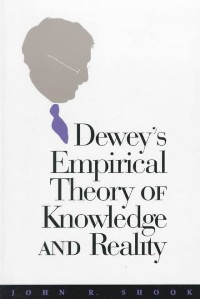
The ongoing revival of interest in the work of American philosopher and pragmatist John Dewey has given rise to a burgeoning flow of commentaries, critical editions, and reevaluations of Dewey's writings. While previous studies of Dewey's work have taken either a historical or a topical focus, Shook offers an innovative, organic approach to understanding Dewey and eloquently shows that Dewey's instrumentalism grew seamlessly out of his idealism. He argues that most current scholarship operates under a mistaken impression of Dewey's early philosophical positions and convincingly demonstrates a number of key points:
that Dewey's metaphysical empiricism remained more indebted to Kant and Hegel than is commonly supposed;
that Dewey owed more to the influence of Wundt than is commonly believed;
that the influence of Peirce and James was not as significant for the development of Dewey's theories of mind and truth as has been argued in the past;
and that Dewey's pragmatic theory of knowledge never really abandoned idealism.
Shook's exposition of the unity of Dewey's thought challenges a large scholarly industry devoted to suppressing or explaining away the consistency between Dewey's early thought and his later work. In every respect, Dewey's Empirical Theory of Knowledge and Realityis a provocative and engaging study that will occupy a unique niche in this field. It is certain to stimulate discussion and controversy, forcing Dewey traditionalists out of habitual modes of thought and transforming our conventional understanding of the development of classical American philosophy.
目录
Table Of Contents:
Preface vii
Abbreviations ix
Introduction 1(6)
Genetic Explanation of Dewey's Philosophy
The Opportunity of Dewey's Early Philosophy 7(14)
Dewey's Epistemology vs. His Metaphysics
The Traditional Account of Dewey's Development
The ``Problem'' of Dewey's Early Philosophy
Absolute Idealism 21(50)
Idealism and Sensationalistic Empiricism
Knowledge and the Psychological Standpoint
Psychology as Philosophical Method
Classifying Dewey's Idealism
Wundtian Voluntarism 71(50)
Organic Voluntarism and Teleological Psychology
Knowledge and Will
The ReflexArc
The Foundations of Functionalism
The Absolute of Active Experience 121(42)
Absolute vs. Functional Truth
The Self and Experience
Moral Judgment and the Functionally Social Self
The Logic of Conduct 163(54)
Reasoning and Experience
Intelligence and Knowledge
Experimental Science
The Reconstruction of Epistemology 217(53)
An Empirical Theory of Meaning
An Empirical Theory of Knowledge
An Empirical Process of Verification
Instrumentalist Naturalism
Appendix. Chronology of Selected Dewey Writings 270(8)
Notes 278(18)
Bibliography 296(12)
Index 308
Preface vii
Abbreviations ix
Introduction 1(6)
Genetic Explanation of Dewey's Philosophy
The Opportunity of Dewey's Early Philosophy 7(14)
Dewey's Epistemology vs. His Metaphysics
The Traditional Account of Dewey's Development
The ``Problem'' of Dewey's Early Philosophy
Absolute Idealism 21(50)
Idealism and Sensationalistic Empiricism
Knowledge and the Psychological Standpoint
Psychology as Philosophical Method
Classifying Dewey's Idealism
Wundtian Voluntarism 71(50)
Organic Voluntarism and Teleological Psychology
Knowledge and Will
The ReflexArc
The Foundations of Functionalism
The Absolute of Active Experience 121(42)
Absolute vs. Functional Truth
The Self and Experience
Moral Judgment and the Functionally Social Self
The Logic of Conduct 163(54)
Reasoning and Experience
Intelligence and Knowledge
Experimental Science
The Reconstruction of Epistemology 217(53)
An Empirical Theory of Meaning
An Empirical Theory of Knowledge
An Empirical Process of Verification
Instrumentalist Naturalism
Appendix. Chronology of Selected Dewey Writings 270(8)
Notes 278(18)
Bibliography 296(12)
Index 308
- 名称
- 类型
- 大小
光盘服务联系方式: 020-38250260 客服QQ:4006604884
云图客服:
用户发送的提问,这种方式就需要有位在线客服来回答用户的问题,这种 就属于对话式的,问题是这种提问是否需要用户登录才能提问
Video Player
×
Audio Player
×
pdf Player
×
