

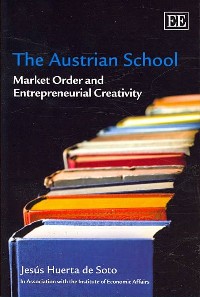
简介
'One of the most learned and creative of contemporary Austrian economists offers a more comprehensive and persuasive account of that school than any other known to me. Professor Huerta de Soto even finds antecedents among the scholastics of 16th-century Spain. He emphasizes the decisive role of entrepreneurs in discovering opportunities, creating knowledge, putting widely scattered knowledge to use, and promoting economic coordination. He compares Austrian economics (favorably) with contemporary mainstream work. All economists should be acquainted with these Austrian contributions, including economists who may not be entirely convinced on some points of money-macro theory.'
- Leland Yeager, Auburn University and University of Virginia, US
The Austrian Schoolforms a concise but comprehensive exposition of the main tenets of the modern Austrian School of Economics while also providing a detailed explanation of the differences between the Austrian and the neoclassical (including the Chicago School) approaches to economics. The book also includes:
* reviews of the contributions of the main Austrian economists
* critical analysis of the major objections to Austrian economics and an evaluation of its likely future development
* complete exposition on the concepts and implications of entrepreneurship and dynamic competition
* a new concept of dynamic efficiency (as an alternative to the standard Paretian criterion) and, a generalized definition of socialism (as a systematic aggression against entrepreneurship)
* evaluation of the role of Spanish Scholastics of the 16th century as forerunners of the Austrian School, as well as the influence and contributions of the main Austrian Scholars of the 19th and 20th centuries.
This book will most notably appeal to Austrian economists but also to other free market economists as well as researchers and academics of economic methodology, the history of economic thought, institutional economics and comparative economic systems.
Contents: Introduction; 1. Essential Principles of the Austrian School; 2. Knowledge and Entrepreneurship; 3. Carl Menger and the Forerunners of the Austrian School; 4. B??hm-Bawerk and Capital Theory; 5. Ludwig von Mises and the Dynamic Conception of the Market' 6. F.A. Hayek and the Spontaneous Order of the Market' 7. The Resurgence of the Austrian School' Bibliography' Index
目录
Table Of Contents:
Introduction ix
Essential principles of the Austrian school 1(15)
The Austrian theory of action versus the neoclassical theory of decision 1(4)
Austrian subjectivism versus neoclassical objectivism 5(1)
The Austrian entrepreneur versus the neoclassical homo economicus 6(1)
The possibility of pure entrepreneurial error (Austrians) versus the a posteriori rationalization of all decisions (neoclassicals) 7(1)
The subjective information of the Austrians versus the objective information of the neoclassicals 7(1)
The entrepreneurial process of coordination (Austrians) versus general and/or partial equilibrium models (neoclassicals) 8(2)
Subjective costs (Austrians) versus objective costs (neoclassicals) 10(1)
The verbal formalism of the Austrians versus the mathematical formalism of the neoclassicals 11(1)
The link between theory and the empirical world: the different concept of ``prediction'' 12(3)
Conclusion 15(1)
Knowledge and entrepreneurship 16(12)
The definition of entrepreneurship 16(1)
Information, knowledge and entrepreneurship 17(1)
Subjective and practical rather than scientific knowledge 18(1)
Exclusive, dispersed knowledge 19(1)
Tacit, inarticulable knowledge 20(1)
The essentially creative nature of entrepreneurship 21(1)
The creation of information 21(1)
The transmission of information 22(1)
The learning effect: coordination and adjustment 23(1)
The essential principle 24(1)
Competition and entrepreneurship 25(2)
Conclusion: the Austrian concept of society 27(1)
Carl Menger and the forerunners of the Austrian school 28(16)
Introduction 28(1)
The Scholastics of the Spanish Golden Age as forerunners of the Austrian school 29(5)
The decline of the Scholastic Tradition and the influence of Adam Smith 34(3)
Menger and the subjectivist perspective of the Austrian school: the conception of action as a set of subjective stages, the subjective theory of value and the law of marginal utility 37(3)
Menger and the economic theory of social institutions 40(1)
The Methodenstreit or the controversy over method 41(3)
Bohm-Bawerk and capital theory 44(18)
Introduction 44(1)
Human action as a series of subjective stages 45(1)
Capital and capital goods 46(4)
The interest rate 50(3)
Bohm-Bawerk versus Marshall 53(1)
Bohm-Bawerk versus Marx 53(2)
Bohm-Bawerk versus John Bates Clark and his mythical concept of capital 55(3)
Wieser and the subjective concept of opportunity cost 58(1)
The triumph of the equilibrium model and of positivist formalism 59(3)
Ludwig von Mises and the dynamic conception of the market 62(13)
Introduction 62(1)
A brief biographical sketch 62(2)
The theory of money, credit and economic cycles 64(2)
The theorem of the impossibility of socialism 66(4)
The theory of entrepreneurship 70(1)
Method in economics: theory and history 71(2)
Conclusion 73(2)
F.A. Hayek and the spontaneous order of the market 75(20)
Biographical introduction 75(4)
Research on economic cycles: intertemporal discoordination 79(4)
Debates with Keynes and the Chicago School 83(1)
The debate with the socialists and criticism of social engineering 84(6)
Law, legislation and liberty 90(5)
The resurgence of the Austrian school 95(19)
The crisis of equilibrium analysis and mathematical formalism 95(5)
Rothbard, Kirzner and the resurgence of the Austrian school 100(2)
The current research program of the Austrian school and its foreseeable contributions to the future evolution of economics 102(4)
Replies to some comments and criticisms 106(4)
Conclusion: a comparative assessment of the Austrian paradigm 110(4)
Bibliography 114(9)
Index 123
Introduction ix
Essential principles of the Austrian school 1(15)
The Austrian theory of action versus the neoclassical theory of decision 1(4)
Austrian subjectivism versus neoclassical objectivism 5(1)
The Austrian entrepreneur versus the neoclassical homo economicus 6(1)
The possibility of pure entrepreneurial error (Austrians) versus the a posteriori rationalization of all decisions (neoclassicals) 7(1)
The subjective information of the Austrians versus the objective information of the neoclassicals 7(1)
The entrepreneurial process of coordination (Austrians) versus general and/or partial equilibrium models (neoclassicals) 8(2)
Subjective costs (Austrians) versus objective costs (neoclassicals) 10(1)
The verbal formalism of the Austrians versus the mathematical formalism of the neoclassicals 11(1)
The link between theory and the empirical world: the different concept of ``prediction'' 12(3)
Conclusion 15(1)
Knowledge and entrepreneurship 16(12)
The definition of entrepreneurship 16(1)
Information, knowledge and entrepreneurship 17(1)
Subjective and practical rather than scientific knowledge 18(1)
Exclusive, dispersed knowledge 19(1)
Tacit, inarticulable knowledge 20(1)
The essentially creative nature of entrepreneurship 21(1)
The creation of information 21(1)
The transmission of information 22(1)
The learning effect: coordination and adjustment 23(1)
The essential principle 24(1)
Competition and entrepreneurship 25(2)
Conclusion: the Austrian concept of society 27(1)
Carl Menger and the forerunners of the Austrian school 28(16)
Introduction 28(1)
The Scholastics of the Spanish Golden Age as forerunners of the Austrian school 29(5)
The decline of the Scholastic Tradition and the influence of Adam Smith 34(3)
Menger and the subjectivist perspective of the Austrian school: the conception of action as a set of subjective stages, the subjective theory of value and the law of marginal utility 37(3)
Menger and the economic theory of social institutions 40(1)
The Methodenstreit or the controversy over method 41(3)
Bohm-Bawerk and capital theory 44(18)
Introduction 44(1)
Human action as a series of subjective stages 45(1)
Capital and capital goods 46(4)
The interest rate 50(3)
Bohm-Bawerk versus Marshall 53(1)
Bohm-Bawerk versus Marx 53(2)
Bohm-Bawerk versus John Bates Clark and his mythical concept of capital 55(3)
Wieser and the subjective concept of opportunity cost 58(1)
The triumph of the equilibrium model and of positivist formalism 59(3)
Ludwig von Mises and the dynamic conception of the market 62(13)
Introduction 62(1)
A brief biographical sketch 62(2)
The theory of money, credit and economic cycles 64(2)
The theorem of the impossibility of socialism 66(4)
The theory of entrepreneurship 70(1)
Method in economics: theory and history 71(2)
Conclusion 73(2)
F.A. Hayek and the spontaneous order of the market 75(20)
Biographical introduction 75(4)
Research on economic cycles: intertemporal discoordination 79(4)
Debates with Keynes and the Chicago School 83(1)
The debate with the socialists and criticism of social engineering 84(6)
Law, legislation and liberty 90(5)
The resurgence of the Austrian school 95(19)
The crisis of equilibrium analysis and mathematical formalism 95(5)
Rothbard, Kirzner and the resurgence of the Austrian school 100(2)
The current research program of the Austrian school and its foreseeable contributions to the future evolution of economics 102(4)
Replies to some comments and criticisms 106(4)
Conclusion: a comparative assessment of the Austrian paradigm 110(4)
Bibliography 114(9)
Index 123
- 名称
- 类型
- 大小
光盘服务联系方式: 020-38250260 客服QQ:4006604884
云图客服:
用户发送的提问,这种方式就需要有位在线客服来回答用户的问题,这种 就属于对话式的,问题是这种提问是否需要用户登录才能提问
Video Player
×
Audio Player
×
pdf Player
×
