

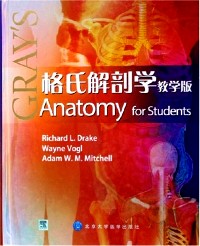
Gray's anatomy for students = 格氏解剖学教学版 /
副标题:无
作 者:Richard L. Drake, Wayne Vogl, Adam W. M. Mitchell ; [illustrations by Richard Tibbitts and Paul R...
分类号:
ISBN:9787810718554
微信扫一扫,移动浏览光盘
简介
《格氏解剖学(学生版)》是世界权威医学名著“格式解剖学”家族的新成员,是特别为满足全世界医学生学习解剖学的需要而制作的。 为了确保本书成为最优秀的教科书,超过100名的全球知名解剖学家和教师联合组成的编辑审核委员会,并与最杰出的制图团队合作,保证本书内容精确、图像清晰,便于使用并能反映最新进展。大量清晰、精美的图片,是本书的显著特色之一。超过1000幅的原创性插图按照人体局部分区排版,并有300余幅照片和影像图片。 为了适应不同形式的教学课堂,格式解剖学始终将解剖学学习与临床医学实践相结合,进一步加深理解,从而将临床解剖学的精华呈现给学生。本书按照人体局部分区来组织结构,每一章内都将该局部分区内各结构的功能进行了概念性总结。局部解剖学具有较多的临床相关讨论,及许多影像学图片和精美的美术图谱。每一章都有专门小节讲述体表解剖学,并附上带解剖学图表的精美的照片,其目的在于将解剖学与需要解剖学知识的病人身体检查和医学系列检查结合起来。全书均使用了临床病例以说明解剖学与临床医学的联系。 读者对象:医疗和卫生专业学生、教师,基础医学工作者。
注:此为英文影印版更多>>
目录
Editorial advisory board
Acknowledgments
Dedications
About the book
1 Anatomy and imaging
What is anatomy?
How can gross anatomy be studied?
Important anatomical terms
The anatomical position
Anatomical planes
Terms to describe location
Imaging
Diagnostic imaging techniques
Plain radiography
Ultrasound
Doppler ultrasound
Computed tomography
Magnetic resonance imaging
Nuclear medicine imaging
Positron emission tomography
Image interpretation
Plain radiography
Chest radiograph
Abdominal radiograph
Gastrointestinal contrast examinations
Urological contrast studies
Computed tomography
Magnetic resonance imaging
Nuclear medicine imaging
Safety in imaging
2 Back
Conceptual overview
General description
Functions
Support
Movement
Protection of the central and peripheral nervous systems
Component parts
Bones
A typical vertebra
Muscles
Vertebral canal
Spinal nerves
Dermatomes and myotomes
Relationship to other regions
Head
Thorax, abdomen, and pelvis
Limbs
Key features
Long vertebral column and short spinal cord
Intervertebral foramina and spinal nerves
Innervation of the back
Regional anatomy
Skeletal framework
Vertebrae
Typical vertebra
Cervical vertebrae
Thoracic vertebrae
Lumbar vertebrae
Sacrum
Coccyx
Intervertebral foramina
Posterior spaces between vertebral arches
Joints
Synovial joints
Descriptions of synovial joints based on shape and movement
Solid joints
Joints between vertebrae in the back
Symphyses between vertebral bodies (intervertebral discs)
Joints between vertebral arches (zygapophysial joints)
Ligaments
Anterior and posterior longitudinal ligaments
Ligamenta flava
Supraspinous ligament and ligamentum nuchae
Interspinous ligaments
Back musculature
Superficial group of back muscles
Trapezius
Latissimus dorsi
Levator scapulae
Rhomboid minor and rhomboid major
Intermediate group of back muscles
Deep group of back muscles
Thoracolumbar fascia
Spinotransversales muscles
Erector spinae muscles
Transversospinales muscles
Segmental muscles
Suboccipital muscles
Introduction to the nervous system
Central nervous system
Brain
Spinal cord
Arrangement of structures in the vertebral canal
Peripheral nervous system
Spinal nerves
Nomenclature of spinal nerves
Functional subdivisions of the CNS
Somatic part of the nervous system
Dermatomes
Myotomes
Visceral part of the nervous system
Sympathetic system
Parasympathetic system
Visceral sensory innervation (visceral afferents)
The enteric system
Nerve plexuses
Somatic plexuses
Visceral plexuses
Referred pain
Surface anatomy
Back surface anatomy
Absence of lateral curvatures
Primary and secondary curvatures in the sagittal plane
Useful nonvertebral skeletal landmarks
How to identify specific vertebral spinous processes
Visualizing the inferior ends of the spinal cord and subarachnoid space
Identifying major muscles
Clinical cases
10 short questions
3 Thorax
Conceptual overview
Generaldescription
Functions
Breathing
Protection ofvitalorgans
Conduit
Component parts
Thoracic wall
Superior thoracic aperture
Inferior thoracic aperture
Diaphragm
Mediastinum
Pleural cavities
Relation ship to other regions
Neck
Upperlimb
Abdomen
Breast
Key features
Vertebral level TIV/V
Venous shunts from left to right
Segmental neurovascular supply of thoracic wall
Sympathetic system
Flexible wall and inferior thoracic aperture
Innervationofthediaphragm
Regional anatomy
Pectoral region
Breast
Arterial supply
Venous drainage
Jnnervation
Lymphatic drainage 1
Breastin men
Muscles of the pectoral region
Pectoralis major 1
Subclavius and pectoralis minor
Thoracic wall
Skeletal framework
Thoracic vertebrae
Ribs
Sternum
Joints
IntercostaI spaces
Muscles
Arterial supply
Venous drainage
Lymphatic drainage
Innervation
Diaphragm
Arterial supply
Venous drainage
Innervation
Movements of the thoracic wall
and diaphragm during breathing
Pleural cavities
Pleura
Parietal pleu ra
Viscera J pleura
Pleural recesses
Lungs
Root and hilum
Right Iunq
Leftlung
BronchiaI tree
Bronchopulmonary segments
PuImOna rv a rteries
Pulmona ry veins
Bronchial arteries and veins
lnnervation
Lymphatic d rainage
Mediastinum
Middle mediastinum
Perica rdium
Hea rt
Pulmonary trunk
Ascendinq aorta
Other vasculature
Superior mediastinum
Thymus
……
4 Abdomen
5 Pelvis and perineum
6 Lower limb
7 Upper limb
Acknowledgments
Dedications
About the book
1 Anatomy and imaging
What is anatomy?
How can gross anatomy be studied?
Important anatomical terms
The anatomical position
Anatomical planes
Terms to describe location
Imaging
Diagnostic imaging techniques
Plain radiography
Ultrasound
Doppler ultrasound
Computed tomography
Magnetic resonance imaging
Nuclear medicine imaging
Positron emission tomography
Image interpretation
Plain radiography
Chest radiograph
Abdominal radiograph
Gastrointestinal contrast examinations
Urological contrast studies
Computed tomography
Magnetic resonance imaging
Nuclear medicine imaging
Safety in imaging
2 Back
Conceptual overview
General description
Functions
Support
Movement
Protection of the central and peripheral nervous systems
Component parts
Bones
A typical vertebra
Muscles
Vertebral canal
Spinal nerves
Dermatomes and myotomes
Relationship to other regions
Head
Thorax, abdomen, and pelvis
Limbs
Key features
Long vertebral column and short spinal cord
Intervertebral foramina and spinal nerves
Innervation of the back
Regional anatomy
Skeletal framework
Vertebrae
Typical vertebra
Cervical vertebrae
Thoracic vertebrae
Lumbar vertebrae
Sacrum
Coccyx
Intervertebral foramina
Posterior spaces between vertebral arches
Joints
Synovial joints
Descriptions of synovial joints based on shape and movement
Solid joints
Joints between vertebrae in the back
Symphyses between vertebral bodies (intervertebral discs)
Joints between vertebral arches (zygapophysial joints)
Ligaments
Anterior and posterior longitudinal ligaments
Ligamenta flava
Supraspinous ligament and ligamentum nuchae
Interspinous ligaments
Back musculature
Superficial group of back muscles
Trapezius
Latissimus dorsi
Levator scapulae
Rhomboid minor and rhomboid major
Intermediate group of back muscles
Deep group of back muscles
Thoracolumbar fascia
Spinotransversales muscles
Erector spinae muscles
Transversospinales muscles
Segmental muscles
Suboccipital muscles
Introduction to the nervous system
Central nervous system
Brain
Spinal cord
Arrangement of structures in the vertebral canal
Peripheral nervous system
Spinal nerves
Nomenclature of spinal nerves
Functional subdivisions of the CNS
Somatic part of the nervous system
Dermatomes
Myotomes
Visceral part of the nervous system
Sympathetic system
Parasympathetic system
Visceral sensory innervation (visceral afferents)
The enteric system
Nerve plexuses
Somatic plexuses
Visceral plexuses
Referred pain
Surface anatomy
Back surface anatomy
Absence of lateral curvatures
Primary and secondary curvatures in the sagittal plane
Useful nonvertebral skeletal landmarks
How to identify specific vertebral spinous processes
Visualizing the inferior ends of the spinal cord and subarachnoid space
Identifying major muscles
Clinical cases
10 short questions
3 Thorax
Conceptual overview
Generaldescription
Functions
Breathing
Protection ofvitalorgans
Conduit
Component parts
Thoracic wall
Superior thoracic aperture
Inferior thoracic aperture
Diaphragm
Mediastinum
Pleural cavities
Relation ship to other regions
Neck
Upperlimb
Abdomen
Breast
Key features
Vertebral level TIV/V
Venous shunts from left to right
Segmental neurovascular supply of thoracic wall
Sympathetic system
Flexible wall and inferior thoracic aperture
Innervationofthediaphragm
Regional anatomy
Pectoral region
Breast
Arterial supply
Venous drainage
Jnnervation
Lymphatic drainage 1
Breastin men
Muscles of the pectoral region
Pectoralis major 1
Subclavius and pectoralis minor
Thoracic wall
Skeletal framework
Thoracic vertebrae
Ribs
Sternum
Joints
IntercostaI spaces
Muscles
Arterial supply
Venous drainage
Lymphatic drainage
Innervation
Diaphragm
Arterial supply
Venous drainage
Innervation
Movements of the thoracic wall
and diaphragm during breathing
Pleural cavities
Pleura
Parietal pleu ra
Viscera J pleura
Pleural recesses
Lungs
Root and hilum
Right Iunq
Leftlung
BronchiaI tree
Bronchopulmonary segments
PuImOna rv a rteries
Pulmona ry veins
Bronchial arteries and veins
lnnervation
Lymphatic d rainage
Mediastinum
Middle mediastinum
Perica rdium
Hea rt
Pulmonary trunk
Ascendinq aorta
Other vasculature
Superior mediastinum
Thymus
……
4 Abdomen
5 Pelvis and perineum
6 Lower limb
7 Upper limb
Gray's anatomy for students = 格氏解剖学教学版 /
- 名称
- 类型
- 大小
光盘服务联系方式: 020-38250260 客服QQ:4006604884
云图客服:
用户发送的提问,这种方式就需要有位在线客服来回答用户的问题,这种 就属于对话式的,问题是这种提问是否需要用户登录才能提问
Video Player
×
Audio Player
×
pdf Player
×
